
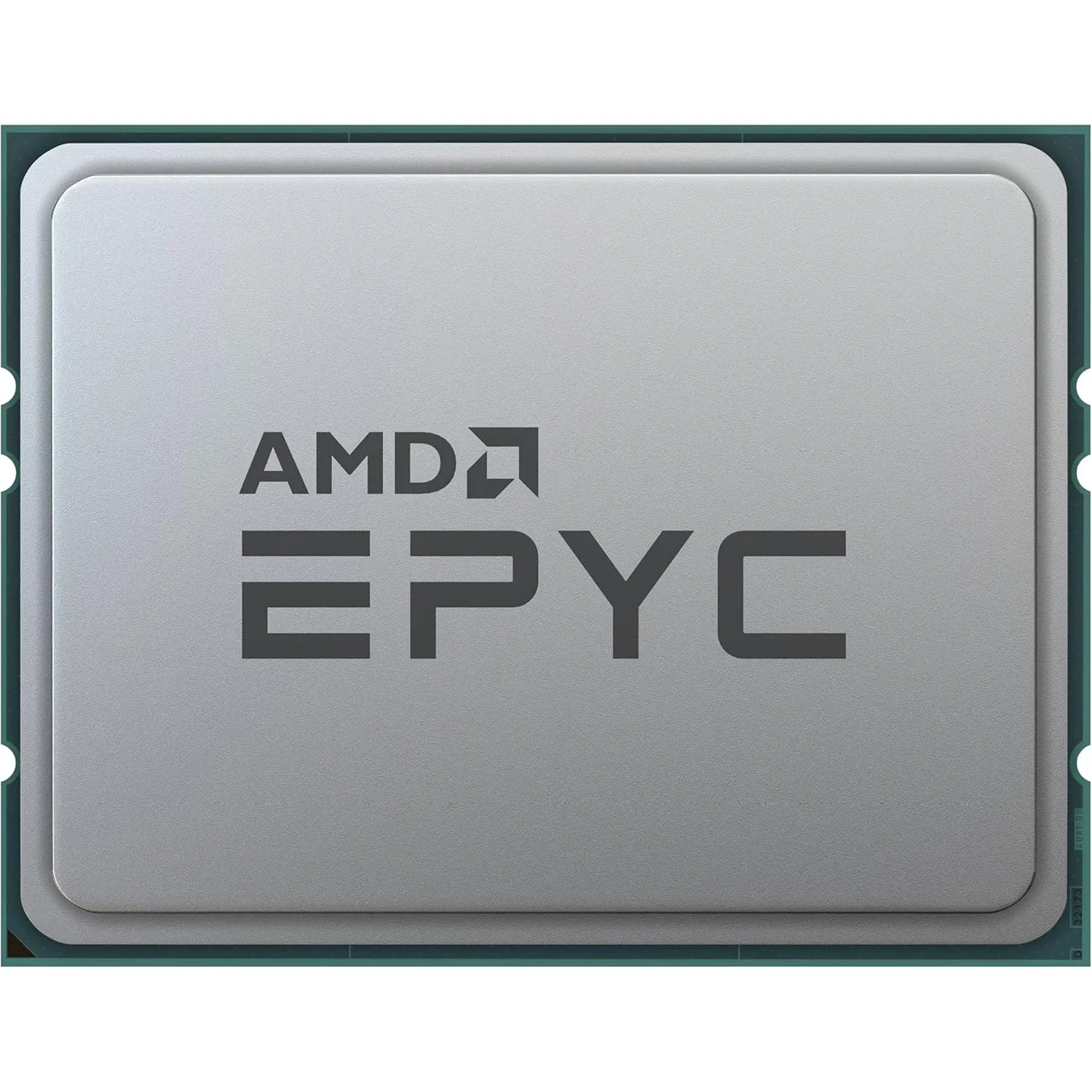
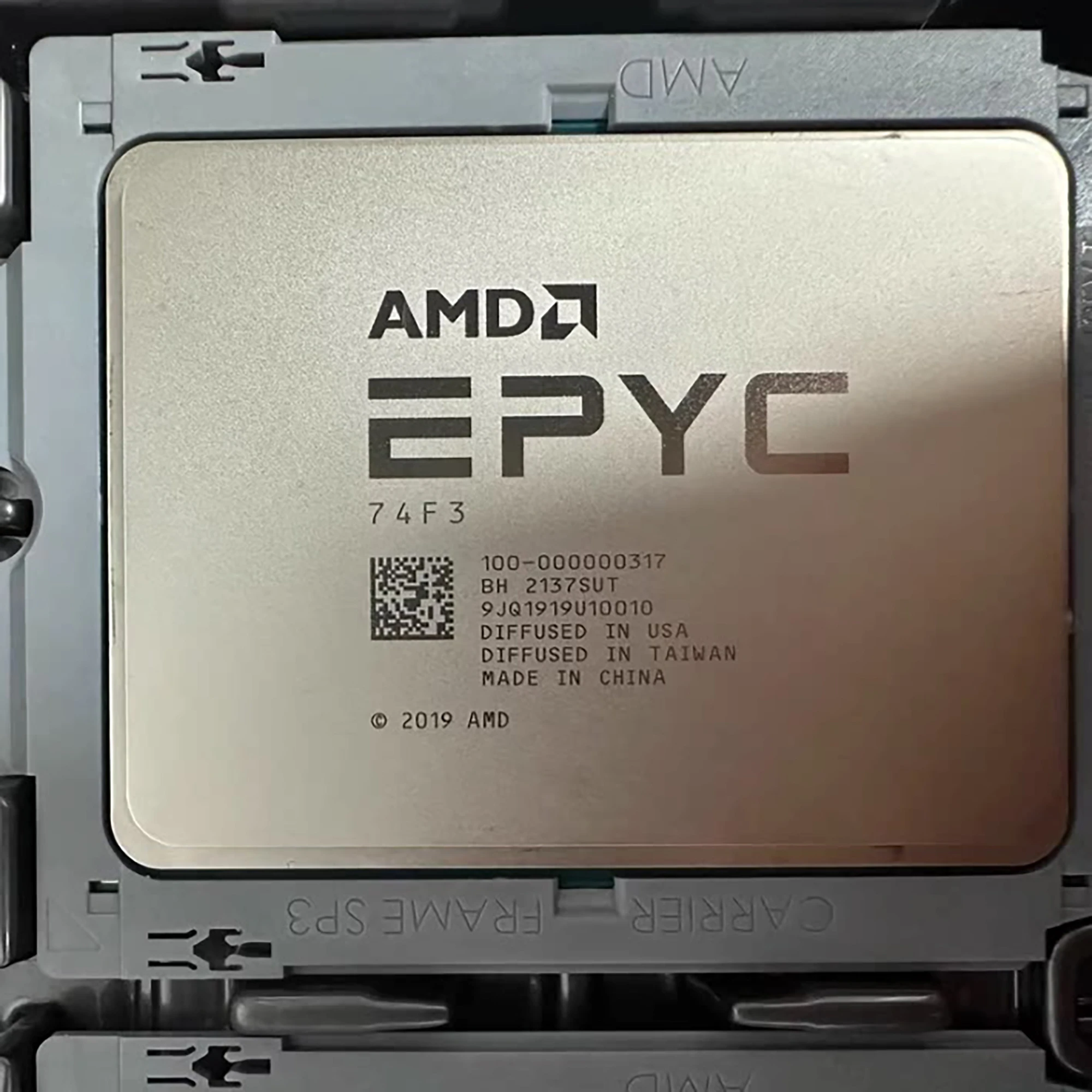
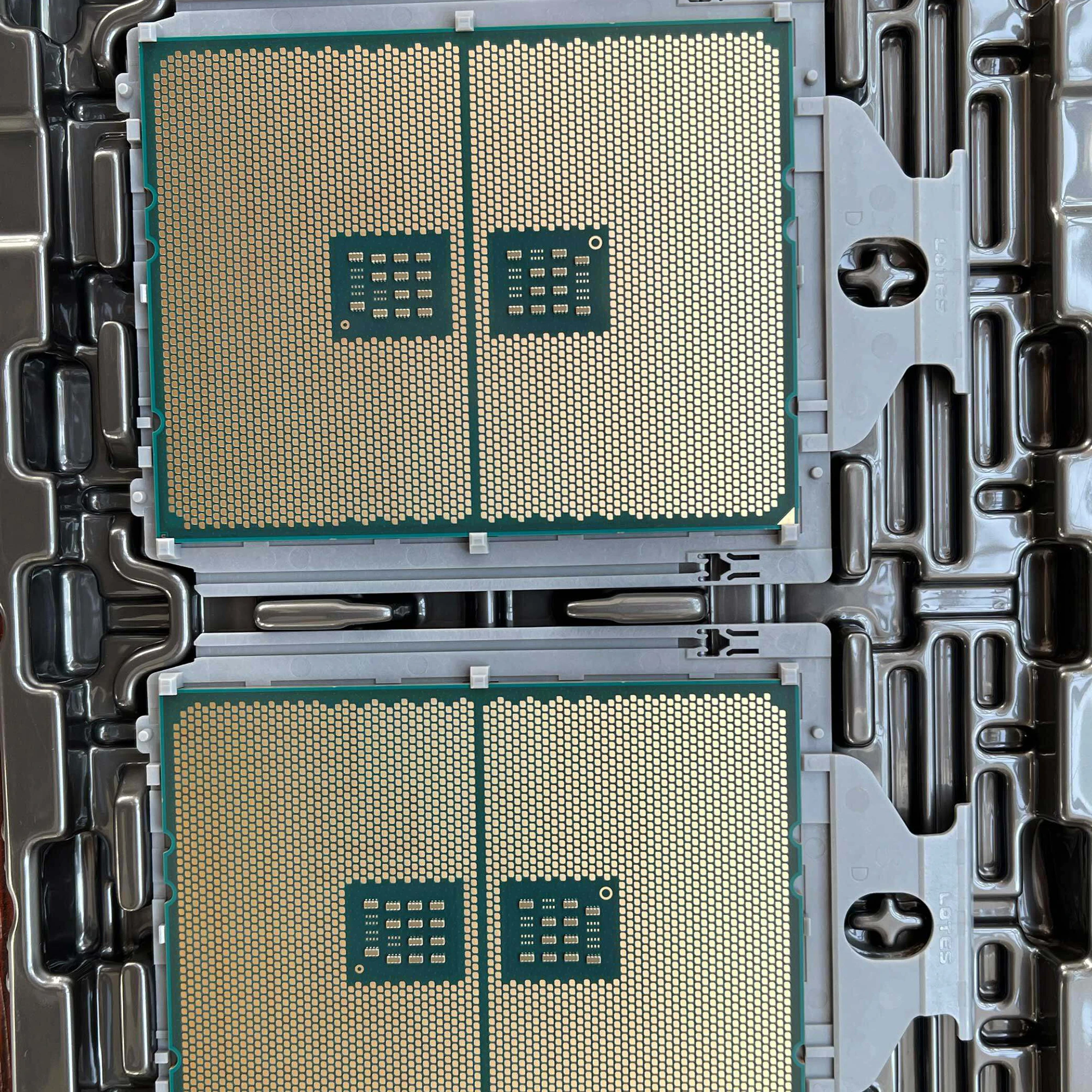
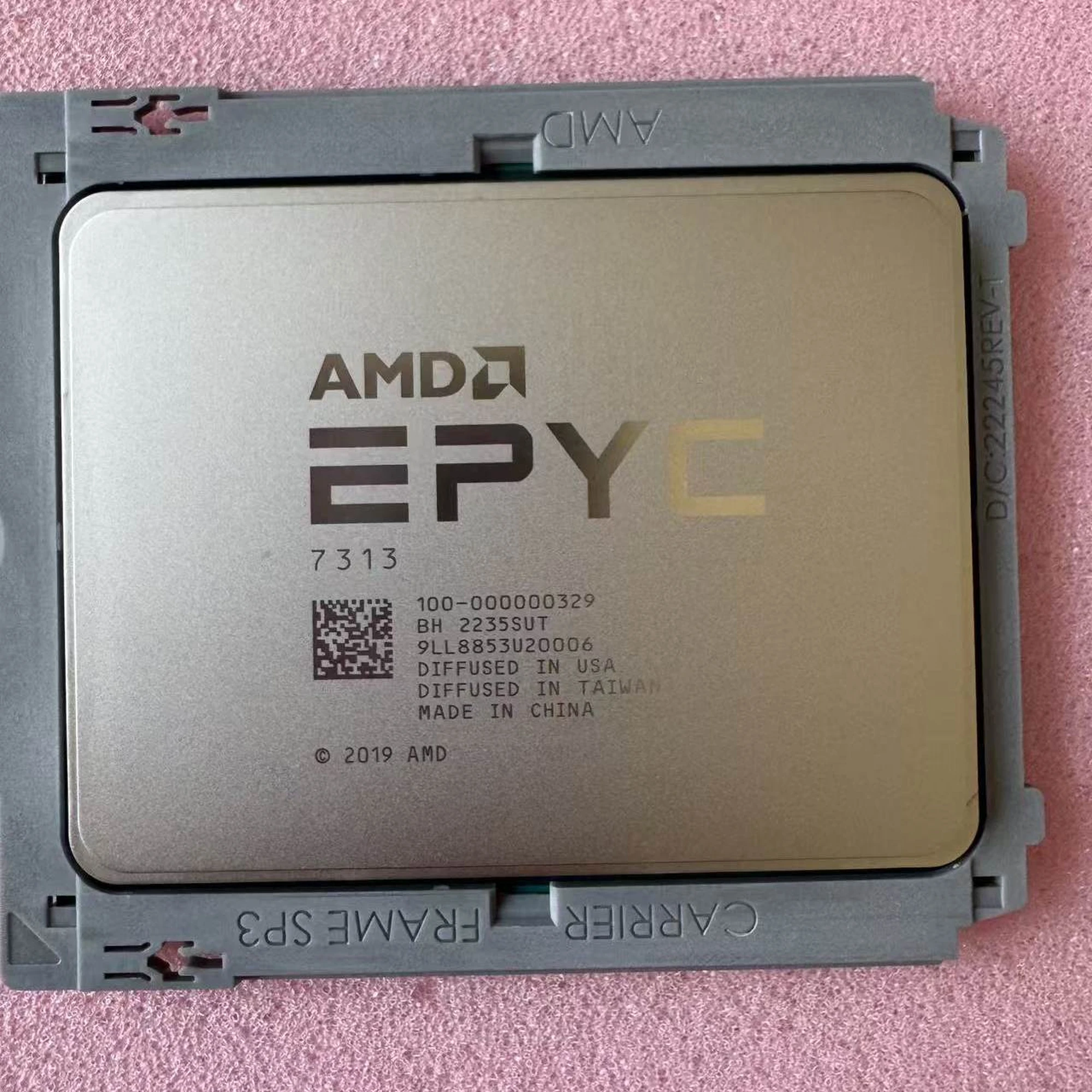
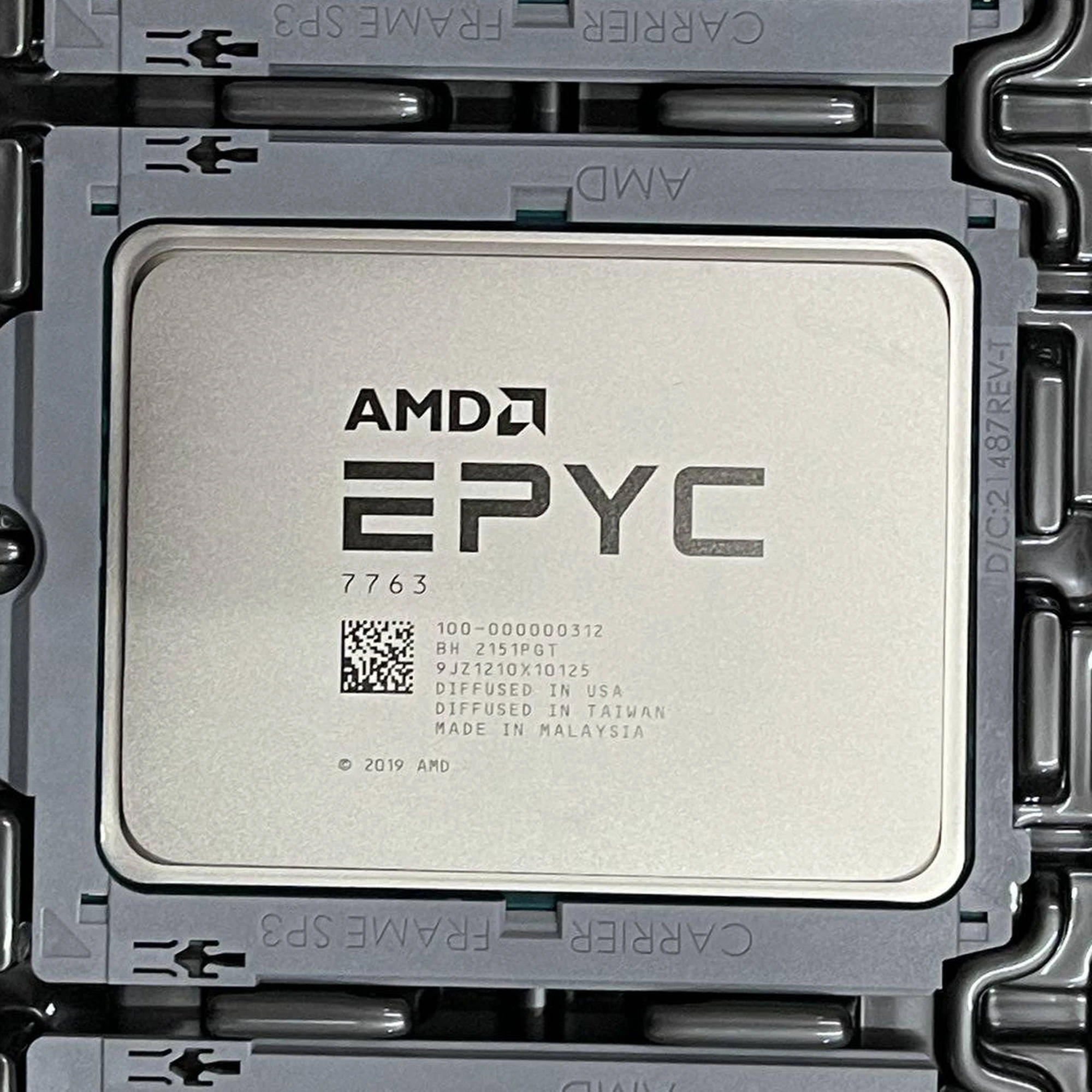

AMD EPYC 74F3 Server Processor | 24-Core 48-Thread, 3.2GHz Base, 4.0GHz Boost, 256MB L3 Cache, PCIe 4.0
| Specification | Details |
|---|---|
| Product Name | AMD EPYC 74F3 Server Processor |
| Product Series | AMD EPYC 7003 Series (Milan) |
| Architecture | Zen 3 Microarchitecture |
| Manufacturing Process | 7nm |
| Cores | 24 Physical Cores |
| Threads | 48 Threads (SMT Supported) |
| Base Clock | 3.2 GHz |
| Max Boost Clock | 4.0 GHz |
| L1 Cache | 1.5 MB (Total) |
| L2 Cache | 12 MB (Total) |
| L3 Cache | 256 MB |
| Memory Type | DDR4 |
| Memory Channels | 8 |
| Max Memory Speed | 3200 MT/s |
| Max Memory Capacity | 4 TB |
| Memory Bandwidth | 204.8 GB/s (Per Socket) |
| PCIe Version | PCIe 4.0 |
| PCIe Lanes | 128 |
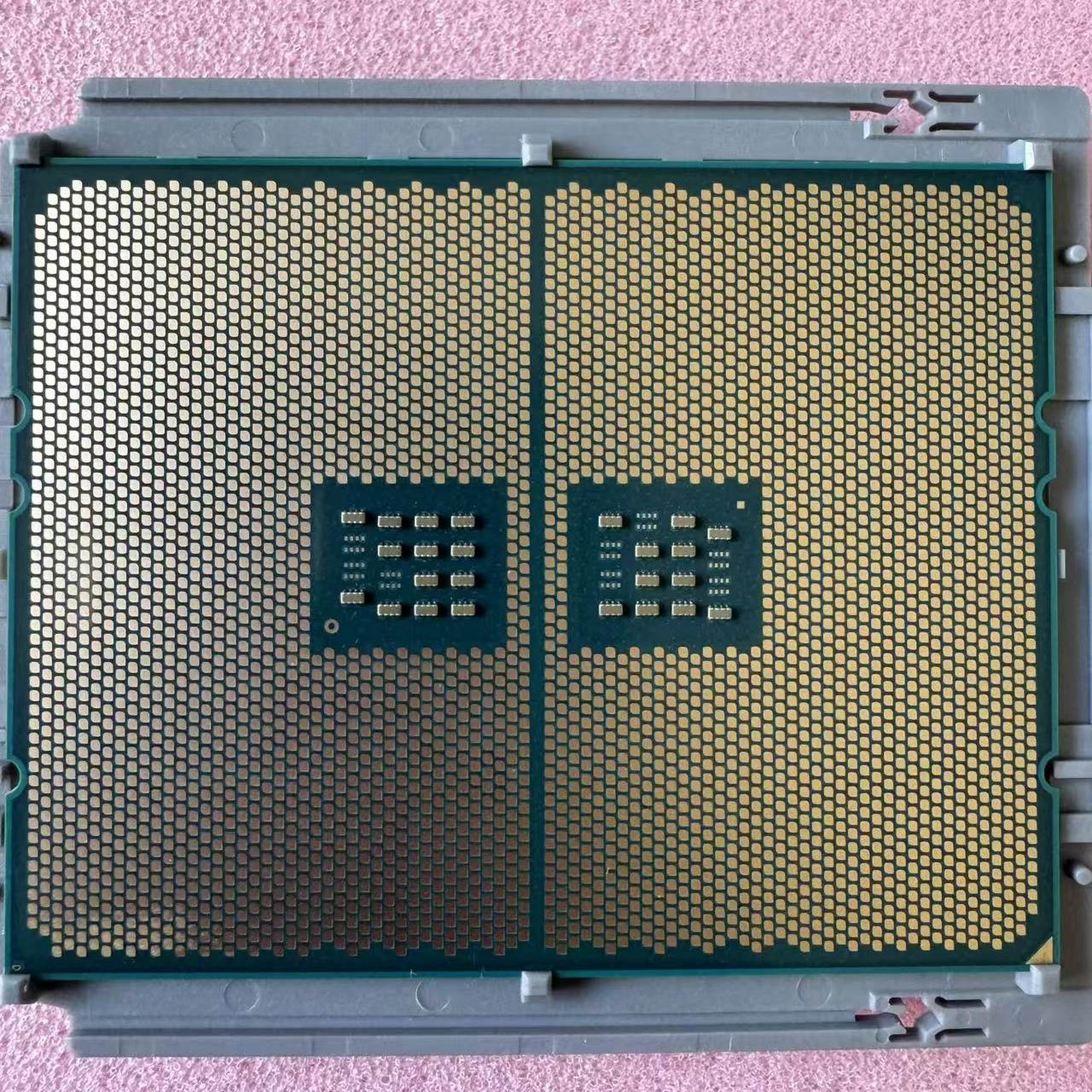
| Socket Type | SP3 |
| Socket Count | 1P / 2P |
| TDP (Default) | 240 W |
| cTDP (Configurable) | 225 – 240 W |
| Release Date | March 15, 2021 |
| MSRP (1kU Pricing) | $2,900 |
| Tray Product ID | 100-000000317 |
| Supported Technologies | AMD Infinity Guard, AMD Infinity Architecture, AMD Virtualization (AMD-V™), AES-NI, FMA3, AVX, AVX2 |
| Workload Affinity | EDA, HCI, High Performance VM Density, Per Core CAE/CFD/FEA, VDI |
| ECC Memory Support | Yes |
The AMD EPYC 74F3 Server Processor stands as a cornerstone of enterprise-grade computing, designed to meet the rigorous demands of modern data centers, cloud infrastructure, and high-performance computing (HPC) environments. As part of AMD’s EPYC 7003 series (codenamed Milan), this processor leverages the advanced 7nm Zen 3 microarchitecture to deliver a perfect balance of performance, efficiency, and scalability—making it an ideal choice for businesses and organizations that rely on consistent, high-throughput computing for mission-critical operations.
Key Architecture & Core Performance
At the heart of the AMD EPYC 74F3 lies the Zen 3 microarchitecture, a significant advancement over its Zen 2 predecessor, which delivers a 19% improvement in instructions per clock (IPC) performance. This architectural upgrade translates to faster single-core and multi-core performance, enabling the processor to handle both compute-intensive and latency-sensitive workloads with ease. Unlike older server processors that struggle to balance single-threaded tasks (such as database queries) and multi-threaded workloads (like virtualization or data analytics), the EPYC 74F3 excels in both, thanks to its optimized core design and intelligent resource allocation.
The processor features 24 physical cores and 48 threads, supported by AMD’s Simultaneous Multithreading (SMT) technology, which allows each core to handle two threads simultaneously. This multi-threaded capability is critical for server environments, where multiple users, applications, and virtual machines (VMs) operate concurrently. Whether running a virtualized data center with high VM density, processing large datasets for business intelligence, or powering edge computing nodes, the 48 threads of the EPYC 74F3 ensure smooth, uninterrupted performance without bottlenecks.
Clock speed is another key strength of the EPYC 74F3. It boasts a base clock of 3.2GHz, ensuring consistent performance for sustained workloads, and a maximum boost clock of 4.0GHz, which kicks in during peak demand to deliver extra processing power for time-sensitive tasks. This dynamic clock adjustment is managed by AMD’s Precision Boost 2 technology, which intelligently optimizes clock speeds based on workload intensity and thermal conditions—maximizing performance while minimizing unnecessary power consumption.
Cache & Memory Performance: Reducing Latency, Boosting Throughput
To complement its powerful core performance, the AMD EPYC 74F3 is equipped with a massive 256MB L3 cache, one of the largest in its class. The L3 cache acts as a high-speed buffer between the processor cores and main memory, storing frequently accessed data and instructions to reduce latency and minimize the need for time-consuming access to slower DDR4 memory. This is particularly beneficial for memory-intensive workloads like in-memory databases, machine learning inference, and scientific computing, where quick data access can significantly improve overall performance.
In addition to its generous cache, the EPYC 74F3 supports 8 DDR4 memory channels, with a maximum memory speed of 3200 MT/s. This multi-channel memory architecture delivers a peak memory bandwidth of 204.8 GB/s, ensuring that the processor can quickly access and process large volumes of data without being constrained by memory bottlenecks. The processor also supports ECC (Error-Correcting Code) memory, a critical feature for server environments that require data integrity and reliability—ECC memory detects and corrects single-bit errors, preventing data corruption and system crashes in mission-critical applications.
With support for up to 4TB of maximum memory capacity, the EPYC 74F3 is well-equipped to handle memory-heavy workloads, including virtualization (where each VM requires dedicated memory), big data analytics (which relies on large datasets stored in memory), and high-performance computing (HPC) tasks like CAE, CFD, and FEA simulations. This memory scalability ensures that the processor can grow with your business needs, eliminating the need for frequent hardware upgrades.
Connectivity & Expansion: PCIe 4.0 for Next-Gen Peripherals
The AMD EPYC 74F3 supports PCIe 4.0 x128 connectivity, a significant upgrade over PCIe 3.0, offering double the bandwidth (16 GT/s per lane) for faster data transfer between the processor and peripherals. This high-speed connectivity is essential for modern server environments, where peripherals like NVMe SSDs, high-speed network adapters, and GPU accelerators demand maximum throughput.
PCIe 4.0 x128 provides ample expansion options, allowing businesses to connect multiple high-performance devices without sacrificing speed. For example, NVMe SSDs connected via PCIe 4.0 can deliver read/write speeds of up to 7GB/s, significantly reducing data access latency compared to traditional SATA SSDs. This is particularly beneficial for applications like database management, where fast storage access is critical for reducing query times and improving user experience.
The processor is compatible with the SP3 socket and supports both 1P (single-processor) and 2P (dual-processor) configurations, offering scalability for businesses that need to expand their server capacity. In a 2P configuration, the EPYC 74F3 can deliver up to 48 cores and 96 threads, making it suitable for large-scale virtualization, HPC clusters, and data center environments with high compute demands.
Power Efficiency & Thermal Management
Despite its powerful performance, the AMD EPYC 74F3 is designed with power efficiency in mind, featuring a default TDP (Thermal Design Power) of 240W and a configurable cTDP (Configurable TDP) range of 225-240W. This flexibility allows IT administrators to optimize power consumption based on their specific workload requirements—lowering TDP for less demanding tasks to reduce energy costs, or maintaining the full 240W TDP for peak performance during high-demand periods.
AMD’s Sensemi technology further enhances power efficiency by monitoring temperature, voltage, and workload in real time, adjusting power delivery to each core dynamically. This ensures that the processor only uses the power it needs, reducing energy waste and lowering operational costs for data centers. Additionally, the 7nm manufacturing process (a step up from the 14nm process used in older EPYC generations) reduces power consumption while increasing performance density, allowing for more efficient server designs with smaller footprints.
Security & Reliability: Protecting Mission-Critical Data
For enterprise environments, security and reliability are non-negotiable—and the AMD EPYC 74F3 delivers on both fronts. The processor includes AMD Infinity Guard, a comprehensive set of security features designed to protect data at every stage of its lifecycle. Key security features include Secure Memory Encryption (SME), which encrypts the entire system memory to prevent unauthorized access in the event of a physical breach, and Secure Encrypted Virtualization (SEV), which encrypts virtual machine memory to isolate VMs from each other and the host system.
These security features are particularly important for cloud service providers and organizations that host multiple tenants on a single server, as they ensure that sensitive data from one tenant cannot be accessed by another. Additionally, the EPYC 74F3 supports hardware-based encryption acceleration (AES-NI), which speeds up encryption and decryption tasks without sacrificing performance—critical for applications that handle sensitive data, such as financial transactions, healthcare records, and government data.
In terms of reliability, the EPYC 74F3 is built to withstand the rigors of 24/7 server operation, with built-in error correction and fault tolerance features. The processor’s support for ECC memory, combined with AMD’s Error Correction Code (ECC) on the cache and internal buses, ensures that data errors are detected and corrected in real time, preventing system crashes and data loss. This level of reliability makes the EPYC 74F3 suitable for mission-critical applications, including healthcare systems, financial services, and emergency response systems.
Workload Affinity & Use Cases
The AMD EPYC 74F3 is optimized for a wide range of enterprise workloads, making it a versatile choice for diverse server environments. Its workload affinity includes EDA (Electronic Design Automation), HCI (Hyper-Converged Infrastructure), high-performance VM density, per-core CAE/CFD/FEA simulations, and VDI (Virtual Desktop Infrastructure). Let’s explore some of the key use cases where the EPYC 74F3 excels:
Virtualization & VDI: With 24 cores, 48 threads, and ample memory bandwidth, the EPYC 74F3 can support a high density of VMs and virtual desktops. This is ideal for organizations that need to consolidate their server infrastructure, reduce hardware costs, and improve manageability. Whether deploying virtual desktops for remote workers or hosting multiple application servers on a single physical machine, the EPYC 74F3 delivers the performance and scalability needed to support these workloads.
Data Analytics & Big Data: The EPYC 74F3’s multi-core performance, large L3 cache, and high memory bandwidth make it well-suited for data analytics workloads, including data mining, machine learning inference, and business intelligence. It can quickly process large datasets, reducing the time it takes to generate insights and make data-driven decisions. For organizations that rely on real-time analytics, the EPYC 74F3’s low latency and high throughput ensure that data is processed quickly and efficiently.
High-Performance Computing (HPC): For scientific computing, engineering simulations (CAE, CFD, FEA), and research applications, the EPYC 74F3 delivers the raw compute power needed to handle complex calculations. Its 24 cores and 48 threads, combined with PCIe 4.0 connectivity for GPU accelerators, make it a powerful choice for HPC clusters and research labs.
Hyper-Converged Infrastructure (HCI): HCI combines compute, storage, and networking into a single, integrated system, requiring a processor that can handle multiple workloads simultaneously. The EPYC 74F3’s balanced performance, memory bandwidth, and PCIe 4.0 connectivity make it ideal for HCI environments, where it can support both compute and storage tasks without bottlenecks.
Pricing & Value Proposition
Released in March 2021, the AMD EPYC 74F3 has a manufacturer’s suggested retail price (MSRP) of $2,900 per unit (1kU pricing). While this places it in the mid-to-high range of server processors, its performance, scalability, and efficiency make it a cost-effective choice for enterprises. Compared to competing processors in the same class, the EPYC 74F3 offers more cores, larger cache, and higher memory bandwidth at a competitive price point—delivering better performance per dollar.
For businesses that prioritize long-term value, the EPYC 74F3’s scalability (support for 2P configurations) and compatibility with future technologies (PCIe 4.0, DDR4) ensure that it can adapt to evolving workload demands, reducing the need for frequent hardware upgrades. Additionally, its power efficiency helps lower operational costs over time, making it a sustainable choice for data centers looking to reduce their carbon footprint.
Conclusion
The AMD EPYC 74F3 Server Processor is a high-performance, versatile, and reliable choice for enterprise server environments. Built on AMD’s 7nm Zen 3 microarchitecture, it delivers exceptional single-core and multi-core performance, supported by a massive 256MB L3 cache, 8 DDR4 memory channels, and PCIe 4.0 x128 connectivity. Its power efficiency, security features, and scalability make it ideal for a wide range of workloads, including virtualization, data analytics, HPC, and HCI.
Whether you’re building a new data center, upgrading your existing server infrastructure, or looking to optimize performance for mission-critical applications, the EPYC 74F3 offers the perfect balance of performance, efficiency, and value. With its robust feature set and proven reliability, it’s a processor that can grow with your business and meet the demands of modern enterprise computing for years to come.
Recommended Motherboards for AMD EPYC 7002/7003 SP3 Processors
| Model | Brand | CPU Configuration | Memory Slots | Max Memory | LAN | PCIe Expansion | Storage | Form Factor | BMC |
|---|---|---|---|---|---|---|---|---|---|
| MZ72-HB2 | GIGABYTE | Dual SP3 | 16×DDR4 | 2TB | 2×10G + 1×Mgmt LAN | 5×PCIe 4.0 x16/x8 | 5×SlimSAS, 1×M.2 | E-ATX | AST2600 |
| MZ32-AR0 | GIGABYTE | Single SP3 | 16×DDR4 | 2TB | 2×1G (Intel I350) | 7×PCIe 4.0/3.0 x16/x8 | 6×SlimSAS, 2×M.2 | E-ATX | AST2600 |
| MZ71-CE1 | GIGABYTE | Dual SP3 | 16×DDR4 | 2TB | 2×1G (BCM5720) + Mgmt LAN | 5×PCIe 4.0 x16/x8 | 3×SlimSAS, 4×SATA | E-ATX | AST2600 |
| ROMED8-2T/BCM | ASRock Rack | Single SP3 | 8×DDR4 | 256GB | 2×10G (Intel X550) + IPMI | 7×PCIe 4.0 x16 | 10×SATA, 2×M.2 | ATX | AST2500 |
| ROMED4ID-2T | ASRock Rack | Single SP3 | 4×DDR4 | 256GB | 2×10G (Intel X550) + IPMI | 1×PCIe 4.0 x16 | 16×SATA, 1×M.2 | Mini-ITX | AST2500 |
| ROME2D16-2T | ASRock Rack | Dual SP3 | 16×DDR4 | 4TB | 2×10G (Intel X550) + IPMI | 5×PCIe 4.0 x16 + 1×x8 | 2×SlimSAS, 2×OcuLink, 2×M.2 | EEB | AST2600 |
| ROME2D32GM-2T | ASRock Rack | Dual SP3 | 32×DDR4 | 8TB | 2×10G + IPMI | 6×PCIe 4.0 x16 | 19×SlimSAS, 1×M.2 | EEB | AST2600 |
| H12SSL-NT | Supermicro | Single SP3 | 8×DDR4 | 2TB | 2×10G (BCM57416) + IPMI | 5×PCIe 4.0 x16/x8 | 2×SlimSAS (SATA/NVMe) | ATX | AST2500 |
| H12SSL-i | Supermicro | Single SP3 | 8×DDR4 | 2TB | 2×1G (BCM5720) | 5×PCIe 4.0 x16, 2×x8 | 8×SATA, 2×M.2 | ATX | AST2500 |
| H12DSi-N6 | Supermicro | Dual SP3 | 16×DDR4 | 4TB | 2×1G + IPMI | 3×PCIe 4.0 x16, 3×x8 | 10×SATA, 1×M.2 | E-ATX | AST2600 |
AMD EPYC 7003 Series Processors Specifications
| Name | # of CPU Cores | # of Threads | Max. Boost Clock | Base Clock | L3 Cache | Default TDP |
| AMD EPYC™ 7203P | 8 | 16 | Up to 3.4 GHz | 2.8 GHz | 64 MB | 120W |
| AMD EPYC™ 7203 | 8 | 16 | Up to 3.4 GHz | 2.8 GHz | 64 MB | 120W |
| AMD EPYC™ 72F3 | 8 | 16 | Up to 4.1 GHz | 3.7 GHz | 256 MB | 180W |
| AMD EPYC™ 7303P | 16 | 32 | Up to 3.4 GHz | 2.4 GHz | 64 MB | 130W |
| AMD EPYC™ 7303 | 16 | 32 | Up to 3.4 GHz | 2.4 GHz | 64 MB | 130W |
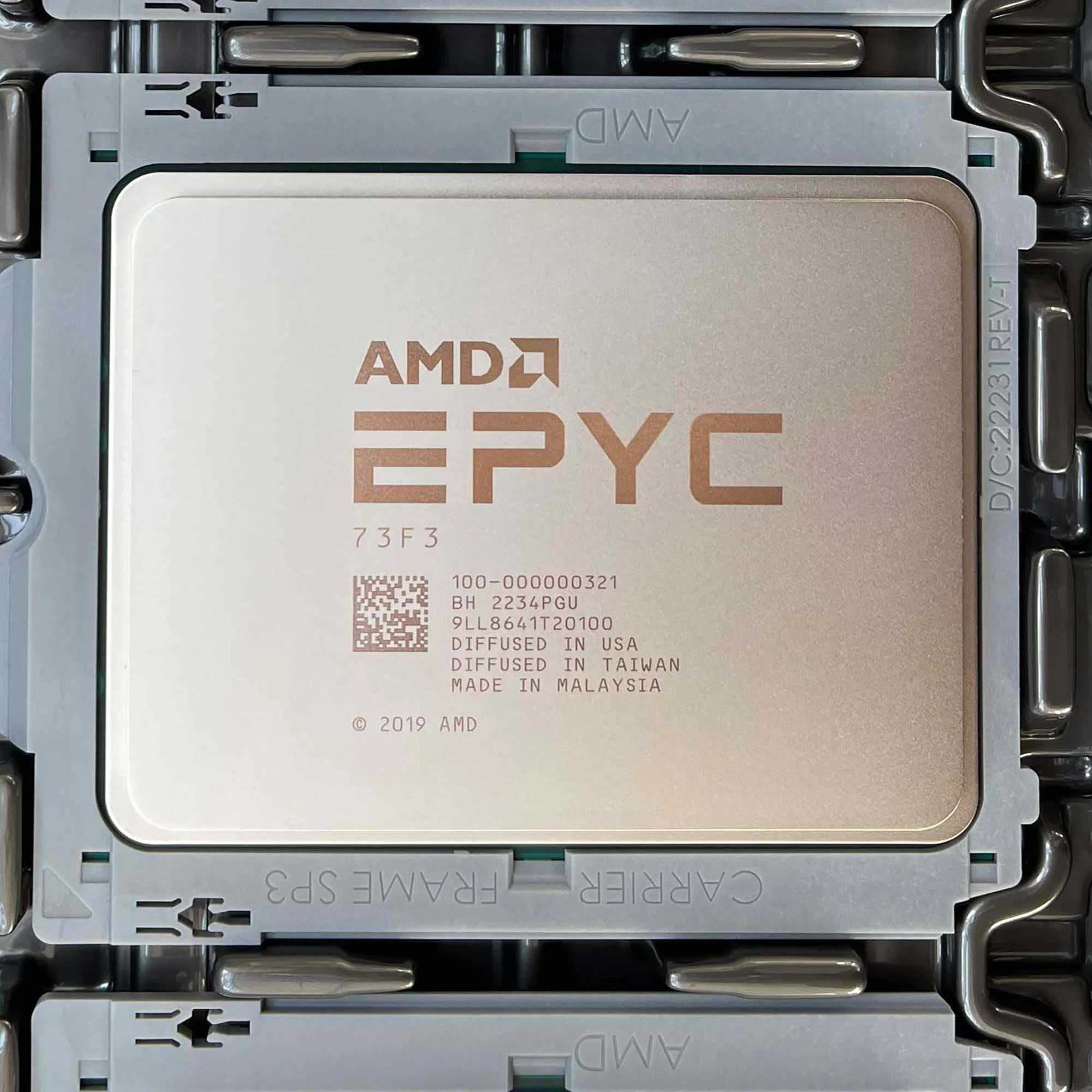
| AMD EPYC™ 73F3 | 16 | 32 | Up to 4 GHz | 3.5 GHz | 256 MB | 240W |
| AMD EPYC™ 7373X | 16 | 32 | Up to 3.8 GHz | 3.05 GHz | 768 MB | 240W |
| AMD EPYC™ 7343 | 16 | 32 | Up to 3.9 GHz | 3.2 GHz | 128 MB | 190W |
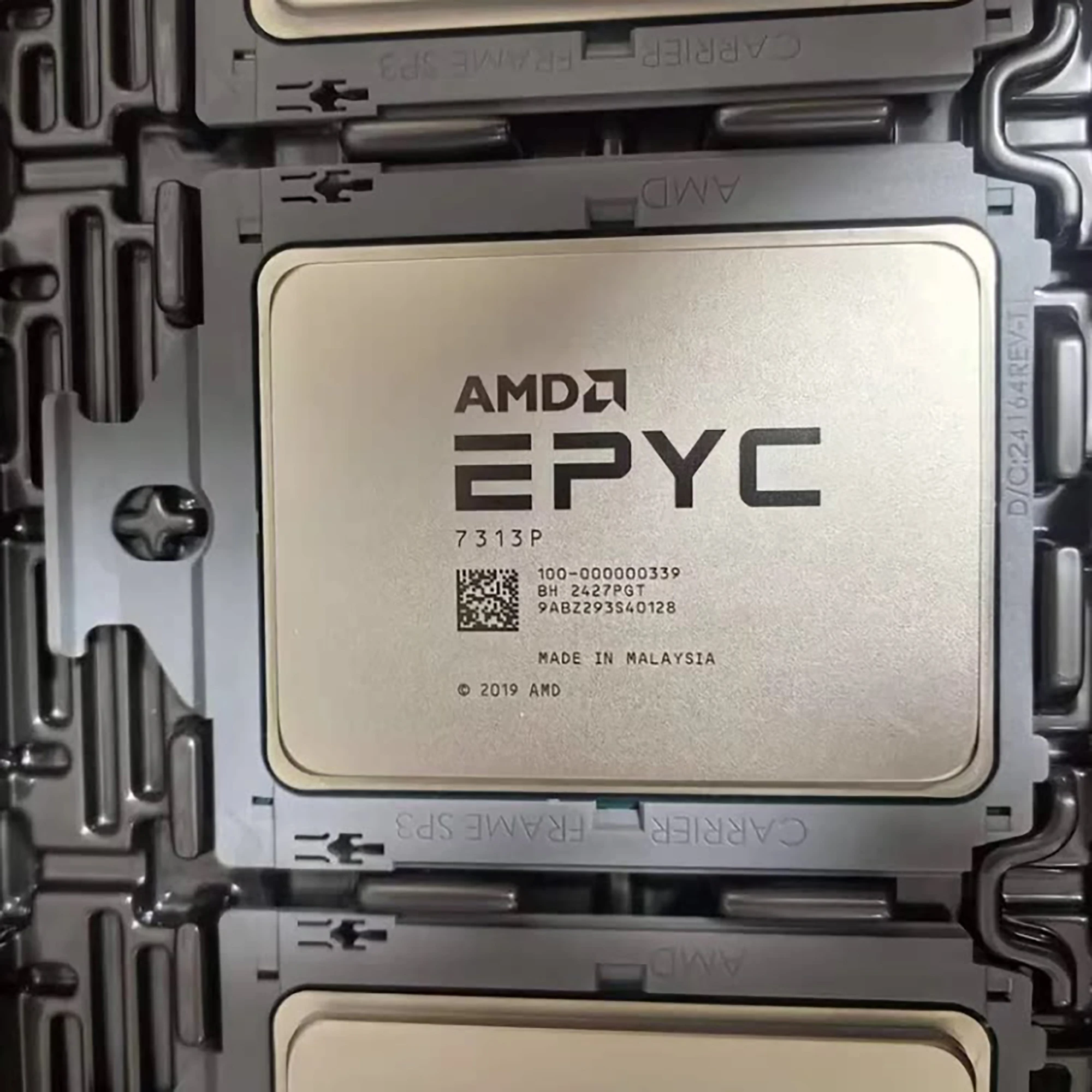
| AMD EPYC™ 7313P | 16 | 32 | Up to 3.7 GHz | 3 GHz | 128 MB | 155W |
| AMD EPYC™ 7313 | 16 | 32 | Up to 3.7 GHz | 3 GHz | 128 MB | 155W |
| AMD EPYC™ 74F3 | 24 | 48 | Up to 4 GHz | 3.2 GHz | 256 MB | 240W |
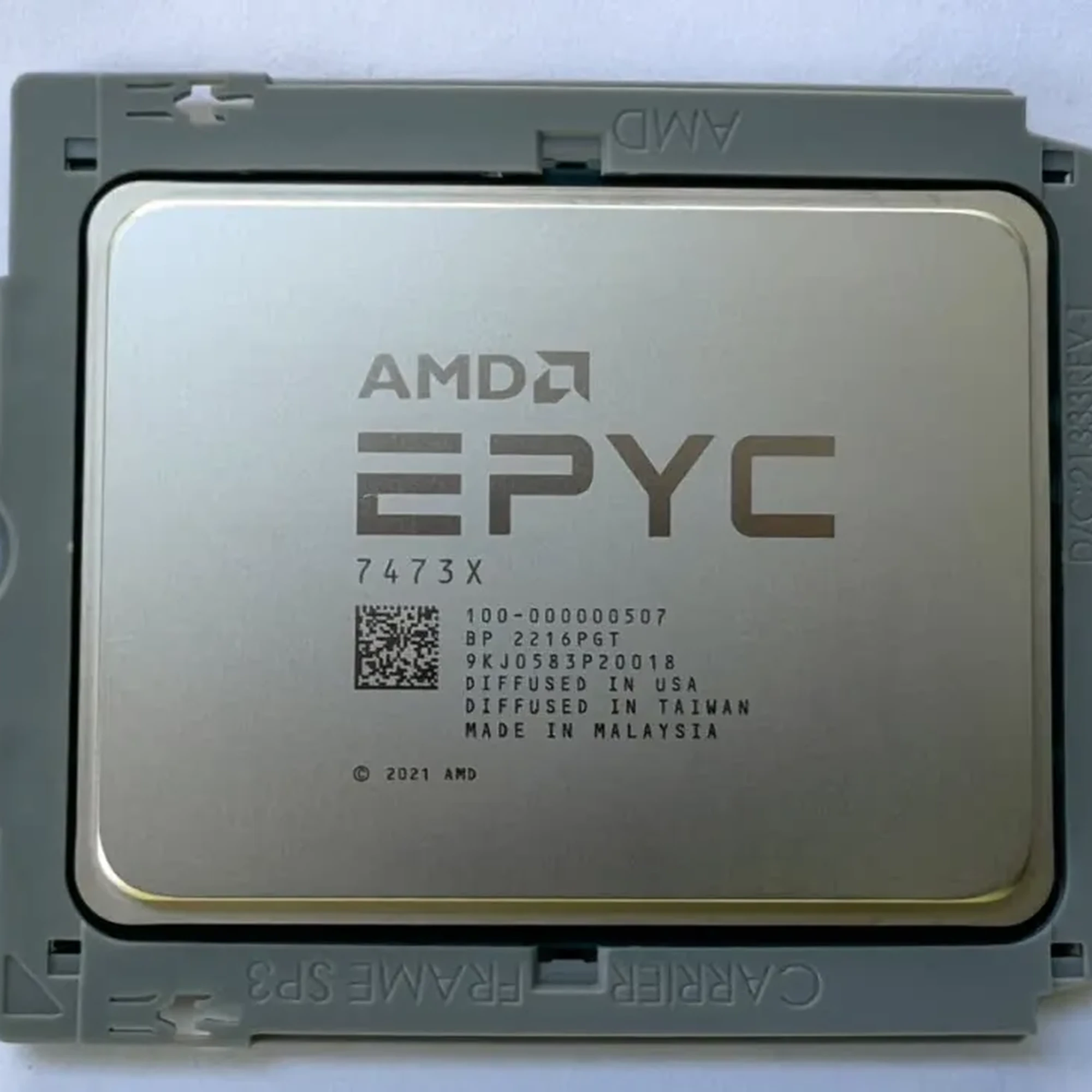
| AMD EPYC™ 7473X | 24 | 48 | Up to 3.7 GHz | 2.8 GHz | 768 MB | 240W |
| AMD EPYC™ 7443P | 24 | 48 | Up to 4 GHz | 2.85 GHz | 128 MB | 200W |
| AMD EPYC™ 7443 | 24 | 48 | Up to 4 GHz | 2.85 GHz | 128 MB | 200W |
| AMD EPYC™ 7413 | 24 | 48 | Up to 3.6 GHz | 2.65 GHz | 128 MB | 180W |
| AMD EPYC™ 7453 | 28 | 56 | Up to 3.45 GHz | 2.75 GHz | 64 MB | 225W |
| AMD EPYC™ 75F3 | 32 | 64 | Up to 4 GHz | 2.95 GHz | 256 MB | 280W |
| AMD EPYC™ 7573X | 32 | 64 | Up to 3.6 GHz | 2.8 GHz | 768 MB | 280W |
| AMD EPYC™ 7543P | 32 | 64 | Up to 3.7 GHz | 2.8 GHz | 256 MB | 225W |
| AMD EPYC™ 7543 | 32 | 64 | Up to 3.7 GHz | 2.8 GHz | 256 MB | 225W |
| AMD EPYC™ 7513 | 32 | 64 | Up to 3.65 GHz | 2.6 GHz | 128 MB | 200W |
| AMD EPYC™ 7643P | 48 | 96 | Up to 3.6 GHz | 2.3 GHz | 256 MB | 225W |
| AMD EPYC™ 7643 | 48 | 96 | Up to 3.6 GHz | 2.3 GHz | 256 MB | 225W |
| AMD EPYC™ 7663 | 56 | 112 | Up to 3.5 GHz | 2 GHz | 256 MB | 240W |
| AMD EPYC™ 7663P | 56 | 112 | Up to 3.5 GHz | 2 GHz | 256 MB | 240W |
| AMD EPYC™ 7773X | 64 | 128 | Up to 3.5 GHz | 2.2 GHz | 768 MB | 280W |
| AMD EPYC™ 7763 | 64 | 128 | Up to 3.5 GHz | 2.45 GHz | 256 MB | 280W |
| AMD EPYC™ 7713P | 64 | 128 | Up to 3.67 GHz | 2 GHz | 256 MB | 225W |
| AMD EPYC™ 7713 | 64 | 128 | Up to 3.67 GHz | 2 GHz | 256 MB | 225W |
| Weight | 1 kg |
|---|---|
| Dimensions | 20 × 20 × 10 cm |
| CPU Series | EPYC 7003 Series |
| CPU Cores | 24 |
| Threads | 48 |
| Max. Boost Clock | 4 GHz |
| Base Clock | 3.2 GHz |
| L2 Cache | 12 MB |
| L3 Cache | 256 MB |
| Default TDP | 240W |
| CPU Socket | SP3 |
| Products Status | USED |
| Warranty(Year) | 1-Year Limited |


Reviews
There are no reviews yet.