
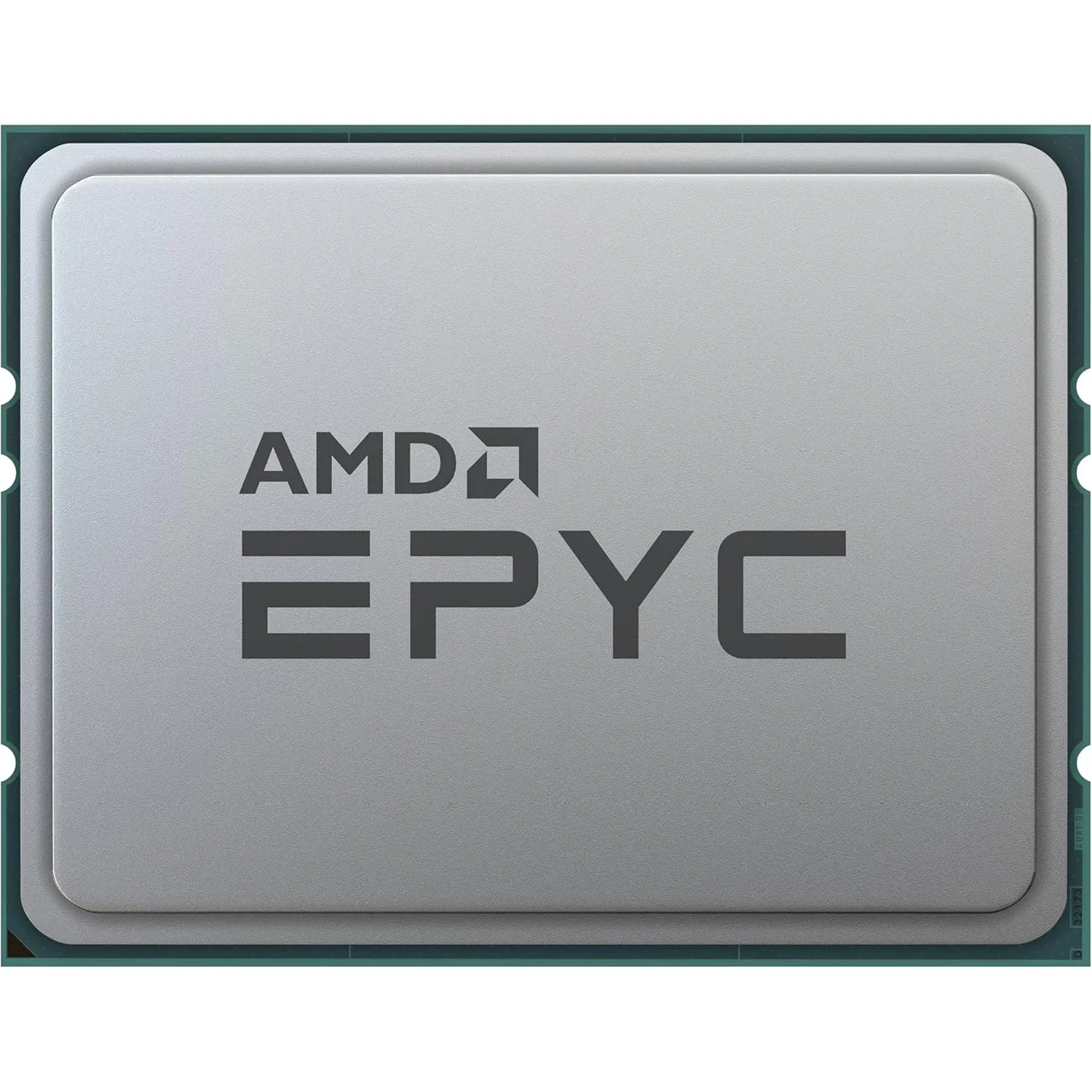
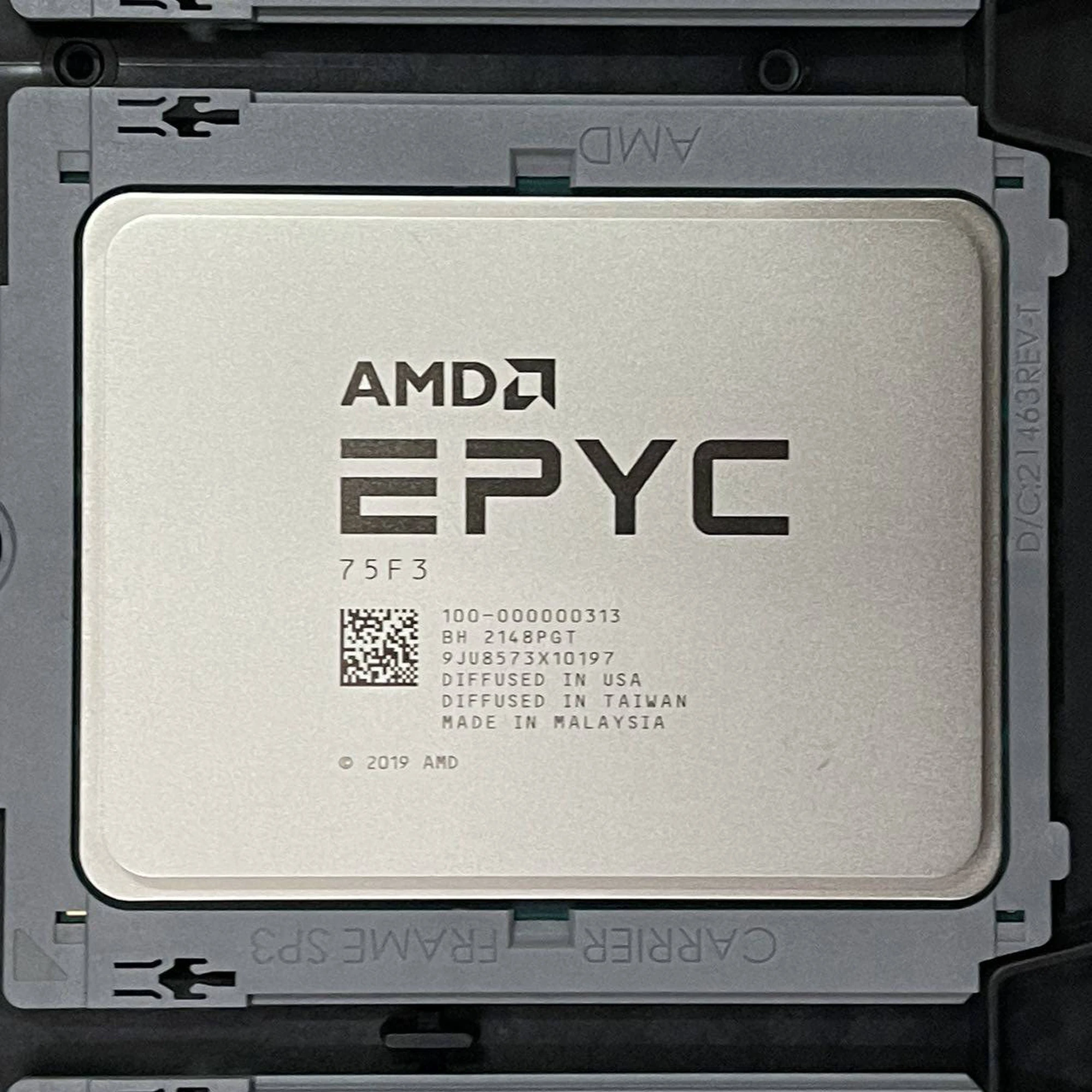
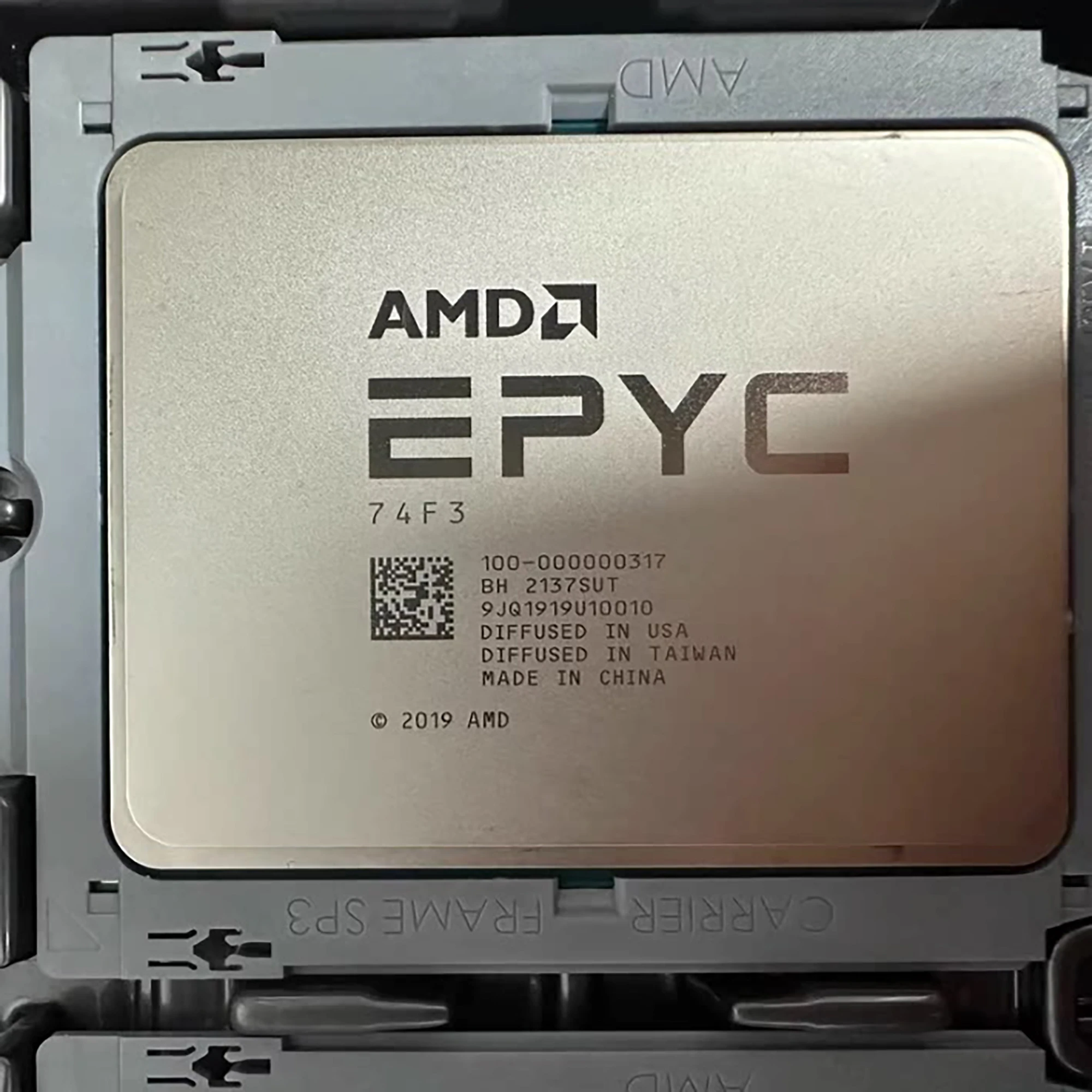
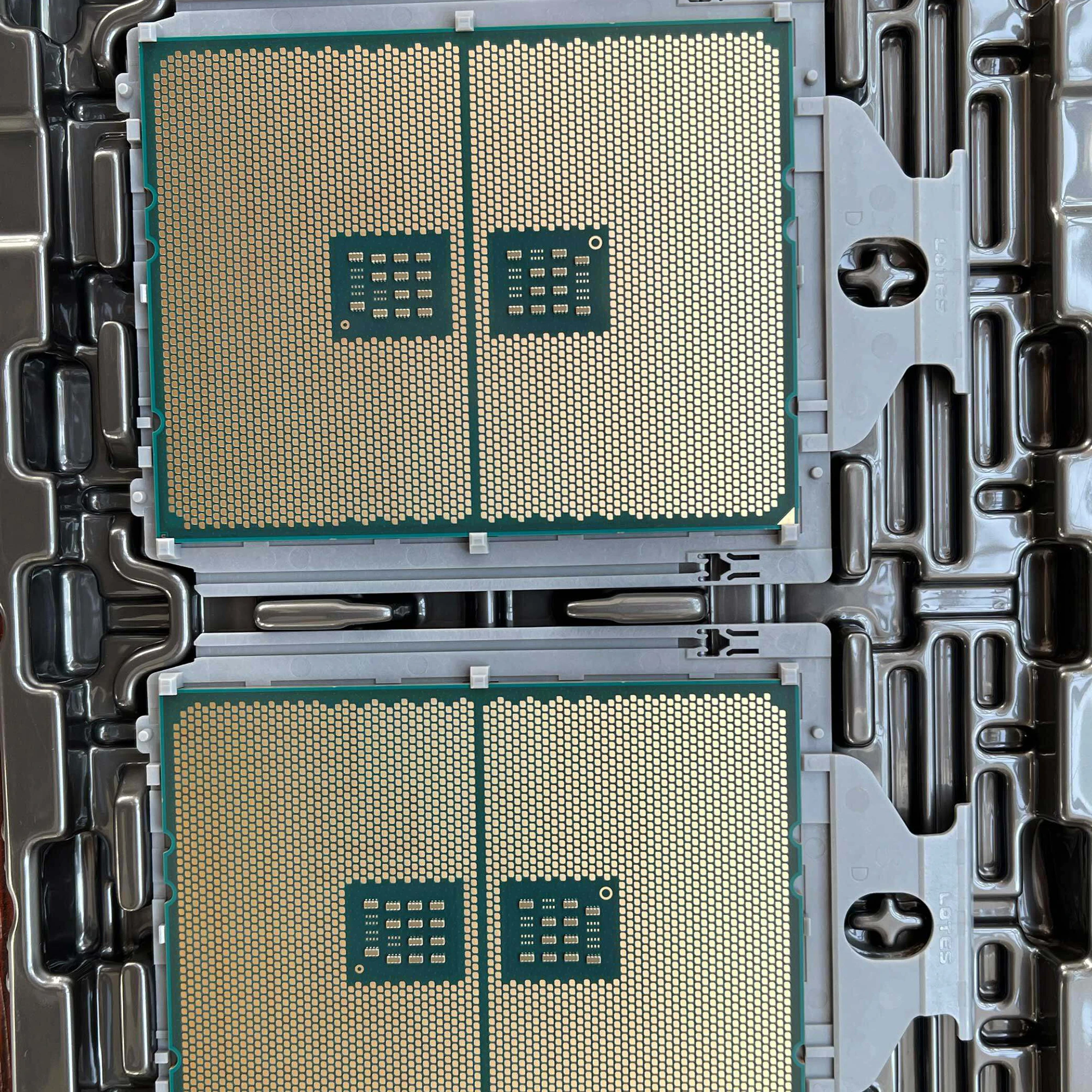
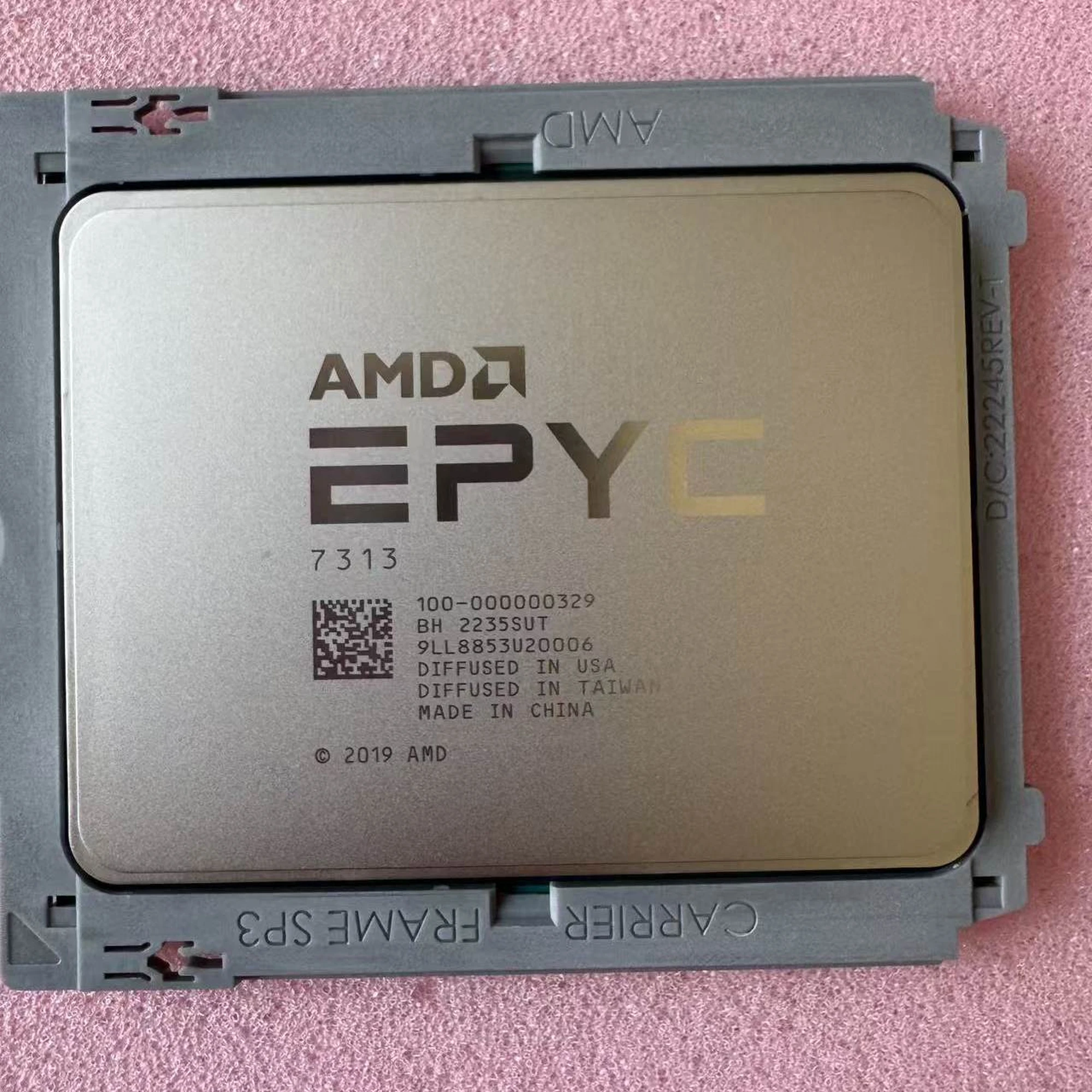
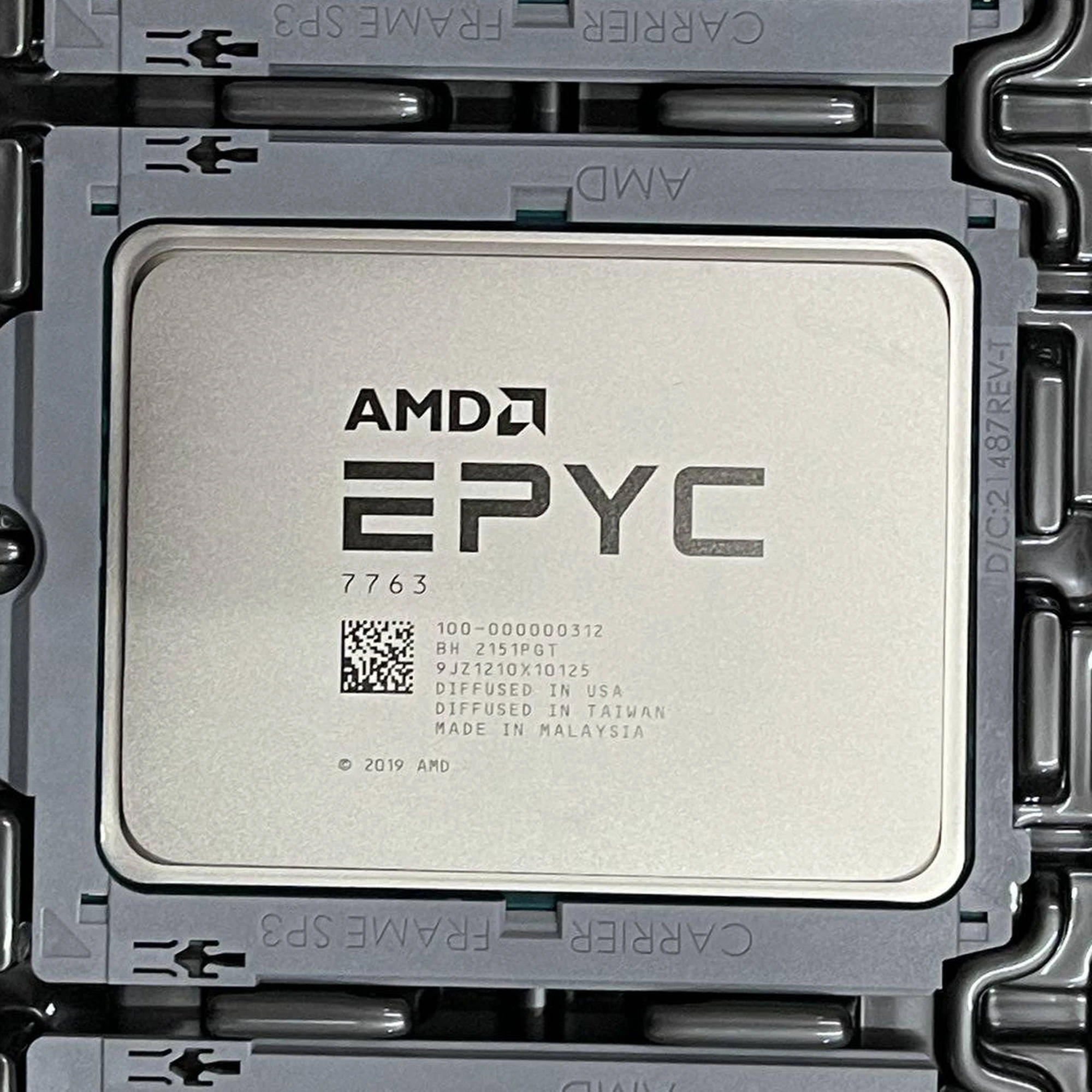
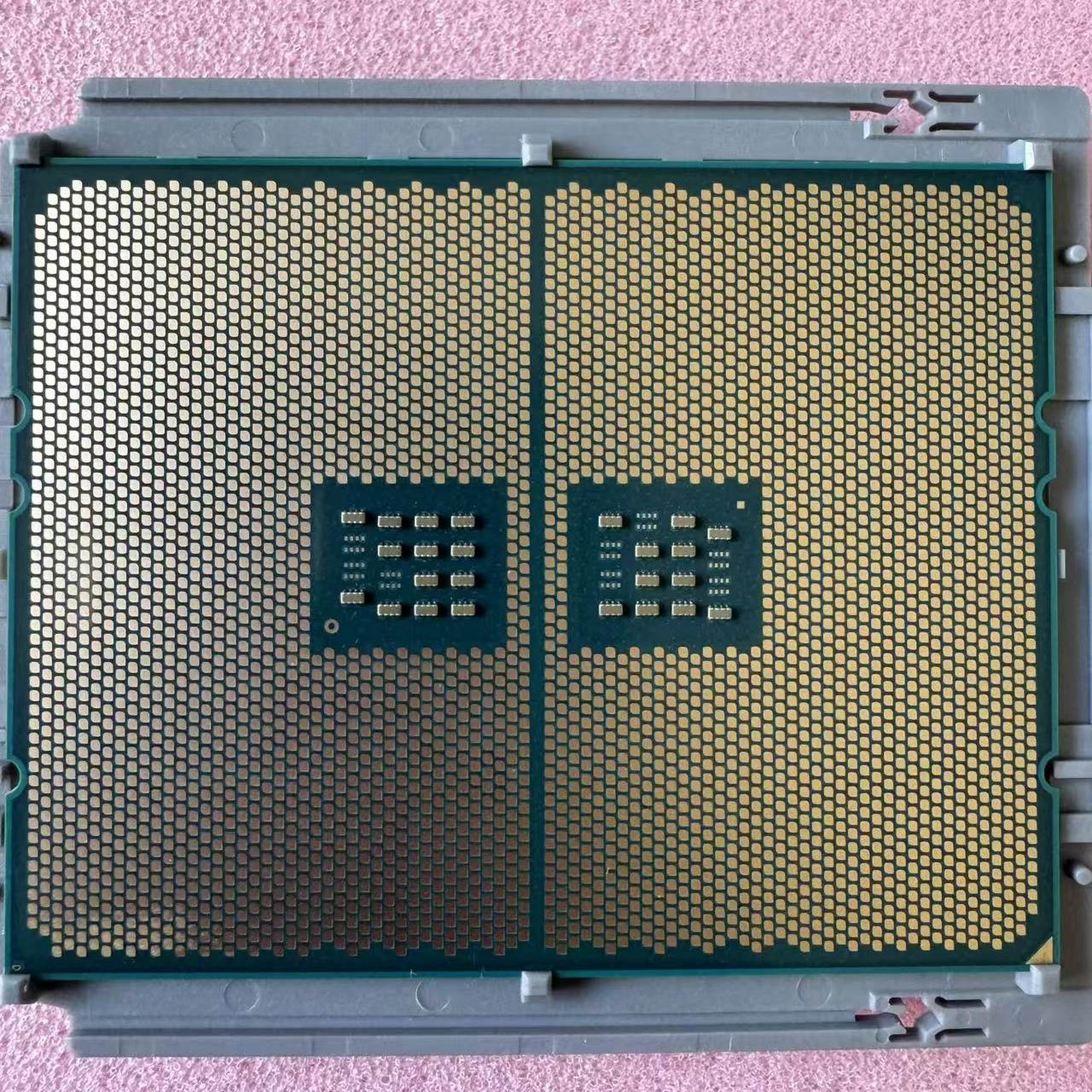
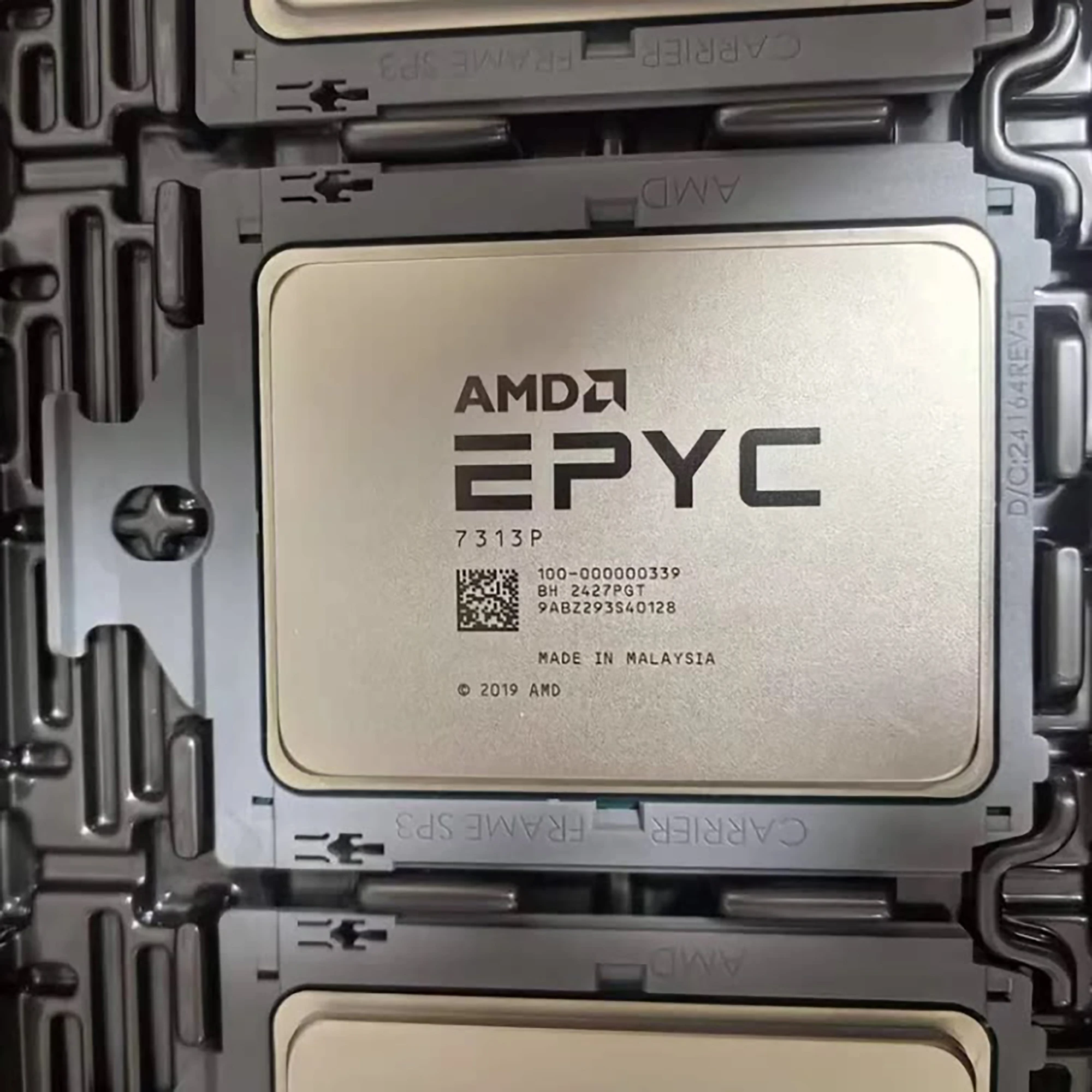
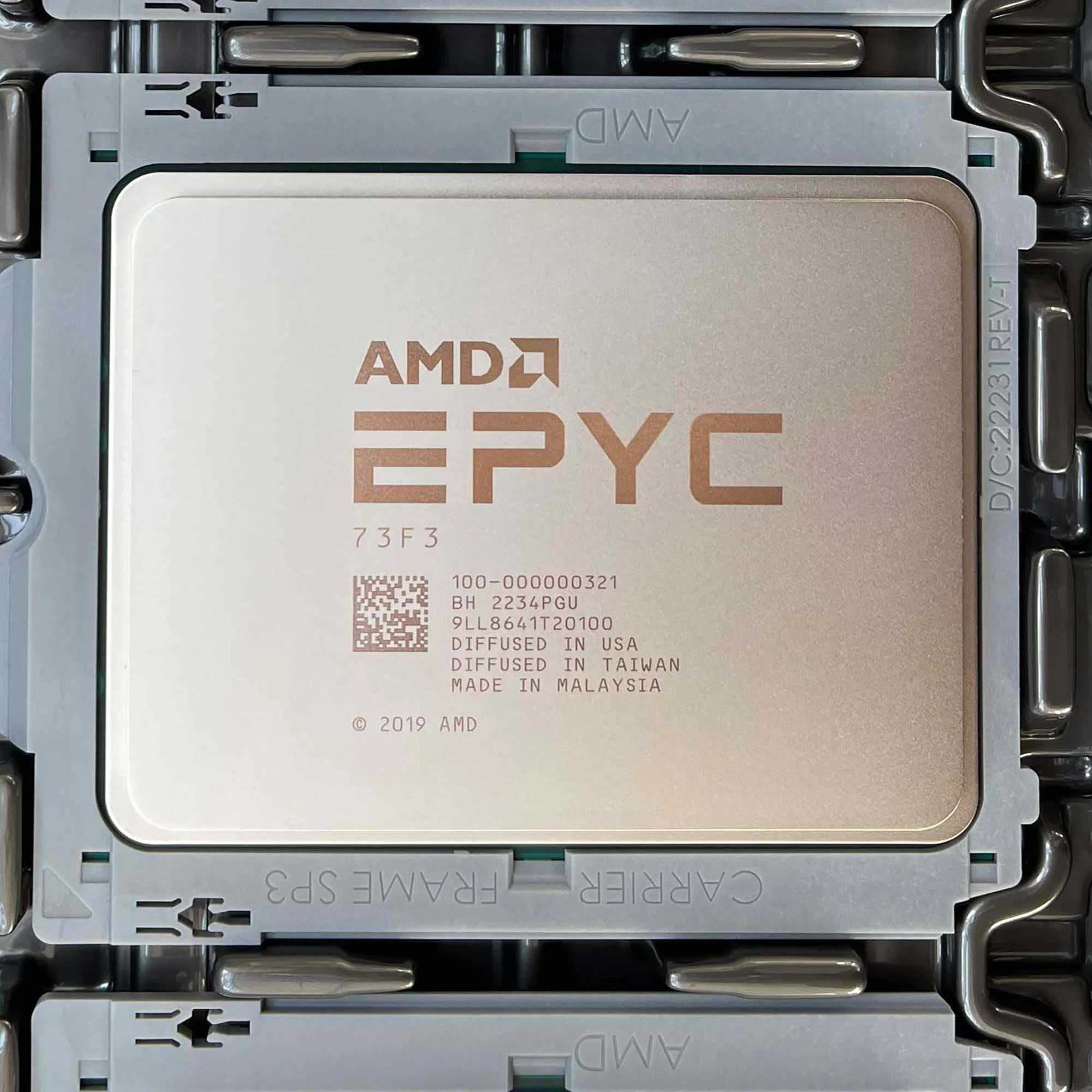

AMD EPYC 75F3 Server Processor | 32 Cores, 64 Threads, 4.0GHz Boost, 256MB L3 Cache – High-Performance Data Center CPU
| Specification | Details |
|---|---|
| Product Name | AMD EPYC 75F3 Server Processor |
| Series | AMD EPYC 7003 Series (Milan) |
| Architecture | Zen 3 |
| Fabrication Process | 7nm (TSMC) |
| Transistors | 33.2 billion |
| Cores | 32 |
| Threads | 64 (via AMD SMT) |
| Base Clock | 2.95 GHz |
| Max Boost Clock | 4.0 GHz |
| L1 Cache | 2 MB |
| L2 Cache | 16 MB |
| L3 Cache | 256 MB |
| TDP | 280W (default) |
| Configurable TDP (cTDP) | 225-280W |
| Socket | SP3 (FCLGA-4094) |
| Socket Count | 1P / 2P |
| Memory Type | DDR4 |
| Memory Channels | 8 |
| Max Memory Speed | 3200 MT/s |
| Memory Bandwidth (per socket) | 204.8 GB/s |
| Max Memory Size | 4 TB |
| PCIe Version | PCIe 4.0 |
| PCIe Lanes | 128 |
| Supported Technologies | AMD Infinity Guard, AMD Infinity Architecture, AMD-V™, AVX, AVX2, ECC Memory |
| Workload Affinity | EDA, HCI, High Performance VM Density, Per Core CAE/CFD/FEA, VDI |
| Launch Date | March 15, 2021 |
| Launch Price (MSRP) | $4,860 |
| Product IDs | Tray: 100-000000313; PIB: 100-100000313 |
The AMD EPYC 75F3 Server Processor stands as a cornerstone of enterprise-grade computing, engineered to meet the rigorous demands of modern data centers, cloud infrastructure, and high-performance workloads. As part of AMD’s 3rd Gen EPYC 7003 Series (codenamed Milan), this processor leverages the cutting-edge Zen 3 microarchitecture, delivering a significant leap in performance, efficiency, and scalability compared to its predecessors. Launched on March 15, 2021, the EPYC 75F3 is designed for organizations seeking to optimize their server infrastructure for compute-intensive tasks, virtualization, and data analytics—all while maintaining cost-effectiveness and energy efficiency.
Key Architecture & Core Performance
At the heart of the AMD EPYC 75F3 lies the Zen 3 microarchitecture, fabricated on a 7nm process by TSMC, which enables a perfect balance of performance and power efficiency. With 33.2 billion transistors and an 8x81mm² die size (plus a 416mm² I/O die on a 12nm process), the processor delivers exceptional computational density without compromising reliability. The 7nm process technology reduces power consumption while increasing transistor density, allowing for more cores and higher clock speeds in a compact form factor—critical for dense data center environments where space and energy efficiency are paramount.
The EPYC 75F3 features 32 physical cores and 64 threads, thanks to AMD’s Simultaneous Multithreading (SMT) technology, which effectively doubles the number of concurrent tasks the processor can handle. This makes it ideal for multi-threaded workloads such as virtualization, containerization, data analytics, and scientific computing. The processor operates at a base clock of 2.95GHz, ensuring consistent performance for sustained workloads, while a max boost clock of 4.0GHz delivers bursts of speed for demanding, short-duration tasks—such as peak traffic on web servers or real-time data processing.
A standout feature of the EPYC 75F3 is its 256MB of L3 cache, which is distributed across the processor’s cores to minimize latency and improve data access speeds. This large cache pool ensures that frequently accessed data is stored close to the cores, reducing the need to access slower system memory and significantly boosting performance for cache-sensitive workloads. Additionally, the processor includes 2MB of L1 cache and 16MB of L2 cache, creating a hierarchical cache system that optimizes data flow and reduces bottlenecks in high-throughput environments.
Memory & Connectivity: Speed, Bandwidth, and Versatility
The AMD EPYC 75F3 is equipped with an 8-channel DDR4 memory controller, supporting memory speeds of up to 3200 MT/s. This high memory bandwidth—204.8 GB/s per socket—ensures that the processor can efficiently handle large datasets, making it ideal for memory-intensive workloads such as in-memory databases, virtual desktop infrastructure (VDI), and high-performance computing (HPC). The processor also supports ECC (Error-Correcting Code) memory, a critical feature for mission-critical systems, as it detects and corrects memory errors to prevent data corruption and system downtime.
In terms of connectivity, the EPYC 75F3 supports PCIe 4.0 x128 lanes, delivering double the bandwidth of PCIe 3.0 and enabling faster data transfer between the processor and peripheral devices such as NVMe SSDs, network adapters, and GPUs. This high-speed connectivity is essential for modern data centers, where fast storage and network access are critical for reducing latency and improving overall system performance. The processor is compatible with the SP3 socket and supports both 1P (single-processor) and 2P (dual-processor) configurations, allowing organizations to scale their server infrastructure based on their specific needs—from small deployments to large, high-density clusters.
Workload Affinity & Real-World Performance
The AMD EPYC 75F3 is optimized for a wide range of enterprise workloads, with specific affinity for EDA (Electronic Design Automation), HCI (Hyper-Converged Infrastructure), high-performance VM density, per-core CAE/CFD/FEA (Computer-Aided Engineering/Computational Fluid Dynamics/Finite Element Analysis), and VDI. This versatility makes it a flexible choice for organizations across industries, from manufacturing and healthcare to finance and cloud services.
Independent testing has demonstrated the EPYC 75F3’s exceptional performance in real-world scenarios. In a comparison of four-node server clusters, a cluster powered by EPYC 75F3 processors handled 1,720 images in 7.2% less time than a cluster powered by Intel Xeon Platinum 8380 processors, while delivering a 7.9% higher frames per second (FPS) rate for image processing tasks—critical for machine learning workflows. Additionally, the EPYC 75F3-based cluster offered a 30.2% lower hardware and support cost, making it a more cost-effective solution for organizations looking to maximize performance per dollar.
In k-means clustering data analysis tests using Dell EMC PowerEdge R6525 servers, the EPYC 75F3 completed workloads 28.5% faster than the previous-generation AMD EPYC 7542 processor, processed up to 40% more data per hour, and delivered 24.5% better performance per dollar. These results highlight the processor’s ability to accelerate data analytics, allowing organizations to derive business insights faster and more efficiently.
Power Efficiency & Thermal Management
Despite its high performance, the AMD EPYC 75F3 maintains impressive power efficiency, with a default TDP (Thermal Design Power) of 280W and a configurable TDP (cTDP) range of 225-280W. This flexibility allows organizations to adjust the processor’s power consumption based on their workload requirements—reducing power usage during light loads and maximizing performance during peak demand. The processor’s 7nm fabrication process plays a key role in its power efficiency, as it reduces leakage current and optimizes power delivery to the cores, ensuring that every watt is used effectively.
Effective thermal management is critical for server processors, and the EPYC 75F3 is designed to work with high-performance cooling solutions to maintain optimal operating temperatures. Its FCLGA-4094 package is compatible with industry-standard cooling systems, making it easy to integrate into existing server designs. The processor’s thermal design ensures that it can operate reliably even in dense data center environments, where heat buildup is a common challenge.
Security & Reliability Features
Enterprise-grade servers require robust security and reliability, and the AMD EPYC 75F3 delivers on both fronts. The processor includes AMD Infinity Guard, a comprehensive set of security features designed to protect data and systems from advanced threats. Infinity Guard includes memory encryption, secure boot, and runtime integrity checks, ensuring that sensitive data remains protected throughout its lifecycle. Additionally, the processor supports AMD Infinity Architecture, which enables seamless communication between multiple processors in a dual-socket configuration, improving scalability and reliability.
The EPYC 75F3 also supports hardware virtualization (AMD-V™) and IOMMU virtualization (PCI passthrough), which greatly improves virtual machine performance and allows guest VMs to directly access host hardware—critical for virtualization-heavy environments such as VDI and cloud computing. The processor also supports advanced vector extensions (AVX and AVX2), which boost performance for calculation-heavy applications such as scientific computing and data analytics.
Pricing & Availability
The AMD EPYC 75F3 is available as a tray processor with a product ID of 100-000000313 (tray) and 100-100000313 (PIB). At launch, the processor had an MSRP of $4,860 per unit, making it a cost-effective choice for organizations seeking high performance without breaking the bank. The processor is widely available through authorized AMD distributors and server manufacturers, including Dell, Supermicro, and other leading vendors. Its compatibility with existing SP3 socket motherboards also makes it easy to upgrade existing server infrastructure without the need for costly hardware replacements.
Why Choose the AMD EPYC 75F3 for Your Server Infrastructure?
The AMD EPYC 75F3 stands out as a top choice for enterprise server environments due to its exceptional performance, versatility, and cost-effectiveness. Its 32 cores, 64 threads, and large cache pool make it ideal for multi-threaded and memory-intensive workloads, while its PCIe 4.0 connectivity and 8-channel DDR4 support ensure fast data transfer and efficient memory access. The processor’s Zen 3 architecture and 7nm process deliver a perfect balance of performance and power efficiency, reducing operational costs while maximizing productivity.
Whether you’re building a new data center, upgrading existing servers, or optimizing your cloud infrastructure, the EPYC 75F3 offers the scalability and reliability needed to support your organization’s growth. Its compatibility with 1P and 2P configurations, support for industry-standard technologies, and robust security features make it a flexible and future-proof solution for today’s enterprise needs. With independent testing confirming its superior performance per dollar and faster workload completion times, the AMD EPYC 75F3 is a smart investment for any organization looking to gain a competitive edge through their server infrastructure.
Recommended Motherboards for AMD EPYC 7002/7003 SP3 Processors
| Model | Brand | CPU Configuration | Memory Slots | Max Memory | LAN | PCIe Expansion | Storage | Form Factor | BMC |
|---|---|---|---|---|---|---|---|---|---|
| MZ72-HB2 | GIGABYTE | Dual SP3 | 16×DDR4 | 2TB | 2×10G + 1×Mgmt LAN | 5×PCIe 4.0 x16/x8 | 5×SlimSAS, 1×M.2 | E-ATX | AST2600 |
| MZ32-AR0 | GIGABYTE | Single SP3 | 16×DDR4 | 2TB | 2×1G (Intel I350) | 7×PCIe 4.0/3.0 x16/x8 | 6×SlimSAS, 2×M.2 | E-ATX | AST2600 |
| MZ71-CE1 | GIGABYTE | Dual SP3 | 16×DDR4 | 2TB | 2×1G (BCM5720) + Mgmt LAN | 5×PCIe 4.0 x16/x8 | 3×SlimSAS, 4×SATA | E-ATX | AST2600 |
| ROMED8-2T/BCM | ASRock Rack | Single SP3 | 8×DDR4 | 256GB | 2×10G (Intel X550) + IPMI | 7×PCIe 4.0 x16 | 10×SATA, 2×M.2 | ATX | AST2500 |
| ROMED4ID-2T | ASRock Rack | Single SP3 | 4×DDR4 | 256GB | 2×10G (Intel X550) + IPMI | 1×PCIe 4.0 x16 | 16×SATA, 1×M.2 | Mini-ITX | AST2500 |
| ROME2D16-2T | ASRock Rack | Dual SP3 | 16×DDR4 | 4TB | 2×10G (Intel X550) + IPMI | 5×PCIe 4.0 x16 + 1×x8 | 2×SlimSAS, 2×OcuLink, 2×M.2 | EEB | AST2600 |
| ROME2D32GM-2T | ASRock Rack | Dual SP3 | 32×DDR4 | 8TB | 2×10G + IPMI | 6×PCIe 4.0 x16 | 19×SlimSAS, 1×M.2 | EEB | AST2600 |
| H12SSL-NT | Supermicro | Single SP3 | 8×DDR4 | 2TB | 2×10G (BCM57416) + IPMI | 5×PCIe 4.0 x16/x8 | 2×SlimSAS (SATA/NVMe) | ATX | AST2500 |
| H12SSL-i | Supermicro | Single SP3 | 8×DDR4 | 2TB | 2×1G (BCM5720) | 5×PCIe 4.0 x16, 2×x8 | 8×SATA, 2×M.2 | ATX | AST2500 |
| H12DSi-N6 | Supermicro | Dual SP3 | 16×DDR4 | 4TB | 2×1G + IPMI | 3×PCIe 4.0 x16, 3×x8 | 10×SATA, 1×M.2 | E-ATX | AST2600 |
AMD EPYC 7003 Series Processors Specifications
| Name | # of CPU Cores | # of Threads | Max. Boost Clock | Base Clock | L3 Cache | Default TDP |
| AMD EPYC™ 7203P | 8 | 16 | Up to 3.4 GHz | 2.8 GHz | 64 MB | 120W |
| AMD EPYC™ 7203 | 8 | 16 | Up to 3.4 GHz | 2.8 GHz | 64 MB | 120W |
| AMD EPYC™ 72F3 | 8 | 16 | Up to 4.1 GHz | 3.7 GHz | 256 MB | 180W |
| AMD EPYC™ 7303P | 16 | 32 | Up to 3.4 GHz | 2.4 GHz | 64 MB | 130W |
| AMD EPYC™ 7303 | 16 | 32 | Up to 3.4 GHz | 2.4 GHz | 64 MB | 130W |
| AMD EPYC™ 73F3 | 16 | 32 | Up to 4 GHz | 3.5 GHz | 256 MB | 240W |
| AMD EPYC™ 7373X | 16 | 32 | Up to 3.8 GHz | 3.05 GHz | 768 MB | 240W |
| AMD EPYC™ 7343 | 16 | 32 | Up to 3.9 GHz | 3.2 GHz | 128 MB | 190W |
| AMD EPYC™ 7313P | 16 | 32 | Up to 3.7 GHz | 3 GHz | 128 MB | 155W |
| AMD EPYC™ 7313 | 16 | 32 | Up to 3.7 GHz | 3 GHz | 128 MB | 155W |
| AMD EPYC™ 74F3 | 24 | 48 | Up to 4 GHz | 3.2 GHz | 256 MB | 240W |
| AMD EPYC™ 7473X | 24 | 48 | Up to 3.7 GHz | 2.8 GHz | 768 MB | 240W |
| AMD EPYC™ 7443P | 24 | 48 | Up to 4 GHz | 2.85 GHz | 128 MB | 200W |
| AMD EPYC™ 7443 | 24 | 48 | Up to 4 GHz | 2.85 GHz | 128 MB | 200W |
| AMD EPYC™ 7413 | 24 | 48 | Up to 3.6 GHz | 2.65 GHz | 128 MB | 180W |
| AMD EPYC™ 7453 | 28 | 56 | Up to 3.45 GHz | 2.75 GHz | 64 MB | 225W |
| AMD EPYC™ 75F3 | 32 | 64 | Up to 4 GHz | 2.95 GHz | 256 MB | 280W |
| AMD EPYC™ 7573X | 32 | 64 | Up to 3.6 GHz | 2.8 GHz | 768 MB | 280W |
| AMD EPYC™ 7543P | 32 | 64 | Up to 3.7 GHz | 2.8 GHz | 256 MB | 225W |
| AMD EPYC™ 7543 | 32 | 64 | Up to 3.7 GHz | 2.8 GHz | 256 MB | 225W |
| AMD EPYC™ 7513 | 32 | 64 | Up to 3.65 GHz | 2.6 GHz | 128 MB | 200W |
| AMD EPYC™ 7643P | 48 | 96 | Up to 3.6 GHz | 2.3 GHz | 256 MB | 225W |
| AMD EPYC™ 7643 | 48 | 96 | Up to 3.6 GHz | 2.3 GHz | 256 MB | 225W |
| AMD EPYC™ 7663 | 56 | 112 | Up to 3.5 GHz | 2 GHz | 256 MB | 240W |
| AMD EPYC™ 7663P | 56 | 112 | Up to 3.5 GHz | 2 GHz | 256 MB | 240W |
| AMD EPYC™ 7773X | 64 | 128 | Up to 3.5 GHz | 2.2 GHz | 768 MB | 280W |
| AMD EPYC™ 7763 | 64 | 128 | Up to 3.5 GHz | 2.45 GHz | 256 MB | 280W |
| AMD EPYC™ 7713P | 64 | 128 | Up to 3.67 GHz | 2 GHz | 256 MB | 225W |
| AMD EPYC™ 7713 | 64 | 128 | Up to 3.67 GHz | 2 GHz | 256 MB | 225W |
| Weight | 1 kg |
|---|---|
| Dimensions | 20 × 20 × 10 cm |
| CPU Series | EPYC 7003 Series |
| CPU Cores | 32 |
| Threads | 64 |
| Max. Boost Clock | 4 GHz |
| Base Clock | 2.95 GHz |
| L2 Cache | 16 MB |
| L3 Cache | 256 MB |
| Default TDP | 280W |
| CPU Socket | SP3 |
| Products Status | USED |
| Warranty(Year) | 1-Year Limited |


Reviews
There are no reviews yet.