
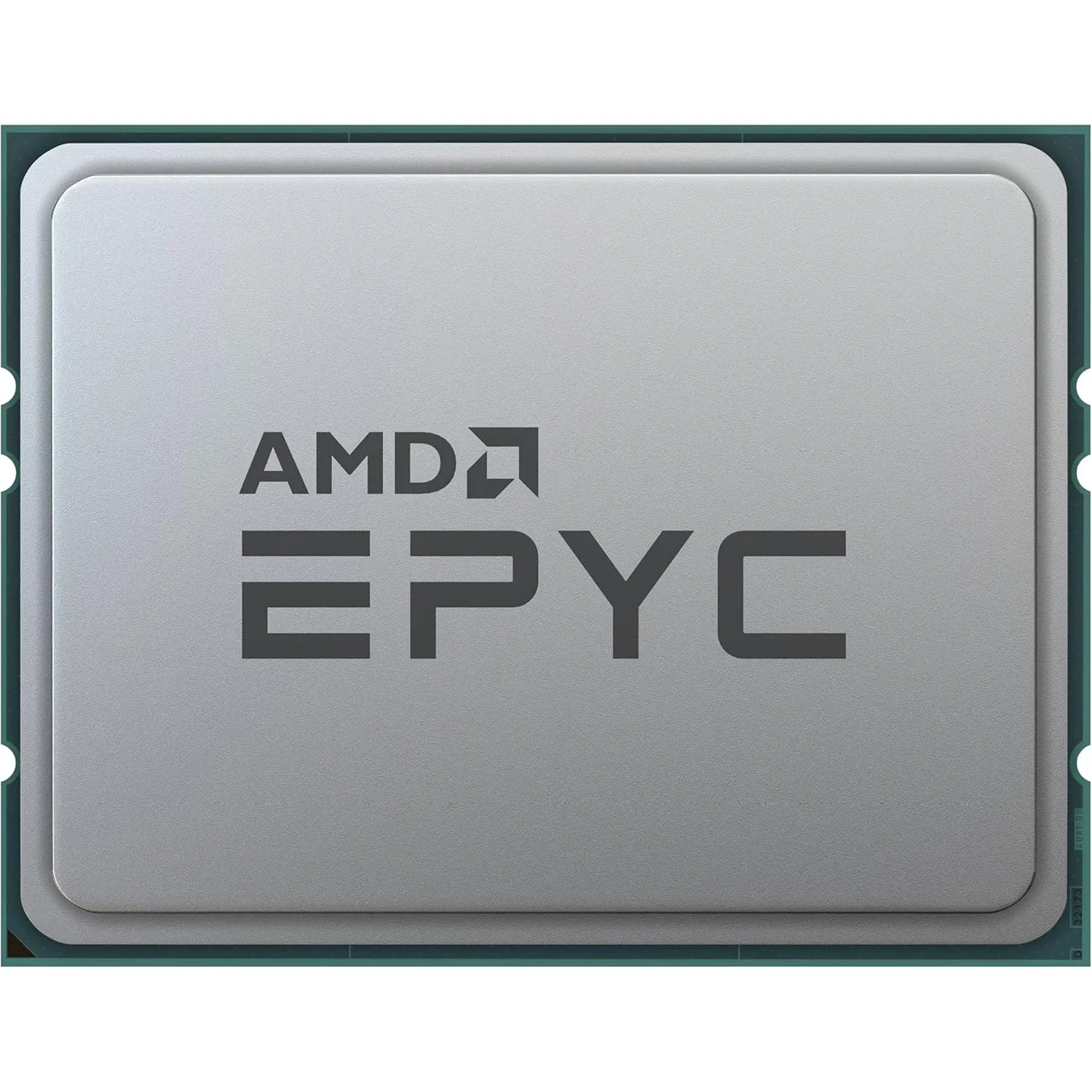
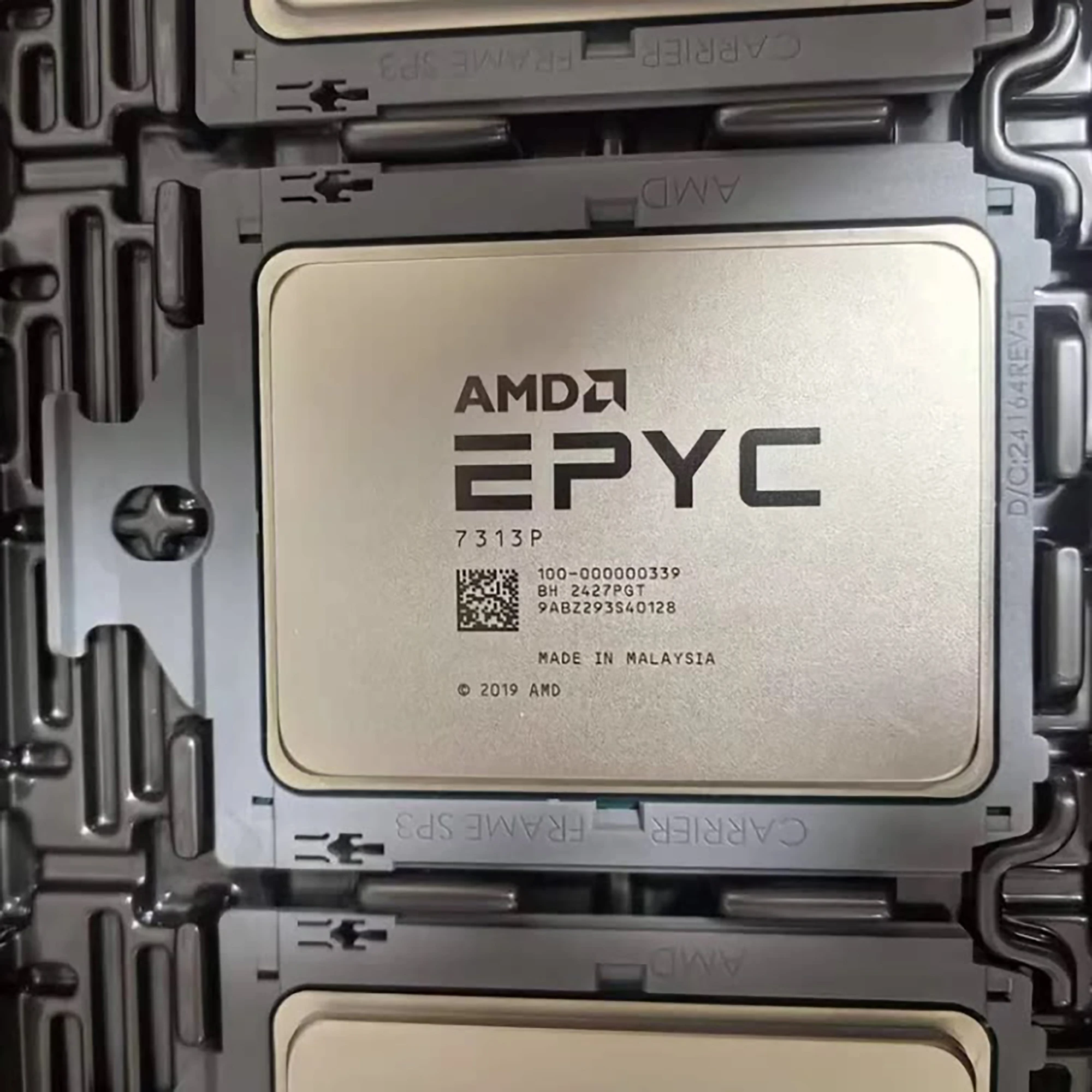
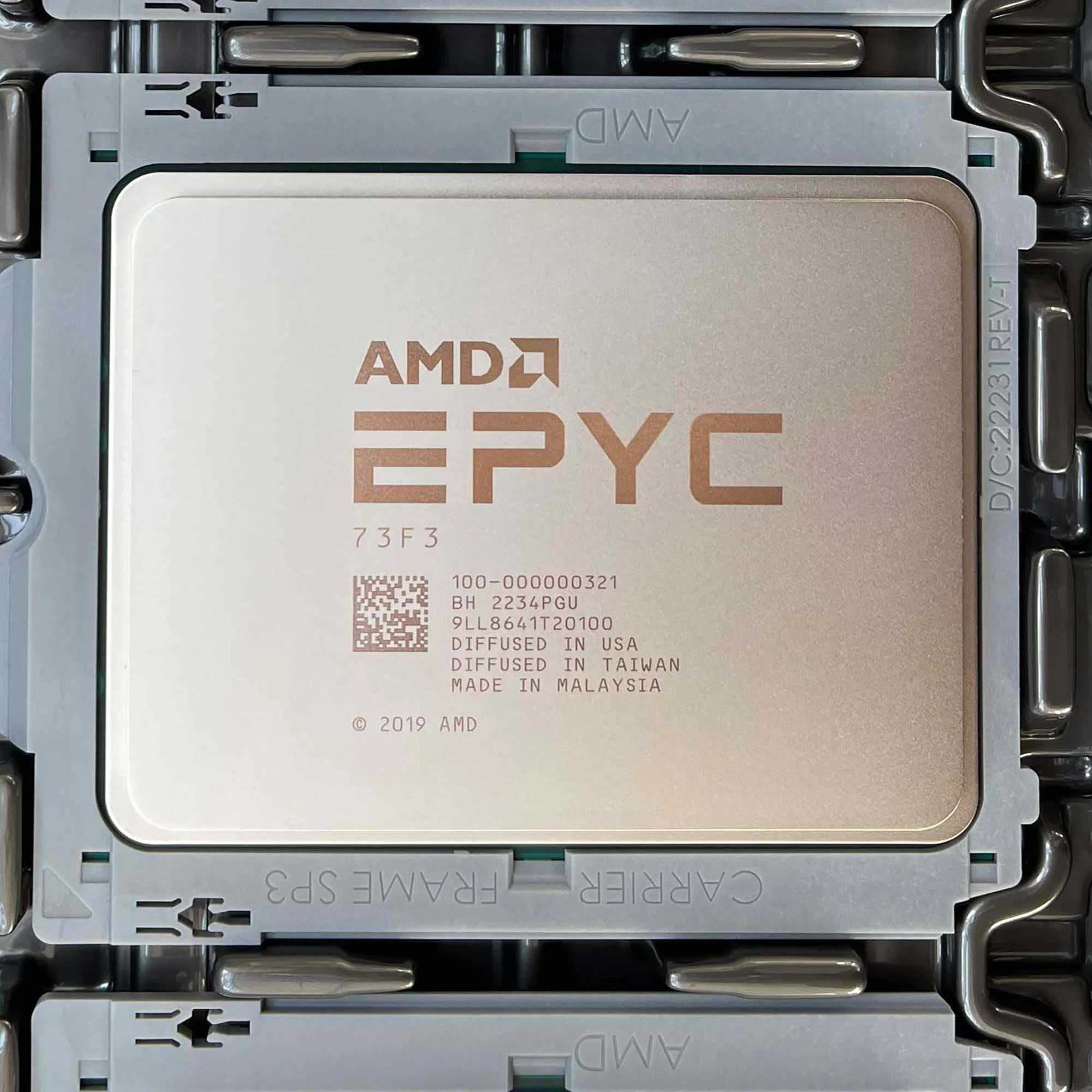
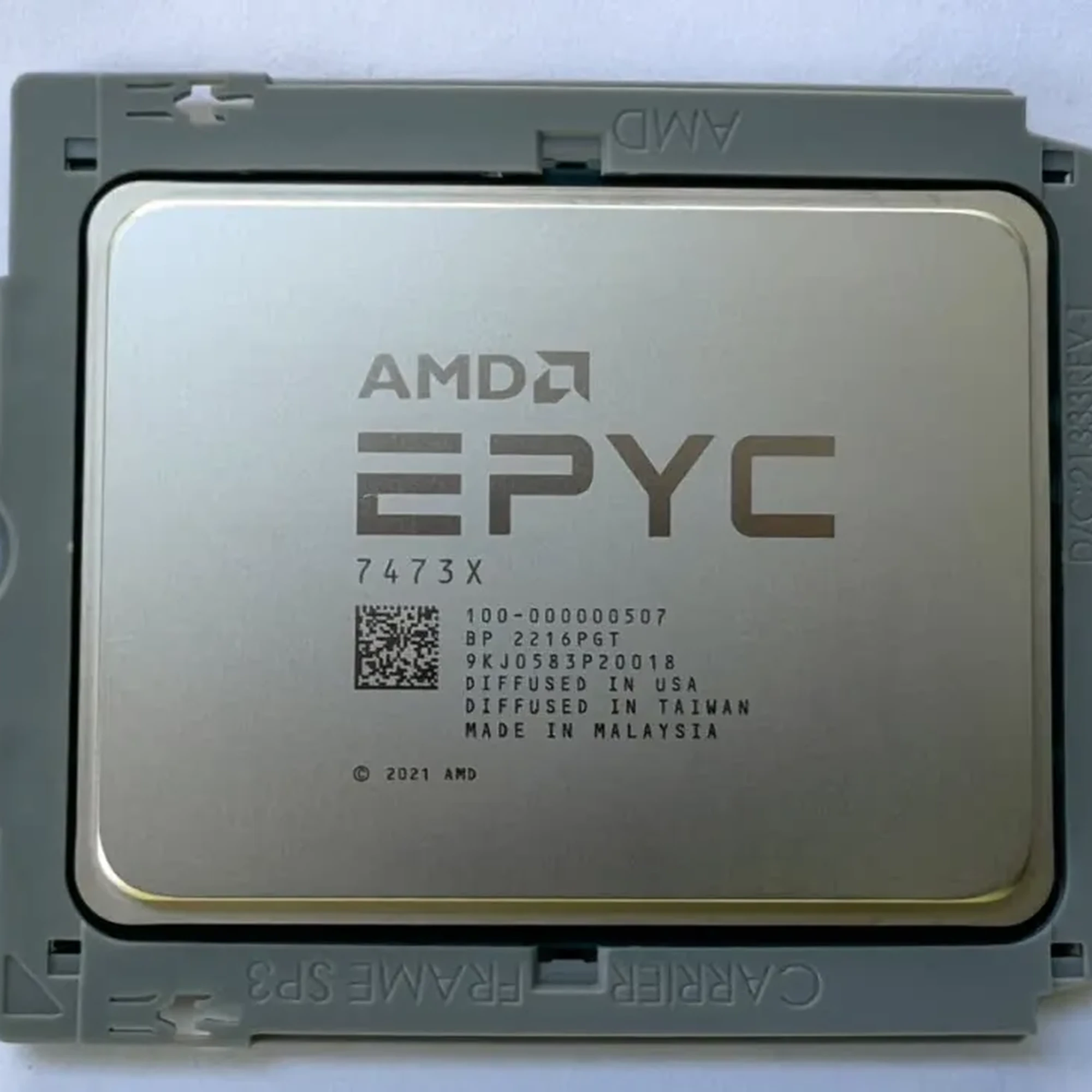
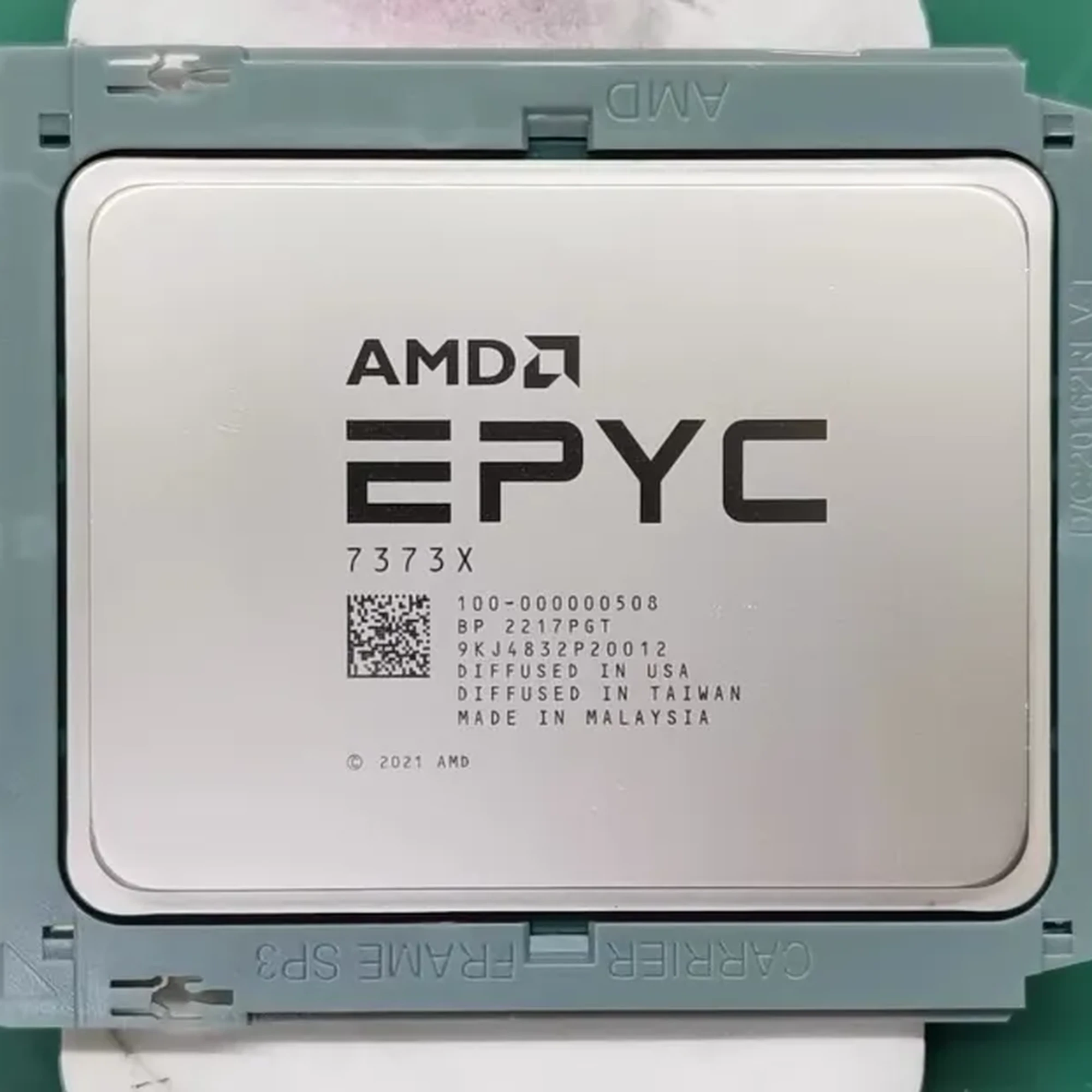

AMD EPYC 7313P Server Processor | 16 Cores, 32 Threads, 3.7GHz Boost, PCIe 4.0 | High-Efficiency Server CPU
| Specification | Details |
|---|---|
| Processor Model | AMD EPYC 7313P |
| Product Series | AMD EPYC 7003 Series |
| Microarchitecture | Zen 3 |
| Manufacturing Process | 7nm+ |
| CPU Cores | 16 |
| Threads | 32 |
| Base Clock Speed | 3 GHz |
| Maximum Boost Clock | Up to 3.7 GHz |
| L1 Cache | 1 MB |
| L2 Cache | 8 MB |
| L3 Cache | 128 MB |
| TDP (Default) | 155 W |
| Configurable TDP (cTDP) | 155 – 180 W |
| Socket Type | SP3 |
| Socket Count | 1P (Single Socket) |
| Memory Type | DDR4 |
| Memory Channels | 8 |
| Maximum Memory Speed | 3200 MT/s |
| Per Socket Memory Bandwidth | 204.8 GB/s |
| Maximum Memory Size | 4 TB |
| PCIe Version | PCIe 4.0 |
| PCIe Lanes | 128 |
| Launch Date | March 15, 2021 |
| 1kU Pricing | $913 USD |
| Product ID (Boxed) | 100-100000339WOF |
| Product ID (Tray) | 100-000000339 |
| Supported Technologies | AMD Infinity Guard, AMD Infinity Architecture, AMD Virtualization (AMD-V™), FMA3, AVX, AVX2, AES-NI |
| Workload Affinity | EDA, Media Streaming, Value per Core CAE, CFD, FEA |
The AMD EPYC 7313P Server Processor is a standout offering in AMD’s EPYC 7003 Series, engineered to deliver a perfect balance of performance, power efficiency, and cost-effectiveness for modern data centers, enterprise servers, and high-demand WordPress-hosted applications. Launched on March 15, 2021, this processor is built on AMD’s cutting-edge Zen 3 microarchitecture, leveraging a 7nm+ manufacturing process to deliver exceptional multi-threaded performance while maintaining a manageable power footprint – a critical advantage for businesses looking to optimize their data center operations and reduce energy costs.
Key Architecture & Core Performance
At the heart of the AMD EPYC 7313P lies a 16-core, 32-thread configuration, powered by AMD’s Zen 3 architecture – a significant upgrade over the previous Zen 2 generation, offering up to 19% improvement in Instructions Per Cycle (IPC). This architectural enhancement translates to faster processing of complex workloads, making the EPYC 7313P ideal for multi-tenant hosting, virtualization, and compute-heavy backend tasks that are common in enterprise environments and high-traffic WordPress sites.
The processor features a base clock speed of 3GHz, with a maximum boost clock of up to 3.7GHz, ensuring that it can handle peak workloads with ease while operating efficiently during lighter usage periods. Unlike some server processors that prioritize either core count or clock speed, the EPYC 7313P strikes a balance between the two, making it versatile enough to support a wide range of use cases – from running multiple virtual machines (VMs) to powering real-time analytics and database management.
Benchmark results underscore the EPYC 7313P’s performance capabilities. According to Geekbench 6, the processor achieves a single-core score of 1566 and a multi-core score of 10745, placing it among the top mid-range server processors for multi-threaded performance. In PassMark testing, it scores 2681 in single-threaded performance and 41609 in multi-threaded performance, further confirming its ability to handle demanding server workloads with consistency. These benchmarks make it clear that the EPYC 7313P is more than capable of supporting high-traffic WordPress sites, enterprise databases, and virtualized environments without compromising on speed or reliability.
Cache & Memory Performance
A critical component of server processor performance is cache, and the AMD EPYC 7313P does not disappoint. It comes equipped with 128MB of L3 cache, a substantial amount that minimizes data latency by keeping frequently accessed data close to the CPU cores. This large L3 cache is particularly beneficial for multi-threaded workloads, such as virtualization and database management, where multiple cores need quick access to shared data. Additionally, the processor features 1MB of L1 cache and 8MB of L2 cache, creating a hierarchical cache system that optimizes data access and further enhances performance.
In terms of memory support, the EPYC 7313P offers robust capabilities designed for server environments. It supports DDR4 memory with a maximum speed of 3200 MT/s, utilizing 8 memory channels to deliver a per-socket memory bandwidth of 204.8 GB/s – a significant advantage for memory-intensive workloads like EDA (Electronic Design Automation), CAE (Computer-Aided Engineering), and real-time analytics. The processor can support a maximum memory size of up to 4TB, providing ample capacity for large databases, virtual machine images, and other memory-heavy applications commonly used in enterprise settings. ECC memory support is also included, ensuring data integrity and reliability – a must for mission-critical server operations where data loss or corruption could have severe consequences.
Connectivity & Expansion Capabilities
The AMD EPYC 7313P is equipped with PCIe 4.0 technology, offering 128 PCIe lanes to support high-speed peripherals, storage, and expansion cards. PCIe 4.0 provides double the bandwidth of PCIe 3.0, enabling ultra-fast NVMe storage, high-performance GPUs for AI inference, and advanced networking cards – all of which are essential for modern data centers and enterprise servers. This level of connectivity makes the EPYC 7313P highly flexible, allowing businesses to customize their server configurations to meet specific workload requirements, whether that involves adding more storage, expanding networking capabilities, or integrating GPU acceleration for AI and machine learning tasks.
The processor uses the SP3 socket and supports a single-socket (1P) configuration, making it suitable for compact server designs that prioritize space efficiency. This socket compatibility ensures broad compatibility with a wide range of server motherboards, giving businesses the flexibility to choose hardware that aligns with their budget and performance needs. Additionally, the EPYC 7313P features AMD’s Configurable TDP (cTDP) technology, allowing IT administrators to adjust the processor’s power consumption between 155W and 180W based on workload demands – a useful feature for optimizing power usage in data centers where energy efficiency is a top priority.
Workload Affinity & Use Cases
The AMD EPYC 7313P is specifically optimized for a range of enterprise workloads, making it a versatile choice for businesses across industries. Its workload affinity includes EDA, media streaming, value-per-core CAE, CFD (Computational Fluid Dynamics), and FEA (Finite Element Analysis) – all of which require high multi-threaded performance and reliable memory access. Beyond these specialized use cases, the processor excels in several common server scenarios:
Virtualization & Private Cloud: With 16 cores and 32 threads, the EPYC 7313P can run dense VM clusters and containerized applications with low latency and high thread throughput. This makes it ideal for businesses looking to deploy private cloud environments or virtualize their IT infrastructure to improve resource utilization and reduce hardware costs.
Enterprise Databases: The processor’s large L3 cache, high memory bandwidth, and multi-threaded performance make it well-suited for hosting PostgreSQL, MariaDB, and NoSQL databases. It delivers stable performance for databases requiring fast memory access, ensuring that critical business data is processed and retrieved quickly – a key requirement for customer-facing applications and internal business systems.
AI Inference & Model Hosting: While primarily a CPU-focused solution, the EPYC 7313P can run CPU-based inference tasks and can be expanded with NVIDIA H100, A100, L40S, or AMD MI210 GPUs for GPU acceleration. This flexibility makes it a viable option for businesses looking to deploy AI and machine learning models without investing in dedicated GPU servers upfront.
Blockchain Validator & RPC Nodes: The processor’s PCIe 4.0 support and high multi-threaded performance make it suitable for hosting Ethereum, Polygon, and Solana validator or archival nodes. When paired with unmetered bandwidth and NVMe storage, it can handle the high transaction volumes and data storage requirements of blockchain networks.
WordPress Enterprise Hosting: For high-traffic WordPress sites, membership platforms, and WooCommerce stores, the EPYC 7313P provides the performance needed to handle concurrent visitors, dynamic content generation, and database queries. Its power efficiency and multi-threaded performance ensure that WordPress sites load quickly and remain responsive even during peak traffic periods – a critical factor for user experience and SEO rankings.
Security & Reliability Features
Security is a top priority for server processors, and the AMD EPYC 7313P includes several advanced security features to protect sensitive data and ensure system integrity. It supports AMD Infinity Guard, a comprehensive set of security technologies designed to defend against modern cyber threats. AMD Infinity Guard includes features like Secure Memory Encryption (SME), which encrypts the entire system memory to prevent unauthorized access, and Secure Encrypted Virtualization (SEV), which encrypts virtual machine memory to isolate VMs from each other and the host system – a critical feature for multi-tenant hosting environments.
Additionally, the processor supports AMD Infinity Architecture, which enables high-speed interconnects between CPU cores, memory, and I/O, ensuring efficient data transfer and system stability. This architecture also enhances reliability by reducing bottlenecks and minimizing the risk of system crashes or performance degradation during high workloads. The EPYC 7313P’s 155W TDP is optimized for 24/7 operation, making it suitable for mission-critical servers that require maximum uptime – a key requirement for data centers and enterprise applications where downtime can result in significant financial losses.
Pricing & Value Proposition
At a launch price of $913 per unit (1kU pricing), the AMD EPYC 7313P offers exceptional value for businesses looking to balance performance and cost. Compared to competing server processors in the same price range, the EPYC 7313P delivers more cores, higher cache capacity, and better memory bandwidth – making it a cost-effective choice for mid-range server deployments. Its power efficiency also contributes to long-term cost savings, as lower power consumption reduces energy bills and cooling costs in data centers.
For businesses running WordPress sites or enterprise applications, the EPYC 7313P’s versatility and performance make it a smart investment. It can handle a wide range of workloads without requiring expensive upgrades, and its compatibility with standard server hardware ensures that it can be integrated into existing infrastructure with minimal disruption. Whether you’re building a new data center, upgrading existing servers, or deploying a high-performance WordPress hosting environment, the EPYC 7313P offers the performance, reliability, and value needed to support your business goals.
Conclusion
The AMD EPYC 7313P Server Processor is a powerful, versatile, and cost-effective solution for modern data centers and enterprise environments. Built on AMD’s Zen 3 architecture, it delivers exceptional multi-threaded performance, robust memory and connectivity capabilities, and advanced security features – all while maintaining a power-efficient 155W TDP. Its 16-core, 32-thread configuration, 128MB L3 cache, PCIe 4.0 support, and DDR4 memory capabilities make it ideal for virtualization, database management, media streaming, AI inference, and high-traffic WordPress sites.
Whether you’re a small business looking to upgrade your server infrastructure or a large enterprise deploying a scalable data center, the EPYC 7313P offers the performance and reliability needed to support your most demanding workloads. With its competitive pricing and long-term value, it’s a standout choice in the mid-range server processor market, helping businesses optimize their operations, reduce costs, and stay ahead in an increasingly digital world.
Recommended Motherboards for AMD EPYC 7002/7003 SP3 Processors
| Model | Brand | CPU Configuration | Memory Slots | Max Memory | LAN | PCIe Expansion | Storage | Form Factor | BMC |
|---|---|---|---|---|---|---|---|---|---|
| MZ72-HB2 | GIGABYTE | Dual SP3 | 16×DDR4 | 2TB | 2×10G + 1×Mgmt LAN | 5×PCIe 4.0 x16/x8 | 5×SlimSAS, 1×M.2 | E-ATX | AST2600 |
| MZ32-AR0 | GIGABYTE | Single SP3 | 16×DDR4 | 2TB | 2×1G (Intel I350) | 7×PCIe 4.0/3.0 x16/x8 | 6×SlimSAS, 2×M.2 | E-ATX | AST2600 |
| MZ71-CE1 | GIGABYTE | Dual SP3 | 16×DDR4 | 2TB | 2×1G (BCM5720) + Mgmt LAN | 5×PCIe 4.0 x16/x8 | 3×SlimSAS, 4×SATA | E-ATX | AST2600 |
| ROMED8-2T/BCM | ASRock Rack | Single SP3 | 8×DDR4 | 256GB | 2×10G (Intel X550) + IPMI | 7×PCIe 4.0 x16 | 10×SATA, 2×M.2 | ATX | AST2500 |
| ROMED4ID-2T | ASRock Rack | Single SP3 | 4×DDR4 | 256GB | 2×10G (Intel X550) + IPMI | 1×PCIe 4.0 x16 | 16×SATA, 1×M.2 | Mini-ITX | AST2500 |
| ROME2D16-2T | ASRock Rack | Dual SP3 | 16×DDR4 | 4TB | 2×10G (Intel X550) + IPMI | 5×PCIe 4.0 x16 + 1×x8 | 2×SlimSAS, 2×OcuLink, 2×M.2 | EEB | AST2600 |
| ROME2D32GM-2T | ASRock Rack | Dual SP3 | 32×DDR4 | 8TB | 2×10G + IPMI | 6×PCIe 4.0 x16 | 19×SlimSAS, 1×M.2 | EEB | AST2600 |
| H12SSL-NT | Supermicro | Single SP3 | 8×DDR4 | 2TB | 2×10G (BCM57416) + IPMI | 5×PCIe 4.0 x16/x8 | 2×SlimSAS (SATA/NVMe) | ATX | AST2500 |
| H12SSL-i | Supermicro | Single SP3 | 8×DDR4 | 2TB | 2×1G (BCM5720) | 5×PCIe 4.0 x16, 2×x8 | 8×SATA, 2×M.2 | ATX | AST2500 |
| H12DSi-N6 | Supermicro | Dual SP3 | 16×DDR4 | 4TB | 2×1G + IPMI | 3×PCIe 4.0 x16, 3×x8 | 10×SATA, 1×M.2 | E-ATX | AST2600 |
AMD EPYC 7003 Series Processors Specifications
| Name | # of CPU Cores | # of Threads | Max. Boost Clock | Base Clock | L3 Cache | Default TDP |
| AMD EPYC™ 7203P | 8 | 16 | Up to 3.4 GHz | 2.8 GHz | 64 MB | 120W |
| AMD EPYC™ 7203 | 8 | 16 | Up to 3.4 GHz | 2.8 GHz | 64 MB | 120W |
| AMD EPYC™ 72F3 | 8 | 16 | Up to 4.1 GHz | 3.7 GHz | 256 MB | 180W |
| AMD EPYC™ 7303P | 16 | 32 | Up to 3.4 GHz | 2.4 GHz | 64 MB | 130W |
| AMD EPYC™ 7303 | 16 | 32 | Up to 3.4 GHz | 2.4 GHz | 64 MB | 130W |
| AMD EPYC™ 73F3 | 16 | 32 | Up to 4 GHz | 3.5 GHz | 256 MB | 240W |
| AMD EPYC™ 7373X | 16 | 32 | Up to 3.8 GHz | 3.05 GHz | 768 MB | 240W |
| AMD EPYC™ 7343 | 16 | 32 | Up to 3.9 GHz | 3.2 GHz | 128 MB | 190W |
| AMD EPYC™ 7313P | 16 | 32 | Up to 3.7 GHz | 3 GHz | 128 MB | 155W |
| AMD EPYC™ 7313 | 16 | 32 | Up to 3.7 GHz | 3 GHz | 128 MB | 155W |
| AMD EPYC™ 74F3 | 24 | 48 | Up to 4 GHz | 3.2 GHz | 256 MB | 240W |
| AMD EPYC™ 7473X | 24 | 48 | Up to 3.7 GHz | 2.8 GHz | 768 MB | 240W |
| AMD EPYC™ 7443P | 24 | 48 | Up to 4 GHz | 2.85 GHz | 128 MB | 200W |
| AMD EPYC™ 7443 | 24 | 48 | Up to 4 GHz | 2.85 GHz | 128 MB | 200W |
| AMD EPYC™ 7413 | 24 | 48 | Up to 3.6 GHz | 2.65 GHz | 128 MB | 180W |
| AMD EPYC™ 7453 | 28 | 56 | Up to 3.45 GHz | 2.75 GHz | 64 MB | 225W |
| AMD EPYC™ 75F3 | 32 | 64 | Up to 4 GHz | 2.95 GHz | 256 MB | 280W |
| AMD EPYC™ 7573X | 32 | 64 | Up to 3.6 GHz | 2.8 GHz | 768 MB | 280W |
| AMD EPYC™ 7543P | 32 | 64 | Up to 3.7 GHz | 2.8 GHz | 256 MB | 225W |
| AMD EPYC™ 7543 | 32 | 64 | Up to 3.7 GHz | 2.8 GHz | 256 MB | 225W |
| AMD EPYC™ 7513 | 32 | 64 | Up to 3.65 GHz | 2.6 GHz | 128 MB | 200W |
| AMD EPYC™ 7643P | 48 | 96 | Up to 3.6 GHz | 2.3 GHz | 256 MB | 225W |
| AMD EPYC™ 7643 | 48 | 96 | Up to 3.6 GHz | 2.3 GHz | 256 MB | 225W |
| AMD EPYC™ 7663 | 56 | 112 | Up to 3.5 GHz | 2 GHz | 256 MB | 240W |
| AMD EPYC™ 7663P | 56 | 112 | Up to 3.5 GHz | 2 GHz | 256 MB | 240W |
| AMD EPYC™ 7773X | 64 | 128 | Up to 3.5 GHz | 2.2 GHz | 768 MB | 280W |
| AMD EPYC™ 7763 | 64 | 128 | Up to 3.5 GHz | 2.45 GHz | 256 MB | 280W |
| AMD EPYC™ 7713P | 64 | 128 | Up to 3.67 GHz | 2 GHz | 256 MB | 225W |
| AMD EPYC™ 7713 | 64 | 128 | Up to 3.67 GHz | 2 GHz | 256 MB | 225W |
| Weight | 1 kg |
|---|---|
| Dimensions | 20 × 20 × 10 cm |
| CPU Series | EPYC 7003 Series |
| CPU Cores | 16 |
| Threads | 32 |
| Max. Boost Clock | 3.7 GHz |
| Base Clock | 3 GHz |
| L2 Cache | 8 MB |
| L3 Cache | 128 MB |
| Default TDP | 155W |
| CPU Socket | SP3 |
| Products Status | USED |
| Warranty(Year) | 1-Year Limited |


Reviews
There are no reviews yet.