
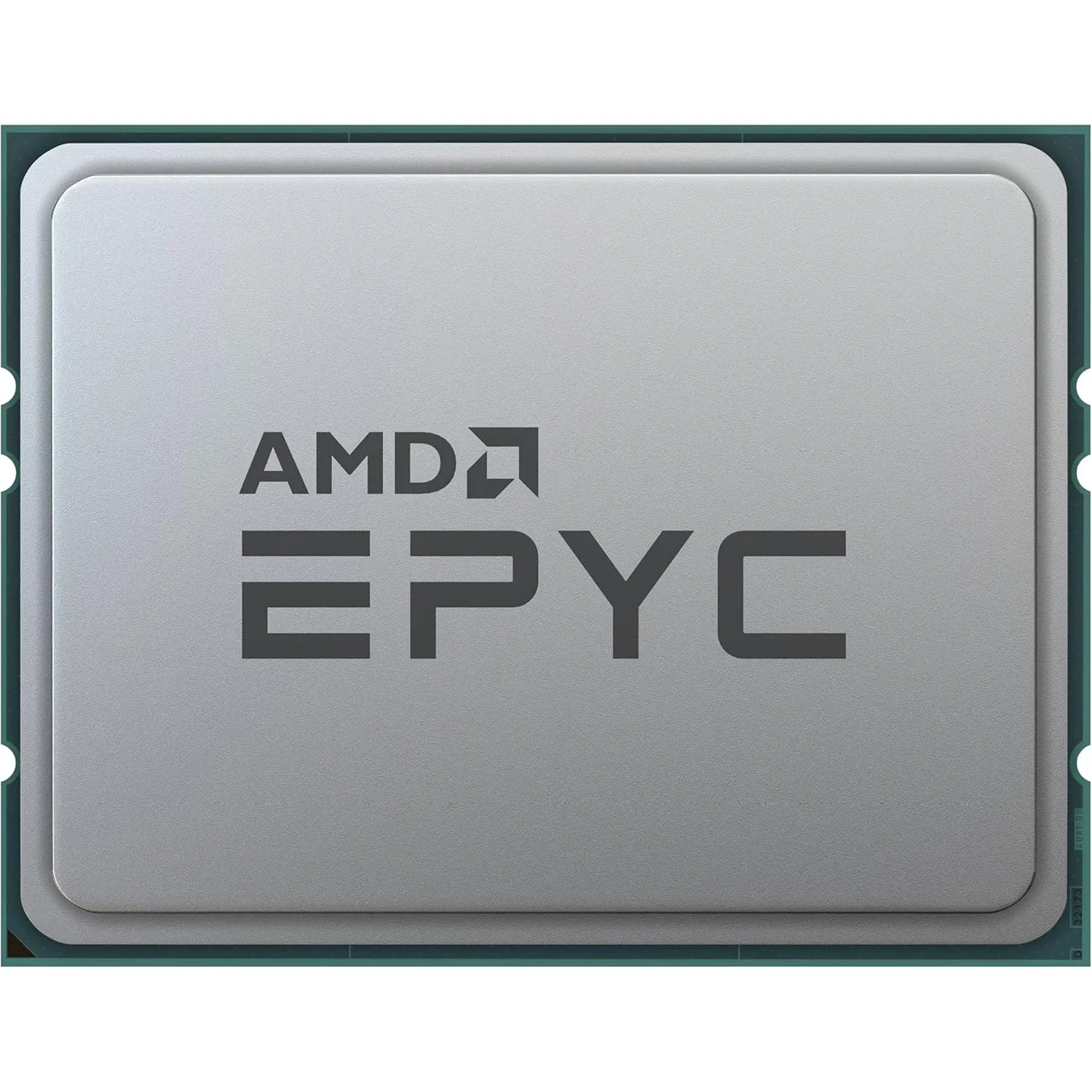
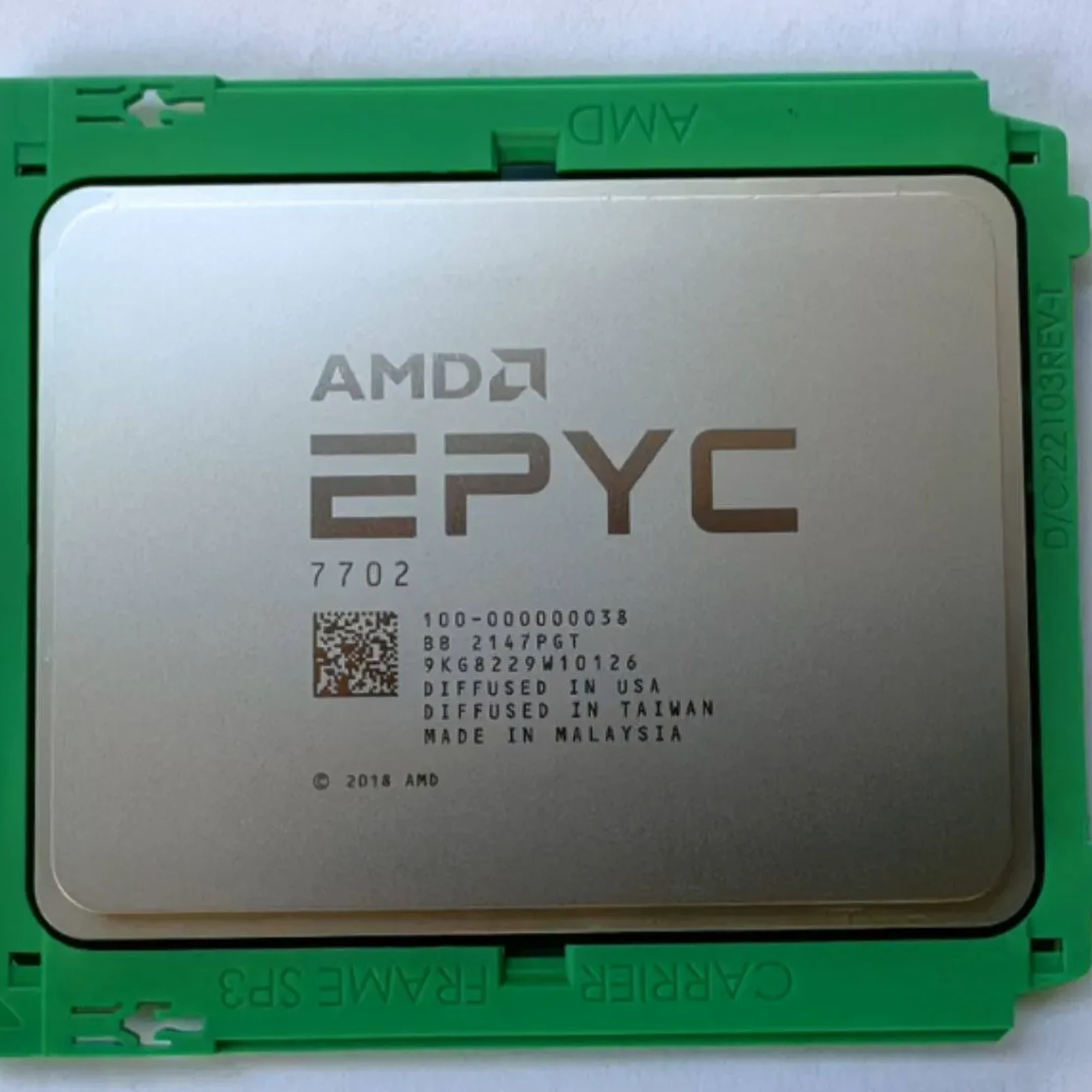

AMD EPYC 7203P Server Processor | 8-Core 16-Thread, 3.4GHz Boost, DDR4 Support for SMB Servers
| Specification | Details |
|---|---|
| Processor Model | AMD EPYC 7203P |
| Series | AMD EPYC 7003 (Milan) Series |
| Architecture | Zen 3 (Milan) |
| Cores | 8 Physical Cores |
| Threads | 16 Threads (AMD SMT) |
| Base Clock | 2.8 GHz |
| Max Boost Clock | Up to 3.4 GHz |
| L3 Cache | 64 MB |
| L2 Cache | 512 KB per Core (4 MB Total) |
| L1 Cache | 64 KB per Core (512 KB Total) |
| TDP (Thermal Design Power) | 120 W |
| Configurable TDP | 120-150 W |
| Socket | AMD Socket SP3 |
| Socket Count | 1P (Single-Socket Optimized) |
| Memory Support | 8-Channel DDR4, Up to 3200 MT/s (3200 MHz) |
| Memory Bandwidth | Up to 204.8 GB/s |
| ECC Memory Support | Yes |
| PCIe Version | PCIe 4.0 |
| PCIe Lanes | 128 Lanes (CPU Only) |
| Manufacturing Process | 7 nm (TSMC) |
| Transistors | 8,300 Million |
| Launch Date | September 5, 2023 |
| Launch Price (1KU) | $348 USD |
| Product IDs (Boxed/Tray) | Boxed: 100-100001287WOF; Tray: 100-000001287 |
| Integrated Graphics | None (No iGPU) |
| Virtualization Support | AMD-V, IOMMU Virtualization (PCI Passthrough) |
| Security Features | AMD Infinity Guard, Secure Boot, Memory Encryption |
| Supported Technologies | AVX, AVX2 (No AVX-512) |
In the competitive landscape of server processors, small to medium-sized businesses (SMBs) and entry-level data centers need a balance of performance, efficiency, and affordability to power their critical operations. The AMD EPYC 7203P Server Processor emerges as a standout solution, designed to meet these exact needs with its optimized single-socket design, robust core configuration, and energy-efficient performance. As part of AMD’s EPYC 7003 (Milan) series, built on the proven Zen 3 architecture, the EPYC 7203P delivers reliable compute power for a wide range of server workloads, from file sharing and email exchange to virtualization and light database management—all without breaking the bank.
Key Overview: What Makes the AMD EPYC 7203P Unique?
Launched in September 2023, the AMD EPYC 7203P is engineered specifically for single-socket server systems, distinguishing itself from its non-P counterpart (EPYC 7203) which supports multi-socket configurations. This specialization makes the 7203P an ideal choice for SMBs and small data centers that don’t require the scalability of multi-processor setups but still need dependable performance for daily operations. Built on TSMC’s 7nm manufacturing process, the processor balances power efficiency and compute capability, featuring 8 physical cores and 16 threads (thanks to AMD’s Simultaneous Multithreading, SMT) to handle parallel tasks with ease.
At its core, the EPYC 7203P operates at a 2.8GHz base clock, with a max boost clock of up to 3.4GHz—providing the necessary speed for both light and moderate server workloads. Complementing its core performance is a generous 64MB of L3 cache, which ensures quick access to frequently used data, reducing latency and improving overall responsiveness. With a 120W TDP (Thermal Design Power) and configurable TDP range of 120-150W, the processor strikes a balance between performance and energy consumption, making it a cost-effective option for businesses looking to minimize their power bills without sacrificing performance.
Architecture & Design: Zen 3 Power for Entry-Level Servers
The AMD EPYC 7203P is built on the Zen 3 (Milan) architecture, a significant upgrade over previous generations that delivers improved IPC (Instructions Per Cycle) and efficiency. The Zen 3 design rearranges the core layout, placing each core in a single CCD (Core Complex Die) with direct access to the L3 cache, eliminating the need for cross-CCD cache access and reducing latency. This architectural improvement translates to faster data processing and better overall performance for server workloads, which often rely on quick access to cached data.
With 8,300 million transistors and a dual-die design (2 CCDs with 4 cores each), the EPYC 7203P is optimized for single-socket systems, ensuring that businesses can build compact, cost-effective servers without compromising on performance. The processor uses the AMD Socket SP3, a server-grade socket designed for high reliability and compatibility with a wide range of server motherboards, making it easy to integrate into existing or new server setups.
One of the key design highlights of the EPYC 7203P is its support for ECC (Error-Correcting Code) memory, a critical feature for server environments. ECC memory automatically detects and corrects single-bit errors, preventing data corruption and system crashes—essential for mission-critical applications like database management and file servers. This feature sets server processors apart from consumer-grade CPUs, ensuring maximum reliability for 24/7 server operations.
Performance: Ideal for SMB Workloads & Entry-Level Data Centers
The AMD EPYC 7203P’s 8-core, 16-thread configuration is perfectly suited for the demands of SMBs and entry-level data centers. Whether you’re running a small business server for file sharing, email, and collaboration tools, or an entry-level virtualization environment with a few VMs (Virtual Machines), the 7203P delivers consistent performance. The 3.4GHz max boost clock ensures that the processor can handle peak workloads, such as multiple concurrent user requests or temporary spikes in data processing, without slowing down.
For virtualization, the EPYC 7203P supports hardware virtualization (AMD-V) and IOMMU virtualization (PCI passthrough), allowing guest VMs to directly access host hardware for improved performance. This makes it an excellent choice for businesses looking to consolidate their IT infrastructure into a single server, reducing hardware costs and simplifying management. With 16 threads, the processor can efficiently handle multiple VMs simultaneously, ensuring each VM has the resources it needs to run smoothly.
In terms of memory performance, the EPYC 7203P supports 8-channel DDR4 memory with a maximum speed of 3200 MT/s (megatransfers per second), delivering a memory bandwidth of up to 204.8 GB/s. This high memory bandwidth ensures that the processor can quickly access large datasets, making it suitable for workloads like light database management, web hosting, and content delivery. The 8-channel memory configuration also provides better multitasking capabilities, as the processor can access multiple memory modules simultaneously.
For I/O connectivity, the EPYC 7203P offers 128 PCIe 4.0 lanes, providing high-speed connectivity to storage devices, network cards, and other peripherals. PCIe 4.0 delivers twice the bandwidth of PCIe 3.0, ensuring fast data transfer speeds between the processor and other components—critical for modern server workloads that rely on high-speed storage (such as NVMe SSDs) and fast network connections.
Power Efficiency & Total Cost of Ownership (TCO)
For SMBs, total cost of ownership (TCO) is a critical factor when choosing server hardware. The AMD EPYC 7203P excels in this area, with its 120W TDP and energy-efficient design. By consuming less power than higher-end server processors, the 7203P helps businesses reduce their electricity bills, especially for servers that run 24/7. Additionally, the processor’s configurable TDP (120-150W) allows businesses to adjust power consumption based on their workload needs—balancing performance and efficiency as required.
The EPYC 7203P also offers a cost-effective price point, with a launch MSRP of $348 (1KU pricing). This makes it an affordable option for businesses that need reliable server performance without investing in high-end, expensive processors. When combined with its energy efficiency and low maintenance requirements, the 7203P delivers a low TCO, making it a smart investment for SMBs and entry-level data centers.
Use Cases: Where the AMD EPYC 7203P Shines
The AMD EPYC 7203P is versatile enough to handle a wide range of entry-level server workloads, making it a popular choice for SMBs, small data centers, and remote offices. Here are some of the key use cases where the 7203P excels:
- SMB File & Print Servers: The 8-core, 16-thread configuration handles multiple concurrent file transfers and print jobs with ease, ensuring smooth operation for small teams.
- Email & Collaboration Servers: Supports email exchange, calendar, and collaboration tools (such as Microsoft Exchange or Google Workspace) for small to medium teams, with reliable performance and low latency.
- Virtualization (Entry-Level): Ideal for running 2-4 VMs simultaneously, making it perfect for businesses looking to consolidate their IT infrastructure into a single server.
- Web Hosting (Small to Medium): Powers small web servers hosting multiple websites or web applications, with the 3.4GHz boost clock ensuring fast page load times.
- Light Database Management: Handles small to medium databases (such as MySQL or PostgreSQL) with ease, thanks to its high memory bandwidth and L3 cache.
- Remote Office/Branch Office (ROBO) Servers: Compact, energy-efficient, and reliable, making it suitable for remote offices that need a local server for file storage and basic IT operations.
Comparison to Competitors: Why Choose the EPYC 7203P?
When compared to entry-level server processors from competitors (such as Intel Xeon E-2300 series), the AMD EPYC 7203P offers several key advantages. For starters, the 7203P provides more threads (16 vs. 8-16 in Intel’s E-2300 series) and a larger L3 cache (64MB vs. up to 20MB in Intel’s offerings), delivering better multitasking performance and faster data access.
Additionally, the EPYC 7203P supports 8-channel DDR4 memory, while Intel’s E-2300 series supports only 4-channel memory—providing twice the memory bandwidth and better performance for memory-intensive workloads. The 128 PCIe 4.0 lanes offered by the 7203P also outperform Intel’s E-2300 series (which offers up to 20 PCIe 4.0 lanes), making it a better choice for servers that require high-speed I/O connectivity.
In terms of power efficiency, the EPYC 7203P’s 120W TDP is competitive with Intel’s E-2300 series (which ranges from 65W to 125W), but the 7203P delivers better performance per watt, making it a more energy-efficient option overall. Finally, the EPYC 7203P’s lower price point (compared to similarly spec’d Intel Xeon processors) makes it a more cost-effective choice for SMBs.
Reliability & Support: Built for 24/7 Server Operations
Servers are the backbone of any business, so reliability is non-negotiable. The AMD EPYC 7203P is built to run 24/7, with a durable design that can withstand the demands of continuous operation. AMD’s Infinity Guard security features provide additional protection against threats, including secure boot, memory encryption, and firmware validation—ensuring that your server data is safe and secure.
AMD also offers comprehensive support for the EPYC 7203P, including access to technical documentation, drivers, and firmware updates. Additionally, many server manufacturers (such as Supermicro) offer 24/7 support for systems equipped with EPYC processors, ensuring that you can get assistance when you need it. The processor also comes with a standard warranty, providing peace of mind for businesses investing in server hardware.
Conclusion: The Perfect Entry-Level Server Processor for SMBs
The AMD EPYC 7203P Server Processor is a versatile, cost-effective solution for SMBs, small data centers, and remote offices. With its 8-core, 16-thread configuration, 3.4GHz max boost clock, 64MB L3 cache, and 8-channel DDR4 support, it delivers reliable performance for a wide range of entry-level server workloads. Its single-socket optimization, energy efficiency, and low TCO make it an ideal choice for businesses looking to power their critical operations without overspending.
Whether you’re building a new server or upgrading an existing one, the EPYC 7203P offers the perfect balance of performance, efficiency, and affordability. Backed by AMD’s proven Zen 3 architecture and comprehensive support, it’s a processor you can trust to keep your server running smoothly 24/7. For SMBs looking to maximize their IT investment, the AMD EPYC 7203P is the clear choice for entry-level server performance.
Recommended Motherboards for AMD EPYC 7002/7003 SP3 Processors
| Model | Brand | CPU Configuration | Memory Slots | Max Memory | LAN | PCIe Expansion | Storage | Form Factor | BMC |
|---|---|---|---|---|---|---|---|---|---|
| MZ72-HB2 | GIGABYTE | Dual SP3 | 16×DDR4 | 2TB | 2×10G + 1×Mgmt LAN | 5×PCIe 4.0 x16/x8 | 5×SlimSAS, 1×M.2 | E-ATX | AST2600 |
| MZ32-AR0 | GIGABYTE | Single SP3 | 16×DDR4 | 2TB | 2×1G (Intel I350) | 7×PCIe 4.0/3.0 x16/x8 | 6×SlimSAS, 2×M.2 | E-ATX | AST2600 |
| MZ71-CE1 | GIGABYTE | Dual SP3 | 16×DDR4 | 2TB | 2×1G (BCM5720) + Mgmt LAN | 5×PCIe 4.0 x16/x8 | 3×SlimSAS, 4×SATA | E-ATX | AST2600 |
| ROMED8-2T/BCM | ASRock Rack | Single SP3 | 8×DDR4 | 256GB | 2×10G (Intel X550) + IPMI | 7×PCIe 4.0 x16 | 10×SATA, 2×M.2 | ATX | AST2500 |
| ROMED4ID-2T | ASRock Rack | Single SP3 | 4×DDR4 | 256GB | 2×10G (Intel X550) + IPMI | 1×PCIe 4.0 x16 | 16×SATA, 1×M.2 | Mini-ITX | AST2500 |
| ROME2D16-2T | ASRock Rack | Dual SP3 | 16×DDR4 | 4TB | 2×10G (Intel X550) + IPMI | 5×PCIe 4.0 x16 + 1×x8 | 2×SlimSAS, 2×OcuLink, 2×M.2 | EEB | AST2600 |
| ROME2D32GM-2T | ASRock Rack | Dual SP3 | 32×DDR4 | 8TB | 2×10G + IPMI | 6×PCIe 4.0 x16 | 19×SlimSAS, 1×M.2 | EEB | AST2600 |
| H12SSL-NT | Supermicro | Single SP3 | 8×DDR4 | 2TB | 2×10G (BCM57416) + IPMI | 5×PCIe 4.0 x16/x8 | 2×SlimSAS (SATA/NVMe) | ATX | AST2500 |
| H12SSL-i | Supermicro | Single SP3 | 8×DDR4 | 2TB | 2×1G (BCM5720) | 5×PCIe 4.0 x16, 2×x8 | 8×SATA, 2×M.2 | ATX | AST2500 |
| H12DSi-N6 | Supermicro | Dual SP3 | 16×DDR4 | 4TB | 2×1G + IPMI | 3×PCIe 4.0 x16, 3×x8 | 10×SATA, 1×M.2 | E-ATX | AST2600 |
AMD EPYC 7003 Series Processors Specifications
| Name | # of CPU Cores | # of Threads | Max. Boost Clock | Base Clock | L3 Cache | Default TDP |
| AMD EPYC™ 7203P | 8 | 16 | Up to 3.4 GHz | 2.8 GHz | 64 MB | 120W |
| AMD EPYC™ 7203 | 8 | 16 | Up to 3.4 GHz | 2.8 GHz | 64 MB | 120W |
| AMD EPYC™ 72F3 | 8 | 16 | Up to 4.1 GHz | 3.7 GHz | 256 MB | 180W |
| AMD EPYC™ 7303P | 16 | 32 | Up to 3.4 GHz | 2.4 GHz | 64 MB | 130W |
| AMD EPYC™ 7303 | 16 | 32 | Up to 3.4 GHz | 2.4 GHz | 64 MB | 130W |
| AMD EPYC™ 73F3 | 16 | 32 | Up to 4 GHz | 3.5 GHz | 256 MB | 240W |
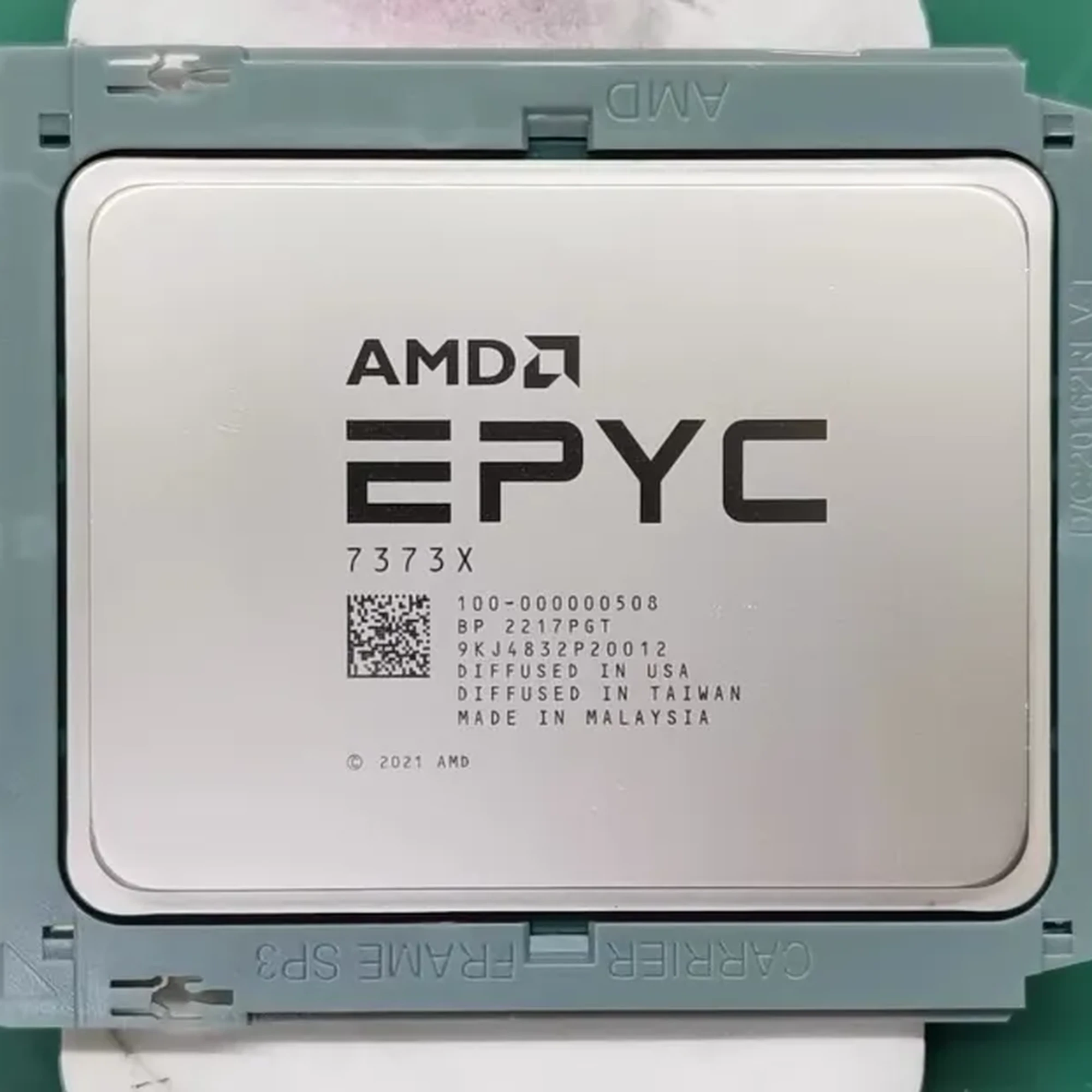
| AMD EPYC™ 7373X | 16 | 32 | Up to 3.8 GHz | 3.05 GHz | 768 MB | 240W |
| AMD EPYC™ 7343 | 16 | 32 | Up to 3.9 GHz | 3.2 GHz | 128 MB | 190W |
| AMD EPYC™ 7313P | 16 | 32 | Up to 3.7 GHz | 3 GHz | 128 MB | 155W |
| AMD EPYC™ 7313 | 16 | 32 | Up to 3.7 GHz | 3 GHz | 128 MB | 155W |
| AMD EPYC™ 74F3 | 24 | 48 | Up to 4 GHz | 3.2 GHz | 256 MB | 240W |
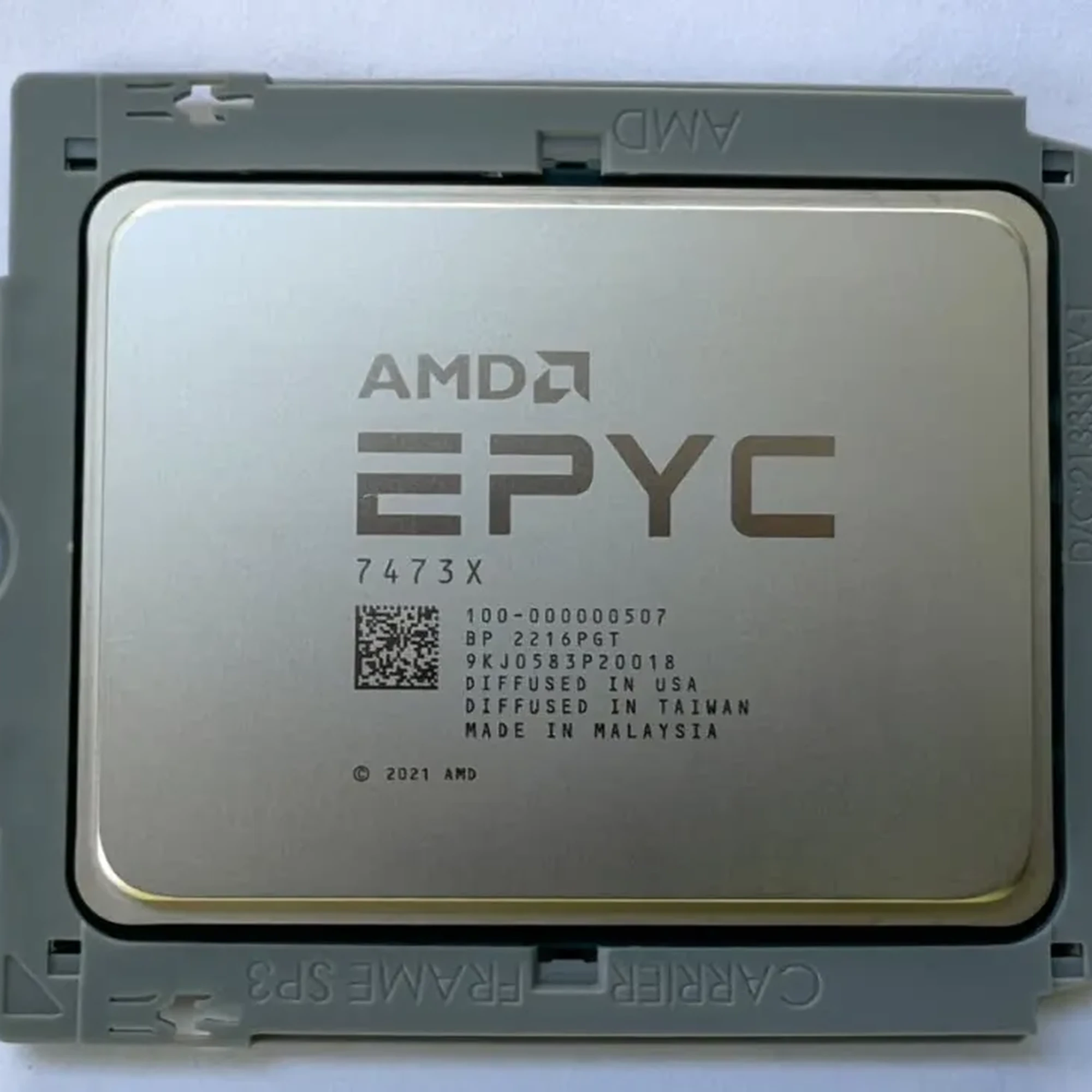
| AMD EPYC™ 7473X | 24 | 48 | Up to 3.7 GHz | 2.8 GHz | 768 MB | 240W |
| AMD EPYC™ 7443P | 24 | 48 | Up to 4 GHz | 2.85 GHz | 128 MB | 200W |
| AMD EPYC™ 7443 | 24 | 48 | Up to 4 GHz | 2.85 GHz | 128 MB | 200W |
| AMD EPYC™ 7413 | 24 | 48 | Up to 3.6 GHz | 2.65 GHz | 128 MB | 180W |
| AMD EPYC™ 7453 | 28 | 56 | Up to 3.45 GHz | 2.75 GHz | 64 MB | 225W |
| AMD EPYC™ 75F3 | 32 | 64 | Up to 4 GHz | 2.95 GHz | 256 MB | 280W |
| AMD EPYC™ 7573X | 32 | 64 | Up to 3.6 GHz | 2.8 GHz | 768 MB | 280W |
| AMD EPYC™ 7543P | 32 | 64 | Up to 3.7 GHz | 2.8 GHz | 256 MB | 225W |
| AMD EPYC™ 7543 | 32 | 64 | Up to 3.7 GHz | 2.8 GHz | 256 MB | 225W |
| AMD EPYC™ 7513 | 32 | 64 | Up to 3.65 GHz | 2.6 GHz | 128 MB | 200W |
| AMD EPYC™ 7643P | 48 | 96 | Up to 3.6 GHz | 2.3 GHz | 256 MB | 225W |
| AMD EPYC™ 7643 | 48 | 96 | Up to 3.6 GHz | 2.3 GHz | 256 MB | 225W |
| AMD EPYC™ 7663 | 56 | 112 | Up to 3.5 GHz | 2 GHz | 256 MB | 240W |
| AMD EPYC™ 7663P | 56 | 112 | Up to 3.5 GHz | 2 GHz | 256 MB | 240W |
| AMD EPYC™ 7773X | 64 | 128 | Up to 3.5 GHz | 2.2 GHz | 768 MB | 280W |
| AMD EPYC™ 7763 | 64 | 128 | Up to 3.5 GHz | 2.45 GHz | 256 MB | 280W |
| AMD EPYC™ 7713P | 64 | 128 | Up to 3.67 GHz | 2 GHz | 256 MB | 225W |
| AMD EPYC™ 7713 | 64 | 128 | Up to 3.67 GHz | 2 GHz | 256 MB | 225W |


