
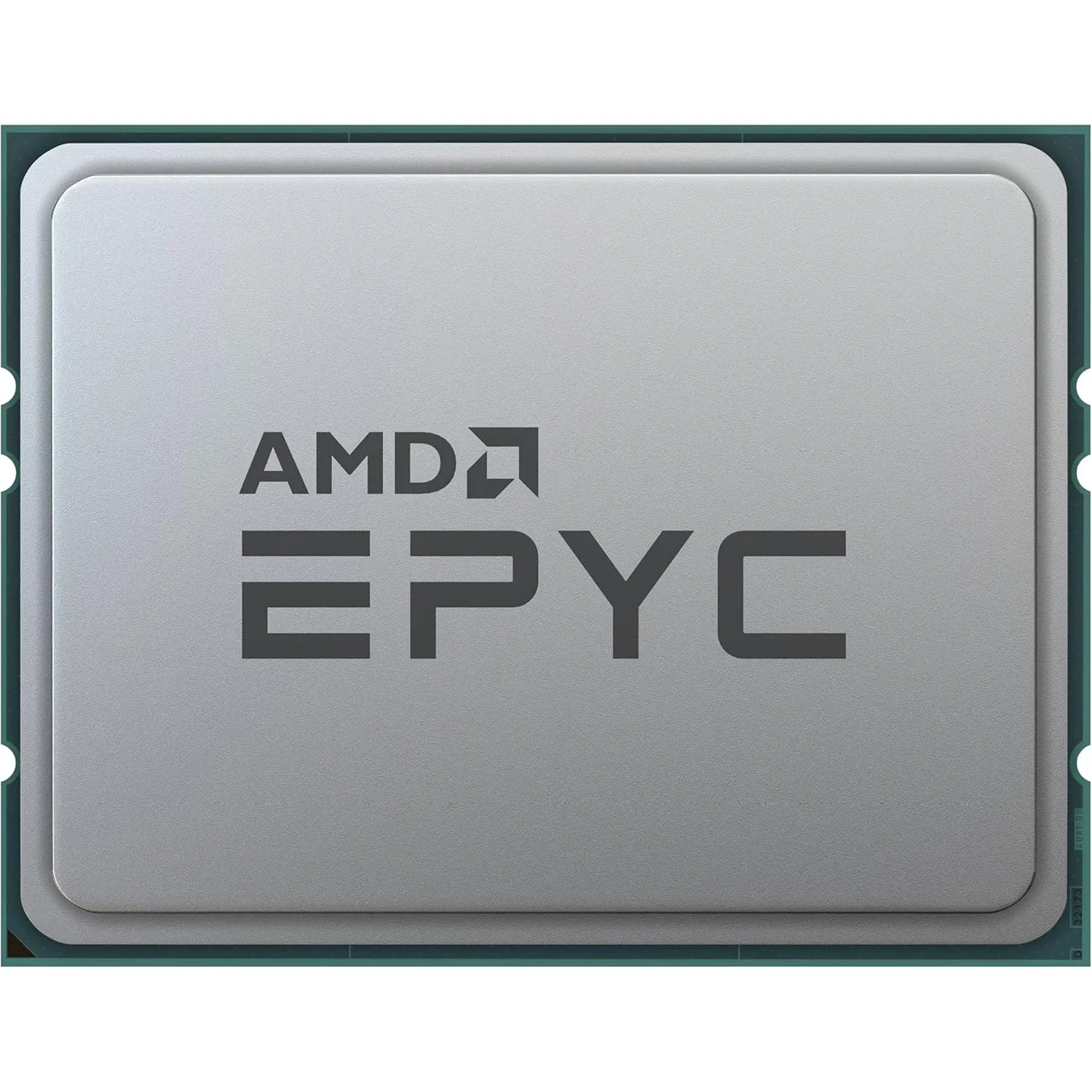
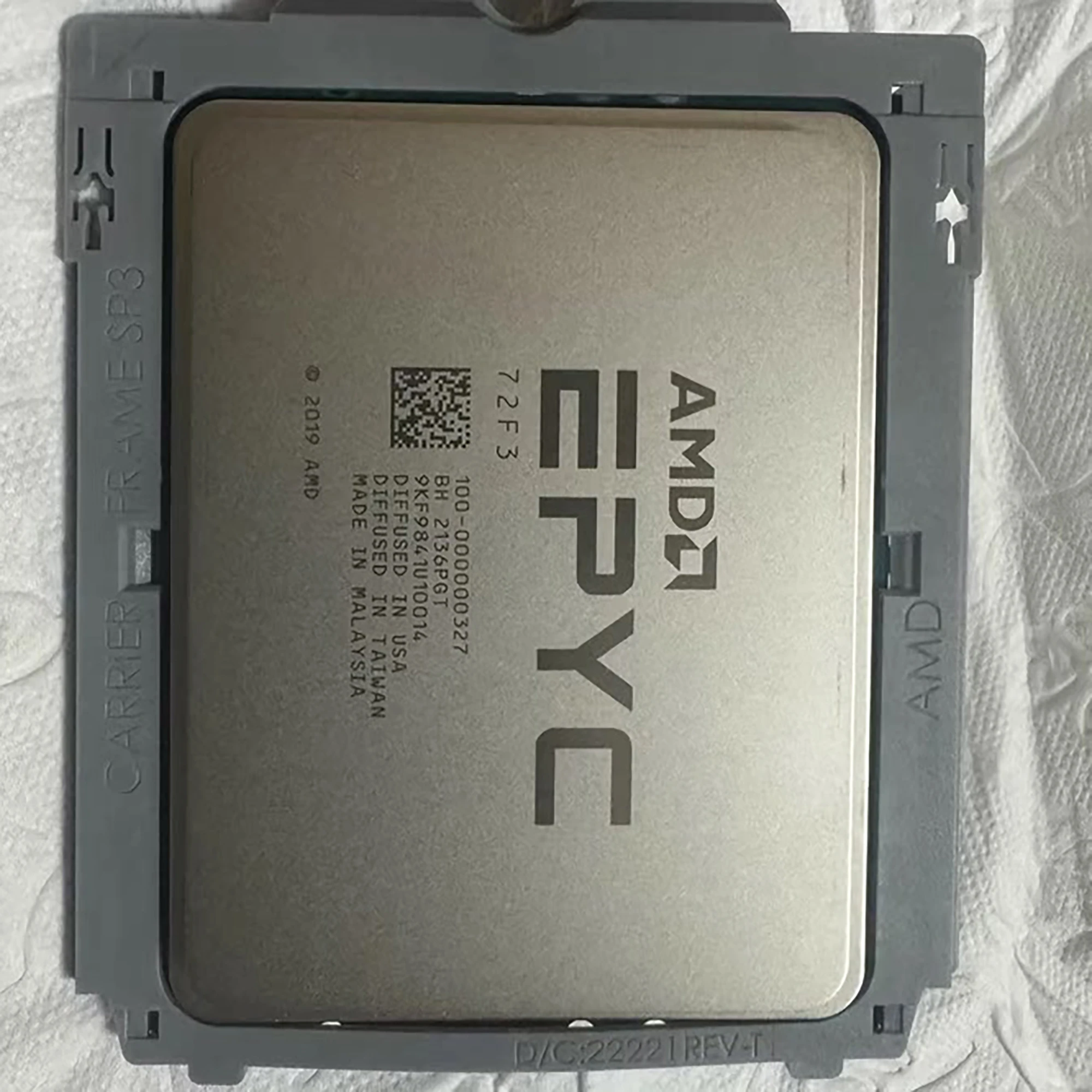
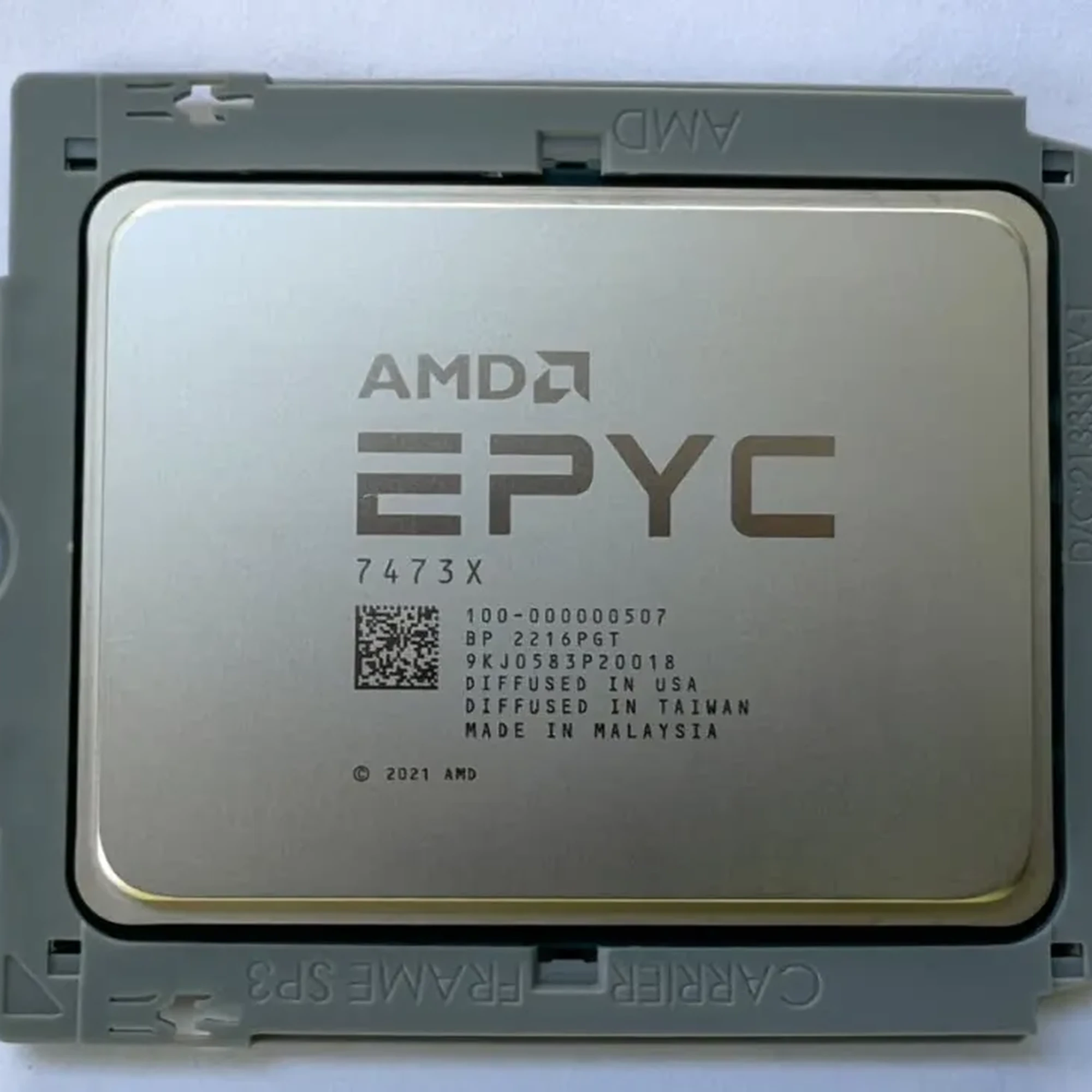
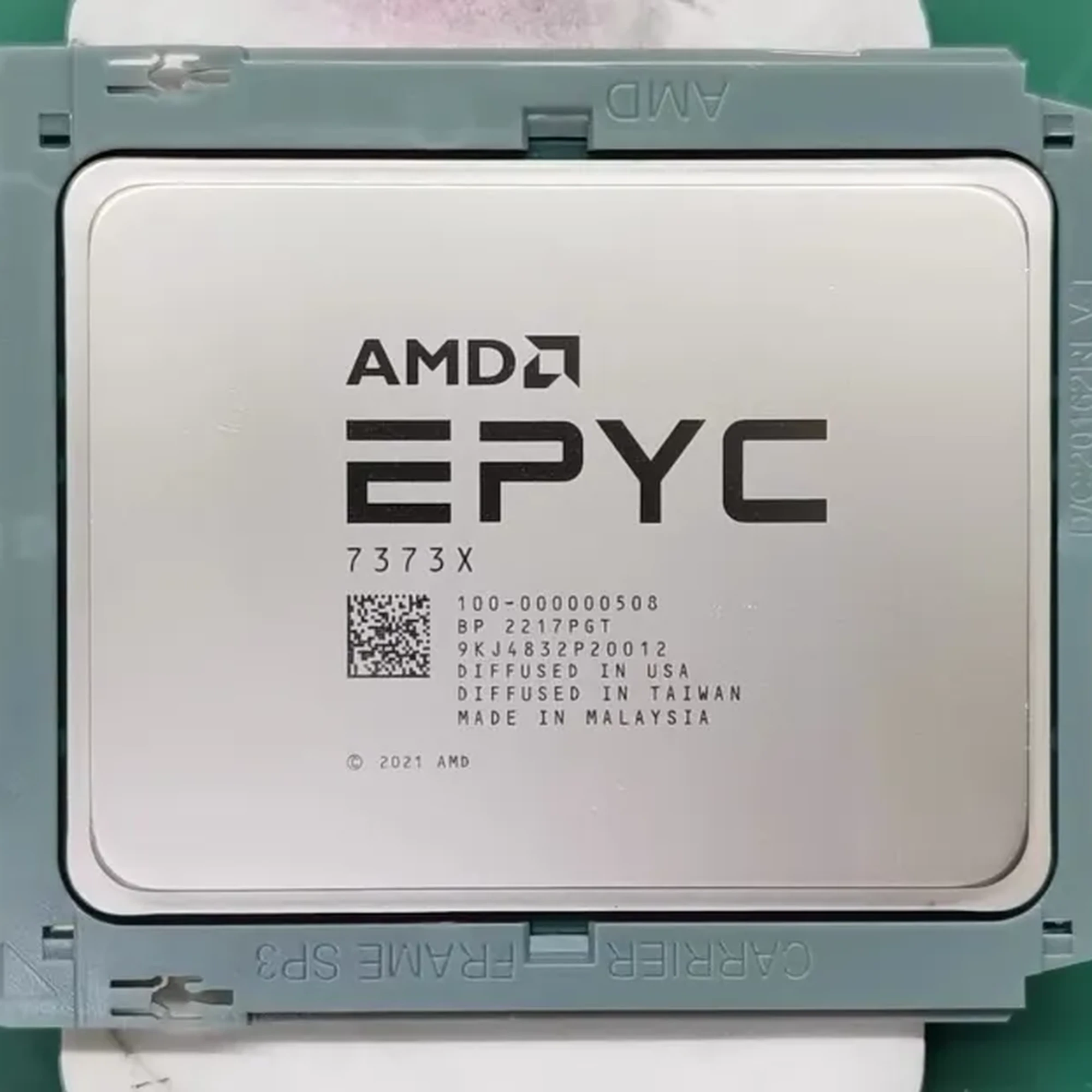
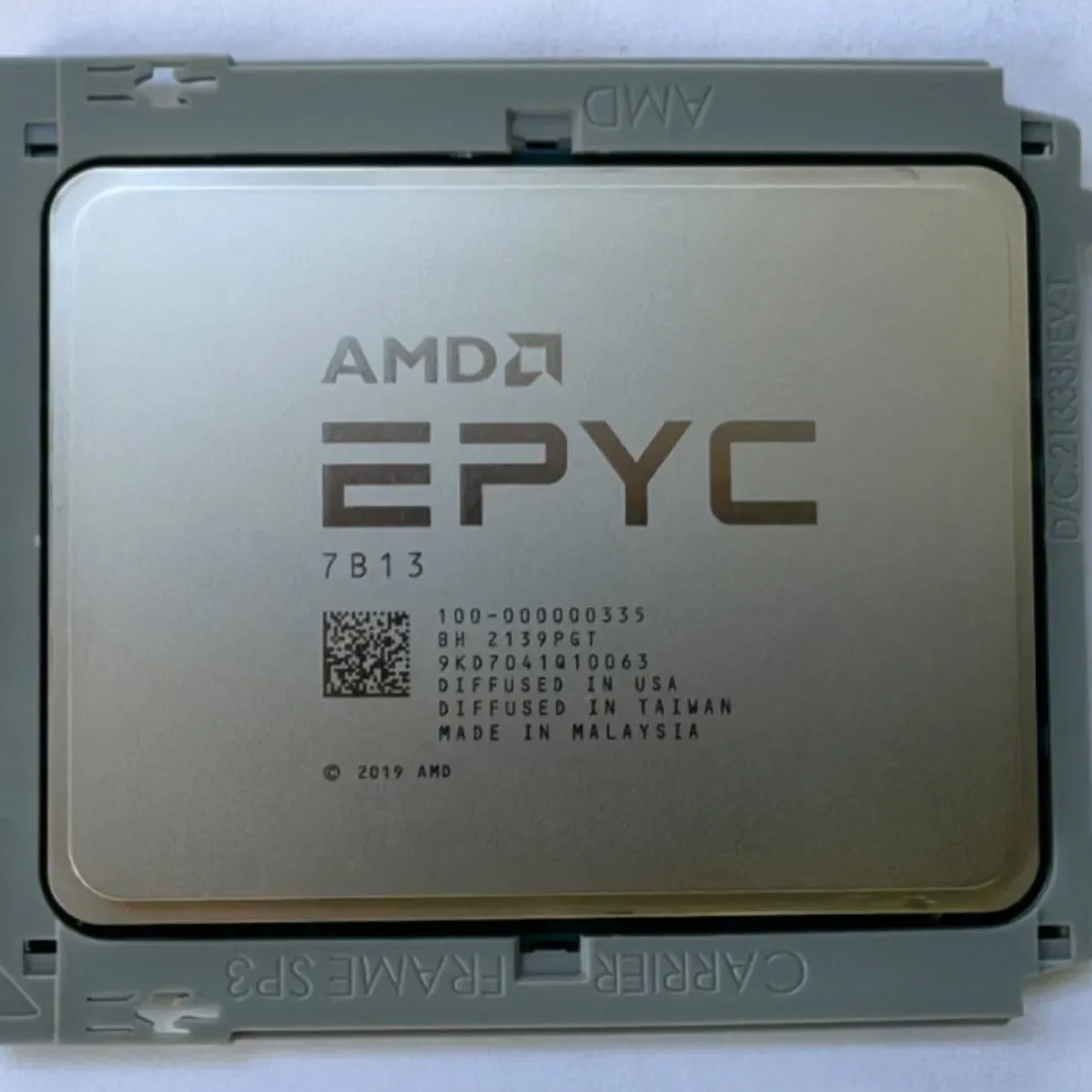
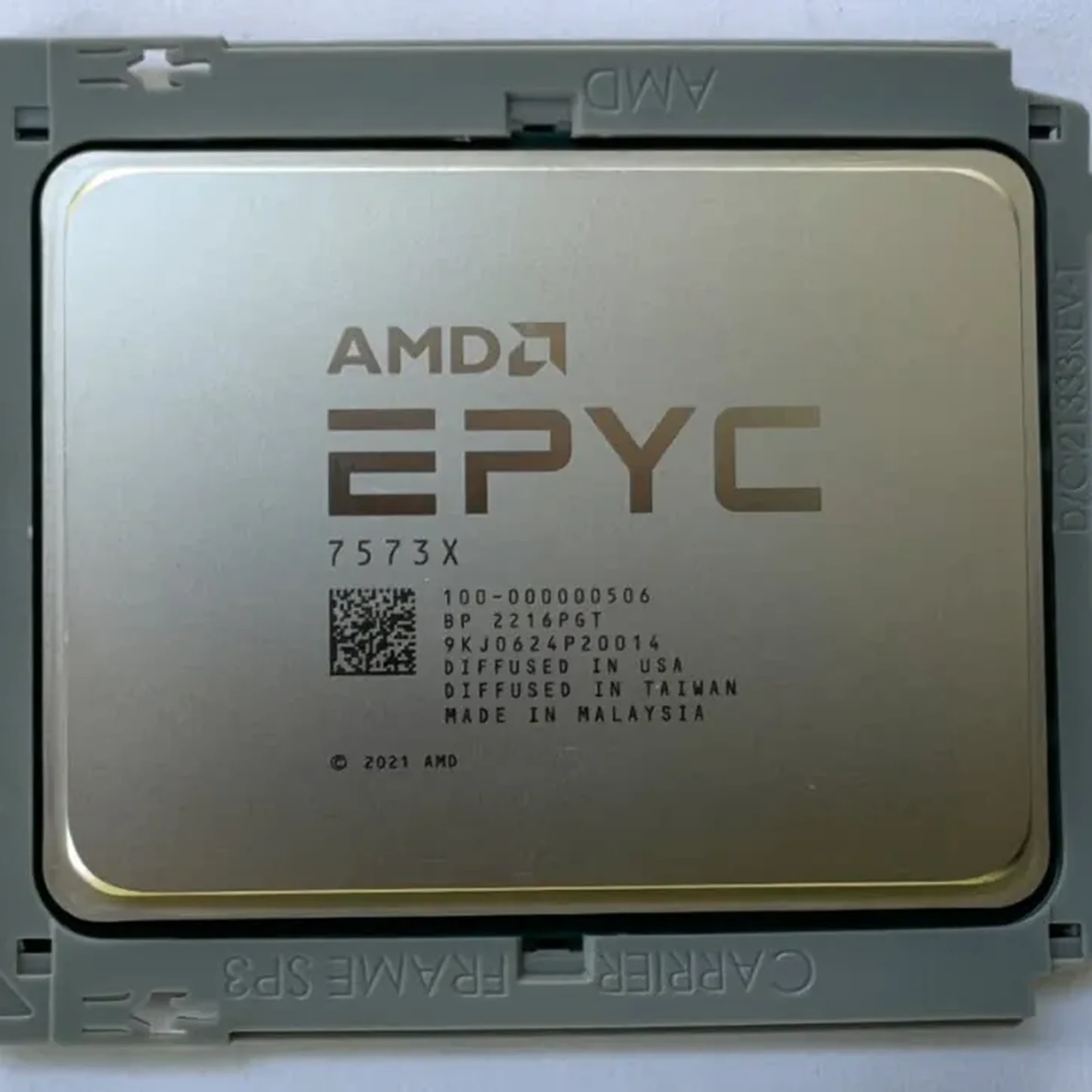
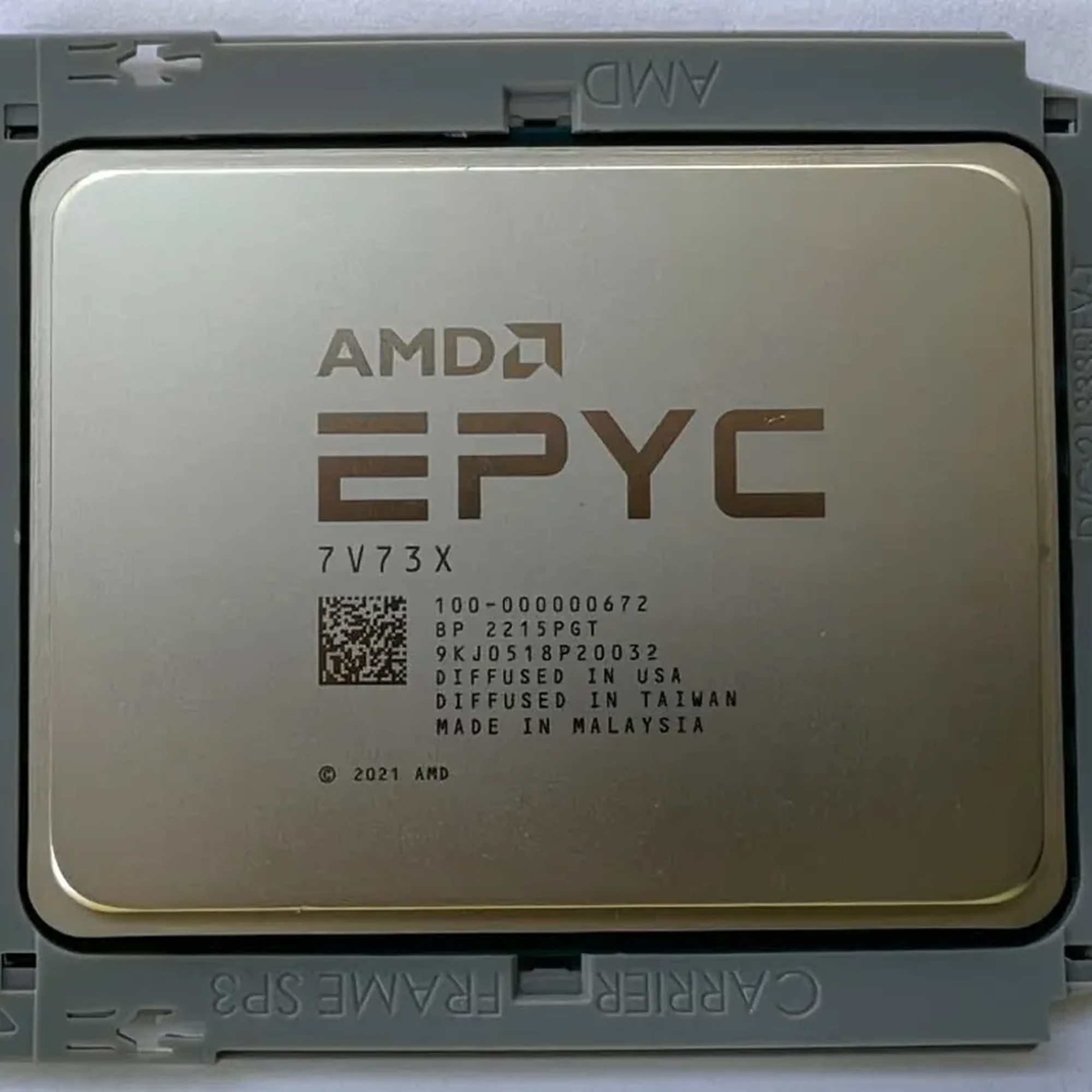
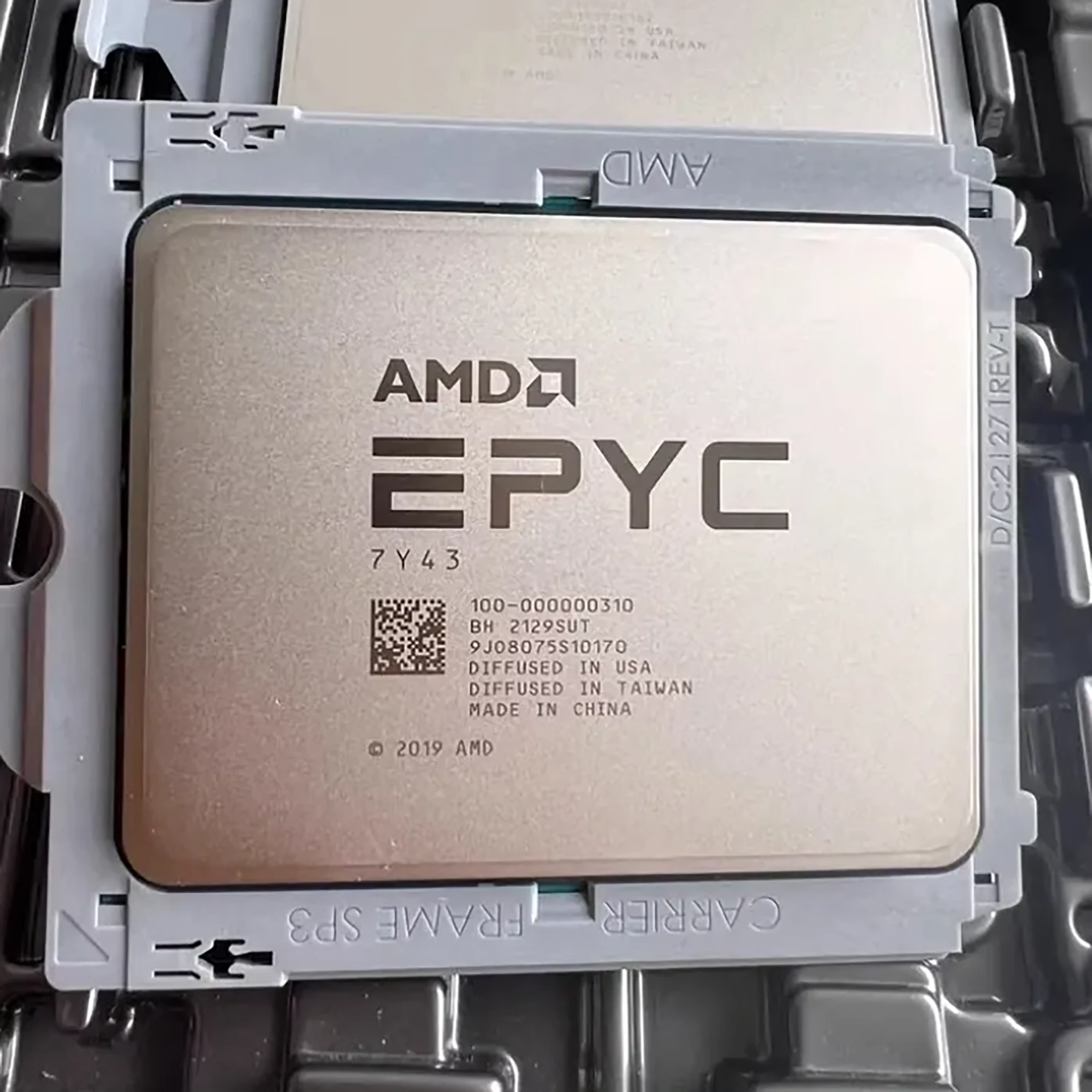
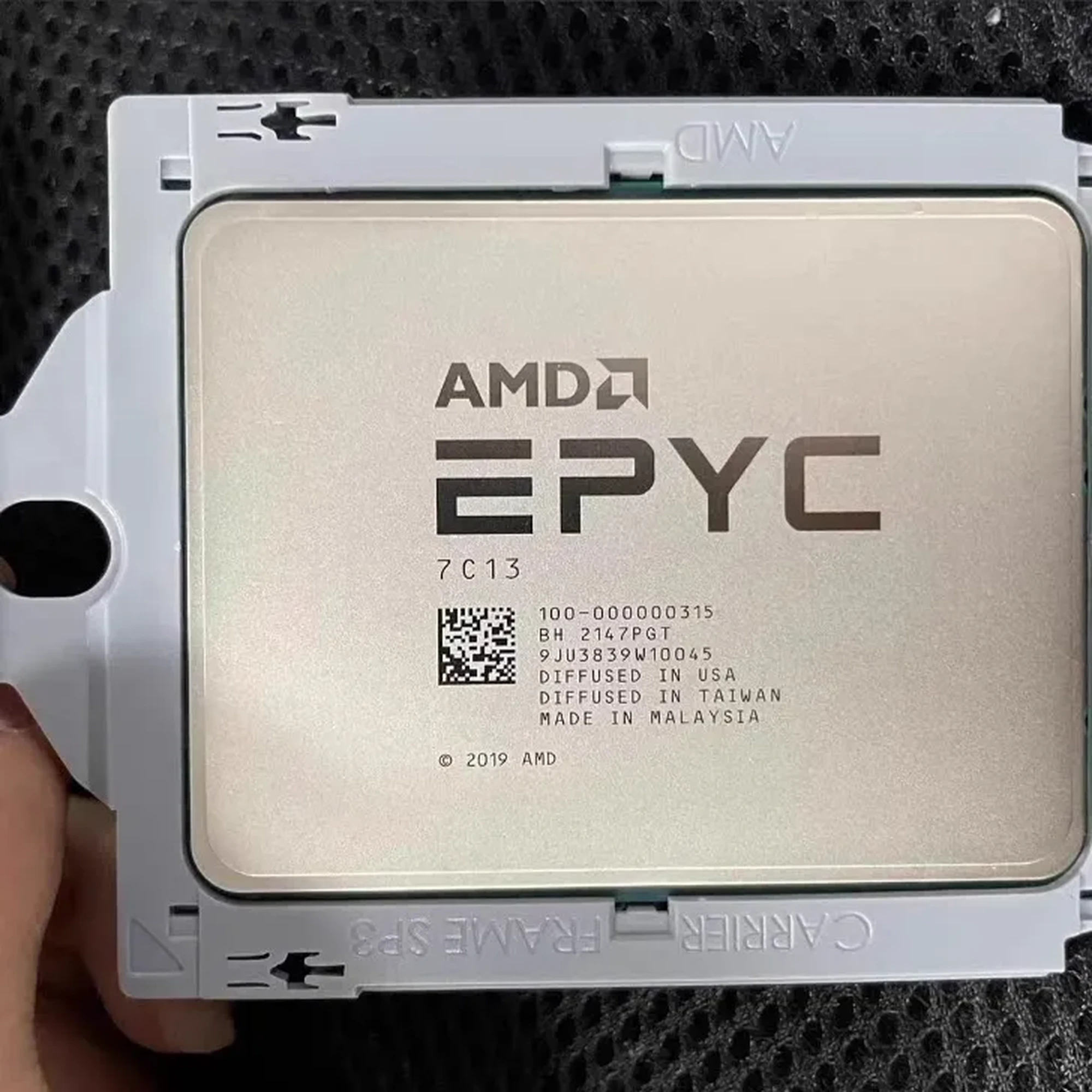
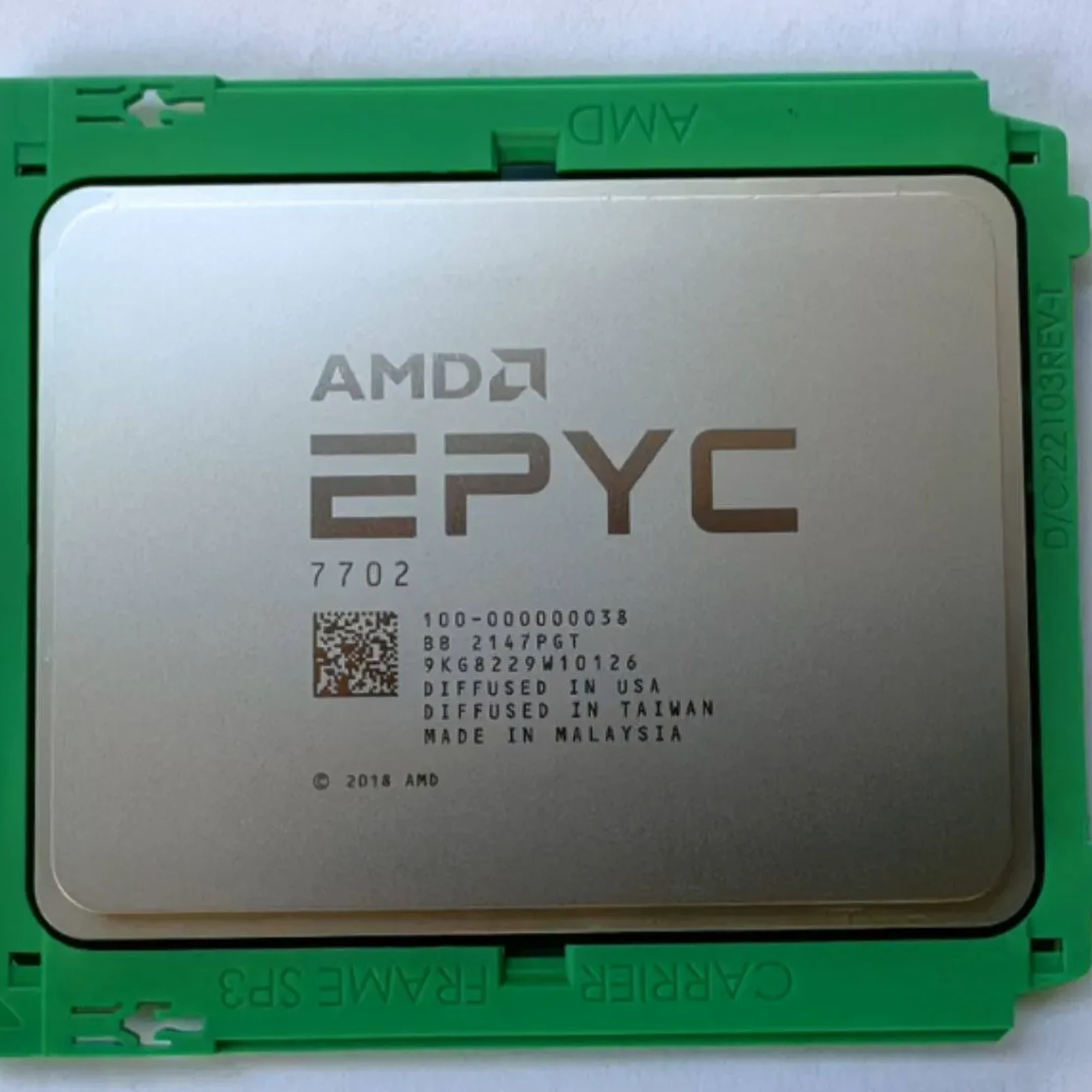

AMD EPYC 72F3 Server Processor | 8-Core 16-Thread 3.7GHz 256MB L3 Cache – High Performance & Energy Efficient
| Specification | Details |
|---|---|
| Product Name | AMD EPYC 72F3 Server Processor |
| Product Family | AMD EPYC |
| Product Series | EPYC 7003 (Milan) Series |
| Architecture | Zen 3 (Milan) |
| Fabrication Process | 7nm FinFET (TSMC) |
| Cores | 8 |
| Threads | 16 (AMD SMT Technology) |
| Base Clock Speed | 3.7GHz |
| Max Boost Clock Speed | Up to 4.1GHz |
| L1 Cache | 128KB per core (Total: 1MB) |
| L2 Cache | 1MB per core (Total: 8MB) |
| L3 Cache | 256MB |
| TDP (Default) | 180W |
| Configurable TDP (cTDP) | 165W – 200W |
| Socket Type | AMD SP3 |
| Socket Count | 1P / 2P |
| Memory Type | DDR4 |
| Memory Channels | 8 |
| Max Memory Speed | Up to 3200 MT/s |
| Per Socket Memory Bandwidth | 204.8 GB/s |
| PCIe Version | PCIe 4.0 |
| PCIe Lanes | 128 |
| Supported Technologies | AMD Infinity Guard, AMD Infinity Architecture, AES-NI, ECC Memory Support, SMT |
| Workload Affinity | Departmental CAE/CFD/FEA, EDA, FSI Risk Analysis, Licensed per Core Data Management (RDBMS), Virtualization |
| Launch Date | March 15, 2021 |
| 1KU Pricing | $2468 USD |
| Product ID (Tray) | 100-000000327 |
In the fast-paced world of enterprise computing, server processors are the backbone of data centers, cloud infrastructures, and mission-critical applications. Every business, whether small or large, relies on powerful, efficient, and reliable server hardware to handle workloads ranging from virtualization and data management to complex computational tasks like CAE (Computer-Aided Engineering), CFD (Computational Fluid Dynamics), and EDA (Electronic Design Automation). The AMD EPYC 72F3 Server Processor, part of AMD’s 3rd Generation EPYC 7003 (Milan) series, is engineered to meet these demanding needs, combining high performance, energy efficiency, and advanced features to power modern server environments.
Introduction to the AMD EPYC 72F3 Server Processor
Launched on March 15, 2021, the AMD EPYC 72F3 is a server-grade processor built on AMD’s Zen 3 (Milan) architecture, fabricated using TSMC’s 7nm FinFET process technology. This cutting-edge manufacturing process enables the processor to deliver exceptional performance while maintaining efficient power consumption, making it an ideal choice for businesses looking to optimize their server infrastructure without sacrificing speed or reliability. As part of the EPYC 7003 series, the 72F3 is designed to address the needs of mid-range to high-end enterprise servers, offering a balance of core count, clock speed, and cache that makes it versatile enough for a wide range of workloads.
Unlike consumer-grade processors, server CPUs like the EPYC 72F3 are built to handle 24/7 operation, support multi-processor configurations, and deliver consistent performance under heavy, sustained loads. The EPYC 72F3 excels in this regard, with a focus on scalability, security, and compatibility—key factors for businesses that depend on their servers to run mission-critical applications without downtime.
Key Performance Features of the AMD EPYC 72F3
The AMD EPYC 72F3 stands out in its class due to its carefully balanced specifications, which are tailored to deliver optimal performance for enterprise workloads. Let’s break down the core features that make this processor a top choice for server environments:
Core and Thread Configuration: Power for Multi-Tasking and Parallel Processing
At the heart of the EPYC 72F3 is an 8-core, 16-thread configuration, powered by AMD’s Simultaneous Multithreading (SMT) technology. This means each core can handle two threads simultaneously, effectively doubling the processor’s ability to handle multiple tasks at once. For server workloads— which often involve running multiple virtual machines (VMs), processing large datasets, or handling concurrent user requests—this multi-threaded performance is critical.
Compared to its competitors, such as the Intel Xeon Gold 6208U, the EPYC 72F3 delivers superior single-threaded performance (approximately 37% faster) and slightly better multi-threaded performance (around 10% faster), despite having fewer physical cores. This makes it particularly well-suited for workloads that require both single-threaded speed (like database queries) and multi-threaded throughput (like virtualization or batch processing).
Clock Speed: Balancing Base Performance and Boost Capability
The EPYC 72F3 features a base clock speed of 3.7GHz and a maximum boost clock of up to 4.1GHz. The base clock ensures consistent performance under sustained loads, while the boost clock kicks in during peak demand, delivering an extra burst of speed for time-sensitive tasks. This balance is essential for server environments, where consistency is key but occasional bursts of performance are needed to handle spikes in workload.
The 4.1GHz boost clock is particularly impressive for an 8-core server processor, as it allows the EPYC 72F3 to handle single-threaded tasks with ease—something that many multi-core processors struggle with. Whether you’re running a database that requires fast query responses or a web server handling high traffic, the EPYC 72F3’s clock speed ensures that your applications run smoothly.
Cache: Reducing Latency and Accelerating Data Access
Cache memory is a critical component of server processors, as it stores frequently accessed data close to the CPU, reducing latency and improving overall performance. The EPYC 72F3 comes equipped with a massive 256MB L3 cache, which is significantly larger than many competing processors in its class. This large L3 cache ensures that the processor can quickly access the data it needs, minimizing the time spent waiting for data to be retrieved from main memory.
For workloads that involve repeated access to large datasets—such as data analytics, database management, or virtualization—the 256MB L3 cache is a game-changer. It reduces bottlenecks and ensures that the processor can maintain high performance even when handling large volumes of data. Additionally, the EPYC 72F3 features 1MB of L2 cache per core (8MB total), further enhancing its ability to handle small, frequently accessed data efficiently.
Power Efficiency: Balancing Performance and Energy Consumption
Server energy consumption is a major concern for businesses, as it directly impacts operational costs and environmental sustainability. The EPYC 72F3 has a default TDP (Thermal Design Power) of 180W, with AMD’s Configurable TDP (cTDP) allowing it to be adjusted between 165W and 200W depending on the workload and cooling capabilities of the server. This flexibility enables businesses to optimize power consumption based on their specific needs—reducing power usage during low-demand periods and increasing it during peak loads to maintain performance.
While the 180W TDP is slightly higher than some competing processors (such as the Intel Xeon Gold 6208U’s 150W TDP), the EPYC 72F3’s superior performance per watt makes it a more efficient choice overall. When combined with AMD’s advanced power management technologies, the EPYC 72F3 delivers the performance businesses need without excessive energy consumption.
Connectivity and Compatibility: Seamless Integration with Server Infrastructure
The AMD EPYC 72F3 is designed to integrate seamlessly with modern server infrastructure, offering a range of connectivity options and compatibility features that make it easy to deploy in existing or new data centers.
Memory Support: High-Bandwidth DDR4 for Data-Intensive Workloads
The EPYC 72F3 supports 8-channel DDR4 memory with a maximum speed of 3200 MT/s, delivering a per-socket memory bandwidth of 204.8 GB/s. This high memory bandwidth is critical for data-intensive workloads, as it allows the processor to quickly transfer data between the CPU and main memory, reducing bottlenecks and improving overall performance.
Additionally, the EPYC 72F3 supports ECC (Error-Correcting Code) memory, which is essential for mission-critical applications. ECC memory detects and corrects errors in data storage, ensuring that data remains accurate and reliable—even in high-stress server environments. This feature makes the EPYC 72F3 ideal for applications like database management, financial analysis, and healthcare IT, where data integrity is non-negotiable.
PCIe 4.0 Support: Faster Connectivity for Peripherals and Storage
The EPYC 72F3 features PCIe 4.0 connectivity with 128 lanes, providing significantly faster data transfer speeds compared to PCIe 3.0. PCIe 4.0 offers double the bandwidth of PCIe 3.0 (16 GT/s per lane vs. 8 GT/s), making it ideal for connecting high-speed peripherals like NVMe SSDs, GPUs, and network adapters.
For server environments that rely on fast storage and network connectivity—such as cloud computing, virtualization, and high-performance computing (HPC)—PCIe 4.0 support is a major advantage. It allows the EPYC 72F3 to handle large volumes of data transfer quickly, reducing latency and improving the performance of storage and network-intensive workloads.
Socket and Multi-Processor Support: Scalability for Growing Businesses
The EPYC 72F3 uses the AMD SP3 socket and supports 1P (1-processor) or 2P (2-processor) configurations. This scalability allows businesses to start with a single processor and expand to two processors as their workloads grow, without having to replace their entire server infrastructure. This flexibility is particularly valuable for small to medium-sized businesses that need to scale their server capacity gradually.
Security Features: Protecting Critical Data and Infrastructure
In today’s digital landscape, server security is more important than ever. The AMD EPYC 72F3 comes equipped with advanced security features designed to protect critical data and infrastructure from threats, making it a reliable choice for businesses that handle sensitive information.
One of the key security features of the EPYC 72F3 is AMD Infinity Guard, a suite of hardware-based security technologies that provide end-to-end protection for data and applications. Infinity Guard includes features like Secure Memory Encryption (SME), which encrypts the entire system memory to prevent unauthorized access, and Secure Encrypted Virtualization (SEV), which encrypts virtual machines to isolate them from each other and the host system.
These features are particularly important for cloud service providers and businesses that run multiple virtual machines on a single server, as they ensure that data from one VM cannot be accessed by another. Additionally, the EPYC 72F3 supports AES-NI (Advanced Encryption Standard New Instructions), which accelerates cryptographic operations, making it faster and more efficient to encrypt and decrypt data.
Ideal Workloads for the AMD EPYC 72F3
The AMD EPYC 72F3 is a versatile processor that excels in a wide range of enterprise workloads. Its balanced combination of core count, clock speed, cache, and connectivity makes it ideal for the following applications:
Virtualization
With 8 cores and 16 threads, the EPYC 72F3 is well-suited for virtualization workloads, allowing businesses to run multiple VMs simultaneously without sacrificing performance. The large 256MB L3 cache and high memory bandwidth ensure that each VM has access to the resources it needs, while the 4.1GHz boost clock delivers fast performance for individual VMs.
Database Management (RDBMS)
Database management systems (RDBMS) require a combination of single-threaded speed (for fast query responses) and multi-threaded throughput (for handling concurrent queries). The EPYC 72F3’s 3.7GHz base clock, 4.1GHz boost clock, and 256MB L3 cache make it an excellent choice for licensed-per-core data management workloads, delivering fast query performance and efficient handling of large datasets.
CAE/CFD/FEA and EDA
Computational tasks like CAE (Computer-Aided Engineering), CFD (Computational Fluid Dynamics), FEA (Finite Element Analysis), and EDA (Electronic Design Automation) require high multi-threaded performance and large cache sizes to handle complex simulations. The EPYC 72F3’s 8 cores, 16 threads, and 256MB L3 cache make it well-suited for these workloads, delivering the performance needed to reduce simulation times and improve productivity.
Data Analytics and FSI Risk Analysis
Data analytics and FSI (Financial Services Industry) risk analysis involve processing large volumes of data to extract insights and assess risks. The EPYC 72F3’s high memory bandwidth, large L3 cache, and multi-threaded performance make it ideal for these workloads, allowing businesses to process data quickly and make informed decisions faster.
Web and Application Servers
Web and application servers require consistent performance to handle concurrent user requests. The EPYC 72F3’s balanced clock speed and multi-threaded performance ensure that web servers can handle high traffic loads, while its energy efficiency helps keep operational costs low.
Why Choose the AMD EPYC 72F3 for Your Server Infrastructure?
When it comes to choosing a server processor, businesses have a lot of options—but the AMD EPYC 72F3 stands out for several key reasons:
1. Superior Performance: The EPYC 72F3 delivers exceptional single-threaded and multi-threaded performance, outperforming many competing processors in its class. Its 3.7GHz base clock, 4.1GHz boost clock, and 256MB L3 cache ensure that it can handle even the most demanding workloads with ease.
2. Energy Efficiency: With a configurable TDP of 165-200W and AMD’s advanced power management technologies, the EPYC 72F3 delivers high performance without excessive energy consumption, helping businesses reduce their operational costs.
3. Scalability: The EPYC 72F3 supports 1P and 2P configurations, allowing businesses to scale their server capacity as their needs grow. This flexibility makes it a cost-effective choice for businesses of all sizes.
4. Advanced Security: AMD Infinity Guard and AES-NI encryption provide robust security for critical data and applications, ensuring that businesses can protect their infrastructure from threats.
5. Compatibility: The EPYC 72F3 is compatible with DDR4 memory, PCIe 4.0, and the AMD SP3 socket, making it easy to integrate into existing server infrastructure.
Conclusion
The AMD EPYC 72F3 Server Processor is a powerful, efficient, and versatile choice for modern enterprise server environments. Built on AMD’s Zen 3 architecture and 7nm process technology, it delivers exceptional performance, energy efficiency, and security—all while offering the scalability and compatibility businesses need to grow. Whether you’re running virtual machines, managing databases, processing complex simulations, or hosting web applications, the EPYC 72F3 is designed to handle your most demanding workloads with ease.
For businesses looking to optimize their server infrastructure, the AMD EPYC 72F3 offers a compelling combination of performance, value, and reliability. Its balanced specifications, advanced features, and compatibility with modern server technologies make it a top choice for data centers, cloud providers, and enterprises of all sizes. Invest in the AMD EPYC 72F3 today and experience the power and efficiency of AMD’s leading server processor technology.
Recommended Motherboards for AMD EPYC 7002/7003 SP3 Processors
| Model | Brand | CPU Configuration | Memory Slots | Max Memory | LAN | PCIe Expansion | Storage | Form Factor | BMC |
|---|---|---|---|---|---|---|---|---|---|
| MZ72-HB2 | GIGABYTE | Dual SP3 | 16×DDR4 | 2TB | 2×10G + 1×Mgmt LAN | 5×PCIe 4.0 x16/x8 | 5×SlimSAS, 1×M.2 | E-ATX | AST2600 |
| MZ32-AR0 | GIGABYTE | Single SP3 | 16×DDR4 | 2TB | 2×1G (Intel I350) | 7×PCIe 4.0/3.0 x16/x8 | 6×SlimSAS, 2×M.2 | E-ATX | AST2600 |
| MZ71-CE1 | GIGABYTE | Dual SP3 | 16×DDR4 | 2TB | 2×1G (BCM5720) + Mgmt LAN | 5×PCIe 4.0 x16/x8 | 3×SlimSAS, 4×SATA | E-ATX | AST2600 |
| ROMED8-2T/BCM | ASRock Rack | Single SP3 | 8×DDR4 | 256GB | 2×10G (Intel X550) + IPMI | 7×PCIe 4.0 x16 | 10×SATA, 2×M.2 | ATX | AST2500 |
| ROMED4ID-2T | ASRock Rack | Single SP3 | 4×DDR4 | 256GB | 2×10G (Intel X550) + IPMI | 1×PCIe 4.0 x16 | 16×SATA, 1×M.2 | Mini-ITX | AST2500 |
| ROME2D16-2T | ASRock Rack | Dual SP3 | 16×DDR4 | 4TB | 2×10G (Intel X550) + IPMI | 5×PCIe 4.0 x16 + 1×x8 | 2×SlimSAS, 2×OcuLink, 2×M.2 | EEB | AST2600 |
| ROME2D32GM-2T | ASRock Rack | Dual SP3 | 32×DDR4 | 8TB | 2×10G + IPMI | 6×PCIe 4.0 x16 | 19×SlimSAS, 1×M.2 | EEB | AST2600 |
| H12SSL-NT | Supermicro | Single SP3 | 8×DDR4 | 2TB | 2×10G (BCM57416) + IPMI | 5×PCIe 4.0 x16/x8 | 2×SlimSAS (SATA/NVMe) | ATX | AST2500 |
| H12SSL-i | Supermicro | Single SP3 | 8×DDR4 | 2TB | 2×1G (BCM5720) | 5×PCIe 4.0 x16, 2×x8 | 8×SATA, 2×M.2 | ATX | AST2500 |
| H12DSi-N6 | Supermicro | Dual SP3 | 16×DDR4 | 4TB | 2×1G + IPMI | 3×PCIe 4.0 x16, 3×x8 | 10×SATA, 1×M.2 | E-ATX | AST2600 |
AMD EPYC 7003 Series Processors Specifications
| Name | # of CPU Cores | # of Threads | Max. Boost Clock | Base Clock | L3 Cache | Default TDP |
| AMD EPYC™ 7203P | 8 | 16 | Up to 3.4 GHz | 2.8 GHz | 64 MB | 120W |
| AMD EPYC™ 7203 | 8 | 16 | Up to 3.4 GHz | 2.8 GHz | 64 MB | 120W |
| AMD EPYC™ 72F3 | 8 | 16 | Up to 4.1 GHz | 3.7 GHz | 256 MB | 180W |
| AMD EPYC™ 7303P | 16 | 32 | Up to 3.4 GHz | 2.4 GHz | 64 MB | 130W |
| AMD EPYC™ 7303 | 16 | 32 | Up to 3.4 GHz | 2.4 GHz | 64 MB | 130W |
| AMD EPYC™ 73F3 | 16 | 32 | Up to 4 GHz | 3.5 GHz | 256 MB | 240W |
| AMD EPYC™ 7373X | 16 | 32 | Up to 3.8 GHz | 3.05 GHz | 768 MB | 240W |
| AMD EPYC™ 7343 | 16 | 32 | Up to 3.9 GHz | 3.2 GHz | 128 MB | 190W |
| AMD EPYC™ 7313P | 16 | 32 | Up to 3.7 GHz | 3 GHz | 128 MB | 155W |
| AMD EPYC™ 7313 | 16 | 32 | Up to 3.7 GHz | 3 GHz | 128 MB | 155W |
| AMD EPYC™ 74F3 | 24 | 48 | Up to 4 GHz | 3.2 GHz | 256 MB | 240W |
| AMD EPYC™ 7473X | 24 | 48 | Up to 3.7 GHz | 2.8 GHz | 768 MB | 240W |
| AMD EPYC™ 7443P | 24 | 48 | Up to 4 GHz | 2.85 GHz | 128 MB | 200W |
| AMD EPYC™ 7443 | 24 | 48 | Up to 4 GHz | 2.85 GHz | 128 MB | 200W |
| AMD EPYC™ 7413 | 24 | 48 | Up to 3.6 GHz | 2.65 GHz | 128 MB | 180W |
| AMD EPYC™ 7453 | 28 | 56 | Up to 3.45 GHz | 2.75 GHz | 64 MB | 225W |
| AMD EPYC™ 75F3 | 32 | 64 | Up to 4 GHz | 2.95 GHz | 256 MB | 280W |
| AMD EPYC™ 7573X | 32 | 64 | Up to 3.6 GHz | 2.8 GHz | 768 MB | 280W |
| AMD EPYC™ 7543P | 32 | 64 | Up to 3.7 GHz | 2.8 GHz | 256 MB | 225W |
| AMD EPYC™ 7543 | 32 | 64 | Up to 3.7 GHz | 2.8 GHz | 256 MB | 225W |
| AMD EPYC™ 7513 | 32 | 64 | Up to 3.65 GHz | 2.6 GHz | 128 MB | 200W |
| AMD EPYC™ 7643P | 48 | 96 | Up to 3.6 GHz | 2.3 GHz | 256 MB | 225W |
| AMD EPYC™ 7643 | 48 | 96 | Up to 3.6 GHz | 2.3 GHz | 256 MB | 225W |
| AMD EPYC™ 7663 | 56 | 112 | Up to 3.5 GHz | 2 GHz | 256 MB | 240W |
| AMD EPYC™ 7663P | 56 | 112 | Up to 3.5 GHz | 2 GHz | 256 MB | 240W |
| AMD EPYC™ 7773X | 64 | 128 | Up to 3.5 GHz | 2.2 GHz | 768 MB | 280W |
| AMD EPYC™ 7763 | 64 | 128 | Up to 3.5 GHz | 2.45 GHz | 256 MB | 280W |
| AMD EPYC™ 7713P | 64 | 128 | Up to 3.67 GHz | 2 GHz | 256 MB | 225W |
| AMD EPYC™ 7713 | 64 | 128 | Up to 3.67 GHz | 2 GHz | 256 MB | 225W |
| Weight | 1 kg |
|---|---|
| Dimensions | 20 × 20 × 10 cm |
| CPU Series | EPYC 7003 Series |
| CPU Cores | 8 |
| Threads | 16 |
| Max. Boost Clock | 4.1 GHz |
| Base Clock | 3.7 GHz |
| L2 Cache | 4 MB |
| L3 Cache | 256 MB |
| Default TDP | 180W |
| CPU Socket | SP3 |
| Products Status | USED |
| Warranty(Year) | 1-Year Limited |


Reviews
There are no reviews yet.