
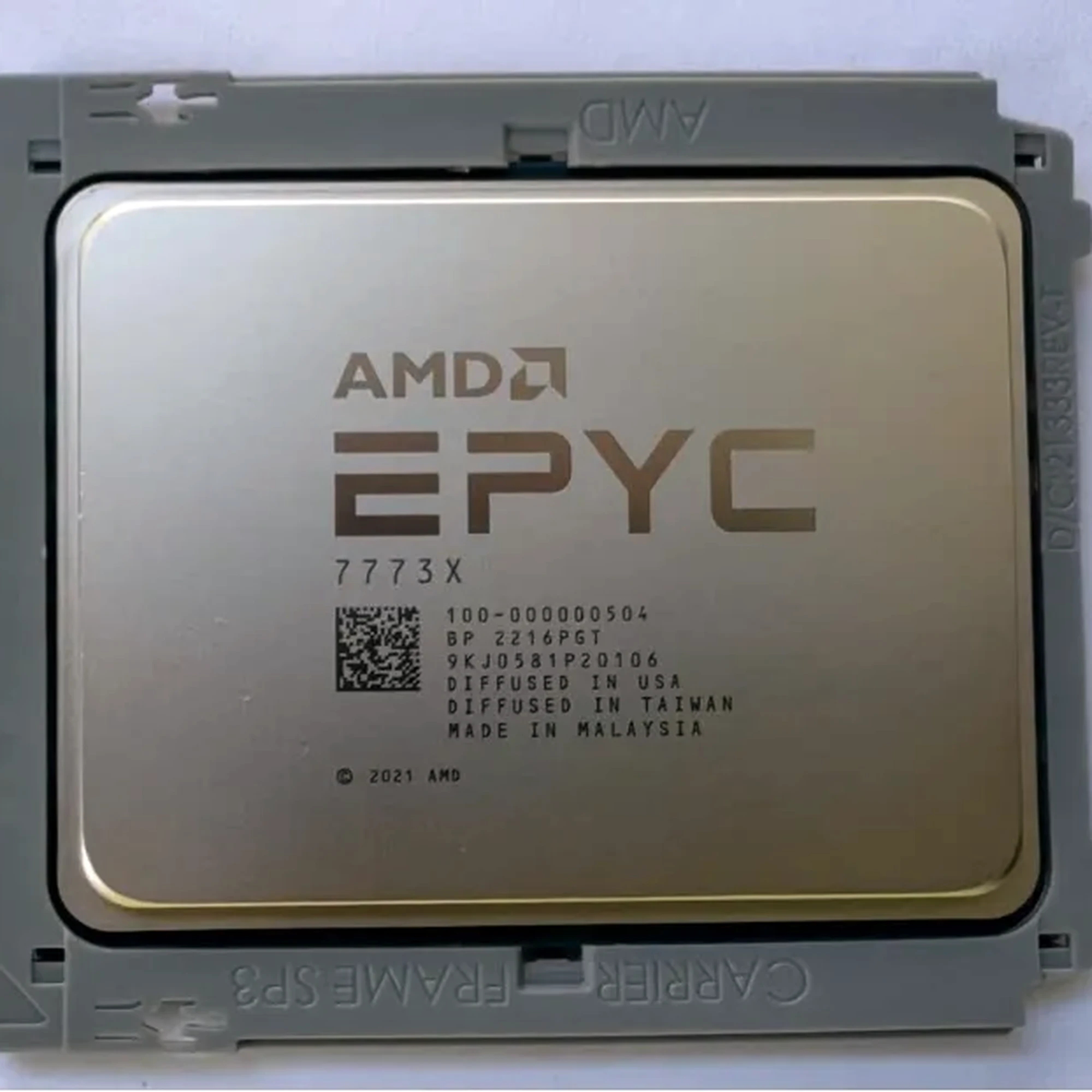
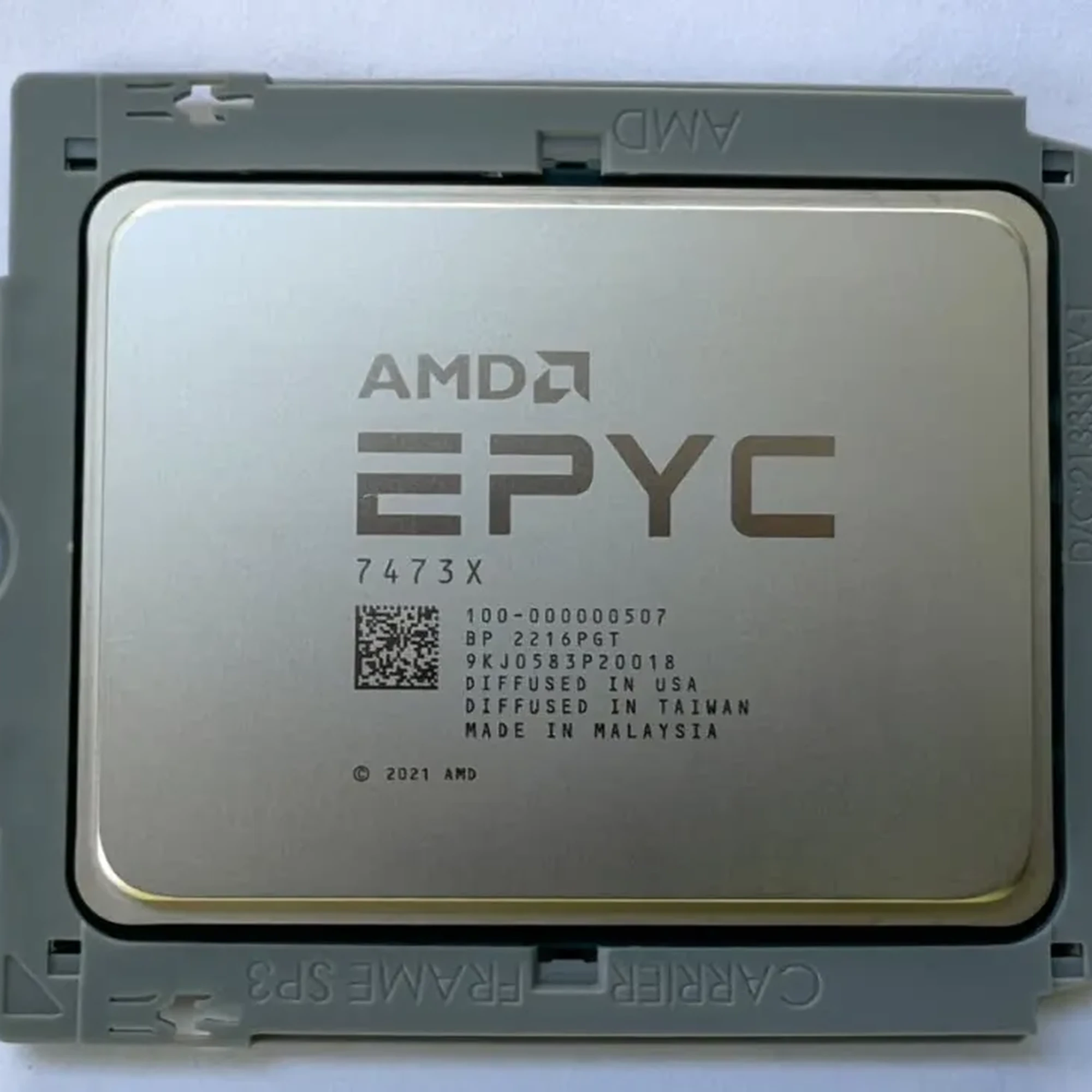
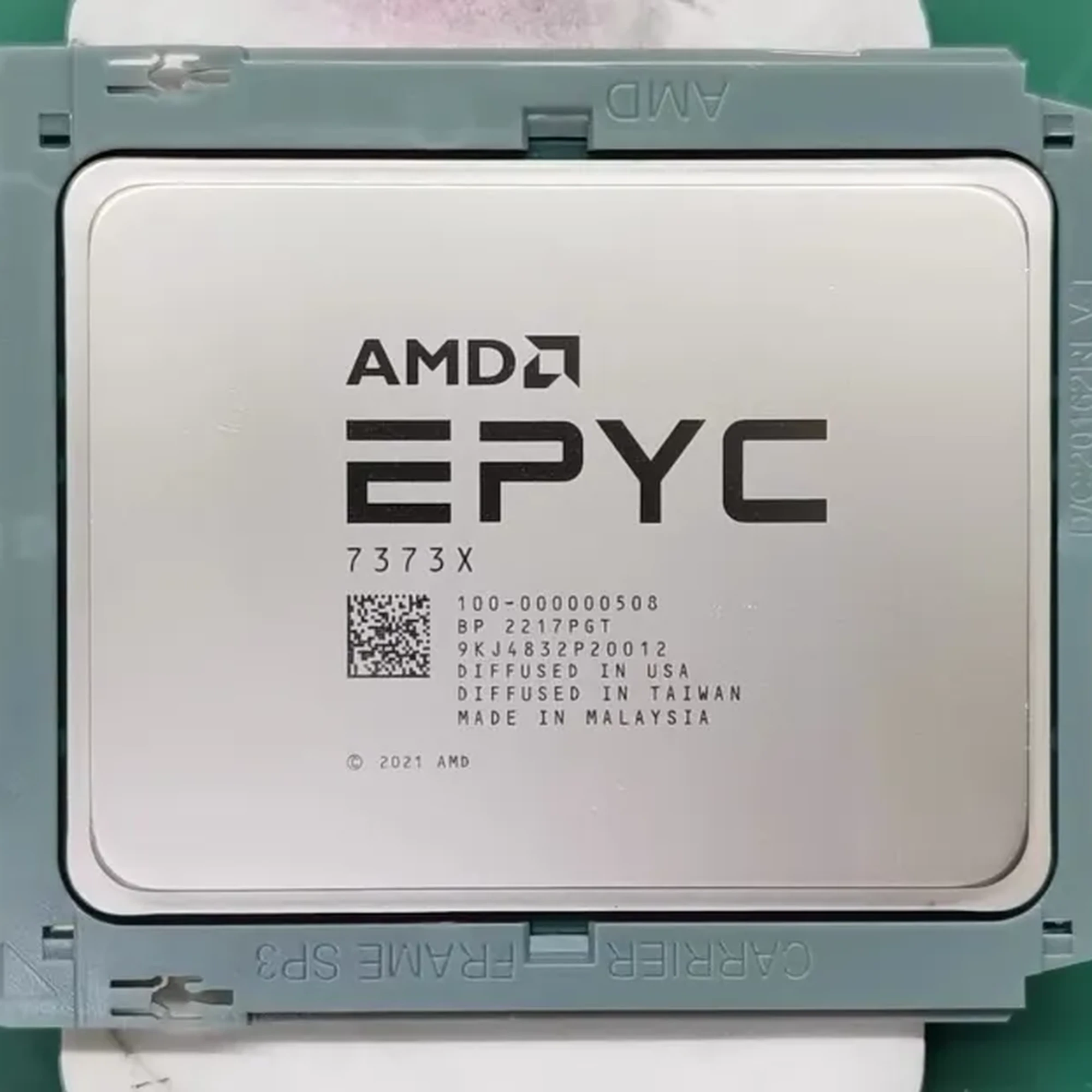

 AMD EPYC 7773X 64-Core 128-Thread Server Processor | 7nm Zen 3, 768MB L3 Cache, PCIe 4.0, 3D V-Cache
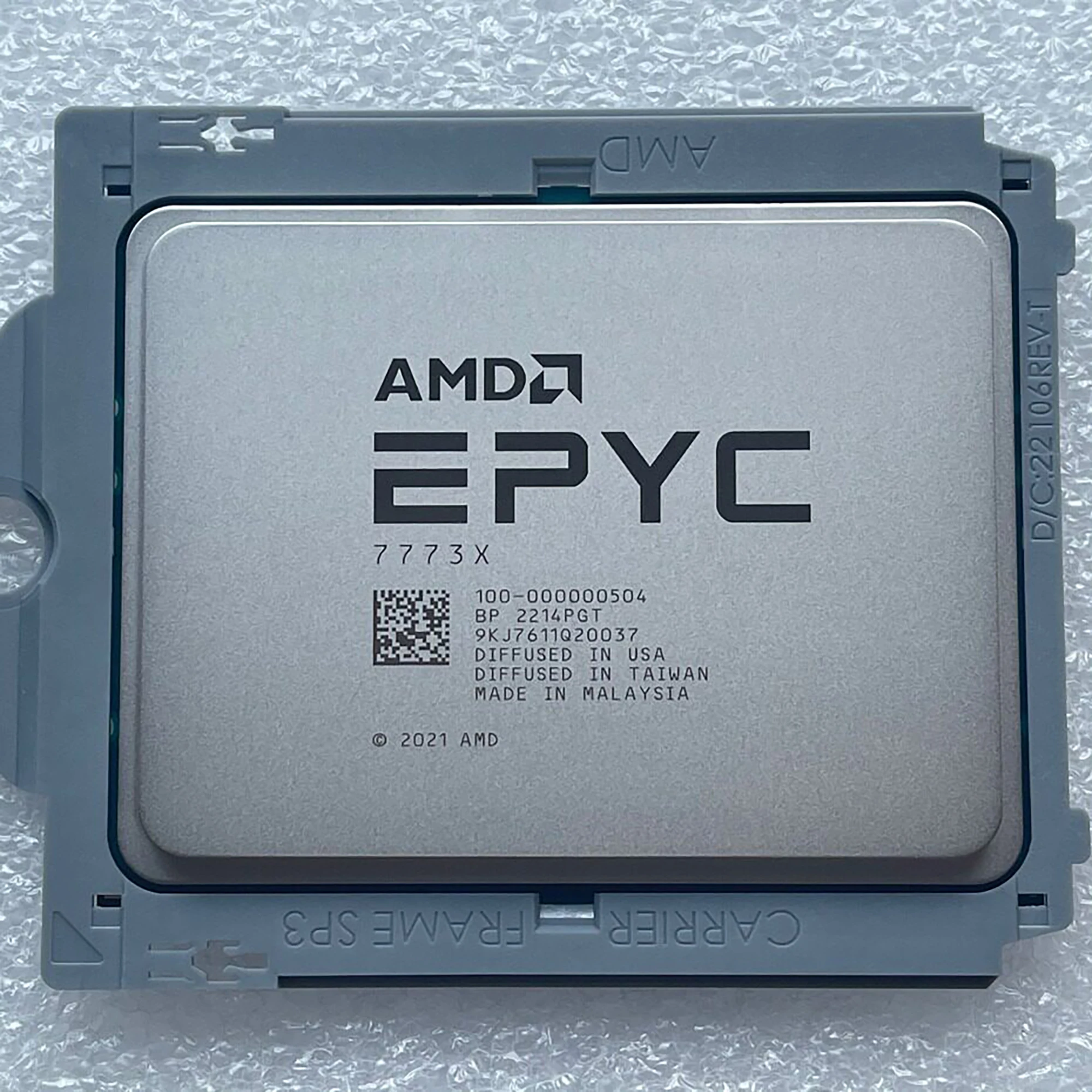 AMD EPYC 7773X 64-Core 128-Thread Server Processor | 7nm Zen 3, 768MB L3 Cache, PCIe 4.0, 3D V-Cache
| Specification | Details |
|---|---|
| Processor Model | AMD EPYC 7773X |
| Series | 3rd Gen AMD EPYC (7003 Series, Milan-X) |
| Architecture | 7nm Zen 3 (Milan-X) with AMD 3D V-Cache Technology |
| Cores/Threads | 64 Cores, 128 Threads (SMT Supported) |
| Base Clock Speed | 2.2 GHz |
| Max Turbo Boost Speed | 3.5 GHz |
| Cache Configuration | L1: 4MB (64KB per core), L2: 32MB (512KB per core), L3: 768MB (Shared) |
| Memory Support | 8 Memory Channels, DDR4-3200 SDRAM, ECC Supported, Max 4TB Memory |
| Memory Bandwidth | 204.8 GB/s per socket |
| PCIe Version & Lanes | PCIe 4.0, 128 Lanes |
| Socket Type | SP3 |
| TDP (Thermal Design Power) | 280W, Configurable CTDP: 225-280W |
| Launch Date | March 22, 2022 |
| Launch Price (MSRP) | $8800 |
| Supported Configurations | 1P (Single-Socket), 2P (Dual-Socket) |
| Key Technologies | AMD 3D V-Cache, AMD Infinity Guard, AMD Infinity Architecture, SMT |
| Product ID (Tray) | 100-000000504 |
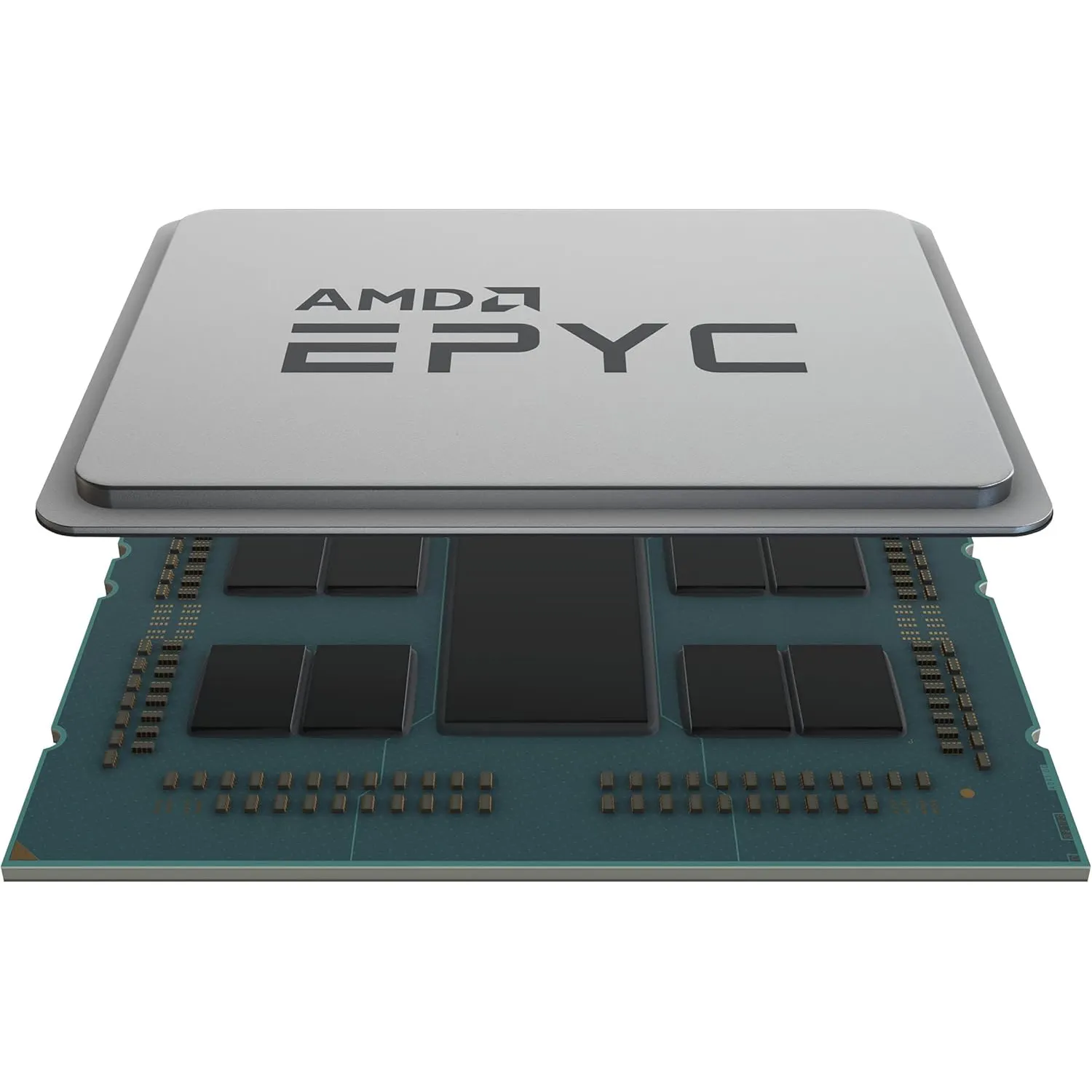
In the high-stakes world of enterprise server processors, the AMD EPYC 7773X emerges as a groundbreaking solution, redefining performance standards for cache-sensitive and high-performance computing (HPC) workloads. Released in March 2022 as part of AMD’s EPYC 7003 (Milan-X) series, this processor is the first data center CPU to leverage AMD’s innovative 3D V-Cache technology, built on the proven 7nm Zen 3 architecture. Designed to address the growing demands of technical computing, data analytics, and enterprise workloads, the EPYC 7773X combines exceptional core density, massive cache capacity, and robust connectivity to deliver a performance uplift that outperforms many competing server CPUs in its class. Whether you’re running computational fluid dynamics (CFD), finite element analysis (FEA), electronic design automation (EDA), or large-scale virtualization, the EPYC 7773X delivers the power, efficiency, and scalability that modern businesses and data centers require.
Key Architecture & Core Performance
At the core of the AMD EPYC 7773X lies the Zen 3 (Milan-X) architecture, a refined iteration of AMD’s award-winning Zen design that delivers improved IPC (Instructions Per Cycle) and enhanced multi-threaded efficiency. Manufactured by TSMC using a 7nm fabrication process, the processor features 64 physical cores and 128 threads, thanks to AMD’s Simultaneous Multithreading (SMT) technology—which allows each core to handle two tasks simultaneously, doubling the processor’s multitasking capabilities. This high core and thread count makes the EPYC 7773X particularly well-suited for parallel workloads, where throughput and multitasking are critical to performance.
The processor operates at a base clock speed of 2.2GHz, with a maximum turbo boost frequency of up to 3.5GHz, ensuring consistent performance across both light and heavy workloads. Unlike some high-core-count processors that sacrifice single-threaded performance for multi-threaded capability, the EPYC 7773X maintains a balanced approach. According to Geekbench 6 benchmarks, it delivers a single-thread score of 1536 and an impressive multi-thread score of 15554, while PassMark benchmarks show a single-thread mark of 2430 and a CPU mark of 109334—outperforming comparable server processors in both single and multi-threaded tasks. This balance is invaluable for environments that run a mix of single-threaded and multi-threaded applications, such as web servers, database management systems, and application development/testing platforms.
A defining feature of the EPYC 7773X is its AMD 3D V-Cache technology, a revolutionary 3D die-stacking solution that significantly increases cache capacity without sacrificing power efficiency or form factor. This technology enables the processor to deliver up to 66% performance uplift across targeted technical computing workloads compared to non-stacked 3rd Gen AMD EPYC processors, making it a game-changer for cache-sensitive tasks.
Cache & Memory Capabilities
The AMD EPYC 7773X sets a new standard for cache capacity in server processors, featuring one of the largest L3 caches in the industry at 768MB of shared L3 cache. Complementing this massive L3 cache is a hierarchical cache system that includes 64KB of L1 cache per core (32KB for instructions, 32KB for data) and 512KB of L2 cache per core, totaling 4MB of L1 cache and 32MB of L2 cache. This robust cache configuration minimizes latency by storing frequently accessed data close to the CPU cores, reducing the time spent accessing data from main memory and significantly boosting overall performance—especially for cache-sensitive workloads like EDA, CFD, and FEA.
In terms of memory support, the EPYC 7773X is equipped with 8 memory channels, supporting DDR4-3200 SDRAM with ECC (Error-Correcting Code) capability—a critical feature for server environments where data integrity is non-negotiable. With a maximum memory bandwidth of 204.8 GB/s per socket and support for up to 4TB of memory, the processor can efficiently handle large datasets, making it ideal for memory-intensive workloads such as data analytics, machine learning inference, and HPC tasks. Additionally, the processor supports both single-socket (1P) and dual-socket (2P) configurations, offering scalability for businesses that need to expand their server capacity over time without replacing their existing infrastructure.
Connectivity & Power Efficiency
The AMD EPYC 7773X comes with robust connectivity options, featuring 128 PCIe 4.0 lanes. PCIe 4.0 offers double the bandwidth of PCIe 3.0 (16 GT/s per lane), enabling faster data transfer between the processor and peripheral devices such as NVMe SSDs, network adapters, and GPU accelerators. This high-speed connectivity is essential for modern server setups that require rapid data access and transfer, such as cloud data centers, edge computing environments, and HPC clusters. The processor also supports AMD Infinity Architecture and AMD Infinity Guard, providing enhanced security and system coherence for enterprise-grade deployments.
When it comes to power consumption, the EPYC 7773X has a TDP (Thermal Design Power) of 280W, with a configurable CTDP (Configurable TDP) range of 225-280W. This balance of power and performance ensures that the processor delivers high throughput without excessive energy usage, helping businesses reduce their data center operational costs. While the processor is power-intensive under maximum load, its efficiency shines in workloads that leverage its cache and multi-threaded capabilities, delivering more performance per watt compared to many competing processors. The processor is also compatible with existing SP3 socket platforms, allowing for drop-in upgrades without the need for new motherboards or infrastructure.
Workload Affinity & Use Cases
The AMD EPYC 7773X is a versatile processor that excels in a wide range of server workloads, with a particular focus on cache-sensitive and high-performance computing tasks. Its unique combination of 64 cores, 128 threads, 768MB L3 cache, and 3D V-Cache technology makes it ideal for the following use cases:
- High-Performance Computing (HPC): Perfect for computational fluid dynamics (CFD), finite element analysis (FEA), and other technical computing tasks that require massive parallel processing and fast data access. The 768MB L3 cache delivers significant performance gains for these workloads, reducing simulation times and accelerating time-to-market for engineering projects.
- Data Centers & Cloud Computing: Ideal for cloud hosting, virtualization, and server consolidation, where the high core and thread count allows for efficient resource allocation and support for hundreds of virtual machines (VMs) or containers. The PCIe 4.0 connectivity and high memory bandwidth ensure smooth performance for cloud-native applications and large-scale data processing.
- Cache-Sensitive Workloads: Excels in electronic design automation (EDA), structural analysis, and big data analytics, where frequent data access and low latency are critical. The AMD 3D V-Cache technology provides a significant performance uplift for these tasks, outperforming processors without stacked cache.
- Enterprise Applications: Suitable for database management, enterprise resource planning (ERP), and customer relationship management (CRM) systems, where reliability, scalability, and performance are essential. The EPYC 7773X’s balanced single and multi-threaded performance ensures smooth operation of both transactional and analytical workloads.
With a launch price of $8800, the AMD EPYC 7773X is positioned as a premium server processor, but its performance gains and versatility make it a cost-effective investment for businesses that rely on cache-sensitive and high-performance workloads. Its compatibility with existing 3rd Gen EPYC platforms also makes it an attractive upgrade option for organizations looking to enhance their server performance without a complete infrastructure overhaul.
Recommended Motherboards for AMD EPYC 7002/7003 SP3 Processors
| Model | Brand | CPU Configuration | Memory Slots | Max Memory | LAN | PCIe Expansion | Storage | Form Factor | BMC |
|---|---|---|---|---|---|---|---|---|---|
| MZ72-HB2 | GIGABYTE | Dual SP3 | 16×DDR4 | 2TB | 2×10G + 1×Mgmt LAN | 5×PCIe 4.0 x16/x8 | 5×SlimSAS, 1×M.2 | E-ATX | AST2600 |
| MZ32-AR0 | GIGABYTE | Single SP3 | 16×DDR4 | 2TB | 2×1G (Intel I350) | 7×PCIe 4.0/3.0 x16/x8 | 6×SlimSAS, 2×M.2 | E-ATX | AST2600 |
| MZ71-CE1 | GIGABYTE | Dual SP3 | 16×DDR4 | 2TB | 2×1G (BCM5720) + Mgmt LAN | 5×PCIe 4.0 x16/x8 | 3×SlimSAS, 4×SATA | E-ATX | AST2600 |
| ROMED8-2T/BCM | ASRock Rack | Single SP3 | 8×DDR4 | 256GB | 2×10G (Intel X550) + IPMI | 7×PCIe 4.0 x16 | 10×SATA, 2×M.2 | ATX | AST2500 |
| ROMED4ID-2T | ASRock Rack | Single SP3 | 4×DDR4 | 256GB | 2×10G (Intel X550) + IPMI | 1×PCIe 4.0 x16 | 16×SATA, 1×M.2 | Mini-ITX | AST2500 |
| ROME2D16-2T | ASRock Rack | Dual SP3 | 16×DDR4 | 4TB | 2×10G (Intel X550) + IPMI | 5×PCIe 4.0 x16 + 1×x8 | 2×SlimSAS, 2×OcuLink, 2×M.2 | EEB | AST2600 |
| ROME2D32GM-2T | ASRock Rack | Dual SP3 | 32×DDR4 | 8TB | 2×10G + IPMI | 6×PCIe 4.0 x16 | 19×SlimSAS, 1×M.2 | EEB | AST2600 |
| H12SSL-NT | Supermicro | Single SP3 | 8×DDR4 | 2TB | 2×10G (BCM57416) + IPMI | 5×PCIe 4.0 x16/x8 | 2×SlimSAS (SATA/NVMe) | ATX | AST2500 |
| H12SSL-i | Supermicro | Single SP3 | 8×DDR4 | 2TB | 2×1G (BCM5720) | 5×PCIe 4.0 x16, 2×x8 | 8×SATA, 2×M.2 | ATX | AST2500 |
| H12DSi-N6 | Supermicro | Dual SP3 | 16×DDR4 | 4TB | 2×1G + IPMI | 3×PCIe 4.0 x16, 3×x8 | 10×SATA, 1×M.2 | E-ATX | AST2600 |
AMD EPYC 7003 Series Processors Specifications
| Name | # of CPU Cores | # of Threads | Max. Boost Clock | Base Clock | L3 Cache | Default TDP |
| AMD EPYC™ 7203P | 8 | 16 | Up to 3.4 GHz | 2.8 GHz | 64 MB | 120W |
| AMD EPYC™ 7203 | 8 | 16 | Up to 3.4 GHz | 2.8 GHz | 64 MB | 120W |
| AMD EPYC™ 72F3 | 8 | 16 | Up to 4.1 GHz | 3.7 GHz | 256 MB | 180W |
| AMD EPYC™ 7303P | 16 | 32 | Up to 3.4 GHz | 2.4 GHz | 64 MB | 130W |
| AMD EPYC™ 7303 | 16 | 32 | Up to 3.4 GHz | 2.4 GHz | 64 MB | 130W |
| AMD EPYC™ 73F3 | 16 | 32 | Up to 4 GHz | 3.5 GHz | 256 MB | 240W |
| AMD EPYC™ 7373X | 16 | 32 | Up to 3.8 GHz | 3.05 GHz | 768 MB | 240W |
| AMD EPYC™ 7343 | 16 | 32 | Up to 3.9 GHz | 3.2 GHz | 128 MB | 190W |
| AMD EPYC™ 7313P | 16 | 32 | Up to 3.7 GHz | 3 GHz | 128 MB | 155W |
| AMD EPYC™ 7313 | 16 | 32 | Up to 3.7 GHz | 3 GHz | 128 MB | 155W |
| AMD EPYC™ 74F3 | 24 | 48 | Up to 4 GHz | 3.2 GHz | 256 MB | 240W |
| AMD EPYC™ 7473X | 24 | 48 | Up to 3.7 GHz | 2.8 GHz | 768 MB | 240W |
| AMD EPYC™ 7443P | 24 | 48 | Up to 4 GHz | 2.85 GHz | 128 MB | 200W |
| AMD EPYC™ 7443 | 24 | 48 | Up to 4 GHz | 2.85 GHz | 128 MB | 200W |
| AMD EPYC™ 7413 | 24 | 48 | Up to 3.6 GHz | 2.65 GHz | 128 MB | 180W |
| AMD EPYC™ 7453 | 28 | 56 | Up to 3.45 GHz | 2.75 GHz | 64 MB | 225W |
| AMD EPYC™ 75F3 | 32 | 64 | Up to 4 GHz | 2.95 GHz | 256 MB | 280W |
| AMD EPYC™ 7573X | 32 | 64 | Up to 3.6 GHz | 2.8 GHz | 768 MB | 280W |
| AMD EPYC™ 7543P | 32 | 64 | Up to 3.7 GHz | 2.8 GHz | 256 MB | 225W |
| AMD EPYC™ 7543 | 32 | 64 | Up to 3.7 GHz | 2.8 GHz | 256 MB | 225W |
| AMD EPYC™ 7513 | 32 | 64 | Up to 3.65 GHz | 2.6 GHz | 128 MB | 200W |
| AMD EPYC™ 7643P | 48 | 96 | Up to 3.6 GHz | 2.3 GHz | 256 MB | 225W |
| AMD EPYC™ 7643 | 48 | 96 | Up to 3.6 GHz | 2.3 GHz | 256 MB | 225W |
| AMD EPYC™ 7663 | 56 | 112 | Up to 3.5 GHz | 2 GHz | 256 MB | 240W |
| AMD EPYC™ 7663P | 56 | 112 | Up to 3.5 GHz | 2 GHz | 256 MB | 240W |
| AMD EPYC™ 7773X | 64 | 128 | Up to 3.5 GHz | 2.2 GHz | 768 MB | 280W |
| AMD EPYC™ 7763 | 64 | 128 | Up to 3.5 GHz | 2.45 GHz | 256 MB | 280W |
| AMD EPYC™ 7713P | 64 | 128 | Up to 3.67 GHz | 2 GHz | 256 MB | 225W |
| AMD EPYC™ 7713 | 64 | 128 | Up to 3.67 GHz | 2 GHz | 256 MB | 225W |


