
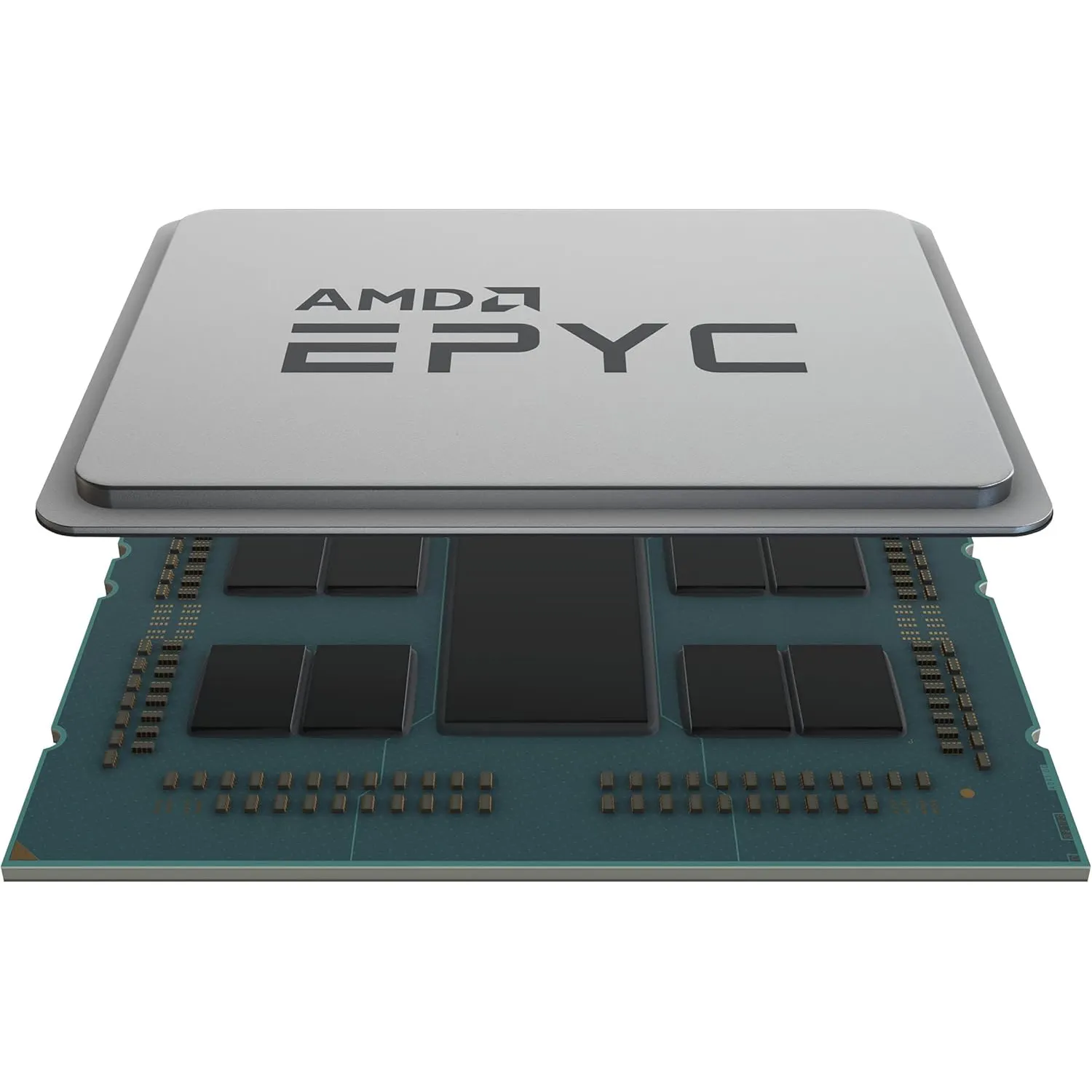
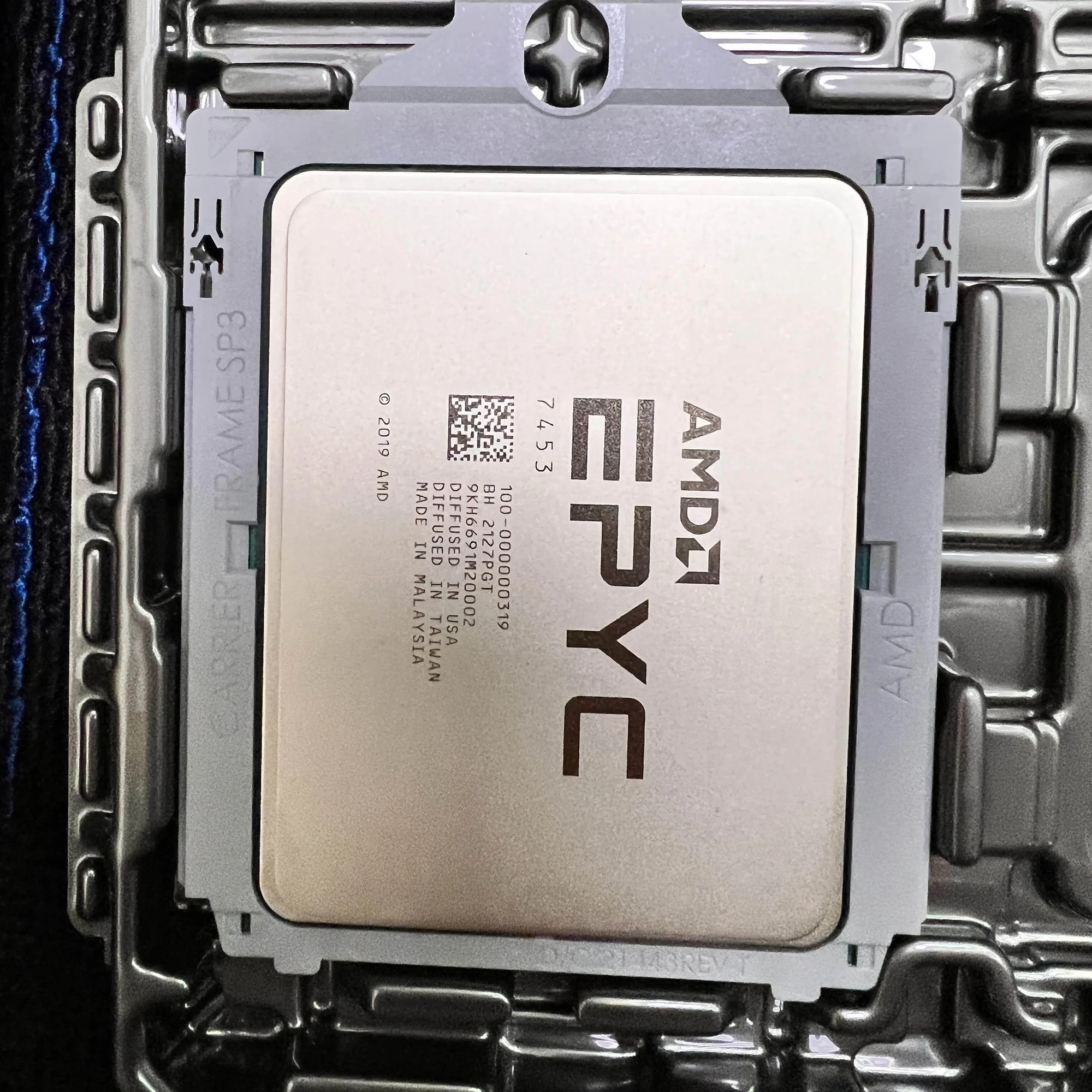
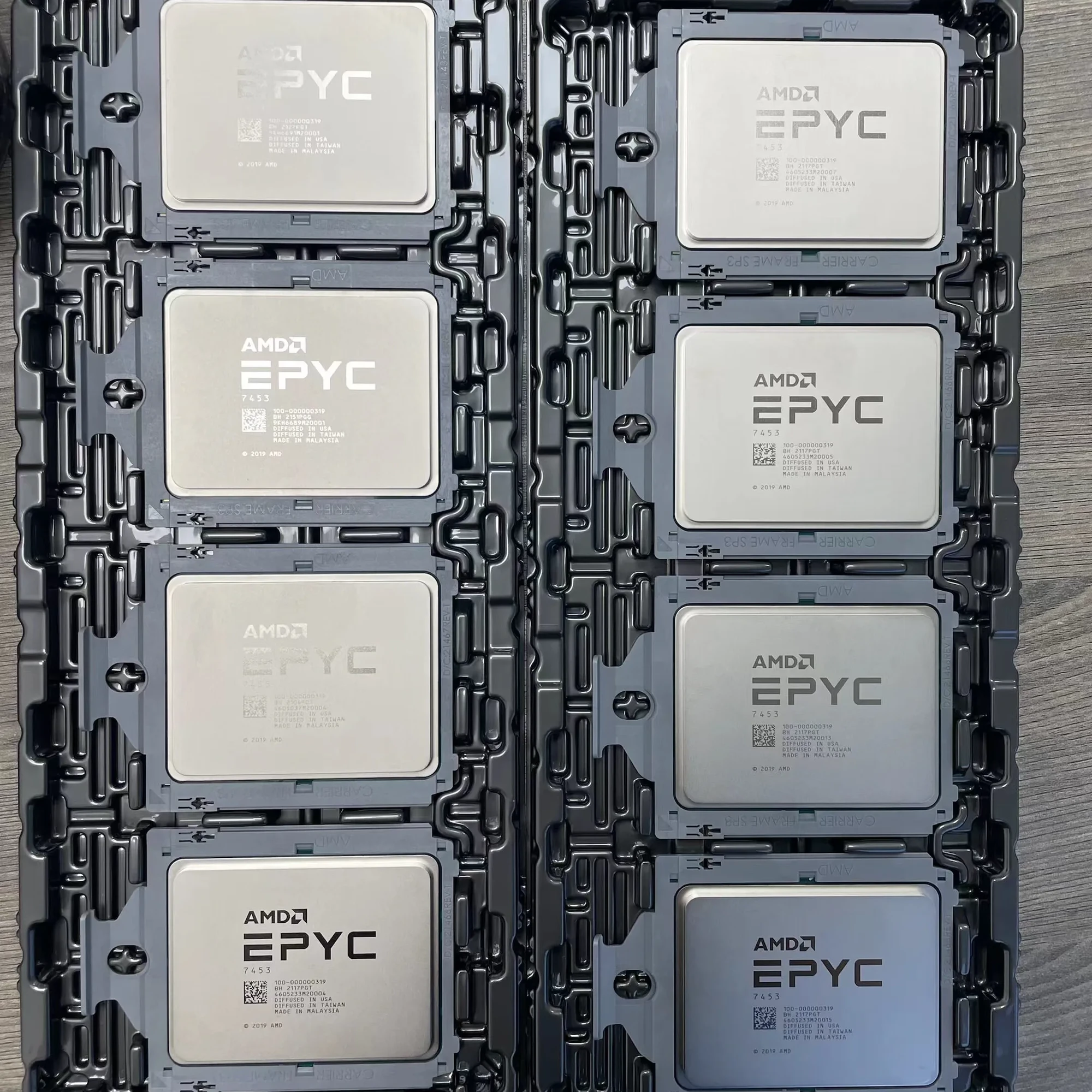
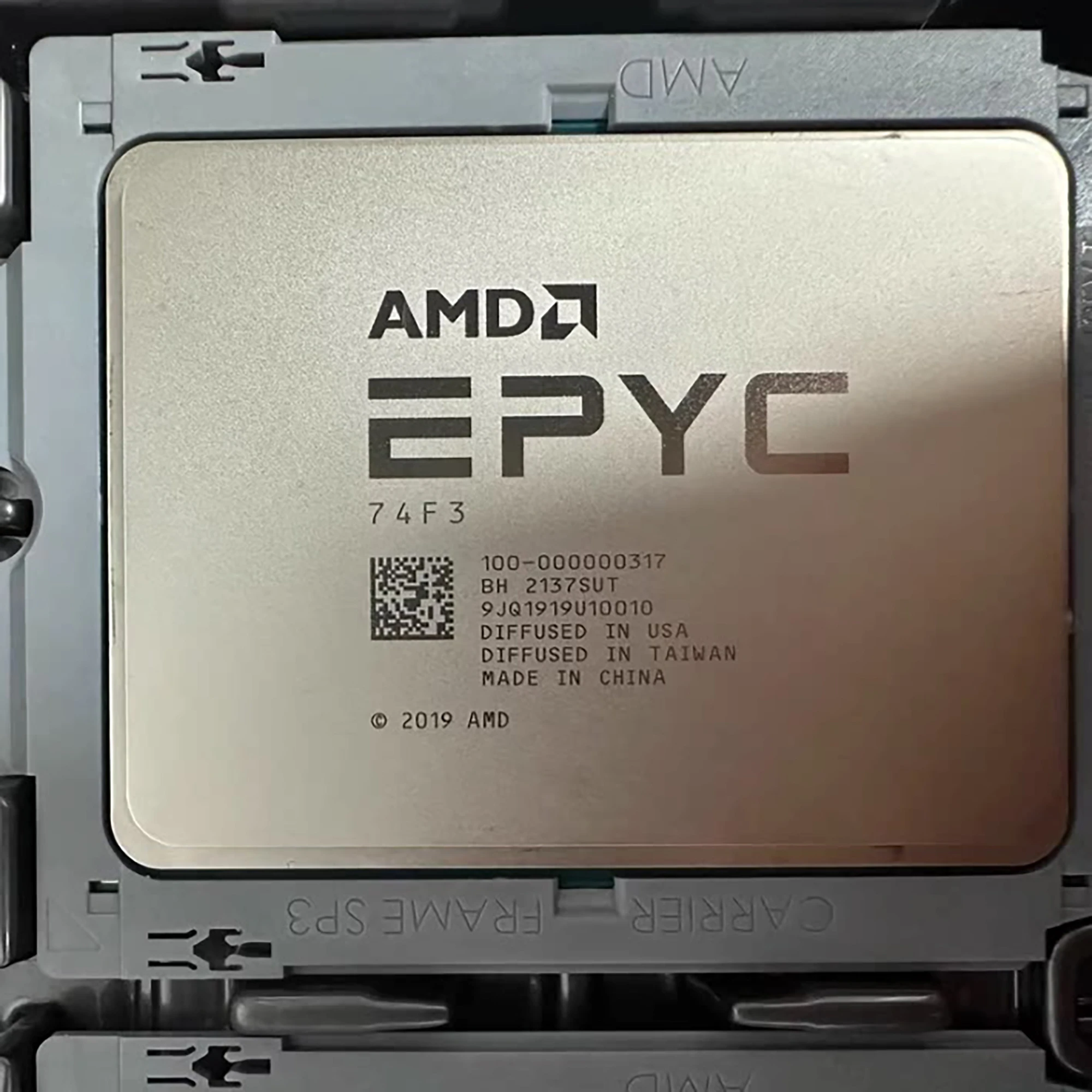
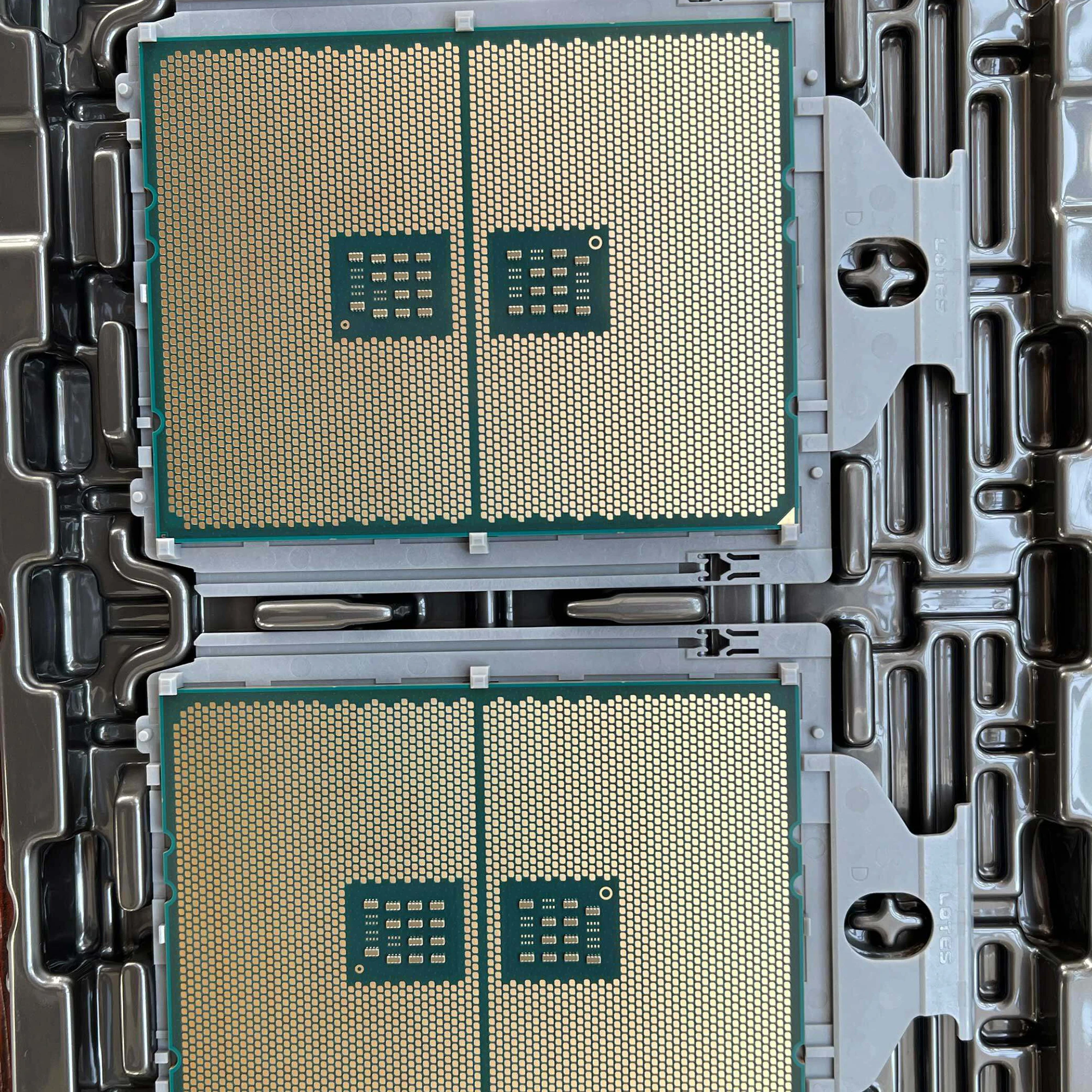
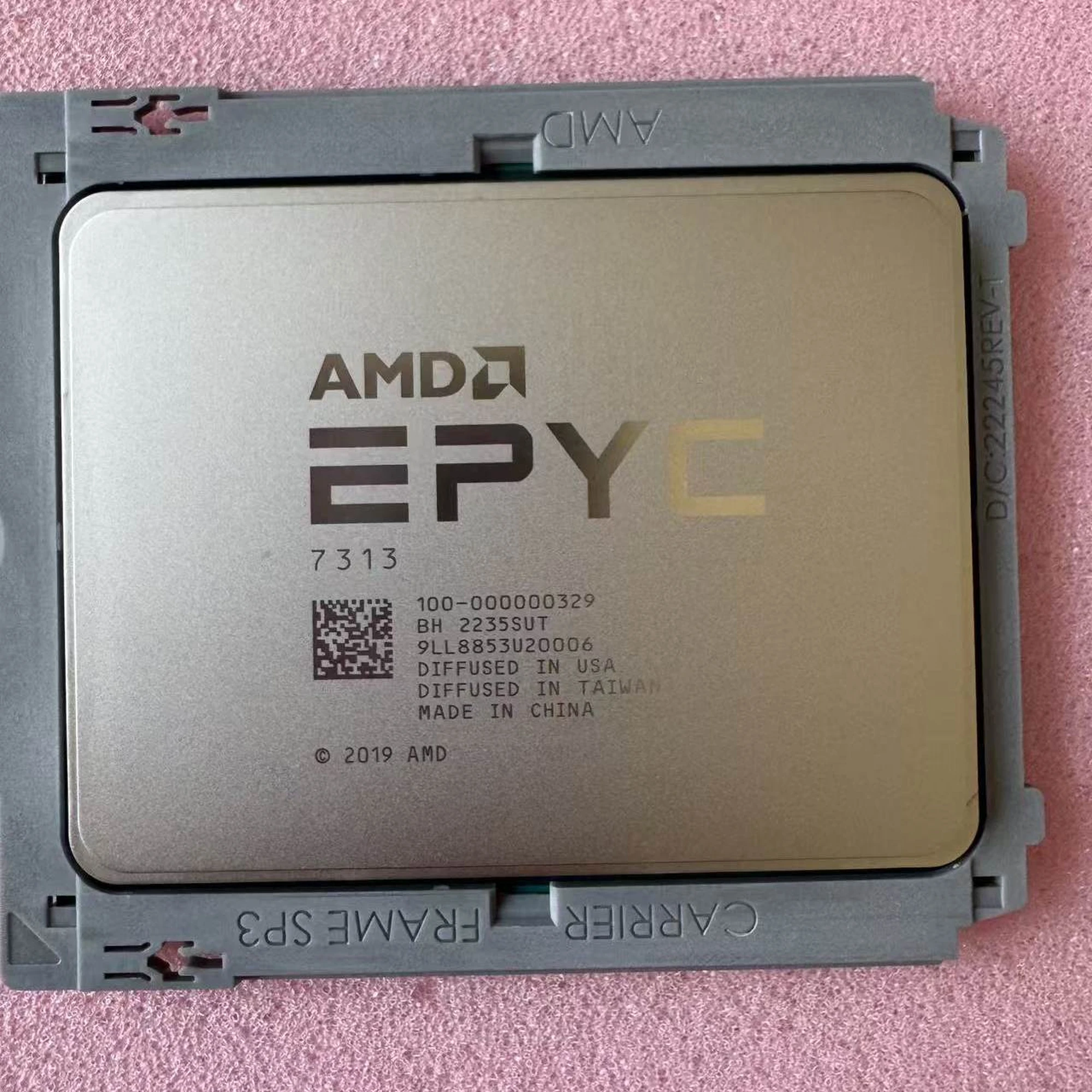
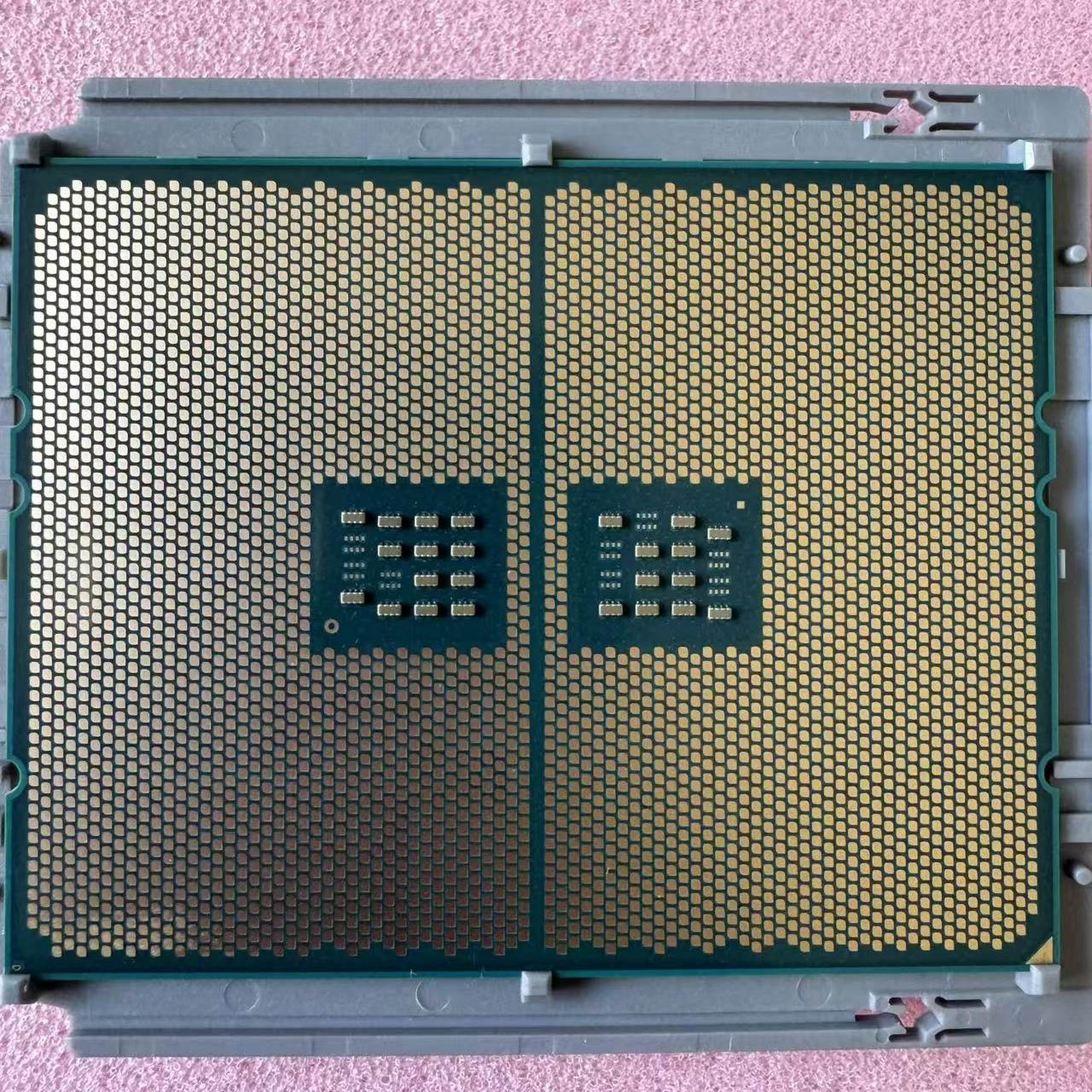

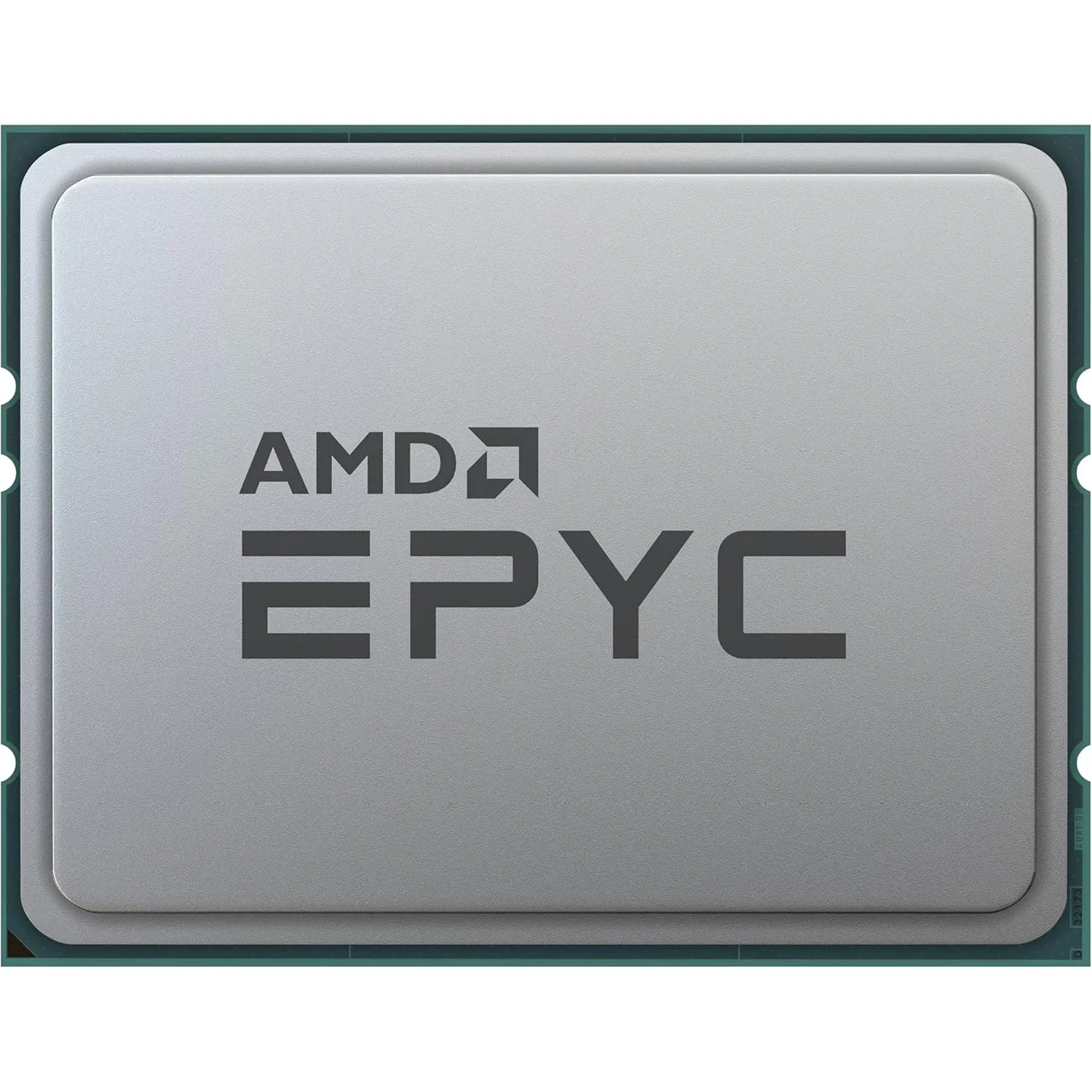
AMD EPYC 7453 Processor 28 Cores, 56 Threads, High-Performance Server CPU
| Specification | Details |
|---|---|
| Processor Model | AMD EPYC 7453 |
| Architecture | Zen 3 |
| Cores | 28 |
| Threads | 56 |
| Base Clock | 2.75 GHz |
| Max Boost Clock | 3.45 GHz |
| L3 Cache | 64 MB |
| TDP | 225W |
| Socket | SP3 |
| Memory Support | DDR4 |
| Memory Channels | 8 Channels |
| PCIe Version | PCIe 4.0 |
| PCIe Lanes | Up to 128 |
| Manufacturing Process | 7nm |
| Max Memory Speed | Up to 3200 MHz |
| Configuration | Single/Dual Socket |
The AMD EPYC 7453 is a powerful server-grade processor designed to deliver exceptional performance, scalability, and efficiency for modern data centers. Built on AMD’s advanced Zen 3 architecture, this processor provides a balanced combination of core count, clock speed, and memory bandwidth, making it ideal for virtualization, cloud computing, enterprise workloads, and high-performance computing (HPC).
With 28 cores and 56 threads, the EPYC 7453 offers a versatile solution for businesses seeking to optimize their infrastructure without compromising performance. Its innovative architecture ensures improved IPC (Instructions Per Clock), reduced latency, and enhanced overall throughput.
Advanced Zen 3 Architecture
At the heart of the EPYC 7453 lies AMD’s Zen 3 core architecture. This generation introduces a unified 8-core complex (CCX), which significantly reduces latency between cores and improves communication efficiency.
This architectural improvement leads to better performance in multi-threaded and single-threaded workloads. Whether running enterprise databases, virtualization platforms, or analytics tools, the EPYC 7453 ensures consistent and reliable results.
High Core Count for Demanding Workloads
The 28-core design of the AMD EPYC 7453 allows businesses to handle demanding workloads with ease. Each core supports simultaneous multithreading (SMT), enabling 56 threads to run concurrently.
This makes the processor ideal for:
- Virtual machine hosting
- Cloud-native applications
- Containerized environments
- Data analytics and AI inference
Organizations can consolidate workloads onto fewer servers, reducing hardware costs and improving operational efficiency.
Impressive Clock Speeds and Performance
The EPYC 7453 operates with a base clock of 2.75 GHz and can boost up to 3.45 GHz. This ensures fast execution for both lightly threaded and heavily parallel applications.
The combination of high clock speeds and efficient architecture results in:
- Faster data processing
- Reduced latency
- Improved application responsiveness
This makes the processor suitable for real-time applications and performance-critical environments.
Massive Cache for Faster Data Access
The processor features a substantial 64MB L3 cache, which helps reduce memory access latency and improves performance for data-intensive workloads.
Large cache memory ensures:
- Faster data retrieval
- Improved database performance
- Enhanced virtualization efficiency
This is particularly beneficial for enterprise applications that rely on quick data access and processing.
PCIe 4.0 Support for Modern Expansion
The AMD EPYC 7453 supports PCIe 4.0, doubling the bandwidth compared to PCIe 3.0. With up to 128 PCIe lanes, the processor provides extensive connectivity for GPUs, NVMe storage, and networking devices.
Benefits include:
- Faster storage performance
- Improved GPU acceleration
- Enhanced networking capabilities
This makes the EPYC 7453 ideal for high-performance storage systems and GPU-accelerated workloads.
Eight-Channel DDR4 Memory Support
Memory performance is critical in server environments, and the EPYC 7453 excels with support for eight-channel DDR4 memory.
Key advantages:
- Higher memory bandwidth
- Support for large memory capacities
- Improved application performance
This ensures smooth operation for memory-intensive applications such as virtualization, databases, and in-memory computing.
Energy Efficiency and Thermal Design
With a TDP of 225W, the AMD EPYC 7453 strikes a balance between performance and power efficiency. Its advanced 7nm manufacturing process ensures lower power consumption while delivering high performance.
Energy-efficient operation helps:
- Reduce operational costs
- Lower cooling requirements
- Improve overall data center efficiency
Enterprise-Grade Security Features
Security is a top priority in modern IT environments. The EPYC 7453 includes AMD Infinity Guard, a comprehensive set of security features designed to protect data and applications.
These features include:
- Secure Encrypted Virtualization (SEV)
- Secure Memory Encryption (SME)
- Hardware-based root of trust
These technologies help safeguard sensitive workloads and ensure compliance with security standards.
Ideal Use Cases
The AMD EPYC 7453 is suitable for a wide range of applications, including:
Virtualization and Cloud Computing
Run multiple virtual machines efficiently with high core density and memory bandwidth.
Enterprise Applications
Support ERP, CRM, and database systems with reliable performance.
High-Performance Computing (HPC)
Handle scientific simulations and data analysis workloads.
Content Delivery and Web Hosting
Deliver fast and reliable services for web applications and content platforms.
Scalability for Growing Businesses
The EPYC 7453 supports dual-socket configurations, allowing organizations to scale their infrastructure as needed. This flexibility ensures that businesses can grow without needing a complete system overhaul.
Reliability and Platform Compatibility
AMD EPYC processors are known for their reliability and compatibility with leading server platforms. The EPYC 7453 integrates seamlessly with enterprise-grade motherboards and systems, ensuring stable operation in mission-critical environments.
Conclusion
The AMD EPYC 7453 is a powerful and versatile server processor that delivers exceptional performance, scalability, and efficiency. With its advanced Zen 3 architecture, high core count, and robust feature set, it is an excellent choice for modern data centers and enterprise environments.
Whether you are building a cloud infrastructure, running virtualized workloads, or deploying high-performance applications, the EPYC 7453 provides the performance and reliability needed to succeed.
Recommended Motherboards for AMD EPYC 7002/7003 SP3 Processors
| Model | Brand | CPU Configuration | Memory Slots | Max Memory | LAN | PCIe Expansion | Storage | Form Factor | BMC |
|---|---|---|---|---|---|---|---|---|---|
| MZ72-HB2 | GIGABYTE | Dual SP3 | 16×DDR4 | 2TB | 2×10G + 1×Mgmt LAN | 5×PCIe 4.0 x16/x8 | 5×SlimSAS, 1×M.2 | E-ATX | AST2600 |
| MZ32-AR0 | GIGABYTE | Single SP3 | 16×DDR4 | 2TB | 2×1G (Intel I350) | 7×PCIe 4.0/3.0 x16/x8 | 6×SlimSAS, 2×M.2 | E-ATX | AST2600 |
| MZ71-CE1 | GIGABYTE | Dual SP3 | 16×DDR4 | 2TB | 2×1G (BCM5720) + Mgmt LAN | 5×PCIe 4.0 x16/x8 | 3×SlimSAS, 4×SATA | E-ATX | AST2600 |
| ROMED8-2T/BCM | ASRock Rack | Single SP3 | 8×DDR4 | 256GB | 2×10G (Intel X550) + IPMI | 7×PCIe 4.0 x16 | 10×SATA, 2×M.2 | ATX | AST2500 |
| ROMED4ID-2T | ASRock Rack | Single SP3 | 4×DDR4 | 256GB | 2×10G (Intel X550) + IPMI | 1×PCIe 4.0 x16 | 16×SATA, 1×M.2 | Mini-ITX | AST2500 |
| ROME2D16-2T | ASRock Rack | Dual SP3 | 16×DDR4 | 4TB | 2×10G (Intel X550) + IPMI | 5×PCIe 4.0 x16 + 1×x8 | 2×SlimSAS, 2×OcuLink, 2×M.2 | EEB | AST2600 |
| ROME2D32GM-2T | ASRock Rack | Dual SP3 | 32×DDR4 | 8TB | 2×10G + IPMI | 6×PCIe 4.0 x16 | 19×SlimSAS, 1×M.2 | EEB | AST2600 |
| H12SSL-NT | Supermicro | Single SP3 | 8×DDR4 | 2TB | 2×10G (BCM57416) + IPMI | 5×PCIe 4.0 x16/x8 | 2×SlimSAS (SATA/NVMe) | ATX | AST2500 |
| H12SSL-i | Supermicro | Single SP3 | 8×DDR4 | 2TB | 2×1G (BCM5720) | 5×PCIe 4.0 x16, 2×x8 | 8×SATA, 2×M.2 | ATX | AST2500 |
| H12DSi-N6 | Supermicro | Dual SP3 | 16×DDR4 | 4TB | 2×1G + IPMI | 3×PCIe 4.0 x16, 3×x8 | 10×SATA, 1×M.2 | E-ATX | AST2600 |
AMD EPYC 7003 Series Processors General Specifications
Name | # of CPU Cores | # of Threads | Max. Boost Clock | Base Clock | L3 Cache | Default TDP |
|---|---|---|---|---|---|---|
| AMD EPYC™ 7203P | 8 | 16 | Up to 3.4 GHz | 2.8 GHz | 64 MB | 120W |
| AMD EPYC™ 7203 | 8 | 16 | Up to 3.4 GHz | 2.8 GHz | 64 MB | 120W |
| AMD EPYC™ 7303P | 16 | 32 | Up to 3.4 GHz | 2.4 GHz | 64 MB | 130W |
| AMD EPYC™ 7303 | 16 | 32 | Up to 3.4 GHz | 2.4 GHz | 64 MB | 130W |
| AMD EPYC™ 7643P | 48 | 96 | Up to 3.6 GHz | 2.3 GHz | 256 MB | 225W |
| AMD EPYC™ 7773X | 64 | 128 | Up to 3.5 GHz | 2.2 GHz | 768 MB | 280W |
| AMD EPYC™ 7763 | 64 | 128 | Up to 3.5 GHz | 2.45 GHz | 256 MB | 280W |
| AMD EPYC™ 7713P | 64 | 128 | Up to 3.67 GHz | 2 GHz | 256 MB | 225W |
| AMD EPYC™ 7713 | 64 | 128 | Up to 3.67 GHz | 2 GHz | 256 MB | 225W |
| AMD EPYC™ 7663 | 56 | 112 | Up to 3.5 GHz | 2 GHz | 256 MB | 240W |
| AMD EPYC™ 7643 | 48 | 96 | Up to 3.6 GHz | 2.3 GHz | 256 MB | 225W |
| AMD EPYC™ 7663P | 56 | 112 | Up to 3.5 GHz | 2 GHz | 256 MB | 240W |
| AMD EPYC™ 75F3 | 32 | 64 | Up to 4 GHz | 2.95 GHz | 256 MB | 280W |
| AMD EPYC™ 7573X | 32 | 64 | Up to 3.6 GHz | 2.8 GHz | 768 MB | 280W |
| AMD EPYC™ 7543P | 32 | 64 | Up to 3.7 GHz | 2.8 GHz | 256 MB | 225W |
| AMD EPYC™ 7543 | 32 | 64 | Up to 3.7 GHz | 2.8 GHz | 256 MB | 225W |
| AMD EPYC™ 7513 | 32 | 64 | Up to 3.65 GHz | 2.6 GHz | 128 MB | 200W |
| AMD EPYC™ 74F3 | 24 | 48 | Up to 4 GHz | 3.2 GHz | 256 MB | 240W |
| AMD EPYC™ 7473X | 24 | 48 | Up to 3.7 GHz | 2.8 GHz | 768 MB | 240W |
| AMD EPYC™ 7453 | 28 | 56 | Up to 3.45 GHz | 2.75 GHz | 64 MB | 225W |
| AMD EPYC™ 7443P | 24 | 48 | Up to 4 GHz | 2.85 GHz | 128 MB | 200W |
| AMD EPYC™ 7443 | 24 | 48 | Up to 4 GHz | 2.85 GHz | 128 MB | 200W |
| AMD EPYC™ 7413 | 24 | 48 | Up to 3.6 GHz | 2.65 GHz | 128 MB | 180W |
| AMD EPYC™ 73F3 | 16 | 32 | Up to 4 GHz | 3.5 GHz | 256 MB | 240W |
| AMD EPYC™ 7373X | 16 | 32 | Up to 3.8 GHz | 3.05 GHz | 768 MB | 240W |
| AMD EPYC™ 7343 | 16 | 32 | Up to 3.9 GHz | 3.2 GHz | 128 MB | 190W |
| AMD EPYC™ 7313P | 16 | 32 | Up to 3.7 GHz | 3 GHz | 128 MB | 155W |
| AMD EPYC™ 7313 | 16 | 32 | Up to 3.7 GHz | 3 GHz | 128 MB | 155W |
| AMD EPYC™ 72F3 | 8 | 16 | Up to 4.1 GHz | 3.7 GHz | 256 MB | 180W |


