
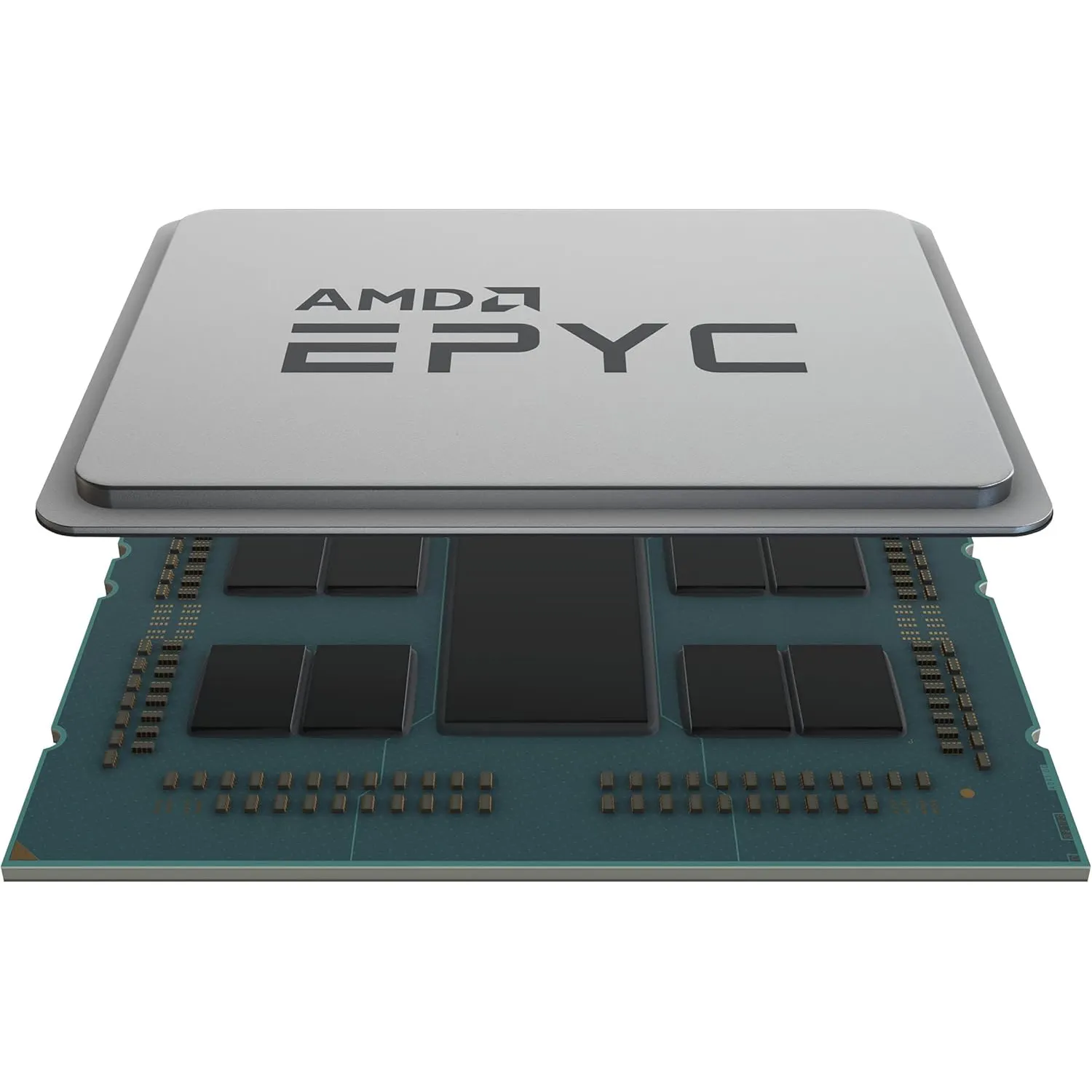
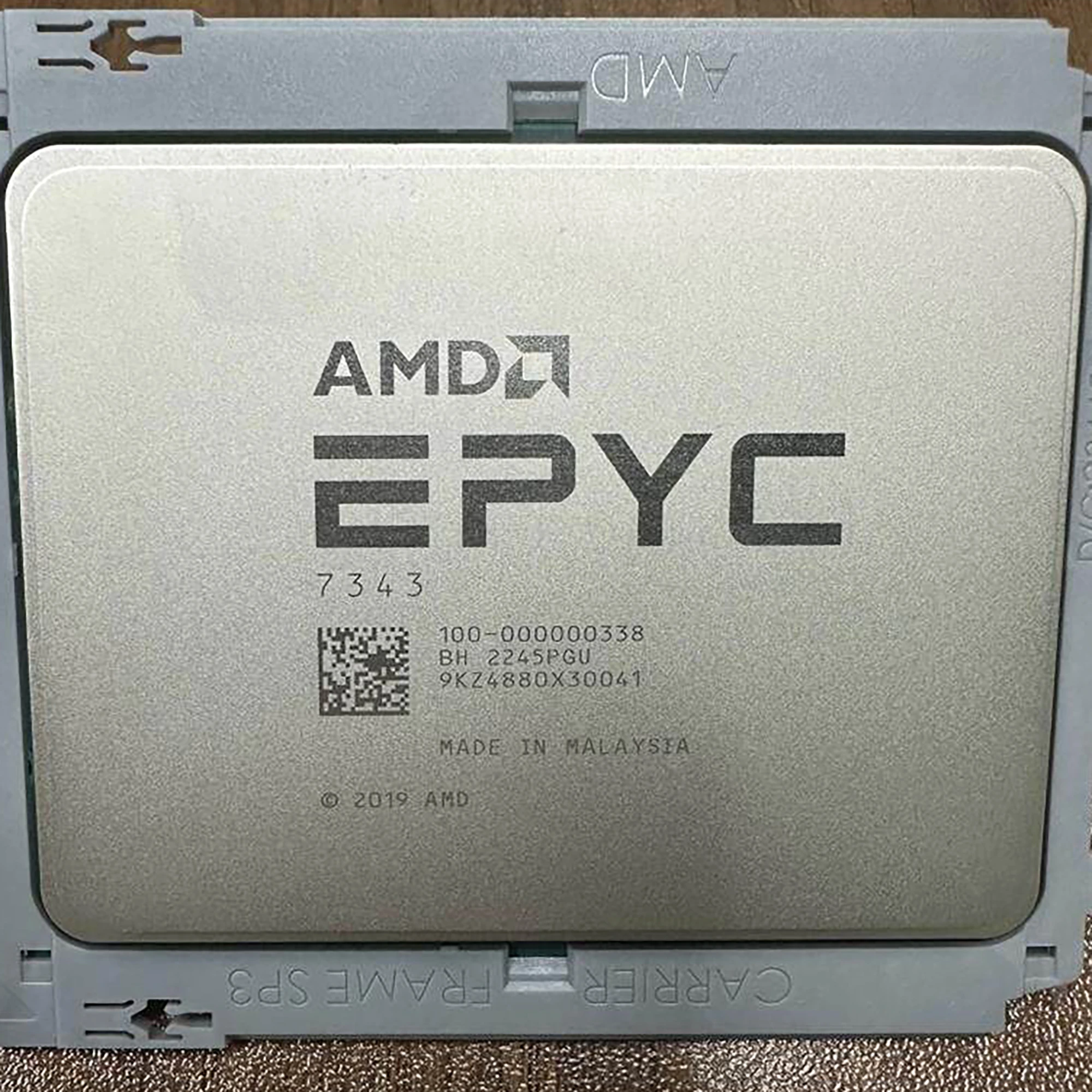
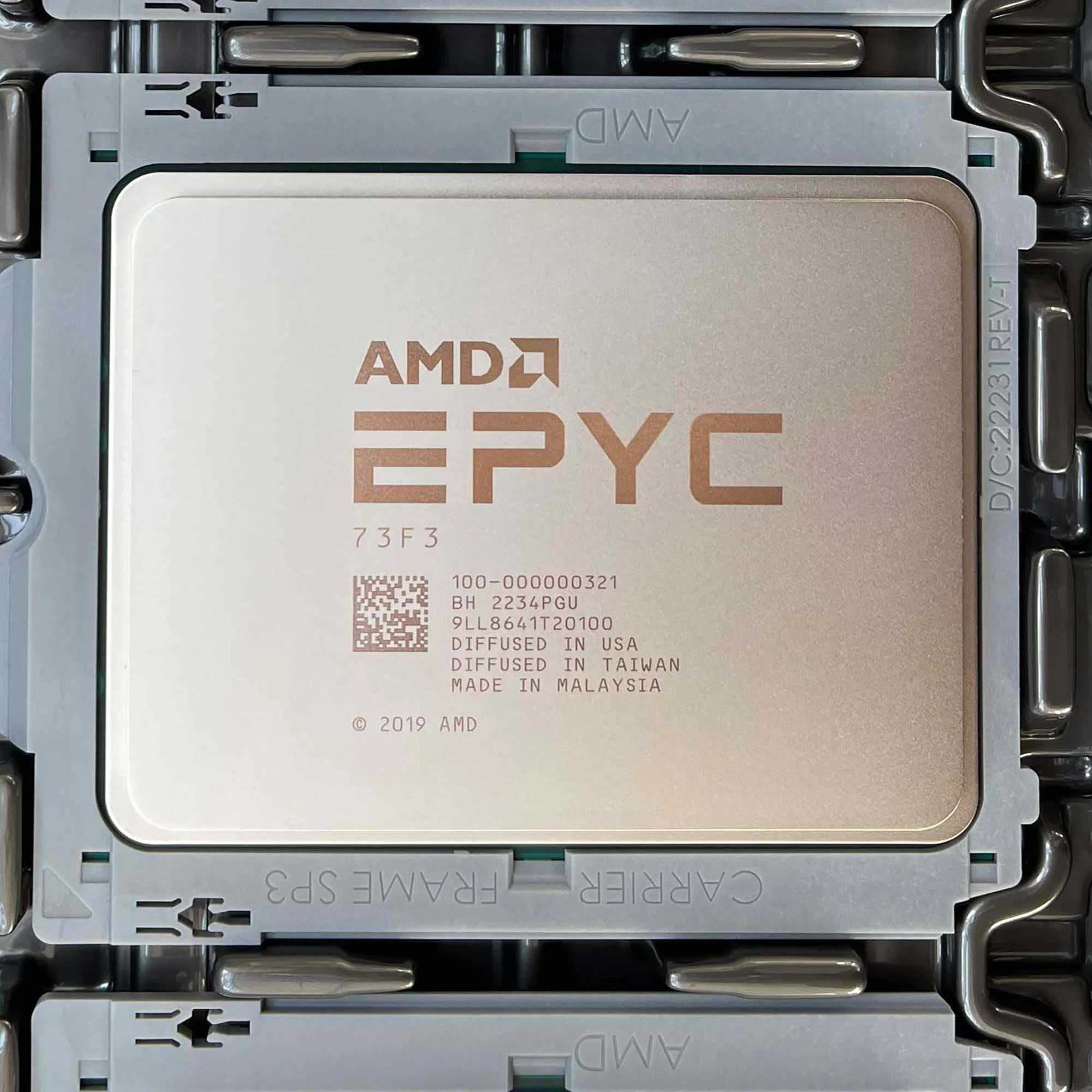
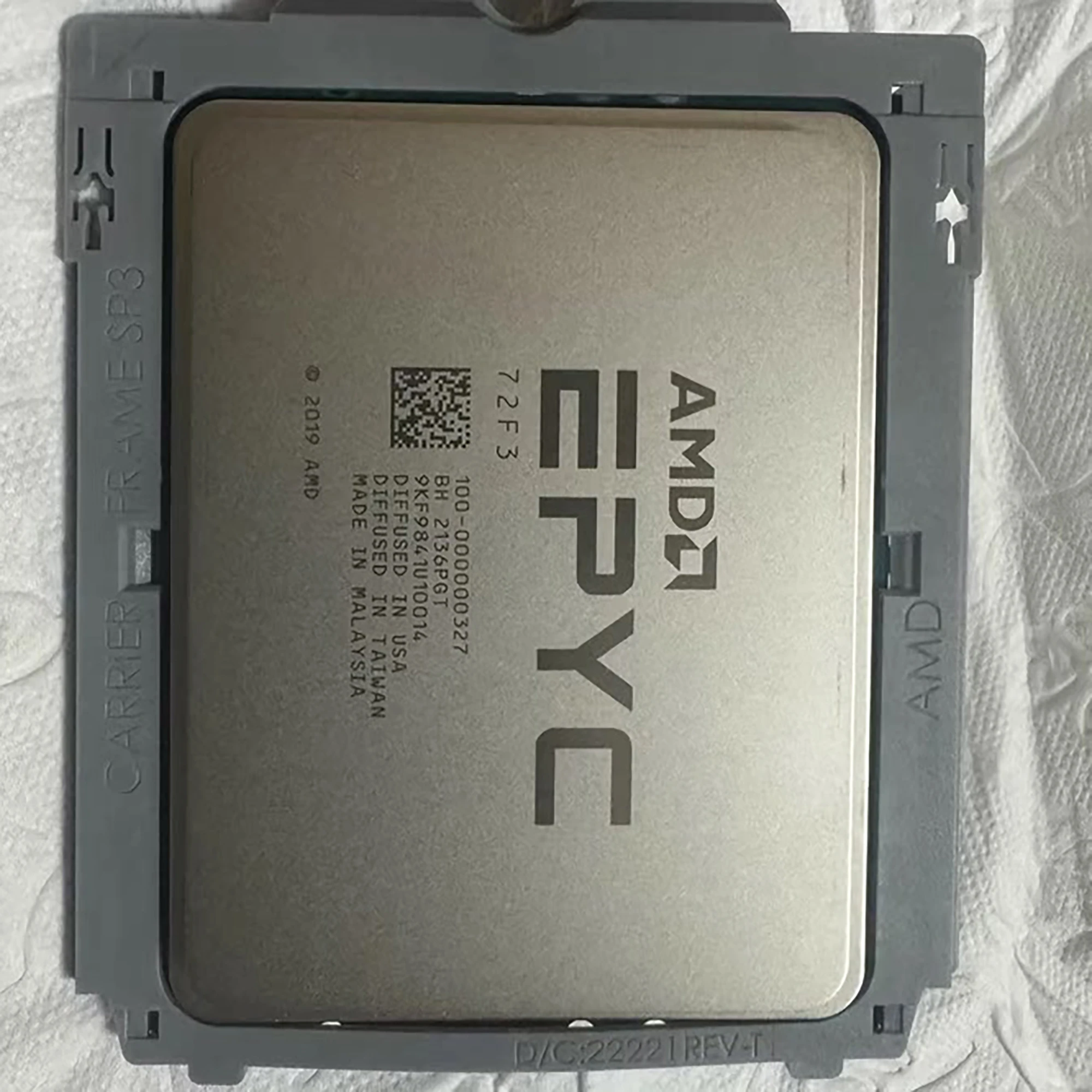
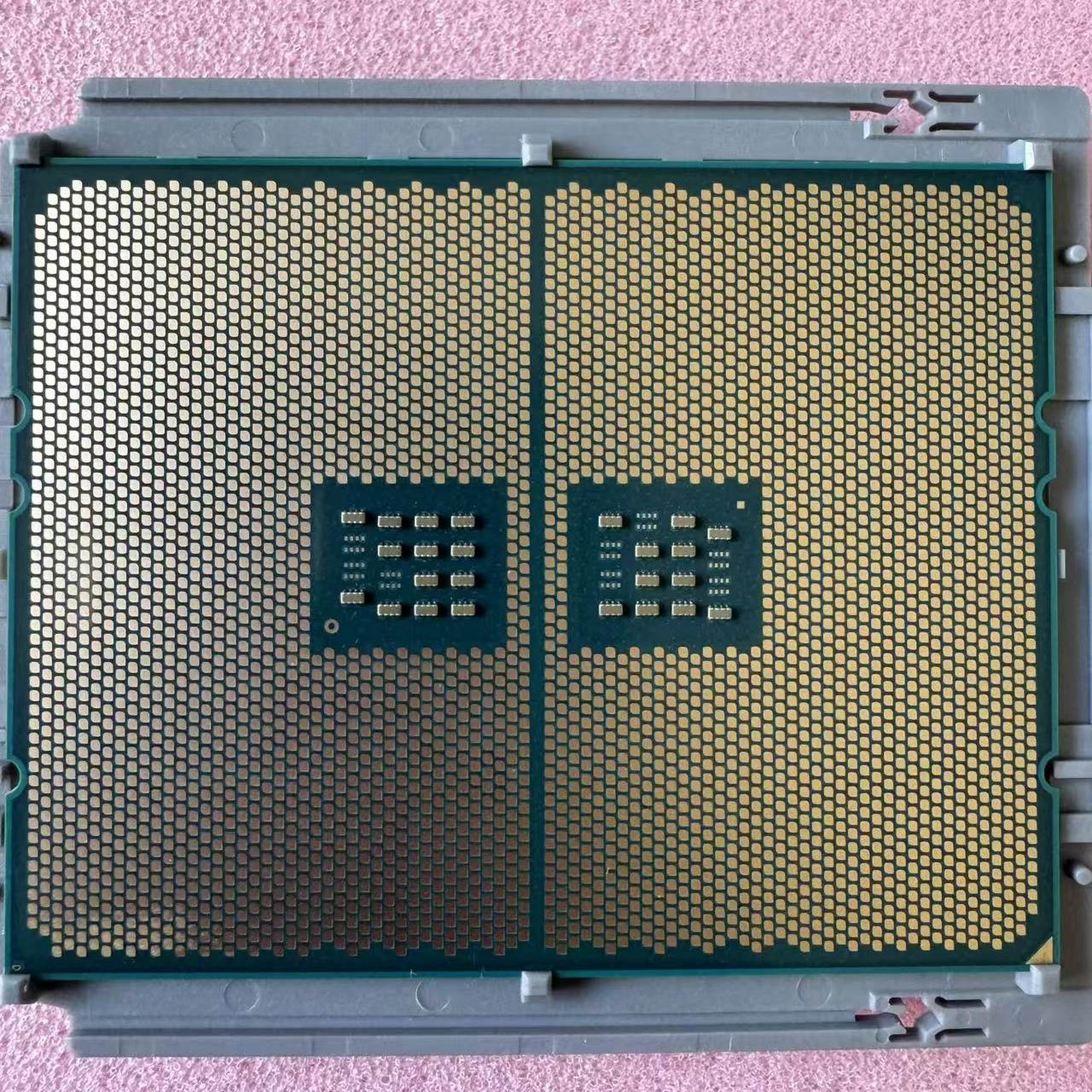
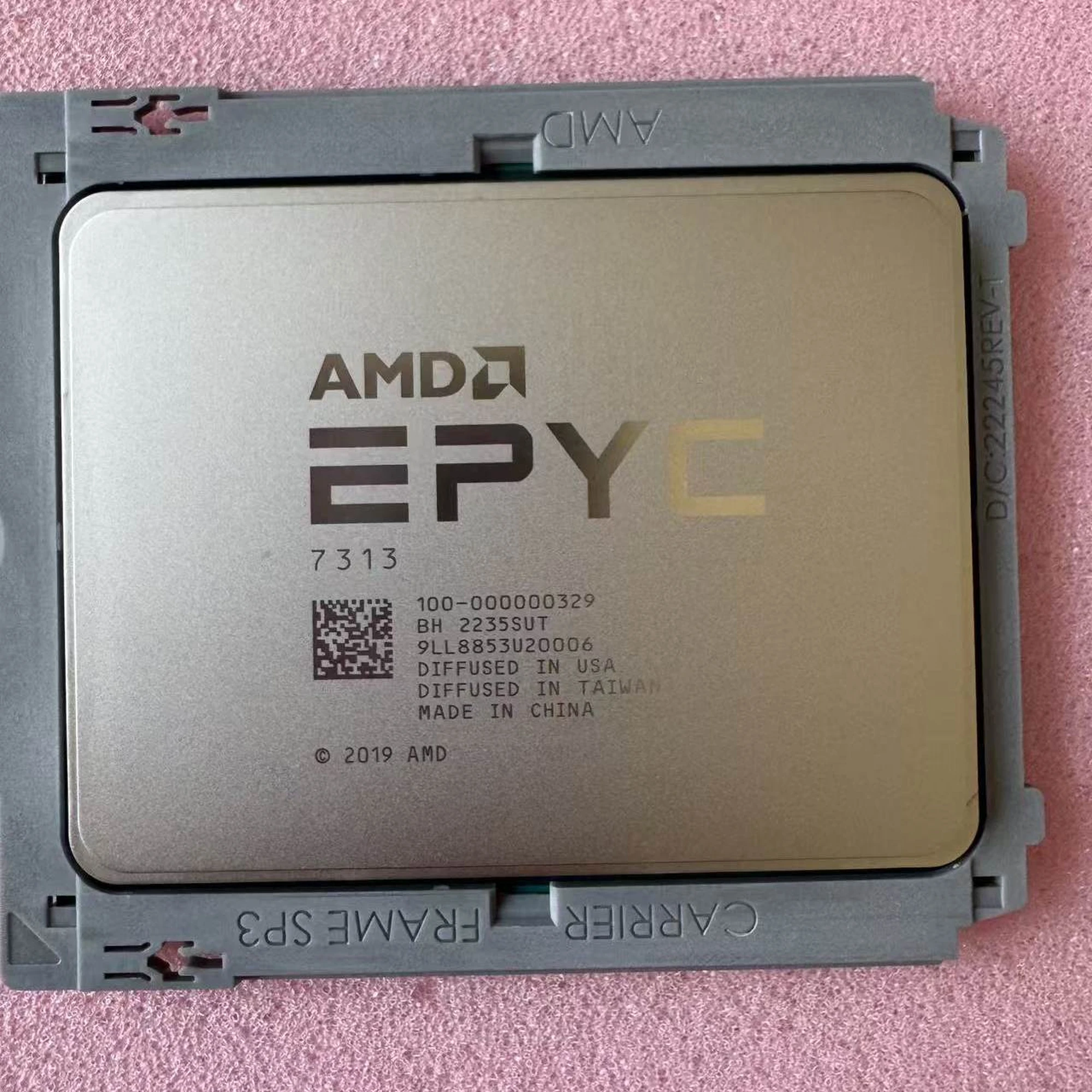
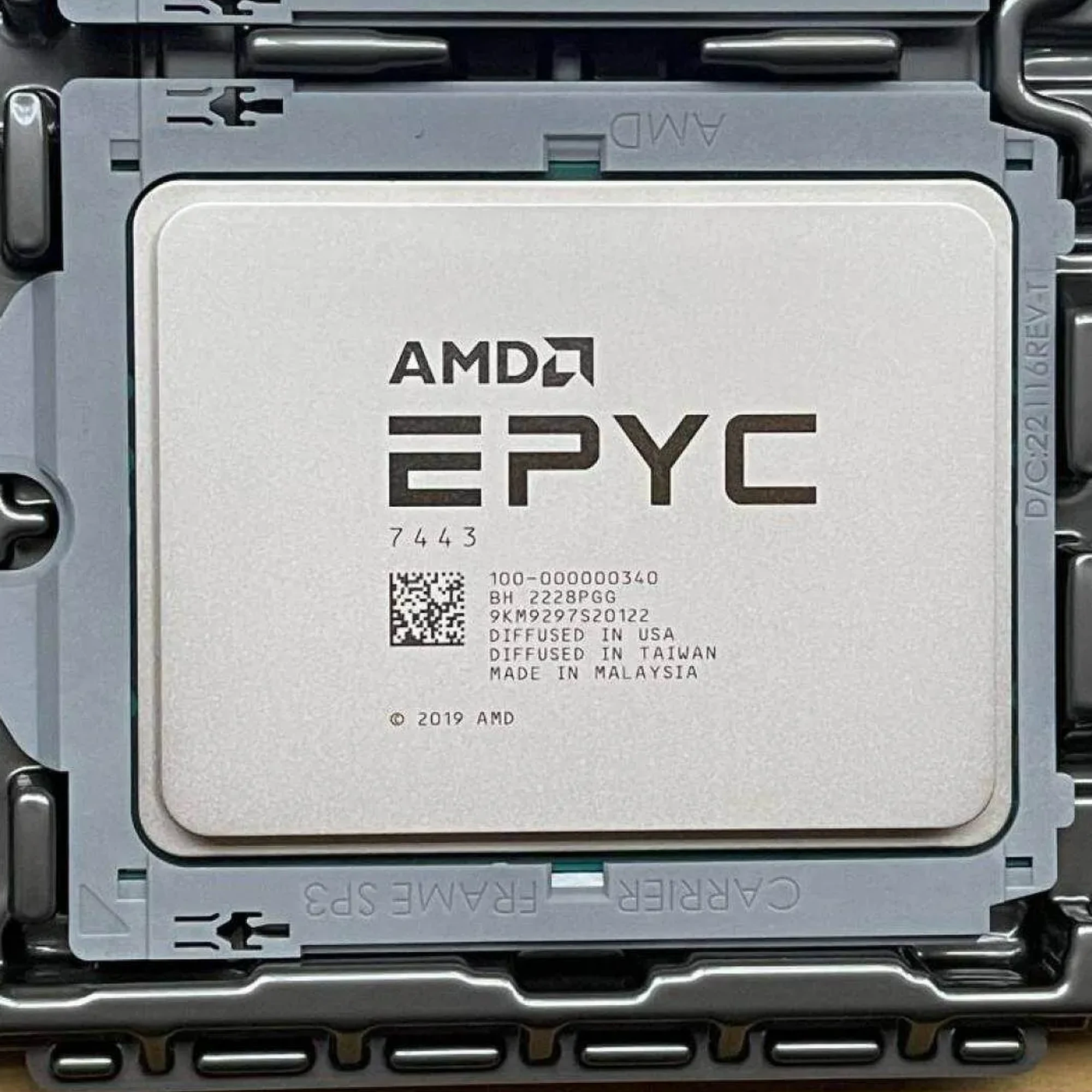
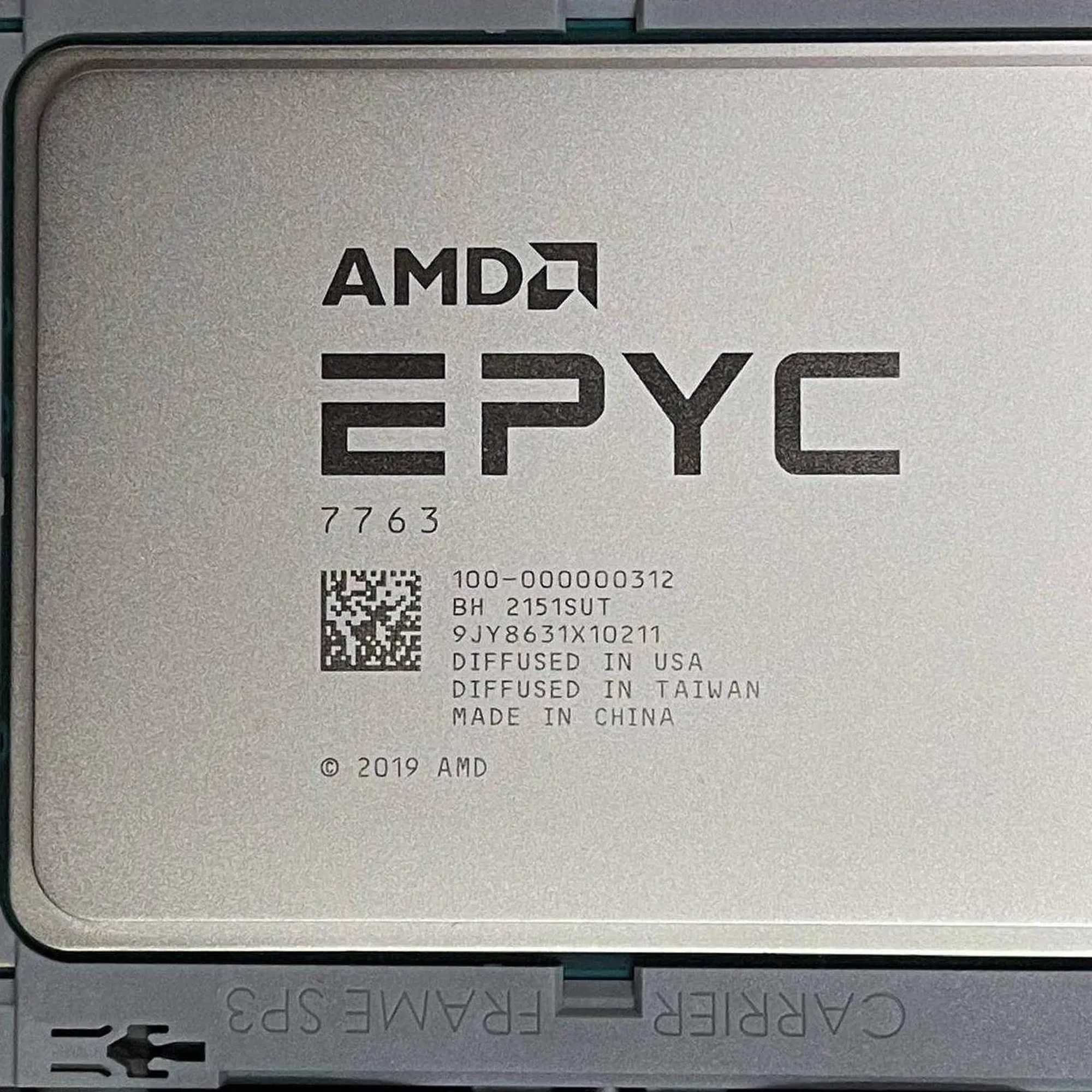

AMD EPYC 7343 Processor – 16-Core 3.2GHz Server CPU for Enterprise Performance
| Specification | Details |
|---|---|
| Processor Name | AMD EPYC 7343 |
| Architecture | Zen 3 |
| Cores / Threads | 16 / 32 |
| Base Clock | 3.2 GHz |
| Max Boost Clock | Up to 3.9 GHz |
| L3 Cache | 128 MB |
| TDP | 190W |
| Socket | SP3 |
| Memory Support | DDR4-3200 |
| Memory Channels | 8 |
| PCIe Version | PCIe 4.0 |
| PCIe Lanes | 128 |
| Manufacturing Process | 7nm |
| Virtualization Support | Yes |
| Security Features | AMD Infinity Guard, SEV, SME |
AMD EPYC 7343 is part of AMD’s highly acclaimed EPYC 7003 series, built on the advanced Zen 3 architecture. Designed to meet the growing demands of modern data centers, this processor strikes an excellent balance between performance, efficiency, and scalability.
With 16 cores and 32 threads, the EPYC 7343 is ideal for businesses looking to optimize workloads such as virtualization, cloud computing, and database management without overspending on higher core-count CPUs.
Built on Advanced Zen 3 Architecture
At the heart of the EPYC 7343 lies AMD’s Zen 3 architecture, which brings significant improvements in instructions per cycle (IPC) compared to previous generations.
This architecture redesign enables:
- Faster data access
- Reduced latency
- Improved workload efficiency
By unifying the L3 cache per core complex, Zen 3 enhances performance consistency across all cores. This results in better performance for both single-threaded and multi-threaded applications.
Performance That Meets Enterprise Needs
The AMD EPYC 7343 delivers a base clock speed of 3.2 GHz and can boost up to 3.9 GHz, making it a strong contender for applications requiring high-frequency performance.
This processor excels in:
- Virtual machines (VMs)
- Software-defined storage
- Enterprise databases
- Web hosting environments
Its 16-core configuration ensures reliable parallel processing, making it suitable for mid-range enterprise servers and scalable infrastructure deployments.
Optimized for Virtualization
Virtualization is one of the key strengths of the EPYC 7343. With 32 threads and support for advanced virtualization technologies, businesses can efficiently run multiple virtual machines on a single processor.
Benefits include:
- Improved resource allocation
- Reduced hardware costs
- Higher consolidation ratios
This makes the EPYC 7343 an excellent choice for cloud service providers and enterprise IT environments.
PCIe 4.0 for Next-Generation Connectivity
One of the standout features of the EPYC 7343 is its support for PCIe 4.0. This provides double the bandwidth compared to PCIe 3.0, enabling faster communication between the CPU and connected devices.
Advantages include:
- Faster NVMe storage performance
- Enhanced GPU acceleration
- Improved networking speeds
With up to 128 PCIe lanes, the EPYC 7343 offers unmatched flexibility for high-performance server configurations.
Memory Performance and Scalability
The EPYC 7343 supports DDR4 memory with speeds up to 3200 MHz and features 8 memory channels.
This enables:
- High memory bandwidth
- Improved application responsiveness
- Support for large datasets
For memory-intensive applications like analytics and virtualization, this processor ensures consistent and reliable performance.
Energy Efficiency and Thermal Design
Efficiency is a key consideration in modern data centers, and the EPYC 7343 does not disappoint.
With a Thermal Design Power (TDP) of 190W, it delivers excellent performance per watt. This helps reduce operational costs while maintaining high computational output.
Key benefits include:
- Lower power consumption
- Reduced cooling requirements
- Improved sustainability
Security Features for Enterprise Protection
AMD has integrated a suite of advanced security technologies into the EPYC 7343, ensuring data protection at every level.
These include:
- AMD Infinity Guard
- Secure Encrypted Virtualization (SEV)
- Secure Memory Encryption (SME)
These features help protect sensitive workloads and ensure compliance with modern security standards.
Ideal Use Cases
The AMD EPYC 7343 is versatile and well-suited for a wide range of applications, including:
Cloud Computing
Its balance of cores and clock speed makes it perfect for cloud infrastructure.
Virtualization
Run multiple VMs efficiently with high performance and low latency.
Database Management
Handle large datasets and transactions with ease.
Web Hosting
Deliver reliable performance for high-traffic websites.
Edge Computing
Compact yet powerful for distributed computing environments.
Comparison with Other EPYC Processors
Compared to higher-end models like the EPYC 7543 or 7763, the EPYC 7343 offers a more cost-effective solution while still delivering excellent performance.
It is ideal for:
- Businesses with moderate workloads
- Organizations optimizing cost-performance ratios
- Scalable infrastructure setups
Why Choose AMD EPYC 7343
Choosing the EPYC 7343 means investing in a processor that delivers:
- Strong single-thread and multi-thread performance
- Advanced connectivity with PCIe 4.0
- Enterprise-grade security
- High energy efficiency
It is a smart choice for businesses aiming to future-proof their IT infrastructure.
Conclusion
The AMD EPYC 7343 stands out as a powerful, efficient, and scalable server processor designed for modern enterprise environments.
Whether you are running virtual machines, managing databases, or building cloud infrastructure, this processor delivers the performance and reliability needed to stay competitive.
With its combination of cutting-edge architecture, robust features, and cost efficiency, the EPYC 7343 is an excellent addition to any data center.
Recommended Motherboards for AMD EPYC 7002/7003 SP3 Processors
| Model | Brand | CPU Configuration | Memory Slots | Max Memory | LAN | PCIe Expansion | Storage | Form Factor | BMC |
|---|---|---|---|---|---|---|---|---|---|
| MZ72-HB2 | GIGABYTE | Dual SP3 | 16×DDR4 | 2TB | 2×10G + 1×Mgmt LAN | 5×PCIe 4.0 x16/x8 | 5×SlimSAS, 1×M.2 | E-ATX | AST2600 |
| MZ32-AR0 | GIGABYTE | Single SP3 | 16×DDR4 | 2TB | 2×1G (Intel I350) | 7×PCIe 4.0/3.0 x16/x8 | 6×SlimSAS, 2×M.2 | E-ATX | AST2600 |
| MZ71-CE1 | GIGABYTE | Dual SP3 | 16×DDR4 | 2TB | 2×1G (BCM5720) + Mgmt LAN | 5×PCIe 4.0 x16/x8 | 3×SlimSAS, 4×SATA | E-ATX | AST2600 |
| ROMED8-2T/BCM | ASRock Rack | Single SP3 | 8×DDR4 | 256GB | 2×10G (Intel X550) + IPMI | 7×PCIe 4.0 x16 | 10×SATA, 2×M.2 | ATX | AST2500 |
| ROMED4ID-2T | ASRock Rack | Single SP3 | 4×DDR4 | 256GB | 2×10G (Intel X550) + IPMI | 1×PCIe 4.0 x16 | 16×SATA, 1×M.2 | Mini-ITX | AST2500 |
| ROME2D16-2T | ASRock Rack | Dual SP3 | 16×DDR4 | 4TB | 2×10G (Intel X550) + IPMI | 5×PCIe 4.0 x16 + 1×x8 | 2×SlimSAS, 2×OcuLink, 2×M.2 | EEB | AST2600 |
| ROME2D32GM-2T | ASRock Rack | Dual SP3 | 32×DDR4 | 8TB | 2×10G + IPMI | 6×PCIe 4.0 x16 | 19×SlimSAS, 1×M.2 | EEB | AST2600 |
| H12SSL-NT | Supermicro | Single SP3 | 8×DDR4 | 2TB | 2×10G (BCM57416) + IPMI | 5×PCIe 4.0 x16/x8 | 2×SlimSAS (SATA/NVMe) | ATX | AST2500 |
| H12SSL-i | Supermicro | Single SP3 | 8×DDR4 | 2TB | 2×1G (BCM5720) | 5×PCIe 4.0 x16, 2×x8 | 8×SATA, 2×M.2 | ATX | AST2500 |
| H12DSi-N6 | Supermicro | Dual SP3 | 16×DDR4 | 4TB | 2×1G + IPMI | 3×PCIe 4.0 x16, 3×x8 | 10×SATA, 1×M.2 | E-ATX | AST2600 |
AMD EPYC 7003 Series Processors Specifications
| Name | # of CPU Cores | # of Threads | Max. Boost Clock | Base Clock | L3 Cache | Default TDP |
| AMD EPYC™ 7203P | 8 | 16 | Up to 3.4 GHz | 2.8 GHz | 64 MB | 120W |
| AMD EPYC™ 7203 | 8 | 16 | Up to 3.4 GHz | 2.8 GHz | 64 MB | 120W |
| AMD EPYC™ 72F3 | 8 | 16 | Up to 4.1 GHz | 3.7 GHz | 256 MB | 180W |
| AMD EPYC™ 7303P | 16 | 32 | Up to 3.4 GHz | 2.4 GHz | 64 MB | 130W |
| AMD EPYC™ 7303 | 16 | 32 | Up to 3.4 GHz | 2.4 GHz | 64 MB | 130W |
| AMD EPYC™ 73F3 | 16 | 32 | Up to 4 GHz | 3.5 GHz | 256 MB | 240W |
| AMD EPYC™ 7373X | 16 | 32 | Up to 3.8 GHz | 3.05 GHz | 768 MB | 240W |
| AMD EPYC™ 7343 | 16 | 32 | Up to 3.9 GHz | 3.2 GHz | 128 MB | 190W |
| AMD EPYC™ 7313P | 16 | 32 | Up to 3.7 GHz | 3 GHz | 128 MB | 155W |
| AMD EPYC™ 7313 | 16 | 32 | Up to 3.7 GHz | 3 GHz | 128 MB | 155W |
| AMD EPYC™ 74F3 | 24 | 48 | Up to 4 GHz | 3.2 GHz | 256 MB | 240W |
| AMD EPYC™ 7473X | 24 | 48 | Up to 3.7 GHz | 2.8 GHz | 768 MB | 240W |
| AMD EPYC™ 7443P | 24 | 48 | Up to 4 GHz | 2.85 GHz | 128 MB | 200W |
| AMD EPYC™ 7443 | 24 | 48 | Up to 4 GHz | 2.85 GHz | 128 MB | 200W |
| AMD EPYC™ 7413 | 24 | 48 | Up to 3.6 GHz | 2.65 GHz | 128 MB | 180W |
| AMD EPYC™ 7453 | 28 | 56 | Up to 3.45 GHz | 2.75 GHz | 64 MB | 225W |
| AMD EPYC™ 75F3 | 32 | 64 | Up to 4 GHz | 2.95 GHz | 256 MB | 280W |
| AMD EPYC™ 7573X | 32 | 64 | Up to 3.6 GHz | 2.8 GHz | 768 MB | 280W |
| AMD EPYC™ 7543P | 32 | 64 | Up to 3.7 GHz | 2.8 GHz | 256 MB | 225W |
| AMD EPYC™ 7543 | 32 | 64 | Up to 3.7 GHz | 2.8 GHz | 256 MB | 225W |
| AMD EPYC™ 7513 | 32 | 64 | Up to 3.65 GHz | 2.6 GHz | 128 MB | 200W |
| AMD EPYC™ 7643P | 48 | 96 | Up to 3.6 GHz | 2.3 GHz | 256 MB | 225W |
| AMD EPYC™ 7643 | 48 | 96 | Up to 3.6 GHz | 2.3 GHz | 256 MB | 225W |
| AMD EPYC™ 7663 | 56 | 112 | Up to 3.5 GHz | 2 GHz | 256 MB | 240W |
| AMD EPYC™ 7663P | 56 | 112 | Up to 3.5 GHz | 2 GHz | 256 MB | 240W |
| AMD EPYC™ 7773X | 64 | 128 | Up to 3.5 GHz | 2.2 GHz | 768 MB | 280W |
| AMD EPYC™ 7763 | 64 | 128 | Up to 3.5 GHz | 2.45 GHz | 256 MB | 280W |
| AMD EPYC™ 7713P | 64 | 128 | Up to 3.67 GHz | 2 GHz | 256 MB | 225W |
| AMD EPYC™ 7713 | 64 | 128 | Up to 3.67 GHz | 2 GHz | 256 MB | 225W |


