
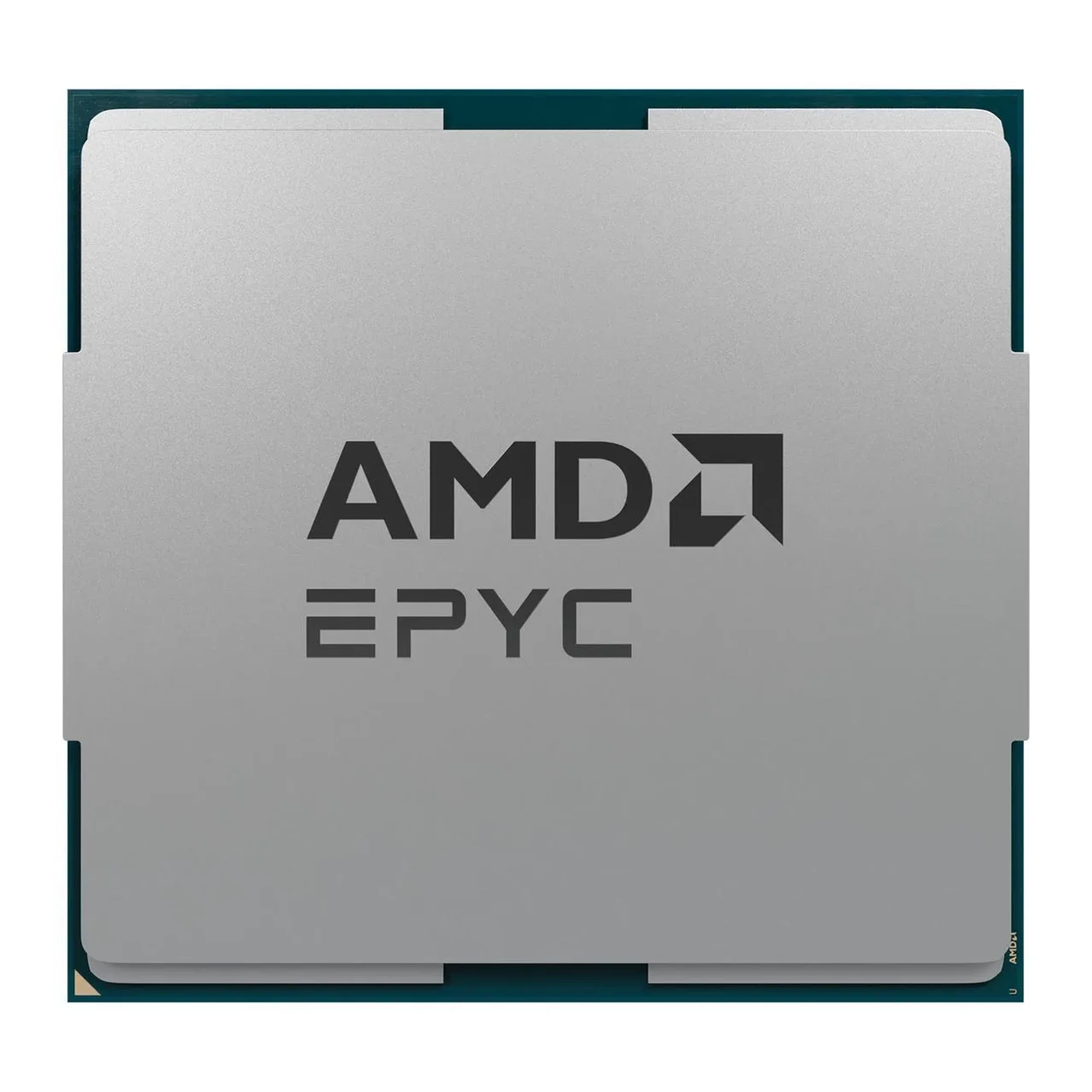
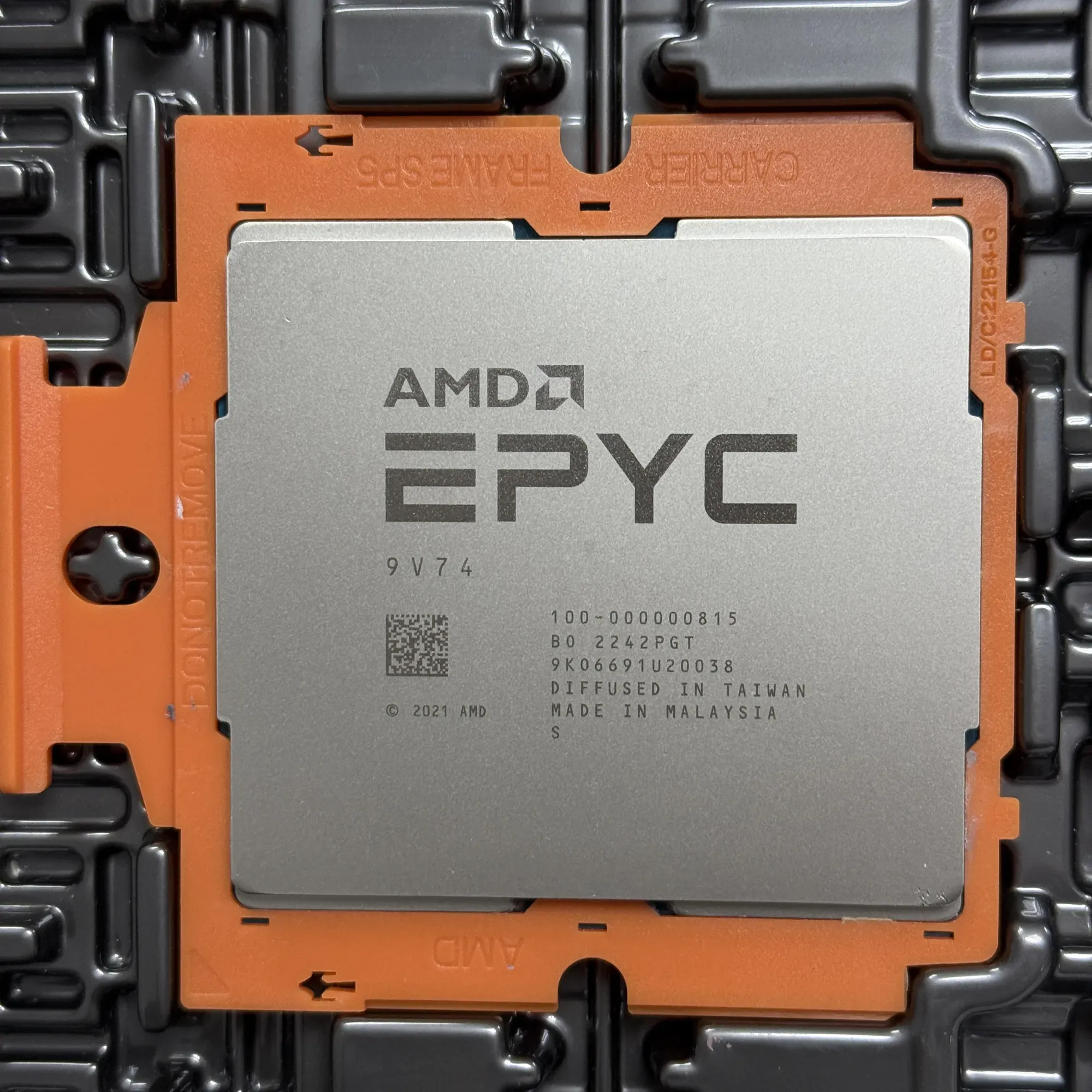
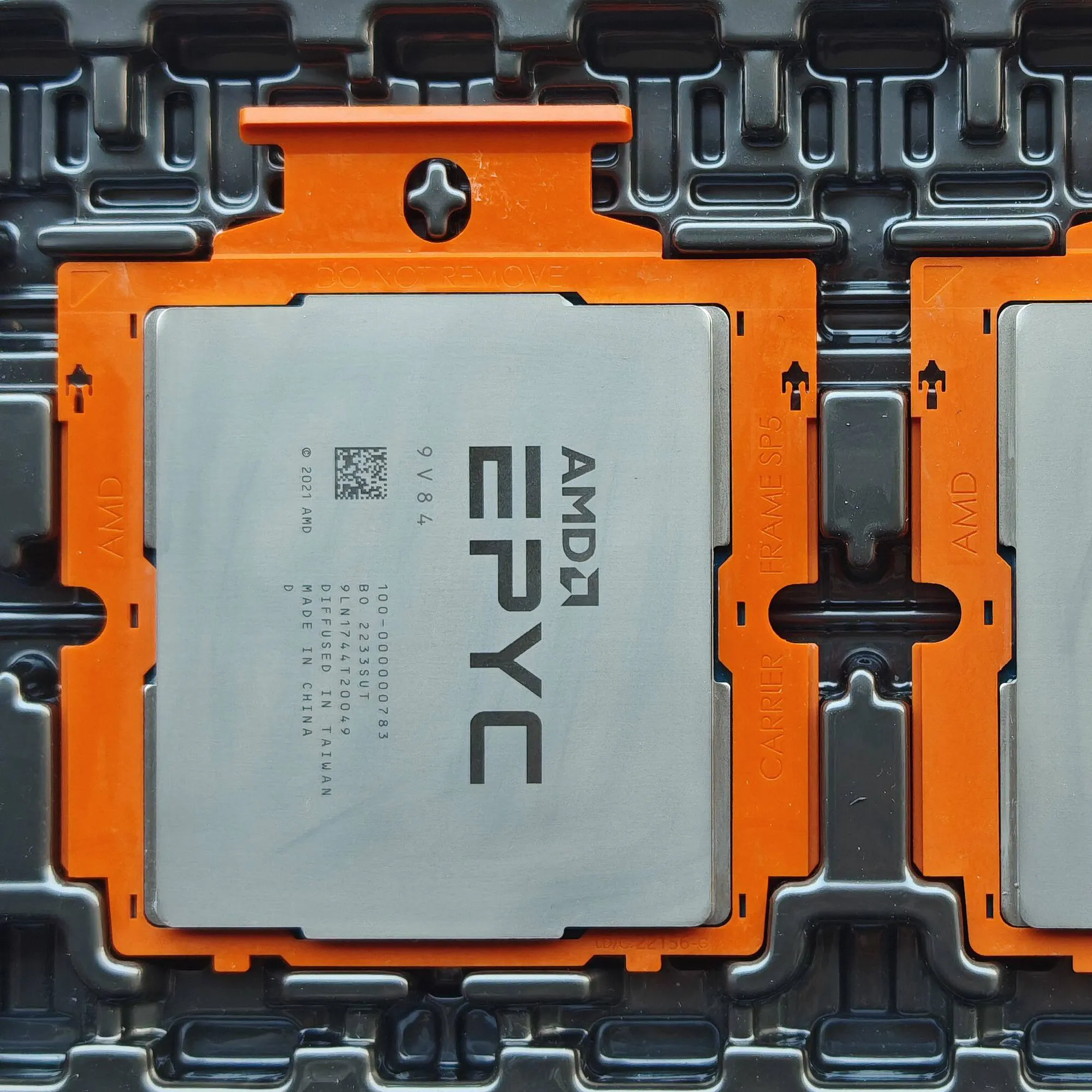
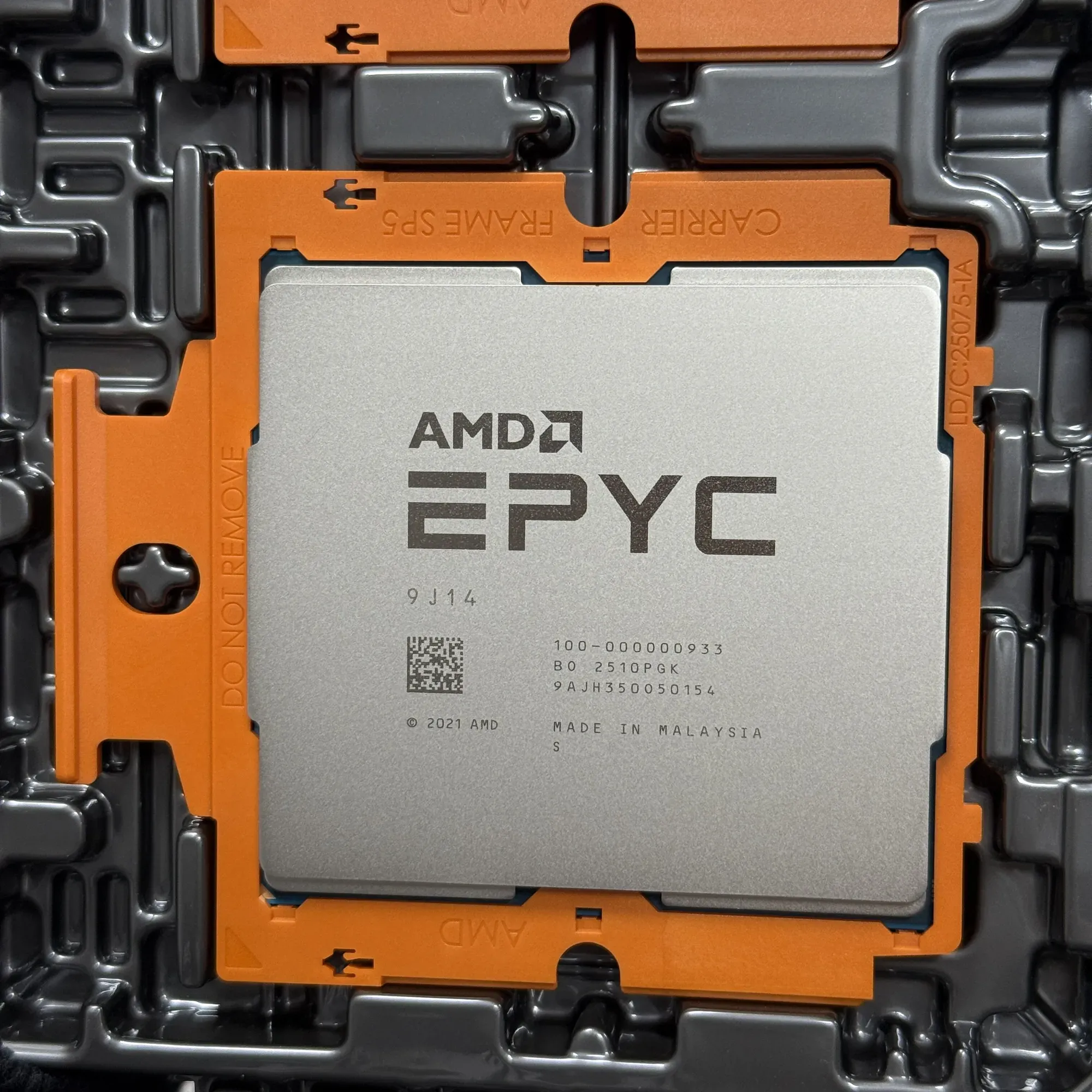
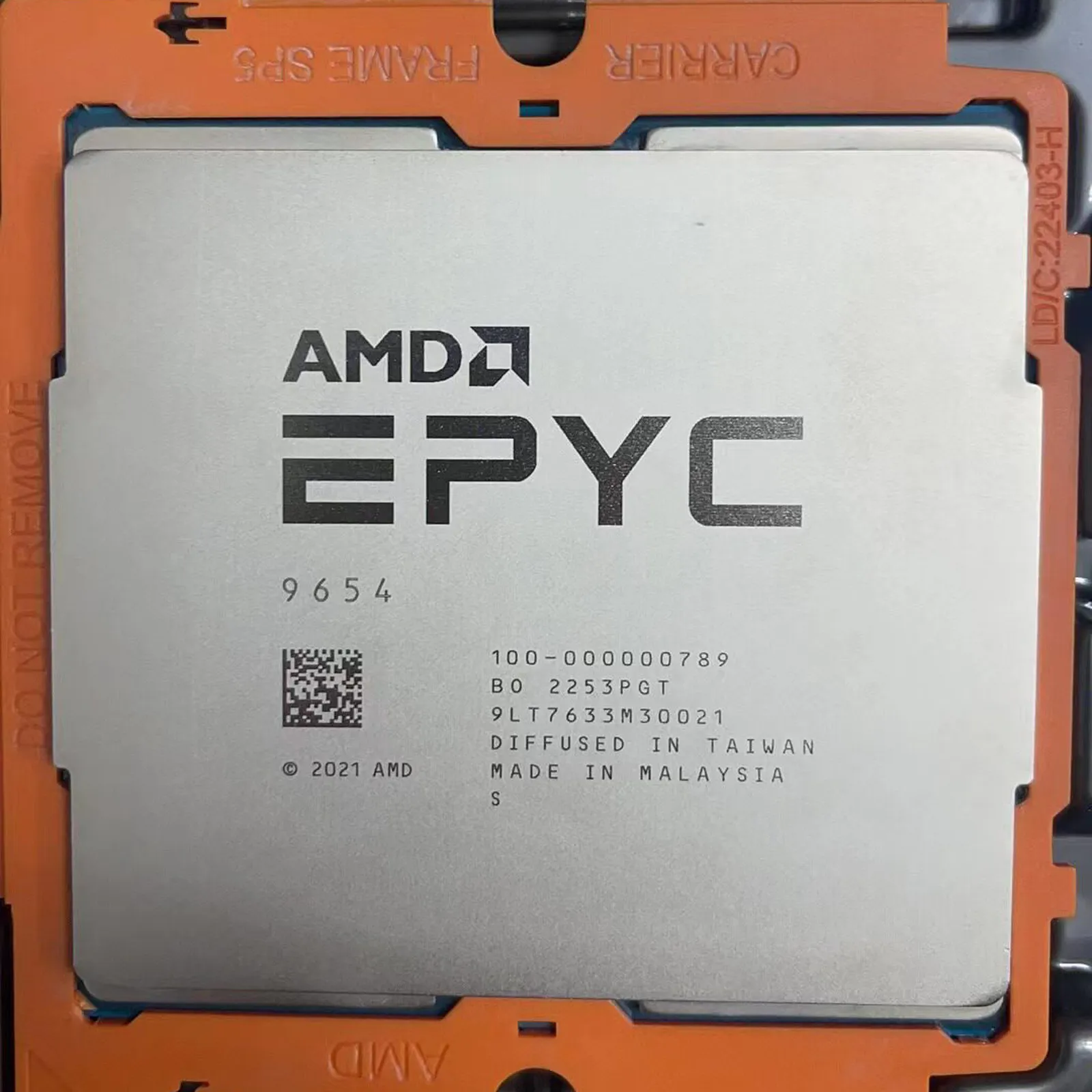
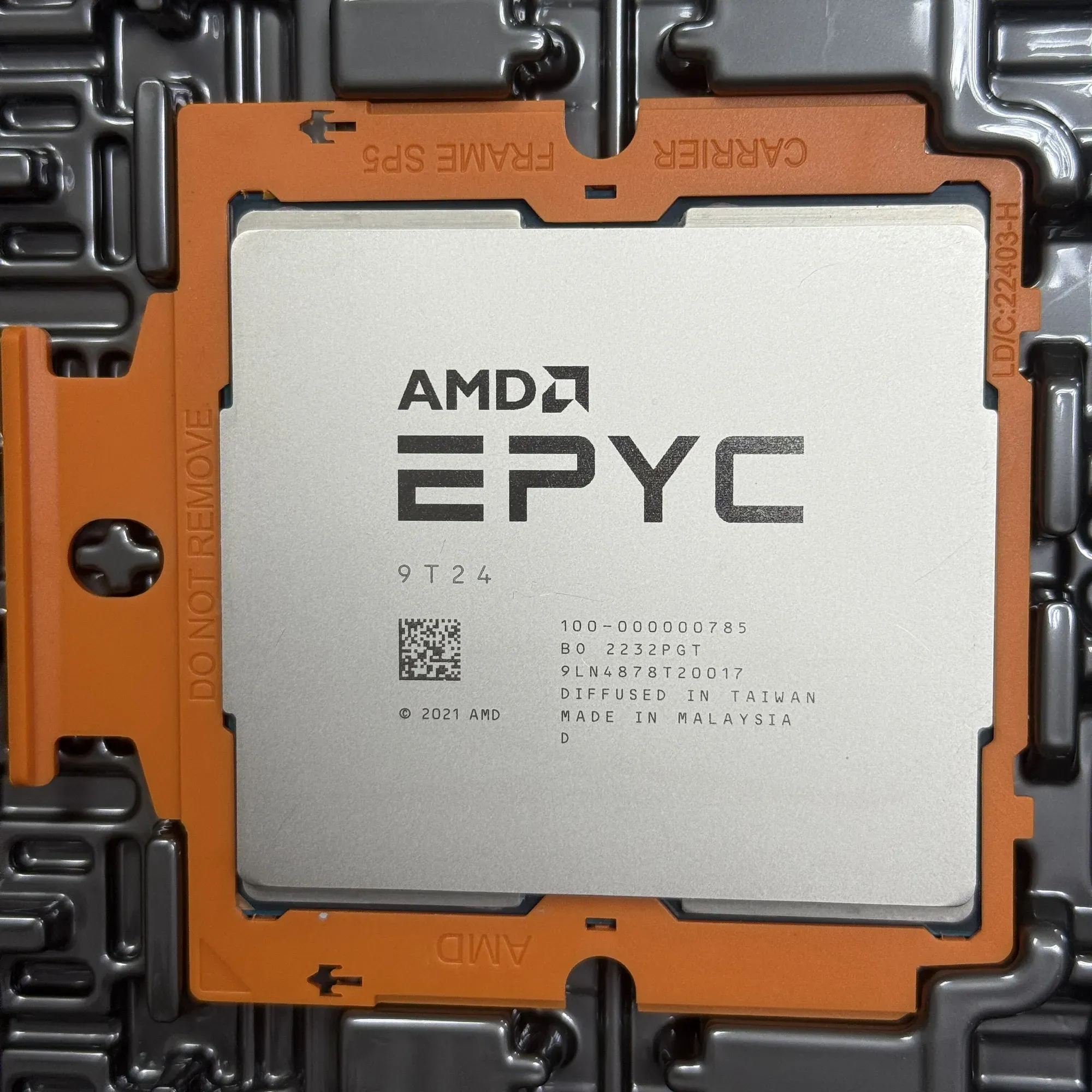
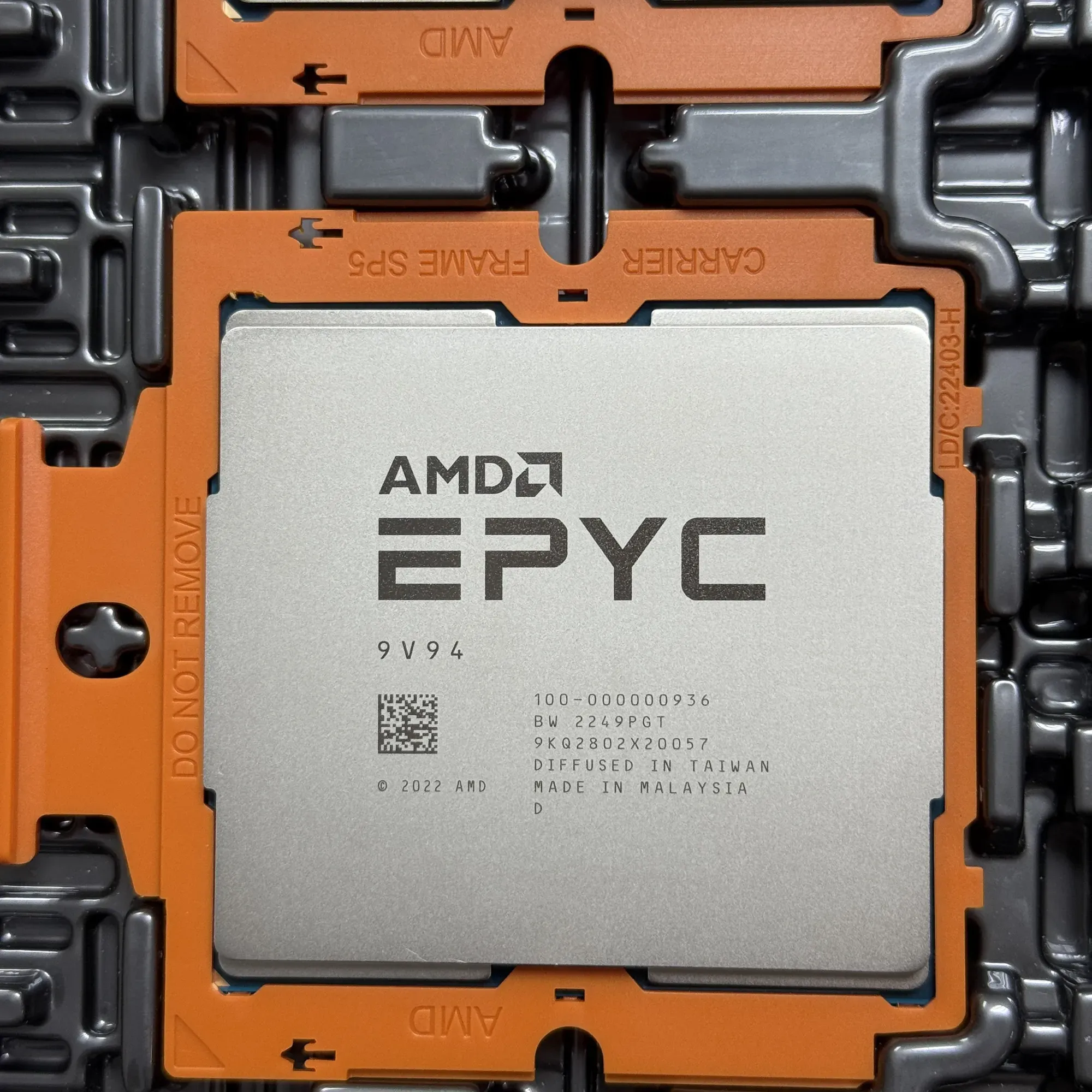
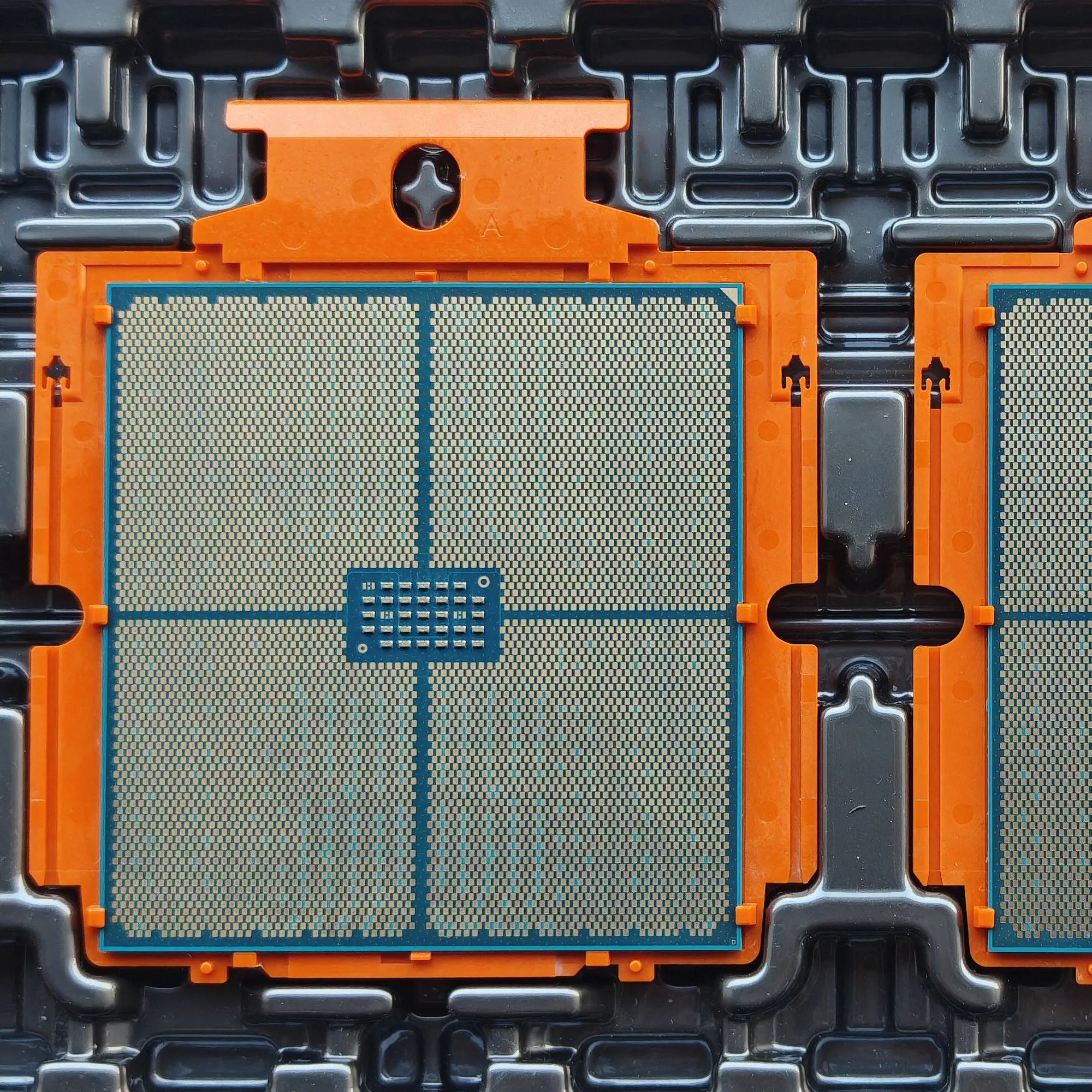

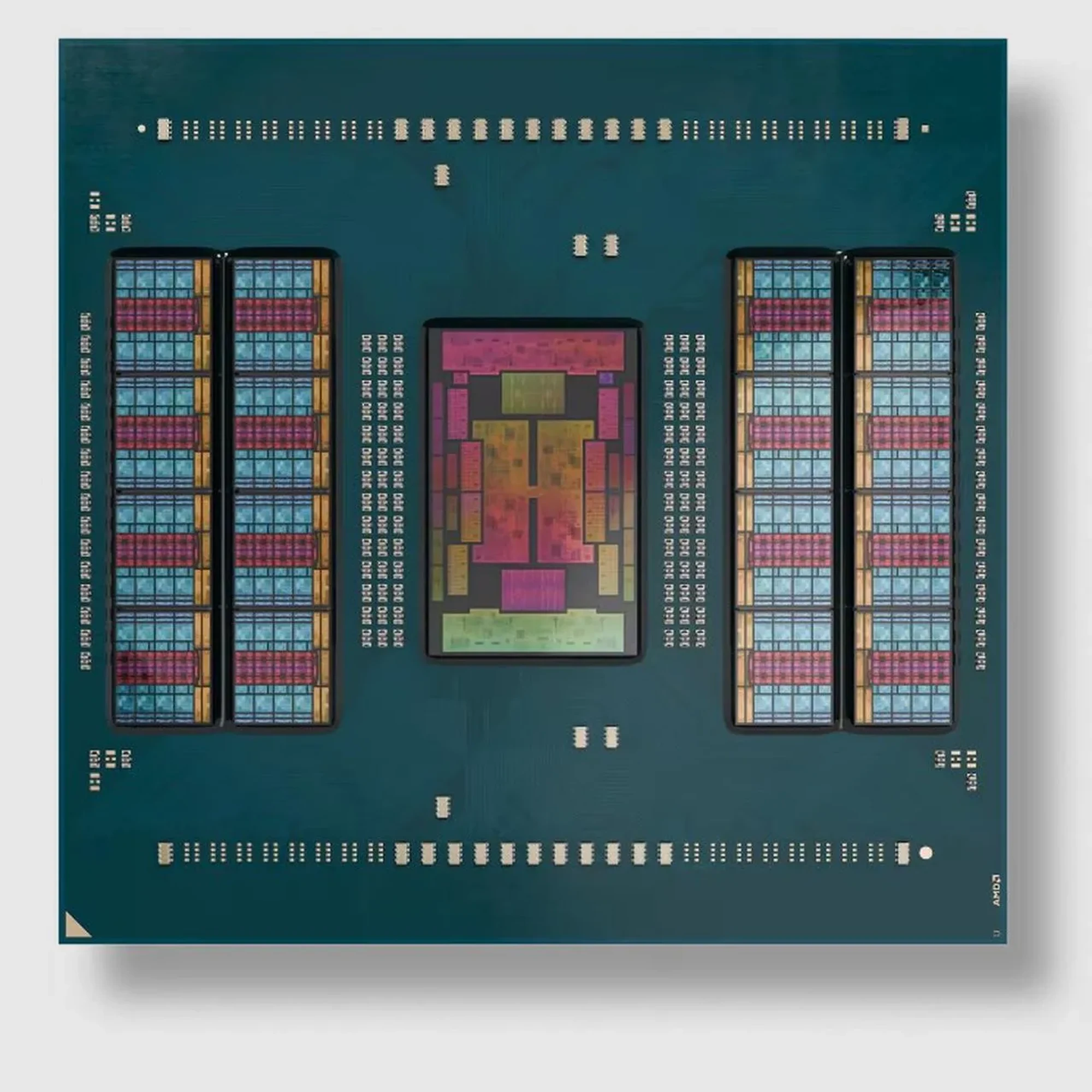
AMD EPYC™ 9745 Server Processor | 128 Cores, 3.7GHz Boost, PCIe 5.0 | High-Performance Data Center CPU
| Specification | Details |
|---|---|
| Product Name | AMD EPYC™ 9745 Server Processor |
| Series | EPYC 9005 Series |
| Fabrication Process | 3nm (TSMC) |
| Core Architecture | Turin (Zen 5c) |
| CPU Cores | 128 |
| Threads | 256 (SMT Supported) |
| Base Clock | 2.4 GHz |
| All-Core Boost Speed | 3.45 GHz |
| Max Boost Clock | Up to 3.7 GHz |
| L3 Cache | 256 MB (Shared) |
| L2 Cache | 1 MB per Core (Total 128 MB) |
| L1 Cache | 80 KB per Core (Total 10.24 MB) |
| TDP (Default) | 400 W |
| Configurable TDP (cTDP) | 320 – 400 W |
| Socket | AMD Socket SP5 |
| Socket Count | 1P / 2P |
| Launch Date | October 10, 2024 |
| PCIe Version | PCIe® 5.0 |
| PCIe Lanes | 128 |
| Memory Type | DDR5 |
| Memory Channels | 12 |
| Max Memory Speed | Up to 6400 MT/s |
| Per Socket Memory Bandwidth | 614 GB/s |
| Max Memory Size (2P) | Up to 6 TB |
| Supported Technologies | AMD Infinity Guard, AMD Infinity Architecture |
| Workload Affinity | Analytics, App Dev | Test, Content Mgmt, HPC, Media Streaming, Networking | NFV, Security, VDI, VM Density, Web Serving, CDC |
| Product ID (Tray) | 100-000001460 |
| 1KU Pricing | $10,588 USD |
| Regional Availability | Global, China, NA, EMEA, APJ, LATAM |
In the fast-evolving landscape of data center technology, the demand for high-performance, efficient, and versatile server processors has never been higher. Businesses, cloud providers, and research institutions rely on powerful CPUs to handle increasingly complex workloads—from artificial intelligence (AI) and machine learning (ML) to high-performance computing (HPC), virtualization, and data analytics. The AMD EPYC™ 9745 Server Processor, a flagship model in the EPYC 9005 Series, is engineered to meet and exceed these demands, delivering industry-leading performance, scalability, and security for modern data center environments.
Introduction to the AMD EPYC™ 9745 Server Processor
Launched on October 10, 2024, the AMD EPYC™ 9745 is a cutting-edge server processor built on TSMC’s 3nm fabrication process, leveraging AMD’s innovative Turin (Zen 5c) core architecture to deliver exceptional performance and efficiency. As part of the EPYC 9005 Series, this processor is designed for business-critical data center workloads, offering the perfect balance of core count, clock speed, and memory bandwidth to handle the most demanding enterprise tasks. Whether you’re running a large-scale cloud infrastructure, a high-performance computing cluster, or a data-intensive AI application, the EPYC 9745 is built to scale with your needs, ensuring consistent performance even under heavy load.
Unlike consumer-grade CPUs, server processors like the EPYC 9745 are optimized for 24/7 operation, reliability, and multi-tasking. With its 128 cores and 256 threads, the EPYC 9745 can handle thousands of concurrent tasks simultaneously, making it ideal for virtualization, containerization, and multi-tenant cloud environments. Additionally, its support for advanced technologies like AMD Infinity Architecture and AMD Infinity Guard ensures that your data center remains secure, efficient, and future-proof.
Key Specifications & Technical Highlights
The AMD EPYC™ 9745 is packed with technical features that set it apart from competitors, making it a top choice for data center administrators and IT professionals. Let’s break down its most critical specifications and how they translate to real-world performance.
Core Architecture & Performance
At the heart of the EPYC 9745 is AMD’s Turin (Zen 5c) core architecture, built on a 3nm process node by TSMC. This advanced process technology allows for higher transistor density, lower power consumption, and improved performance compared to previous-generation 7nm processors. The processor features 128 performance cores, each capable of handling two threads (thanks to AMD’s Simultaneous Multithreading, SMT) for a total of 256 threads—providing exceptional multi-tasking capabilities for parallel workloads.
The EPYC 9745 operates at a base clock speed of 2.4GHz, with an all-core boost speed of 3.45GHz and a maximum boost clock of up to 3.7GHz for single-threaded tasks. This balance of base and boost speeds ensures that the processor can handle both multi-threaded workloads (like HPC and data analytics) and single-threaded tasks (like application hosting and web serving) with ease. Whether you’re running complex simulations, training AI models, or hosting hundreds of virtual machines, the EPYC 9745 delivers consistent, reliable performance.
Cache & Memory Performance
Cache memory is critical for server performance, as it reduces latency and improves data access speeds. The EPYC 9745 features a massive 256MB of L3 cache, shared across all 128 cores, ensuring that frequently accessed data is readily available for fast processing. Additionally, each core is equipped with 80KB of L1 cache and 1MB of L2 cache, further enhancing performance by reducing the need to access slower main memory.
When it comes to memory, the EPYC 9745 supports 12 DDR5 memory channels, with a maximum memory speed of up to 6400 MT/s and a per-socket memory bandwidth of 614 GB/s. This high memory bandwidth is essential for data-intensive workloads like AI/ML, where large datasets need to be transferred quickly between memory and the CPU. The processor also supports ECC (Error-Correcting Code) memory, which helps prevent data corruption and ensures system stability—critical for business-critical applications that require 99.999% uptime.
I/O & Connectivity
The EPYC 9745 features 128 PCIe 5.0 lanes, providing exceptional I/O bandwidth for connecting storage devices, network cards, and other peripherals. PCIe 5.0 offers twice the bandwidth of PCIe 4.0, enabling faster data transfer speeds between the CPU and other components—ideal for high-speed SSDs, GPUs, and network interfaces. This high I/O bandwidth is particularly beneficial for cloud environments, where multiple storage and network devices need to communicate with the CPU simultaneously.
The processor uses the AMD Socket SP5, supporting both 1P (1-processor) and 2P (2-processor) configurations, allowing for easy scalability as your data center grows. Whether you’re building a small server cluster or a large-scale data center, the EPYC 9745 can be configured to meet your specific needs, with support for up to 6TB of maximum memory in a 2P setup.
Power Efficiency & TDP
Despite its high performance, the EPYC 9745 is designed to be power-efficient, with a default TDP (Thermal Design Power) of 400W and a configurable TDP (cTDP) range of 320-400W. This flexibility allows data center administrators to optimize power consumption based on workload demands—reducing energy costs during periods of low usage and ensuring maximum performance during peak loads. The 3nm fabrication process plays a key role in this efficiency, as it reduces leakage current and improves power density, making the EPYC 9745 a more sustainable choice for modern data centers.
Workload Optimization & Use Cases
The AMD EPYC™ 9745 is engineered to excel across a wide range of data center workloads, thanks to its versatile design and advanced features. Below are some of the key use cases where the EPYC 9745 delivers exceptional performance:
High-Performance Computing (HPC)
HPC workloads—such as scientific simulations, weather forecasting, and computational fluid dynamics—require massive parallel processing power. The EPYC 9745’s 128 cores, 256 threads, and high memory bandwidth make it ideal for these tasks, allowing researchers and engineers to run complex simulations faster than ever before. Whether you’re modeling climate change, developing new drugs, or designing advanced materials, the EPYC 9745 can handle the most demanding HPC workloads with ease.
Artificial Intelligence (AI) & Machine Learning (ML)
AI and ML workloads—including deep learning training and inference—require both high computational power and fast memory bandwidth. The EPYC 9745’s 3nm architecture, large L3 cache, and 12 DDR5 memory channels provide the perfect foundation for AI/ML applications, enabling faster model training and more efficient inference. Additionally, the processor’s support for PCIe 5.0 allows for seamless integration with high-performance GPUs, further accelerating AI workloads.
Virtualization & Cloud Computing
Cloud providers and enterprises rely on virtualization to maximize server utilization and reduce costs. The EPYC 9745’s 128 cores and 256 threads allow for high VM (Virtual Machine) density, enabling you to run hundreds of VMs on a single server. Its support for AMD Secure Encrypted Virtualization (SEV) ensures that virtual machines are isolated and secure, protecting sensitive data from unauthorized access. Whether you’re running a public cloud, private cloud, or hybrid cloud environment, the EPYC 9745 provides the scalability and security you need.
Data Analytics & Big Data
Data analytics workloads—such as data warehousing, business intelligence, and real-time analytics—require fast access to large datasets and high parallel processing power. The EPYC 9745’s high memory bandwidth and 128 cores allow for faster data processing, enabling businesses to gain insights from their data in real time. Whether you’re analyzing customer behavior, optimizing supply chains, or detecting fraud, the EPYC 9745 can handle the most data-intensive analytics workloads.
Media Streaming & Content Management
Media streaming and content management platforms require reliable performance to deliver high-quality content to millions of users simultaneously. The EPYC 9745’s multi-threading capabilities and high I/O bandwidth make it ideal for these workloads, allowing for smooth streaming, fast content delivery, and efficient content management. Whether you’re running a video streaming service, a content delivery network (CDN), or a digital media platform, the EPYC 9745 ensures a seamless user experience.
Security & Reliability
Data center security is a top priority for businesses, and the AMD EPYC™ 9745 is equipped with advanced security features to protect your data and infrastructure. AMD Infinity Guard, a comprehensive set of security technologies, provides hardware-level protection against a wide range of threats, including malware, data breaches, and unauthorized access. Key security features include:
- Secure Encrypted Virtualization (SEV): Isolates virtual machines to prevent data leakage between VMs.
- Secure Memory Encryption (SME): Encrypts system memory to protect sensitive data from physical attacks.
- AMD Secure Boot: Ensures that only trusted firmware and software are loaded during system boot, preventing malware from compromising the system.
In addition to its security features, the EPYC 9745 is designed for maximum reliability, with support for ECC memory, hot-swappable components, and 24/7 operation. This makes it ideal for business-critical applications that require zero downtime, such as financial services, healthcare, and e-commerce.
Why Choose the AMD EPYC™ 9745 Server Processor?
With so many server processors on the market, why should you choose the AMD EPYC 9745? Here are some of the key advantages that set it apart from the competition:
- Industry-Leading Core Count: 128 cores and 256 threads provide exceptional multi-tasking performance for the most demanding workloads.
- Advanced 3nm Architecture: TSMC’s 3nm process delivers better performance and efficiency than previous-generation processors.
- High Memory Bandwidth: 12 DDR5 memory channels and 614 GB/s per-socket bandwidth ensure fast data access for data-intensive workloads.
- PCIe 5.0 Support: 128 PCIe 5.0 lanes provide fast I/O connectivity for storage, GPUs, and network devices.
- Comprehensive Security: AMD Infinity Guard provides hardware-level security to protect your data and infrastructure.
- Scalability: Supports 1P and 2P configurations, allowing you to scale your data center as your needs grow.
- Global Availability: Available worldwide, including China, NA, EMEA, APJ, and LATAM, ensuring easy access for businesses around the globe.
Pricing & Availability
The AMD EPYC™ 9745 Server Processor is available globally, with a 1KU (1000-unit) pricing of $10,588 USD. It is supported by a wide range of server manufacturers, including Dell, HPE, Lenovo, and Supermicro, making it easy to integrate into your existing data center infrastructure. Whether you’re building a new data center or upgrading your existing servers, the EPYC 9745 offers exceptional value for money, with a perfect balance of performance, efficiency, and security.
Conclusion
The AMD EPYC™ 9745 Server Processor is a game-changer for modern data centers, delivering industry-leading performance, scalability, and security for the most demanding workloads. With its 128 cores, 256 threads, 3nm architecture, and advanced features like PCIe 5.0 and AMD Infinity Guard, the EPYC 9745 is designed to meet the needs of today’s data-driven businesses. Whether you’re running HPC, AI, virtualization, or data analytics workloads, the EPYC 9745 provides the performance and reliability you need to stay ahead of the competition.
If you’re looking for a server processor that can handle the most demanding data center tasks while remaining efficient and secure, the AMD EPYC 9745 is the perfect choice. With its global availability, scalable design, and exceptional value, it’s no wonder that the EPYC 9005 Series is quickly becoming the preferred choice for data center administrators and IT professionals around the world.
Recommended Motherboards for AMD EPYC 9005/9004 SP5 processors
| Model | CPU (Socket / TDP) | Memory | PCIe/CXL | LAN | Management | Form Factor |
|---|---|---|---|---|---|---|
| Gigabyte MZ73-LM2 | Dual SP5 / 500W | 24×DDR5 | PCIe 5.0 | 2×10GbE | IPMI | E-ATX |
| Gigabyte MZ73-LM1 | Dual SP5 / 400W | 24×DDR5 | PCIe 5.0 | 2×10GbE | IPMI | E-ATX |
| Gigabyte MZ73-LM0 | Dual SP5 / 400W | 24×DDR5 | PCIe 5.0 | 2×10GbE | IPMI | E-ATX |
| Gigabyte MZ33-AR1 | Single SP5 / 400W | 24×DDR5 | PCIe 5.0 | 1×10GbE | IPMI | E-ATX |
| Gigabyte MZ33-CP1 | Single SP5 / 500W | 12×DDR5 | PCIe 5.0 | 2×1GbE | IPMI | E-ATX |
| ASRock Rack TURIND8-2L2T | Single SP5 / 400W | 8×DDR5 | PCIe 5.0 + CXL 2.0 | 2×10GbE + 2×1GbE | IPMI | CEB |
| ASRock Rack TURIN2D16-2T | Dual SP5 / 400W | 16×DDR5 (8+8) | PCIe 5.0 + CXL 2.0 | 2×10GbE | IPMI | EEB |
| ASRock Rack TURIN2D24G-2L+/500W | Dual SP5 / 500W | 24×DDR5 (12+12) | PCIe 5.0 + CXL 2.0 | 2×1GbE | IPMI | Proprietary |
| ASUS K14PA-U12 | Single SP5 / 400W | 12×DDR5 | PCIe 5.0 | 2×25GbE (SFP28) | iKVM (ASMB11) | CEB |
5th Gen AMD EPYC Server CPUs Model Specifications
| Name | # of CPU Cores | # of Threads | Max. Boost Clock | Base Clock | L3 Cache | Default TDP |
| AMD EPYC™ 9965 | 192 | 384 | Up to 3.7 GHz | 2.25 GHz | 384 MB | 500W |
| AMD EPYC™ 9845 | 160 | 320 | Up to 3.7 GHz | 2.1 GHz | 320 MB | 390W |
| AMD EPYC™ 9825 | 144 | 288 | Up to 3.7 GHz | 2.2 GHz | 384 MB | 390W |
| AMD EPYC™ 9755 | 128 | 256 | Up to 4.1 GHz | 2.7 GHz | 512 MB | 500W |
| AMD EPYC™ 9745 | 128 | 256 | Up to 3.7 GHz | 2.4 GHz | 256 MB | 400W |
| AMD EPYC™ 9655P | 96 | 192 | Up to 4.5 GHz | 2.6 GHz | 384 MB | 400W |
| AMD EPYC™ 9655 | 96 | 192 | Up to 4.5 GHz | 2.6 GHz | 384 MB | 400W |
| AMD EPYC™ 9645 | 96 | 192 | Up to 3.7 GHz | 2.3 GHz | 256 MB | 320W |
| AMD EPYC™ 9575F | 64 | 128 | Up to 5 GHz | 3.3 GHz | 256 MB | 400W |
| AMD EPYC™ 9565 | 72 | 144 | Up to 4.3 GHz | 3.15 GHz | 384 MB | 400W |
| AMD EPYC™ 9555P | 64 | 128 | Up to 4.4 GHz | 3.2 GHz | 256 MB | 360W |
| AMD EPYC™ 9555 | 64 | 128 | Up to 4.4 GHz | 3.2 GHz | 256 MB | 360W |
| AMD EPYC™ 9535 | 64 | 128 | Up to 4.3 GHz | 2.4 GHz | 256 MB | 300W |
| AMD EPYC™ 9475F | 48 | 96 | Up to 4.8 GHz | 3.65 GHz | 256 MB | 400W |
| AMD EPYC™ 9455P | 48 | 96 | Up to 4.4 GHz | 3.15 GHz | 256 MB | 300W |
| AMD EPYC™ 9455 | 48 | 96 | Up to 4.4 GHz | 3.15 GHz | 256 MB | 300W |
| AMD EPYC™ 9375F | 32 | 64 | Up to 4.8 GHz | 3.8 GHz | 256 MB | 320W |
| AMD EPYC™ 9365 | 36 | 72 | Up to 4.3 GHz | 3.4 GHz | 192 MB | 300W |
| AMD EPYC™ 9355P | 32 | 64 | Up to 4.4 GHz | 3.55 GHz | 256 MB | 280W |
| AMD EPYC™ 9355 | 32 | 64 | Up to 4.4 GHz | 3.55 GHz | 256 MB | 280W |
| AMD EPYC™ 9335 | 32 | 64 | Up to 4.4 GHz | 3 GHz | 128 MB | 210W |
| AMD EPYC™ 9275F | 24 | 48 | Up to 4.8 GHz | 4.1 GHz | 256 MB | 320W |
| AMD EPYC™ 9255 | 24 | 48 | Up to 4.3 GHz | 3.2 GHz | 128 MB | 200W |
| AMD EPYC™ 9175F | 16 | 32 | Up to 5 GHz | 4.2 GHz | 512 MB | 320W |
| AMD EPYC™ 9135 | 16 | 32 | Up to 4.3 GHz | 3.65 GHz | 64 MB | 200W |
| AMD EPYC™ 9115 | 16 | 32 | Up to 4.1 GHz | 2.6 GHz | 64 MB | 125W |
| AMD EPYC™ 9015 | 8 | 16 | Up to 4.1 GHz | 3.6 GHz | 64 MB | 125W |


