
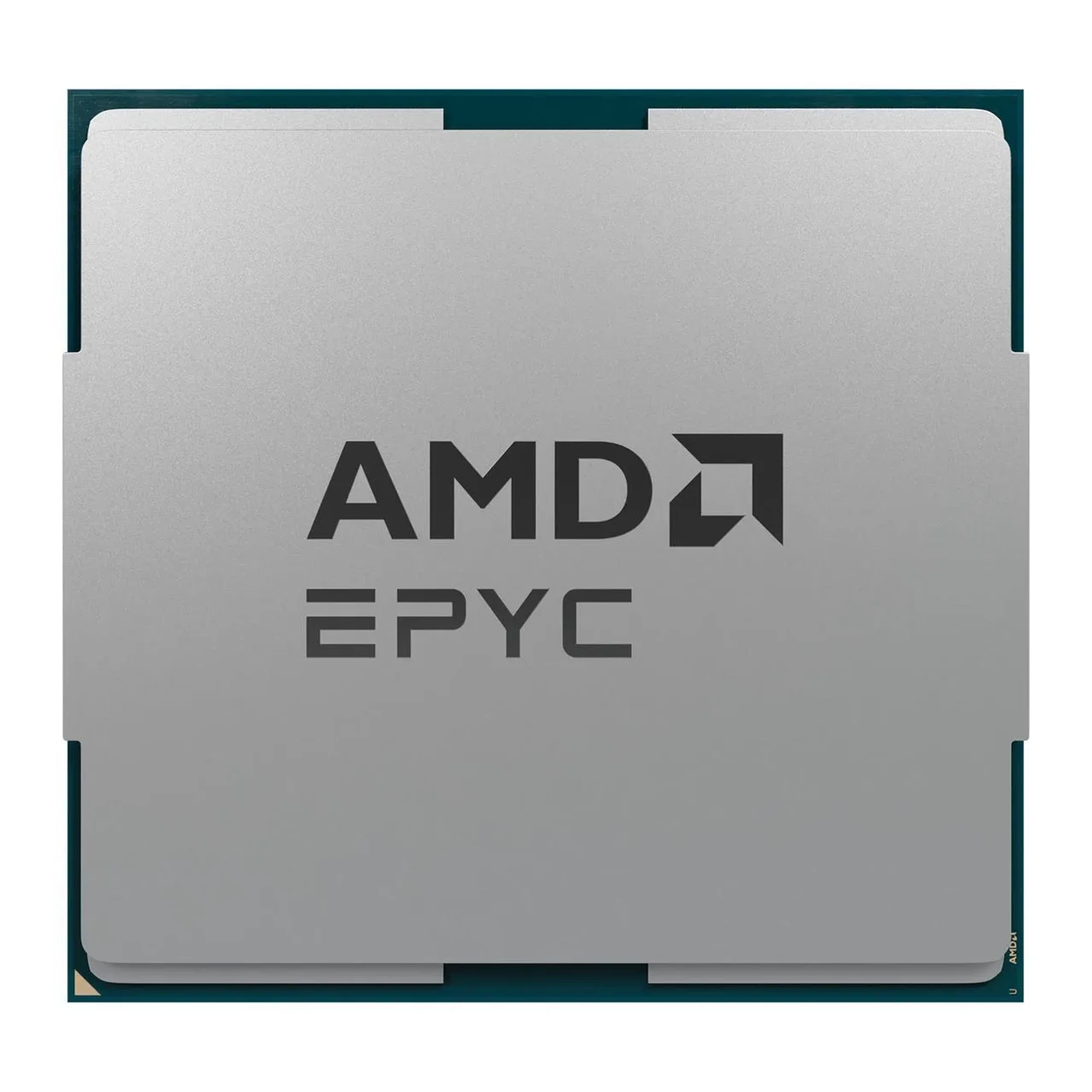
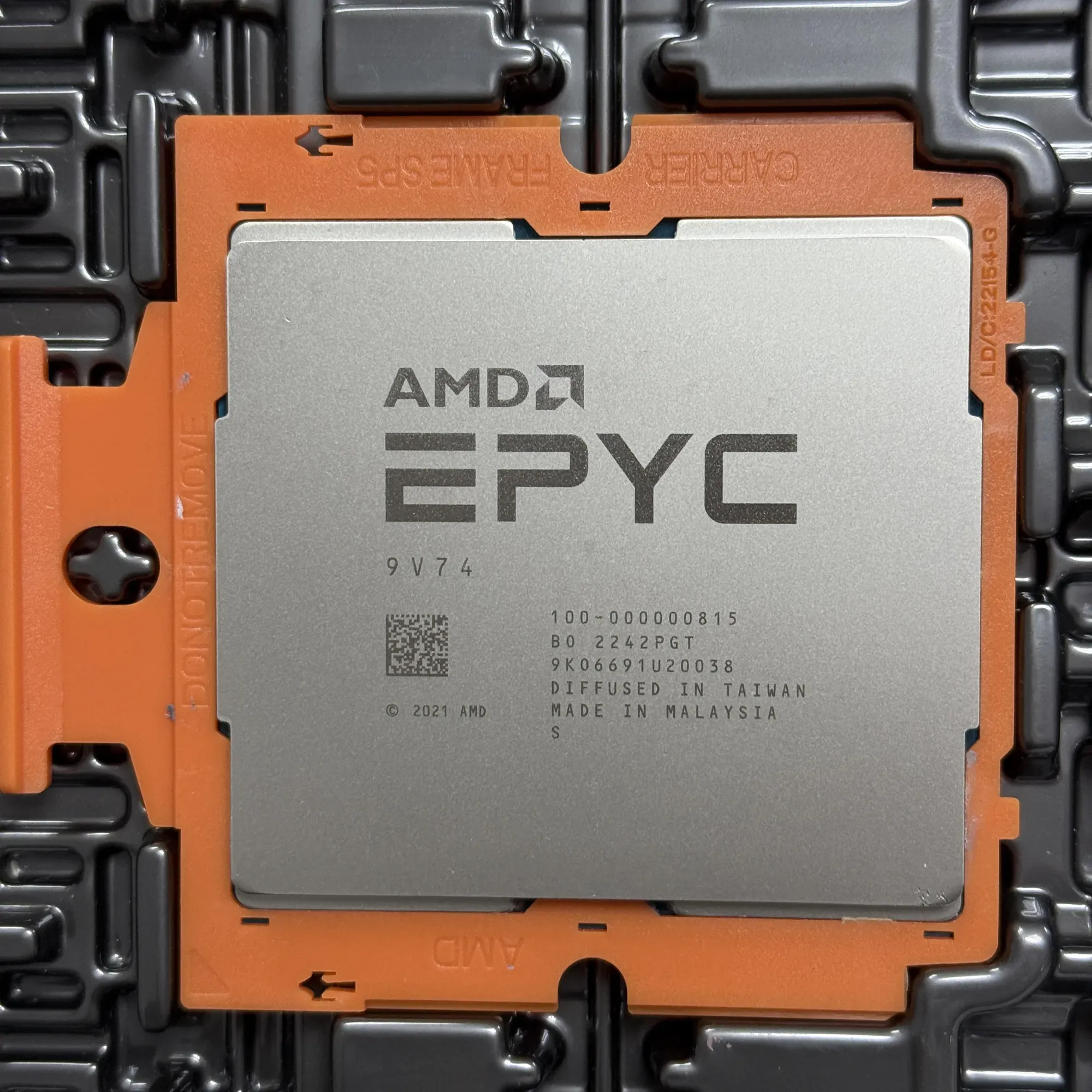
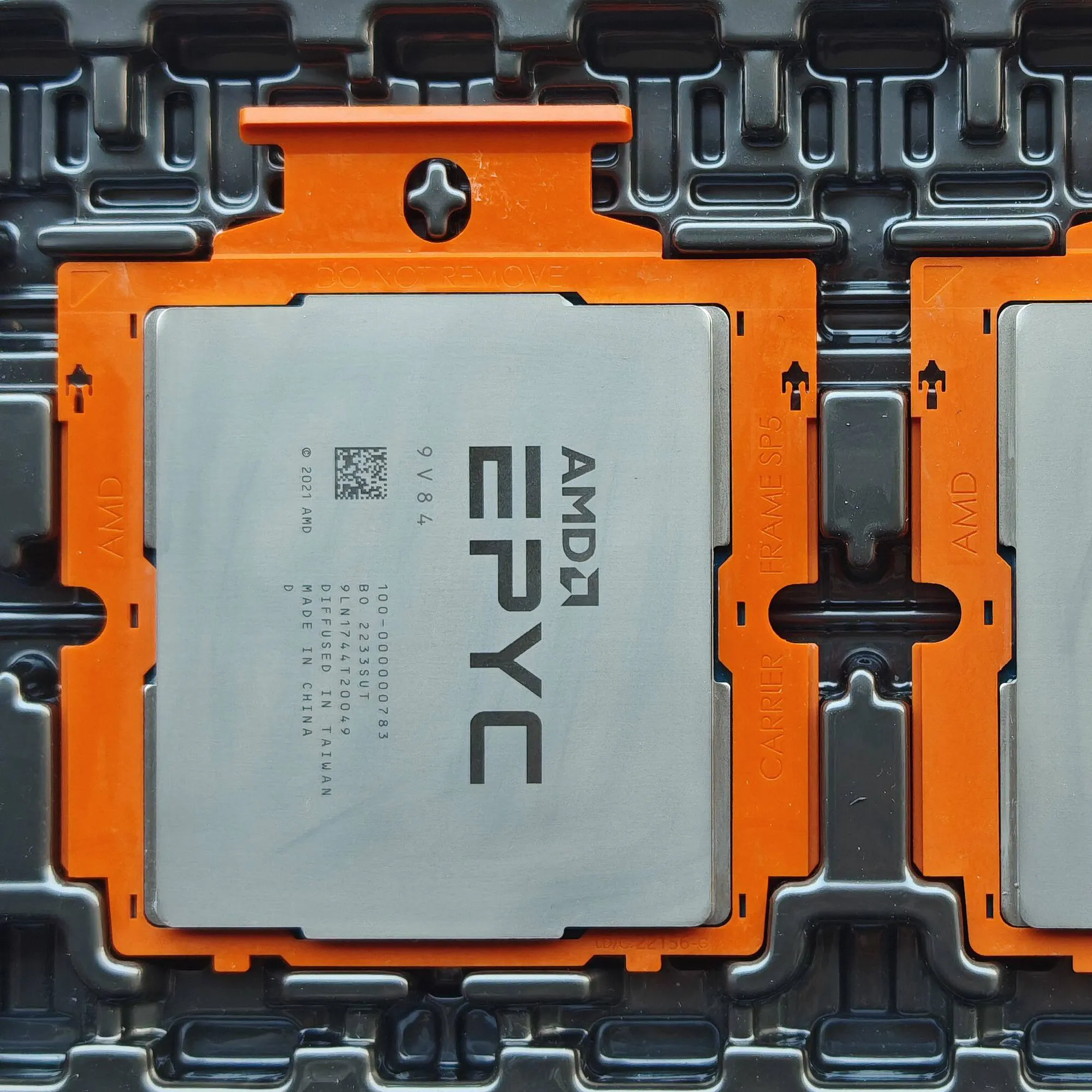
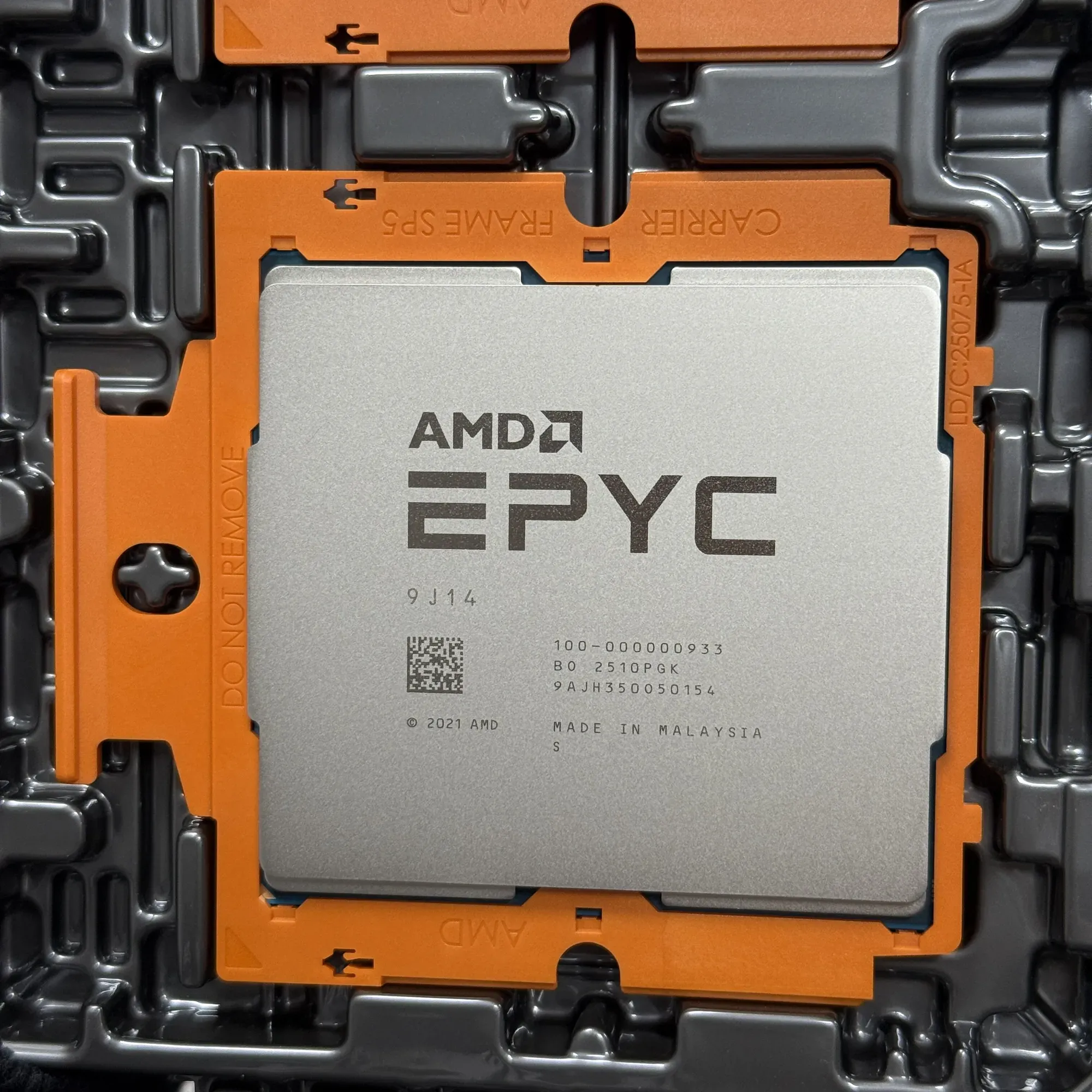

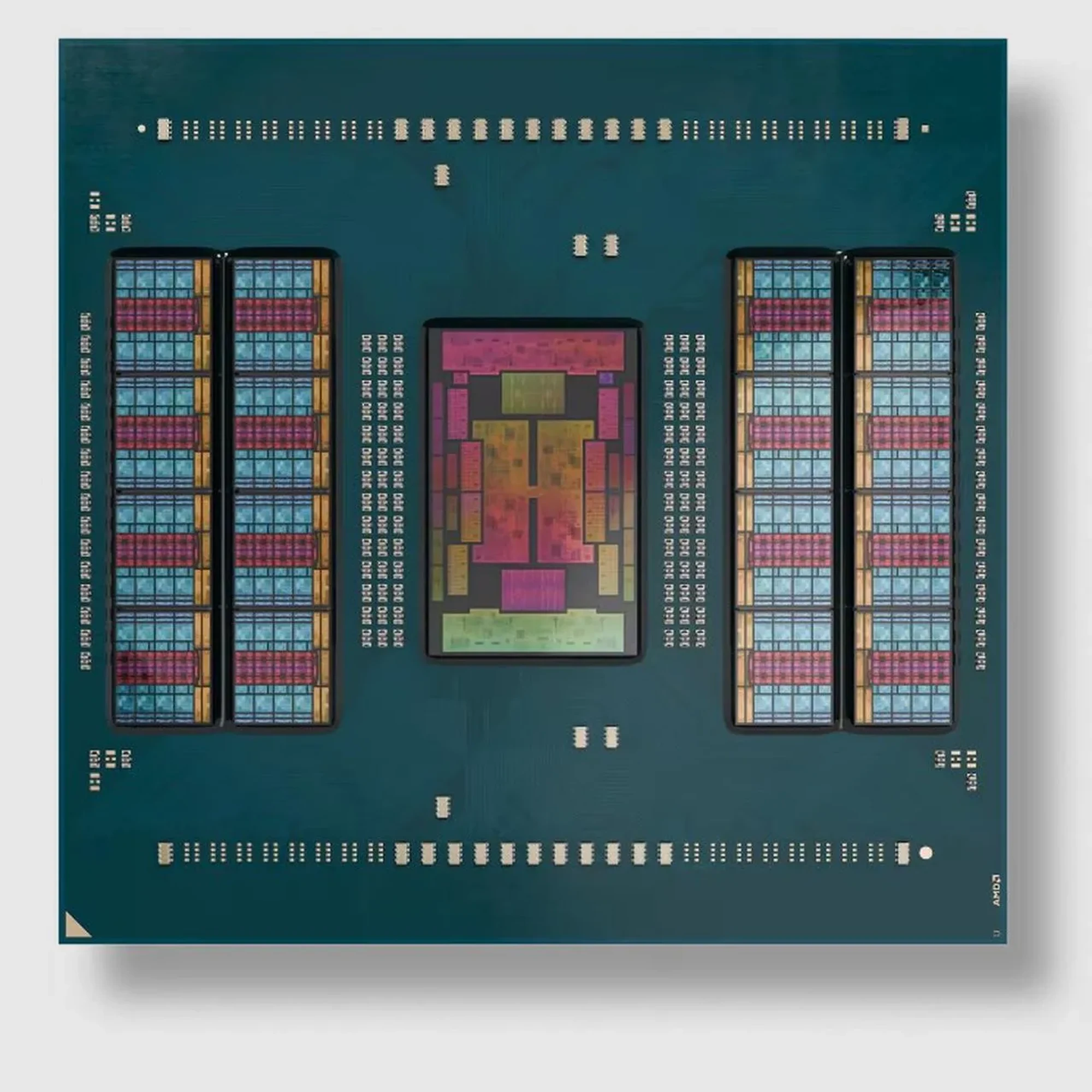
AMD EPYC™ 9645 Server Processor | 96-Core 192-Thread, 3.7GHz Boost, PCIe 5.0 for Data Centers & Cloud
| Specification | Details |
|---|---|
| Product Name | AMD EPYC™ 9645 Server Processor |
| Product Series | AMD EPYC 9005 Series |
| Cores | 96 |
| Threads | 192 |
| Base Clock Speed | 2.3 GHz |
| Max Boost Clock Speed | 3.7 GHz |
| All Core Boost Speed | 3.3 GHz |
| L3 Cache | 256 MB |
| TDP (Default) | 320 W |
| cTDP (Configurable) | 320-400 W |
| Socket | AMD SP5 |
| Socket Count | 1P / 2P |
| PCIe Version | PCIe® 5.0 |
| PCIe Lanes | 128 |
| Memory Type | DDR5 |
| Memory Channels | 12 |
| Max Memory Speed | 6400 MT/s |
| Per Socket Memory Bandwidth | 614 GB/s |
| Max Memory Capacity (Per Socket) | 6 TB |
| ECC Memory Support | Yes |
| Supported Technologies | AMD Infinity Guard, AMD Infinity Architecture |
| Workload Affinity | App dev | test, Consumer-Oriented Digital Services, Content mgmt, ERM | SCM | CRM apps |
| Release Date | October 10, 2024 |
| Tray Product ID | 100-000001461 |
| 1kU Pricing | 8495 USD |
| Regional Availability | Global, China, NA, EMEA, APJ, LATAM |
In the dynamic landscape of data centers and enterprise computing, the demand for powerful, efficient, and scalable server processors continues to escalate. As organizations increasingly depend on AI-driven applications, cloud computing infrastructure, and data-intensive workloads, the requirement for a processor capable of delivering consistent performance, robust security, and cost-effective scalability has become imperative. The AMD EPYC™ 9645 Server Processor — a flagship offering within AMD’s EPYC 9005 Series — is engineered to redefine the capabilities of modern data center infrastructure. Designed to address the evolving demands of AI-enabled, business-critical workloads, the EPYC 9645 integrates exceptional core density, cutting-edge connectivity, and advanced security features to power the most demanding enterprise environments, ranging from cloud service providers to high-performance computing (HPC) clusters and beyond.
Unmatched Core Density & Multitasking Capability
At the core of the AMD EPYC™ 9645 lies its robust core configuration: 96 physical cores and 192 threads, positioning it as one of the most core-dense server processors available in the market. This high core count represents a significant advancement for workloads requiring parallel processing, including virtualization, containerization, AI model training and inference, database management, and content delivery networks (CDNs). Unlike consumer or mid-range server processors, the EPYC 9645 is specifically engineered to handle hundreds of concurrent tasks simultaneously, enabling organizations to consolidate their infrastructure without compromising performance. Each core operates on AMD’s advanced architecture, optimized for efficiency and throughput, ensuring the processor delivers consistent performance even under sustained load — a critical requirement for data centers operating 24/7/365.
The processor’s clock speeds further enhance its multitasking capabilities. With a base clock of 2.3GHz and a maximum boost clock of 3.7GHz, the EPYC 9645 achieves an optimal balance between power efficiency and peak performance. The base clock ensures stable, reliable performance for long-running workloads when all 96 cores are active, while the boost clock activates for single-threaded or lightly threaded tasks requiring enhanced speed. This flexibility makes the EPYC 9645 well-suited for mixed-workload environments, where certain tasks demand high parallelism and others require rapid single-core performance. Whether deploying a virtualized environment with dozens of virtual machines (VMs), processing large datasets for AI applications, or managing a high-traffic e-commerce platform, the EPYC 9645 delivers the computational power required to execute such tasks effectively.
Cutting-Edge Connectivity & Memory Performance
In today’s data-driven ecosystem, connectivity and memory bandwidth are as critical as core count and clock speed. The AMD EPYC™ 9645 is equipped with PCIe® 5.0 connectivity, offering up to 128 PCIe lanes — double the bandwidth of PCIe 4.0. This extensive connectivity ensures the processor can support the latest high-speed storage devices, graphics processing units (GPUs), and network adapters, eliminating bottlenecks that may impede data transfer. For organizations utilizing NVMe SSDs, PCIe 5.0 delivers sequential read/write speeds of up to 16GB/s, significantly reducing data access latency and enhancing overall system responsiveness. Additionally, the 128 PCIe lanes provide greater flexibility in system design, enabling organizations to configure servers with multiple GPUs for AI workloads or high-speed network cards for low-latency data transfer.
Complementing its PCIe 5.0 connectivity is the EPYC 9645’s support for DDR5 memory. With 12 memory channels and compatibility with memory speeds of up to 6400 MT/s, the processor delivers a memory bandwidth of up to 614 GB/s — a substantial upgrade over previous generations. This high memory bandwidth is critical for memory-intensive workloads such as AI, machine learning, and HPC, where large datasets must be efficiently transferred between memory and the processor. The EPYC 9645 also supports Error-Correcting Code (ECC) memory, which detects and corrects common data errors to ensure data integrity and system stability — a essential feature for business-critical applications where even minor data corruption could result in costly downtime or data loss. With support for up to 6TB of memory per socket, the EPYC 9645 can accommodate even the largest datasets and most memory-intensive applications.
Advanced Security Features for Business-Critical Environments
Security is a paramount concern for any data center, and the AMD EPYC™ 9645 is equipped with a comprehensive suite of advanced security features to protect sensitive data and ensure compliance with industry regulations. At the foundation of its security capabilities is AMD Infinity Guard, a robust set of hardware-based security features designed to defend against modern cyber threats. AMD Infinity Guard includes Secure Encrypted Virtualization (SEV), which encrypts virtual machine (VM) memory to prevent unauthorized access, even from hypervisors. This feature is particularly critical for cloud service providers, where multiple tenants share the same physical hardware — SEV ensures that each tenant’s data remains isolated and secure.
Another key security feature of the EPYC 9645 is Secure Memory Encryption (SME), which encrypts the entire system memory to protect against physical attacks, such as cold boot attacks. With SME, all data stored in memory is encrypted using a unique key, ensuring that even if an attacker gains physical access to the server, the data remains unreadable. The processor also supports the AMD Secure Processor, a dedicated security chip that manages encryption keys and performs secure boot, ensuring that system firmware and the operating system are not tampered with during boot-up. These features work in tandem to create a multi-layered security architecture that defends against both physical and virtual threats, providing organizations with the confidence that their sensitive data is protected.
Energy Efficiency & Cost Savings
Data centers are among the largest consumers of electricity, making energy efficiency a critical consideration for organizations seeking to reduce operational costs and minimize their environmental footprint. The AMD EPYC™ 9645 is designed with energy efficiency as a core priority, featuring a default Thermal Design Power (TDP) of 320W and a configurable TDP (cTDP) range of 320-400W. This allows organizations to adjust the processor’s power consumption based on workload requirements — reducing power usage during periods of low demand and increasing it during peak loads. The processor’s advanced architecture also includes power management features such as AMD CoolCore™ and AMD PowerNow!™, which dynamically adjust core voltage and frequency to optimize energy efficiency without sacrificing performance.
In addition to reducing energy costs, the EPYC 9645’s high core density and scalability contribute to a lower total cost of ownership (TCO) for organizations. By consolidating multiple physical servers into a single server powered by the EPYC 9645, organizations can reduce hardware costs, maintenance expenses, and data center space requirements. For instance, a single EPYC 9645 server can replace multiple mid-range servers, decreasing the number of servers needed to run equivalent workloads. This not only reduces hardware expenditures but also lowers power consumption and cooling costs, as fewer servers generate less heat. The EPYC 9645’s long-term reliability and durability further contribute to lower TCO, as it requires less frequent replacement and maintenance compared to lower-quality processors.
Ideal Use Cases for the AMD EPYC™ 9645
The AMD EPYC™ 9645 is a versatile processor that excels in a wide range of enterprise and data center use cases. Its high core count, fast clock speeds, and advanced connectivity make it well-suited for the following applications:
- AI & Machine Learning: The 96 cores and 192 threads are optimized for parallel processing of AI models, while the high memory bandwidth ensures efficient data access for training and inference workloads. PCIe 5.0 support enables seamless integration with high-performance GPUs, further enhancing AI performance.
- Cloud Computing: Cloud service providers can leverage the EPYC 9645’s core density to host more VMs and containers per server, increasing resource utilization and reducing operational costs. The processor’s security features, such as SEV, make it well-suited for multi-tenant cloud environments.
- High-Performance Computing (HPC): HPC workloads, including scientific computing, weather simulation, and genomic sequencing, require massive parallel processing power — the EPYC 9645’s 96 cores and high memory bandwidth make it an optimal choice for these demanding applications.
- Enterprise Databases & ERP/CRM Systems: The processor’s high core count and memory bandwidth ensure that databases and enterprise resource planning (ERP)/customer relationship management (CRM) systems can handle large volumes of transactions and queries with minimal latency, enhancing user experience and operational productivity.
- Content Management & Digital Services: For organizations operating content management systems (CMS), content delivery networks (CDNs), or consumer-oriented digital services, the EPYC 9645 delivers the performance required to handle high traffic volumes and deliver content efficiently to users worldwide.
Why Choose the AMD EPYC™ 9645 Over Competitors?
When compared to other server processors in its class, the AMD EPYC™ 9645 distinguishes itself through its exceptional core density, advanced connectivity, and comprehensive security features. Unlike competing processors that offer fewer cores or lower memory bandwidth, the EPYC 9645 delivers 96 cores and 192 threads, making it ideal for parallel processing workloads. Its PCIe 5.0 connectivity and DDR5 support also provide a significant performance advantage over processors utilizing PCIe 4.0 and DDR4 memory.
Additionally, the EPYC 9645 offers superior value, with a lower cost per core compared to many competitors. This makes it an ideal choice for organizations seeking to maximize performance while maintaining cost control. AMD’s commitment to innovation and customer support further differentiates the EPYC 9645 — with regular firmware updates and a global network of partners, organizations can be confident that their investment in the EPYC 9645 will remain relevant for years to come.
In conclusion, the AMD EPYC™ 9645 Server Processor is a powerful, efficient, and secure solution for modern data centers and enterprise environments. With its 96 cores, 192 threads, PCIe 5.0 connectivity, DDR5 support, and advanced security features, it delivers the performance and scalability required to handle the most demanding workloads. Whether an organization operates as a cloud service provider, an enterprise IT team, or a research organization, the EPYC 9645 is engineered to support operational goals while reducing costs and improving efficiency. Investing in the AMD EPYC 9645 enables organizations to elevate their data center capabilities to new heights.
Recommended Motherboards for AMD EPYC 9005/9004 SP5 processors
| Model | CPU (Socket / TDP) | Memory | PCIe/CXL | LAN | Management | Form Factor |
|---|---|---|---|---|---|---|
| Gigabyte MZ73-LM2 | Dual SP5 / 500W | 24×DDR5 | PCIe 5.0 | 2×10GbE | IPMI | E-ATX |
| Gigabyte MZ73-LM1 | Dual SP5 / 400W | 24×DDR5 | PCIe 5.0 | 2×10GbE | IPMI | E-ATX |
| Gigabyte MZ73-LM0 | Dual SP5 / 400W | 24×DDR5 | PCIe 5.0 | 2×10GbE | IPMI | E-ATX |
| Gigabyte MZ33-AR1 | Single SP5 / 400W | 24×DDR5 | PCIe 5.0 | 1×10GbE | IPMI | E-ATX |
| Gigabyte MZ33-CP1 | Single SP5 / 500W | 12×DDR5 | PCIe 5.0 | 2×1GbE | IPMI | E-ATX |
| ASRock Rack TURIND8-2L2T | Single SP5 / 400W | 8×DDR5 | PCIe 5.0 + CXL 2.0 | 2×10GbE + 2×1GbE | IPMI | CEB |
| ASRock Rack TURIN2D16-2T | Dual SP5 / 400W | 16×DDR5 (8+8) | PCIe 5.0 + CXL 2.0 | 2×10GbE | IPMI | EEB |
| ASRock Rack TURIN2D24G-2L+/500W | Dual SP5 / 500W | 24×DDR5 (12+12) | PCIe 5.0 + CXL 2.0 | 2×1GbE | IPMI | Proprietary |
| ASUS K14PA-U12 | Single SP5 / 400W | 12×DDR5 | PCIe 5.0 | 2×25GbE (SFP28) | iKVM (ASMB11) | CEB |
5th Gen AMD EPYC Server CPUs Model Specifications
| Name | # of CPU Cores | # of Threads | Max. Boost Clock | Base Clock | L3 Cache | Default TDP |
| AMD EPYC™ 9965 | 192 | 384 | Up to 3.7 GHz | 2.25 GHz | 384 MB | 500W |
| AMD EPYC™ 9845 | 160 | 320 | Up to 3.7 GHz | 2.1 GHz | 320 MB | 390W |
| AMD EPYC™ 9825 | 144 | 288 | Up to 3.7 GHz | 2.2 GHz | 384 MB | 390W |
| AMD EPYC™ 9755 | 128 | 256 | Up to 4.1 GHz | 2.7 GHz | 512 MB | 500W |
| AMD EPYC™ 9745 | 128 | 256 | Up to 3.7 GHz | 2.4 GHz | 256 MB | 400W |
| AMD EPYC™ 9655P | 96 | 192 | Up to 4.5 GHz | 2.6 GHz | 384 MB | 400W |
| AMD EPYC™ 9655 | 96 | 192 | Up to 4.5 GHz | 2.6 GHz | 384 MB | 400W |
| AMD EPYC™ 9645 | 96 | 192 | Up to 3.7 GHz | 2.3 GHz | 256 MB | 320W |
| AMD EPYC™ 9575F | 64 | 128 | Up to 5 GHz | 3.3 GHz | 256 MB | 400W |
| AMD EPYC™ 9565 | 72 | 144 | Up to 4.3 GHz | 3.15 GHz | 384 MB | 400W |
| AMD EPYC™ 9555P | 64 | 128 | Up to 4.4 GHz | 3.2 GHz | 256 MB | 360W |
| AMD EPYC™ 9555 | 64 | 128 | Up to 4.4 GHz | 3.2 GHz | 256 MB | 360W |
| AMD EPYC™ 9535 | 64 | 128 | Up to 4.3 GHz | 2.4 GHz | 256 MB | 300W |
| AMD EPYC™ 9475F | 48 | 96 | Up to 4.8 GHz | 3.65 GHz | 256 MB | 400W |
| AMD EPYC™ 9455P | 48 | 96 | Up to 4.4 GHz | 3.15 GHz | 256 MB | 300W |
| AMD EPYC™ 9455 | 48 | 96 | Up to 4.4 GHz | 3.15 GHz | 256 MB | 300W |
| AMD EPYC™ 9375F | 32 | 64 | Up to 4.8 GHz | 3.8 GHz | 256 MB | 320W |
| AMD EPYC™ 9365 | 36 | 72 | Up to 4.3 GHz | 3.4 GHz | 192 MB | 300W |
| AMD EPYC™ 9355P | 32 | 64 | Up to 4.4 GHz | 3.55 GHz | 256 MB | 280W |
| AMD EPYC™ 9355 | 32 | 64 | Up to 4.4 GHz | 3.55 GHz | 256 MB | 280W |
| AMD EPYC™ 9335 | 32 | 64 | Up to 4.4 GHz | 3 GHz | 128 MB | 210W |
| AMD EPYC™ 9275F | 24 | 48 | Up to 4.8 GHz | 4.1 GHz | 256 MB | 320W |
| AMD EPYC™ 9255 | 24 | 48 | Up to 4.3 GHz | 3.2 GHz | 128 MB | 200W |
| AMD EPYC™ 9175F | 16 | 32 | Up to 5 GHz | 4.2 GHz | 512 MB | 320W |
| AMD EPYC™ 9135 | 16 | 32 | Up to 4.3 GHz | 3.65 GHz | 64 MB | 200W |
| AMD EPYC™ 9115 | 16 | 32 | Up to 4.1 GHz | 2.6 GHz | 64 MB | 125W |
| AMD EPYC™ 9015 | 8 | 16 | Up to 4.1 GHz | 3.6 GHz | 64 MB | 125W |


