-
 Pick up from the CUBETIQ Store

-
Courier delivery

-
DHL/UPS/Fedex Courier delivery

Don't Miss Top Accessories
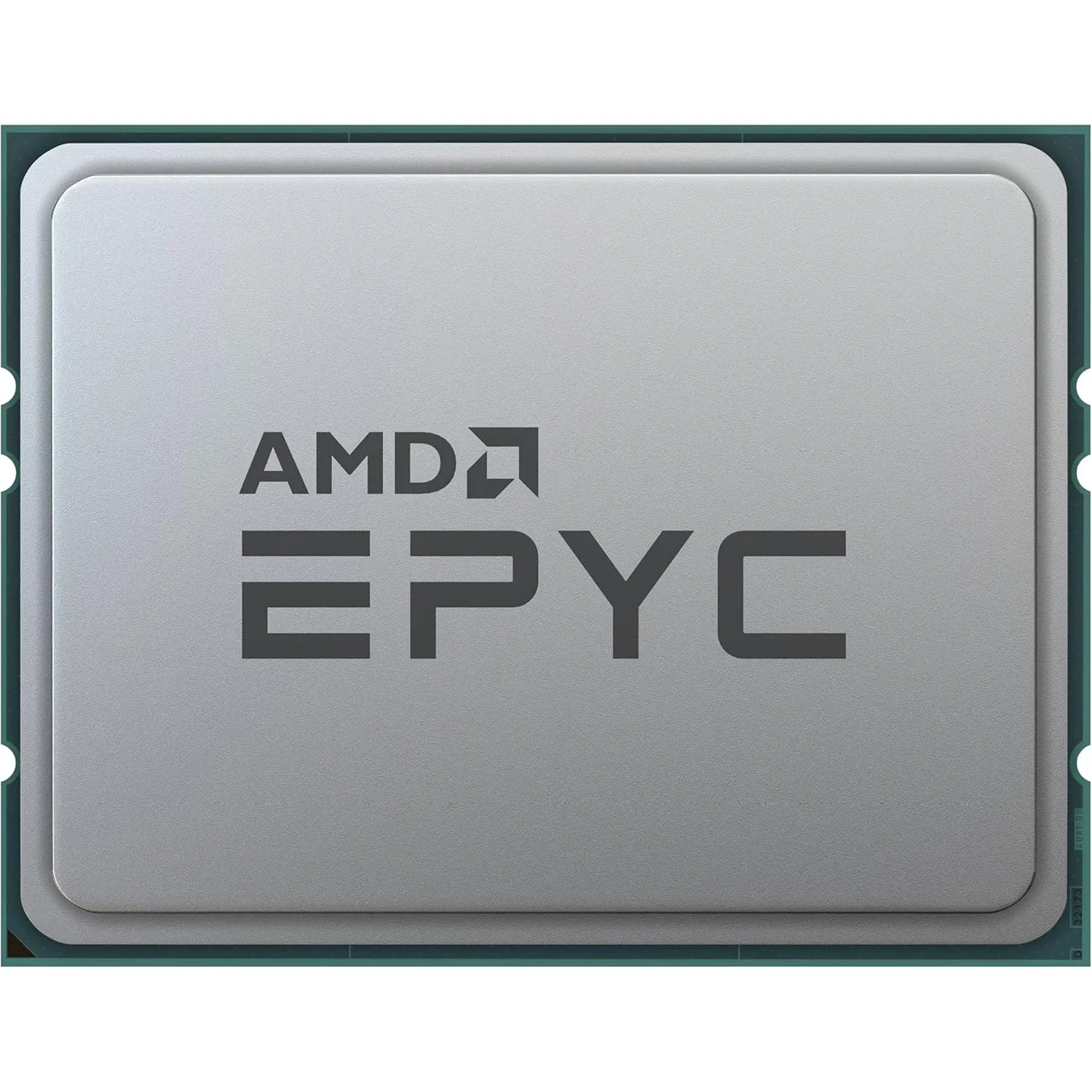
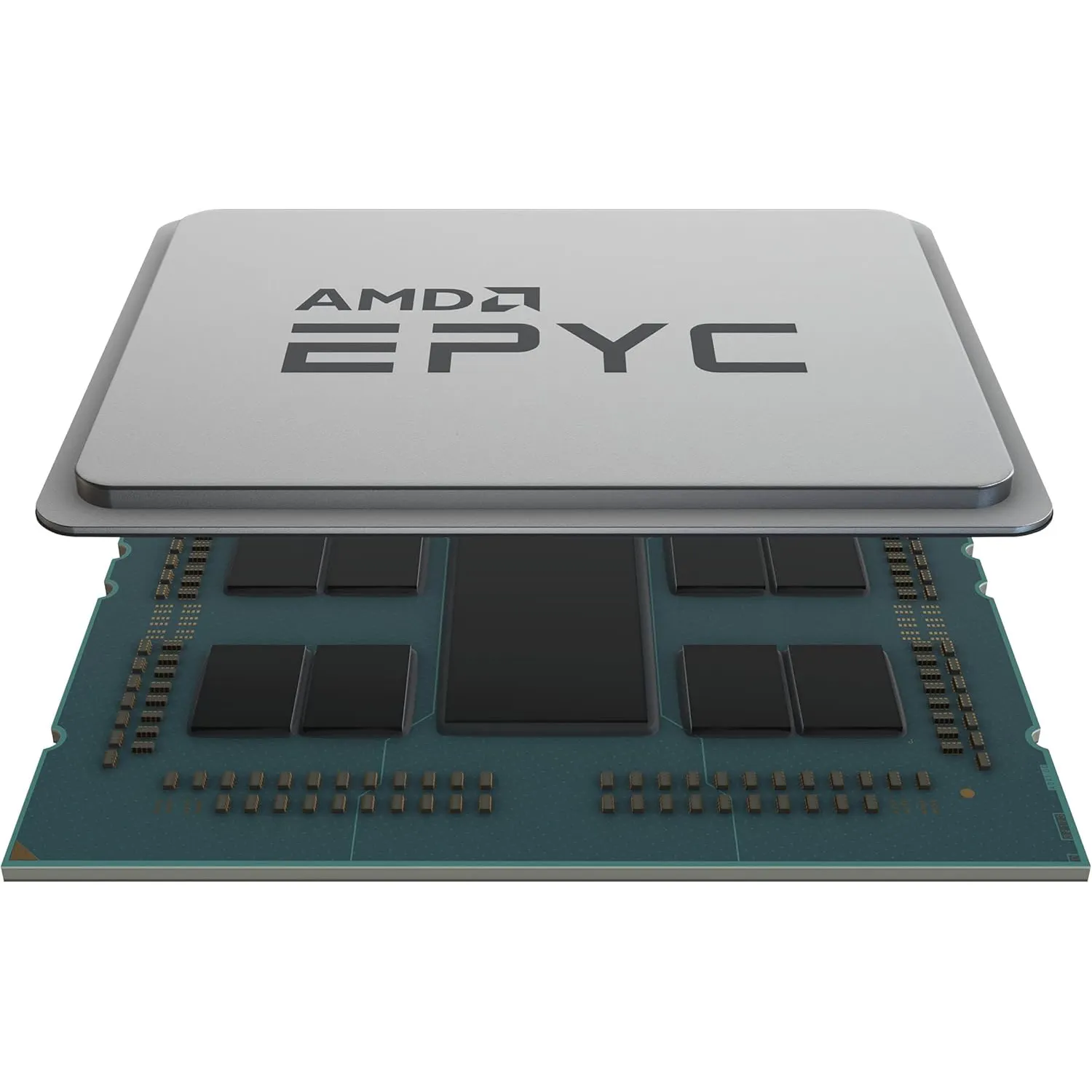
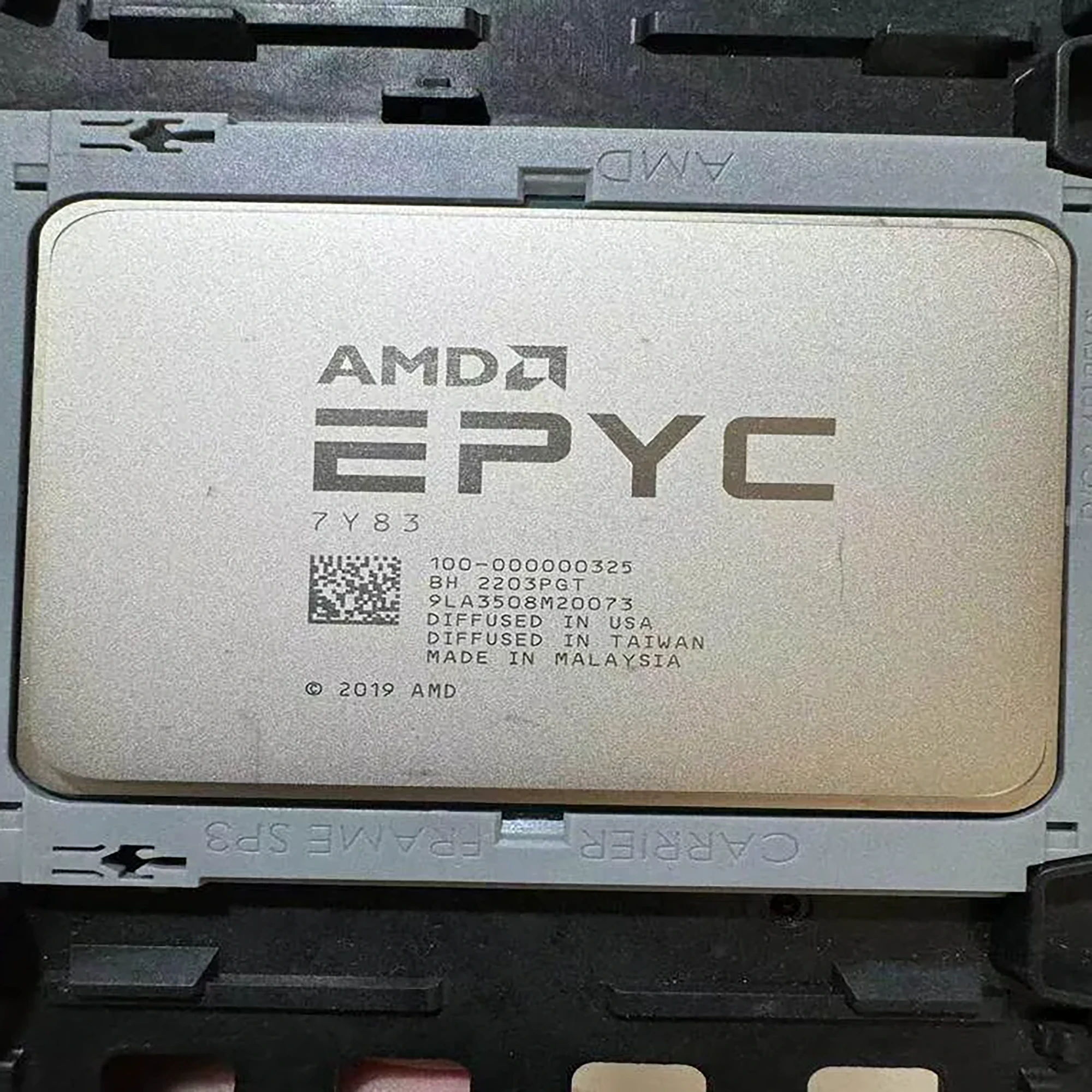
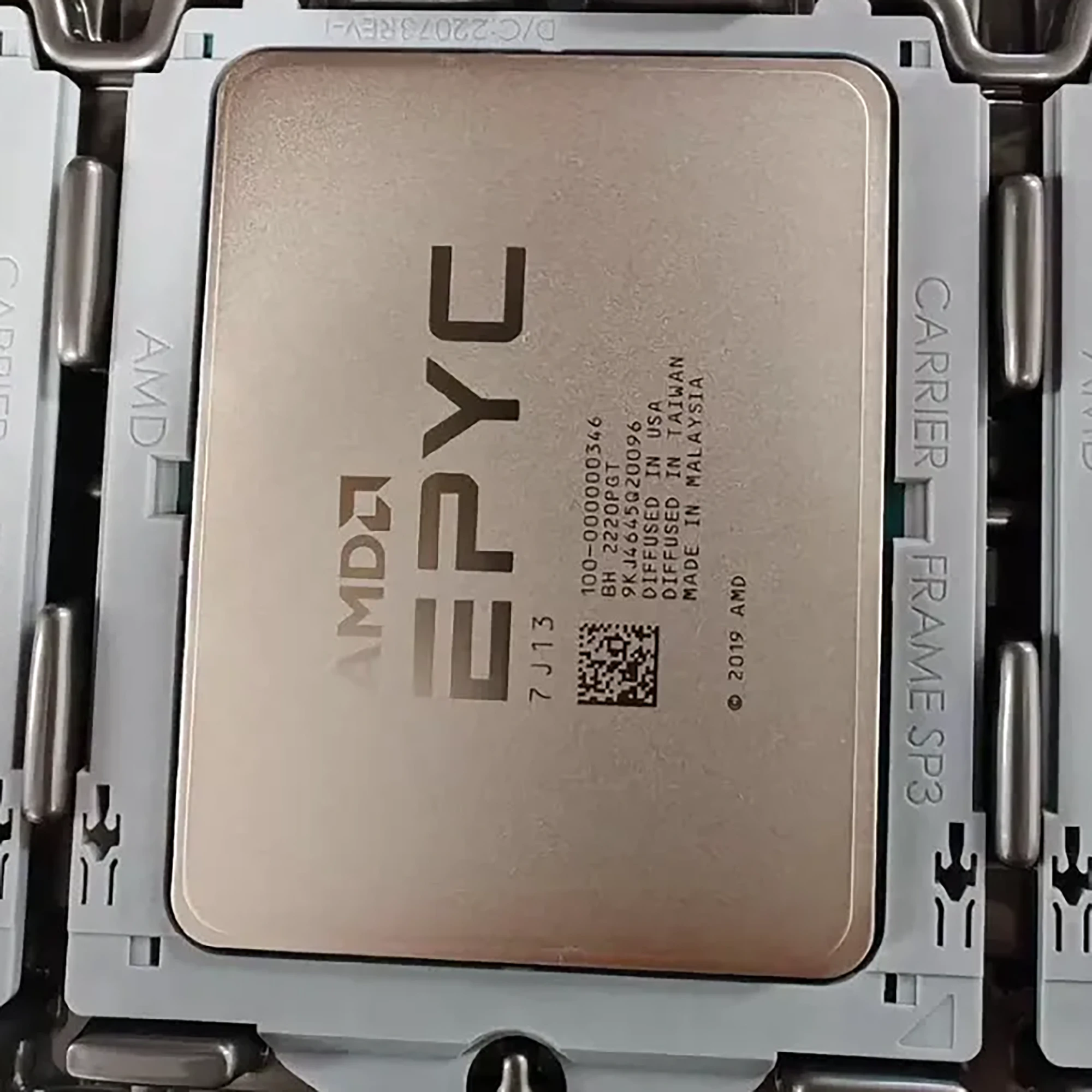
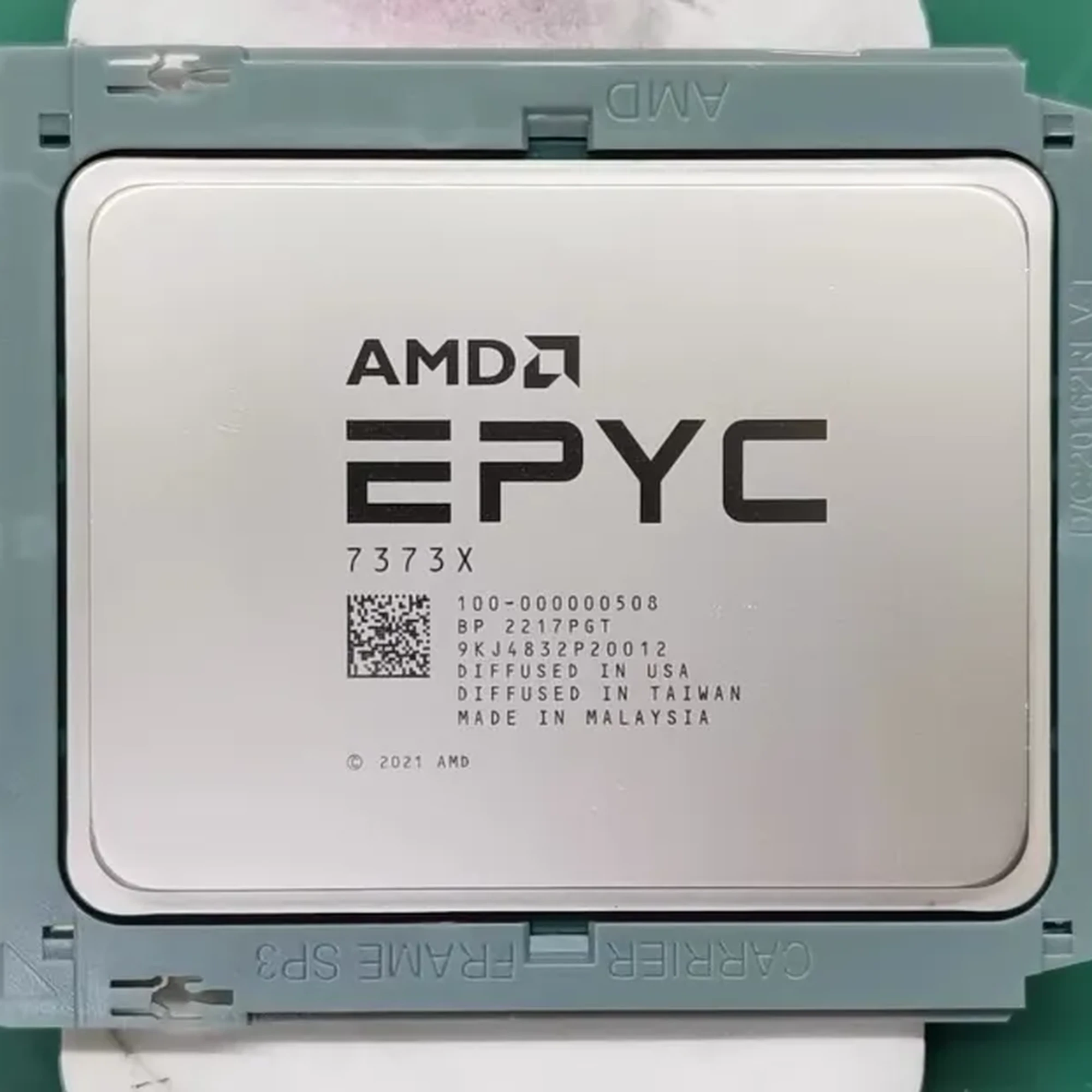
AMD EPYC 7Y83 Processor | 64 Cores, 128 Threads, 3.5GHz Max Boost
AMD EPYC 7Y83: 64-Core Milan Powerhouse for Modern Data Centers
The AMD EPYC 7Y83 is a flagship server processor from the renowned EPYC 7003 “Milan” series. Built on TSMC’s advanced 7nm process technology, this CPU is engineered to deliver outstanding performance, security, and efficiency for the most demanding enterprise workloads. With 64 physical cores, 128 threads, and a maximum boost clock of 3.5 GHz, the EPYC 7Y83 redefines what’s possible in high-density computing environments.
Unmatched Core Density and Performance
At the heart of the EPYC 7Y83 lies 64 Zen 3 cores, capable of handling 128 simultaneous threads. This massive parallelism makes it an ideal choice for virtualization, cloud computing, and multi-threaded applications such as scientific simulations, financial modeling, and genomic research. Unlike many competing processors, the EPYC 7Y83 maintains a consistent 2.45 GHz base frequency across all cores, ensuring predictable performance under sustained loads.
The Zen 3 architecture introduces a unified 8-core complex (CCX) design with a larger shared L3 cache. Each core has direct access to 32KB L1 instruction and 32KB L1 data caches, plus 512KB L2 private cache. The shared L3 cache totals 256MB (32MB per CCX), significantly reducing memory latency and improving performance in cache-sensitive workloads.
Memory and I/O Capabilities
Memory support is exceptional, featuring 8 channels of DDR4 ECC memory with speeds up to 3200 MHz. The processor supports up to 4 TB of RAM per socket, ideal for in-memory databases and large-scale virtualization. With PCIe 4.0 support (128 lanes per socket), the EPYC 7Y83 provides double the bandwidth of PCIe 3.0, enabling faster NVMe storage, high-speed networking (100GbE+), and GPU accelerators.
Advanced Security and Reliability
AMD has integrated a comprehensive security suite into the EPYC 7Y83. Features include AMD Infinity Guard, which combines Secure Encrypted Virtualization (SEV) and Secure Memory Encryption (SME). SEV-ES (Encrypted State) and SEV-SNP (Secure Nested Paging) provide hardware-level isolation for virtual machines, protecting sensitive data from hypervisor vulnerabilities. Additionally, the processor supports firmware TPM 2.0, secure boot, and transparent SME for memory encryption.
Energy Efficiency and Thermal Design
Despite its 64 cores, the EPYC 7Y83 has a configurable TDP of up to 240W (default 225W). This efficiency is achieved through advanced power gating, dynamic voltage/frequency scaling, and the 7nm process. The processor operates in a temperature range of 0°C to 85°C, suitable for standard data center environments. For cooling, it requires a SP3 socket-compatible server heatsink capable of dissipating 225W+.
Ideal Use Cases
- Virtualization: Run hundreds of VMs per server with VMware ESXi, Microsoft Hyper-V, or KVM.
- High-Performance Computing (HPC): CFD, weather modeling, molecular dynamics.
- Cloud-Native Workloads: Kubernetes, containerized microservices, serverless functions.
- Big Data Analytics: Apache Spark, Hadoop, real-time databases.
- AI Inference: Large-scale recommendation engines, image recognition.
Why Choose EPYC 7Y83 Over Xeon?
Compared to Intel Xeon Platinum 8380 (40 cores), the EPYC 7Y83 offers 60% more cores, 60% more threads, and a unified 256MB L3 cache versus Intel’s segmented 60MB. PCIe 4.0 support provides twice the I/O bandwidth, and total cost of ownership is typically lower due to reduced licensing fees (per-core pricing models favor higher core counts) and lower power consumption per core.
Compatibility and Platform Requirements
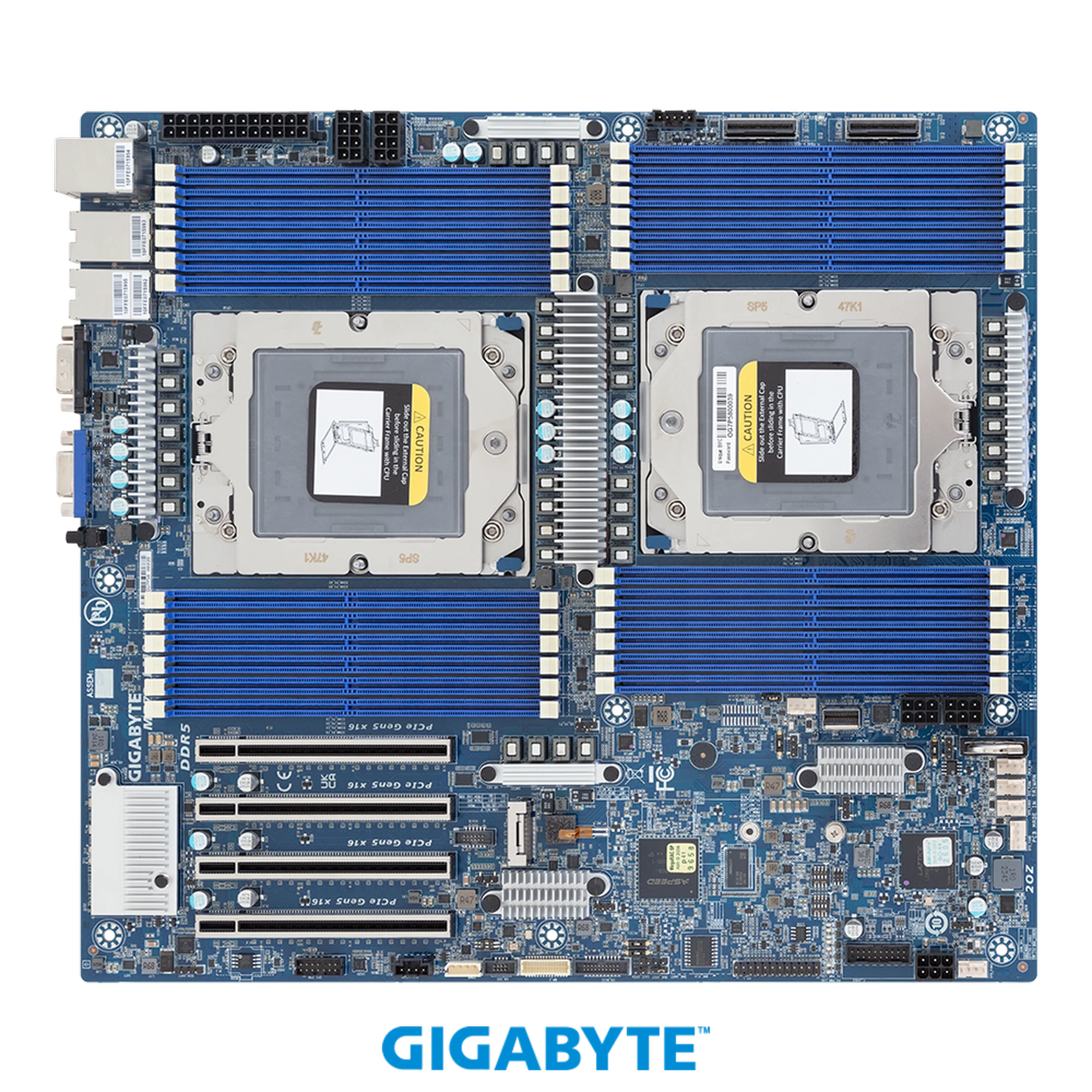
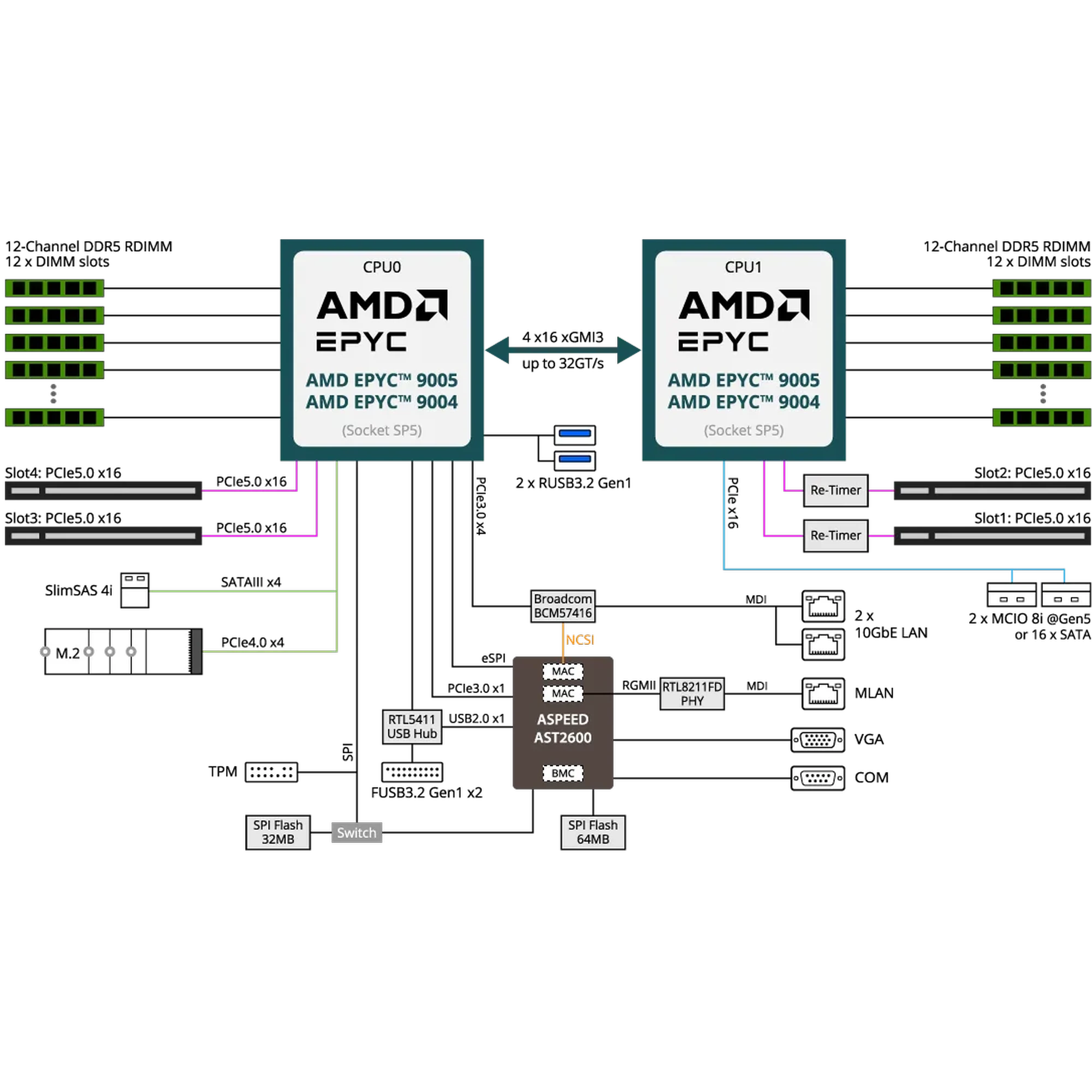
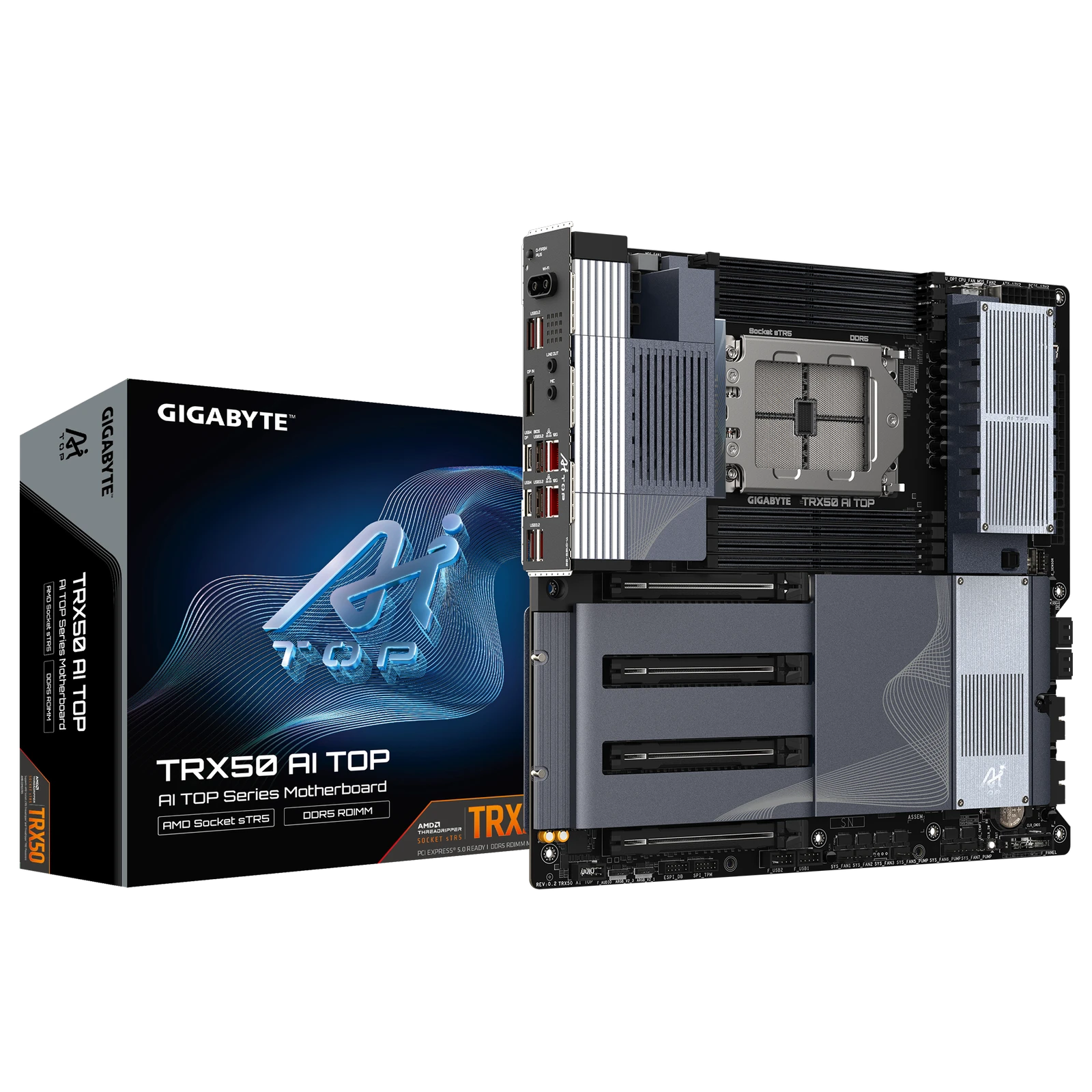
The EPYC 7Y83 uses the SP3 socket (LGA4094) and is compatible with motherboards based on AMD B550, X570, WRX80 (for workstations), and server chipsets like B550, X570, and TRX40. For dual-socket configurations, ensure the motherboard supports two EPYC 7003 series processors. Recommended platforms include Supermicro H12 generation, ASRock Rack ROMED8, and Gigabyte MZ72-HB2.
Firmware update (AGESA 1.0.0.3 or newer) may be required on older SP3 motherboards to support Milan processors.
Conclusion
The AMD EPYC 7Y83 represents the pinnacle of x86 server CPU design in its generation. With 64 cores, 128 threads, 256MB L3 cache, and PCIe 4.0, it provides an unbeatable combination of core density, memory bandwidth, and I/O throughput. Whether you are building a cloud infrastructure, upgrading an HPC cluster, or consolidating legacy servers, the EPYC 7Y83 delivers exceptional performance per watt and per dollar.
Technical Specifications – AMD EPYC 7Y83
| Specification | Detail |
|---|---|
| Product Family | AMD EPYC 7003 Series (Milan) |
| Model Number | 7Y83 |
| Core Count | 64 |
| Thread Count | 128 |
| Base Clock Speed | 2.45 GHz |
| Max Boost Clock Speed | Up to 3.5 GHz |
| L1 Cache | 64KB per core (32KB instruction + 32KB data) |
| L2 Cache | 512KB per core |
| L3 Cache | 256MB shared |
| Manufacturing Process | TSMC 7nm |
| Socket | SP3 (LGA4094) |
| PCIe Version | PCIe 4.0 |
| PCIe Lanes | 128 lanes per socket |
| Memory Type | DDR4 ECC Registered |
| Memory Channels | 8 |
| Max Memory Speed | 3200 MHz |
| Max Memory Capacity | 4 TB per socket |
| TDP (Thermal Design Power) | 225W (configurable up to 240W) |
| Operating Temperature | 0°C to 85°C |
| Security Features | SEV, SME, SEV-ES, SEV-SNP, TPM 2.0, Secure Boot |
| Architecture | Zen 3 |
| Supported Technologies | AVX2, AVX-512 (via 2x 256-bit), FMA3, AES-NI, AMD-V, IOMMU |
| Dual Socket Support | Yes (2P configurations) |
AMD EPYC 7003 Series Processors General Specifications
Name | # of CPU Cores | # of Threads | Max. Boost Clock | Base Clock | L3 Cache | Default TDP |
|---|---|---|---|---|---|---|
| AMD EPYC™ 7203P | 8 | 16 | Up to 3.4 GHz | 2.8 GHz | 64 MB | 120W |
| AMD EPYC™ 7203 | 8 | 16 | Up to 3.4 GHz | 2.8 GHz | 64 MB | 120W |
| AMD EPYC™ 7303P | 16 | 32 | Up to 3.4 GHz | 2.4 GHz | 64 MB | 130W |
| AMD EPYC™ 7303 | 16 | 32 | Up to 3.4 GHz | 2.4 GHz | 64 MB | 130W |
| AMD EPYC™ 7643P | 48 | 96 | Up to 3.6 GHz | 2.3 GHz | 256 MB | 225W |
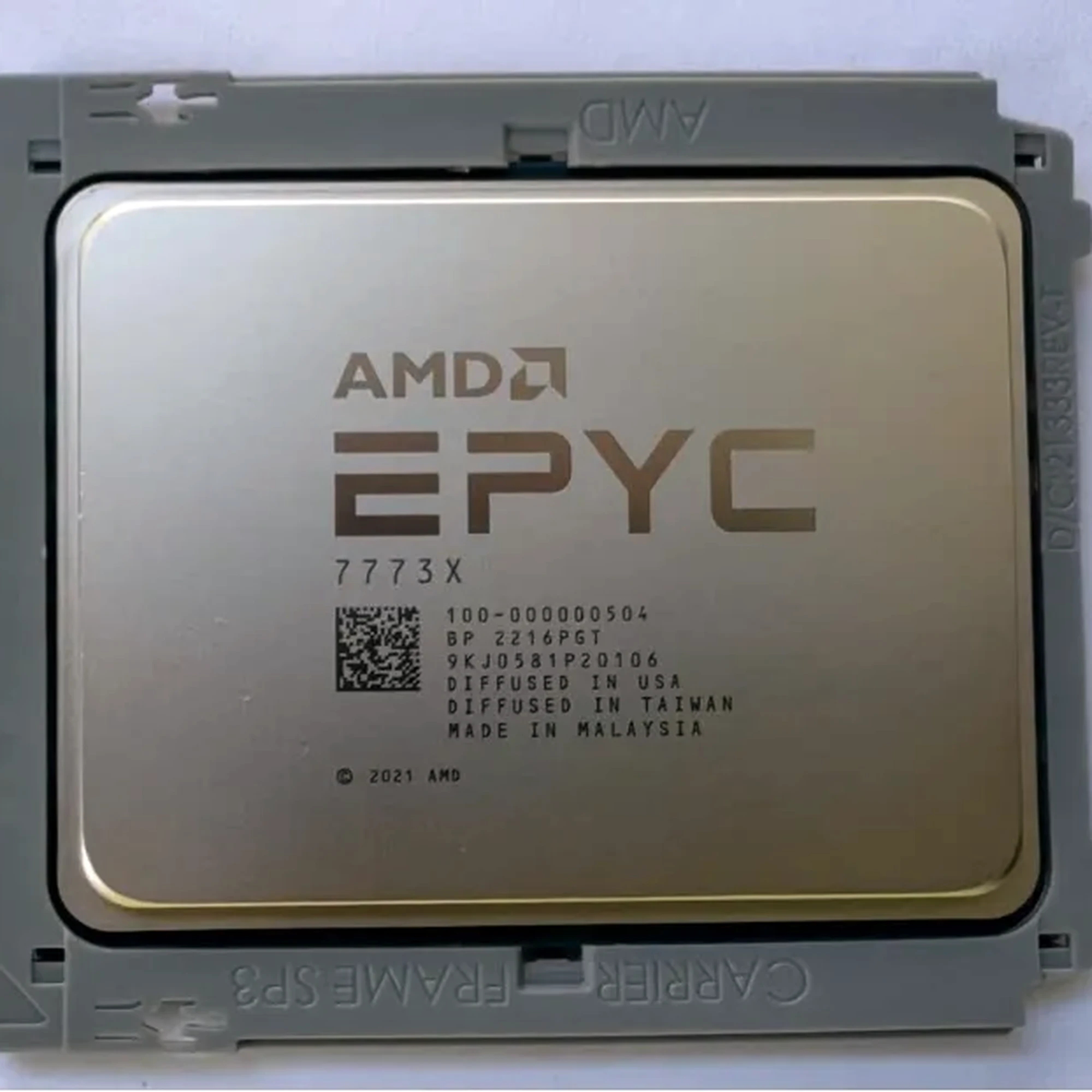
| AMD EPYC™ 7773X | 64 | 128 | Up to 3.5 GHz | 2.2 GHz | 768 MB | 280W |
| AMD EPYC™ 7763 | 64 | 128 | Up to 3.5 GHz | 2.45 GHz | 256 MB | 280W |
| AMD EPYC™ 7713P | 64 | 128 | Up to 3.67 GHz | 2 GHz | 256 MB | 225W |
| AMD EPYC™ 7713 | 64 | 128 | Up to 3.67 GHz | 2 GHz | 256 MB | 225W |
| AMD EPYC™ 7663 | 56 | 112 | Up to 3.5 GHz | 2 GHz | 256 MB | 240W |
| AMD EPYC™ 7643 | 48 | 96 | Up to 3.6 GHz | 2.3 GHz | 256 MB | 225W |
| AMD EPYC™ 7663P | 56 | 112 | Up to 3.5 GHz | 2 GHz | 256 MB | 240W |
| AMD EPYC™ 75F3 | 32 | 64 | Up to 4 GHz | 2.95 GHz | 256 MB | 280W |
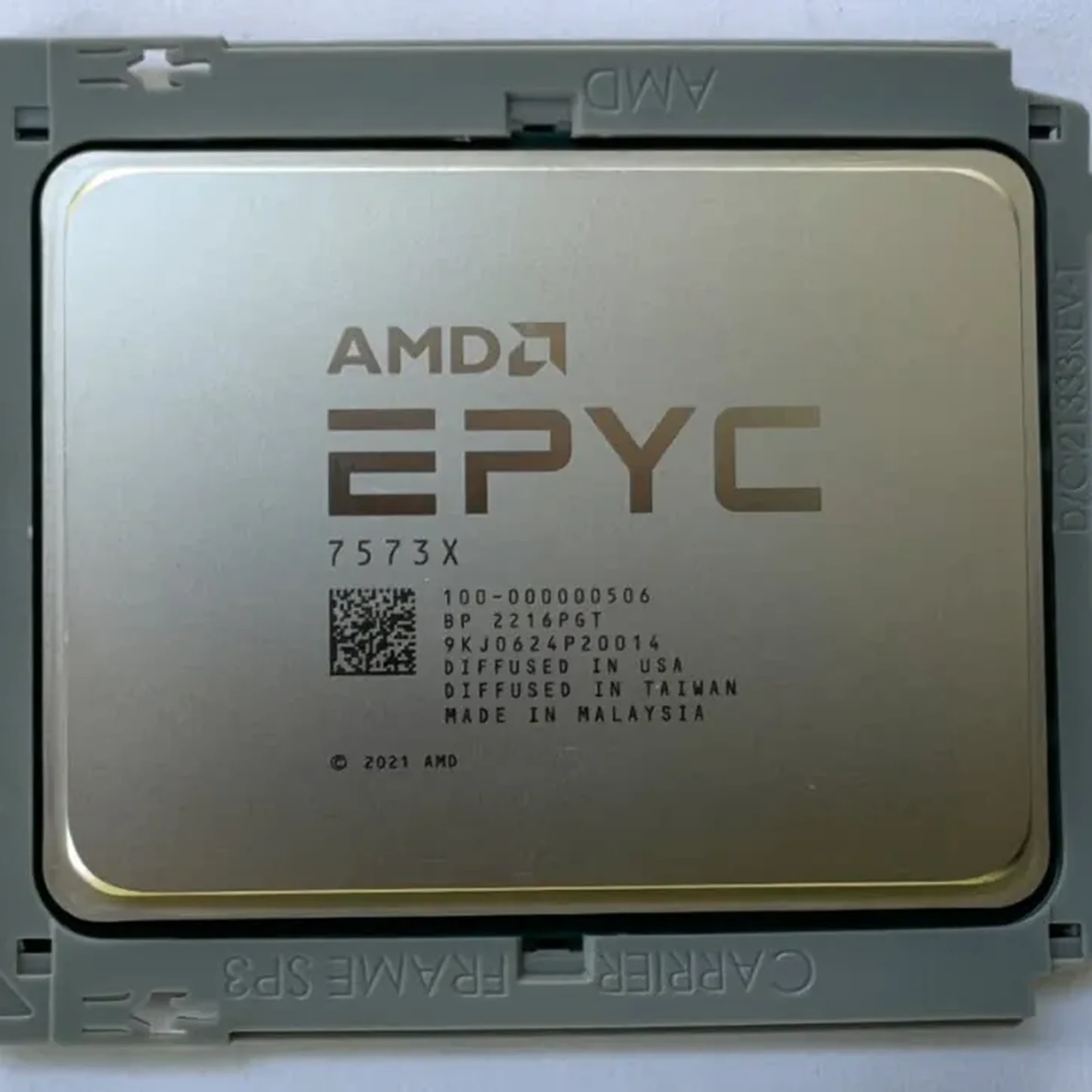
| AMD EPYC™ 7573X | 32 | 64 | Up to 3.6 GHz | 2.8 GHz | 768 MB | 280W |
| AMD EPYC™ 7543P | 32 | 64 | Up to 3.7 GHz | 2.8 GHz | 256 MB | 225W |
| AMD EPYC™ 7543 | 32 | 64 | Up to 3.7 GHz | 2.8 GHz | 256 MB | 225W |
| AMD EPYC™ 7513 | 32 | 64 | Up to 3.65 GHz | 2.6 GHz | 128 MB | 200W |
| AMD EPYC™ 74F3 | 24 | 48 | Up to 4 GHz | 3.2 GHz | 256 MB | 240W |
| AMD EPYC™ 7473X | 24 | 48 | Up to 3.7 GHz | 2.8 GHz | 768 MB | 240W |
| AMD EPYC™ 7453 | 28 | 56 | Up to 3.45 GHz | 2.75 GHz | 64 MB | 225W |
| AMD EPYC™ 7443P | 24 | 48 | Up to 4 GHz | 2.85 GHz | 128 MB | 200W |
| AMD EPYC™ 7443 | 24 | 48 | Up to 4 GHz | 2.85 GHz | 128 MB | 200W |
| AMD EPYC™ 7413 | 24 | 48 | Up to 3.6 GHz | 2.65 GHz | 128 MB | 180W |
| AMD EPYC™ 73F3 | 16 | 32 | Up to 4 GHz | 3.5 GHz | 256 MB | 240W |
| AMD EPYC™ 7373X | 16 | 32 | Up to 3.8 GHz | 3.05 GHz | 768 MB | 240W |
| AMD EPYC™ 7343 | 16 | 32 | Up to 3.9 GHz | 3.2 GHz | 128 MB | 190W |
| AMD EPYC™ 7313P | 16 | 32 | Up to 3.7 GHz | 3 GHz | 128 MB | 155W |
| AMD EPYC™ 7313 | 16 | 32 | Up to 3.7 GHz | 3 GHz | 128 MB | 155W |
| AMD EPYC™ 72F3 | 8 | 16 | Up to 4.1 GHz | 3.7 GHz | 256 MB | 180W |