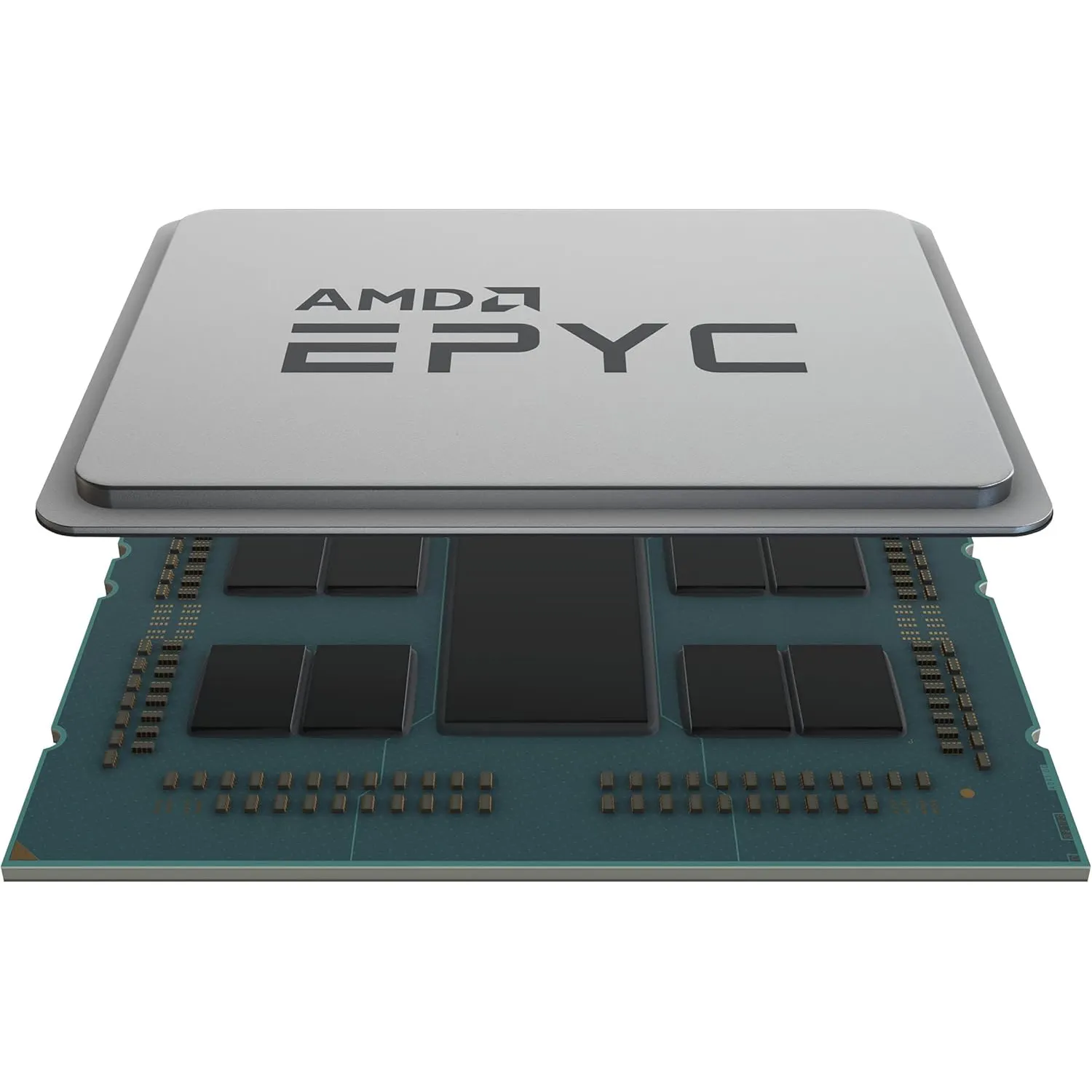
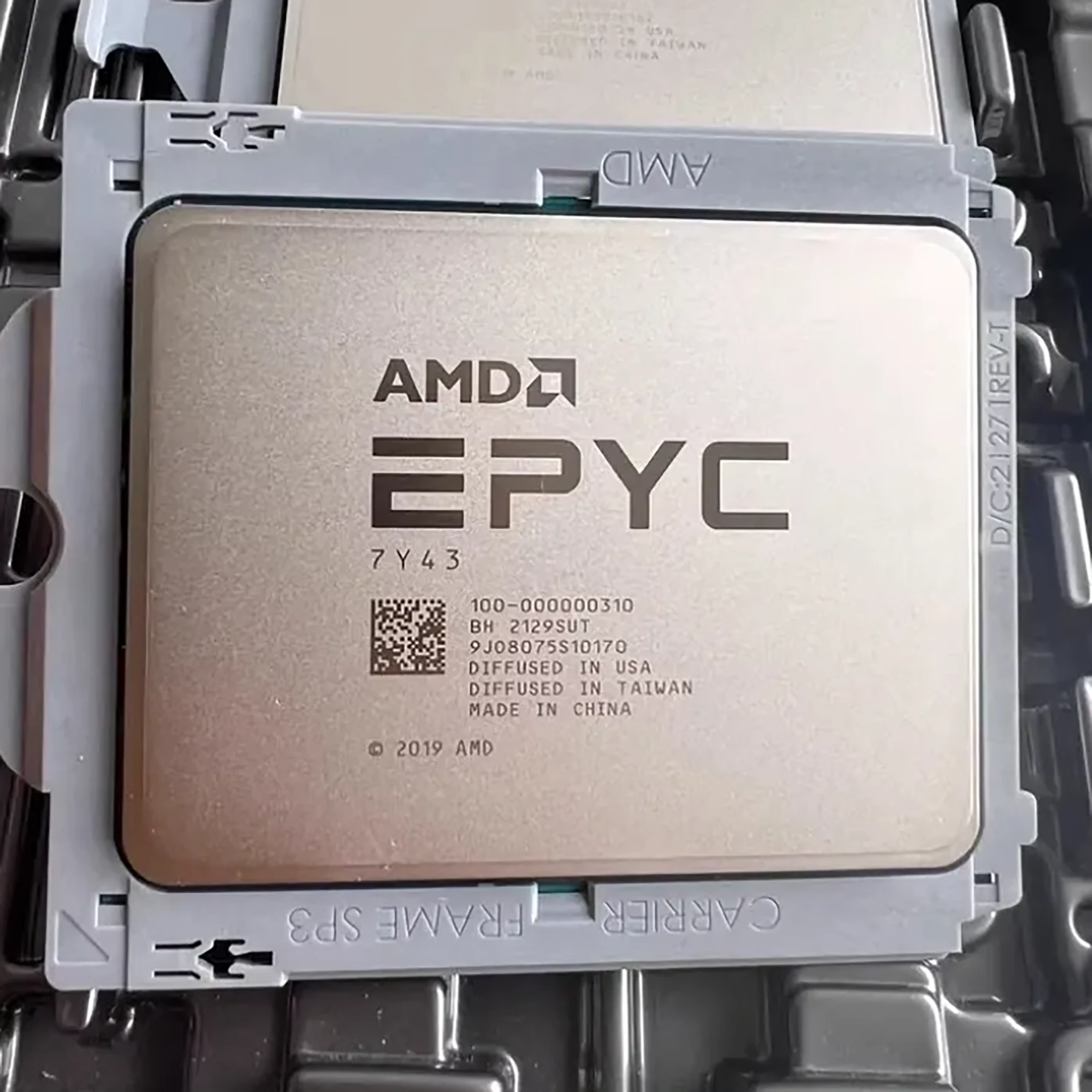
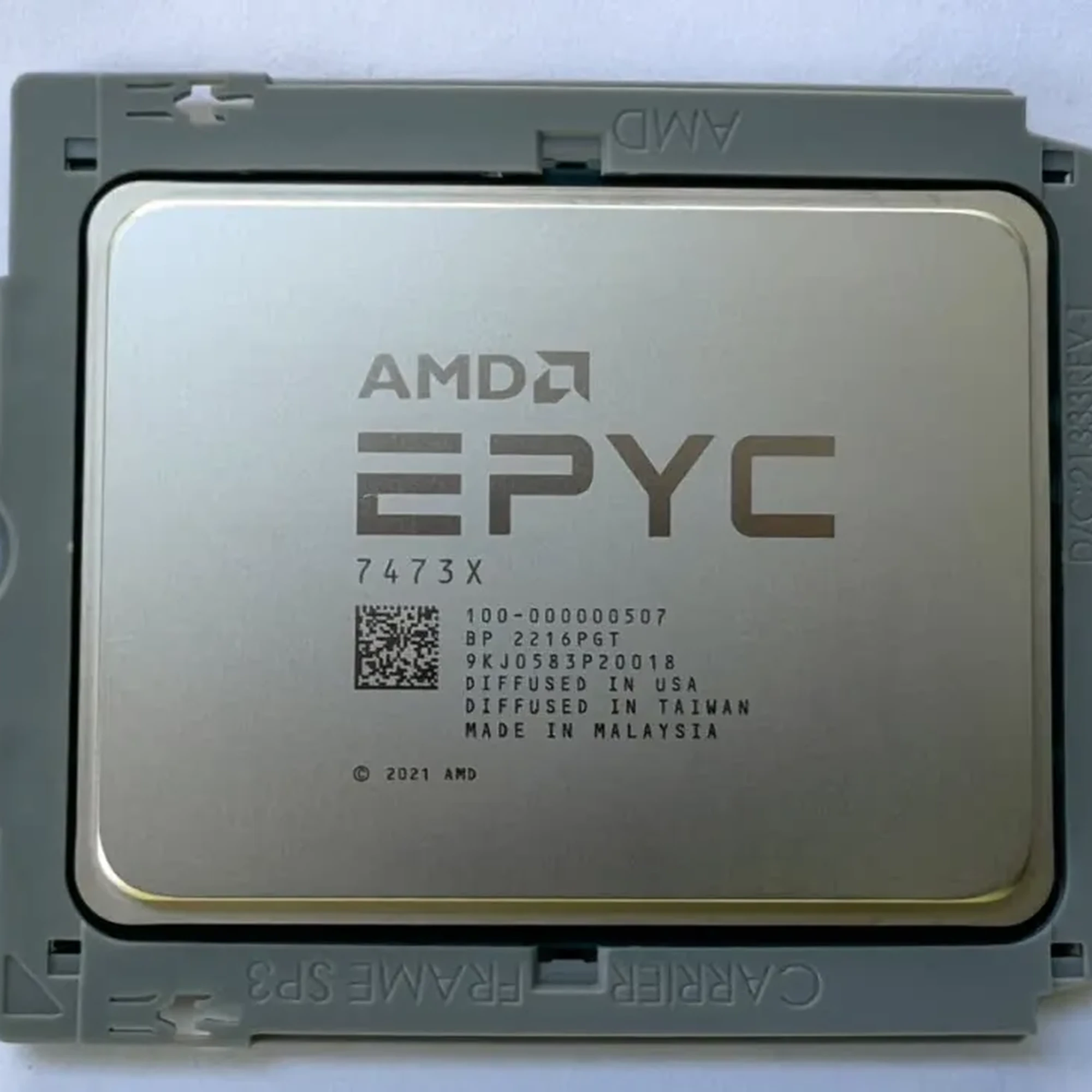
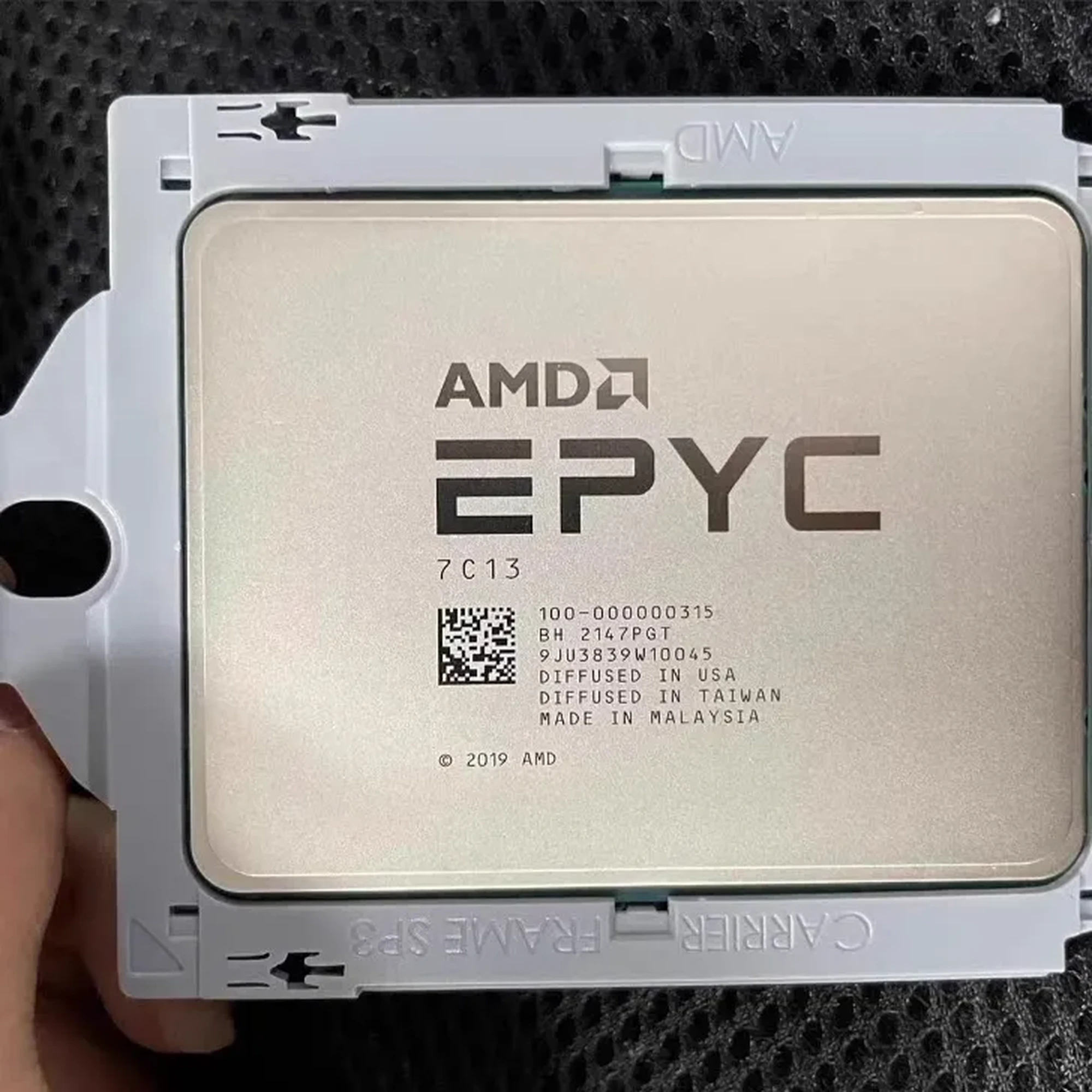
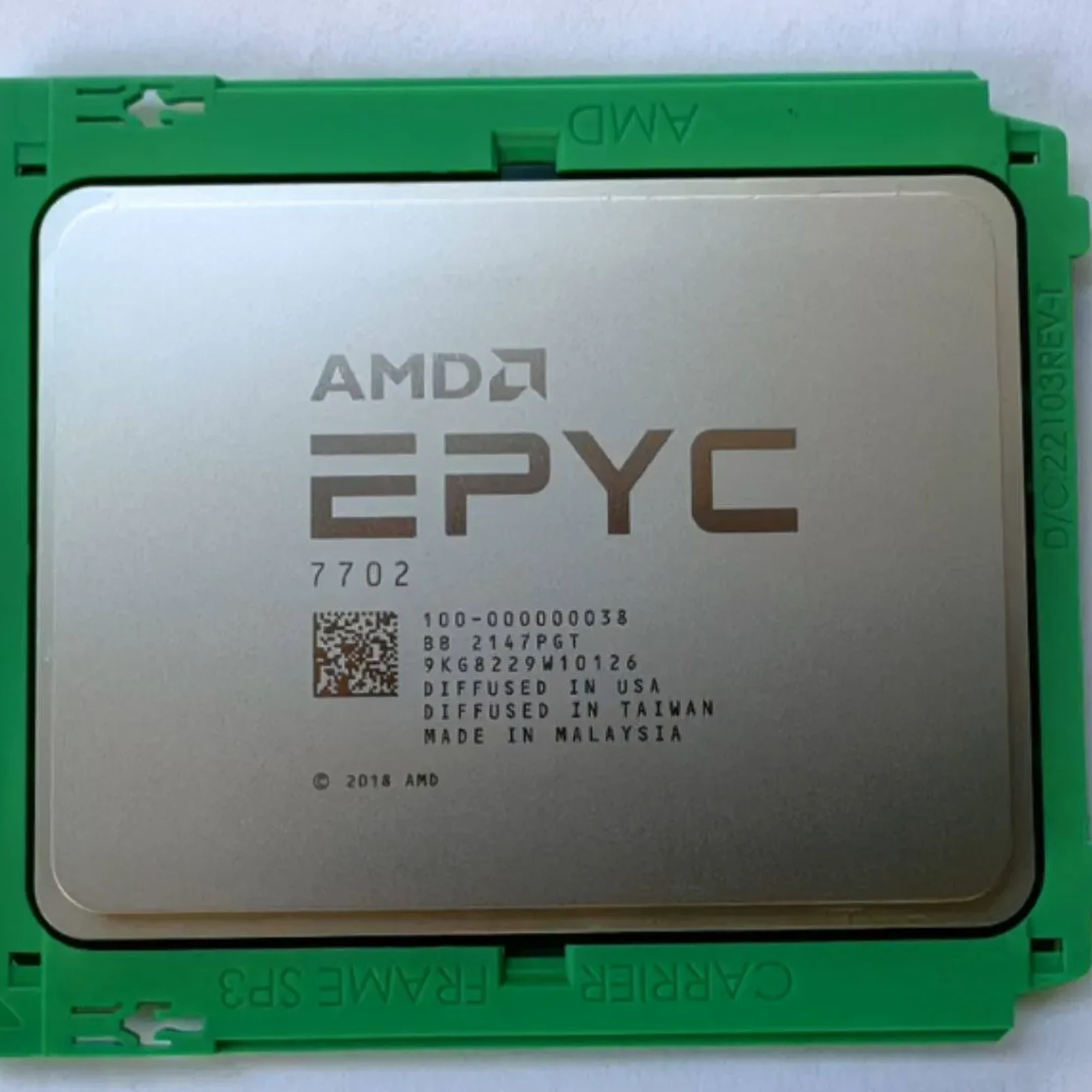
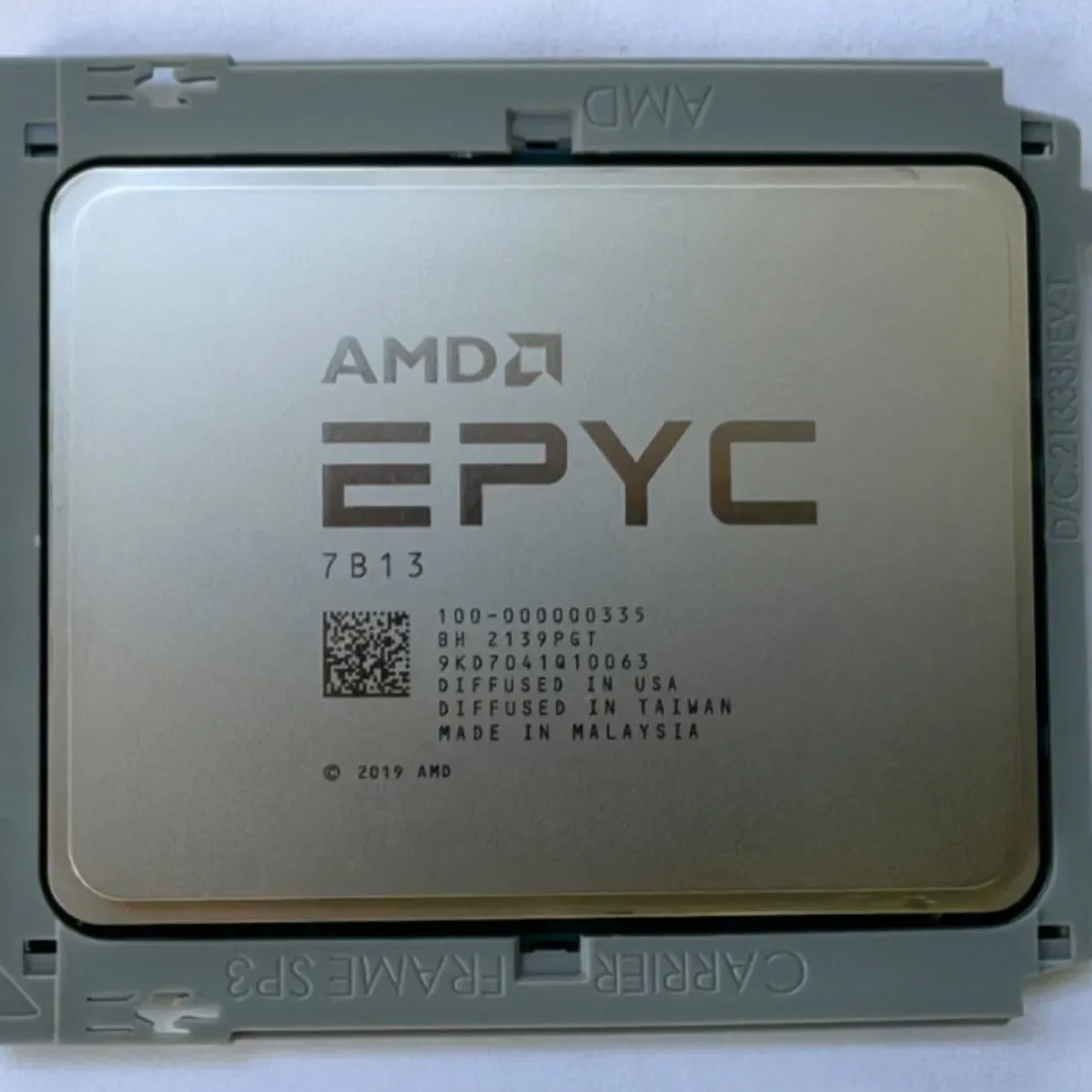

AMD EPYC 7Y43 Processor – 32-Core 64-Thread Zen 3 Server CPU
The AMD EPYC 7Y43 stands as a powerful workhorse in the EPYC Milan 7003 series, engineered to deliver exceptional performance, reliability, and efficiency for modern data centers, cloud environments, and high-demand enterprise workloads. Built on AMD’s Zen 3 architecture and manufactured using a 7nm process by TSMC, this server processor combines high core density, impressive clock speeds, and advanced connectivity to meet the evolving needs of today’s digital infrastructure. Whether you’re running virtual machines (VMs), managing databases, processing large-scale analytics, or powering cloud-native applications, the EPYC 7Y43 is designed to handle diverse and demanding tasks with ease, making it a top choice for IT professionals and organizations seeking a balanced blend of performance and value.
Key Architecture & Core Configuration
At the heart of the AMD EPYC 7Y43 is AMD’s Zen 3 architecture, a significant upgrade over its predecessor that delivers improved IPC (Instructions Per Cycle) and efficiency. The processor features 48 physical cores and 96 threads, thanks to AMD’s Simultaneous Multithreading (SMT) technology, which allows each core to handle two threads simultaneously. This high core and thread count makes the EPYC 7Y43 ideal for parallel processing workloads, such as virtualization, container orchestration, microservices, and high-performance computing (HPC) tasks that require massive multitasking capabilities.
The EPYC 7Y43 is based on the Milan codename, part of AMD’s 7003 series of server processors launched in 2021, which marked a leap forward in server performance and efficiency. Unlike consumer-grade processors, the EPYC 7Y43 is purpose-built for server environments, with a focus on stability, scalability, and long-term reliability—critical factors for data centers that operate 24/7. The 7nm manufacturing process not only reduces power consumption but also allows for higher core counts and faster clock speeds, ensuring that the processor can deliver consistent performance even under heavy loads.
Clock Speeds & Performance Capabilities
The AMD EPYC 7Y43 boasts a base clock speed of 2.55GHz, providing a solid foundation for sustained performance, while its max boost clock reaches up to 3.6GHz, delivering a burst of speed when handling single-threaded or lightly-threaded workloads. This balance between base and boost clocks is crucial for workloads that require both parallel processing power and responsive single-thread performance, such as database management, ERP systems, and VDI (Virtual Desktop Infrastructure) deployments.
Benchmark tests highlight the EPYC 7Y43’s impressive performance. In Geekbench 6, the processor achieves a single-core score of approximately 1528 and a multi-core score of 12680, demonstrating its ability to handle both single-threaded tasks (like web serving and application responsiveness) and multi-threaded tasks (like video rendering, data analytics, and scientific computing) with ease. Additionally, XMRig benchmark tests show that the EPYC 7Y43 delivers a hashrate of over 65,000 H/s in certain configurations, further showcasing its raw computing power.
Compared to newer EPYC models like the 9634, the EPYC 7Y43 holds its own with a higher base clock speed (2.55GHz vs. 2.25GHz) and a lower TDP (280W vs. 290W), making it a more power-efficient option for workloads that don’t require the latest 5nm architecture or DDR5 memory support. Its single-core performance is also 11% higher than the EPYC 9634, making it a better choice for applications that rely on single-thread responsiveness.
Cache & Memory Performance
Cache performance is a key factor in server processor performance, and the AMD EPYC 7Y43 does not disappoint. It features a generous 256MB of L3 cache, split across 8 CCDs (Core Complex Dies), with 16MB of L3 cache per CCD. This large L3 cache reduces latency by storing frequently accessed data closer to the cores, improving performance for memory-intensive workloads like databases, virtualization, and in-memory analytics. Additionally, the processor includes 512KB of L2 cache per core (for a total of 24MB) and 64KB of L1 cache per core (32KB for instructions, 32KB for data), creating a hierarchical cache system that optimizes data access and reduces bottlenecks.
For memory, the EPYC 7Y43 supports 8-channel DDR4 memory with a maximum speed of 3200 MT/s, providing a per-socket memory bandwidth of up to 204.8 GB/s. This high memory bandwidth is essential for handling large datasets and memory-intensive workloads, such as big data analytics, machine learning, and virtualization with multiple VMs. The processor also supports ECC (Error-Correcting Code) memory, which is critical for server environments as it detects and corrects memory errors, ensuring data integrity and system stability.
Connectivity & Expansion
The AMD EPYC 7Y43 features 128 PCIe 4.0 lanes, providing exceptional I/O bandwidth for connecting storage devices, network cards, GPUs, FPGAs, and other peripherals. PCIe 4.0 offers double the bandwidth of PCIe 3.0, with a transfer rate of up to 16 GT/s per lane, making it ideal for high-speed storage solutions like NVMe SSDs and high-performance network interfaces. This extensive I/O connectivity allows organizations to build scalable server configurations that can adapt to growing workload demands, whether it’s adding more storage, upgrading network capabilities, or integrating accelerators for AI and HPC tasks.
The processor uses the SP3 socket, which is compatible with a wide range of server motherboards designed for the EPYC 7003 series. It also supports 2-way SMP (Symmetric Multiprocessing), allowing users to pair two EPYC 7Y43 processors in a single server for even higher core counts and performance. This scalability makes the EPYC 7Y43 suitable for large-scale data centers and enterprise environments that require maximum processing power.
Power Efficiency & TDP
Power efficiency is a top priority for data centers, as it directly impacts operational costs and environmental sustainability. The AMD EPYC 7Y43 has a default TDP (Thermal Design Power) of 280W, which is balanced for its core count and performance capabilities. Unlike some high-core-count processors that require excessive power, the EPYC 7Y43 delivers excellent performance per watt, making it an efficient choice for data centers looking to reduce energy consumption without sacrificing performance.
The processor’s 7nm manufacturing process plays a key role in its efficiency, as it allows for more transistors to be packed into a smaller die, reducing power consumption while increasing performance. Additionally, AMD’s Precision Boost technology dynamically adjusts clock speeds based on workload demand, ensuring that the processor only uses the power needed to handle the current task, further optimizing efficiency.
Ideal Use Cases & Workload Affinity
The AMD EPYC 7Y43 is versatile and well-suited for a wide range of server workloads, thanks to its high core count, balanced clock speeds, and advanced features. Some of its ideal use cases include:
- Data Centers & Cloud Computing: The EPYC 7Y43’s 48 cores and 96 threads make it perfect for cloud environments, where it can handle multiple VMs, containerized applications, and cloud-native workloads with ease. Its high memory bandwidth and PCIe 4.0 connectivity also support scalable cloud infrastructure.
- Virtualization: With support for advanced virtualization technologies like AMD-V, the EPYC 7Y43 excels in VDI deployments, server virtualization, and hybrid cloud environments. It can run dozens of VMs simultaneously without compromising performance, making it a cost-effective choice for organizations looking to consolidate their server infrastructure.
- Database Management: The processor’s large L3 cache, high memory bandwidth, and balanced clock speeds make it ideal for running relational databases (RDBMS), NoSQL databases, and data warehouses. It can handle transaction-heavy workloads and large-scale data processing with low latency.
- High-Performance Computing (HPC): For scientific computing, CAE/CFD/FEA simulations, and machine learning workloads, the EPYC 7Y43’s parallel processing capabilities and high core count deliver the performance needed to accelerate research and development.
- Media Streaming & Content Delivery: The processor’s multi-threaded performance and efficient power consumption make it suitable for media streaming servers, content delivery networks (CDNs), and video transcoding workloads.
Competitive Advantages
Compared to other server processors in its class, the AMD EPYC 7Y43 offers several key advantages:
- Balanced Performance: With 48 cores, 96 threads, and a 3.6GHz max boost clock, the EPYC 7Y43 strikes a perfect balance between multi-threaded and single-threaded performance, making it versatile for diverse workloads.
- Power Efficiency: Its 280W TDP and 7nm process deliver excellent performance per watt, reducing energy costs for data centers.
- Extensive Connectivity: 128 PCIe 4.0 lanes and 8-channel DDR4 memory support provide exceptional I/O and memory bandwidth, enabling scalable server configurations.
- Cost-Effectiveness: As a member of the EPYC 7003 series, the EPYC 7Y43 offers a compelling value proposition, delivering high performance at a competitive price point compared to newer processors.
- Reliability: Built for 24/7 server operation, the EPYC 7Y43 includes features like ECC memory support and AMD Infinity Guard, which enhances security and system stability.
Conclusion
The AMD EPYC 7Y43 is a high-performance, versatile server processor that excels in data centers, cloud environments, and enterprise workloads. Its 48 cores, 96 threads, balanced clock speeds, large cache, and advanced connectivity make it a top choice for organizations seeking a reliable and efficient solution for their most demanding tasks. Whether you’re virtualizing servers, managing databases, processing large datasets, or powering cloud applications, the EPYC 7Y43 delivers the performance, scalability, and efficiency needed to drive your business forward. With its competitive price point and proven reliability, it’s a valuable addition to any server infrastructure, offering long-term value and adaptability to future workload demands.
| Specification | Details |
|---|---|
| Processor Model | AMD EPYC 7Y43 |
| Series | AMD EPYC 7003 (Milan) |
| Architecture | Zen 3 |
| Manufacturing Process | 7nm (TSMC) |
| Cores | 48 |
| Threads | 96 (SMT Supported) |
| Base Clock | 2.55GHz |
| Max Boost Clock | 3.6GHz |
| L1 Cache | 32KB Instruction + 32KB Data per core (Total: 3072KB) |
| L2 Cache | 512KB per core (Total: 24576KB / 24MB) |
| L3 Cache | 256MB (16MB per CCD, 8 CCDs total) |
| TDP (Thermal Design Power) | 280W |
| Socket | SP3 |
| SMP Support | 2-way (Dual Socket) |
| Memory Type | DDR4 |
| Memory Channels | 8 |
| Max Memory Speed | 3200 MT/s |
| Per Socket Memory Bandwidth | 204.8 GB/s |
| PCIe Version | PCIe 4.0 |
| PCIe Lanes | 128 |
| Supported Technologies | AMD-V (Virtualization), AMD Infinity Guard, SMT, ECC Memory |
| Workload Affinity | Data Centers, Cloud Computing, Virtualization, Databases, HPC, Media Streaming |
| Launch Date | 2021 |
| Transistor Count | 33.2 Billion |
AMD EPYC 7003 Series Processors General Specifications
Name | # of CPU Cores | # of Threads | Max. Boost Clock | Base Clock | L3 Cache | Default TDP |
|---|---|---|---|---|---|---|
| AMD EPYC™ 7203P | 8 | 16 | Up to 3.4 GHz | 2.8 GHz | 64 MB | 120W |
| AMD EPYC™ 7203 | 8 | 16 | Up to 3.4 GHz | 2.8 GHz | 64 MB | 120W |
| AMD EPYC™ 7303P | 16 | 32 | Up to 3.4 GHz | 2.4 GHz | 64 MB | 130W |
| AMD EPYC™ 7303 | 16 | 32 | Up to 3.4 GHz | 2.4 GHz | 64 MB | 130W |
| AMD EPYC™ 7643P | 48 | 96 | Up to 3.6 GHz | 2.3 GHz | 256 MB | 225W |
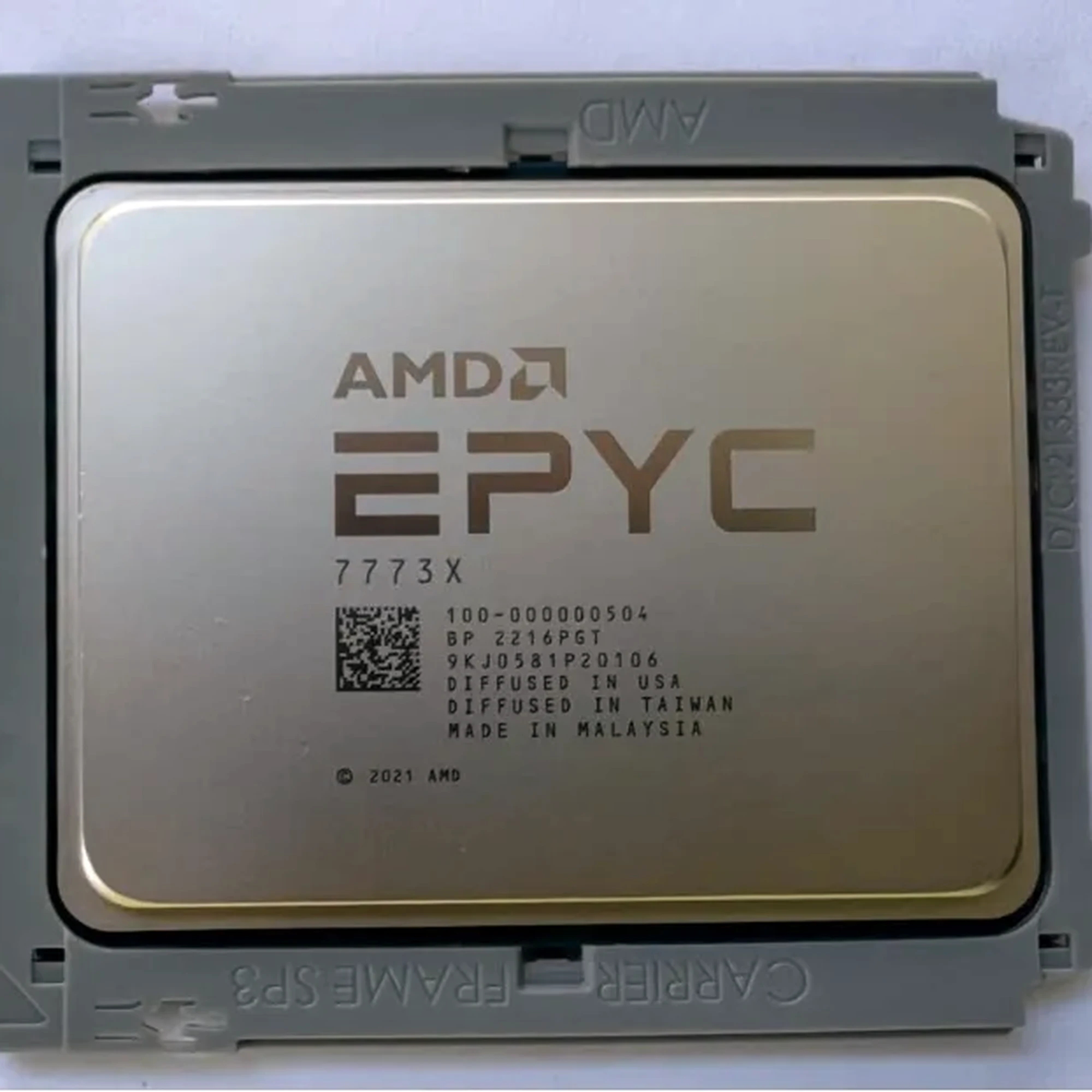
| AMD EPYC™ 7773X | 64 | 128 | Up to 3.5 GHz | 2.2 GHz | 768 MB | 280W |
| AMD EPYC™ 7763 | 64 | 128 | Up to 3.5 GHz | 2.45 GHz | 256 MB | 280W |
| AMD EPYC™ 7713P | 64 | 128 | Up to 3.67 GHz | 2 GHz | 256 MB | 225W |
| AMD EPYC™ 7713 | 64 | 128 | Up to 3.67 GHz | 2 GHz | 256 MB | 225W |
| AMD EPYC™ 7663 | 56 | 112 | Up to 3.5 GHz | 2 GHz | 256 MB | 240W |
| AMD EPYC™ 7643 | 48 | 96 | Up to 3.6 GHz | 2.3 GHz | 256 MB | 225W |
| AMD EPYC™ 7663P | 56 | 112 | Up to 3.5 GHz | 2 GHz | 256 MB | 240W |
| AMD EPYC™ 75F3 | 32 | 64 | Up to 4 GHz | 2.95 GHz | 256 MB | 280W |
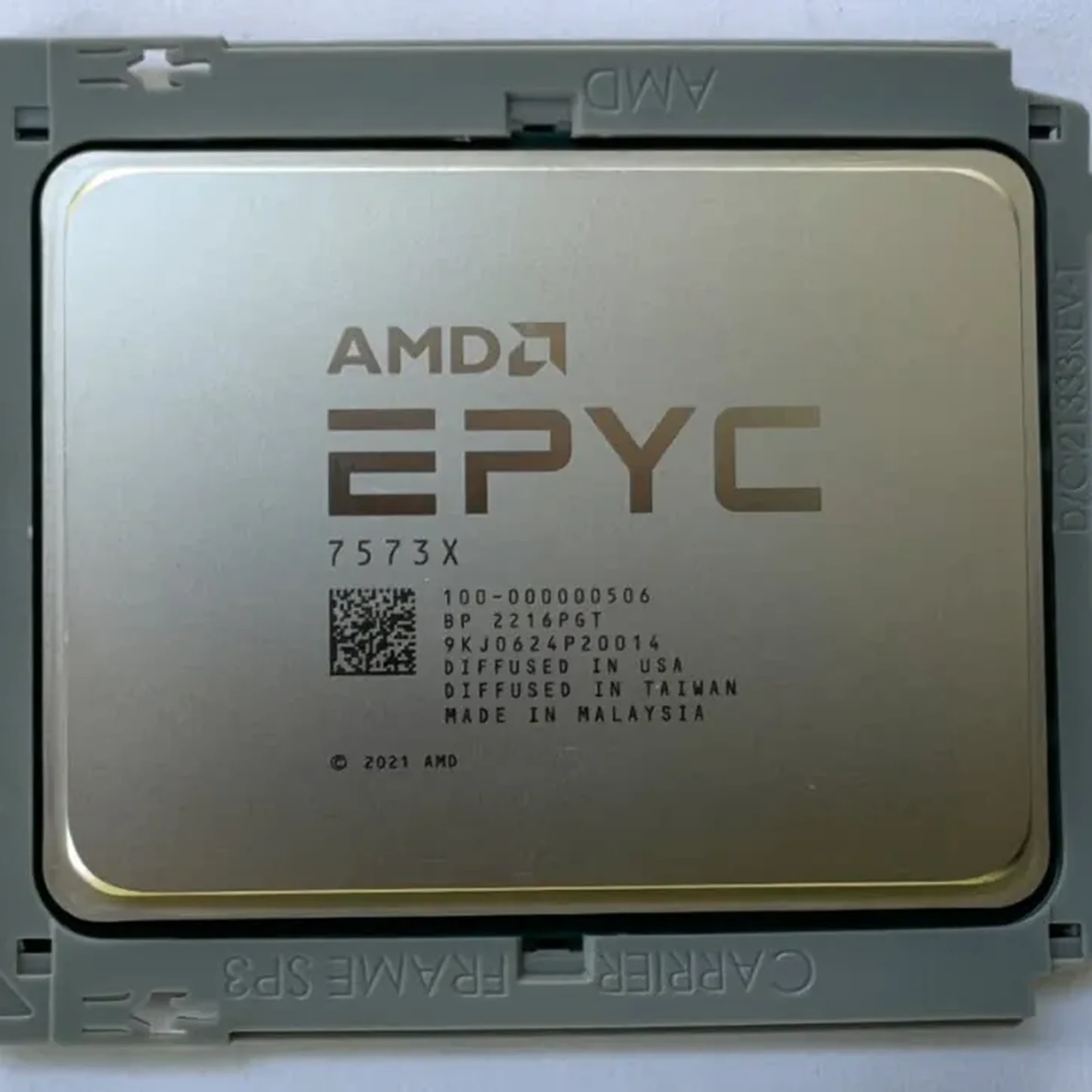
| AMD EPYC™ 7573X | 32 | 64 | Up to 3.6 GHz | 2.8 GHz | 768 MB | 280W |
| AMD EPYC™ 7543P | 32 | 64 | Up to 3.7 GHz | 2.8 GHz | 256 MB | 225W |
| AMD EPYC™ 7543 | 32 | 64 | Up to 3.7 GHz | 2.8 GHz | 256 MB | 225W |
| AMD EPYC™ 7513 | 32 | 64 | Up to 3.65 GHz | 2.6 GHz | 128 MB | 200W |
| AMD EPYC™ 74F3 | 24 | 48 | Up to 4 GHz | 3.2 GHz | 256 MB | 240W |
| AMD EPYC™ 7473X | 24 | 48 | Up to 3.7 GHz | 2.8 GHz | 768 MB | 240W |
| AMD EPYC™ 7453 | 28 | 56 | Up to 3.45 GHz | 2.75 GHz | 64 MB | 225W |
| AMD EPYC™ 7443P | 24 | 48 | Up to 4 GHz | 2.85 GHz | 128 MB | 200W |
| AMD EPYC™ 7443 | 24 | 48 | Up to 4 GHz | 2.85 GHz | 128 MB | 200W |
| AMD EPYC™ 7413 | 24 | 48 | Up to 3.6 GHz | 2.65 GHz | 128 MB | 180W |
| AMD EPYC™ 73F3 | 16 | 32 | Up to 4 GHz | 3.5 GHz | 256 MB | 240W |
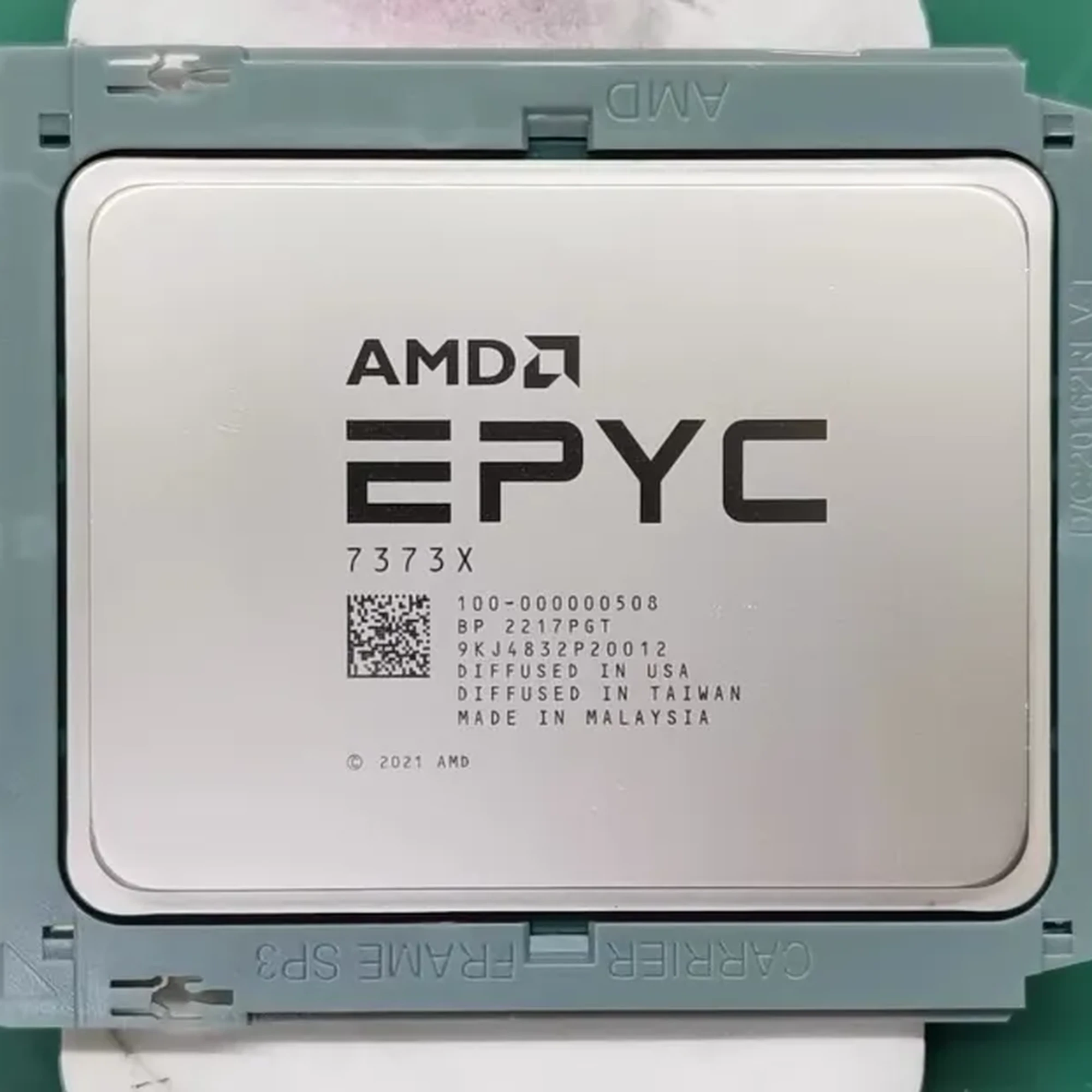
| AMD EPYC™ 7373X | 16 | 32 | Up to 3.8 GHz | 3.05 GHz | 768 MB | 240W |
| AMD EPYC™ 7343 | 16 | 32 | Up to 3.9 GHz | 3.2 GHz | 128 MB | 190W |
| AMD EPYC™ 7313P | 16 | 32 | Up to 3.7 GHz | 3 GHz | 128 MB | 155W |
| AMD EPYC™ 7313 | 16 | 32 | Up to 3.7 GHz | 3 GHz | 128 MB | 155W |
| AMD EPYC™ 72F3 | 8 | 16 | Up to 4.1 GHz | 3.7 GHz | 256 MB | 180W |