
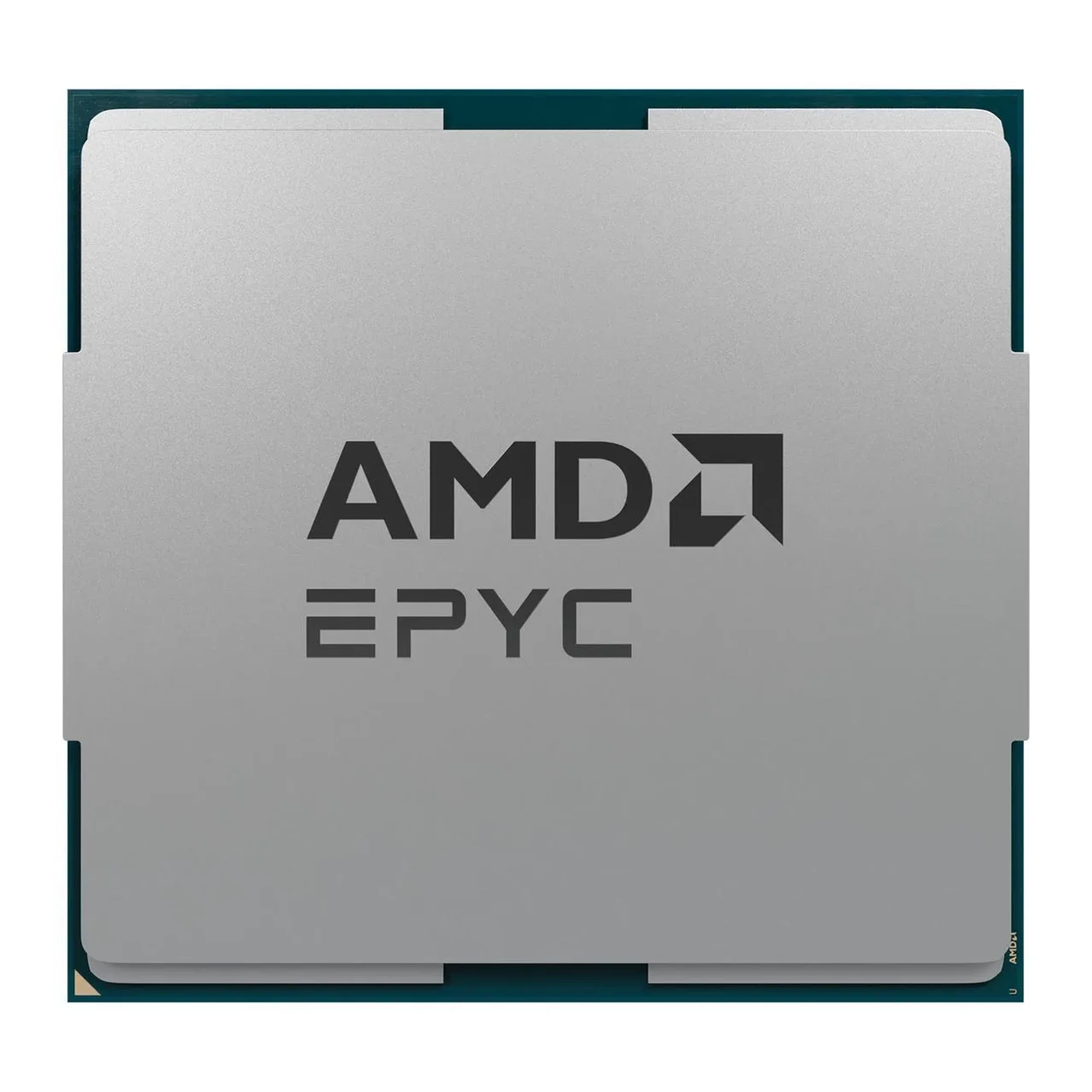
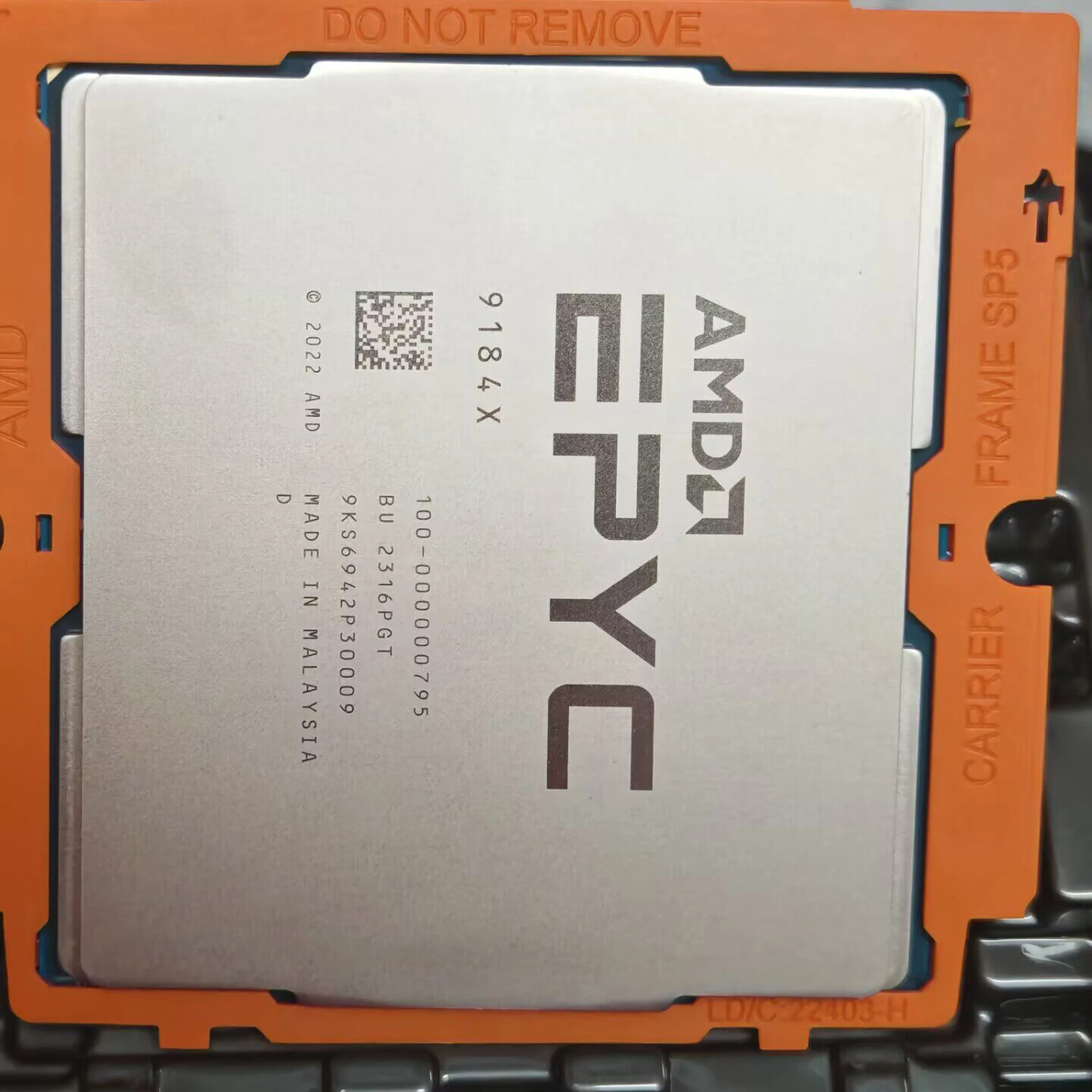
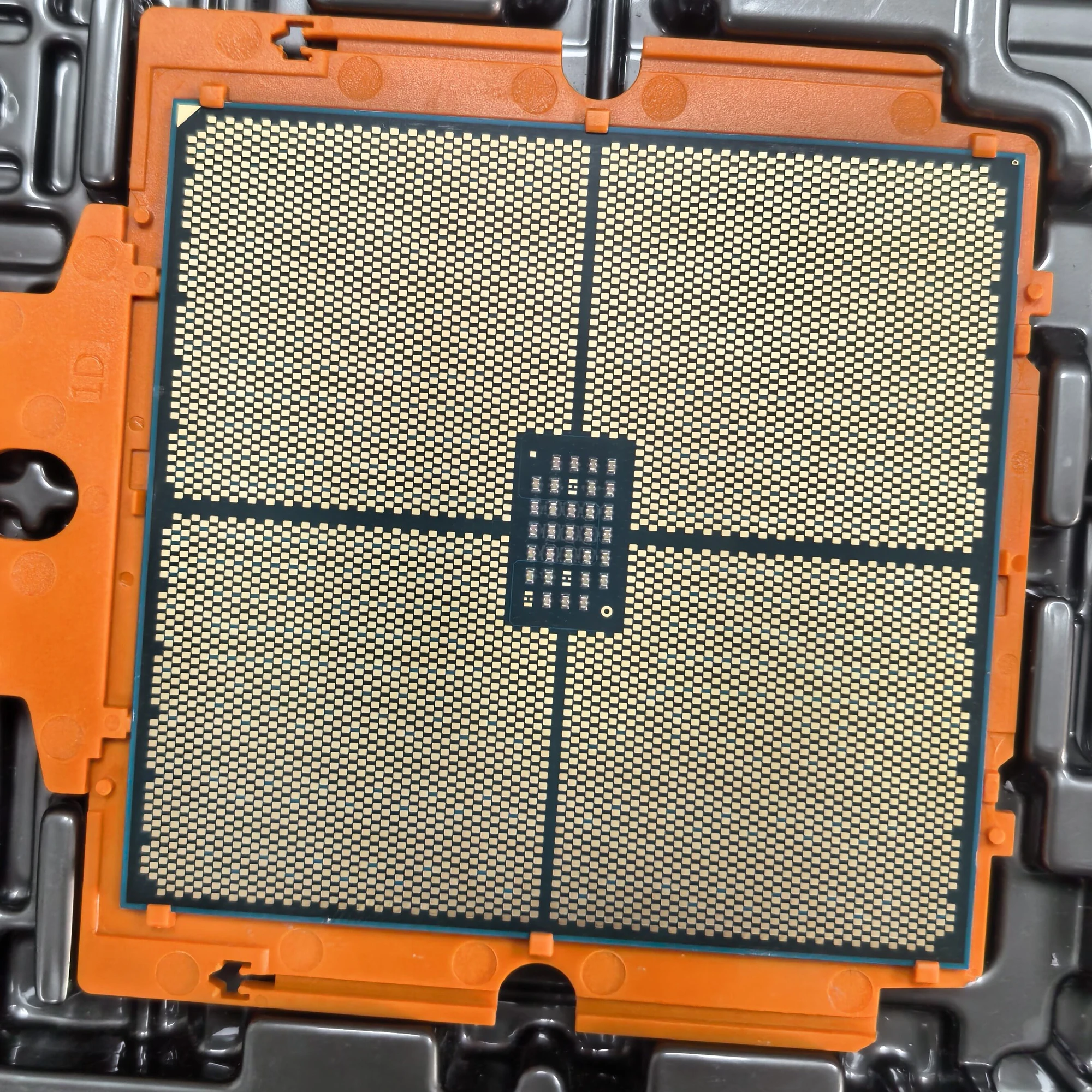
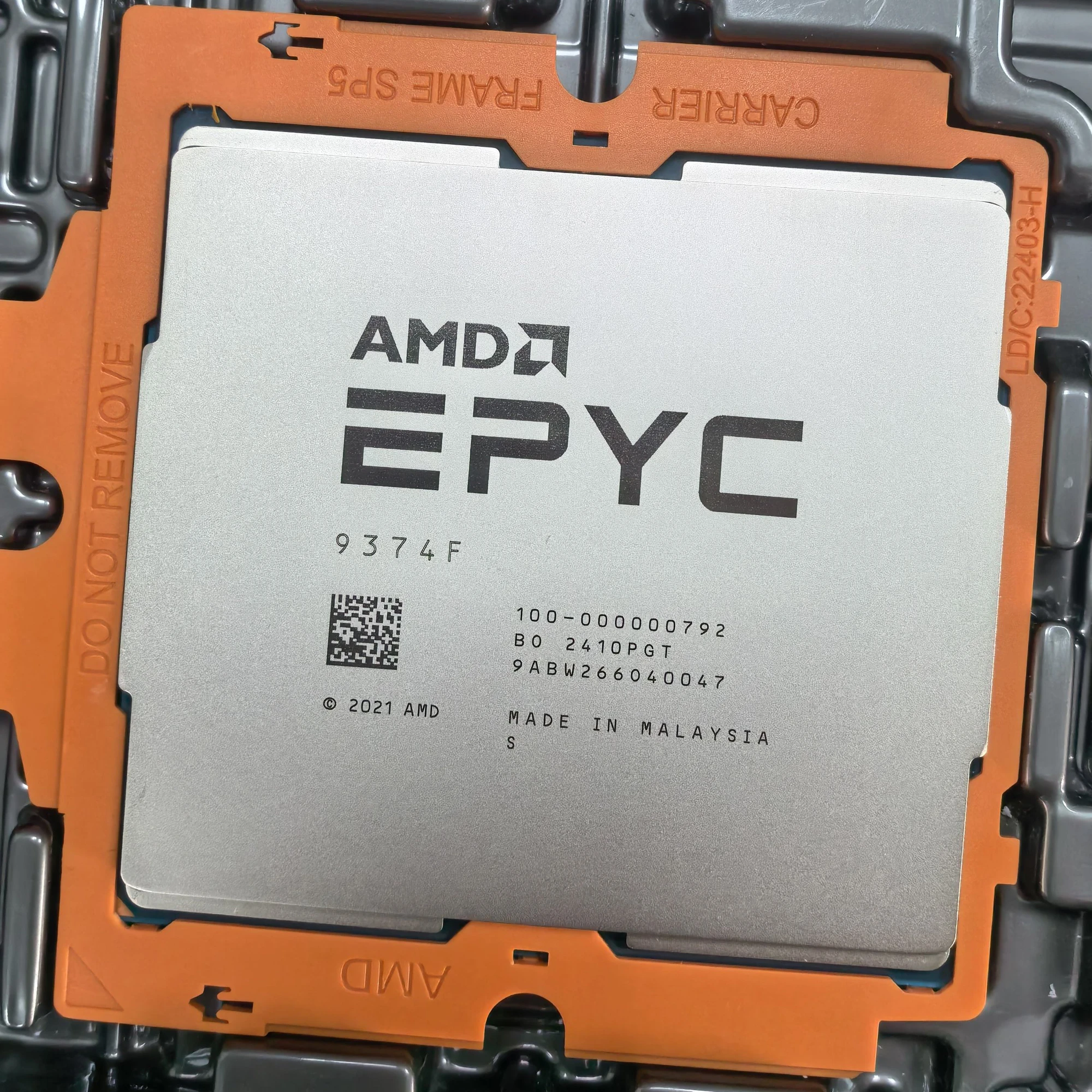

AMD EPYC 9174F Server Processor | 16-Core 4.4GHz, 256MB Cache, DDR5, PCIe 5.0 for Data Centers
| Specification | Details |
|---|---|
| Processor Model | AMD EPYC 9174F |
| Product Series | AMD EPYC 9004 Series (Genoa) |
| Microarchitecture | Zen 4 |
| Manufacturing Process | 5nm |
| Cores | 16 Cores |
| Threads | 32 Threads (Hyper-Threading Supported) |
| Base Clock Speed | 4.1 GHz |
| Max Boost Clock Speed | 4.4 GHz |
| All Core Boost Speed | 4.15 GHz |
| L1 Cache | 16 x 32 KB (Instruction) + 16 x 32 KB (Data) = 1024 KB Total |
| L2 Cache | 16 x 1024 KB = 16384 KB (16 MB) Total |
| L3 Cache | 256 MB (Shared Across All Cores) |
| Memory Support | DDR5-4800 MHz, 12 Memory Channels |
| Max Memory Bandwidth | 460.8 GB/s |
| PCIe Version | PCIe 5.0 |
| PCIe Lanes | 128 Lanes (CPU Only) |
| Socket Type | SP5 |
| Configurable TDP | 320W – 400W |
| Default TDP | 320W |
| Max Processors per Configuration | 1P / 2P |
| Launch Date | November 10, 2022 |
| Launch MSRP | $3850 USD |
| Current Average Price | $2275 – $3927 USD |
| Tray Product ID | 100-000000796 |
| Supported Technologies | AMD Infinity Guard, AMD Infinity Architecture, ECC Memory Support, Virtualization Technology |
| Workload Affinity | EDA, High-speed Data Management (NR|RDBMS), Per Core CAE|CFD|FEA |
| Benchmark (PassMark CPU Mark) | 53,525 (Multi-Thread), 3,254 (Single-Thread) |
| Benchmark (Geekbench 6) | 15,540 (Multi-Core), 2,036 (Single-Core) |
In the fast-paced world of enterprise data centers, where every millisecond of latency and every watt of power matters, the AMD EPYC 9174F server processor stands out as a high-performance, energy-efficient solution designed to meet the demands of modern workloads. As part of AMD’s 4th-generation EPYC 9004 Series (codenamed Genoa), the EPYC 9174F builds on the success of its predecessors, leveraging the advanced Zen 4 microarchitecture and 5nm manufacturing process to deliver a perfect balance of raw power, efficiency, and scalability—making it an ideal choice for businesses of all sizes, from small enterprises to large-scale data centers.
What Makes the AMD EPYC 9174F a Game-Changer for Server Environments?
The AMD EPYC 9174F is engineered to address the most pressing challenges facing today’s data centers: the need for faster processing speeds, higher memory bandwidth, improved energy efficiency, and seamless scalability. Unlike consumer-grade processors, server CPUs like the EPYC 9174F are built to run 24/7 under heavy loads, supporting mission-critical applications such as virtualization, cloud computing, database management, high-performance computing (HPC), and enterprise resource planning (ERP). With its 16 cores, 32 threads, and cutting-edge hardware features, the EPYC 9174F delivers the performance and reliability required to keep these applications running smoothly, even during peak demand.
One of the key advantages of the EPYC 9174F is its foundation on AMD’s Zen 4 microarchitecture, which represents a significant leap forward in performance and efficiency compared to the previous Zen 3 generation. The Zen 4 architecture introduces a range of improvements, including a larger L3 cache, faster core-to-core communication, and enhanced instruction per cycle (IPC) performance—all of which translate to faster processing times and better overall system responsiveness. When combined with the 5nm manufacturing process, the EPYC 9174F achieves a higher transistor density, allowing for more cores and cache in a smaller form factor while reducing power consumption.
Key Performance Features of the AMD EPYC 9174F
At the heart of the AMD EPYC 9174F is its 16-core, 32-thread configuration, which is optimized for multi-threaded workloads—the lifeblood of server environments. Each core operates at a base clock speed of 4.1GHz, with a maximum boost clock of 4.4GHz, ensuring that even single-threaded applications run quickly while multi-threaded tasks benefit from parallel processing power. This combination of high clock speeds and multi-threaded performance makes the EPYC 9174F versatile, capable of handling everything from light web hosting to heavy-duty database queries and virtual machine (VM) workloads.
Another standout feature of the EPYC 9174F is its massive 256MB L3 cache. Cache memory acts as a high-speed buffer between the processor and main memory, reducing the time it takes for the CPU to access frequently used data. For data-intensive workloads like database management, big data analytics, and HPC, a large L3 cache is critical— it minimizes latency and ensures that the processor is never waiting for data to be fetched from main memory. The EPYC 9174F’s 256MB L3 cache is shared across all 16 cores, allowing for efficient data sharing and improved multi-core performance, which is essential for modern server applications that rely on parallel processing.
In addition to its core and cache configuration, the EPYC 9174F supports the latest memory and connectivity standards, further enhancing its performance. It features 12 memory channels supporting DDR5-4800 memory, delivering a maximum memory bandwidth of 460.8 GB/s. DDR5 memory is significantly faster than its DDR4 predecessor, with higher data transfer rates and lower power consumption, making it ideal for memory-intensive workloads like virtualization, HPC, and real-time data processing. The 12 memory channels also allow for larger memory capacities, enabling the EPYC 9174F to support up to terabytes of RAM—critical for applications that require large datasets to be stored in memory for fast access.
Connectivity is another area where the EPYC 9174F excels. It supports PCIe 5.0, the latest generation of the Peripheral Component Interconnect Express standard, which offers double the bandwidth of PCIe 4.0 (up to 32 GT/s per lane). This increased bandwidth is essential for connecting high-speed storage devices (such as NVMe SSDs), network interface cards (NICs), and accelerators (like GPUs and FPGAs), all of which are common in modern data centers. With 128 PCIe 5.0 lanes, the EPYC 9174F provides ample connectivity for even the most demanding server configurations, allowing for seamless integration of multiple high-performance peripherals.
Energy Efficiency: A Critical Advantage for Data Centers
For data center operators, energy efficiency is not just a cost-saving measure—it’s a strategic priority. The AMD EPYC 9174F is designed with energy efficiency in mind, featuring a default TDP (Thermal Design Power) of 320W, with a configurable TDP range of 320W to 400W. This flexibility allows data center administrators to adjust the processor’s power consumption based on workload demands: running at lower TDP for lighter loads to save energy, or increasing TDP for peak performance when needed.
The 5nm manufacturing process plays a key role in the EPYC 9174F’s energy efficiency. Compared to the 7nm process used in previous EPYC generations, the 5nm process reduces power consumption per transistor, allowing for more efficient performance. This means that the EPYC 9174F can deliver higher performance per watt than older server processors, reducing energy costs and lowering the carbon footprint of data centers—an increasingly important consideration for businesses focused on sustainability.
Additionally, the EPYC 9174F supports AMD’s Infinity Guard and Infinity Architecture technologies, which not only enhance security but also improve energy efficiency by optimizing data flow between cores and memory. Infinity Guard provides hardware-level security features to protect against advanced threats, while Infinity Architecture ensures that data is transferred efficiently within the processor, reducing latency and minimizing power consumption.
Ideal Workloads for the AMD EPYC 9174F
The AMD EPYC 9174F is a versatile processor that excels in a wide range of server workloads, thanks to its balanced performance, large cache, and high memory bandwidth. Here are some of the key workloads where the EPYC 9174F shines:
Virtualization: With 16 cores and 32 threads, the EPYC 9174F can support multiple virtual machines simultaneously, making it ideal for virtualization environments. The large L3 cache and high memory bandwidth ensure that VMs run smoothly, with minimal latency and maximum responsiveness. Whether you’re running a small virtualized environment for a small business or a large-scale cloud infrastructure, the EPYC 9174F provides the performance and scalability needed to support your virtualization goals.
Database Management: Databases are among the most demanding server workloads, requiring fast processing speeds, high memory bandwidth, and large cache to handle complex queries and large datasets. The EPYC 9174F’s 256MB L3 cache and 460.8 GB/s memory bandwidth make it perfect for database management systems (DBMS) like MySQL, PostgreSQL, and Oracle. It can handle thousands of concurrent queries with ease, ensuring that your database runs efficiently even during peak usage.
High-Performance Computing (HPC): HPC workloads, such as scientific computing, numerical simulations, and AI/ML training, require massive parallel processing power and high memory bandwidth. The EPYC 9174F’s 16 cores, high clock speeds, and support for DDR5 memory make it well-suited for HPC applications. Whether you’re running simulations for engineering, weather forecasting, or drug discovery, the EPYC 9174F delivers the performance needed to accelerate your research and development.
Enterprise Resource Planning (ERP) and Business Intelligence (BI): ERP and BI applications require fast processing of large volumes of business data, including financial records, customer information, and inventory data. The EPYC 9174F’s multi-threaded performance and large cache ensure that these applications run quickly, allowing businesses to make data-driven decisions in real time.
Web Hosting and Cloud Services: For web hosting providers and cloud service providers, the EPYC 9174F offers the performance and reliability needed to support thousands of websites and cloud applications. Its high core count and fast clock speeds ensure that web servers can handle high traffic volumes, while its energy efficiency helps reduce operating costs.
Compatibility and Scalability
The AMD EPYC 9174F is designed to be compatible with the SP5 socket, which is part of AMD’s EPYC 9004 Series platform. This socket supports both single-processor (1P) and dual-processor (2P) configurations, allowing for easy scalability as your business grows. Whether you need a single processor for a small server or two processors for a high-performance data center node, the EPYC 9174F can adapt to your needs.
In addition to socket compatibility, the EPYC 9174F is compatible with a wide range of server motherboards and chassis, making it easy to integrate into existing data center infrastructure. It also supports industry-standard technologies like ECC (Error-Correcting Code) memory, which is critical for server environments where data integrity is paramount. ECC memory detects and corrects memory errors, preventing data corruption and ensuring the reliability of mission-critical applications.
Pricing and Value Proposition
The AMD EPYC 9174F offers exceptional value for money, delivering high performance and energy efficiency at a competitive price point. With a launch MSRP of $3850 and current market prices averaging around $2275-$3927, the EPYC 9174F is an affordable option for businesses looking to upgrade their server infrastructure without breaking the bank. When compared to competing server processors, the EPYC 9174F offers better performance per watt and a lower total cost of ownership (TCO), thanks to its energy efficiency and scalability.
For businesses that rely on their server infrastructure to drive operations, the EPYC 9174F’s performance and reliability can help reduce downtime, improve productivity, and lower operating costs—making it a smart investment for long-term growth. Whether you’re building a new data center or upgrading existing servers, the EPYC 9174F provides the performance, efficiency, and scalability needed to meet the demands of modern business.
Conclusion
The AMD EPYC 9174F server processor is a powerful, versatile, and energy-efficient solution designed for modern data centers and enterprise environments. Built on AMD’s Zen 4 microarchitecture and 5nm manufacturing process, it delivers exceptional performance with 16 cores, 32 threads, 4.4GHz max boost, 256MB L3 cache, and support for DDR5-4800 memory and PCIe 5.0. Its balanced design makes it ideal for a wide range of workloads, including virtualization, database management, HPC, and web hosting, while its energy efficiency and scalability help reduce costs and support long-term growth.
Recommended Motherboards for AMD EPYC 9005/9004 SP5 processors
| Model | CPU (Socket / TDP) | Memory | PCIe/CXL | LAN | Management | Form Factor |
|---|---|---|---|---|---|---|
| Gigabyte MZ73-LM2 | Dual SP5 / 500W | 24×DDR5 | PCIe 5.0 | 2×10GbE | IPMI | E-ATX |
| Gigabyte MZ73-LM1 | Dual SP5 / 400W | 24×DDR5 | PCIe 5.0 | 2×10GbE | IPMI | E-ATX |
| Gigabyte MZ73-LM0 | Dual SP5 / 400W | 24×DDR5 | PCIe 5.0 | 2×10GbE | IPMI | E-ATX |
| Gigabyte MZ33-AR1 | Single SP5 / 400W | 24×DDR5 | PCIe 5.0 | 1×10GbE | IPMI | E-ATX |
| Gigabyte MZ33-CP1 | Single SP5 / 500W | 12×DDR5 | PCIe 5.0 | 2×1GbE | IPMI | E-ATX |
| ASRock Rack TURIND8-2L2T | Single SP5 / 400W | 8×DDR5 | PCIe 5.0 + CXL 2.0 | 2×10GbE + 2×1GbE | IPMI | CEB |
| ASRock Rack TURIN2D16-2T | Dual SP5 / 400W | 16×DDR5 (8+8) | PCIe 5.0 + CXL 2.0 | 2×10GbE | IPMI | EEB |
| ASRock Rack TURIN2D24G-2L+/500W | Dual SP5 / 500W | 24×DDR5 (12+12) | PCIe 5.0 + CXL 2.0 | 2×1GbE | IPMI | Proprietary |
| ASUS K14PA-U12 | Single SP5 / 400W | 12×DDR5 | PCIe 5.0 | 2×25GbE (SFP28) | iKVM (ASMB11) | CEB |
4th Gen AMD EPYC Server CPUs 9004 Series Processors SKUs
| Name | # of CPU Cores | # of Threads | Max. Boost Clock | Base Clock | L3 Cache | Default TDP |
| AMD EPYC™ 9184X | 16 | 32 | Up to 4.2 GHz | 3.55 GHz | 768 MB | 320W |
| AMD EPYC™ 9174F | 16 | 32 | Up to 4.4 GHz | 4.1 GHz | 256 MB | 320W |
| AMD EPYC™ 9124 | 16 | 32 | Up to 3.7 GHz | 3 GHz | 64 MB | 200W |
| AMD EPYC™ 9184X | 16 | 32 | Up to 4.2 GHz | 3.55 GHz | 768 MB | 320W |
| AMD EPYC™ 9274F | 24 | 48 | Up to 4.3 GHz | 4.05 GHz | 256 MB | 320W |
| AMD EPYC™ 9254 | 24 | 48 | Up to 4.15 GHz | 2.9 GHz | 128 MB | 200W |
| AMD EPYC™ 9224 | 24 | 48 | Up to 3.7 GHz | 2.5 GHz | 64 MB | 200W |
| AMD EPYC™ 9384X | 32 | 64 | Up to 3.9 GHz | 3.1 GHz | 768 MB | 320W |
| AMD EPYC™ 9374F | 32 | 64 | Up to 4.3 GHz | 3.85 GHz | 256 MB | 320W |
| AMD EPYC™ 9354P | 32 | 64 | Up to 3.8 GHz | 3.25 GHz | 256 MB | 280W |
| AMD EPYC™ 9354 | 32 | 64 | Up to 3.8 GHz | 3.25 GHz | 256 MB | 280W |
| AMD EPYC™ 9334 | 32 | 64 | Up to 3.9 GHz | 2.7 GHz | 128 MB | 210W |
| AMD EPYC™ 9384X | 32 | 64 | Up to 3.9 GHz | 3.1 GHz | 768 MB | 320W |
| AMD EPYC™ 9474F | 48 | 96 | Up to 4.1 GHz | 3.6 GHz | 256 MB | 360W |
| AMD EPYC™ 9454P | 48 | 96 | Up to 3.8 GHz | 2.75 GHz | 256 MB | 290W |
| AMD EPYC™ 9454 | 48 | 96 | Up to 3.8 GHz | 2.75 GHz | 256 MB | 290W |
| AMD EPYC™ 9554P | 64 | 128 | Up to 3.75 GHz | 3.1 GHz | 256 MB | 360W |
| AMD EPYC™ 9554 | 64 | 128 | Up to 3.75 GHz | 3.1 GHz | 256 MB | 360W |
| AMD EPYC™ 9534 | 64 | 128 | Up to 3.7 GHz | 2.45 GHz | 256 MB | 280W |
| AMD EPYC™ 9634 | 84 | 168 | Up to 3.7 GHz | 2.25 GHz | 384 MB | 290W |
| AMD EPYC™ 9684X | 96 | 192 | Up to 3.7 GHz | 2.55 GHz | 1152 MB | 400W |
| AMD EPYC™ 9654P | 96 | 192 | Up to 3.7 GHz | 2.4 GHz | 384 MB | 360W |
| AMD EPYC™ 9654 | 96 | 192 | Up to 3.7 GHz | 2.4 GHz | 384 MB | 360W |
| AMD EPYC™ 9684X | 96 | 192 | Up to 3.7 GHz | 2.55 GHz | 1152 MB | 400W |
| AMD EPYC™ 9734 | 112 | 224 | Up to 3 GHz | 2.2 GHz | 256 MB | 340W |
| AMD EPYC™ 9734 | 112 | 224 | Up to 3 GHz | 2.2 GHz | 256 MB | 340W |
| AMD EPYC™ 9754S | 128 | 128 | Up to 3.1 GHz | 2.25 GHz | 256 MB | 360W |
| AMD EPYC™ 9754 | 128 | 256 | Up to 3.1 GHz | 2.25 GHz | 256 MB | 360W |
| AMD EPYC™ 9754S | 128 | 128 | Up to 3.1 GHz | 2.25 GHz | 256 MB | 360W |
| AMD EPYC™ 9754 | 128 | 256 | Up to 3.1 GHz | 2.25 GHz | 256 MB | 360W |


