
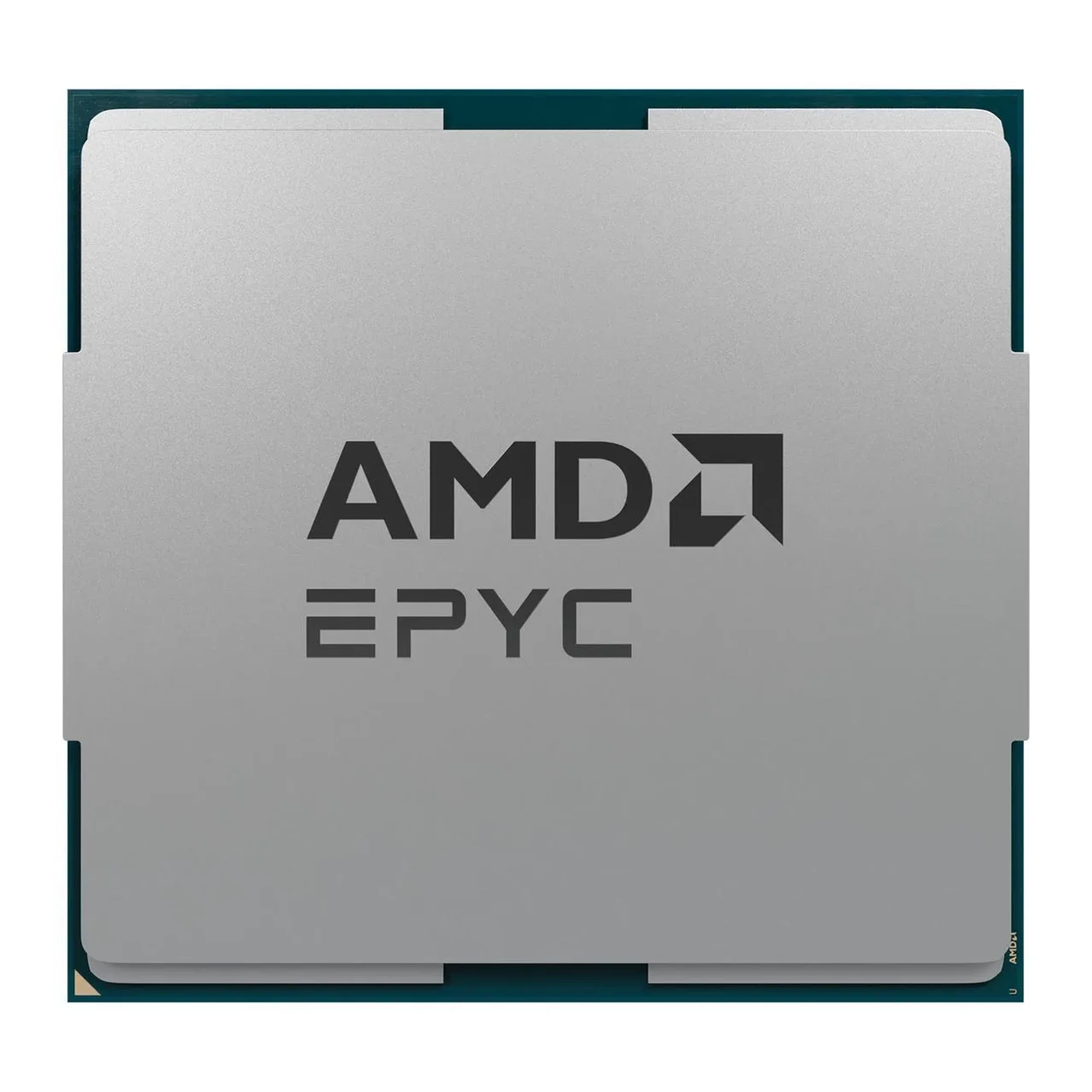
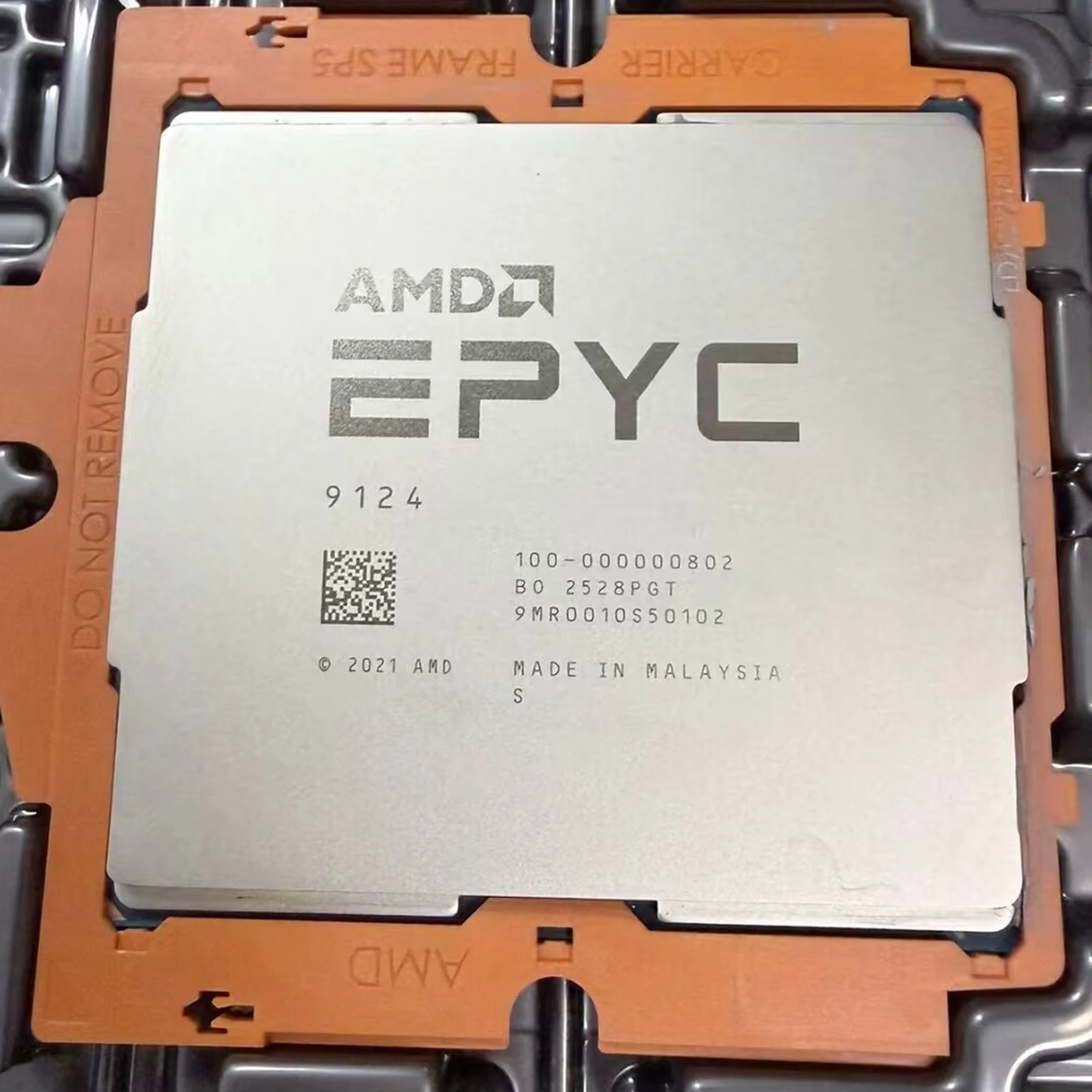
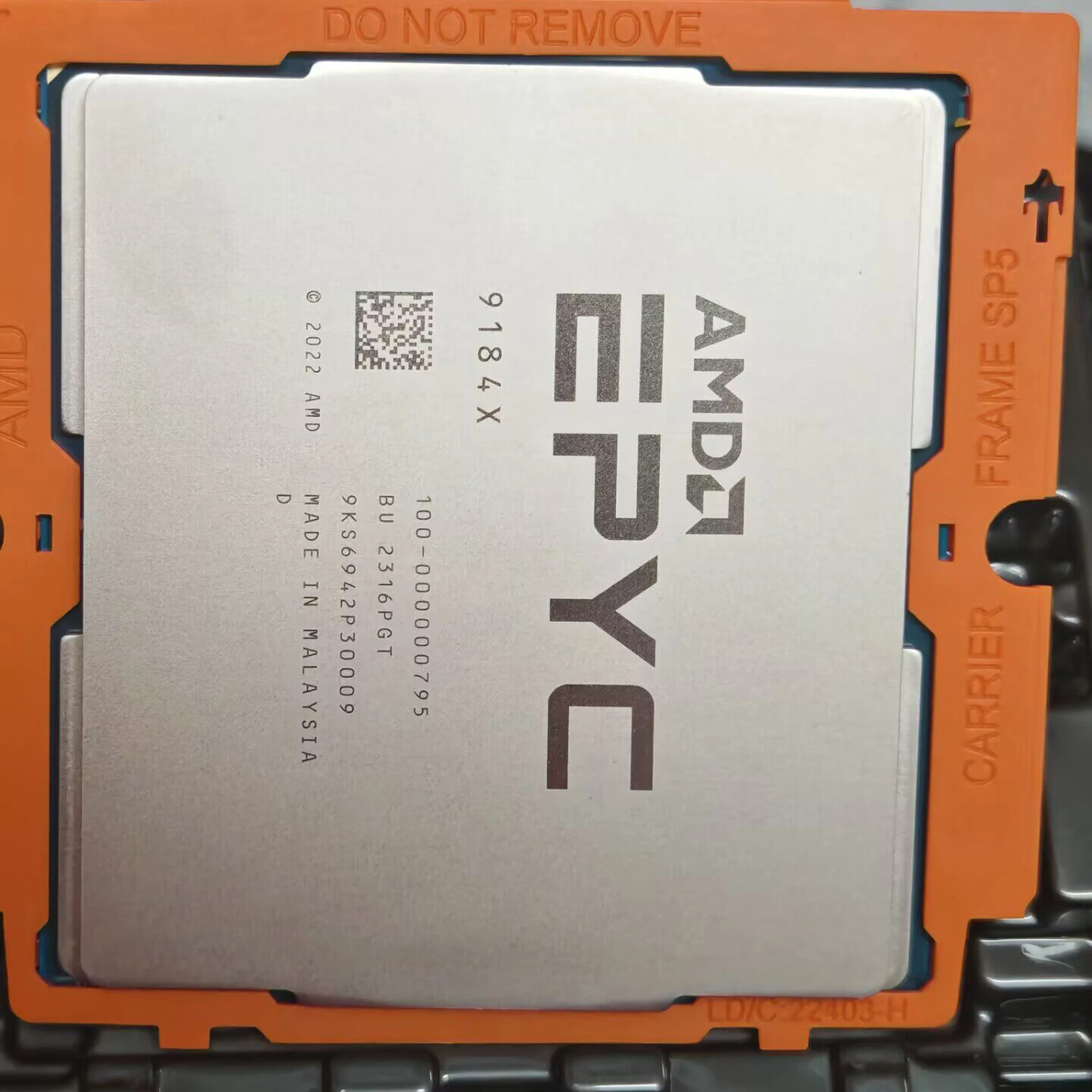
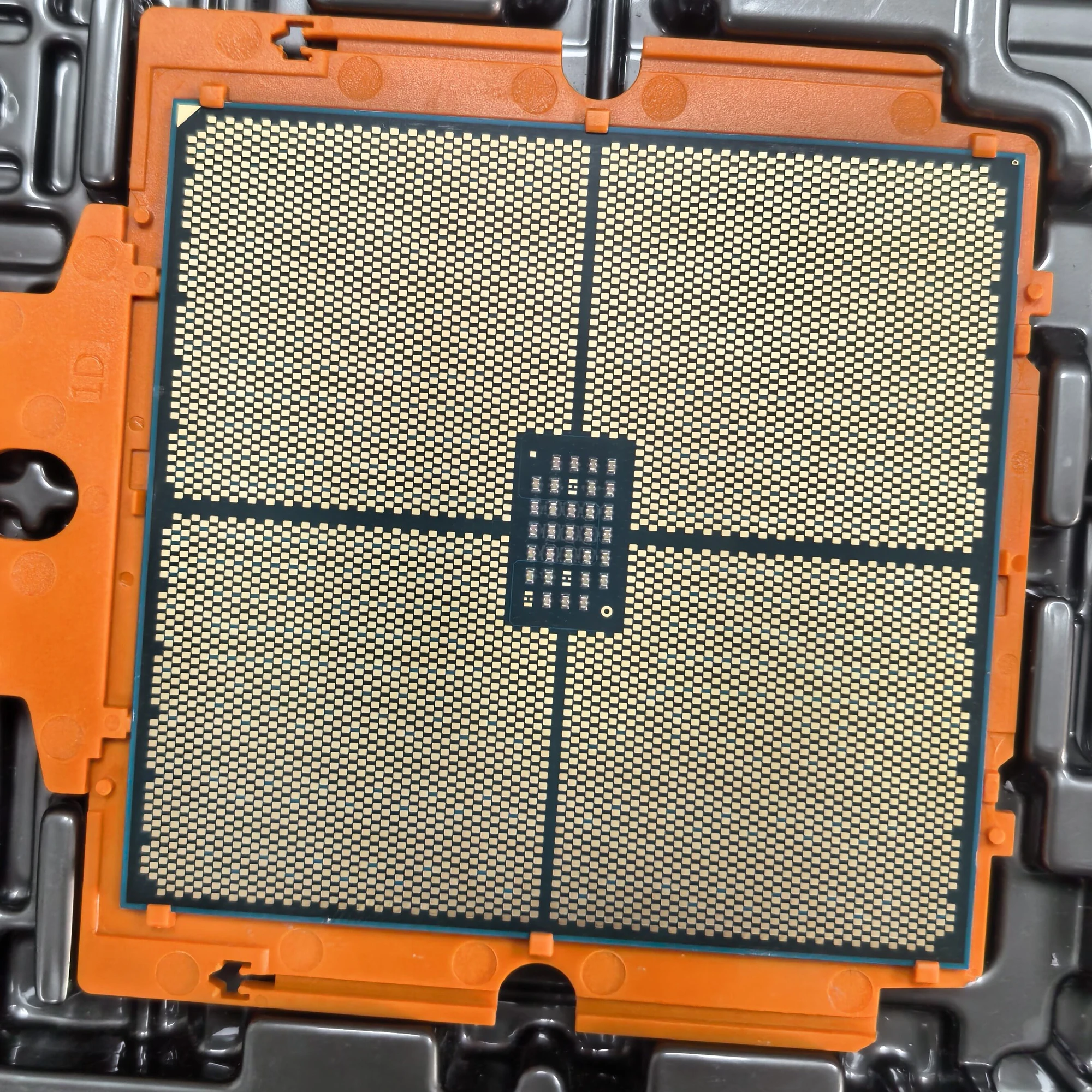

AMD EPYC 9124 Server Processor | 16-Core 32-Thread, 5nm Zen 4, DDR5 & PCIe 5.0 for Enterprise Servers
| Specification | Details |
|---|---|
| Processor Model | AMD EPYC 9124 |
| Series | 4th Generation AMD EPYC (Genoa), EPYC 9004 Series |
| Architecture | Zen 4 |
| Manufacturing Process | 5nm (TSMC) |
| Cores | 16 (Hexadeca-Core) |
| Threads | 32 (SMT Supported) |
| Base Clock | 3.0 GHz |
| All-Core Boost Clock | 3.6 GHz |
| Max Single-Core Boost Clock | 3.7 GHz |
| L1 Cache | 16 x 32 KB (Instruction) + 16 x 32 KB (Data) = 1024 KB Total |
| L2 Cache | 16 MB (1 MB per Core) |
| L3 Cache | 64 MB (Shared) |
| Memory Type | DDR5 |
| Memory Channels | 12 |
| Max Memory Speed | 4800 MT/s |
| Memory Bandwidth | 460.8 GB/s (Per Socket) |
| PCIe Version | PCIe 5.0 |
| PCIe Lanes | 128 |
| Socket Type | SP5 |
| Socket Count | 1P / 2P |
| TDP (Default) | 200W |
| Configurable TDP (cTDP) | 200-240W |
| Release Date | November 10, 2022 |
| MSRP (1kU Pricing) | $1,083 USD |
| Product ID (Tray) | 100-000000802 |
| Supported Technologies | AMD Infinity Guard, AMD Infinity Architecture |
| Workload Affinity | Media Streaming, Per Core CAE/CFD/FEA, Value Workloads |
| Integrated GPU (iGPU) | None |
| Regional Availability | Global, China, EMEA, APJ, LATAM |
In the competitive landscape of enterprise server processors, the AMD EPYC 9124 stands out as a versatile, cost-effective solution tailored for small-to-medium data centers, virtualization environments, and edge computing deployments. Released in November 2022 as part of AMD’s 4th-generation EPYC (Genoa) lineup, this processor combines advanced 5nm manufacturing technology, Zen 4 architecture, and enterprise-grade features to deliver a balance of performance, efficiency, and affordability that makes it a top choice for businesses looking to upgrade their server infrastructure without breaking the bank.
Key Overview: What Makes the AMD EPYC 9124 Unique?
The AMD EPYC 9124 is positioned as an entry-level enterprise server processor, but it punches above its weight with specifications that rival higher-priced competitors. Built on TSMC’s 5nm process node and powered by AMD’s Zen 4 architecture, it delivers a significant leap in performance and energy efficiency compared to previous-generation EPYC processors and competing Intel Xeon models. With 16 physical cores and 32 threads (thanks to Simultaneous Multithreading, SMT), a 3.0GHz base clock, 3.6GHz all-core boost, and 3.7GHz max single-core boost, the EPYC 9124 is engineered to handle a wide range of server workloads—from virtualization and database management to software-defined storage and media streaming—with ease.
One of the most notable advantages of the EPYC 9124 is its exceptional value proposition. Priced at an MSRP of $1,083 (as of 2026), it offers more cores, higher clock speeds, and newer technology than similarly priced Intel Xeon Silver models, making it an ideal choice for budget-conscious businesses that refuse to compromise on performance or reliability. Whether you’re building a new server cluster or upgrading aging infrastructure, the EPYC 9124 provides a future-proof foundation that supports the latest memory and I/O standards, ensuring your investment remains relevant for years to come.
Architecture & Manufacturing: Zen 4 and 5nm Excellence
At the heart of the AMD EPYC 9124 is AMD’s Zen 4 architecture, the fourth generation of the company’s revolutionary x86 microarchitecture. Zen 4 brings a 14% improvement in Instructions Per Cycle (IPC) compared to Zen 3, meaning the processor can execute more instructions per clock cycle—translating to faster performance across both single-threaded and multi-threaded workloads. This IPC boost is particularly beneficial for latency-sensitive applications like database queries and web services, where every millisecond counts.
Complementing the Zen 4 architecture is TSMC’s 5nm manufacturing process, which enables the EPYC 9124 to deliver higher performance while keeping power consumption in check. The 5nm process reduces transistor size, allowing AMD to pack more cores and cache into a smaller footprint, while also improving energy efficiency. This is critical for data centers, where power costs and heat management are major concerns—an efficient processor like the EPYC 9124 can significantly reduce operational expenses over its lifetime.
Another key architectural feature is AMD’s Chiplet (small chip) design, which separates the compute cores from the I/O components. This modular approach improves manufacturing yields, reduces costs, and allows for greater flexibility in scaling performance. For the EPYC 9124, this means a optimized balance of compute power and I/O connectivity, ensuring the processor can handle both CPU-intensive and data-intensive workloads without bottlenecks.
Performance: Benchmarks & Real-World Capabilities
The AMD EPYC 9124’s performance is backed by impressive benchmark results, making it a reliable choice for a variety of server workloads. According to Geekbench 6, the processor achieves a single-core score of 1,781 and a multi-core score of 12,542—placing it ahead of many competing entry-level server processors. In PassMark testing, the EPYC 9124 scores a multi-thread rating of 43,846 and a single-thread rating of 2,719, further confirming its strong performance across both single and multi-threaded tasks.
In real-world scenarios, the EPYC 9124 excels in virtualization, thanks to its 16 cores and 32 threads. It can easily support 20-30 virtual machines (VMs) simultaneously, making it ideal for private cloud and deployments. Compared to the Intel Xeon Silver 4210 (10 cores/20 threads), the EPYC 9124 offers 60% more cores and a 36% higher base clock, resulting in significantly better multi-threaded performance for virtualized workloads.
Database performance is another strength of the EPYC 9124, thanks to its 64MB L3 cache. The large L3 cache reduces the need to access slower system memory, accelerating database queries and reducing latency.
For software-defined storage (SDS) workloads, the EPYC 9124’s 128 PCIe 5.0 lanes provide ample bandwidth for connecting high-speed NVMe SSDs, enabling the creation of high-performance all-flash storage arrays. PCIe 5.0 offers twice the bandwidth of PCIe 4.0, ensuring fast data transfer between the processor and storage devices, which is critical for SDS environments that require low latency and high throughput.
Memory & I/O: Future-Proof Connectivity
The AMD EPYC 9124 is equipped with cutting-edge memory and I/O capabilities, ensuring it can keep up with the demands of modern server workloads. It supports 12 channels of DDR5-4800 memory, with a theoretical memory bandwidth of 460.8 GB/s—significantly higher than the DDR4 memory supported by older processors. This high memory bandwidth is essential for memory-intensive workloads like in-memory databases, virtualization, and scientific computing, as it reduces data bottlenecks and improves overall system performance.
In addition to DDR5 support, the EPYC 9124 features 128 PCIe 5.0 lanes, providing enterprise-grade I/O expansion. PCIe 5.0 is the latest generation of the PCI Express standard, offering 32 GT/s per lane—twice the bandwidth of PCIe 4.0. This allows for faster connectivity to storage devices, network cards, and other peripherals, making the EPYC 9124 suitable for high-performance computing (HPC) edge nodes, media streaming servers, and other I/O-intensive applications.
The processor also supports AMD Infinity Guard and AMD Infinity Architecture, which provide enterprise-grade security and scalability. Infinity Guard includes features like Secure Memory Encryption (SME) and Secure Encrypted Virtualization (SEV), protecting sensitive data from unauthorized access. Infinity Architecture, meanwhile, enables seamless scalability in multi-processor (2P) configurations, allowing businesses to expand their server capacity as their needs grow.
Power Efficiency & TDP: Balancing Performance and Cost
With a default TDP of 200W and a configurable TDP (cTDP) range of 200-240W, the AMD EPYC 9124 strikes an ideal balance between performance and power consumption. Its 5nm manufacturing process and Zen 4 architecture enable it to deliver more performance per watt than previous-generation processors, reducing energy costs for data centers. For edge computing deployments, where power and cooling resources may be limited, the 200W TDP makes the EPYC 9124 a practical choice, as it can deliver strong performance without requiring excessive power or cooling.
Compared to competing Intel Xeon models, the EPYC 9124 offers better power efficiency. For example, the Intel Xeon Gold 5218 (16 cores/32 threads) has a TDP of 125W but offers lower clock speeds and older technology (14nm), resulting in lower performance per watt. The EPYC 9124’s higher TDP is offset by its superior performance and efficiency, making it a more cost-effective choice in the long run.
Ideal Use Cases: Who Should Choose the AMD EPYC 9124?
The AMD EPYC 9124 is designed for a wide range of enterprise server applications, making it a versatile choice for businesses of all sizes. Its key use cases include:
Virtualization & Cloud Computing: With 16 cores and 32 threads, the EPYC 9124 can handle multiple VMs simultaneously, making it ideal for private cloud, public cloud, and deployments. It supports popular virtualization platforms like VMware, Hyper-V, and KVM, ensuring compatibility with existing infrastructure.
Database Services: The 64MB L3 cache and high memory bandwidth make the EPYC 9124 perfect for running relational databases (PostgreSQL, MySQL, SQL Server) and NoSQL databases (MongoDB, Cassandra). It reduces query latency and improves throughput, ensuring smooth performance even under heavy load.
Software-Defined Storage (SDS): The 128 PCIe 5.0 lanes enable fast connectivity to NVMe SSDs, making the EPYC 9124 suitable for SDS environments. It can handle high-volume data storage and retrieval, making it ideal for media streaming, backup, and disaster recovery solutions.
Edge Computing: The 200W TDP and compact form factor make the EPYC 9124 suitable for edge data centers, where space and power are limited. It can deliver enterprise-grade performance for edge applications like IoT analytics, real-time processing, and remote monitoring.
Small-to-Medium Data Centers: For businesses with limited budgets, the EPYC 9124 offers enterprise-grade performance at an affordable price. It can serve as the foundation for a small-to-medium data center, supporting a variety of workloads without the need for expensive high-end processors.
Competitive Comparison: Why Choose EPYC 9124 Over Alternatives?
When compared to competing server processors, the AMD EPYC 9124 offers several key advantages:
vs. Intel Xeon Silver 4210: The Xeon Silver 4210 offers 10 cores/20 threads, a 2.2GHz base clock, and 14nm manufacturing. The EPYC 9124 provides 60% more cores, a 36% higher base clock, 5nm technology, DDR5 support, and PCIe 5.0—all at a similar price point. This makes the EPYC 9124 a far better value for businesses that need more multi-threaded performance.
vs. Intel Xeon Gold 5218: The Xeon Gold 5218 offers 16 cores/32 threads (matching the EPYC 9124) but uses 14nm technology, has a lower base clock (2.3GHz), and does not support DDR5 or PCIe 5.0. The EPYC 9124 offers better performance, newer technology, and future-proofing, making it a better long-term investment.
vs. AMD EPYC 9254: The EPYC 9254 is a higher-end model with 24 cores/48 threads, but it costs nearly twice as much as the EPYC 9124. For businesses that don’t need 24 cores, the EPYC 9124 offers exceptional value, delivering similar performance per core at a lower cost.
Conclusion: The EPYC 9124 – A Cost-Effective Enterprise Workhorse
The AMD EPYC 9124 is more than just an entry-level server processor—it’s a cost-effective workhorse that delivers enterprise-grade performance, energy efficiency, and future-proofing. Its 5nm Zen 4 architecture, 16 cores/32 threads, DDR5 support, and PCIe 5.0 connectivity make it suitable for a wide range of server workloads, from virtualization and databases to edge computing and software-defined storage. Whether you’re a small business looking to build your first server or a medium-sized enterprise upgrading your data center, the EPYC 9124 offers the perfect balance of performance and affordability.
With its strong benchmark results, enterprise-grade security features, and compatibility with modern server infrastructure, the EPYC 9124 is a top choice for businesses that want to maximize their return on investment. It’s a processor that can grow with your business, supporting future upgrades and ensuring your server infrastructure remains competitive in an ever-evolving technological landscape. For WordPress websites selling server hardware, the EPYC 9124’s unique value proposition, combined with the SEO-optimized content provided here, will help attract potential customers and drive conversions.
Recommended Motherboards for AMD EPYC 9005/9004 SP5 processors
| Model | CPU (Socket / TDP) | Memory | PCIe/CXL | LAN | Management | Form Factor |
|---|---|---|---|---|---|---|
| Gigabyte MZ73-LM2 | Dual SP5 / 500W | 24×DDR5 | PCIe 5.0 | 2×10GbE | IPMI | E-ATX |
| Gigabyte MZ73-LM1 | Dual SP5 / 400W | 24×DDR5 | PCIe 5.0 | 2×10GbE | IPMI | E-ATX |
| Gigabyte MZ73-LM0 | Dual SP5 / 400W | 24×DDR5 | PCIe 5.0 | 2×10GbE | IPMI | E-ATX |
| Gigabyte MZ33-AR1 | Single SP5 / 400W | 24×DDR5 | PCIe 5.0 | 1×10GbE | IPMI | E-ATX |
| Gigabyte MZ33-CP1 | Single SP5 / 500W | 12×DDR5 | PCIe 5.0 | 2×1GbE | IPMI | E-ATX |
| ASRock Rack TURIND8-2L2T | Single SP5 / 400W | 8×DDR5 | PCIe 5.0 + CXL 2.0 | 2×10GbE + 2×1GbE | IPMI | CEB |
| ASRock Rack TURIN2D16-2T | Dual SP5 / 400W | 16×DDR5 (8+8) | PCIe 5.0 + CXL 2.0 | 2×10GbE | IPMI | EEB |
| ASRock Rack TURIN2D24G-2L+/500W | Dual SP5 / 500W | 24×DDR5 (12+12) | PCIe 5.0 + CXL 2.0 | 2×1GbE | IPMI | Proprietary |
| ASUS K14PA-U12 | Single SP5 / 400W | 12×DDR5 | PCIe 5.0 | 2×25GbE (SFP28) | iKVM (ASMB11) | CEB |
4th Gen AMD EPYC Server CPUs 9004 Series Processors SKUs
| Name | # of CPU Cores | # of Threads | Max. Boost Clock | Base Clock | L3 Cache | Default TDP |
| AMD EPYC™ 9184X | 16 | 32 | Up to 4.2 GHz | 3.55 GHz | 768 MB | 320W |
| AMD EPYC™ 9174F | 16 | 32 | Up to 4.4 GHz | 4.1 GHz | 256 MB | 320W |
| AMD EPYC™ 9124 | 16 | 32 | Up to 3.7 GHz | 3 GHz | 64 MB | 200W |
| AMD EPYC™ 9184X | 16 | 32 | Up to 4.2 GHz | 3.55 GHz | 768 MB | 320W |
| AMD EPYC™ 9274F | 24 | 48 | Up to 4.3 GHz | 4.05 GHz | 256 MB | 320W |
| AMD EPYC™ 9254 | 24 | 48 | Up to 4.15 GHz | 2.9 GHz | 128 MB | 200W |
| AMD EPYC™ 9224 | 24 | 48 | Up to 3.7 GHz | 2.5 GHz | 64 MB | 200W |
| AMD EPYC™ 9384X | 32 | 64 | Up to 3.9 GHz | 3.1 GHz | 768 MB | 320W |
| AMD EPYC™ 9374F | 32 | 64 | Up to 4.3 GHz | 3.85 GHz | 256 MB | 320W |
| AMD EPYC™ 9354P | 32 | 64 | Up to 3.8 GHz | 3.25 GHz | 256 MB | 280W |
| AMD EPYC™ 9354 | 32 | 64 | Up to 3.8 GHz | 3.25 GHz | 256 MB | 280W |
| AMD EPYC™ 9334 | 32 | 64 | Up to 3.9 GHz | 2.7 GHz | 128 MB | 210W |
| AMD EPYC™ 9384X | 32 | 64 | Up to 3.9 GHz | 3.1 GHz | 768 MB | 320W |
| AMD EPYC™ 9474F | 48 | 96 | Up to 4.1 GHz | 3.6 GHz | 256 MB | 360W |
| AMD EPYC™ 9454P | 48 | 96 | Up to 3.8 GHz | 2.75 GHz | 256 MB | 290W |
| AMD EPYC™ 9454 | 48 | 96 | Up to 3.8 GHz | 2.75 GHz | 256 MB | 290W |
| AMD EPYC™ 9554P | 64 | 128 | Up to 3.75 GHz | 3.1 GHz | 256 MB | 360W |
| AMD EPYC™ 9554 | 64 | 128 | Up to 3.75 GHz | 3.1 GHz | 256 MB | 360W |
| AMD EPYC™ 9534 | 64 | 128 | Up to 3.7 GHz | 2.45 GHz | 256 MB | 280W |
| AMD EPYC™ 9634 | 84 | 168 | Up to 3.7 GHz | 2.25 GHz | 384 MB | 290W |
| AMD EPYC™ 9684X | 96 | 192 | Up to 3.7 GHz | 2.55 GHz | 1152 MB | 400W |
| AMD EPYC™ 9654P | 96 | 192 | Up to 3.7 GHz | 2.4 GHz | 384 MB | 360W |
| AMD EPYC™ 9654 | 96 | 192 | Up to 3.7 GHz | 2.4 GHz | 384 MB | 360W |
| AMD EPYC™ 9684X | 96 | 192 | Up to 3.7 GHz | 2.55 GHz | 1152 MB | 400W |
| AMD EPYC™ 9734 | 112 | 224 | Up to 3 GHz | 2.2 GHz | 256 MB | 340W |
| AMD EPYC™ 9734 | 112 | 224 | Up to 3 GHz | 2.2 GHz | 256 MB | 340W |
| AMD EPYC™ 9754S | 128 | 128 | Up to 3.1 GHz | 2.25 GHz | 256 MB | 360W |
| AMD EPYC™ 9754 | 128 | 256 | Up to 3.1 GHz | 2.25 GHz | 256 MB | 360W |
| AMD EPYC™ 9754S | 128 | 128 | Up to 3.1 GHz | 2.25 GHz | 256 MB | 360W |
| AMD EPYC™ 9754 | 128 | 256 | Up to 3.1 GHz | 2.25 GHz | 256 MB | 360W |


