
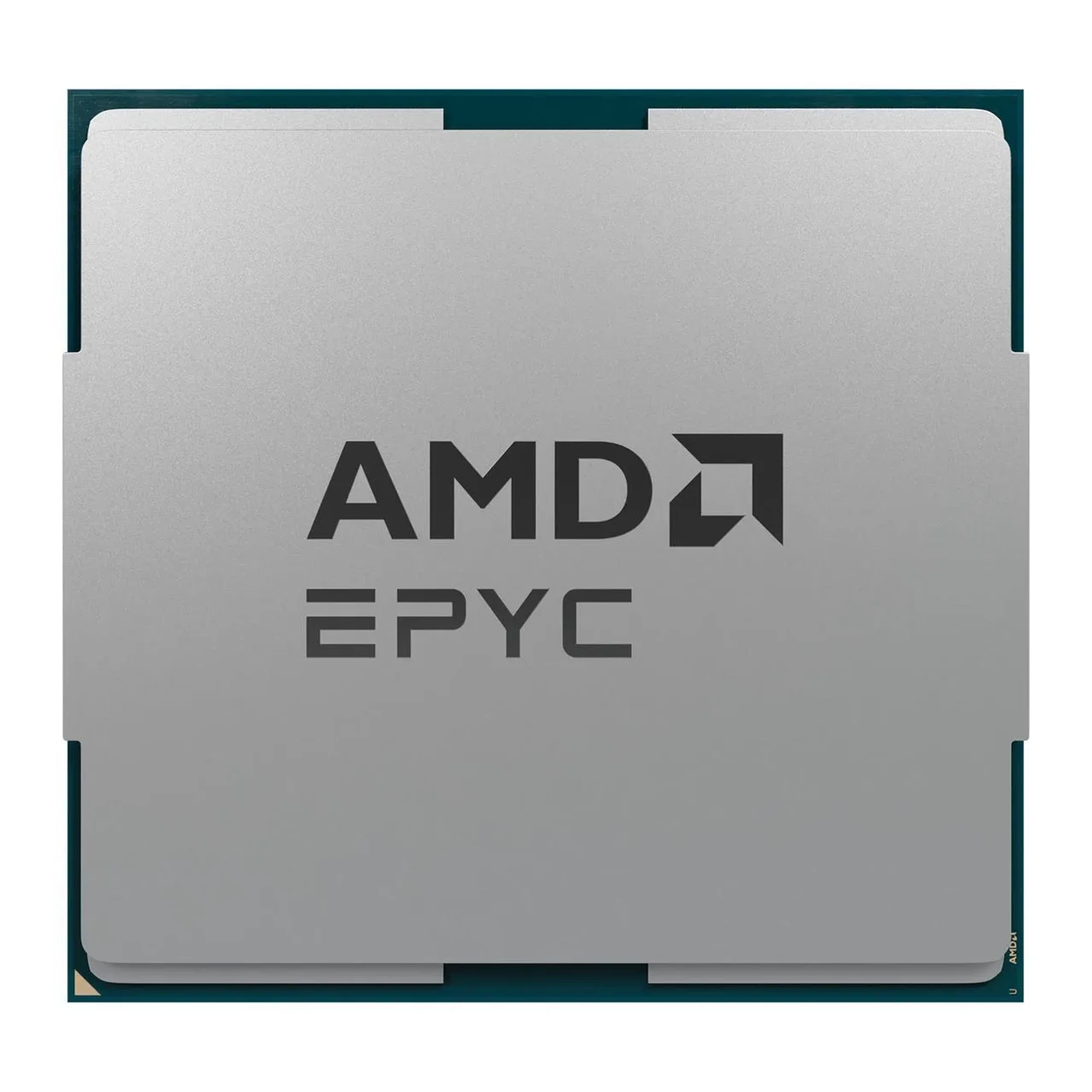
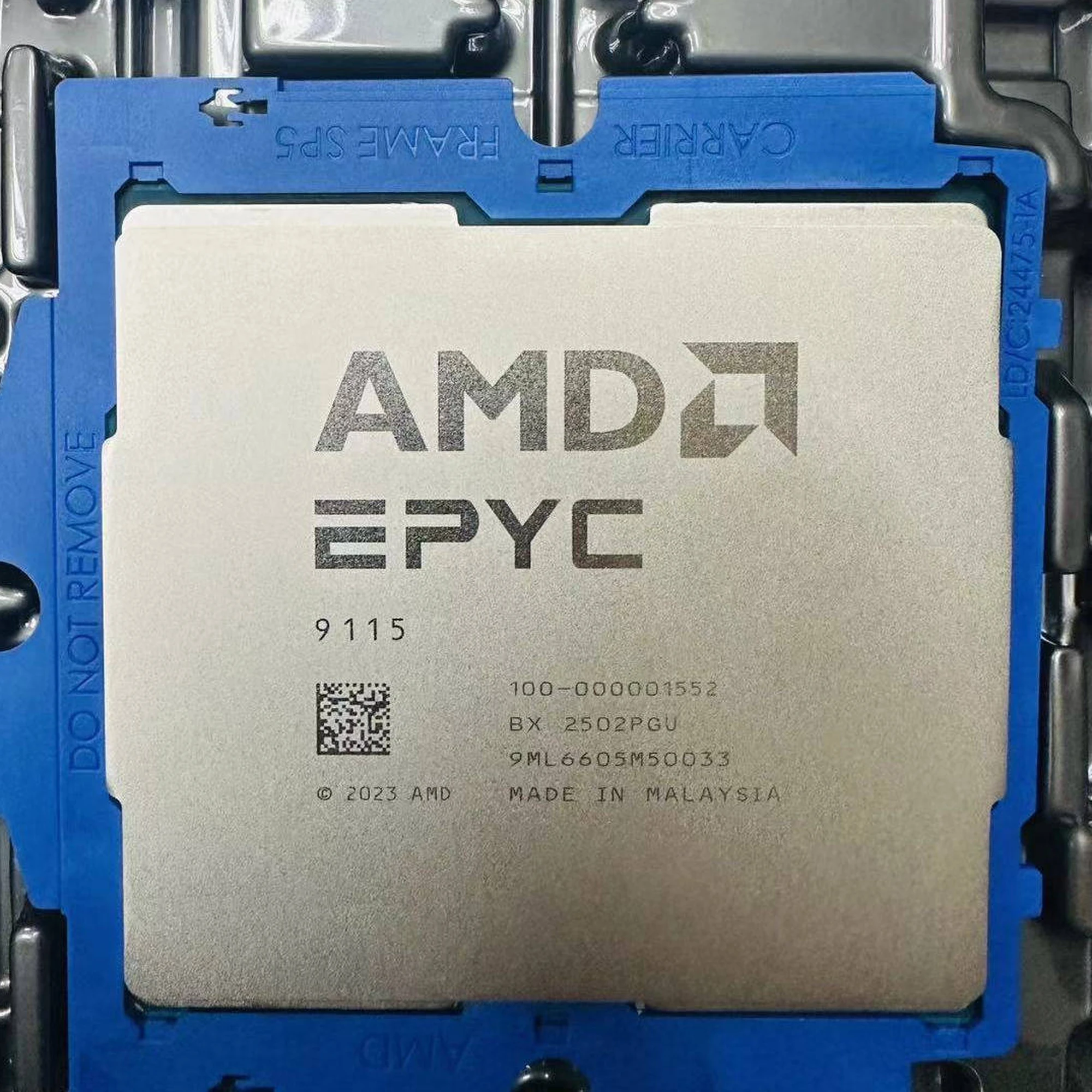
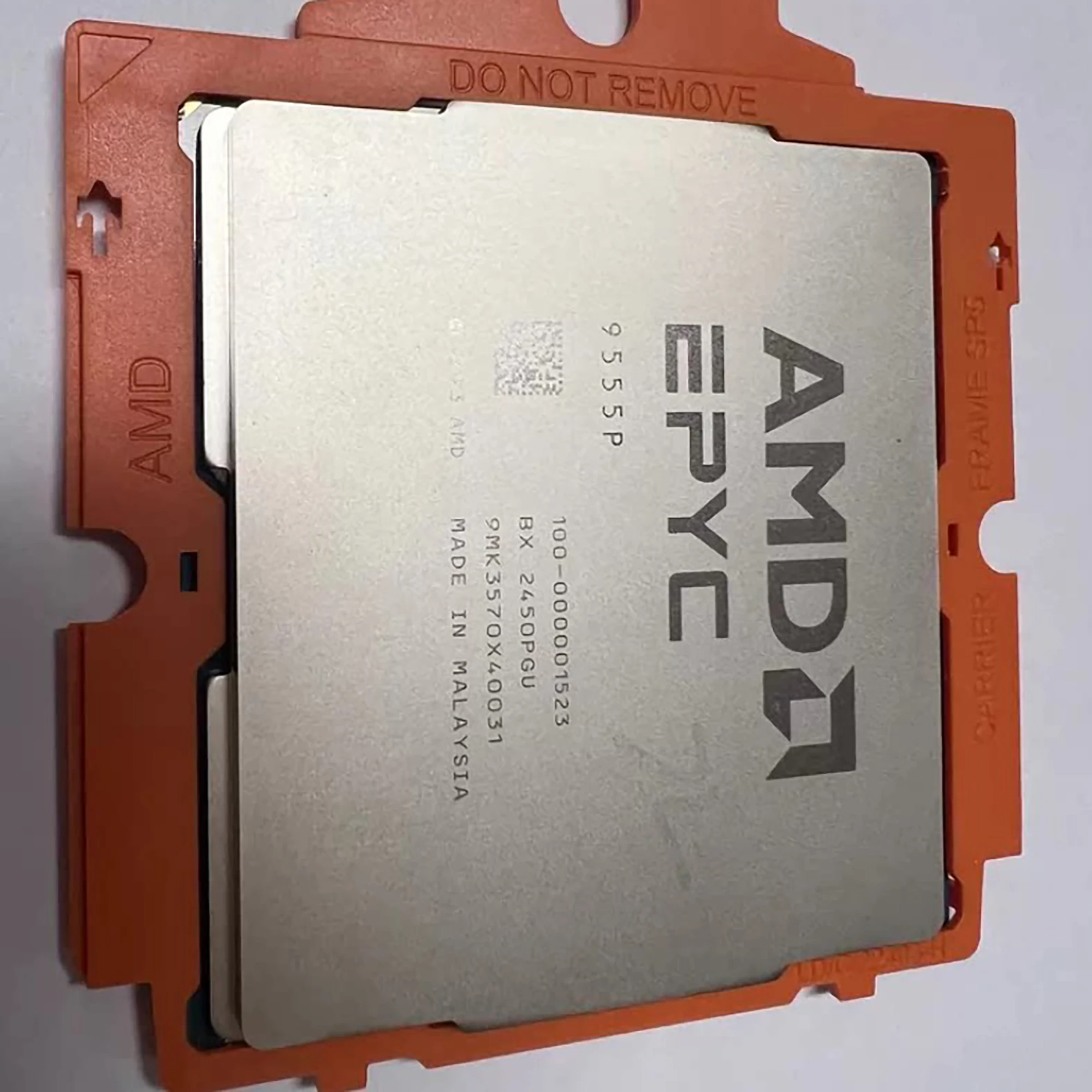
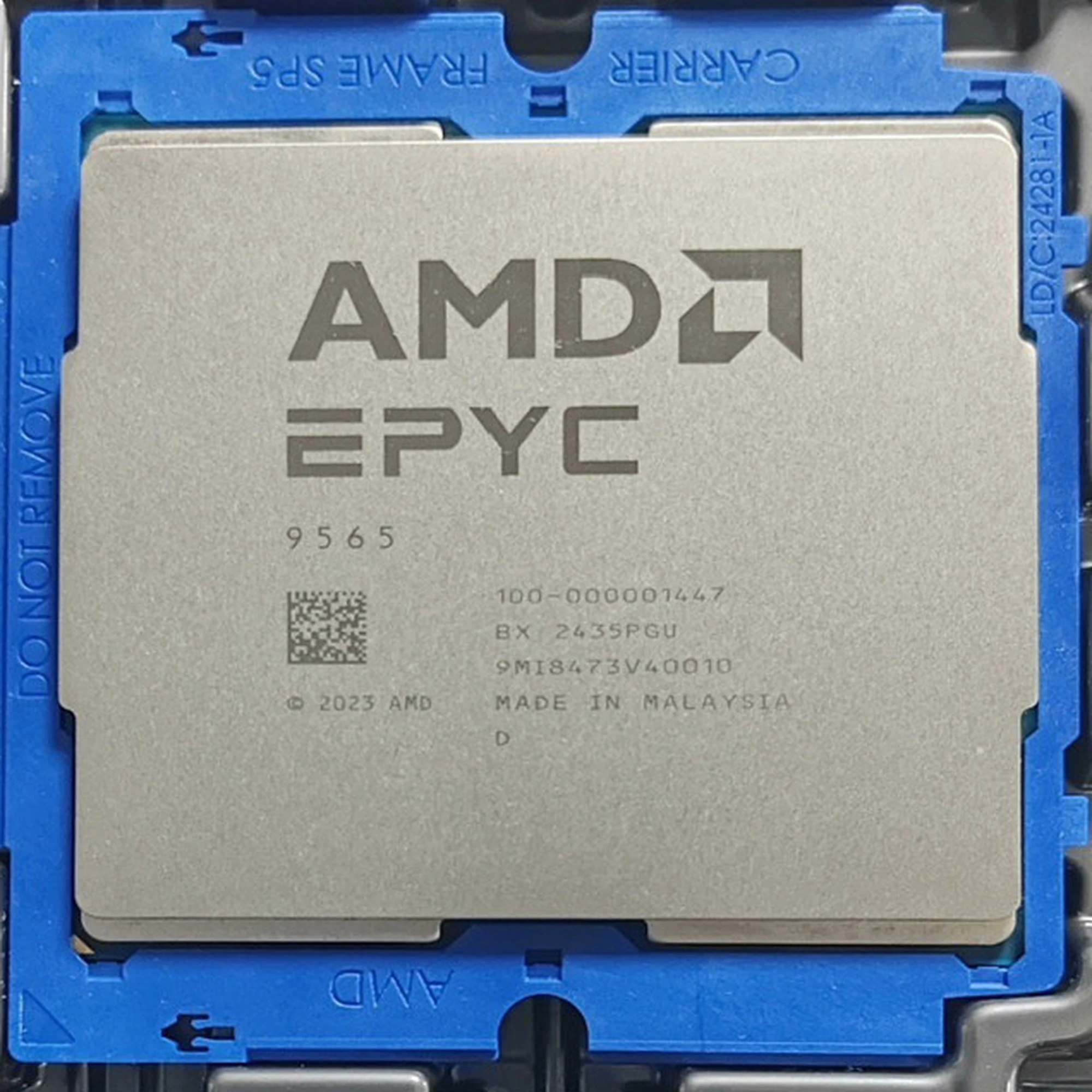
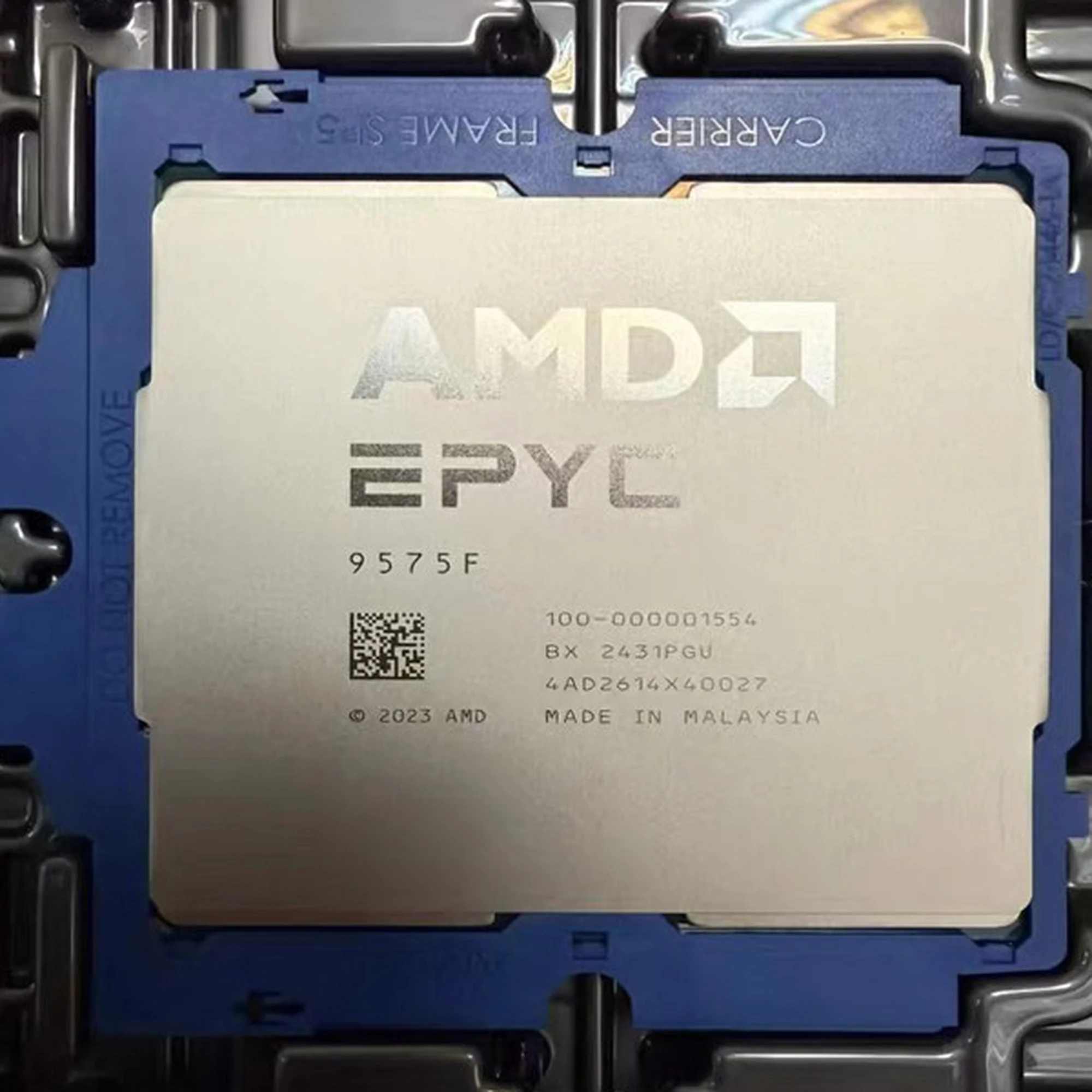
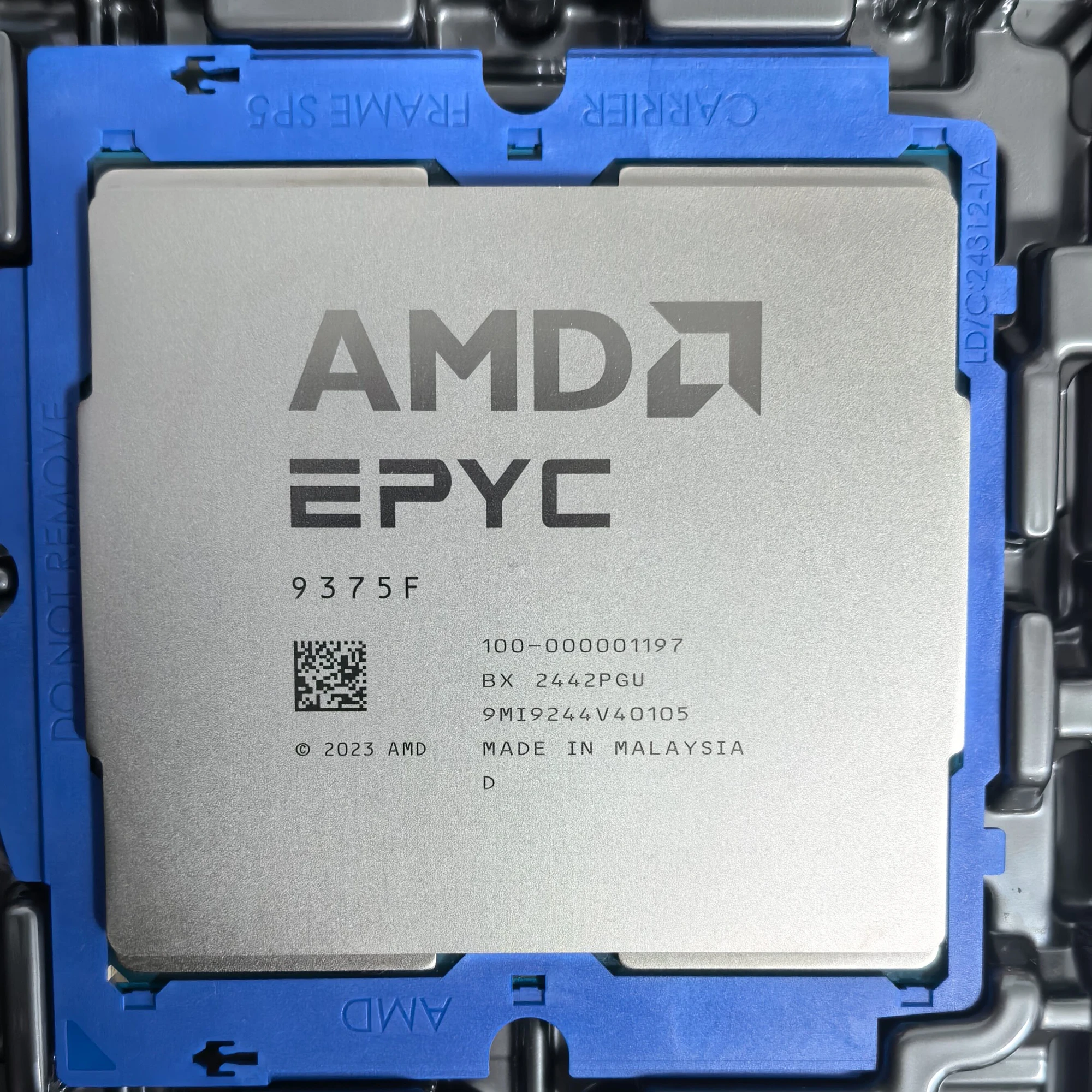
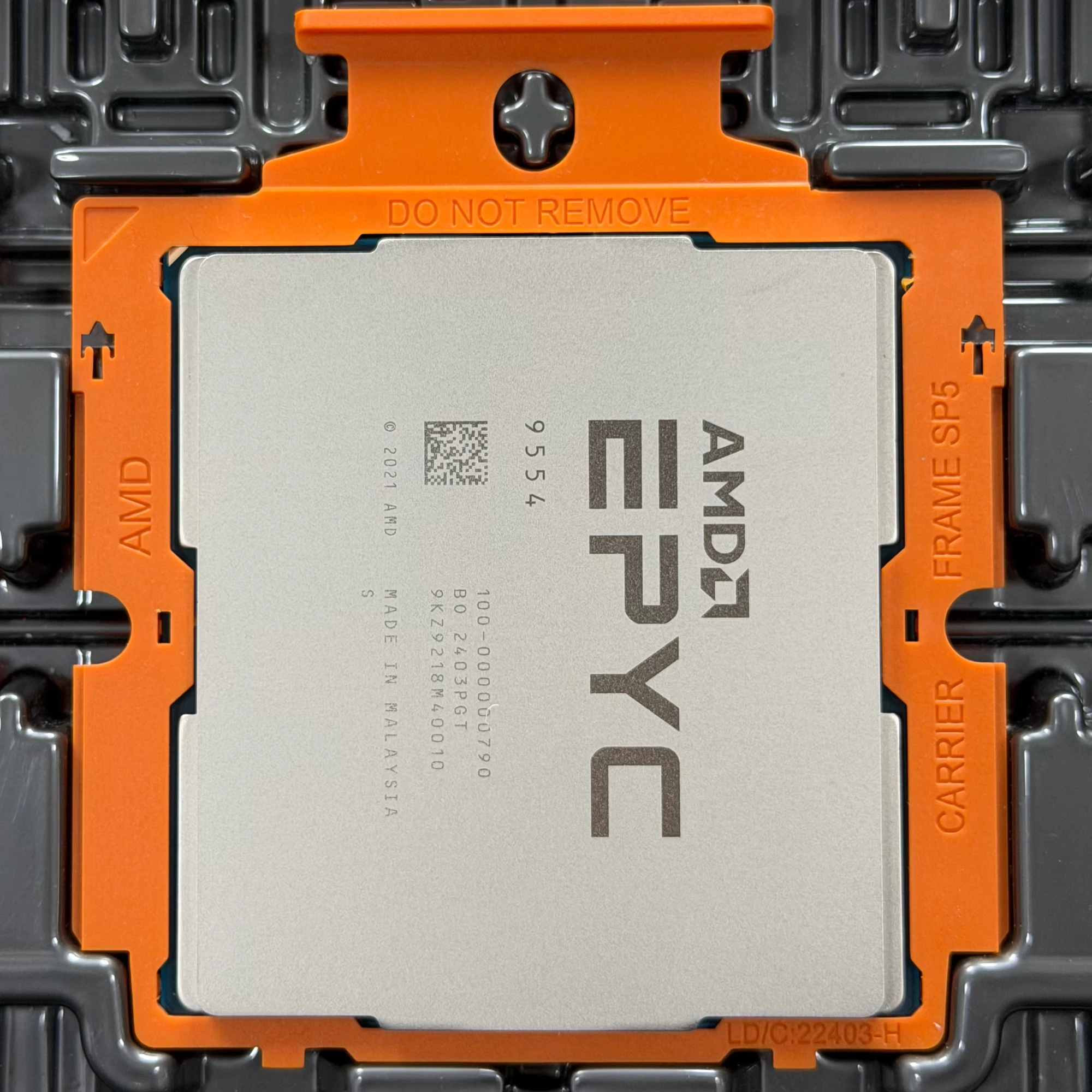
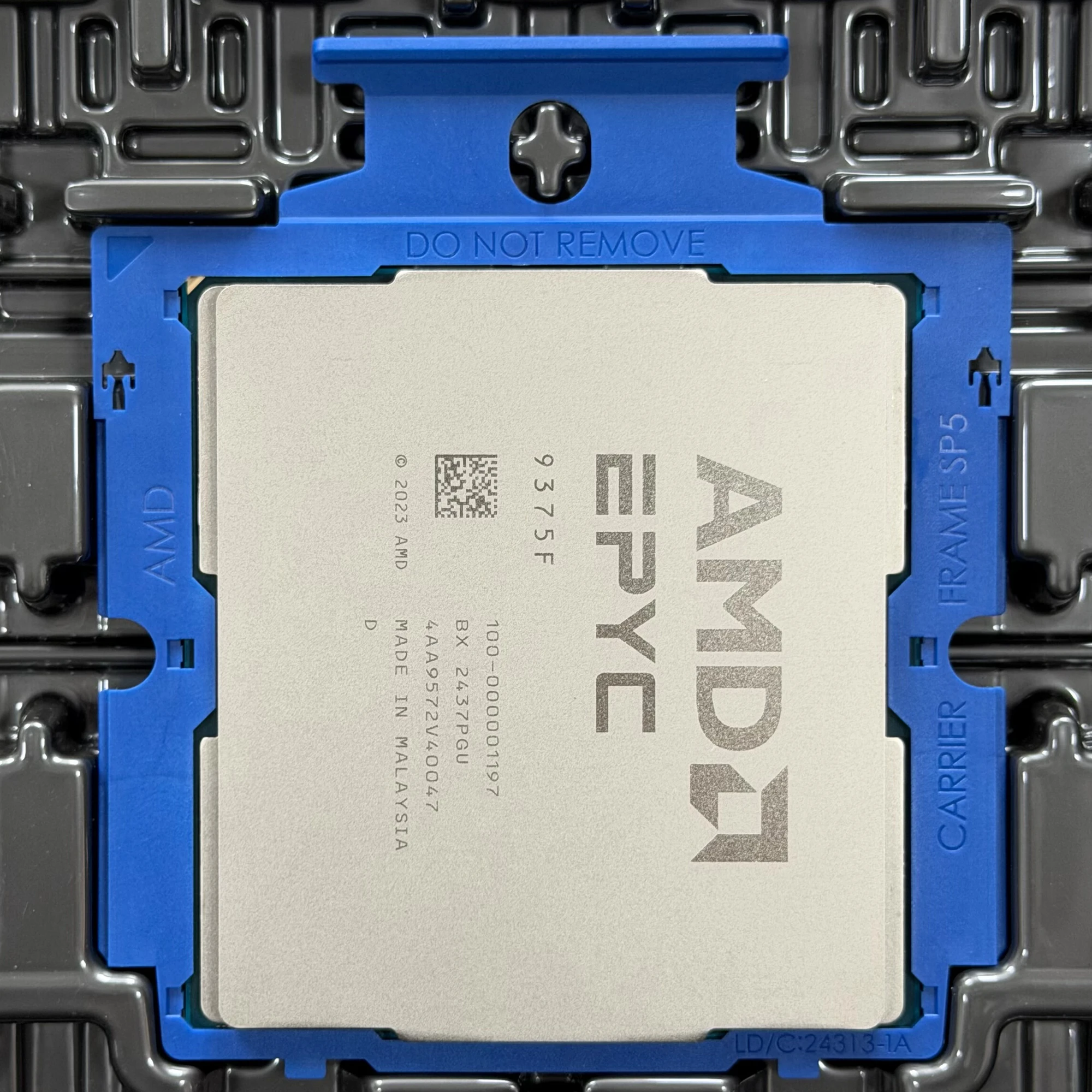
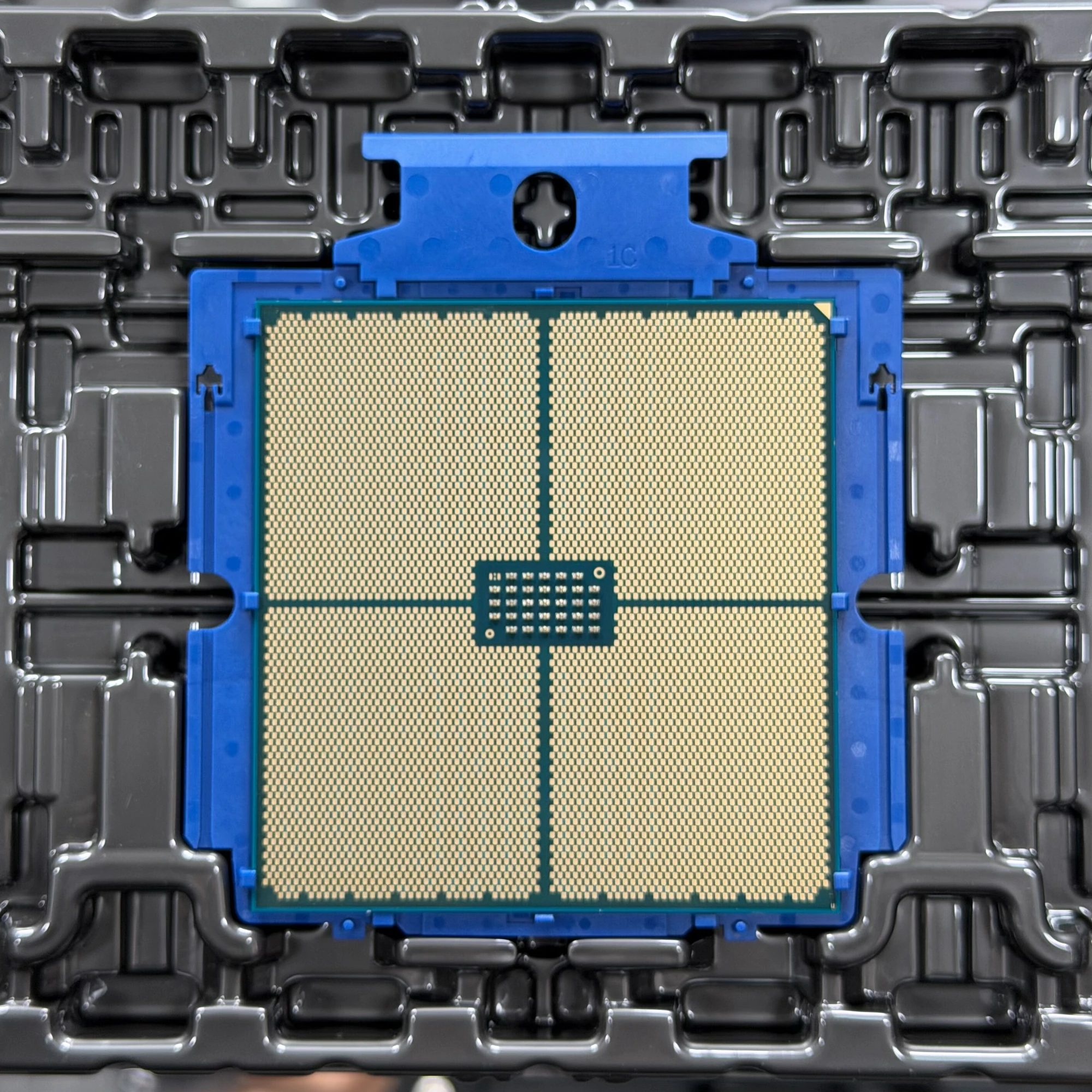
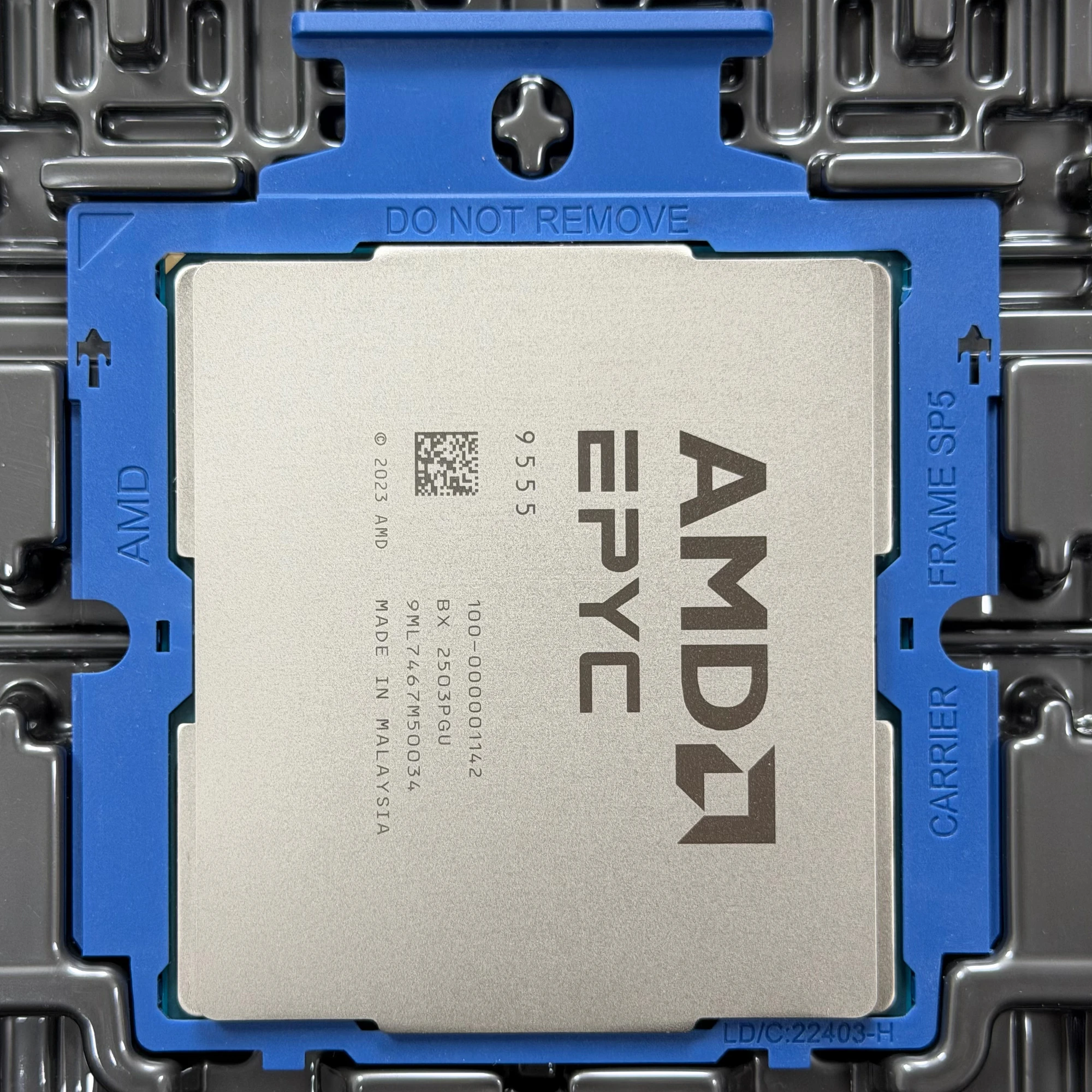
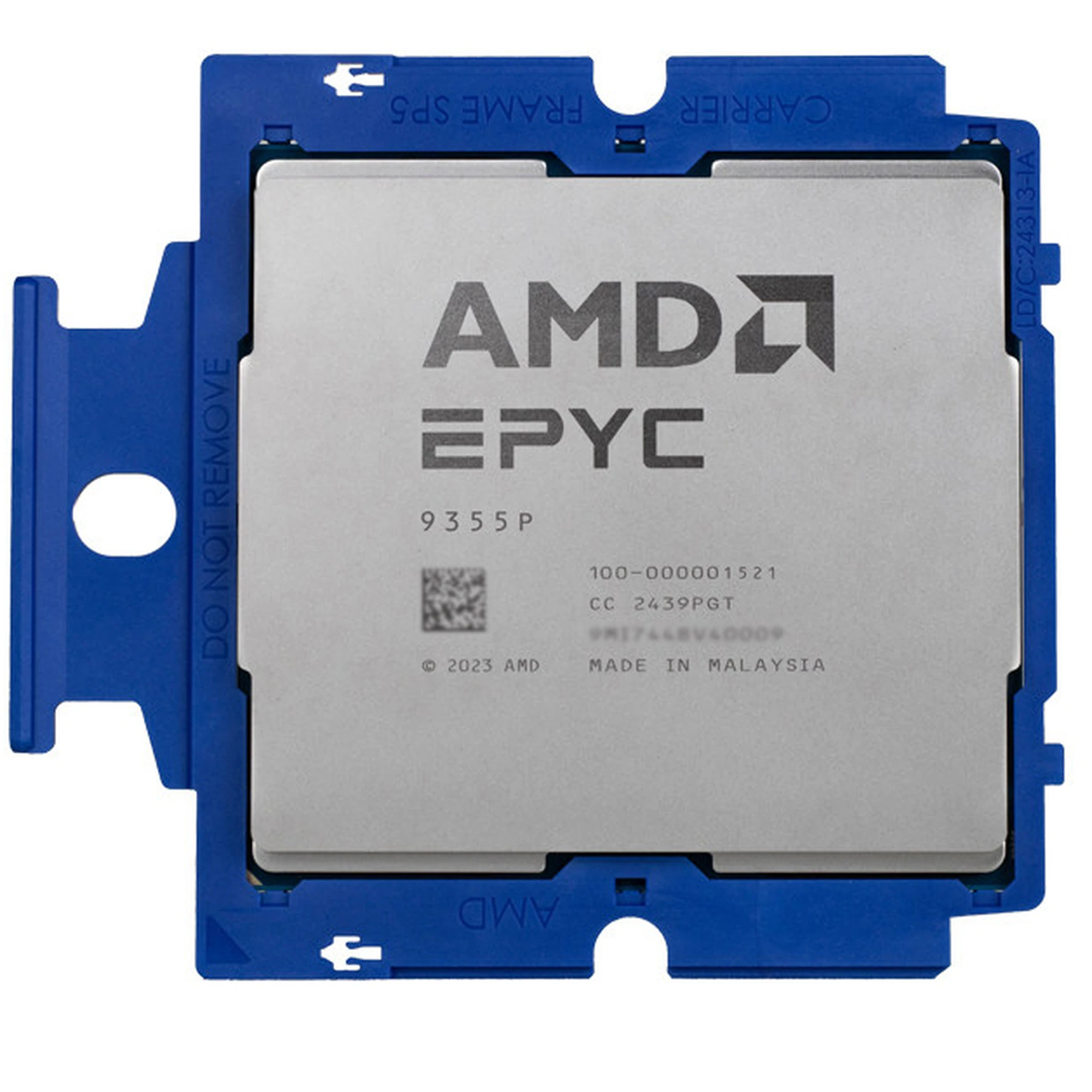
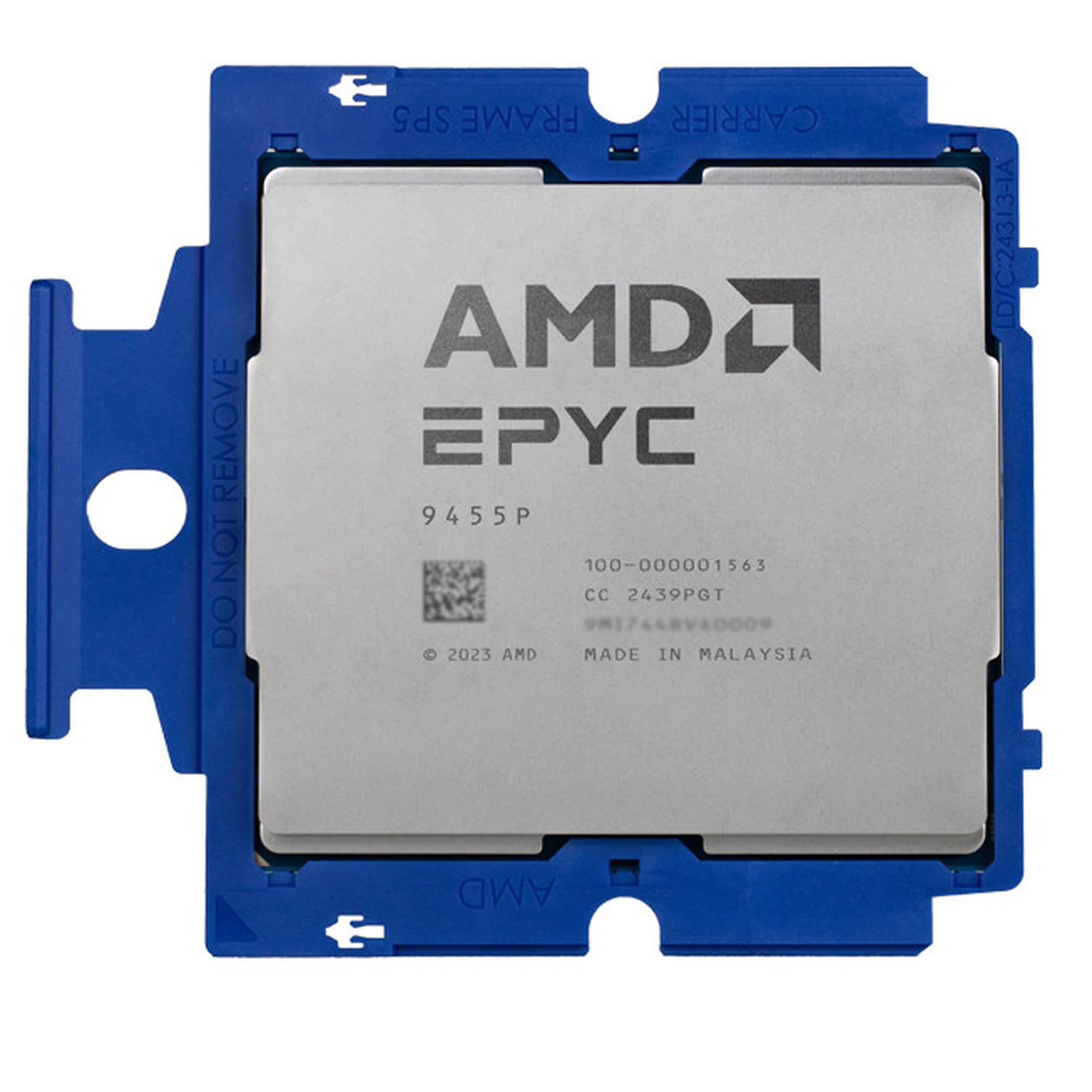
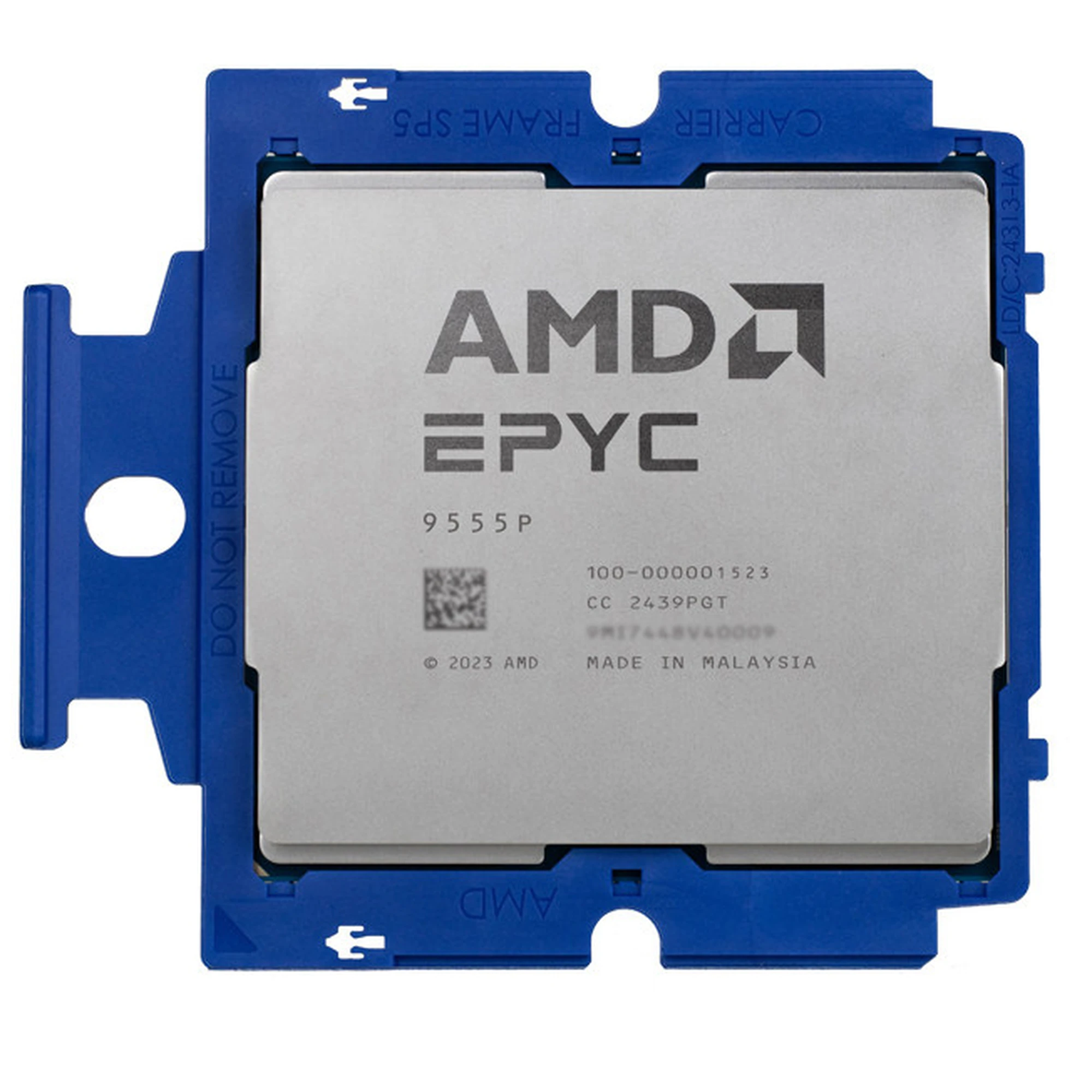

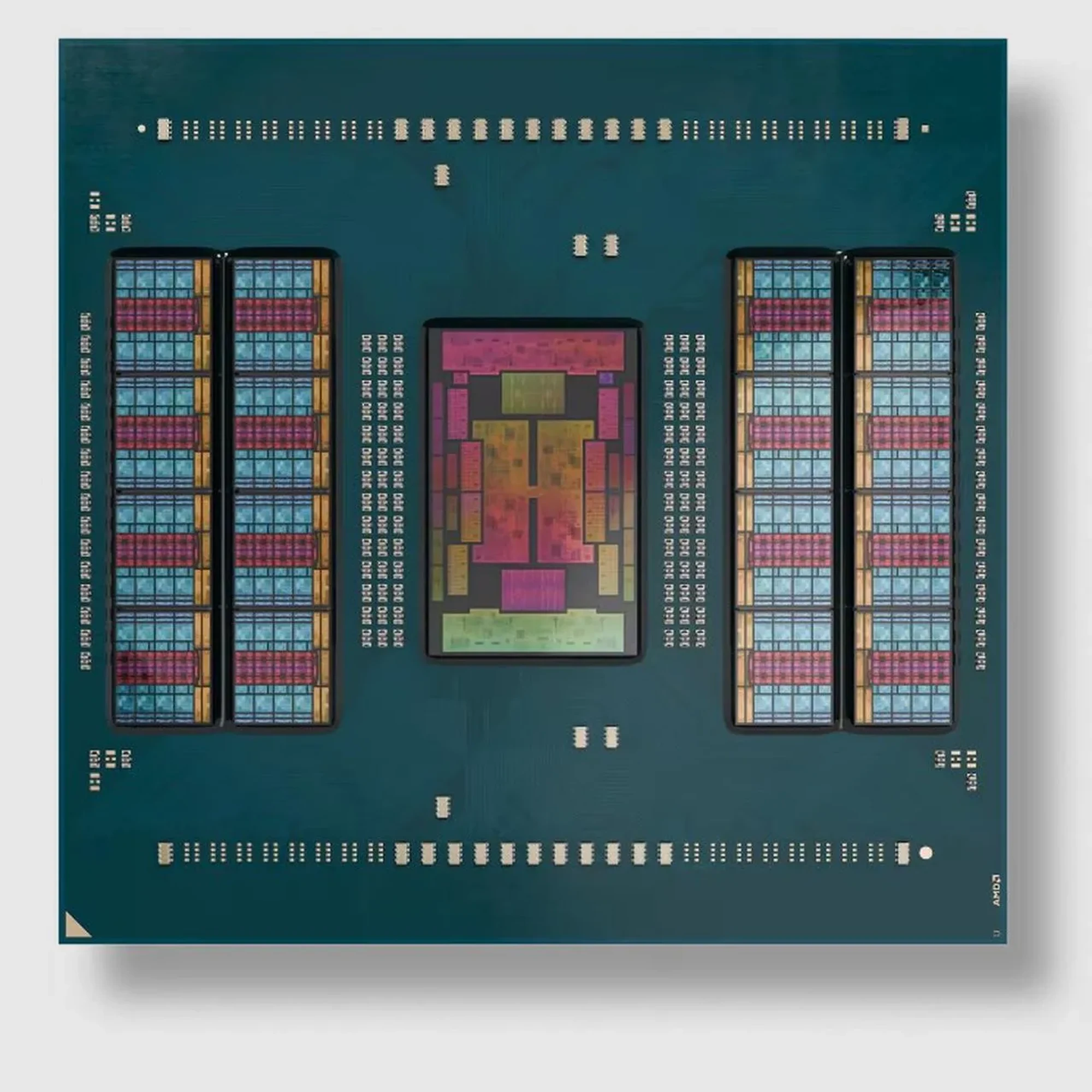
AMD EPYC™ 9355P Server Processor | 32 Cores, 64 Threads, 4.4GHz Boost, DDR5 Support – High-Performance Data Center CPU
| Specification Category | Details |
|---|---|
| Product Name | AMD EPYC™ 9355P Server Processor |
| Product Series | AMD EPYC™ |
| Series | EPYC 9005 Series (Turin) |
| Form Factor | Servers |
| Regional Availability | Global, China, NA, EMEA, APJ, LATAM |
| CPU Cores | 32 |
| CPU Threads | 64 (SMT Supported) |
| Base Clock | 3.55 GHz |
| Max Boost Clock | Up to 4.4 GHz |
| All Core Boost Speed | 4.2 GHz |
| L3 Cache | 256 MB (Shared) |
| L2 Cache | 32 MB (1 MB per Core) |
| L1 Cache | 2.56 MB (80 KB per Core) |
| 1KU Pricing | $2598 USD |
| Default TDP | 280 W |
| AMD Configurable TDP (cTDP) | 240 – 300 W |
| CPU Socket | SP5 |
| Socket Count | 1P |
| Launch Date | October 10, 2024 |
| Manufacturing Process | 4 nm (TSMC) |
| Transistor Count | 66.52 Billions |
| PCI Express® Version | PCIe® 5.0 x 128 |
| System Memory Type | DDR5 |
| Memory Channels | 12 |
| System Memory Specification | Up to 6400 MT/s |
| Per Socket Memory Bandwidth | 614 GB/s |
| Max Memory Size | Up to 6 TB |
| ECC Memory Support | Yes |
| Supported Technologies | AMD Infinity Guard, AMD Infinity Architecture |
| Workload Affinity | ERM|SCM|CRM apps, Value data mgmt (NR|RDBMS), VDI, VM Density |
| Product ID (Tray) | 100-000001521 |
| Integrated Graphics | N/A |
In the dynamic landscape of data centers and enterprise computing, the demand for high-performance, reliable, and efficient server processors remains paramount. As organizations increasingly adopt AI-driven applications, cloud computing, virtualization, and data-intensive workloads, the requirement for a processor capable of balancing raw computing power, multitasking capabilities, and energy efficiency has become more critical than ever. The AMD EPYC™ 9355P Server Processor—part of AMD’s EPYC 9005 Series (codenamed Turin)—is a cutting-edge server CPU engineered to meet and exceed the rigorous demands of modern data center environments. Released in October 2024, the EPYC 9355P integrates advanced 4nm manufacturing technology, a robust core architecture, and innovative features to deliver out-of-the-box performance and density leadership for AI-enabled, mission-critical workloads across various industries worldwide.
Key Overview: What Makes the AMD EPYC™ 9355P Stand Out?
The AMD EPYC 9355P is a server-grade processor designed for scalability, reliability, and high performance, rendering it an ideal solution for small to large-scale data centers, enterprise servers, and cloud infrastructure. Unlike consumer-grade CPUs, this processor is engineered to support 24/7 operation, handle heavy multitasking, and maintain consistent performance under extreme workload conditions. At its core, the EPYC 9355P is equipped with 32 physical cores and 64 threads, leveraging AMD’s Simultaneous Multithreading (SMT) technology, which enables each core to process two tasks concurrently. This configuration delivers exceptional multitasking capabilities, allowing the processor to run multiple virtual machines (VMs), containerized applications, and data processing tasks without compromising speed or operational efficiency.
Fabricated on TSMC’s 4nm manufacturing process, the EPYC 9355P benefits from enhanced transistor density, reduced power consumption, and improved thermal efficiency compared to previous-generation server processors. With a base clock of 3.55GHz and a maximum boost clock of 4.4GHz (alongside a 4.2GHz all-core boost), the processor delivers exceptional single-threaded and multi-threaded performance—critical for both latency-sensitive applications (such as CRM and ERM tools) and throughput-heavy workloads (including database management and VDI). Additionally, the 256MB of L3 cache ensures that frequently accessed data is stored in close proximity to the cores, minimizing latency and enhancing overall system responsiveness.
Performance Breakdown: Core, Clock, and Cache
The performance of a server processor is defined by its core count, clock speeds, and cache size—and the AMD EPYC 9355P excels in all three domains. This section details these key components and their contributions to the processor’s exceptional performance.
Core and Thread Configuration
With 32 physical cores and 64 threads, the EPYC 9355P is optimized for multitasking and parallel processing. This core count makes it highly suitable for workloads requiring the simultaneous execution of multiple tasks, such as virtualization (VM density), cloud computing, and data analytics. Each core is built on AMD’s Zen 5 (Turin) architecture, which delivers significant improvements in Instructions Per Cycle (IPC) compared to previous generations. This enhancement enables the processor to execute more instructions per clock cycle, resulting in accelerated performance even at lower clock speeds.
In benchmark testing, the EPYC 9355P outperforms many comparable server processors, including AMD’s own Ryzen Threadripper PRO 5975WX. According to PassMark testing, the EPYC 9355P achieves a multi-threaded CPU Mark score of 97,293—approximately 29% higher than the Ryzen Threadripper PRO 5975WX—and a single-threaded score of 3,741, which is 13% higher than its counterpart. These results confirm that the EPYC 9355P is a leader in both single-threaded and multi-threaded performance, making it versatile enough to accommodate a wide range of workload requirements.
Clock Speeds: Balancing Speed and Efficiency
The EPYC 9355P features a base clock of 3.55GHz, ensuring consistent performance for routine server tasks. For more demanding workloads, the processor can boost to a maximum of 4.4GHz for single-core tasks, delivering the speed required for latency-sensitive applications such as real-time data processing and transactional databases. Additionally, the all-core boost speed of 4.2GHz ensures that the processor maintains high performance even when all 32 cores are in use—critical for throughput-heavy workloads such as batch processing and AI inference.
The processor’s clock speed management is enhanced by AMD’s Precision Boost technology, which dynamically adjusts clock speeds based on workload demand and thermal conditions. This ensures that the processor operates at the optimal speed for the task at hand, balancing performance and power consumption. Whether executing a single demanding application or multiple lightweight tasks, the EPYC 9355P adapts to deliver optimal performance.
Cache: Reducing Latency, Enhancing Responsiveness
Cache memory is a critical component of server processors, as it stores frequently accessed data and instructions, reducing the need to access slower main memory. The EPYC 9355P is equipped with 256MB of L3 cache—shared across all 32 cores—which is significantly larger than that of many competing server processors. This large L3 cache ensures that data-intensive workloads (such as database management, data analytics, and AI) can access critical data quickly, minimizing latency and improving overall system performance.
In addition to the L3 cache, the processor features 80KB of L1 cache per core (2.56MB total) and 1MB of L2 cache per core (32MB total). This hierarchical cache structure—with L1 for immediate data, L2 for frequently used data, and L3 for shared data—ensures that the processor can efficiently handle even the most demanding workloads. The combination of large cache sizes and efficient cache management positions the EPYC 9355P as a top choice for workloads requiring fast data access and low latency.
Technical Specifications: Connectivity, Memory, and Power
Beyond core performance, the AMD EPYC 9355P offers a range of technical features that make it suitable for modern data center environments. From advanced connectivity options to flexible memory support, these features ensure that the processor can integrate seamlessly with existing infrastructure and scale to meet future demands.
Connectivity: PCIe 5.0 for High-Speed Data Transfer
The EPYC 9355P supports PCIe® 5.0 x128, the latest generation of PCI Express technology. PCIe 5.0 provides double the bandwidth of PCIe 4.0, delivering up to 32 GT/s per lane—critical for high-speed peripherals such as NVMe SSDs, network adapters, and GPU accelerators. With 128 PCIe lanes, the processor offers ample connectivity for multiple high-performance devices, making it well-suited for AI and machine learning workloads that require fast data transfer between components.
Whether deploying a high-performance computing (HPC) cluster or a cloud server with multiple storage devices, the EPYC 9355P’s PCIe 5.0 support ensures that data moves quickly and efficiently, reducing bottlenecks and enhancing overall system performance.
Memory Support: DDR5 for High Bandwidth and Capacity
The EPYC 9355P supports DDR5 memory, the latest generation of DRAM technology, which offers higher bandwidth, lower power consumption, and greater capacity compared to DDR4. The processor features 12 memory channels, supporting up to 6400 MT/s memory speed and a per-socket memory bandwidth of 614 GB/s. This high memory bandwidth is critical for data-intensive workloads such as AI, machine learning, and big data analytics, which require fast access to large datasets.
Additionally, the EPYC 9355P supports ECC (Error-Correcting Code) memory, which detects and corrects memory errors—essential for server environments where data integrity is critical. With support for up to 6TB of maximum memory size, the processor can handle even the most memory-intensive workloads, making it suitable for virtualization, VDI, and large-scale database management.
Power Consumption: Balancing Performance and Efficiency
The EPYC 9355P has a default Thermal Design Power (TDP) of 280W, with AMD’s Configurable TDP (cTDP) ranging from 240W to 300W. This flexibility allows data center administrators to adjust the processor’s power consumption based on specific operational needs—trading off between performance and energy efficiency. For data centers focused on reducing energy costs, the 240W cTDP setting can lower power consumption without significant performance degradation, while the 300W setting enables maximum performance in high-demand environments.
Despite its 280W TDP, the EPYC 9355P’s 4nm manufacturing process ensures excellent performance per watt. When compared to older 7nm server processors, the EPYC 9355P delivers superior performance while consuming similar or less power, making it a more efficient choice for data centers seeking to reduce their carbon footprint and energy costs.
Workload Affinity: Ideal for Mission-Critical Applications
The AMD EPYC 9355P is optimized for a wide range of mission-critical workloads, making it a versatile solution for data centers across industries. Its workload affinity includes Enterprise Resource Management (ERM), Supply Chain Management (SCM), Customer Relationship Management (CRM) applications, value data management (including non-relational and relational databases), Virtual Desktop Infrastructure (VDI), and VM density. This versatility enables the processor to handle everything from day-to-day business applications to complex data processing tasks, all while maintaining high performance and reliability.
For example, in VDI environments, the EPYC 9355P’s 32 cores and 64 threads enable support for a large number of virtual desktops, providing end-users with a smooth and responsive experience. In database management, the processor’s large L3 cache and high memory bandwidth ensure that queries are processed quickly, reducing latency and improving operational productivity. For AI and machine learning workloads, the PCIe 5.0 support and high core count facilitate fast data transfer between the CPU and GPU accelerators, accelerating model training and inference.
Security and Reliability: Built for Enterprise Environments
Data center security and reliability are non-negotiable, and the AMD EPYC 9355P is engineered with these priorities in mind. The processor supports AMD Infinity Guard, a comprehensive suite of security features designed to protect data and applications from potential threats. Infinity Guard includes features such as Secure Memory Encryption (SME), which encrypts the entire system memory, and Secure Encrypted Virtualization (SEV), which encrypts virtual machines to prevent unauthorized access.
Additionally, the EPYC 9355P features AMD Infinity Architecture, which provides a high-speed, low-latency interconnect between cores, cache, and I/O. This architecture ensures that data moves efficiently within the processor, reducing bottlenecks and enhancing system reliability. Designed for 24/7 operation, the processor is built to withstand the rigors of data center environments, with robust thermal management and error-correcting features that minimize downtime.
Pricing and Availability
The AMD EPYC 9355P is available globally, including in regions such as China, North America (NA), Europe, the Middle East, and Africa (EMEA), Asia Pacific (APJ), and Latin America (LATAM). The 1KU (1000-unit) pricing for the processor is $2598 USD, positioning it as a cost-effective solution for data centers seeking to balance performance and budget constraints. The processor is available in a tray package with the product ID 100-000001521 and is compatible with motherboards featuring the SP5 socket (1P socket count).
Why Choose the AMD EPYC™ 9355P for Your Data Center?
In a market saturated with server processors, the AMD EPYC 9355P distinguishes itself through its exceptional performance, versatility, and efficiency. The key reasons to select this processor for your data center are as follows:
- Exceptional Performance: 32 cores, 64 threads, a 4.4GHz maximum boost clock, and 256MB of L3 cache deliver industry-leading single-threaded and multi-threaded performance.
- Advanced Technology: TSMC’s 4nm fabrication process, PCIe 5.0, and DDR5 support ensure that the processor is future-proof and compatible with the latest data center technologies.
- Workload Versatility: Optimized for a wide range of mission-critical workloads, including virtualization, database management, AI, and VDI.
- Energy Efficiency: Configurable TDP (240-300W) and the 4nm process deliver excellent performance per watt, reducing energy costs and carbon footprint.
- Security and Reliability: AMD Infinity Guard and Infinity Architecture provide robust security and system reliability, critical for enterprise environments.
- Global Availability: Available worldwide, with support for regions across the globe, facilitating seamless integration into existing data center infrastructure.
Whether deploying a new data center, upgrading existing infrastructure, or optimizing performance for specific workloads, the AMD EPYC 9355P Server Processor is a powerful, reliable, and cost-effective solution that delivers the performance and features required to succeed in today’s digital landscape.
Recommended Motherboards for AMD EPYC 9005/9004 SP5 processors
| Model | CPU (Socket / TDP) | Memory | PCIe/CXL | LAN | Management | Form Factor |
|---|---|---|---|---|---|---|
| Gigabyte MZ73-LM2 | Dual SP5 / 500W | 24×DDR5 | PCIe 5.0 | 2×10GbE | IPMI | E-ATX |
| Gigabyte MZ73-LM1 | Dual SP5 / 400W | 24×DDR5 | PCIe 5.0 | 2×10GbE | IPMI | E-ATX |
| Gigabyte MZ73-LM0 | Dual SP5 / 400W | 24×DDR5 | PCIe 5.0 | 2×10GbE | IPMI | E-ATX |
| Gigabyte MZ33-AR1 | Single SP5 / 400W | 24×DDR5 | PCIe 5.0 | 1×10GbE | IPMI | E-ATX |
| Gigabyte MZ33-CP1 | Single SP5 / 500W | 12×DDR5 | PCIe 5.0 | 2×1GbE | IPMI | E-ATX |
| ASRock Rack TURIND8-2L2T | Single SP5 / 400W | 8×DDR5 | PCIe 5.0 + CXL 2.0 | 2×10GbE + 2×1GbE | IPMI | CEB |
| ASRock Rack TURIN2D16-2T | Dual SP5 / 400W | 16×DDR5 (8+8) | PCIe 5.0 + CXL 2.0 | 2×10GbE | IPMI | EEB |
| ASRock Rack TURIN2D24G-2L+/500W | Dual SP5 / 500W | 24×DDR5 (12+12) | PCIe 5.0 + CXL 2.0 | 2×1GbE | IPMI | Proprietary |
| ASUS K14PA-U12 | Single SP5 / 400W | 12×DDR5 | PCIe 5.0 | 2×25GbE (SFP28) | iKVM (ASMB11) | CEB |
5th Gen AMD EPYC Server CPUs Model Specifications
| Name | # of CPU Cores | # of Threads | Max. Boost Clock | Base Clock | L3 Cache | Default TDP |
| AMD EPYC™ 9965 | 192 | 384 | Up to 3.7 GHz | 2.25 GHz | 384 MB | 500W |
| AMD EPYC™ 9845 | 160 | 320 | Up to 3.7 GHz | 2.1 GHz | 320 MB | 390W |
| AMD EPYC™ 9825 | 144 | 288 | Up to 3.7 GHz | 2.2 GHz | 384 MB | 390W |
| AMD EPYC™ 9755 | 128 | 256 | Up to 4.1 GHz | 2.7 GHz | 512 MB | 500W |
| AMD EPYC™ 9745 | 128 | 256 | Up to 3.7 GHz | 2.4 GHz | 256 MB | 400W |
| AMD EPYC™ 9655P | 96 | 192 | Up to 4.5 GHz | 2.6 GHz | 384 MB | 400W |
| AMD EPYC™ 9655 | 96 | 192 | Up to 4.5 GHz | 2.6 GHz | 384 MB | 400W |
| AMD EPYC™ 9645 | 96 | 192 | Up to 3.7 GHz | 2.3 GHz | 256 MB | 320W |
| AMD EPYC™ 9575F | 64 | 128 | Up to 5 GHz | 3.3 GHz | 256 MB | 400W |
| AMD EPYC™ 9565 | 72 | 144 | Up to 4.3 GHz | 3.15 GHz | 384 MB | 400W |
| AMD EPYC™ 9555P | 64 | 128 | Up to 4.4 GHz | 3.2 GHz | 256 MB | 360W |
| AMD EPYC™ 9555 | 64 | 128 | Up to 4.4 GHz | 3.2 GHz | 256 MB | 360W |
| AMD EPYC™ 9535 | 64 | 128 | Up to 4.3 GHz | 2.4 GHz | 256 MB | 300W |
| AMD EPYC™ 9475F | 48 | 96 | Up to 4.8 GHz | 3.65 GHz | 256 MB | 400W |
| AMD EPYC™ 9455P | 48 | 96 | Up to 4.4 GHz | 3.15 GHz | 256 MB | 300W |
| AMD EPYC™ 9455 | 48 | 96 | Up to 4.4 GHz | 3.15 GHz | 256 MB | 300W |
| AMD EPYC™ 9375F | 32 | 64 | Up to 4.8 GHz | 3.8 GHz | 256 MB | 320W |
| AMD EPYC™ 9365 | 36 | 72 | Up to 4.3 GHz | 3.4 GHz | 192 MB | 300W |
| AMD EPYC™ 9355P | 32 | 64 | Up to 4.4 GHz | 3.55 GHz | 256 MB | 280W |
| AMD EPYC™ 9355 | 32 | 64 | Up to 4.4 GHz | 3.55 GHz | 256 MB | 280W |
| AMD EPYC™ 9335 | 32 | 64 | Up to 4.4 GHz | 3 GHz | 128 MB | 210W |
| AMD EPYC™ 9275F | 24 | 48 | Up to 4.8 GHz | 4.1 GHz | 256 MB | 320W |
| AMD EPYC™ 9255 | 24 | 48 | Up to 4.3 GHz | 3.2 GHz | 128 MB | 200W |
| AMD EPYC™ 9175F | 16 | 32 | Up to 5 GHz | 4.2 GHz | 512 MB | 320W |
| AMD EPYC™ 9135 | 16 | 32 | Up to 4.3 GHz | 3.65 GHz | 64 MB | 200W |
| AMD EPYC™ 9115 | 16 | 32 | Up to 4.1 GHz | 2.6 GHz | 64 MB | 125W |
| AMD EPYC™ 9015 | 8 | 16 | Up to 4.1 GHz | 3.6 GHz | 64 MB | 125W |


