
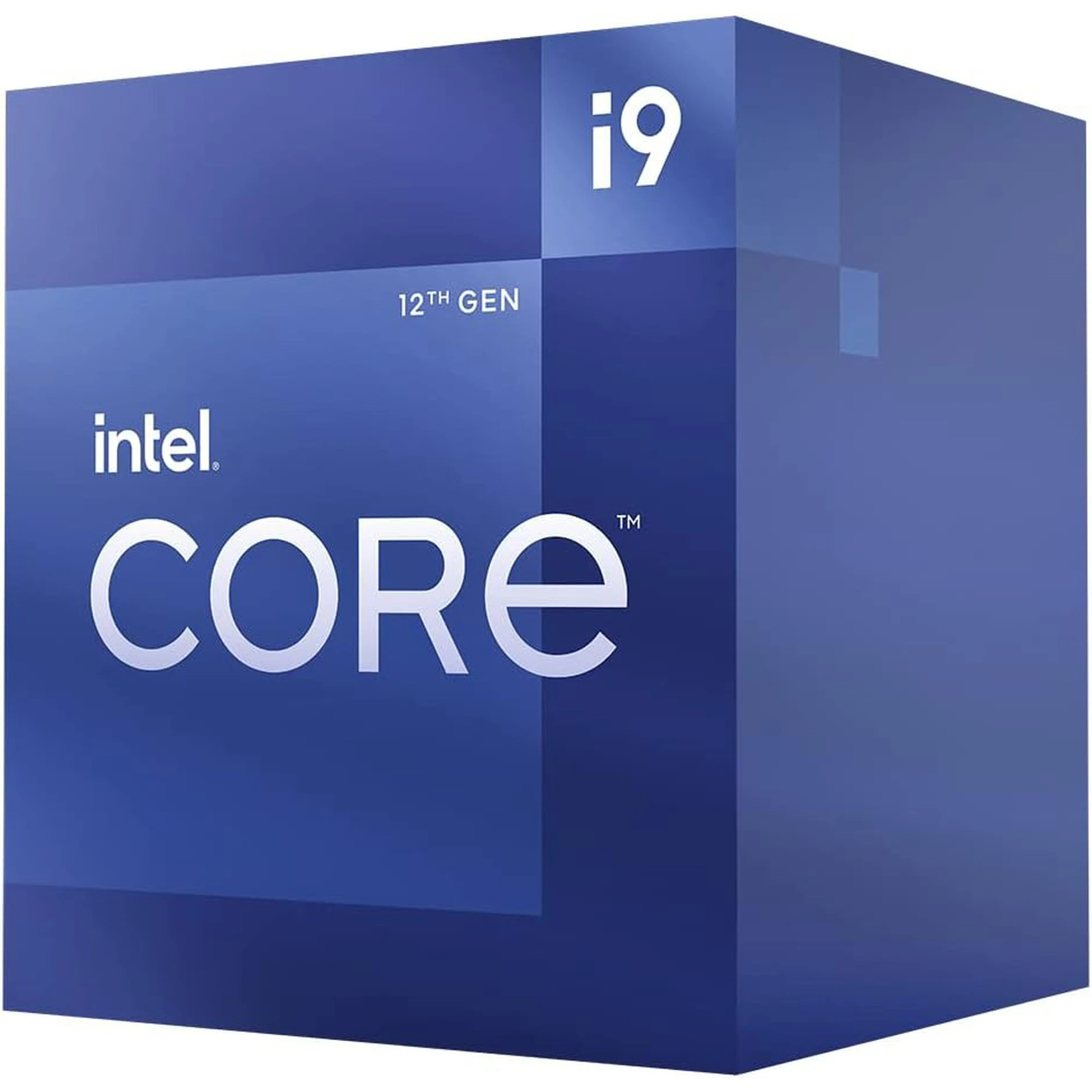
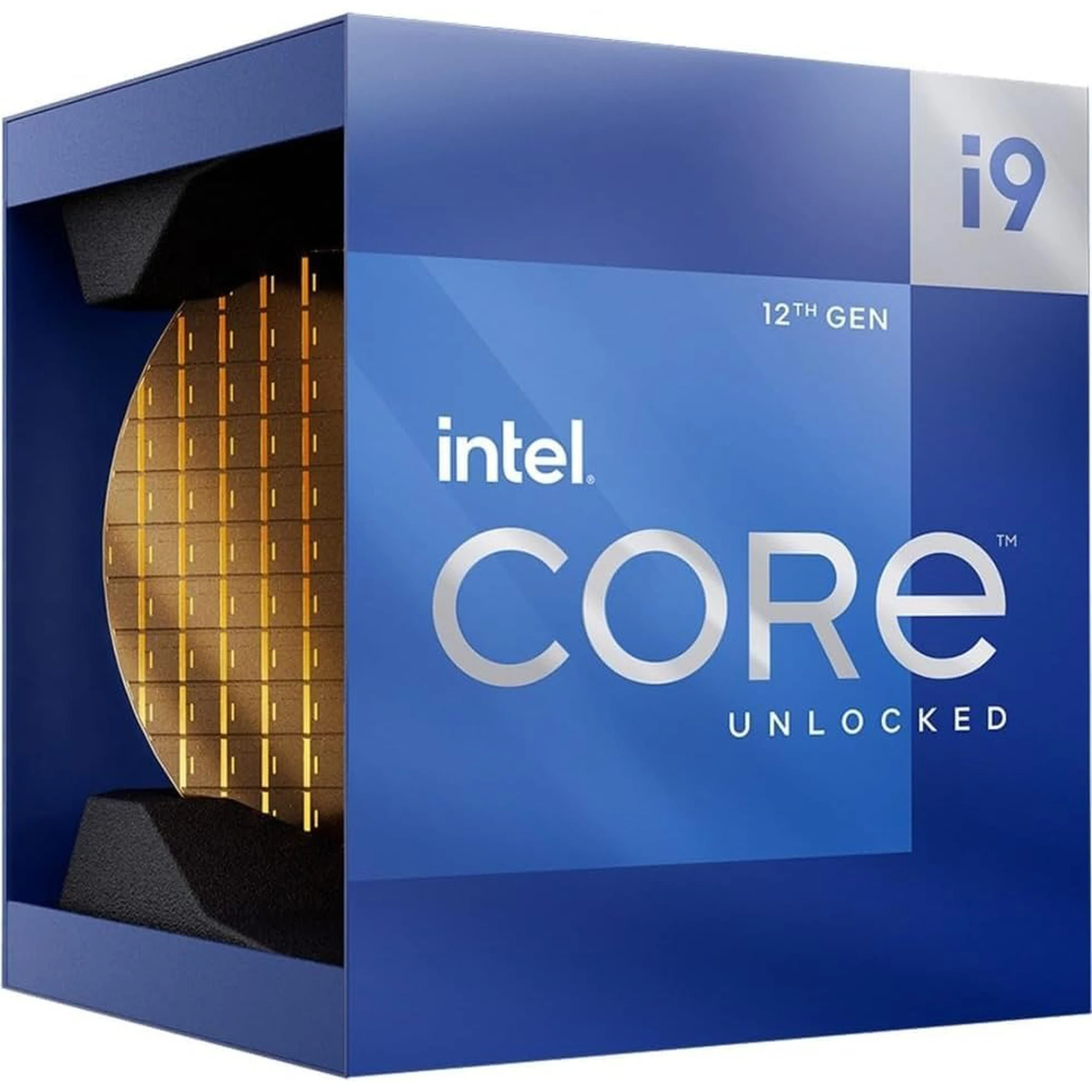
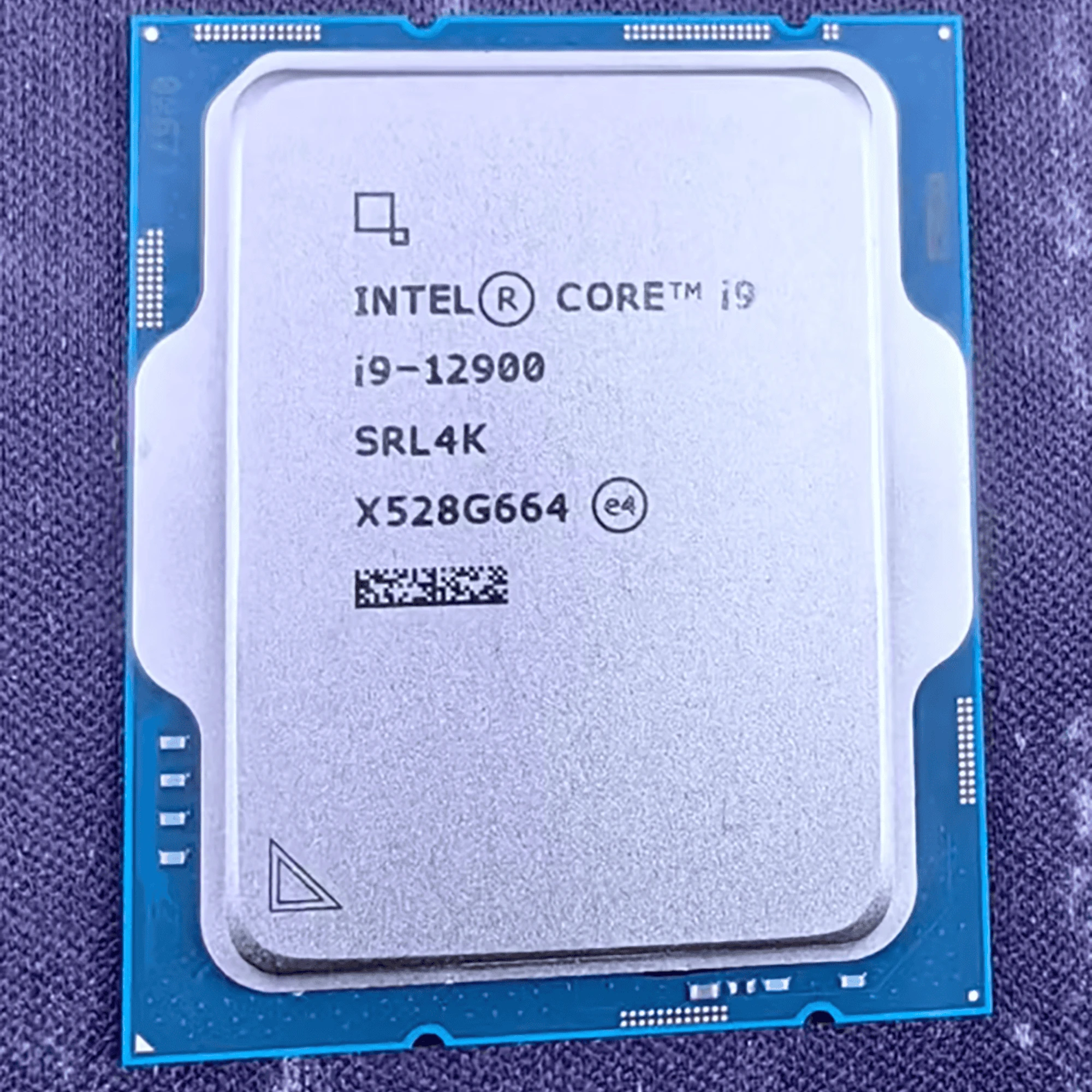

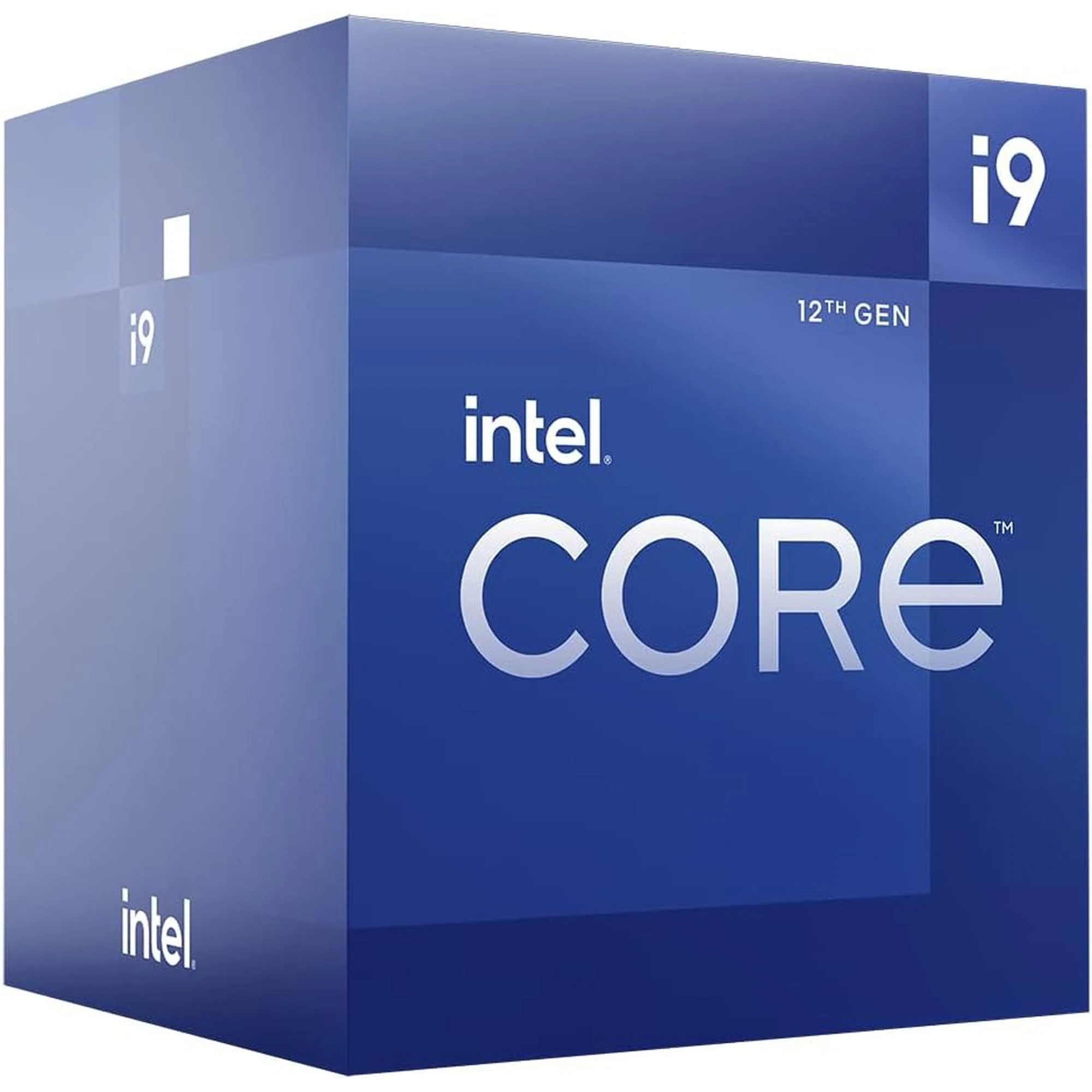

Intel Core i9-12900 Processor | 16 Cores (8P+8E), 5.1GHz Turbo, UHD 770 Graphics, PCIe 5.0 | High-Performance Desktop CPU
| Specification | Details |
|---|---|
| Processor Model | Intel Core i9-12900 |
| Product Line | 12th Generation Intel Core i9 (Alder Lake-S) |
| Lithography | Intel 7 (10nm Enhanced SuperFin) |
| Core Configuration | 16 Cores (8 Performance Cores + 8 Efficient Cores) |
| Thread Count | 24 Threads (Hyper-Threading on P-Cores) |
| Performance Core (P-Core) Base Frequency | 2.4GHz |
| Performance Core (P-Core) Max Turbo Frequency | 5.1GHz (with Intel Turbo Boost Max 3.0) |
| Efficient Core (E-Core) Base Frequency | 1.8GHz |
| Efficient Core (E-Core) Max Turbo Frequency | 3.8GHz |
| Cache | 30MB Intel Smart Cache, 14MB Total L2 Cache |
| Memory Support | Up to DDR5 4800 MT/s, Up to DDR4 3200 MT/s; Max 128GB; 2 Memory Channels; ECC Memory Supported |
| Memory Bandwidth | 76.8GB/s |
| Integrated Graphics | Intel UHD Graphics 770; 300MHz Base Frequency; 1.55GHz Max Dynamic Frequency; 32 Execution Units |
| Graphics Outputs | eDP 1.4b, DP 1.4a, HDMI 2.1 |
| Max Resolution | 7680×4320@60Hz (DP), 4096×2160@60Hz (HDMI), 5120×3200@120Hz (eDP) |
| PCIe Support | PCIe 5.0 and PCIe 4.0; Up to 20 Lanes; Configurations: 1×16+4, 2×8+4 |
| Socket | LGA1700 |
| Thermal Design Power (TDP) | 65W |
| Max Turbo Power | 202W |
| T-Junction Temperature | 100°C |
| Launch Date | Q1 2022 |
| Recommended Customer Price (RCP) | $538.00 – $568.00 |
| Key Technologies | Intel Thread Director, Intel Turbo Boost Max 3.0, Intel Hyper-Threading, Intel Deep Learning Boost, Intel Gaussian & Neural Accelerator 3.0 |
| Supported Operating Systems | Windows 10, Windows 11, Linux |
The Intel Core i9-12900 Processor stands as a cornerstone of Intel’s 12th-Generation Alder Lake lineup, representing a significant leap forward in hybrid computing architecture. Launched in Q1 2022, this high-performance desktop CPU redefined what users could expect from a mainstream processor, blending raw power with intelligent efficiency to cater to both professional creators and avid gamers alike. Unlike its predecessors, the i9-12900 leverages Intel’s innovative Alder Lake-S design, which combines Performance Cores (P-Cores) and Efficient Cores (E-Cores) to optimize for every type of workload—from demanding multi-threaded tasks to light everyday computing. With a focus on versatility, power, and future-proofing, the i9-12900 remains a top choice for users seeking a processor that can handle the most rigorous tasks without compromising on efficiency.
Key Architecture: Alder Lake’s Hybrid Design
At the heart of the Intel Core i9-12900 is its hybrid architecture, a game-changing approach that separates processing tasks into two distinct core types to maximize both performance and power efficiency. This design is built on Intel 7 lithography (10nm Enhanced SuperFin), which strikes an ideal balance between transistor density, power consumption, and heat management. The 16-core configuration consists of 8 Golden Cove Performance Cores and 8 Gracemont Efficient Cores, totaling 24 threads thanks to Intel Hyper-Threading Technology on the P-Cores.
Performance Cores (P-Cores) are engineered for maximum single-threaded and multi-threaded performance, making them ideal for demanding tasks like 4K video editing, 3D rendering, gaming at high settings, and professional software (e.g., Adobe Creative Cloud, AutoCAD, and video encoding tools). These cores operate at a base frequency of 2.4GHz and can boost up to 5.1GHz with Intel Turbo Boost Max Technology 3.0, ensuring that even the most CPU-intensive workloads run smoothly. On the other hand, Efficient Cores (E-Cores) are designed for lighter tasks such as web browsing, email, background applications, and multitasking, operating at a base frequency of 1.8GHz and a max turbo frequency of 3.8GHz. This separation of duties allows the processor to allocate resources intelligently, prioritizing power to the P-Cores when needed and relying on the E-Cores for less demanding tasks to conserve energy.
Complementing this hybrid design is Intel Thread Director, a hardware-based technology that works seamlessly with Windows 11 (and Windows 10 with updates) to assign tasks to the appropriate cores in real time. This ensures that critical tasks get the full power of the P-Cores, while background tasks run efficiently on the E-Cores, reducing latency and improving overall system responsiveness. The result is a processor that feels faster and more efficient than traditional single-architecture CPUs, even when handling multiple tasks simultaneously.
Performance Breakdown: Gaming, Content Creation, and Professional Workloads
The Intel Core i9-12900 delivers exceptional performance across a wide range of use cases, making it a versatile choice for both casual and professional users. Let’s break down its performance in key categories:
Gaming Performance
For gamers, the i9-12900 is a powerhouse, thanks to its high single-threaded performance and support for the latest gaming technologies. Single-threaded performance is critical for gaming, as most games rely on a single core to handle the main game loop, and the i9-12900’s P-Cores excel in this area. With a max turbo frequency of 5.1GHz, the processor can deliver smooth frame rates in even the most demanding AAA titles, including Cyberpunk 2077, Elden Ring, and Call of Duty: Modern Warfare II. When paired with a high-end GPU (e.g., NVIDIA RTX 4080 or AMD Radeon RX 7900 XTX), the i9-12900 ensures that the CPU never becomes a bottleneck, allowing the GPU to reach its full potential.
Additionally, the i9-12900 features Intel UHD Graphics 770, an integrated GPU that provides solid performance for casual gaming and media playback. While it’s not designed for high-end gaming, the UHD 770 can handle 1080p gaming at medium settings for less demanding titles like Minecraft, League of Legends, and Fortnite, making it a great option for users who want to game without a dedicated GPU or need a backup for GPU failures. The integrated GPU also supports 4K video playback and multiple displays, with a maximum resolution of 7680×4320@60Hz via DisplayPort and 4096×2160@60Hz via HDMI 2.1.
Content Creation & Professional Workloads
Content creators will appreciate the i9-12900’s multi-threaded performance, which shines in tasks like video editing, 3D rendering, graphic design, and music production. With 16 cores and 24 threads, the processor can handle simultaneous video encoding, rendering, and multitasking with ease. For example, when editing 4K or 8K video in Adobe Premiere Pro or DaVinci Resolve, the i9-12900 reduces export times significantly compared to previous-generation processors, allowing creators to work more efficiently.
The processor’s 30MB Intel Smart Cache and 14MB total L2 cache also play a crucial role in content creation performance. The large cache size reduces data latency, allowing the processor to access frequently used data quickly, which is essential for tasks that require constant data retrieval (e.g., 3D rendering and video encoding). Additionally, the i9-12900 supports PCIe 5.0, the latest generation of PCIe technology, which provides faster data transfer speeds for storage devices (e.g., NVMe SSDs) and GPUs. This means faster load times for large projects, smoother playback of high-resolution media, and improved overall workflow efficiency.
For professionals working with CPU-intensive software like AutoCAD, Blender, or Adobe After Effects, the i9-12900’s hybrid architecture ensures that both single-threaded and multi-threaded tasks are handled efficiently. The P-Cores tackle the most demanding aspects of these applications, while the E-Cores handle background tasks like file syncing, antivirus scans, and email notifications, ensuring that the main workflow remains uninterrupted.
Multitasking & Everyday Use
Even for everyday users, the i9-12900 delivers a smooth and responsive experience. Whether you’re browsing the web with dozens of tabs open, streaming video while working on a document, or running multiple applications simultaneously, the processor’s 16 cores and 24 threads ensure that there’s no lag or slowdown. The E-Cores are particularly useful for multitasking, as they can handle background tasks without consuming excessive power, while the P-Cores are ready to kick in when you need extra performance (e.g., opening a large file or running a demanding application).
Technical Specifications & Hardware Compatibility
The Intel Core i9-12900 comes with a range of technical specifications that make it a future-proof choice for desktop builds. The processor supports both DDR4 and DDR5 memory, with a maximum memory size of 128GB and a maximum memory bandwidth of 76.8GB/s. This flexibility allows users to choose between more affordable DDR4 memory or faster DDR5 memory, depending on their budget and performance needs. The processor also supports ECC memory, making it a viable option for workstations that require error correction for critical tasks.
In terms of connectivity, the i9-12900 features 20 PCIe 5.0/4.0 lanes, which provide ample bandwidth for high-speed storage, GPUs, and other peripherals. The processor uses the LGA1700 socket, which is compatible with Intel’s 600-series and 700-series motherboards (e.g., Z690, B660, H610, Z790). This means users can build a system with the latest motherboards or upgrade an existing system (with a BIOS update) to take advantage of the i9-12900’s performance.
The processor has a base power consumption of 65W and a maximum turbo power of 202W, which is typical for high-performance desktop CPUs. While it does require a quality CPU cooler (e.g., a 240mm AIO cooler or a high-end air cooler) to maintain optimal temperatures under load, its power efficiency is impressive given its performance level. The processor’s T-junction temperature is 100°C, ensuring that it can handle prolonged high-load tasks without overheating.
Why Choose the Intel Core i9-12900?
In a market filled with high-performance processors, the Intel Core i9-12900 stands out for its versatility, performance, and value. Here are some key reasons to choose this processor:
1. Hybrid Architecture: The combination of P-Cores and E-Cores delivers the best of both worlds—maximum performance for demanding tasks and efficient power usage for everyday use.
2. Exceptional Gaming & Content Creation Performance: Whether you’re a gamer, content creator, or professional, the i9-12900 can handle even the most rigorous tasks with ease.
3. Future-Proofing: Support for PCIe 5.0, DDR5 memory, and LGA1700 motherboards ensures that the processor will remain compatible with the latest hardware for years to come.
4. Integrated Graphics: The Intel UHD Graphics 770 provides a reliable backup for gaming and media playback, eliminating the need for a dedicated GPU for casual use.
5. Value: While it’s a high-end processor, the i9-12900 offers excellent performance per dollar compared to other flagship CPUs, making it a great choice for users who want top-tier performance without breaking the bank.
In conclusion, the Intel Core i9-12900 Processor is a versatile and powerful desktop CPU that excels in every use case—from gaming and content creation to professional workloads and everyday multitasking. Its hybrid architecture, impressive performance, and future-proof features make it a top choice for anyone looking to build a high-performance desktop system that will remain relevant for years to come. Whether you’re a professional creator, a serious gamer, or a power user, the i9-12900 delivers the performance and efficiency you need to get the job done.


