
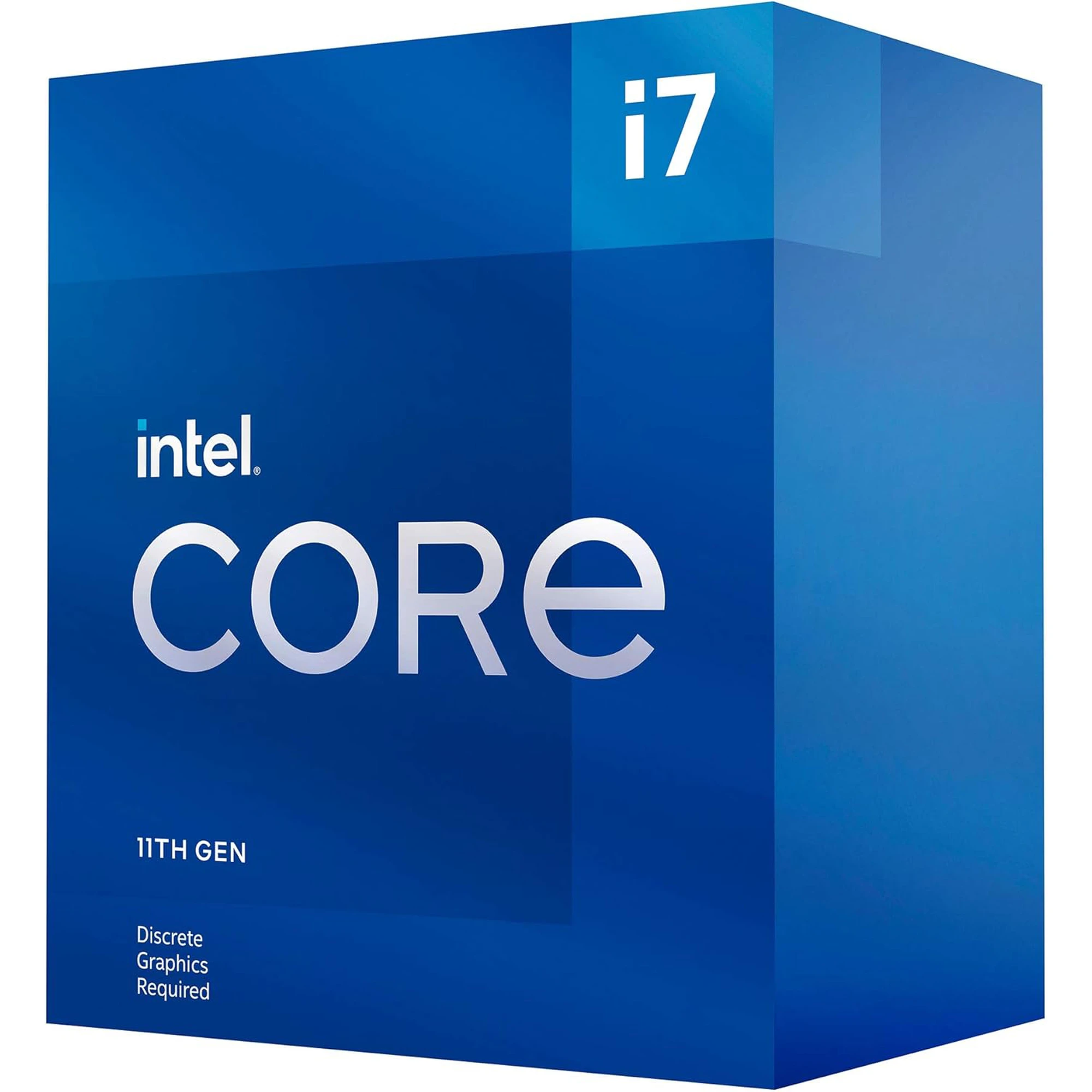
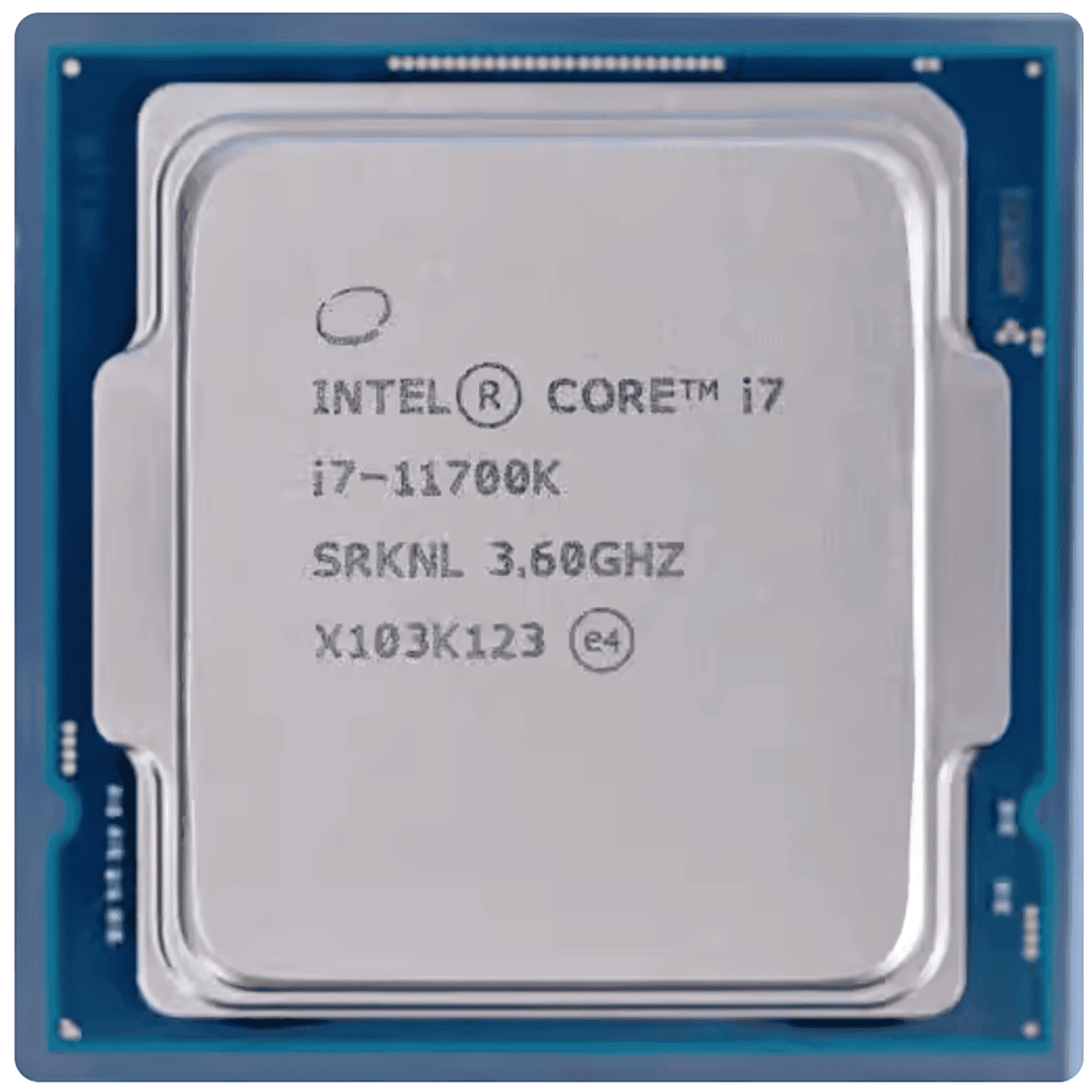
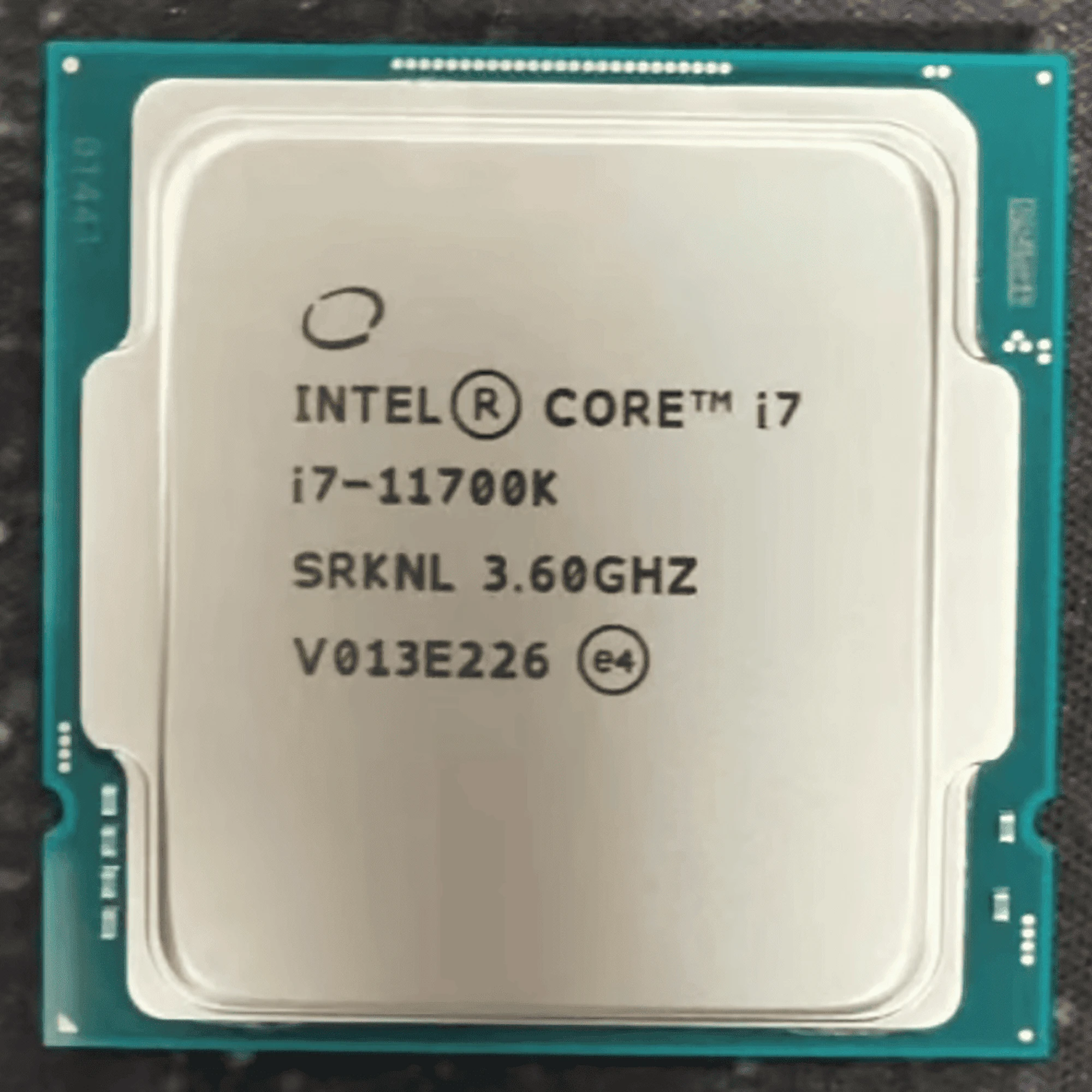
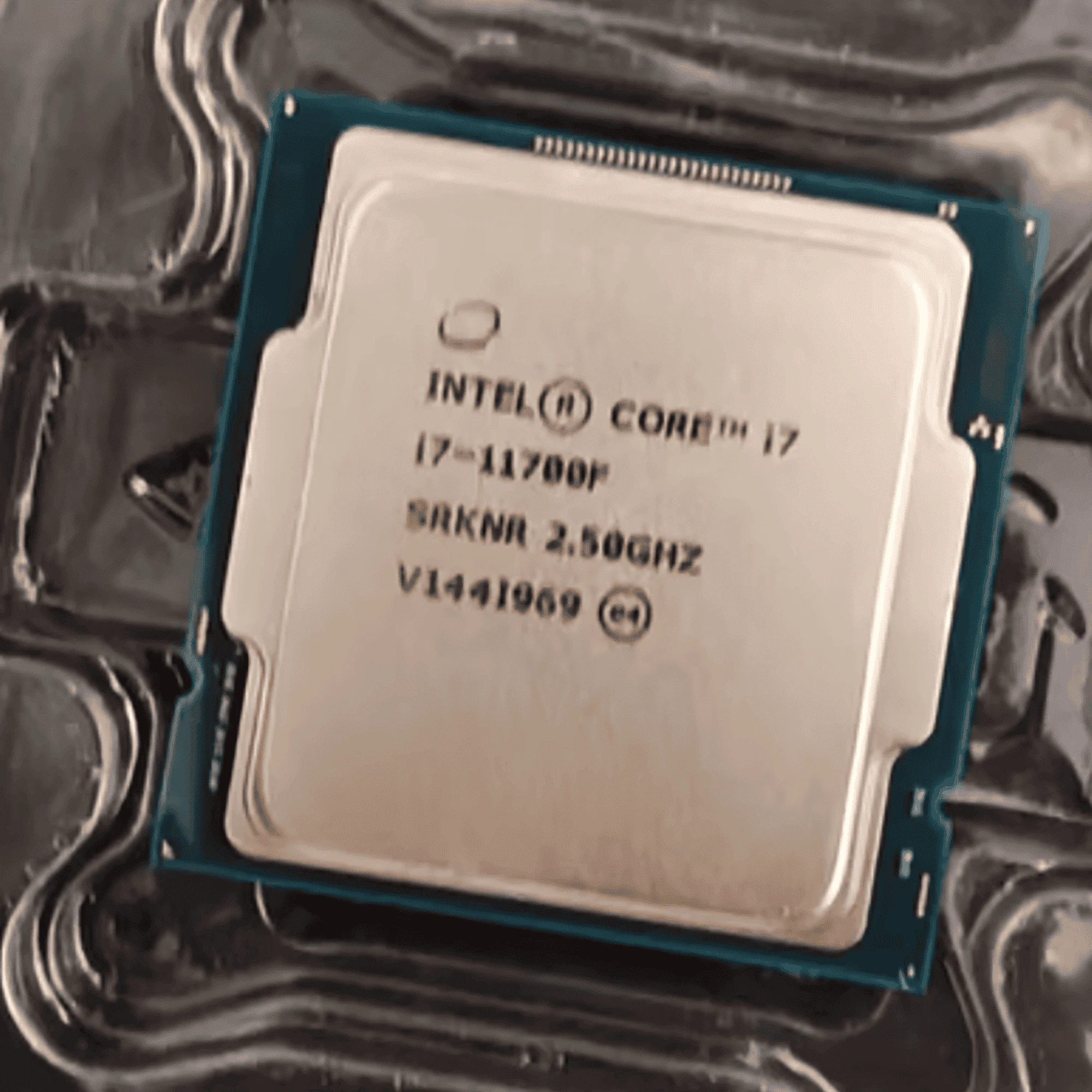
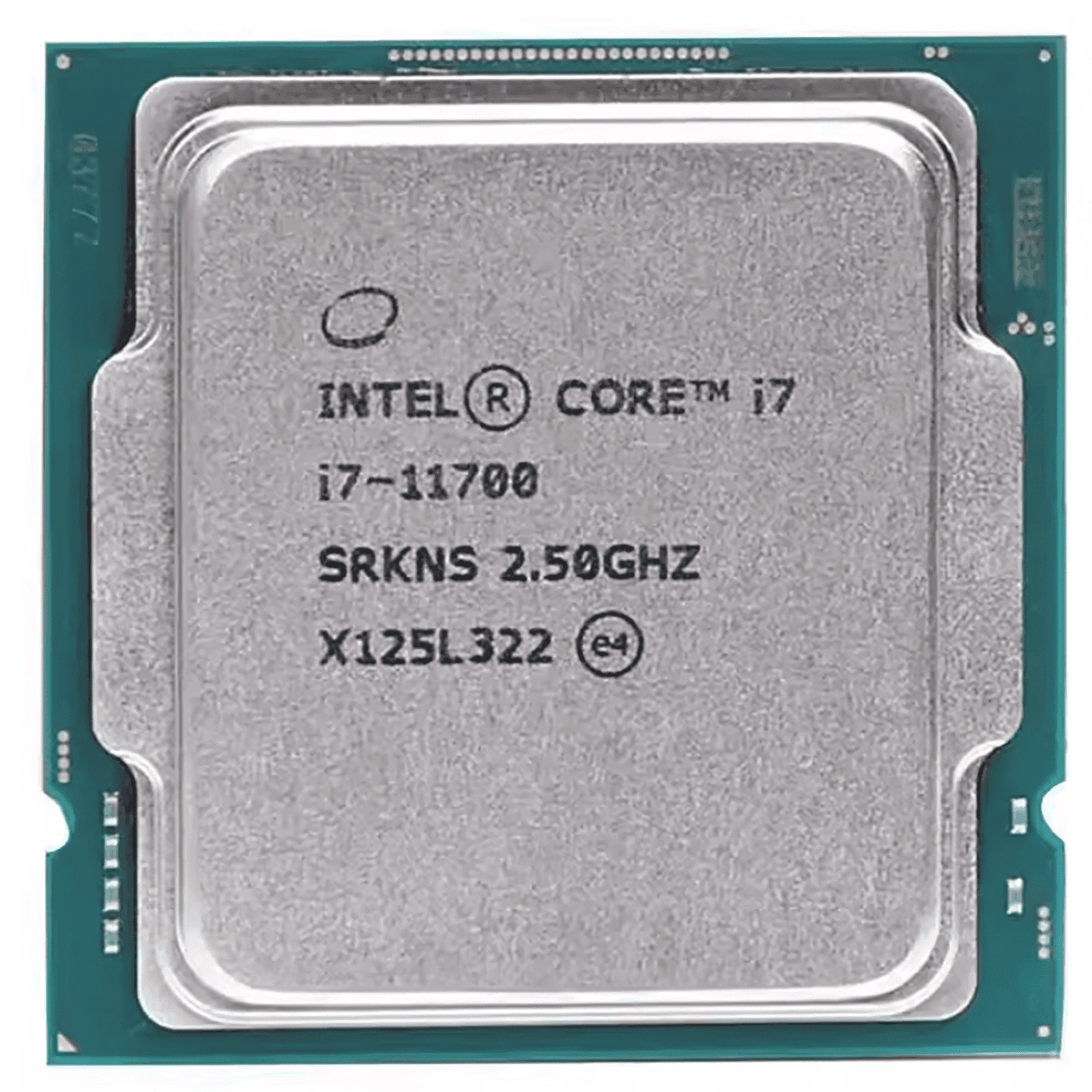
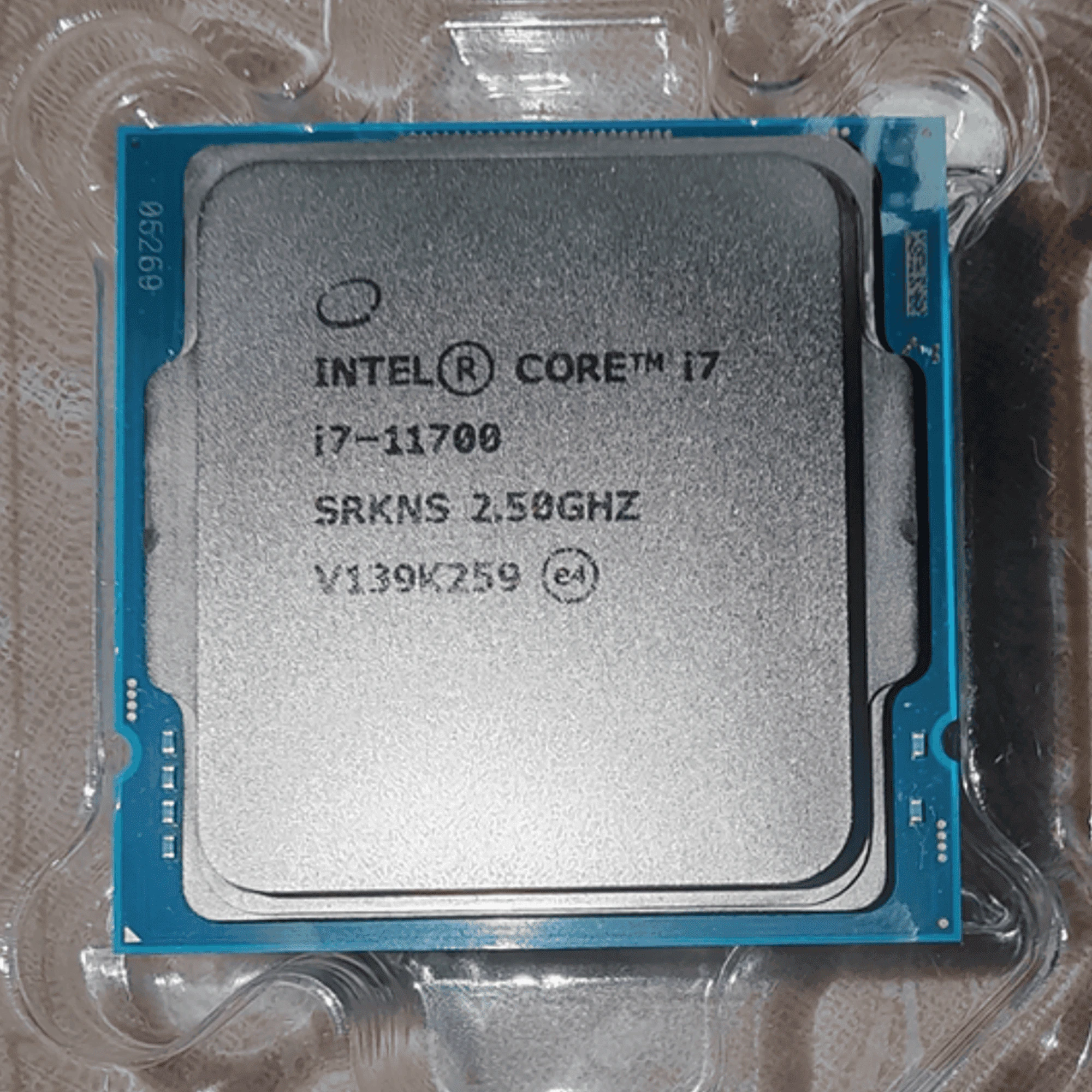
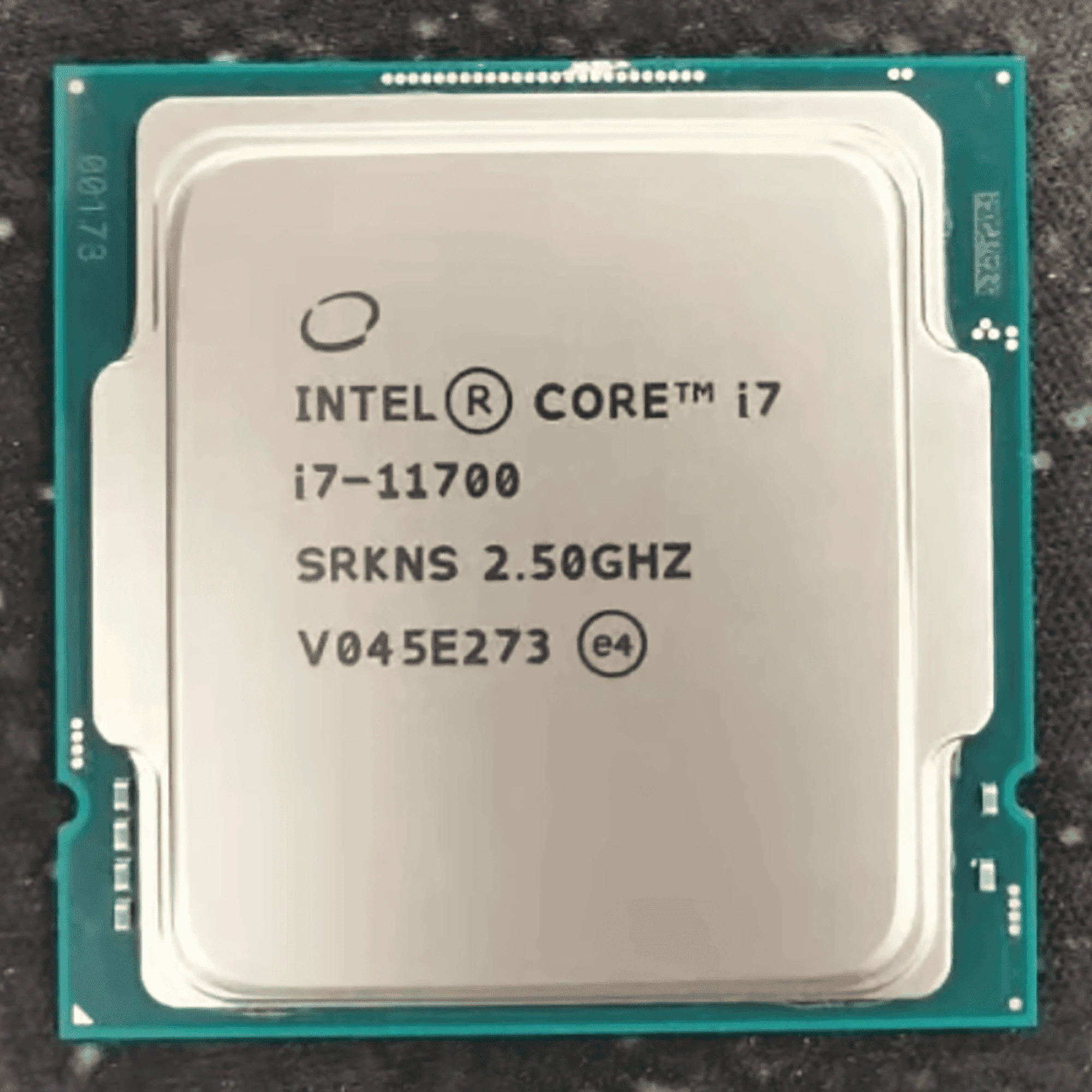

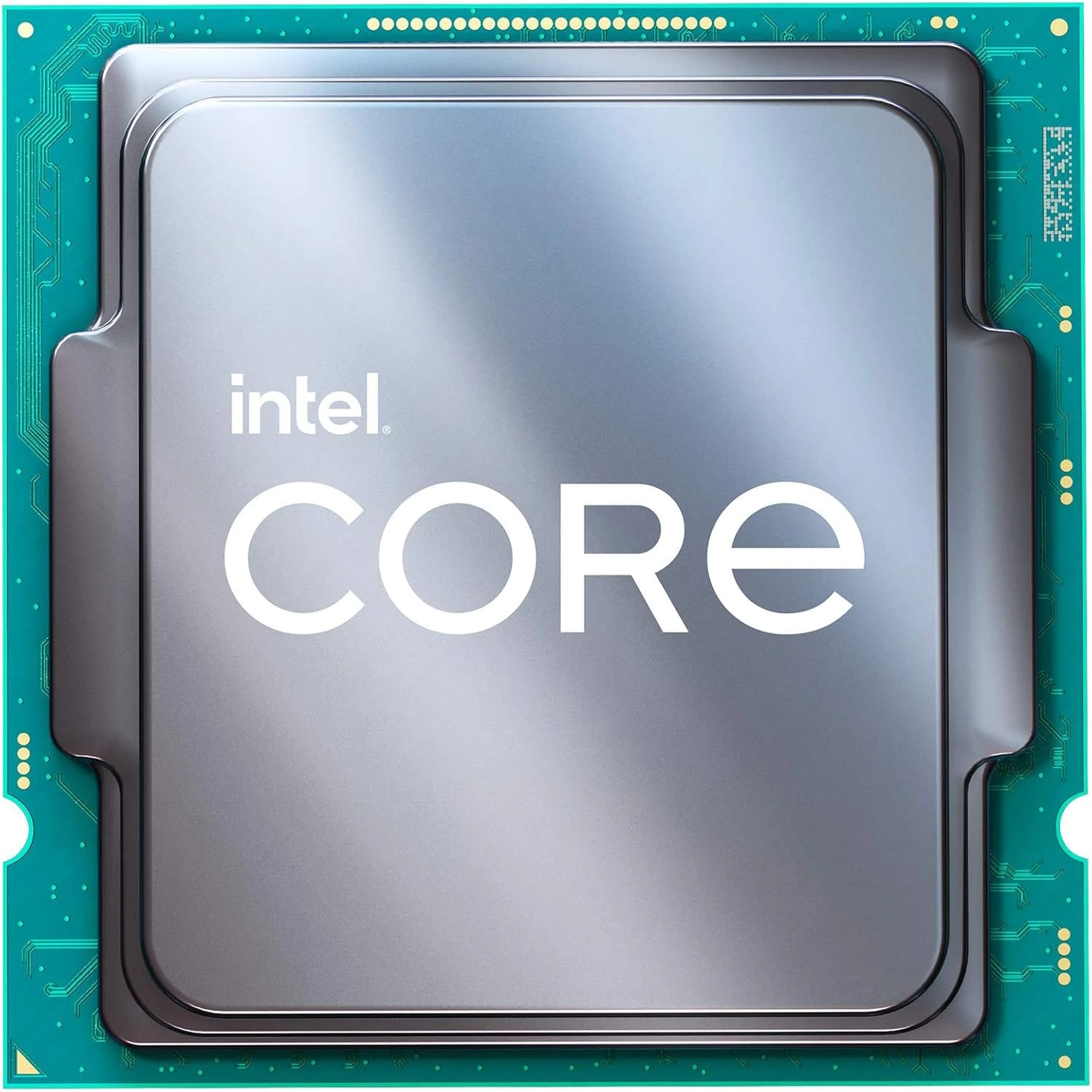
Intel Core i7-11700F Processor | 8 Cores 16 Threads, 4.9GHz Turbo, 16MB Cache, LGA1200, PCIe 4.0 (No iGPU)
| Specification | Details |
|---|---|
| Processor Model | Intel Core i7-11700F |
| Generation | 11th Generation (Rocket Lake-S) |
| Architecture | Rocket Lake |
| Manufacturing Process | 14nm |
| Total Cores | 8 |
| Total Threads | 16 (Intel Hyper-Threading Technology) |
| Base Frequency | 2.5GHz |
| Max Turbo Frequency | 4.9GHz (Intel Turbo Boost Max Technology 3.0) |
| Turbo Boost 2.0 Frequency | 4.8GHz |
| Cache | 16MB Intel Smart Cache |
| Bus Speed | 8 GT/s |
| TDP (Thermal Design Power) | 65W |
| Tjunction Temperature | 100°C |
| Socket | FCLGA1200 |
| Max CPU Configuration | 1 |
| Thermal Solution Specification | PCG 2019C |
| Package Size | 37.5 mm x 37.5 mm |
| Memory Support | Dual-channel DDR4-3200, max 128GB, 50GB/s bandwidth |
| ECC Memory Supported | No |
| PCIe Revision | 4.0 |
| Max PCIe Lanes | 20 |
| PCIe Configurations | Up to 1×16 + 1×4, 2×8 + 1×4, 1×8 + 3×4 |
| Integrated Graphics | No (F-series) |
| Advanced Technologies | Intel DL Boost, Intel Turbo Boost 2.0/3.0, Hyper-Threading, AES-NI, VT-x, VT-d, Optane Memory Supported |
| Instruction Set Extensions | Intel SSE 4.1, SSE 4.2, AVX 2, AVX-512 |
| Launch Date | Q1 2021 |
| Marketing Status | Launched |
| Embedded Options | No |
The Intel Core i7-11700F Processor stands as a robust mid-to-high-tier desktop CPU, part of Intel’s 11th Generation Rocket Lake-S lineup, launched in Q1 2021 to cater to gamers, content creators, and power users seeking a balance of performance, reliability, and value. Built on Intel’s 14nm process technology and Rocket Lake architecture, this processor prioritizes single-core and multi-core performance, making it a versatile choice for both gaming and productivity workloads—all while omitting integrated graphics (the “F” suffix denotes this) to offer a cost-effective alternative to its iGPU-equipped counterparts.
Key Architecture & Core Performance
At the heart of the Intel Core i7-11700F lies an 8-core, 16-thread configuration, powered by Intel Hyper-Threading Technology, which effectively doubles the number of threads to handle simultaneous multitasking with ease. Each core operates at a base frequency of 2.5GHz, a conservative baseline that balances power efficiency and performance, while Intel Turbo Boost Technology 2.0 and Turbo Boost Max Technology 3.0 push the max turbo frequency to an impressive 4.9GHz—critical for gaming, where single-core performance directly impacts frame rates, and for CPU-intensive tasks like video editing, 3D rendering, and software development.
The 14nm manufacturing process, while not the most cutting-edge in Intel’s lineup, is refined and reliable, ensuring consistent performance and thermal efficiency when paired with adequate cooling. Unlike newer Intel generations that adopted smaller process nodes, the 14nm Rocket Lake architecture focuses on optimizing IPC (Instructions Per Cycle) and adding support for modern technologies like PCIe 4.0, making the i7-11700F relevant even for users building systems with the latest peripherals and components.
Cache & Memory Performance
A 16MB Intel Smart Cache complements the core configuration, providing fast access to frequently used data and reducing latency for both gaming and productivity tasks. This shared L3 cache ensures that all 8 cores can quickly retrieve critical data, minimizing bottlenecks and improving overall system responsiveness—whether you’re switching between multiple applications, streaming gameplay while editing, or running complex software.
In terms of memory support, the i7-11700F features dual-channel DDR4 memory compatibility, with a maximum supported speed of 3200MHz (when paired with a compatible motherboard) and a maximum memory size of 128GB. This translates to a memory bandwidth of up to 50GB/s, ensuring smooth performance for memory-intensive tasks like video editing, 3D modeling, and multitasking with large datasets. It’s important to note that ECC memory is not supported, making this processor better suited for consumer and gaming systems rather than enterprise or mission-critical workstations.
Expansion & Connectivity: PCIe 4.0 Support
One of the standout features of the 11th Generation Rocket Lake processors is native support for PCIe 4.0, and the i7-11700F is no exception. With up to 20 PCIe 4.0 lanes, this processor enables faster connectivity to discrete graphics cards, NVMe SSDs, and other high-speed peripherals—delivering double the bandwidth of PCIe 3.0. This means faster game loading times, smoother video rendering, and improved performance for PCIe 4.0-enabled devices, making the i7-11700F future-proof for upcoming hardware upgrades.
The PCIe 4.0 configuration options are flexible, supporting up to 1×16 + 1×4, 2×8 + 1×4, or 1×8 + 3×4 lane configurations, allowing users to customize their build based on their needs (e.g., a single high-performance GPU in the 16-lane slot, paired with NVMe SSDs in the 4-lane slots). Additionally, the processor supports Intel Optane Memory, which can accelerate boot times and application loading by caching frequently used data, further enhancing the user experience.
Power Efficiency & Thermal Management
The Intel Core i7-11700F has a TDP (Thermal Design Power) of 65W, a standard power envelope for mid-range desktop processors that balances performance and energy consumption. Under heavy loads, the processor may draw more power, but with proper cooling (such as a quality air cooler or liquid cooler), it maintains stable temperatures and consistent performance. The maximum Tjunction temperature (the safe upper limit for core temperature) is 100°C, ensuring that even during extended gaming or productivity sessions, the processor remains within safe operating limits.
It’s worth noting that the i7-11700F does not support Intel Thermal Velocity Boost, a feature found in higher-end Intel processors that further boosts clock speeds when thermal headroom is available. However, the 4.9GHz max turbo frequency is still more than sufficient for most gaming and productivity needs, and the locked multiplier (meaning the processor cannot be overclocked) simplifies system setup and ensures stability for users who don’t need to tweak clock speeds.
Compatibility & System Requirements
The Intel Core i7-11700F uses the LGA1200 socket, which is compatible with Intel 400-series (Z490, B460, H410) and 500-series (Z590, B560, H510) motherboards. However, some 400-series motherboards may require a BIOS update to support 11th Generation processors, so it’s important to check with the motherboard manufacturer for compatibility before purchasing. The processor supports a maximum of 1 CPU configuration (single-processor systems) and uses the PCG 2019C thermal solution specification, ensuring compatibility with most standard LGA1200 coolers.
As mentioned earlier, the i7-11700F lacks integrated graphics (iGPU), so a dedicated graphics card is required to output video to a monitor—this is a key consideration for users building a system, as it adds to the overall cost but also allows for greater flexibility in choosing a GPU that matches their gaming or content creation needs. For users who already own a dedicated GPU or plan to purchase one, this omission is a non-issue and even offers a cost savings compared to iGPU-equipped i7 models.
Real-World Performance: Gaming & Productivity
In gaming, the Intel Core i7-11700F excels, particularly at 1080p and 1440p resolutions, where its strong single-core performance (4.9GHz max turbo) ensures high frame rates and smooth gameplay. When paired with a mid-to-high-end GPU (such as an RTX 3070 or RX 6700 XT), the i7-11700F rarely bottlenecks the GPU, delivering 140+ FPS in games like Shadow of the Tomb Raider (1080p high settings), 120-150 FPS in Call of Duty: Warzone, and 80-100 FPS in Cyberpunk 2077 (1080p high settings, no ray tracing). For competitive gamers, this translates to a responsive, lag-free experience, while casual gamers will appreciate the smooth performance across all modern titles.
In productivity tasks, the 8-core, 16-thread configuration shines, handling multitasking with ease—whether you’re running multiple browser tabs, editing video in Adobe Premiere Pro, rendering 3D models in Blender, or coding in complex IDEs. Benchmark results highlight its capabilities: in Cinebench R23, the i7-11700F scores around 1500-1600 points in single-core performance and 14,000-15,000 points in multi-core performance, placing it ahead of AMD’s Ryzen 7 3700X in many tests and close to newer mid-range processors like the Intel Core i5-12600K. In PassMark CPU Mark, it scores around 25,000 points, confirming its solid performance for modern productivity workloads.
Security & Advanced Technologies
The Intel Core i7-11700F comes equipped with a range of advanced security and performance-enhancing technologies to improve user experience and system security. Intel Deep Learning Boost (Intel DL Boost) accelerates AI and machine learning workloads, making it ideal for content creators working with AI-powered tools (e.g., Adobe Sensei, DaVinci Resolve’s AI features). Intel AES New Instructions (AES-NI) provides hardware-accelerated encryption and decryption, enhancing data security for sensitive files and applications.
Other notable technologies include Intel Hyper-Threading Technology (for improved multitasking), Intel 64 (for 64-bit computing), Enhanced Intel SpeedStep Technology (for dynamic power management), and Thermal Monitoring Technologies (for real-time temperature tracking). The processor also supports Intel Virtualization Technology (VT-x) and VT-d, improving virtual machine performance and allowing guest VMs to directly access host hardware (PCI passthrough), making it a solid choice for users who run virtual machines for work or testing.
Value Proposition & Target Audience
The Intel Core i7-11700F offers excellent value for users seeking a high-performance processor without the added cost of integrated graphics. Launched at an MSRP of $298, it remains a cost-effective option for gamers, content creators, and power users who already own a dedicated GPU or plan to purchase one. While newer Intel and AMD processors offer better efficiency and slightly higher performance, the i7-11700F’s combination of 8 cores, 16 threads, 4.9GHz turbo, and PCIe 4.0 support makes it a reliable choice for budget-to-mid-range builds.
Its target audience includes: gamers building a mid-range gaming PC (paired with a dedicated GPU), content creators who need strong multi-core performance for video editing/rendering, small business users who require a reliable processor for multitasking and productivity, and users upgrading from older Intel processors (e.g., 8th or 9th Gen) who want to leverage LGA1200 motherboard compatibility without a full platform upgrade. For enthusiasts looking to overclock, the locked multiplier may be a drawback, but for most users, the out-of-the-box performance is more than sufficient.
Conclusion
The Intel Core i7-11700F Processor is a versatile, high-performance desktop CPU that excels in both gaming and productivity. Its 8-core, 16-thread configuration, 4.9GHz max turbo frequency, 16MB Smart Cache, and PCIe 4.0 support make it a strong contender in the mid-range market, while the omission of integrated graphics offers cost savings for users who already own a dedicated GPU. With compatibility with LGA1200 motherboards, reliable 14nm performance, and a range of advanced technologies, the i7-11700F remains a practical choice for anyone building a powerful, value-driven desktop system in 2024 and beyond. Whether you’re a gamer, content creator, or power user, this processor delivers the performance and reliability needed to handle modern workloads with ease.


