
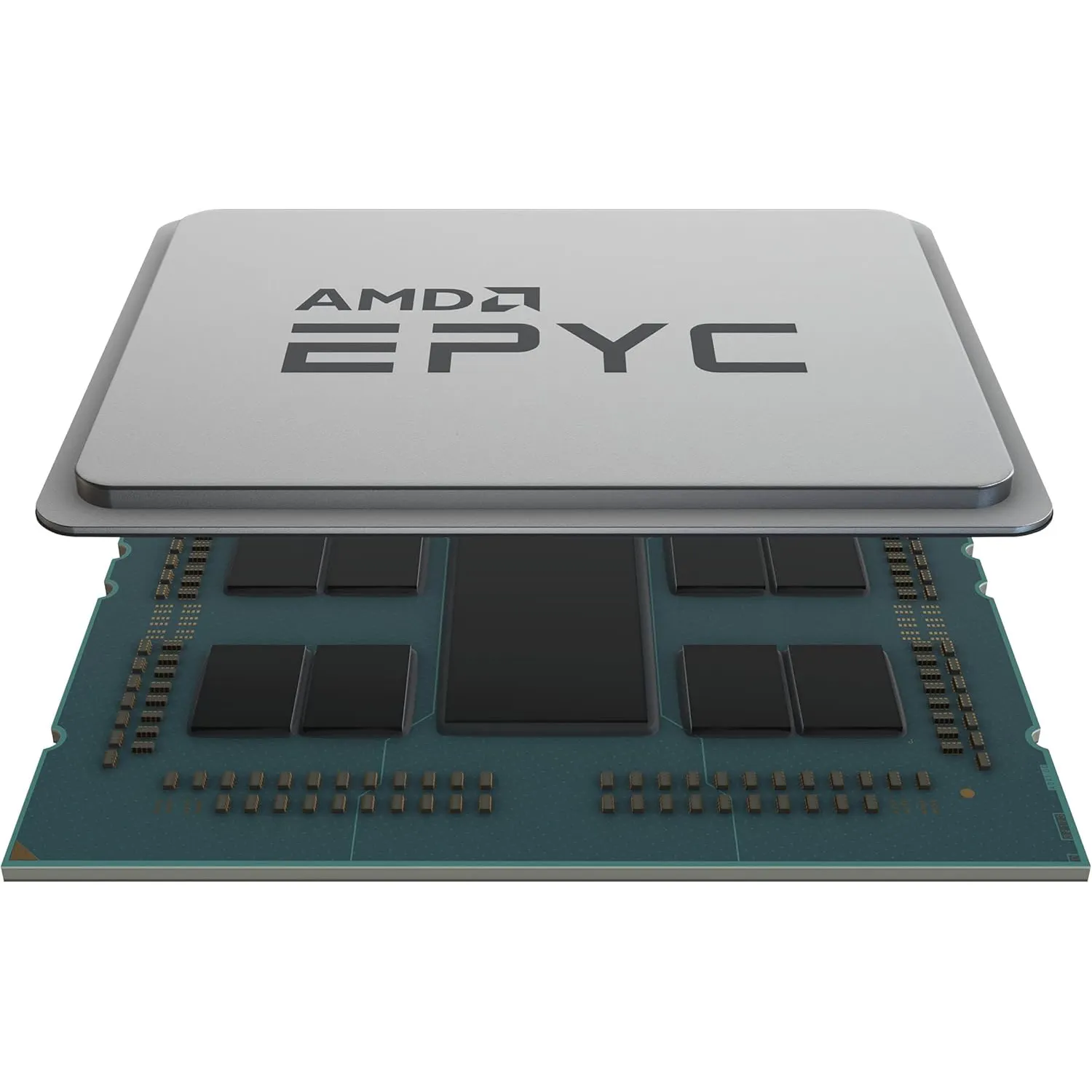
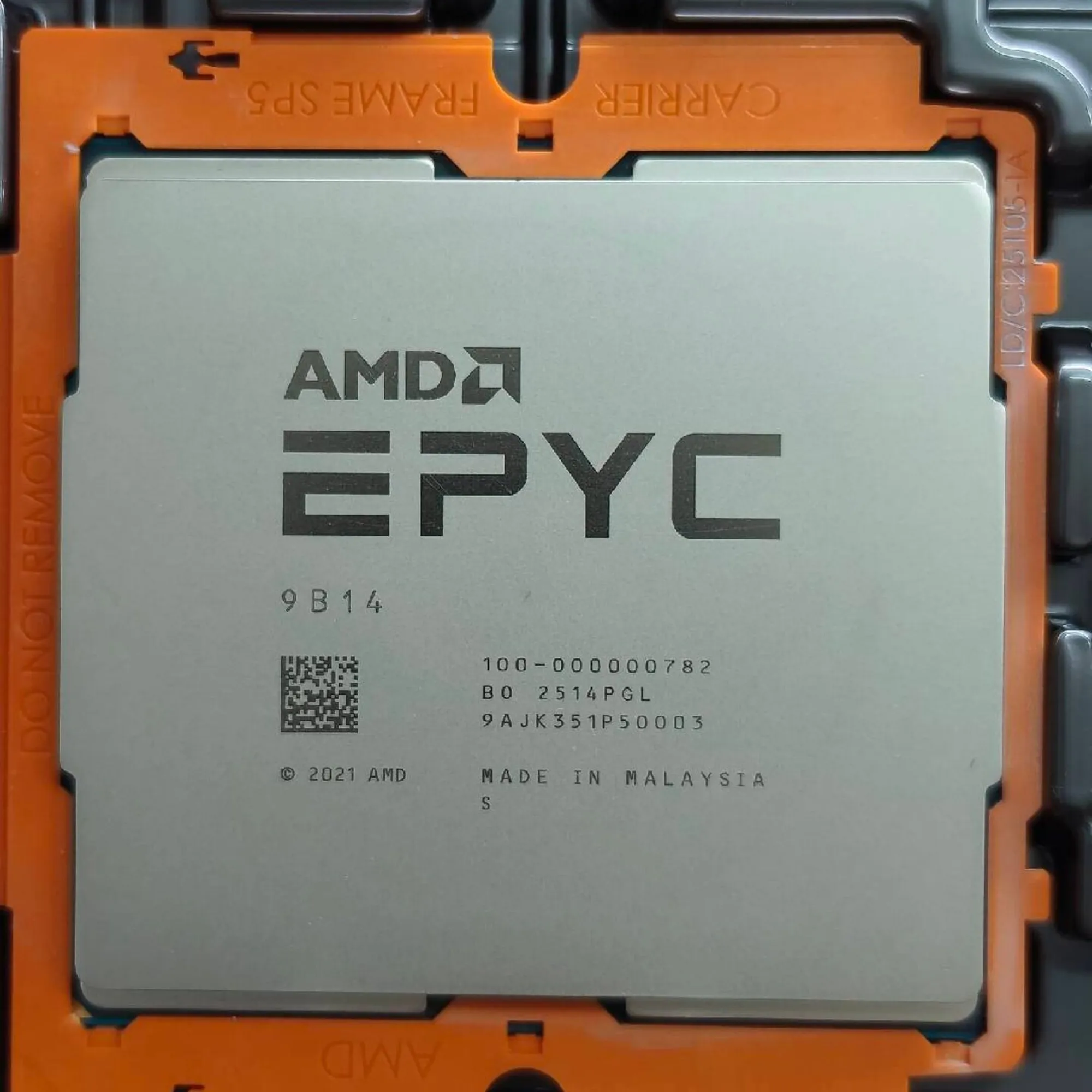
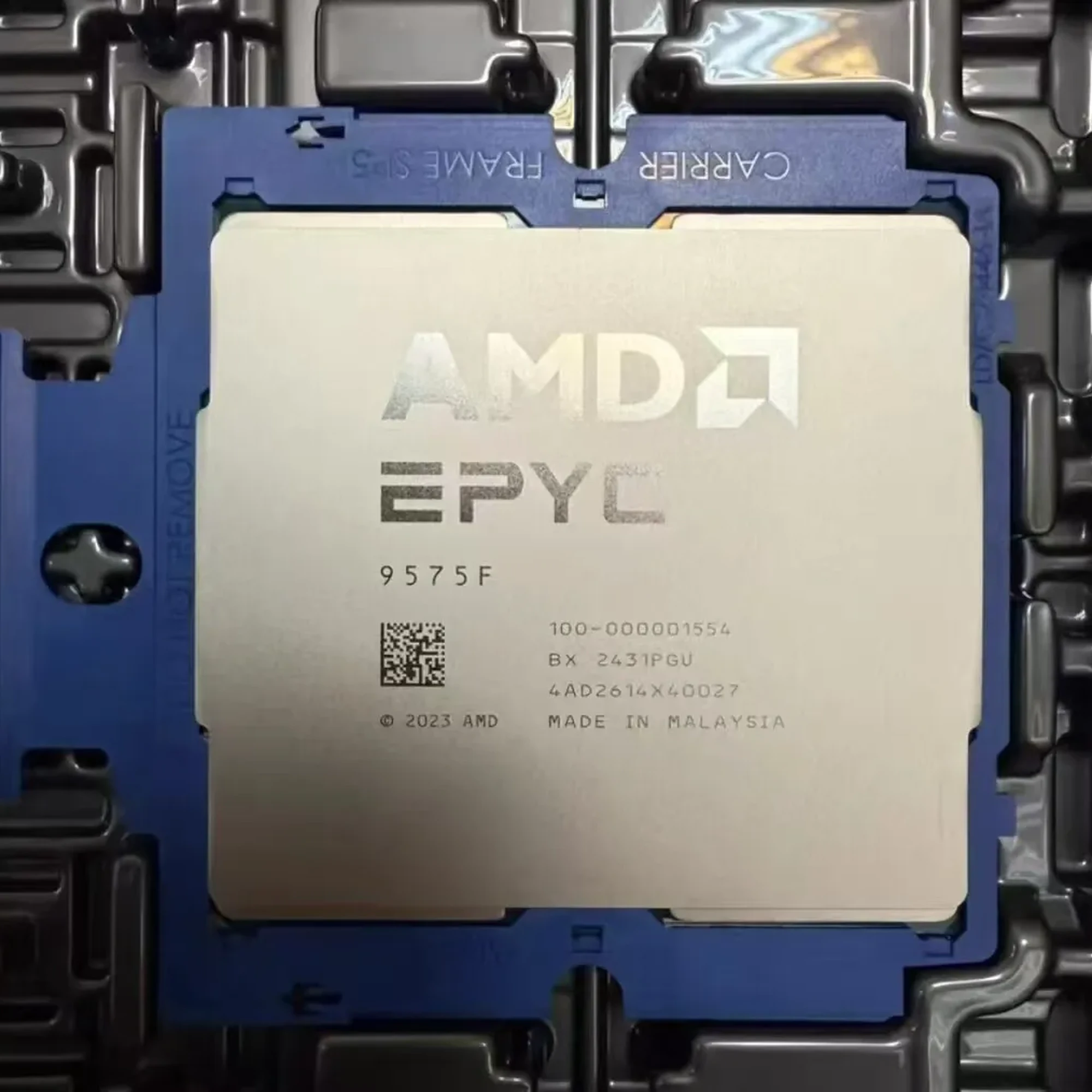
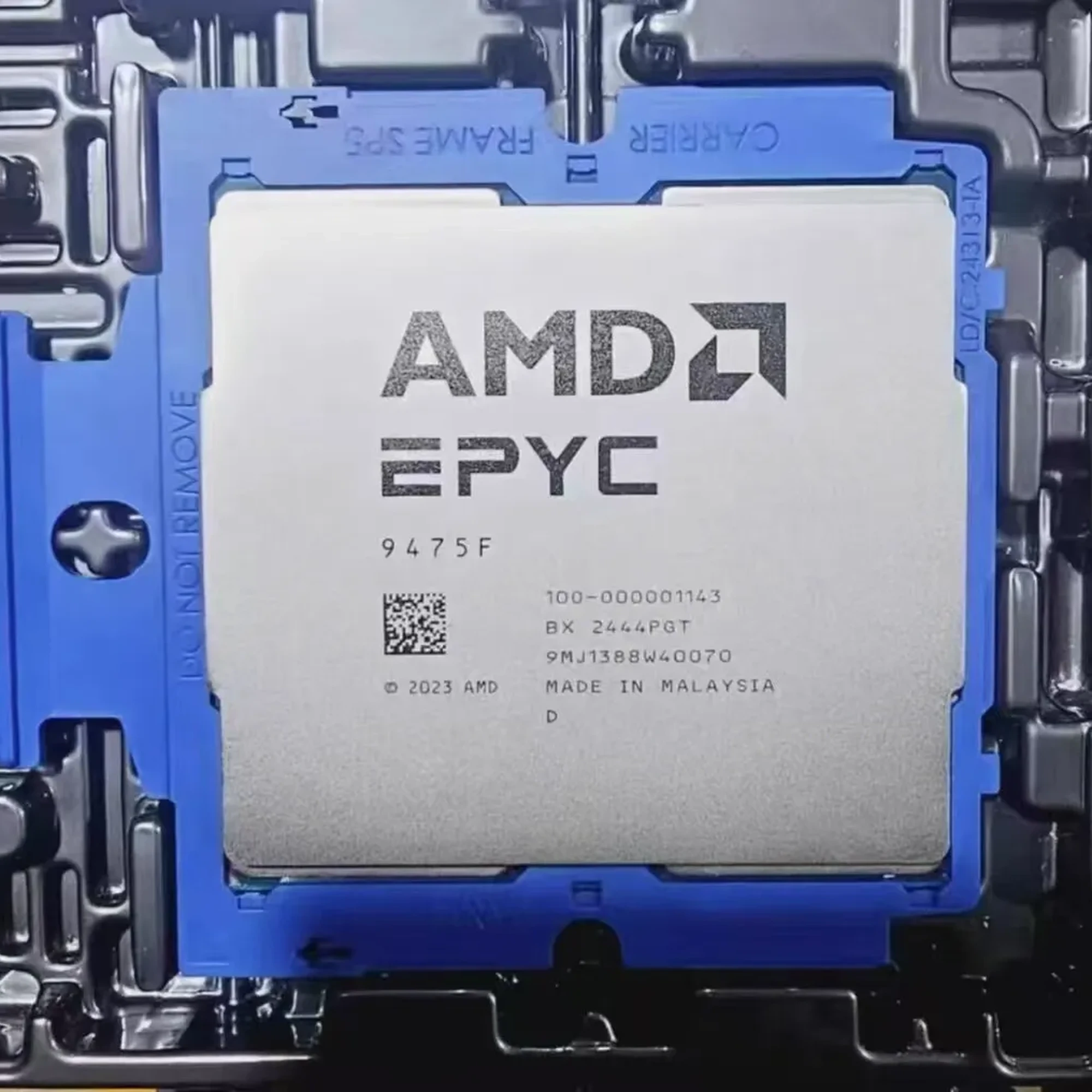
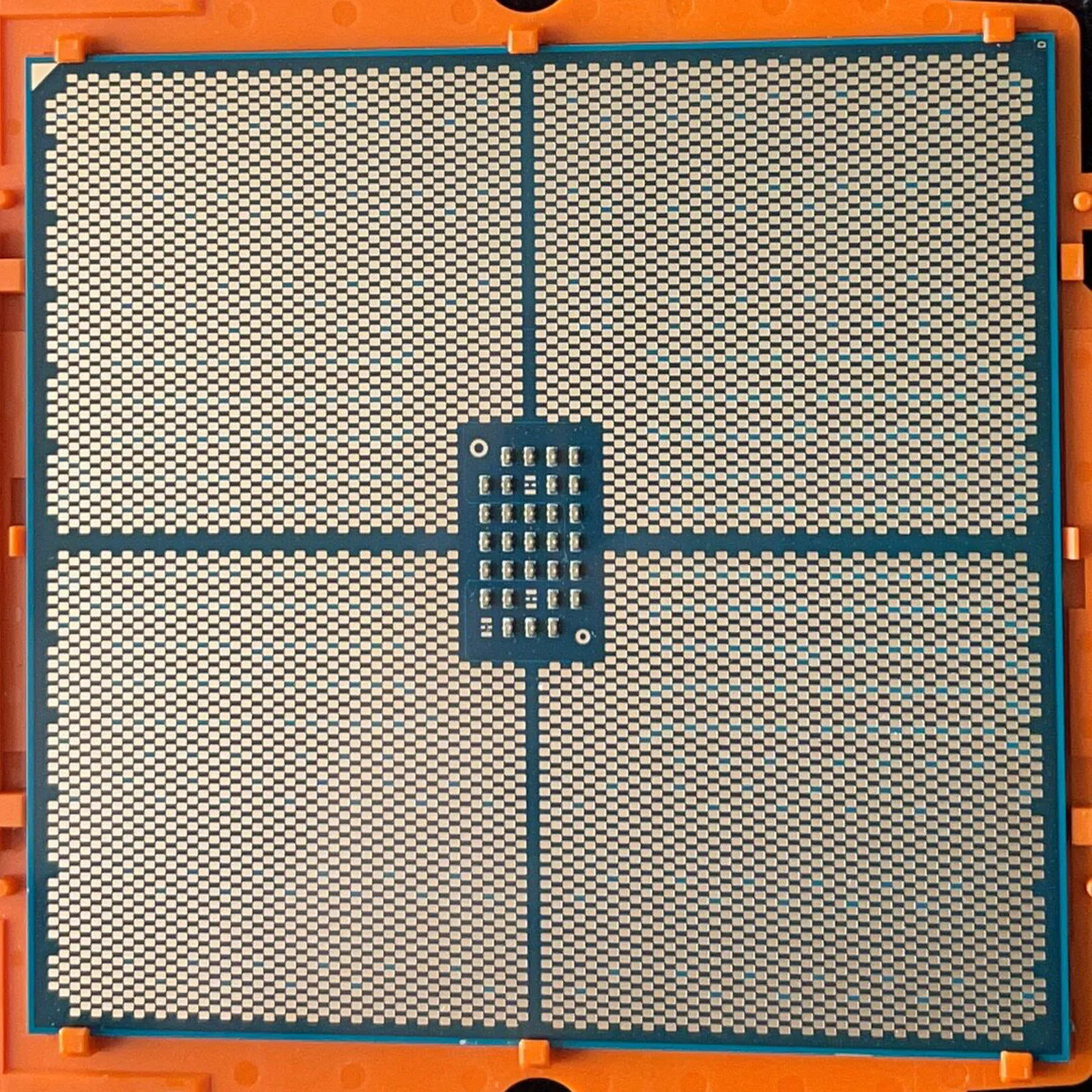
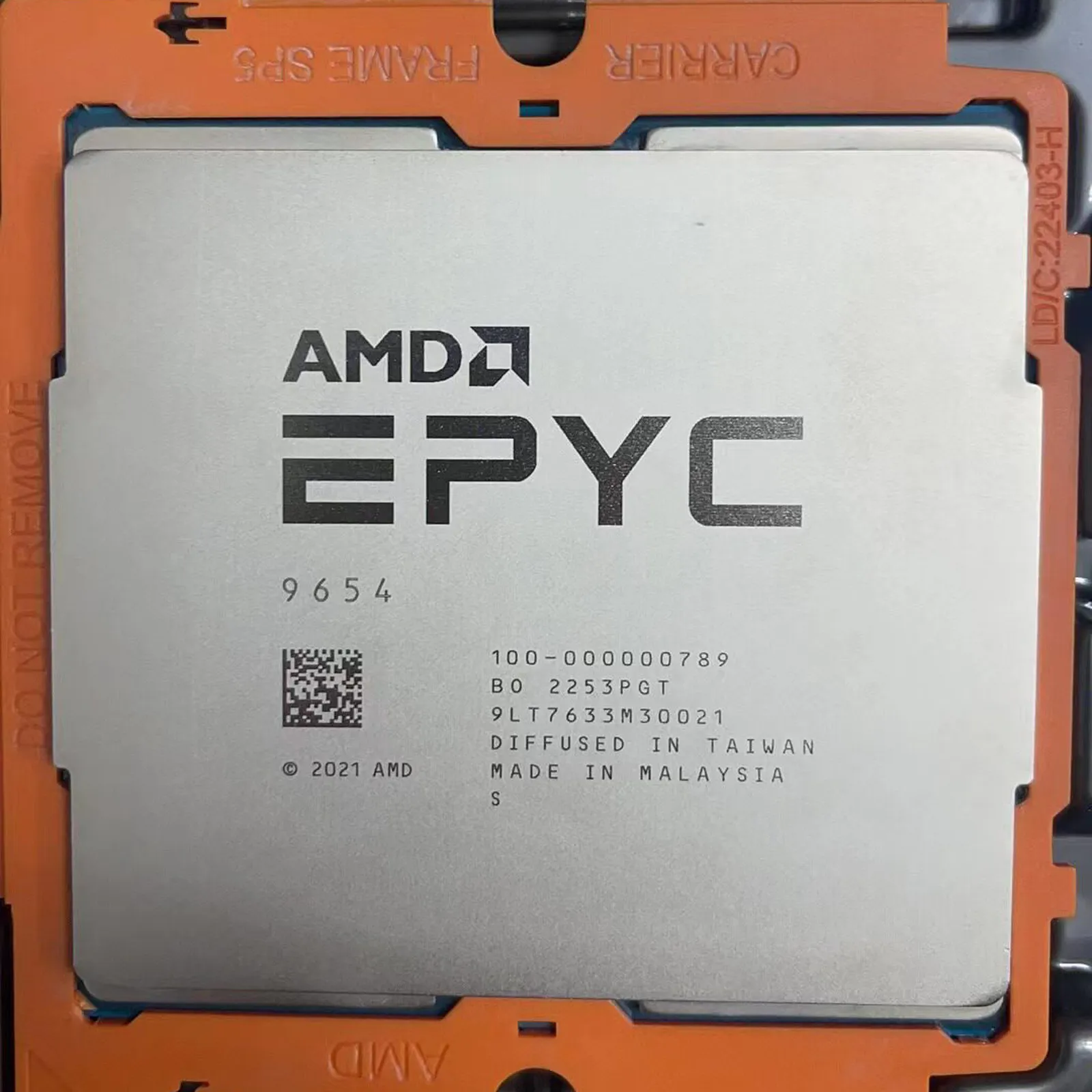

AMD EPYC 9B14 96-Core 2.6GHz SP5 CPU | 400W, 5200MT/s DDR5, Zen 4 Architecture
| Specification | Details |
|---|---|
| Processor Model | AMD EPYC 9B14 |
| Architecture | Zen 4 |
| Core Count | 96 Cores |
| Thread Count | 192 Threads (SMT Enabled) |
| Base Clock Speed | 2.6 GHz |
| Maximum Boost Clock | 3.7 GHz |
| TDP (Thermal Design Power) | 400W (Default & Maximum) |
| Cache | 384MB L3 Cache; 1.00MB L2 Cache per Core (Total 96MB L2) |
| Memory Support | DDR5-5200MT/s (Maximum); 8 Memory Channels; Up to 2TB Maximum Memory Capacity |
| Socket Type | SP5 (LGA 6096) |
| PCIe Generation | PCIe 5.0 |
| Release Date | Q4 2023 |
| OEM Variant Of | AMD EPYC 9654 |
| Recommended Motherboards | Supermicro H11SSL, MZ33, MZ73 (Dual-Socket); Asrock Rack SP5 Motherboards |
| Geekbench 6 Scores | Single-Core: ~1842; Multi-Core: ~9937 |
| Use Cases | Data Centers, HPC, Virtualization, Enterprise Databases, AI/ML, Professional Workstations |
Introduction to the AMD EPYC 9B14 Processor
In the competitive landscape of data center and high-performance computing (HPC), the AMD EPYC 9B14 stands out as a robust, value-driven processor engineered to meet the demands of modern workloads. As an OEM variant of the popular AMD EPYC 9654, the 9B14 builds on the proven Zen 4 architecture to deliver enhanced performance, improved memory support, and reliable efficiency—all at a competitive price point. Designed for single-socket and multi-socket server configurations, this 96-core CPU is tailored for businesses, data centers, and professionals who require uncompromising multitasking capabilities, fast data throughput, and consistent performance for mission-critical applications.
Released in Q4 2023, the AMD EPYC 9B14 is part of AMD’s 4th Gen EPYC lineup, which has redefined server performance standards with its advanced Zen 4 core design, increased cache capacity, and support for cutting-edge memory technologies. Unlike standard retail models, the 9B14 is a custom OEM version, originally developed for Google’s cloud services, making it a battle-tested solution that has proven its reliability in high-demand, large-scale environments. Whether you’re running complex HPC simulations, data analytics, virtualization, or AI-driven workloads, the EPYC 9B14 delivers the power and efficiency needed to keep your operations running smoothly.
Key Performance Advantages of the EPYC 9B14
The AMD EPYC 9B14’s performance stems from its thoughtful design, which prioritizes core count, clock speed, and memory bandwidth—three critical factors for modern server workloads. With 96 cores and 192 threads, this processor excels at multitasking, allowing it to handle hundreds of concurrent tasks without sacrificing speed or responsiveness. This makes it ideal for virtualization, where multiple VMs (Virtual Machines) run simultaneously, as well as for data analytics and batch processing, where parallel computing is essential.
One of the most notable improvements over the EPYC 9654 is the EPYC 9B14’s base clock speed of 2.6GHz, which is 0.2GHz higher than the 9654’s 2.4GHz base clock. While the maximum boost clock remains comparable, this higher base clock translates to more consistent performance in sustained workloads, where the processor is operating at full load for extended periods. Additionally, the EPYC 9B14 supports a maximum memory frequency of 5200MT/s, an upgrade from the 9654’s 4800MT/s. This increased memory bandwidth ensures faster data transfer between the CPU and RAM, reducing bottlenecks in memory-intensive applications like HPC, AI training, and large-scale database management.
Benchmark tests highlight the EPYC 9B14’s capabilities: in Geekbench 6, it achieves a single-core score of approximately 1842 and a multi-core score of 9937, demonstrating strong performance across both single-threaded and multi-threaded tasks. In real-world scenarios, this translates to faster file compression, quicker PDF rendering, and improved performance in code compilation and text processing—making it a versatile solution for a wide range of professional workloads. Compared to older-generation CPUs, the EPYC 9B14 delivers up to 60% higher throughput for enterprise-critical operations, ensuring that your business can meet strict SLAs (Service Level Agreements) and reduce time-to-market for key projects.
Technical Specifications & Hardware Compatibility
The AMD EPYC 9B14 is built on AMD’s Zen 4 architecture, manufactured using a 4nm process, which balances performance and power efficiency. It features a 400W default TDP (Thermal Design Power)—the same as the 9654’s maximum TDP—making it a high-performance option for systems that can accommodate higher power requirements. Despite its 400W TDP, the EPYC 9B14’s large die size makes more manageable than expected: a 6-heatpipe 4U air cooler can keep temperatures around 80°C in well-ventilated cases, while liquid cooling can reduce temperatures to 60°C or lower. However, it’s important to note that the processor’s high power draw places significant stress on motherboard power delivery, requiring active cooling for the供电 components to prevent overheating during long-term stress testing.
In terms of compatibility, the EPYC 9B14 uses the SP5 socket, which is compatible with 4th Gen EPYC (Genoa) and 5th Gen EPYC (Turin) motherboards. Recommended motherboards include Supermicro H11SSL, MZ33, and MZ73 (for dual-socket configurations), while Asrock Rack motherboards are also highly compatible. It’s important to verify motherboard compatibility with the manufacturer, as some older SP5 motherboards may require a BIOS update to support the EPYC 9B14. Additionally, the processor supports up to 8 channels of DDR5 memory, with a maximum capacity of 2TB (using 256GB DIMMs), making it suitable for memory-intensive workloads like in-memory databases and AI inference.
When it comes to memory, the EPYC 9B14’s 5200MT/s maximum frequency requires native support from the memory modules—attempting to overclock 4800MT/s memory to 5200MT/s is not recommended, as it may result in instability. Given the current price difference between 4800MT/s and 5600MT/s DDR5 modules, 4800MT/s memory offers the best balance of performance and value for most users. Other notable technical features include 384MB of L3 cache, which reduces latency by storing frequently accessed data close to the CPU cores, and support for PCIe 5.0, enabling fast connectivity to high-speed storage and networking devices.
Ideal Use Cases for the AMD EPYC 9B14
The AMD EPYC 9B14 is a versatile processor that excels in a variety of high-demand use cases, thanks to its high core count, strong memory bandwidth, and reliable performance. Below are some of the most common applications where the EPYC 9B14 shines:
- Data Centers: The EPYC 9B14 is ideal for data centers running virtualization, cloud computing, and hosting services. Its 96 cores and 192 threads allow it to support dozens of VMs simultaneously, while its 5200MT/s memory support ensures fast data access for cloud-based applications. As a former Google Cloud OEM processor, it’s proven to handle the rigors of large-scale data center operations.
- High-Performance Computing (HPC): For HPC workloads like computational fluid dynamics, weather forecasting, and scientific simulations, the EPYC 9B14’s parallel processing capabilities and high memory bandwidth deliver faster results, reducing time-to-insight for research and engineering projects. It outperforms older-generation CPUs in HPC benchmarks, offering up to 2.1x faster performance in Ansys Fluent simulations.
- Professional Workstations: Creative professionals, engineers, and data scientists will benefit from the EPYC 9B14’s multitasking capabilities. It handles resource-intensive tasks like video editing, 3D rendering, and code compilation with ease, reducing workflow bottlenecks and improving productivity. Its high core count also makes it ideal for AI training and inference, where parallel processing is essential.
- Enterprise Databases & Analytics: The EPYC 9B14’s large L3 cache and high memory bandwidth make it perfect for running large enterprise databases and data analytics platforms. It can process massive datasets quickly, enabling businesses to gain valuable insights in real time. Whether you’re running SQL databases, NoSQL systems, or big data frameworks like Hadoop, the EPYC 9B14 delivers the performance needed to handle high query volumes.
Why Choose the AMD EPYC 9B14 Over Competitors?
In a market filled with server processors, the AMD EPYC 9B14 stands out for its unique combination of performance, value, and reliability. Compared to Intel’s Xeon Platinum lineup, the EPYC 9B14 offers more cores and threads at a lower price point, making it a cost-effective solution for businesses looking to maximize performance without breaking the bank. Additionally, its Zen 4 architecture delivers better power efficiency than older AMD and Intel processors, helping to reduce energy costs and meet corporate sustainability goals.
As an OEM variant of the EPYC 9654, the 9B14 offers several key advantages over the standard retail model, including a higher base clock and improved memory support. This makes it a “step up” from the 9654, delivering better performance in sustained workloads without a significant price increase. Furthermore, the EPYC 9B14 is backed by AMD’s reputation for reliability and innovation, with access to AMD’s Infinity Guard security suite, which helps protect sensitive data from evolving threats in AI and cloud environments.
Another key advantage of the EPYC 9B14 is its compatibility with existing SP5 socket motherboards, making it easy to upgrade existing server infrastructure without replacing the entire system. This reduces upgrade costs and minimizes downtime, making it an ideal choice for businesses looking to extend the life of their hardware while improving performance.
Practical Tips for Using the AMD EPYC 9B14
To get the most out of your AMD EPYC 9B14 processor, consider the following practical tips:
- Considerations: Invest in a high-quality cooling solution to manage the 400W TDP. A 4U air cooler with good airflow is sufficient for most environments, but liquid cooling is recommended for high-density server racks or extreme workloads. Don’t forget to add active cooling for the motherboard’s power delivery components to prevent overheating.
- Memory Selection: Opt for native 5200MT/s DDR5 memory if your budget allows; otherwise, 4800MT/s memory offers a good balance of performance and value. Avoid overclocking memory, as it can lead to instability.
- Motherboard Compatibility: Ensure your motherboard is compatible with the EPYC 9B14 and that the BIOS is up to date. Supermicro, Asrock Rack, and MSI offer reliable SP5 motherboards that work well with this processor.
- Initial Setup: Be patient during the first boot, as the EPYC 9B14 may take several minutes to complete its initial自检. Subsequent boots will be much faster. Always power off the system before replacing memory to ensure proper detection.
Conclusion
The AMD EPYC 9B14 is a powerful, versatile, and cost-effective processor that delivers exceptional performance for data centers, HPC, and professional workloads. As an OEM variant of the EPYC 9654, it builds on AMD’s proven Zen 4 architecture to offer a higher base clock, improved memory support, and reliable efficiency—all at a competitive price. With 96 cores, 192 threads, 5200MT/s DDR5 support, and 400W TDP, it’s designed to handle the most demanding tasks, from virtualization and data analytics to AI and HPC simulations.
Whether you’re upgrading your existing server infrastructure or building a new high-performance system, the AMD EPYC 9B14 offers the perfect balance of performance, value, and reliability. Its compatibility with SP5 socket motherboards, robust cooling options, and practical design make it an ideal choice for businesses of all sizes looking to stay ahead in today’s fast-paced digital landscape. Invest in the AMD EPYC 9B14 and experience the power of Zen 4 architecture for your most critical operations.
Recommended Motherboards for AMD EPYC 9005/9004 SP5 processors
| Model | CPU (Socket / TDP) | Memory | PCIe/CXL | LAN | Management | Form Factor |
|---|---|---|---|---|---|---|
| Gigabyte MZ73-LM2 | Dual SP5 / 500W | 24×DDR5 | PCIe 5.0 | 2×10GbE | IPMI | E-ATX |
| Gigabyte MZ73-LM1 | Dual SP5 / 400W | 24×DDR5 | PCIe 5.0 | 2×10GbE | IPMI | E-ATX |
| Gigabyte MZ73-LM0 | Dual SP5 / 400W | 24×DDR5 | PCIe 5.0 | 2×10GbE | IPMI | E-ATX |
| Gigabyte MZ33-AR1 | Single SP5 / 400W | 24×DDR5 | PCIe 5.0 | 1×10GbE | IPMI | E-ATX |
| Gigabyte MZ33-CP1 | Single SP5 / 500W | 12×DDR5 | PCIe 5.0 | 2×1GbE | IPMI | E-ATX |
| ASRock Rack TURIND8-2L2T | Single SP5 / 400W | 8×DDR5 | PCIe 5.0 + CXL 2.0 | 2×10GbE + 2×1GbE | IPMI | CEB |
| ASRock Rack TURIN2D16-2T | Dual SP5 / 400W | 16×DDR5 (8+8) | PCIe 5.0 + CXL 2.0 | 2×10GbE | IPMI | EEB |
| ASRock Rack TURIN2D24G-2L+/500W | Dual SP5 / 500W | 24×DDR5 (12+12) | PCIe 5.0 + CXL 2.0 | 2×1GbE | IPMI | Proprietary |
| ASUS K14PA-U12 | Single SP5 / 400W | 12×DDR5 | PCIe 5.0 | 2×25GbE (SFP28) | iKVM (ASMB11) | CEB |
4th Gen 9004 Series Model Specifications
| Name | # of CPU Cores | # of Threads | Max. Boost Clock | Base Clock | L3 Cache | Default TDP |
| AMD EPYC™ 9754S | 128 | 128 | Up to 3.1 GHz | 2.25 GHz | 256 MB | 360W |
| AMD EPYC™ 9754 | 128 | 256 | Up to 3.1 GHz | 2.25 GHz | 256 MB | 360W |
| AMD EPYC™ 9734 | 112 | 224 | Up to 3 GHz | 2.2 GHz | 256 MB | 340W |
| AMD EPYC™ 9684X | 96 | 192 | Up to 3.7 GHz | 2.55 GHz | 1152 MB | 400W |
| AMD EPYC™ 9654P | 96 | 192 | Up to 3.7 GHz | 2.4 GHz | 384 MB | 360W |
| AMD EPYC™ 9654 | 96 | 192 | Up to 3.7 GHz | 2.4 GHz | 384 MB | 360W |
| AMD EPYC™ 9634 | 84 | 168 | Up to 3.7 GHz | 2.25 GHz | 384 MB | 290W |
| AMD EPYC™ 9554P | 64 | 128 | Up to 3.75 GHz | 3.1 GHz | 256 MB | 360W |
| AMD EPYC™ 9554 | 64 | 128 | Up to 3.75 GHz | 3.1 GHz | 256 MB | 360W |
| AMD EPYC™ 9534 | 64 | 128 | Up to 3.7 GHz | 2.45 GHz | 256 MB | 280W |
| AMD EPYC™ 9474F | 48 | 96 | Up to 4.1 GHz | 3.6 GHz | 256 MB | 360W |
| AMD EPYC™ 9454P | 48 | 96 | Up to 3.8 GHz | 2.75 GHz | 256 MB | 290W |
| AMD EPYC™ 9454 | 48 | 96 | Up to 3.8 GHz | 2.75 GHz | 256 MB | 290W |
| AMD EPYC™ 9384X | 32 | 64 | Up to 3.9 GHz | 3.1 GHz | 768 MB | 320W |
| AMD EPYC™ 9374F | 32 | 64 | Up to 4.3 GHz | 3.85 GHz | 256 MB | 320W |
| AMD EPYC™ 9354P | 32 | 64 | Up to 3.8 GHz | 3.25 GHz | 256 MB | 280W |
| AMD EPYC™ 9354 | 32 | 64 | Up to 3.8 GHz | 3.25 GHz | 256 MB | 280W |
| AMD EPYC™ 9334 | 32 | 64 | Up to 3.9 GHz | 2.7 GHz | 128 MB | 210W |
| AMD EPYC™ 9274F | 24 | 48 | Up to 4.3 GHz | 4.05 GHz | 256 MB | 320W |
| AMD EPYC™ 9254 | 24 | 48 | Up to 4.15 GHz | 2.9 GHz | 128 MB | 200W |
| AMD EPYC™ 9224 | 24 | 48 | Up to 3.7 GHz | 2.5 GHz | 64 MB | 200W |
| AMD EPYC™ 9184X | 16 | 32 | Up to 4.2 GHz | 3.55 GHz | 768 MB | 320W |
| AMD EPYC™ 9174F | 16 | 32 | Up to 4.4 GHz | 4.1 GHz | 256 MB | 320W |
| AMD EPYC™ 9124 | 16 | 32 | Up to 3.7 GHz | 3 GHz | 64 MB | 200W |


