
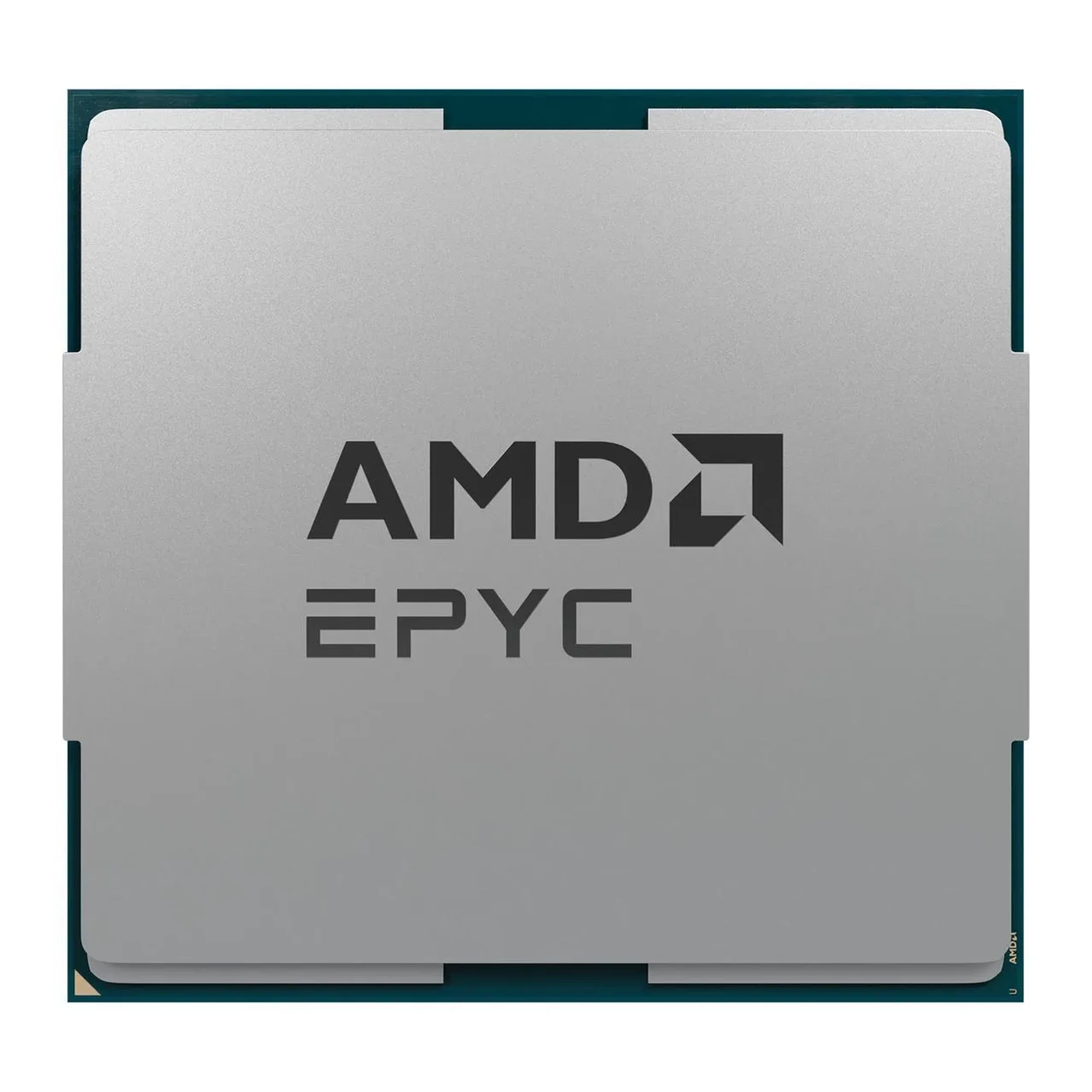
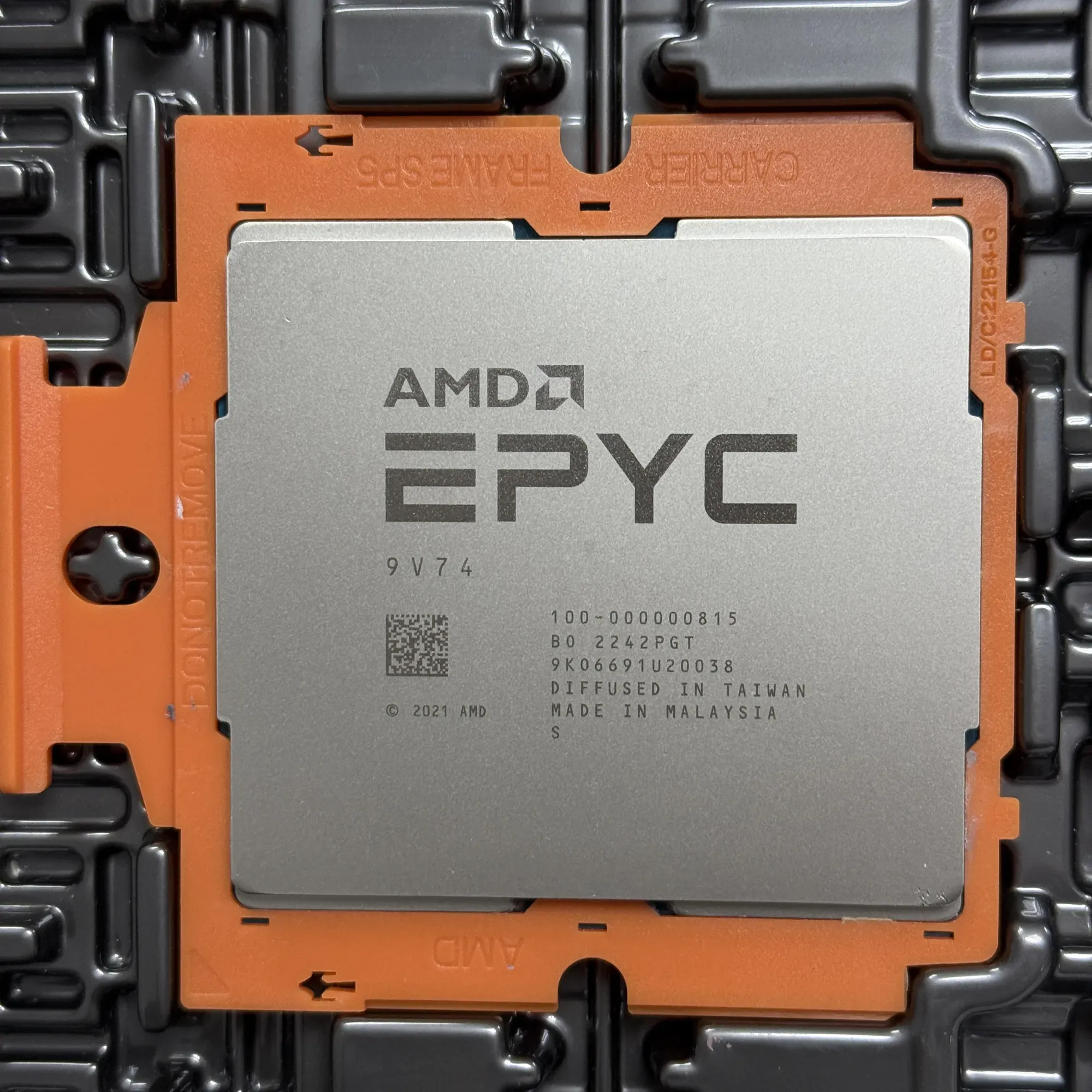
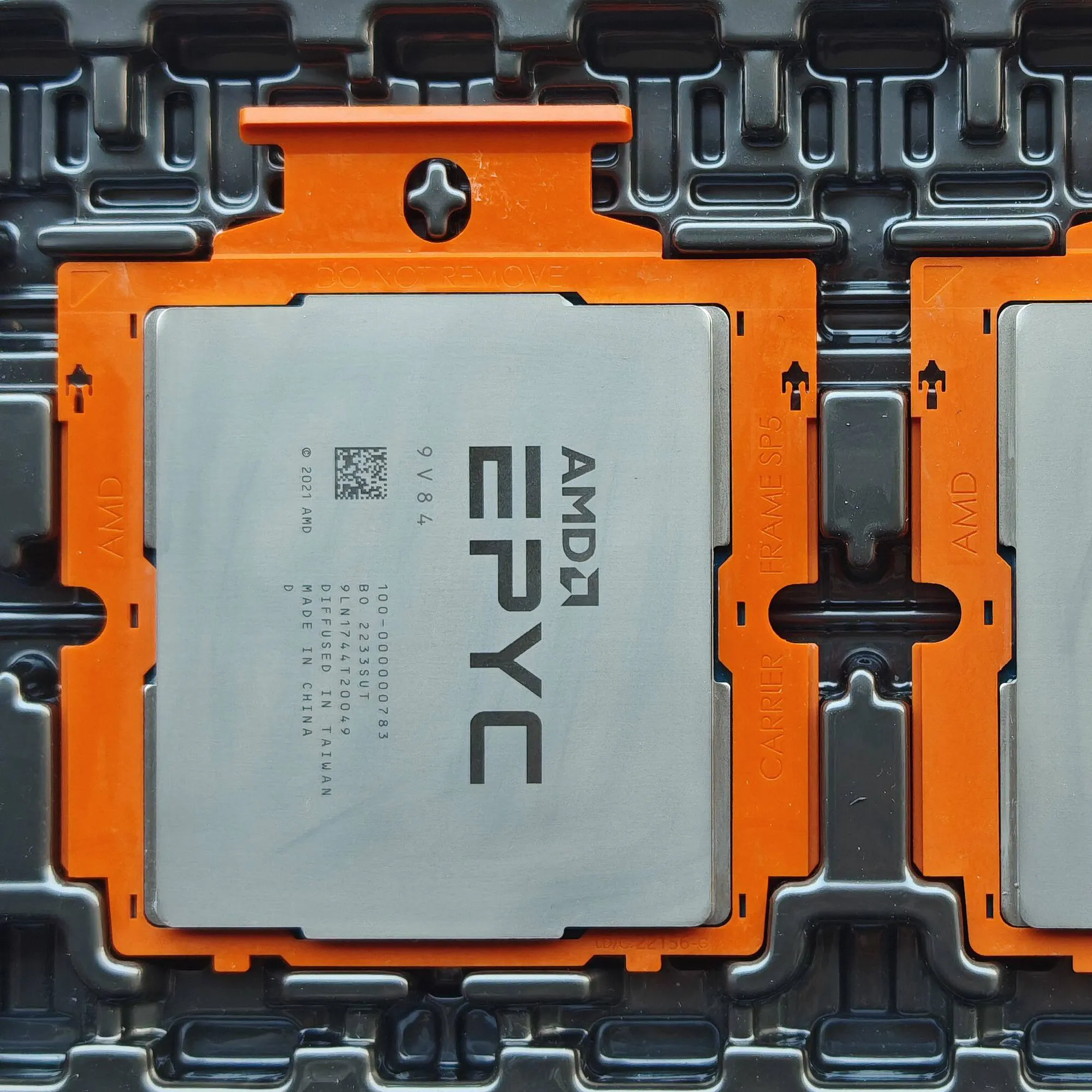
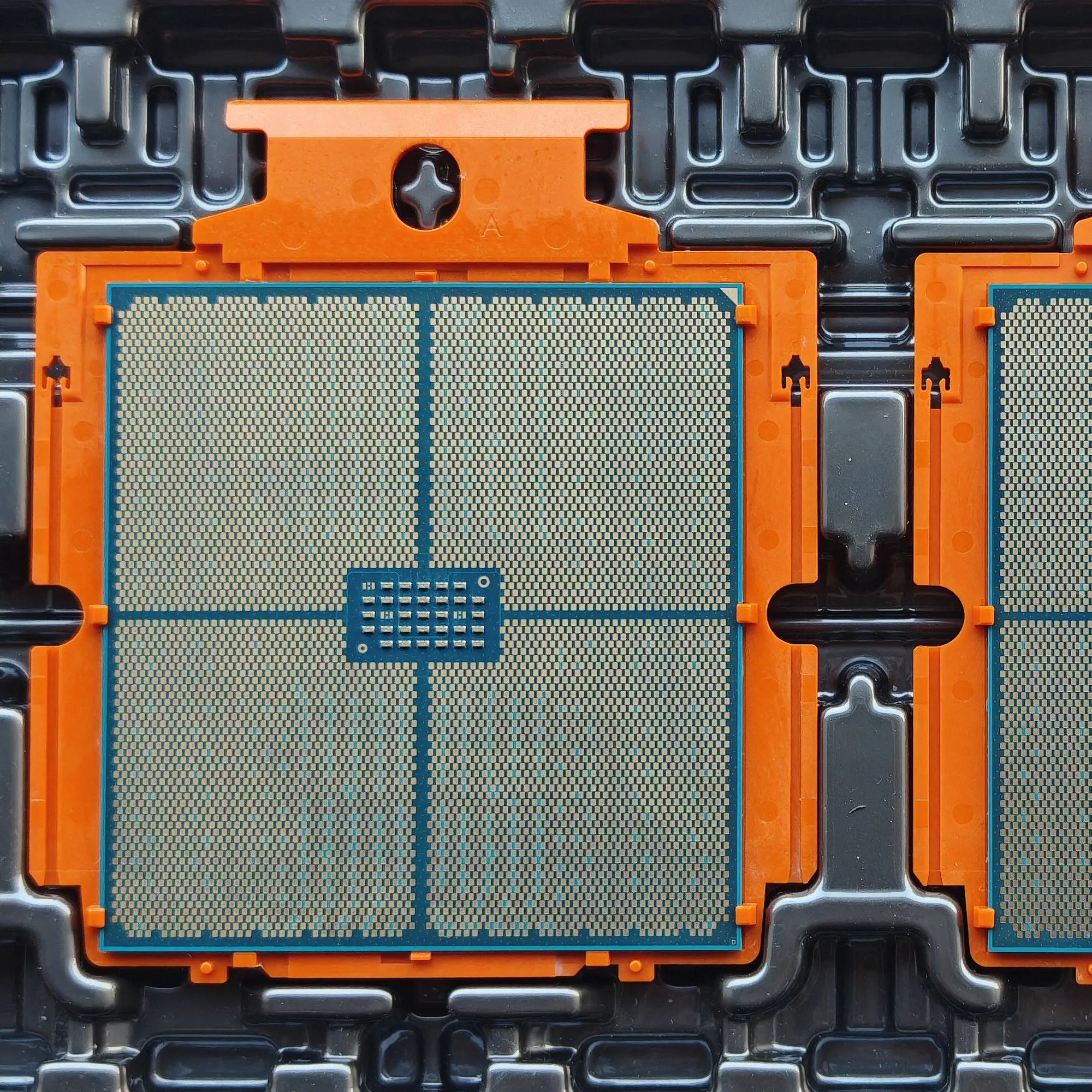

 AMD EPYC 9825 Processor | 144 Cores, 288 Threads, 3.7GHz Boost – High-Density Data Center Performance
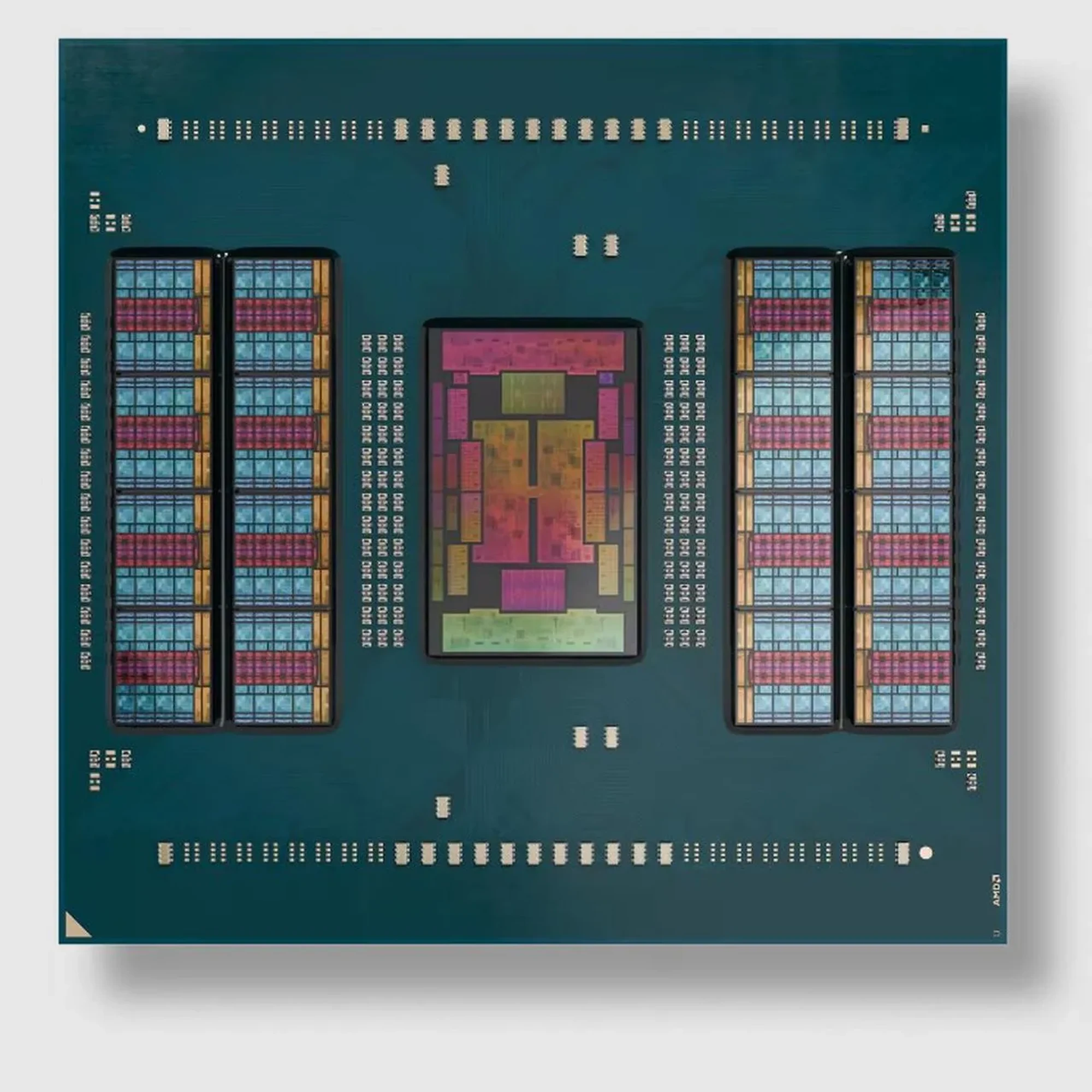 AMD EPYC 9825 Processor | 144 Cores, 288 Threads, 3.7GHz Boost – High-Density Data Center Performance
| Specification | Details |
|---|---|
| Product Name | AMD EPYC™ 9825 Processor |
| Product Family | AMD EPYC |
| Product Series | EPYC 9005 Series |
| Form Factor | Server |
| Regional Availability | Global, China, NA, EMEA, APJ, LATAM |
| CPU Cores | 144 |
| CPU Threads | 288 |
| Max Boost Clock | Up to 3.7 GHz |
| All Core Boost Speed | 3.3 GHz |
| Base Clock | 2.2 GHz |
| L3 Cache | 384 MB |
| 1kU Pricing | $11,053 USD |
| Default TDP | 390W |
| AMD Configurable TDP (cTDP) | 320 – 400W |
| CPU Socket | SP5 |
| Socket Count | 1P / 2P |
| Launch Date | 10/10/2024 |
| PCIe Version | PCIe® 5.0 x 128 |
| System Memory Type | DDR5 |
| Memory Channels | 12 |
| System Memory Specification | Up to 6400 MT/s |
| Per Socket Memory Bandwidth | 614 GB/s |
| Tray Product ID | 100-000000837 |
| Supported Technologies | AMD Infinity Guard, AMD Infinity Architecture |
| Workload Affinity | Analytics, App Dev | Test, CDC, Content Mgmt, HPC, Media Streaming, Networking | NFV, Security, VDI, VM Density, Web Serving |
In the rapidly evolving landscape of data center technology, businesses and enterprises demand processors that can keep pace with the growing demands of AI-enabled workloads, high-performance computing (HPC), virtualization, and mission-critical applications. The AMD EPYC™ 9825 Processor, part of the EPYC 9005 Series, emerges as a powerhouse designed to redefine high-density server performance, offering unmatched core count, advanced connectivity, and robust security features—all engineered to deliver exceptional value for modern data centers worldwide.
Unrivaled Core Performance: 144 Cores for Demanding Workloads
At the heart of the AMD EPYC™ 9825 Processor lies a massive 144 cores and 288 threads, making it one of the most powerful server CPUs in the EPYC lineup. This exceptional core count is purpose-built to handle the most demanding multi-threaded workloads, from AI model training and machine learning inference to large-scale analytics, content management, and virtual desktop infrastructure (VDI). Unlike lower-core alternatives, the EPYC 9825 eliminates bottlenecks in high-density environments, allowing businesses to consolidate more workloads per server rack, reduce hardware costs, and optimize data center efficiency.
Complementing its core count is a carefully calibrated clock speed profile that balances performance and power efficiency. The processor features a 2.2GHz base clock, ensuring consistent performance for sustained workloads, while an all-core boost speed of 3.3GHz delivers reliable performance when multiple cores are active. For single-threaded tasks that require bursts of speed—such as application development, testing, and web serving—the EPYC 9825 can reach a maximum boost clock of up to 3.7GHz, ensuring responsiveness even in mixed-workload environments. This versatility makes it an ideal choice for data centers that host a diverse range of applications, from latency-sensitive web services to compute-intensive HPC workloads.
Massive Cache & Memory Bandwidth: Eliminating Data Bottlenecks
To support its high core count and clock speeds, the AMD EPYC™ 9825 Processor is equipped with a generous 384MB of L3 cache. This large cache pool acts as a high-speed buffer between the processor cores and system memory, reducing latency and ensuring that frequently accessed data is readily available for processing. For data-intensive workloads like big data analytics, database management, and media streaming, this massive cache translates to faster data retrieval, improved throughput, and reduced reliance on slower system memory—ultimately boosting overall application performance.
In addition to its robust cache, the EPYC 9825 features advanced memory capabilities that further enhance its performance. The processor supports DDR5 system memory with a maximum speed of up to 6400 MT/s, delivering exceptional memory bandwidth of 614 GB/s per socket. With 12 memory channels, it can handle large volumes of data simultaneously, making it ideal for memory-bound workloads such as AI training, scientific computing, and virtualization. Whether you’re running complex simulations or hosting dozens of virtual machines (VMs), the EPYC 9825’s memory architecture ensures that data flows smoothly between the processor and memory, eliminating bottlenecks that can slow down critical applications.
Advanced Connectivity: PCIe 5.0 for Next-Generation Peripherals
The AMD EPYC™ 9825 Processor is built for the future of data center connectivity, featuring PCI Express® (PCIe®) 5.0 technology with 128 lanes. PCIe 5.0 offers double the bandwidth of PCIe 4.0, delivering up to 32 GT/s per lane—making it ideal for connecting high-speed peripherals such as NVMe SSDs, network interface cards (NICs), and AI accelerators. This advanced connectivity ensures that the EPYC 9825 can keep up with the growing demand for fast storage and high-speed networking, enabling faster data transfer, lower latency, and improved overall system performance.
For data centers looking to scale their infrastructure, the EPYC 9825 supports 1P (1-processor) and 2P (2-processor) configurations, allowing businesses to expand their computing power as their needs grow. The processor uses the SP5 socket, which is designed for high-performance server platforms, ensuring compatibility with a wide range of server motherboards and chassis. This flexibility makes it easy to integrate the EPYC 9825 into existing data center infrastructure or build new, high-density server clusters tailored to specific workload requirements.
Power Efficiency & Configurability: Optimized for Data Center Density
Despite its exceptional performance, the AMD EPYC™ 9825 Processor is engineered with power efficiency in mind. It features a default thermal design power (TDP) of 390W, which is optimized for high-density data center environments where power and cooling are critical considerations. Additionally, AMD’s Configurable TDP (cTDP) technology allows IT administrators to adjust the processor’s power consumption between 320W and 400W, providing flexibility to balance performance and power efficiency based on workload demands. This configurability ensures that the EPYC 9825 can adapt to different data center environments, from energy-efficient facilities to high-performance clusters that prioritize raw computing power.
The processor’s power efficiency is further enhanced by AMD’s Infinity Architecture, which enables seamless communication between cores, cache, and memory. This architecture reduces data latency and improves resource utilization, ensuring that every watt of power is used efficiently to deliver maximum performance. For businesses looking to reduce their carbon footprint and lower energy costs, the EPYC 9825’s power-efficient design is a significant advantage, allowing for higher server density without a proportional increase in power consumption.
Robust Security: Protecting Mission-Critical Workloads
In today’s data-driven world, security is a top priority for data centers hosting sensitive information and mission-critical applications. The AMD EPYC™ 9825 Processor includes AMD Infinity Guard, a comprehensive set of security features designed to protect data at every stage of its lifecycle. Infinity Guard includes hardware-enforced memory encryption, which encrypts data in memory to prevent unauthorized access, even if the physical server is compromised. It also features secure boot capabilities, ensuring that only trusted firmware and software are loaded during system startup, reducing the risk of malware and unauthorized access.
For businesses operating in regulated industries—such as finance, healthcare, and government—the EPYC 9825’s security features help ensure compliance with industry standards and regulations. The processor’s secure architecture also supports virtualization-based security (VBS), which isolates sensitive workloads in virtual machines, further enhancing protection against cyber threats. With these advanced security features, the EPYC 9825 provides peace of mind for businesses that rely on their data centers to store and process sensitive information.
Workload Versatility: Ideal for a Wide Range of Data Center Applications
The AMD EPYC™ 9825 Processor is designed to excel across a diverse range of data center workloads, making it a versatile choice for businesses of all sizes. Its high core count and multi-threaded performance make it ideal for AI and machine learning workloads, where parallel processing is essential for training complex models and running inference at scale. For HPC applications—such as scientific computing, weather forecasting, and computational fluid dynamics—the EPYC 9825’s combination of high core count, large cache, and fast memory bandwidth delivers the performance needed to accelerate research and innovation.
In addition to AI and HPC, the EPYC 9825 is well-suited for virtualization and cloud computing. With 288 threads, it can host dozens of VMs simultaneously, allowing cloud providers and enterprises to maximize server utilization and reduce hardware costs. The processor’s support for PCIe 5.0 also makes it ideal for cloud environments that require fast storage and high-speed networking, ensuring that virtual machines and cloud-based applications deliver responsive performance to end users.
Other workloads that benefit from the EPYC 9825’s performance include content management, media streaming, networking and NFV (Network Functions Virtualization), web serving, and database management. Whether you’re running a large-scale e-commerce platform, a media streaming service, or a mission-critical database, the EPYC 9825 provides the power and reliability needed to keep your applications running smoothly.
Global Availability & Pricing
The AMD EPYC™ 9825 Processor is available globally, with regional availability including China, North America (NA), Europe, Middle East, and Africa (EMEA), Asia Pacific (APJ), and Latin America (LATAM). This global availability ensures that businesses around the world can access the processor’s exceptional performance and integrate it into their data center infrastructure. The processor is offered in a tray configuration with the product ID 100-000000837, and its 1kU pricing is set at $11,053 USD—providing a competitive value proposition for businesses looking to invest in high-performance server technology.
Why Choose the AMD EPYC™ 9825 Processor?
In a market saturated with server processors, the AMD EPYC™ 9825 stands out for its exceptional core count, advanced memory and connectivity features, power efficiency, and robust security. For businesses looking to modernize their data centers, the EPYC 9825 offers a compelling combination of performance and value, allowing them to handle the most demanding workloads while reducing hardware and energy costs. Whether you’re building a new data center, expanding an existing one, or upgrading your server infrastructure, the EPYC 9825 is designed to deliver the performance, reliability, and versatility needed to succeed in today’s digital landscape.
With its 144 cores, 288 threads, 384MB L3 cache, PCIe 5.0 connectivity, and DDR5 support, the EPYC 9825 is a true powerhouse that can adapt to the evolving needs of modern data centers. Backed by AMD’s reputation for innovation and reliability, this processor is a smart investment for businesses that demand the best in server performance and efficiency.
Recommended Motherboards for AMD EPYC 9005/9004 SP5 processors
| Model | CPU (Socket / TDP) | Memory | PCIe/CXL | LAN | Management | Form Factor |
|---|---|---|---|---|---|---|
| Gigabyte MZ73-LM2 | Dual SP5 / 500W | 24×DDR5 | PCIe 5.0 | 2×10GbE | IPMI | E-ATX |
| Gigabyte MZ73-LM1 | Dual SP5 / 400W | 24×DDR5 | PCIe 5.0 | 2×10GbE | IPMI | E-ATX |
| Gigabyte MZ73-LM0 | Dual SP5 / 400W | 24×DDR5 | PCIe 5.0 | 2×10GbE | IPMI | E-ATX |
| Gigabyte MZ33-AR1 | Single SP5 / 400W | 24×DDR5 | PCIe 5.0 | 1×10GbE | IPMI | E-ATX |
| Gigabyte MZ33-CP1 | Single SP5 / 500W | 12×DDR5 | PCIe 5.0 | 2×1GbE | IPMI | E-ATX |
| ASRock Rack TURIND8-2L2T | Single SP5 / 400W | 8×DDR5 | PCIe 5.0 + CXL 2.0 | 2×10GbE + 2×1GbE | IPMI | CEB |
| ASRock Rack TURIN2D16-2T | Dual SP5 / 400W | 16×DDR5 (8+8) | PCIe 5.0 + CXL 2.0 | 2×10GbE | IPMI | EEB |
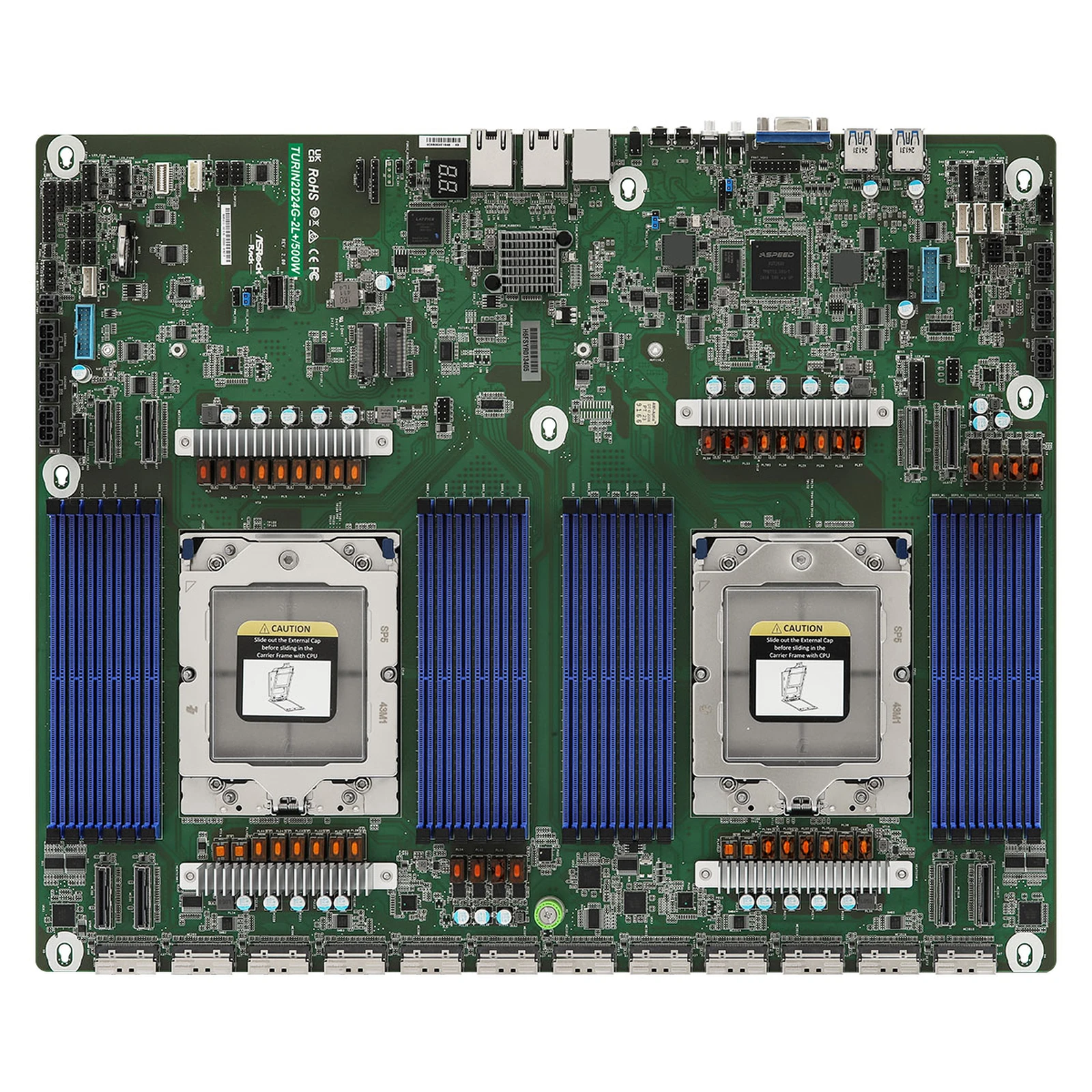
| ASRock Rack TURIN2D24G-2L+/500W | Dual SP5 / 500W | 24×DDR5 (12+12) | PCIe 5.0 + CXL 2.0 | 2×1GbE | IPMI | Proprietary |
| ASUS K14PA-U12 | Single SP5 / 400W | 12×DDR5 | PCIe 5.0 | 2×25GbE (SFP28) | iKVM (ASMB11) | CEB |
5th Gen AMD EPYC Server CPUs Model Specifications
| Name | # of CPU Cores | # of Threads | Max. Boost Clock | Base Clock | L3 Cache | Default TDP |
| AMD EPYC™ 9965 | 192 | 384 | Up to 3.7 GHz | 2.25 GHz | 384 MB | 500W |
| AMD EPYC™ 9845 | 160 | 320 | Up to 3.7 GHz | 2.1 GHz | 320 MB | 390W |
| AMD EPYC™ 9825 | 144 | 288 | Up to 3.7 GHz | 2.2 GHz | 384 MB | 390W |
| AMD EPYC™ 9755 | 128 | 256 | Up to 4.1 GHz | 2.7 GHz | 512 MB | 500W |
| AMD EPYC™ 9745 | 128 | 256 | Up to 3.7 GHz | 2.4 GHz | 256 MB | 400W |
| AMD EPYC™ 9655P | 96 | 192 | Up to 4.5 GHz | 2.6 GHz | 384 MB | 400W |
| AMD EPYC™ 9655 | 96 | 192 | Up to 4.5 GHz | 2.6 GHz | 384 MB | 400W |
| AMD EPYC™ 9645 | 96 | 192 | Up to 3.7 GHz | 2.3 GHz | 256 MB | 320W |
| AMD EPYC™ 9575F | 64 | 128 | Up to 5 GHz | 3.3 GHz | 256 MB | 400W |
| AMD EPYC™ 9565 | 72 | 144 | Up to 4.3 GHz | 3.15 GHz | 384 MB | 400W |
| AMD EPYC™ 9555P | 64 | 128 | Up to 4.4 GHz | 3.2 GHz | 256 MB | 360W |
| AMD EPYC™ 9555 | 64 | 128 | Up to 4.4 GHz | 3.2 GHz | 256 MB | 360W |
| AMD EPYC™ 9535 | 64 | 128 | Up to 4.3 GHz | 2.4 GHz | 256 MB | 300W |
| AMD EPYC™ 9475F | 48 | 96 | Up to 4.8 GHz | 3.65 GHz | 256 MB | 400W |
| AMD EPYC™ 9455P | 48 | 96 | Up to 4.4 GHz | 3.15 GHz | 256 MB | 300W |
| AMD EPYC™ 9455 | 48 | 96 | Up to 4.4 GHz | 3.15 GHz | 256 MB | 300W |
| AMD EPYC™ 9375F | 32 | 64 | Up to 4.8 GHz | 3.8 GHz | 256 MB | 320W |
| AMD EPYC™ 9365 | 36 | 72 | Up to 4.3 GHz | 3.4 GHz | 192 MB | 300W |
| AMD EPYC™ 9355P | 32 | 64 | Up to 4.4 GHz | 3.55 GHz | 256 MB | 280W |
| AMD EPYC™ 9355 | 32 | 64 | Up to 4.4 GHz | 3.55 GHz | 256 MB | 280W |
| AMD EPYC™ 9335 | 32 | 64 | Up to 4.4 GHz | 3 GHz | 128 MB | 210W |
| AMD EPYC™ 9275F | 24 | 48 | Up to 4.8 GHz | 4.1 GHz | 256 MB | 320W |
| AMD EPYC™ 9255 | 24 | 48 | Up to 4.3 GHz | 3.2 GHz | 128 MB | 200W |
| AMD EPYC™ 9175F | 16 | 32 | Up to 5 GHz | 4.2 GHz | 512 MB | 320W |
| AMD EPYC™ 9135 | 16 | 32 | Up to 4.3 GHz | 3.65 GHz | 64 MB | 200W |
| AMD EPYC™ 9115 | 16 | 32 | Up to 4.1 GHz | 2.6 GHz | 64 MB | 125W |
| AMD EPYC™ 9015 | 8 | 16 | Up to 4.1 GHz | 3.6 GHz | 64 MB | 125W |


