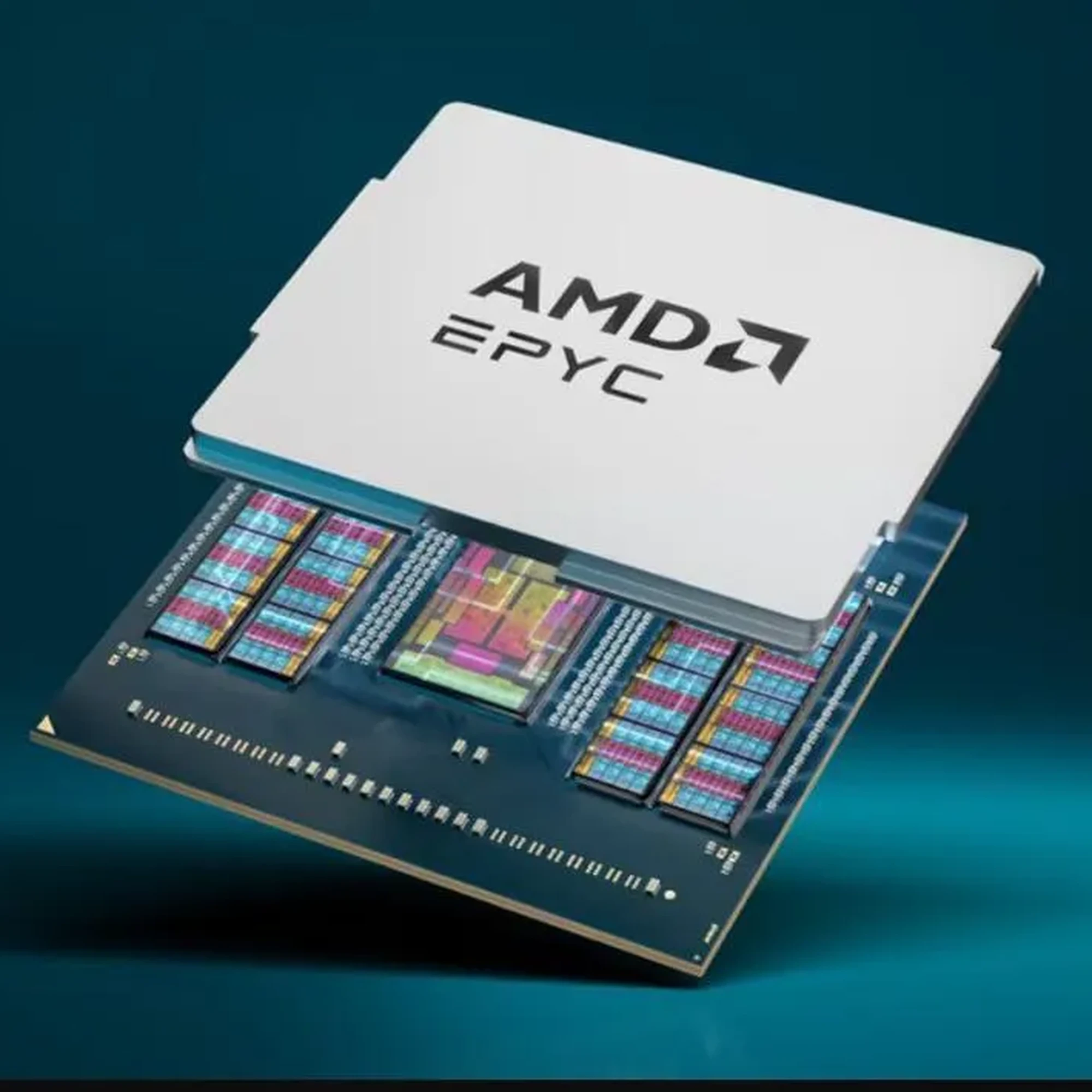
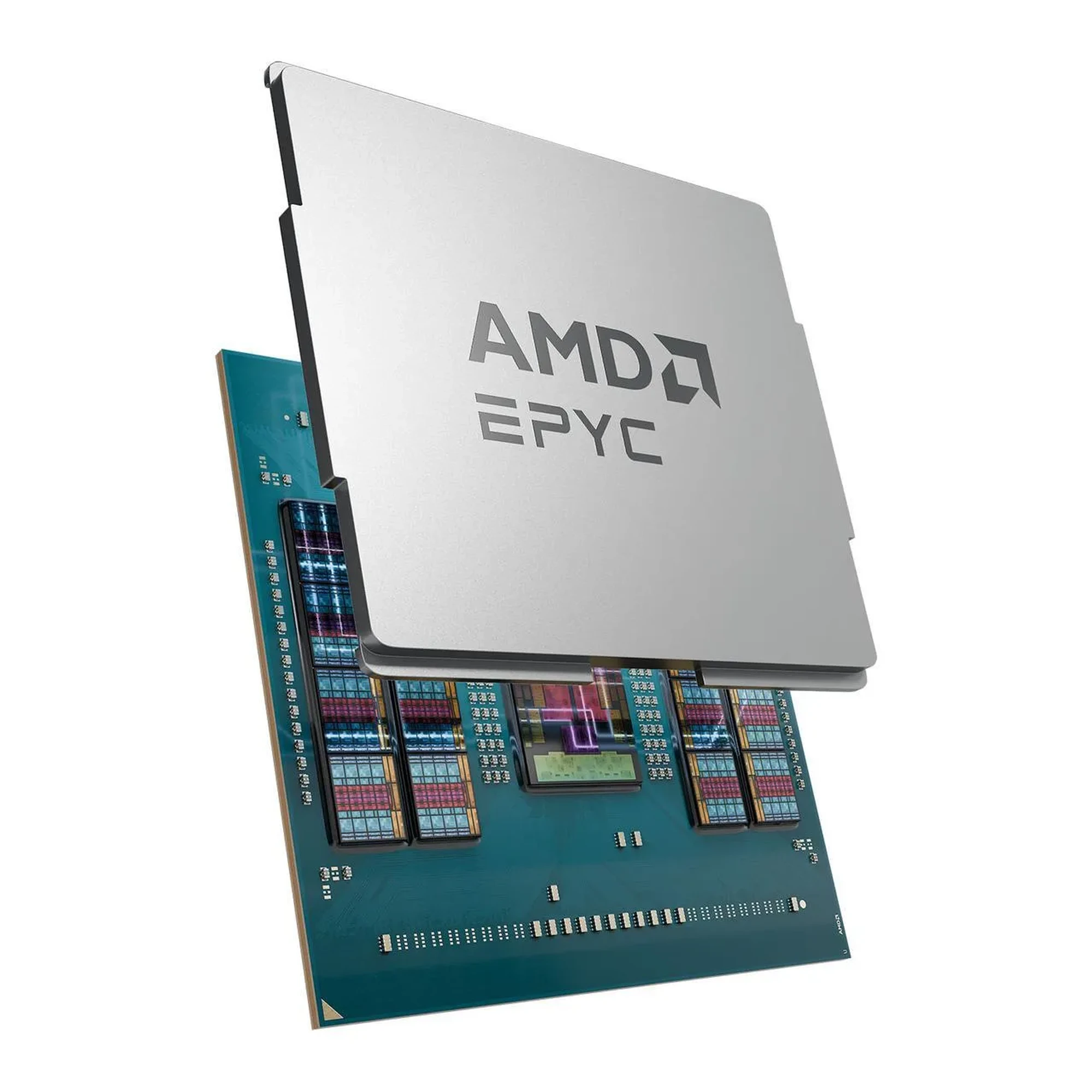
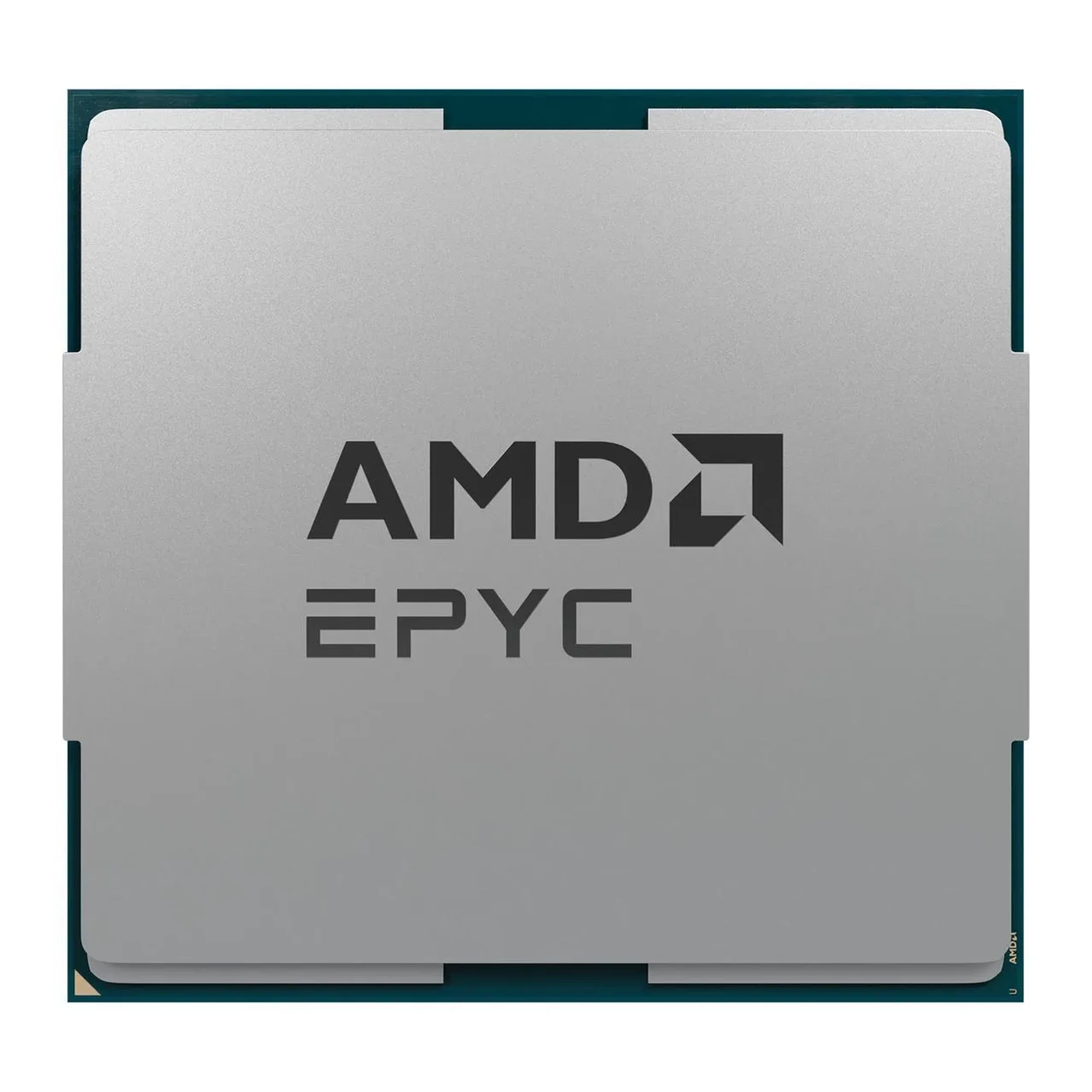
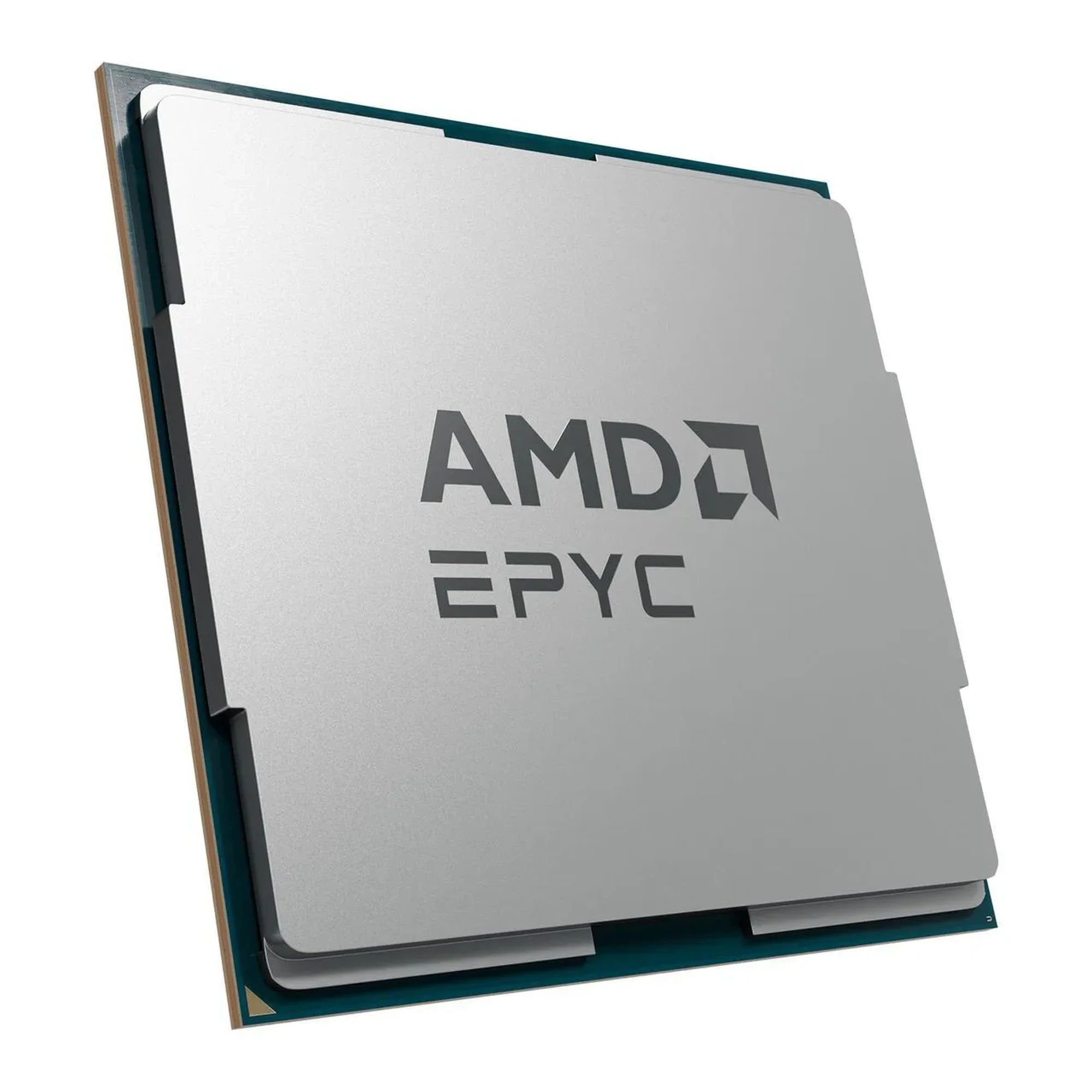

AMD EPYC 9655 5th Gen 9005 Series 96-Core Server Processor
Introduction to AMD EPYC 9655
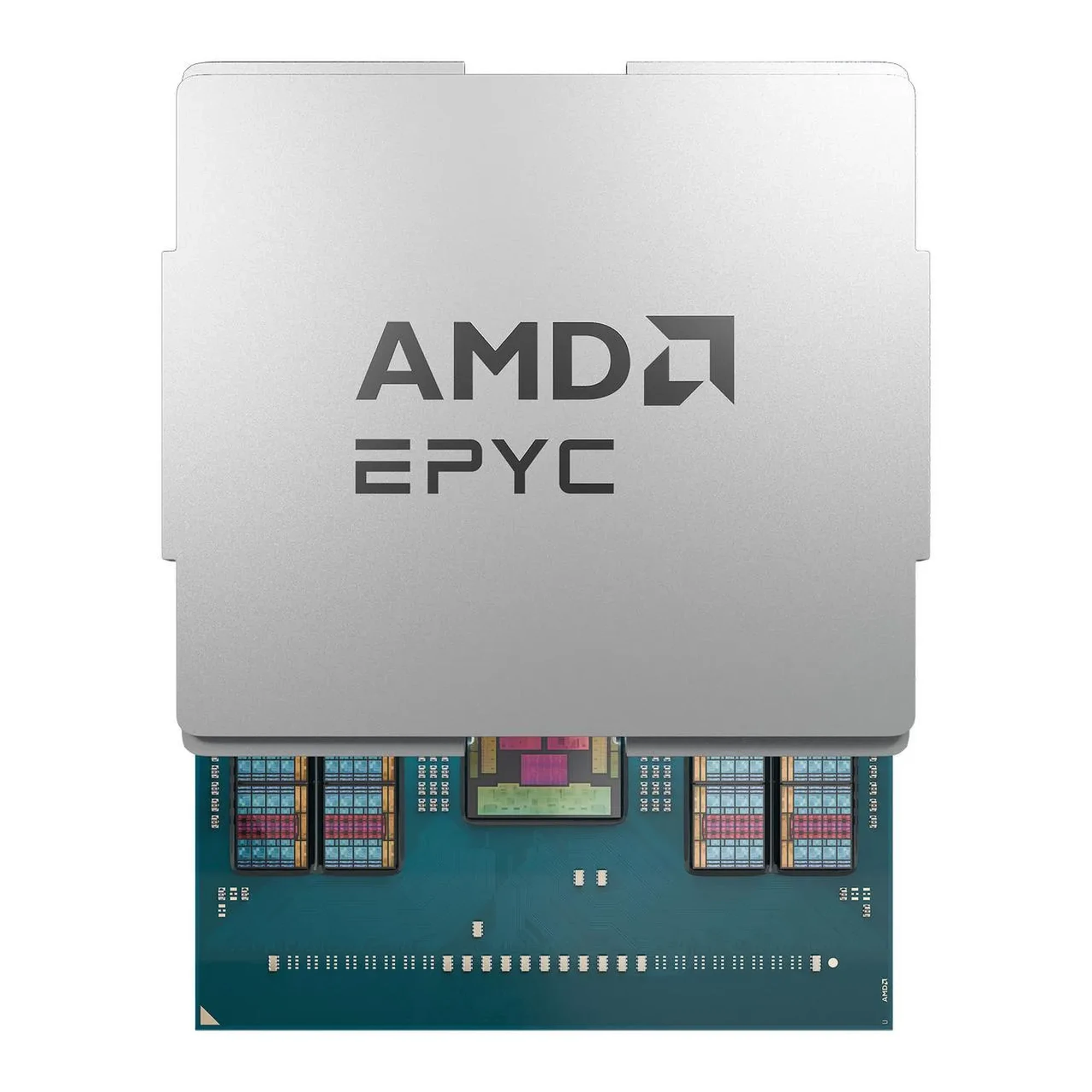
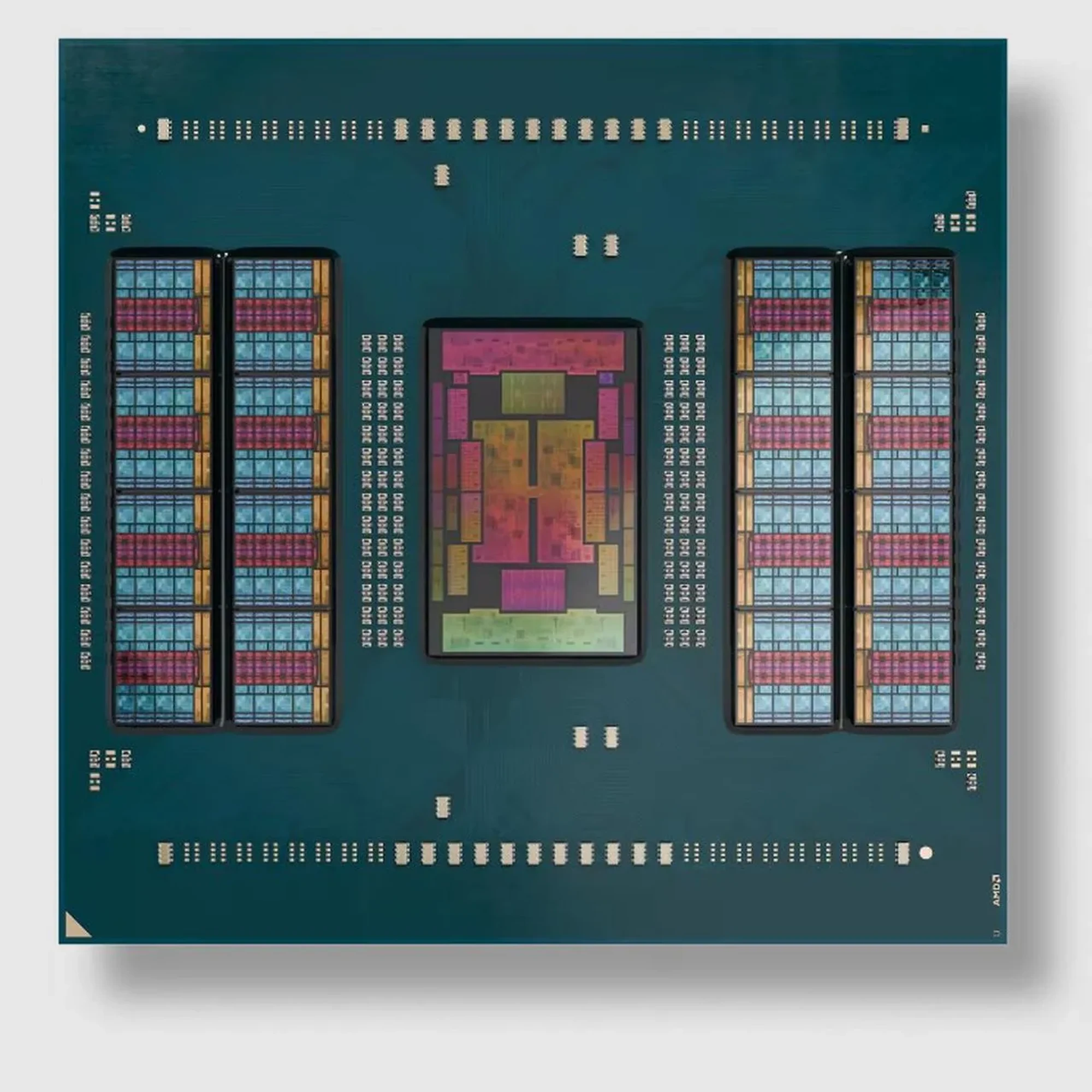
The AMD EPYC 9655 5th Gen 9005 Series processor represents a major leap forward in server-class computing performance. Built on AMD’s latest Zen 5 architecture, this processor is designed to meet the increasing demands of modern data centers, cloud environments, and AI-driven workloads.
With an impressive 96 cores and 192 threads, the EPYC 9655 delivers exceptional parallel processing power, making it ideal for virtualization, high-performance computing (HPC), and enterprise-scale databases.
This processor is part of AMD’s next-generation EPYC lineup, offering improved performance-per-core, higher memory bandwidth, and enhanced efficiency compared to previous generations.
Breakthrough Performance with Zen 5 Architecture
At the heart of the EPYC 9655 lies AMD’s Zen 5 (Turin) microarchitecture, engineered for higher instructions-per-clock (IPC) and better overall efficiency. This enables organizations to achieve more compute performance within the same power and space constraints.
The processor operates at a base clock of 2.6 GHz and can boost up to 4.5 GHz, delivering both strong single-thread and multi-thread performance.
With Precision Boost technology, the CPU dynamically adjusts frequencies to optimize workload performance, ensuring maximum efficiency during demanding operations.
Massive Core Density for Data Center Workloads
One of the standout features of the AMD EPYC 9655 is its 96-core configuration, which allows for unparalleled workload consolidation. With support for Simultaneous Multithreading (SMT), the processor handles up to 192 threads, making it highly efficient for multi-tenant and virtualized environments.
This high core density enables:
- Greater VM density per server
- Reduced infrastructure footprint
- Lower total cost of ownership (TCO)
- Improved scalability for enterprise applications
Organizations can run more workloads on fewer servers, optimizing both performance and operational efficiency.
Advanced Memory Architecture
The EPYC 9655 supports DDR5 memory with 12 memory channels, significantly increasing bandwidth and throughput compared to previous generations.
Key memory benefits include:
- Support for speeds up to 6400 MT/s
- Up to 614 GB/s memory bandwidth per socket
- ECC memory support for enhanced reliability
This makes the processor ideal for memory-intensive applications such as:
- Large-scale databases
- Real-time analytics
- Scientific simulations
- AI/ML workloads
Industry-Leading I/O and Connectivity
Modern data centers demand fast and scalable connectivity, and the EPYC 9655 delivers with PCIe 5.0 support and 128 lanes.
This enables:
- Faster storage with NVMe SSDs
- High-speed networking
- GPU acceleration for AI workloads
- Scalable expansion options
Additionally, support for CXL 2.0 enhances memory expansion capabilities, allowing systems to scale beyond traditional limitations.
Optimized for Enterprise and AI Workloads
The AMD EPYC 9655 is engineered to handle a wide range of enterprise workloads, including:
- Cloud-native applications
- Artificial intelligence and machine learning
- High-performance computing (HPC)
- Financial modeling and analytics
- Enterprise resource planning (ERP) systems
Its support for AVX-512 instructions enhances performance in compute-intensive tasks, making it highly efficient for AI inference and scientific computing.
Scalability and Multi-Socket Support
The EPYC 9655 supports both single-socket (1P) and dual-socket (2P) configurations, enabling flexible deployment options.
In dual-socket setups, organizations can double the compute power, reaching:
- 192 cores
- 384 threads
This scalability ensures that the processor can grow with business needs, from small deployments to hyperscale data centers.
Energy Efficiency and Thermal Design
Despite its powerful performance, the EPYC 9655 is designed with efficiency in mind. It features a default TDP of 400W, with configurable TDP options ranging from 320W to 400W.
This allows system integrators to balance performance and energy consumption based on workload requirements.
AMD’s advanced manufacturing process (4nm) ensures improved efficiency compared to older nodes, helping reduce energy costs over time.
Security and Reliability Features
Security is critical in modern IT environments, and AMD integrates robust protection technologies into the EPYC 9655, including:
- AMD Infinity Guard
- Secure Encrypted Virtualization (SEV-SNP)
- Hardware-based memory encryption
- Secure boot capabilities
These features help protect sensitive data and ensure compliance with enterprise security standards.
Virtualization and Cloud Optimization
The EPYC 9655 is highly optimized for virtualization platforms, offering:
- Enhanced VM performance
- Improved resource allocation
- Faster migration capabilities
- High consolidation ratios
Its architecture ensures that cloud service providers and enterprises can deliver reliable, scalable services with minimal overhead.
Ideal Use Cases
The AMD EPYC 9655 is perfect for:
- Data centers and cloud infrastructure
- AI and machine learning deployments
- High-performance computing clusters
- Large enterprise databases
- Virtualized environments
Its combination of core density, memory bandwidth, and I/O performance makes it one of the most powerful server CPUs available today.
Conclusion
The AMD EPYC 9655 5th Gen 9005 Series processor is a powerhouse designed for next-generation computing. With cutting-edge architecture, massive core counts, and industry-leading memory and I/O capabilities, it delivers unmatched performance for modern workloads.
Whether you are building a hyperscale data center or upgrading enterprise infrastructure, the EPYC 9655 provides the performance, scalability, and efficiency needed to stay ahead in today’s competitive digital landscape.
Specifications Sheet
| Category | Specification |
|---|---|
| Model | AMD EPYC 9655 |
| Architecture | Zen 5 (Turin) |
| Cores / Threads | 96 / 192 |
| Base Clock | 2.6 GHz |
| Max Boost Clock | Up to 4.5 GHz |
| All-Core Boost | Up to 4.1 GHz |
| Cache | 384 MB L3 |
| TDP | 400W (320–400W configurable) |
| Socket | SP5 |
| Process Node | 4nm |
| Memory Type | DDR5 |
| Memory Channels | 12 |
| Max Memory Speed | Up to 6400 MT/s |
| Memory Bandwidth | Up to 614 GB/s |
| PCIe Version | PCIe 5.0 |
| PCIe Lanes | 128 |
| Multi-Socket Support | 1P / 2P |
| Release Date | October 2024 |
5th Gen AMD EPYC Server CPUs Model Specifications
Name | # of CPU Cores | # of Threads | Max. Boost Clock | Base Clock | L3 Cache | Default TDP |
|---|---|---|---|---|---|---|
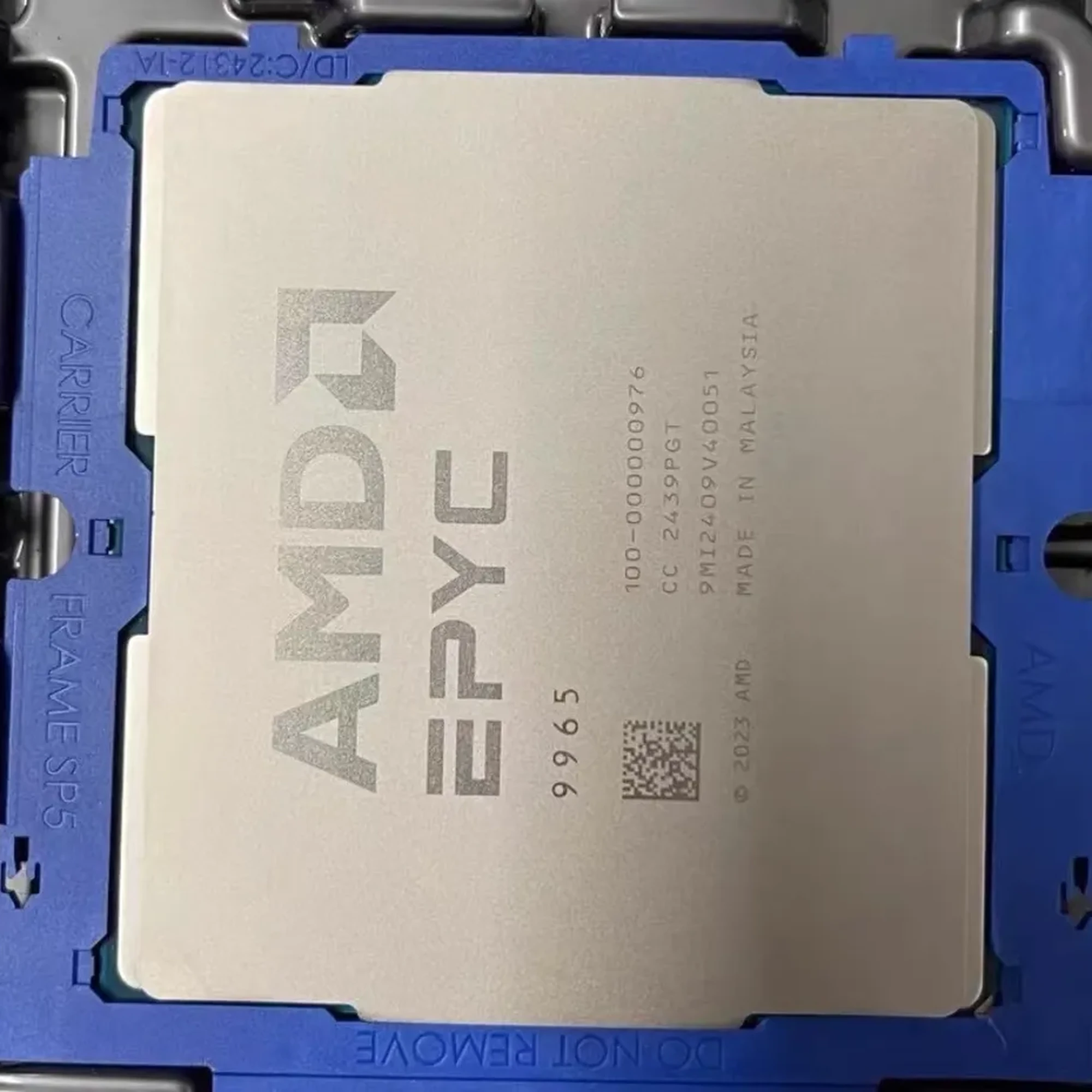
| AMD EPYC™ 9965 | 192 | 384 | Up to 3.7 GHz | 2.25 GHz | 384 MB | 500W |
| AMD EPYC™ 9845 | 160 | 320 | Up to 3.7 GHz | 2.1 GHz | 320 MB | 390W |
| AMD EPYC™ 9825 | 144 | 288 | Up to 3.7 GHz | 2.2 GHz | 384 MB | 390W |
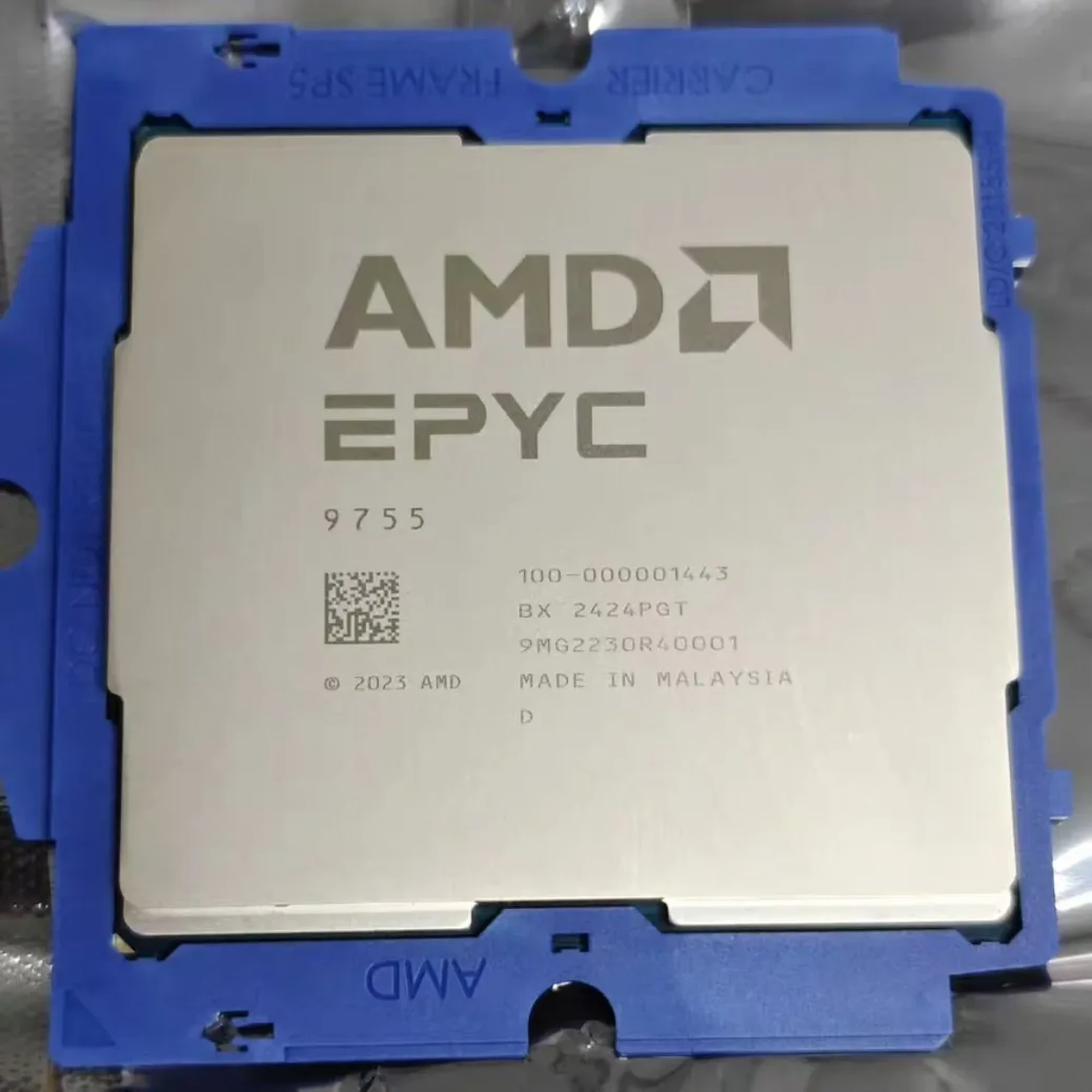
| AMD EPYC™ 9755 | 128 | 256 | Up to 4.1 GHz | 2.7 GHz | 512 MB | 500W |
| AMD EPYC™ 9745 | 128 | 256 | Up to 3.7 GHz | 2.4 GHz | 256 MB | 400W |
| AMD EPYC™ 9655P | 96 | 192 | Up to 4.5 GHz | 2.6 GHz | 384 MB | 400W |
| AMD EPYC™ 9655 | 96 | 192 | Up to 4.5 GHz | 2.6 GHz | 384 MB | 400W |
| AMD EPYC™ 9645 | 96 | 192 | Up to 3.7 GHz | 2.3 GHz | 256 MB | 320W |
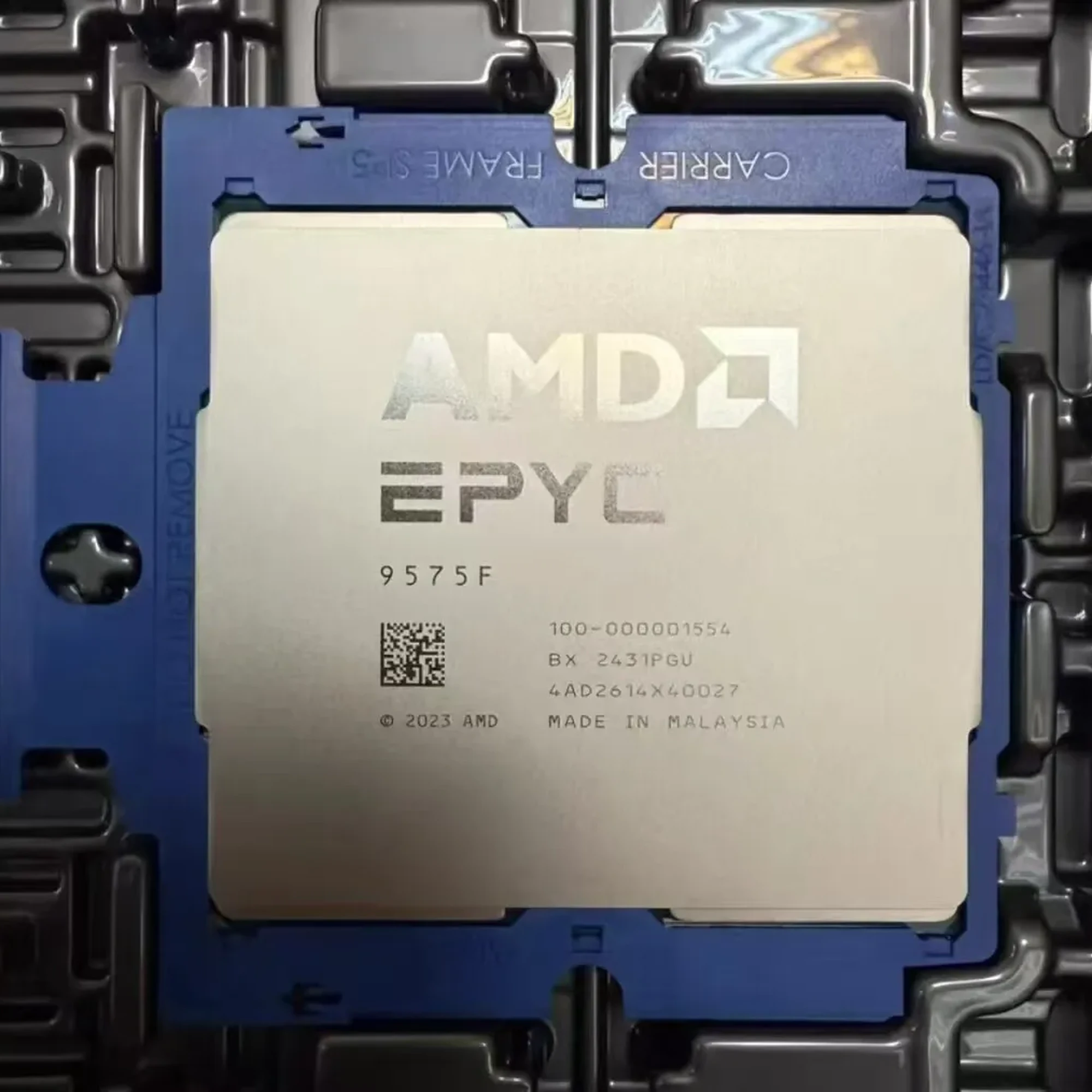
| AMD EPYC™ 9575F | 64 | 128 | Up to 5 GHz | 3.3 GHz | 256 MB | 400W |
| AMD EPYC™ 9565 | 72 | 144 | Up to 4.3 GHz | 3.15 GHz | 384 MB | 400W |
| AMD EPYC™ 9555P | 64 | 128 | Up to 4.4 GHz | 3.2 GHz | 256 MB | 360W |
| AMD EPYC™ 9555 | 64 | 128 | Up to 4.4 GHz | 3.2 GHz | 256 MB | 360W |
| AMD EPYC™ 9535 | 64 | 128 | Up to 4.3 GHz | 2.4 GHz | 256 MB | 300W |
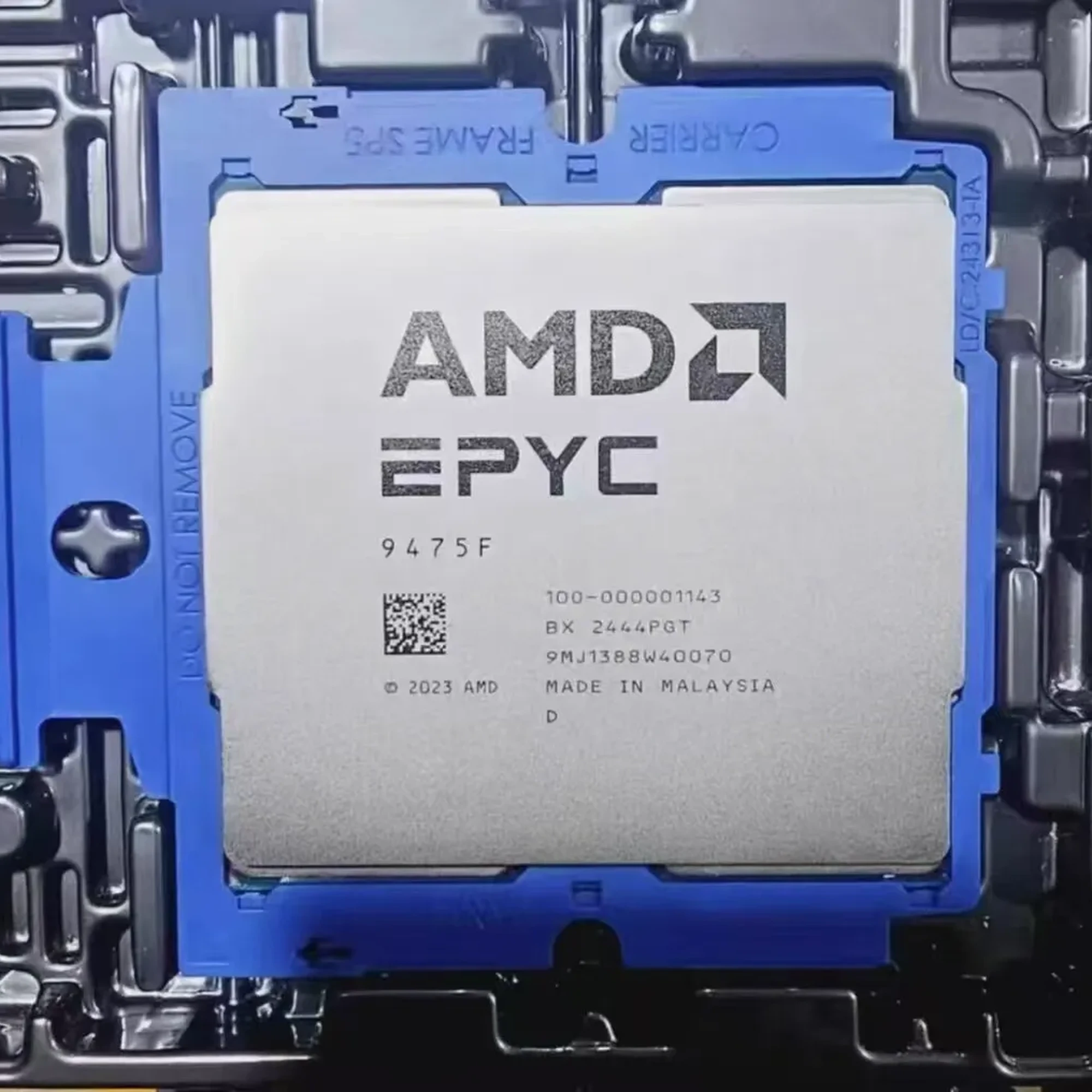
| AMD EPYC™ 9475F | 48 | 96 | Up to 4.8 GHz | 3.65 GHz | 256 MB | 400W |
| AMD EPYC™ 9455P | 48 | 96 | Up to 4.4 GHz | 3.15 GHz | 256 MB | 300W |
| AMD EPYC™ 9455 | 48 | 96 | Up to 4.4 GHz | 3.15 GHz | 256 MB | 300W |
| AMD EPYC™ 9375F | 32 | 64 | Up to 4.8 GHz | 3.8 GHz | 256 MB | 320W |
| AMD EPYC™ 9365 | 36 | 72 | Up to 4.3 GHz | 3.4 GHz | 192 MB | 300W |
| AMD EPYC™ 9355P | 32 | 64 | Up to 4.4 GHz | 3.55 GHz | 256 MB | 280W |
| AMD EPYC™ 9355 | 32 | 64 | Up to 4.4 GHz | 3.55 GHz | 256 MB | 280W |
| AMD EPYC™ 9335 | 32 | 64 | Up to 4.4 GHz | 3 GHz | 128 MB | 210W |
| AMD EPYC™ 9275F | 24 | 48 | Up to 4.8 GHz | 4.1 GHz | 256 MB | 320W |
| AMD EPYC™ 9255 | 24 | 48 | Up to 4.3 GHz | 3.2 GHz | 128 MB | 200W |
| AMD EPYC™ 9175F | 16 | 32 | Up to 5 GHz | 4.2 GHz | 512 MB | 320W |
| AMD EPYC™ 9135 | 16 | 32 | Up to 4.3 GHz | 3.65 GHz | 64 MB | 200W |
| AMD EPYC™ 9115 | 16 | 32 | Up to 4.1 GHz | 2.6 GHz | 64 MB | 125W |
| AMD EPYC™ 9015 | 8 | 16 | Up to 4.1 GHz | 3.6 GHz | 64 MB | 125W |