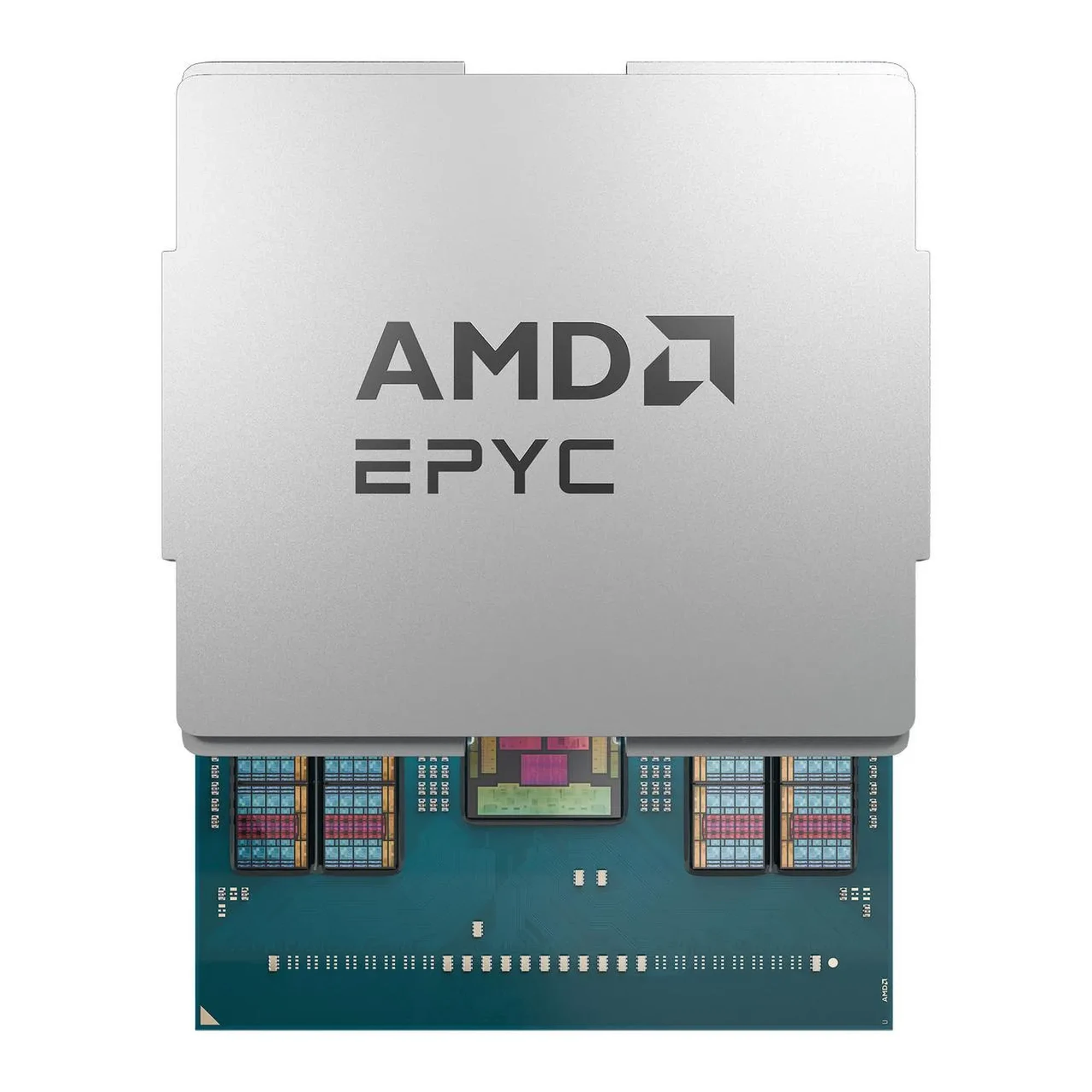
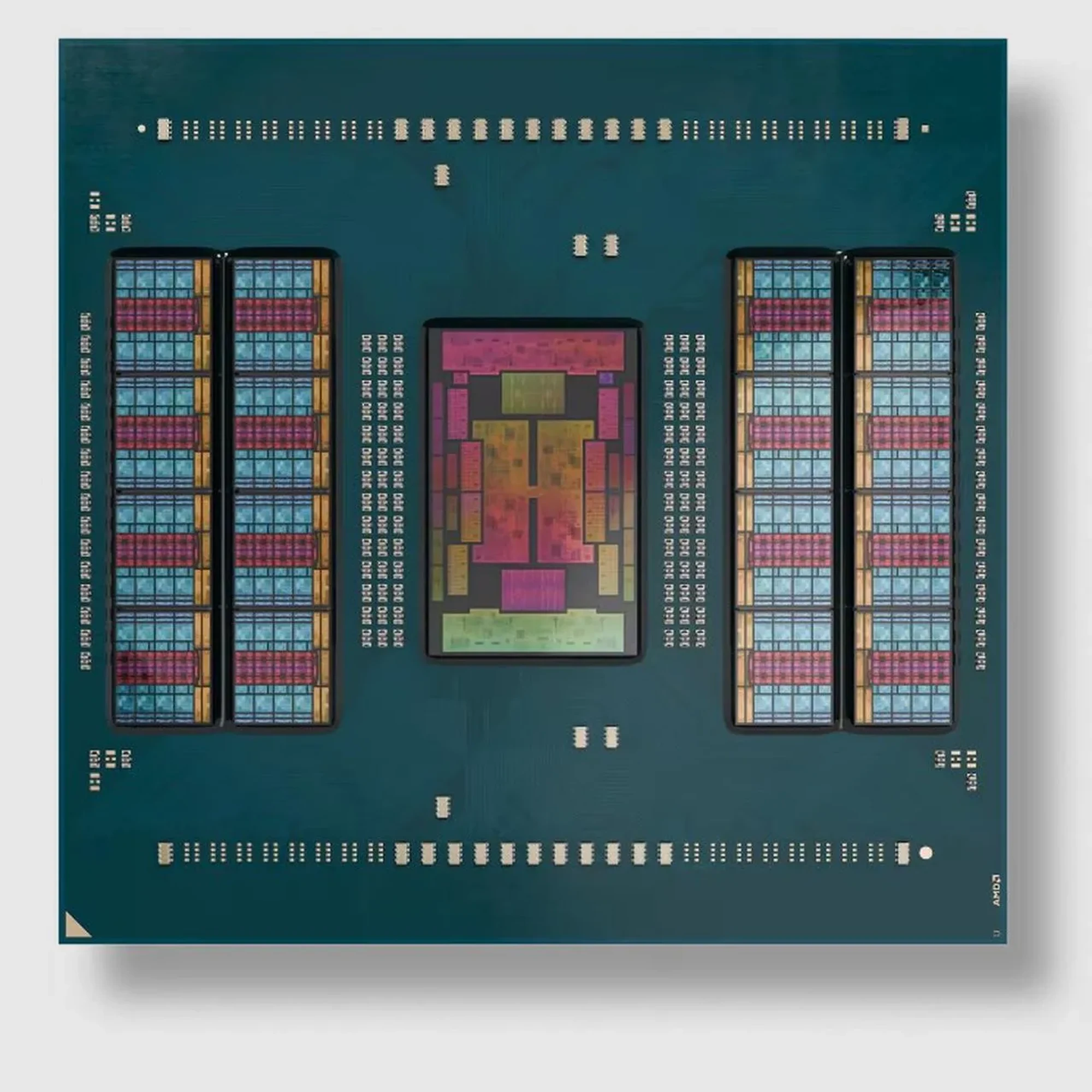
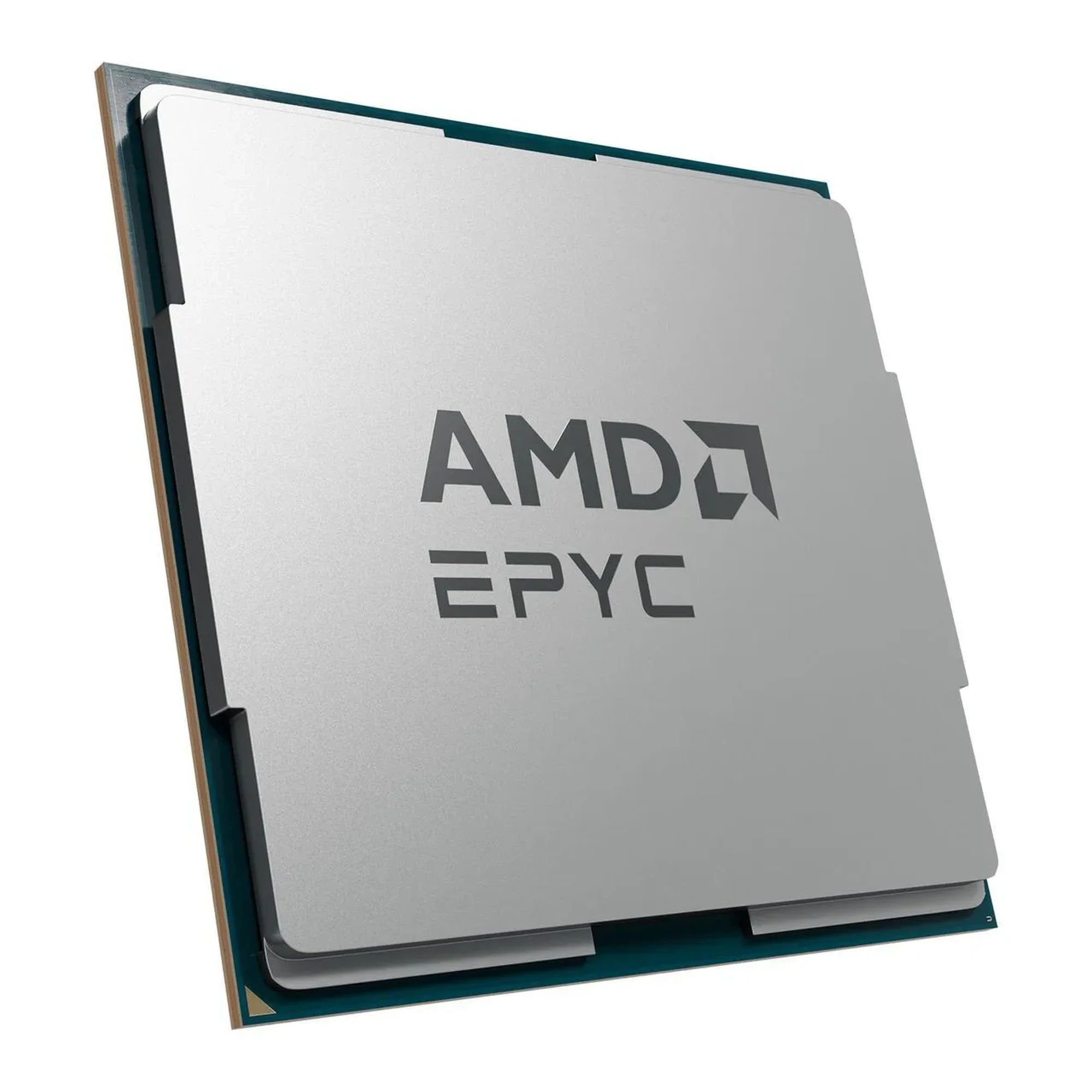
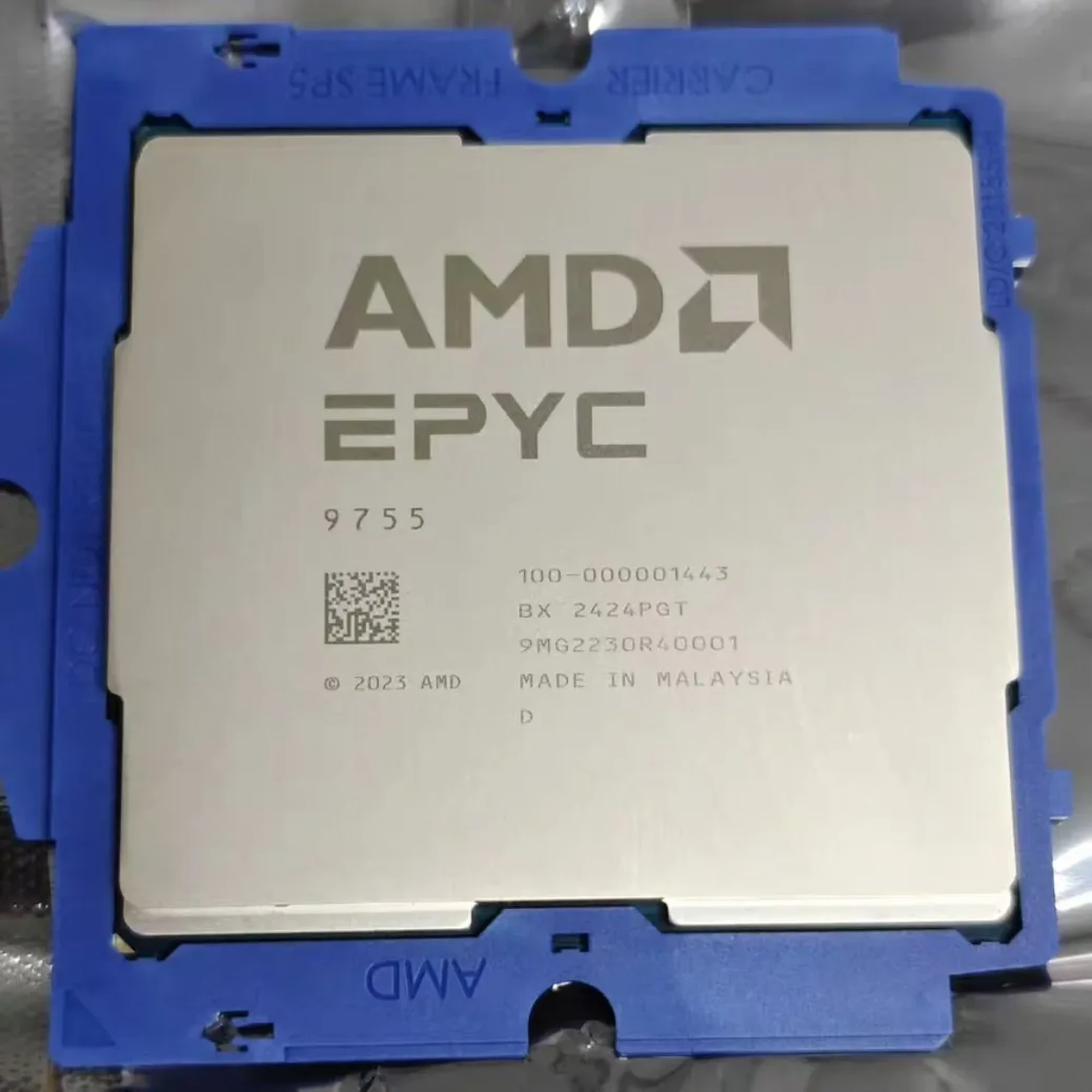
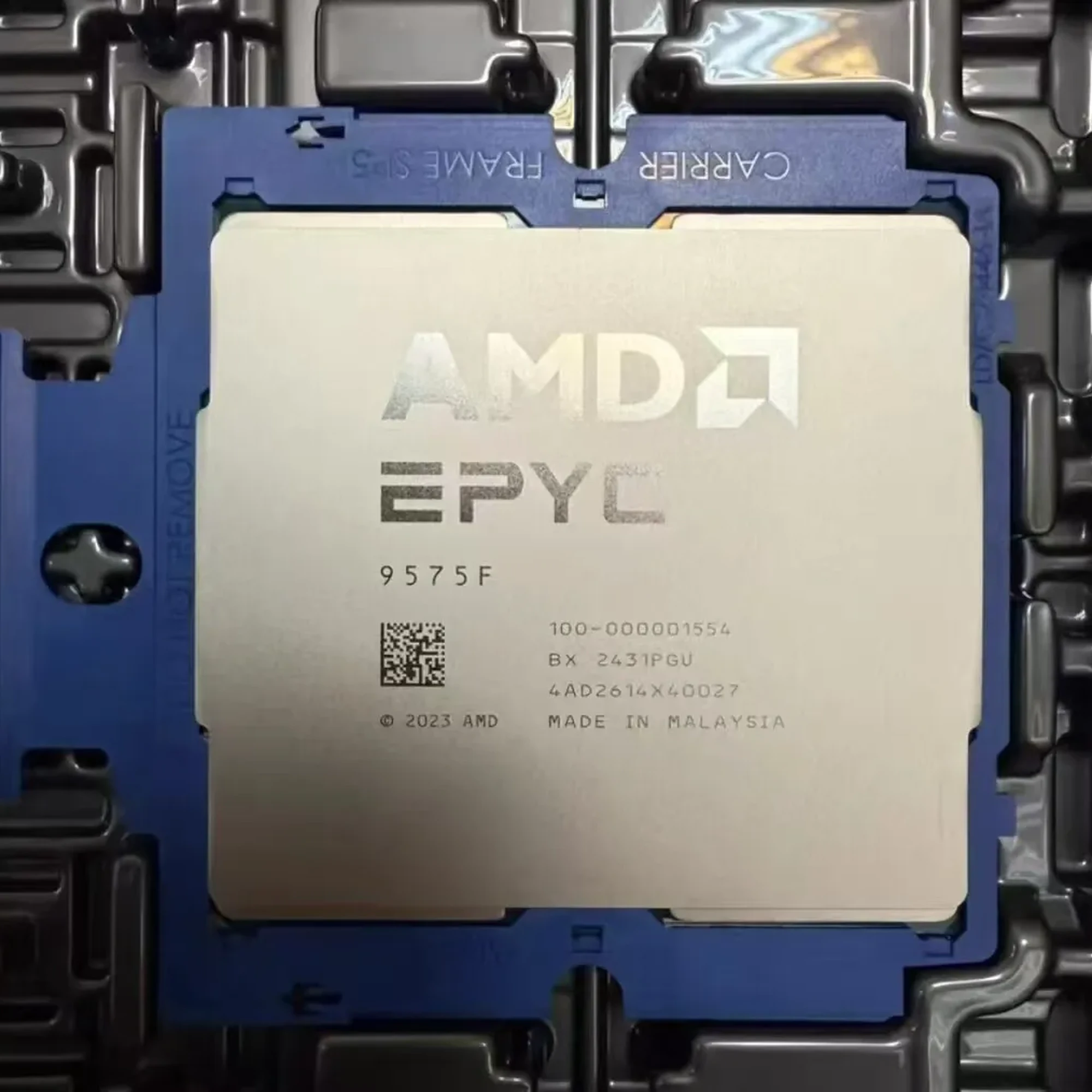
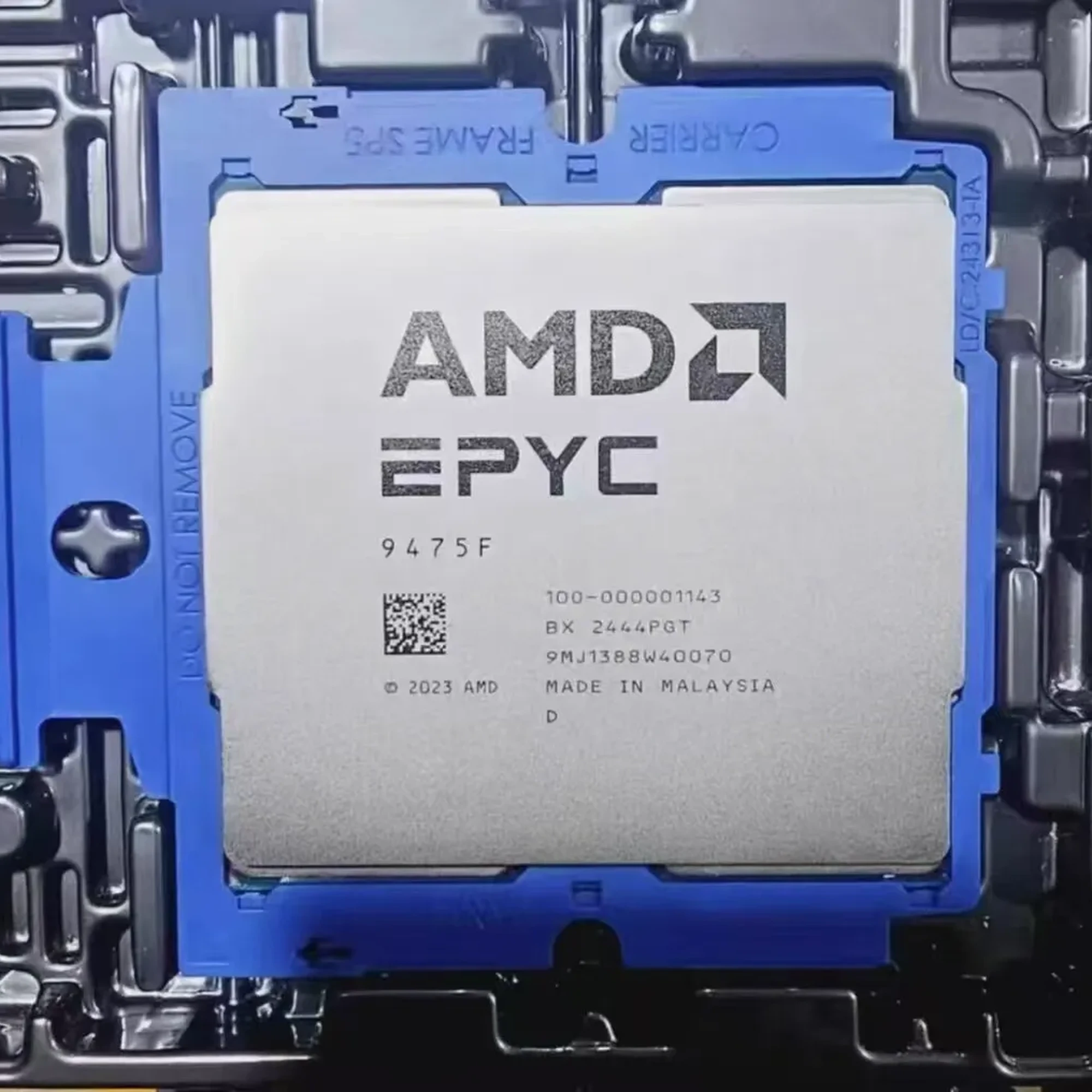
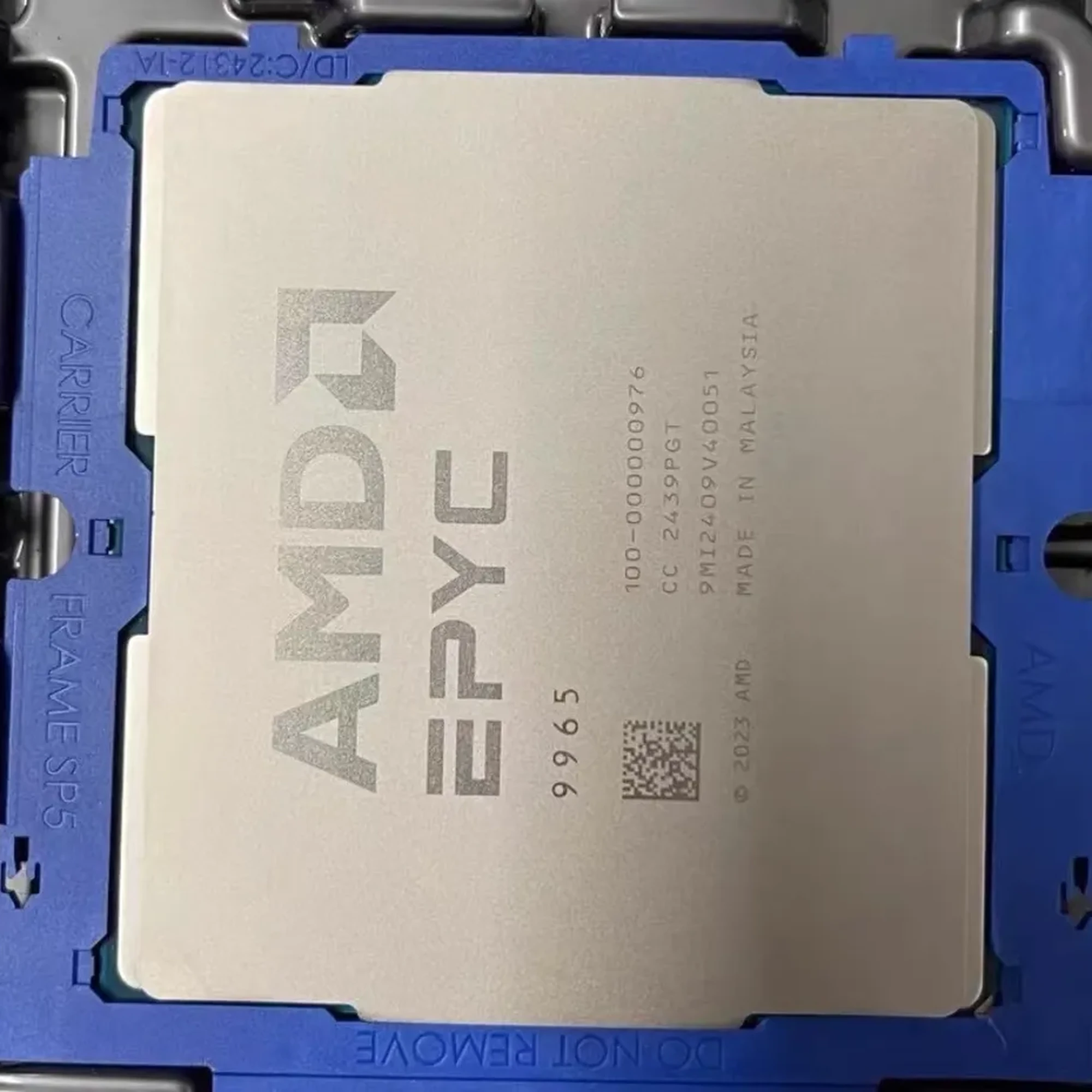

AMD EPYC 9555 5th Gen 9005 Series Server Processor – 64 Cores Zen 5 Power
Overview of AMD EPYC 9555 5th Gen Processor
The AMD EPYC 9555 is part of the advanced 5th Generation EPYC 9005 Series, designed to deliver exceptional performance, scalability, and efficiency for modern data centers. Built on the cutting-edge Zen 5 architecture, this processor represents AMD’s continued leadership in high-performance computing for enterprise environments.
With 64 cores and 128 threads, the EPYC 9555 is engineered to handle the most demanding workloads, including artificial intelligence, virtualization, cloud computing, and large-scale database management. Its robust design ensures consistent performance across multi-threaded applications, making it a preferred choice for businesses that require reliability and scalability.
AMD positions this processor as a solution for AI-enabled and business-critical workloads, emphasizing both performance density and operational efficiency.
Zen 5 Architecture and Performance Innovation
At the core of the EPYC 9555 lies the powerful Zen 5 architecture, also known as the “Turin” platform. This architecture introduces significant improvements in instruction throughput, efficiency, and processing capabilities compared to previous generations.
Manufactured using a 4nm process technology, the EPYC 9555 achieves higher transistor density and improved energy efficiency. This allows enterprises to run more workloads per server while reducing overall power consumption and operational costs.
The processor operates at a base clock speed of 3.2 GHz and can boost up to 4.4 GHz when needed. This dynamic frequency scaling ensures optimal performance across both single-threaded and multi-threaded workloads.
Massive Core Count for Enterprise Workloads
One of the defining features of the AMD EPYC 9555 is its 64-core, 128-thread configuration. This high core density enables organizations to consolidate workloads, reduce hardware footprint, and improve overall system efficiency.
The processor supports simultaneous multithreading (SMT), effectively doubling the number of threads available for execution. This makes it ideal for virtualization environments where multiple virtual machines must run concurrently without performance degradation.
For industries such as finance, healthcare, and cloud services, where parallel processing is critical, the EPYC 9555 provides a significant competitive advantage.
Advanced Cache Architecture
The EPYC 9555 features a sophisticated cache hierarchy designed to minimize latency and maximize data throughput. It includes:
- L1 Cache: 80 KB per core
- L2 Cache: 1 MB per core
- L3 Cache: 256 MB shared
The large 256 MB L3 cache is particularly beneficial for data-intensive workloads, such as analytics and AI training, where fast access to large datasets is crucial.
This cache design ensures that frequently accessed data remains close to the processing cores, reducing memory bottlenecks and improving overall system performance.
DDR5 Memory Support and Bandwidth
Memory performance plays a critical role in server efficiency, and the EPYC 9555 excels in this area with support for DDR5 memory. The processor features a 12-channel memory architecture, enabling high bandwidth and improved data throughput.
With support for memory speeds up to 6000 MT/s, the EPYC 9555 delivers exceptional performance for memory-intensive applications.
Additionally, ECC (Error-Correcting Code) memory support ensures data integrity and reliability, which is essential for mission-critical environments such as financial systems and cloud infrastructure.
PCIe 5.0 and Future-Ready Connectivity
The EPYC 9555 supports PCIe 5.0 with up to 128 lanes, providing ultra-fast connectivity for modern data center components.
This allows seamless integration with high-speed storage devices, GPUs, and networking solutions, enabling organizations to build scalable and future-proof infrastructure.
The inclusion of CXL 2.0 support further enhances memory expansion capabilities, allowing for flexible system configurations and improved performance in memory-heavy workloads.
Energy Efficiency and Thermal Design
Despite its high performance, the EPYC 9555 is designed with efficiency in mind. It has a thermal design power (TDP) of 360W, which can be configured between 320W and 400W depending on workload requirements.
This flexibility allows data centers to optimize power consumption based on their specific needs, balancing performance and energy efficiency.
The 4nm manufacturing process also contributes to improved performance-per-watt, making the EPYC 9555 a cost-effective solution for large-scale deployments.
Security and Reliability Features
Security is a critical concern for enterprise environments, and AMD addresses this with a comprehensive set of features in the EPYC 9555.
The processor supports AMD Infinity Guard technologies, including Secure Encrypted Virtualization (SEV-SNP), which protects data in use and ensures secure virtual machine isolation.
These features help safeguard sensitive data against modern cyber threats, making the EPYC 9555 suitable for industries with strict security requirements.
Virtualization and Cloud Optimization
The EPYC 9555 is optimized for virtualization and cloud-native workloads. Its high core count, large cache, and advanced memory support make it ideal for hosting multiple virtual machines and containers.
Hardware virtualization support enhances performance and reduces overhead, allowing organizations to maximize resource utilization.
This makes the processor an excellent choice for cloud service providers and enterprises building private or hybrid cloud environments.
AI and Data Analytics Performance
With increasing demand for AI and data analytics, the EPYC 9555 is designed to handle complex computational tasks efficiently.
Support for advanced instruction sets such as AVX-512 and AI acceleration features enables faster processing of machine learning workloads.
Combined with high memory bandwidth and large cache capacity, the processor delivers exceptional performance for training and inference tasks.
Scalability for Modern Data Centers
The EPYC 9555 supports dual-socket configurations, allowing organizations to scale their infrastructure as needed.
This scalability ensures that businesses can expand their computing capabilities without significant hardware changes, making it a future-proof investment.
Whether deployed in hyperscale data centers or enterprise IT environments, the EPYC 9555 provides the flexibility and performance needed to support growing workloads.
Ideal Use Cases
The AMD EPYC 9555 is suitable for a wide range of applications, including:
- Cloud computing and virtualization
- Artificial intelligence and machine learning
- High-performance computing (HPC)
- Database management systems
- Enterprise resource planning (ERP)
- Big data analytics
Its versatility and performance make it a reliable solution for organizations seeking to optimize their IT infrastructure.
Conclusion
The AMD EPYC 9555 5th Gen 9005 Series processor stands out as a powerful and versatile solution for modern data centers. With its Zen 5 architecture, high core count, advanced memory support, and robust security features, it delivers exceptional performance across a wide range of workloads.
Organizations looking to enhance efficiency, scalability, and performance will find the EPYC 9555 to be a compelling choice. Its combination of cutting-edge technology and enterprise-grade reliability ensures that it meets the demands of today’s most challenging computing environments.
Specifications Sheet
| Specification | Details |
|---|---|
| Processor Name | AMD EPYC 9555 |
| Series | EPYC 9005 (5th Gen) |
| Architecture | Zen 5 (Turin) |
| Cores / Threads | 64 / 128 |
| Base Clock | 3.2 GHz |
| Max Boost Clock | Up to 4.4 GHz |
| Cache | L1: 80KB/core, L2: 1MB/core, L3: 256MB |
| TDP | 360W (Configurable 320–400W) |
| Manufacturing Process | 4nm |
| Socket | SP5 |
| Memory Support | DDR5 |
| Memory Channels | 12-channel |
| Max Memory Speed | Up to 6000 MT/s |
| PCIe Version | PCIe 5.0 |
| PCIe Lanes | 128 |
| ECC Support | Yes |
| Virtualization | AMD-V |
| Security Features | SEV-SNP |
| Multi-Socket Support | Up to 2P |
| Release Date | October 2024 |
5th Gen AMD EPYC Server CPUs Model Specifications
Name | # of CPU Cores | # of Threads | Max. Boost Clock | Base Clock | L3 Cache | Default TDP |
|---|---|---|---|---|---|---|
| AMD EPYC™ 9965 | 192 | 384 | Up to 3.7 GHz | 2.25 GHz | 384 MB | 500W |
| AMD EPYC™ 9845 | 160 | 320 | Up to 3.7 GHz | 2.1 GHz | 320 MB | 390W |
| AMD EPYC™ 9825 | 144 | 288 | Up to 3.7 GHz | 2.2 GHz | 384 MB | 390W |
| AMD EPYC™ 9755 | 128 | 256 | Up to 4.1 GHz | 2.7 GHz | 512 MB | 500W |
| AMD EPYC™ 9745 | 128 | 256 | Up to 3.7 GHz | 2.4 GHz | 256 MB | 400W |
| AMD EPYC™ 9655P | 96 | 192 | Up to 4.5 GHz | 2.6 GHz | 384 MB | 400W |
| AMD EPYC™ 9655 | 96 | 192 | Up to 4.5 GHz | 2.6 GHz | 384 MB | 400W |
| AMD EPYC™ 9645 | 96 | 192 | Up to 3.7 GHz | 2.3 GHz | 256 MB | 320W |
| AMD EPYC™ 9575F | 64 | 128 | Up to 5 GHz | 3.3 GHz | 256 MB | 400W |
| AMD EPYC™ 9565 | 72 | 144 | Up to 4.3 GHz | 3.15 GHz | 384 MB | 400W |
| AMD EPYC™ 9555P | 64 | 128 | Up to 4.4 GHz | 3.2 GHz | 256 MB | 360W |
| AMD EPYC™ 9555 | 64 | 128 | Up to 4.4 GHz | 3.2 GHz | 256 MB | 360W |
| AMD EPYC™ 9535 | 64 | 128 | Up to 4.3 GHz | 2.4 GHz | 256 MB | 300W |
| AMD EPYC™ 9475F | 48 | 96 | Up to 4.8 GHz | 3.65 GHz | 256 MB | 400W |
| AMD EPYC™ 9455P | 48 | 96 | Up to 4.4 GHz | 3.15 GHz | 256 MB | 300W |
| AMD EPYC™ 9455 | 48 | 96 | Up to 4.4 GHz | 3.15 GHz | 256 MB | 300W |
| AMD EPYC™ 9375F | 32 | 64 | Up to 4.8 GHz | 3.8 GHz | 256 MB | 320W |
| AMD EPYC™ 9365 | 36 | 72 | Up to 4.3 GHz | 3.4 GHz | 192 MB | 300W |
| AMD EPYC™ 9355P | 32 | 64 | Up to 4.4 GHz | 3.55 GHz | 256 MB | 280W |
| AMD EPYC™ 9355 | 32 | 64 | Up to 4.4 GHz | 3.55 GHz | 256 MB | 280W |
| AMD EPYC™ 9335 | 32 | 64 | Up to 4.4 GHz | 3 GHz | 128 MB | 210W |
| AMD EPYC™ 9275F | 24 | 48 | Up to 4.8 GHz | 4.1 GHz | 256 MB | 320W |
| AMD EPYC™ 9255 | 24 | 48 | Up to 4.3 GHz | 3.2 GHz | 128 MB | 200W |
| AMD EPYC™ 9175F | 16 | 32 | Up to 5 GHz | 4.2 GHz | 512 MB | 320W |
| AMD EPYC™ 9135 | 16 | 32 | Up to 4.3 GHz | 3.65 GHz | 64 MB | 200W |
| AMD EPYC™ 9115 | 16 | 32 | Up to 4.1 GHz | 2.6 GHz | 64 MB | 125W |
| AMD EPYC™ 9015 | 8 | 16 | Up to 4.1 GHz | 3.6 GHz | 64 MB | 125W |