
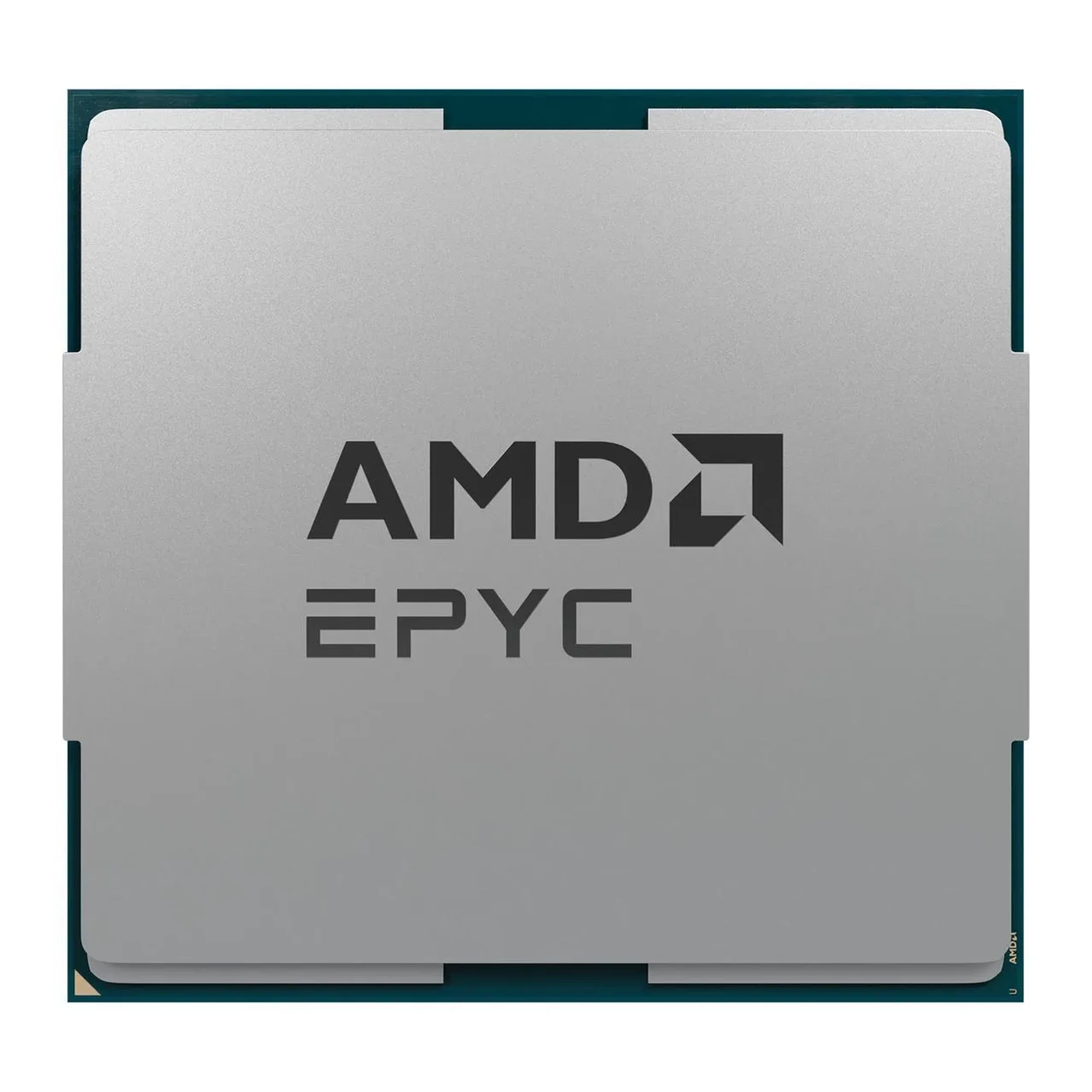
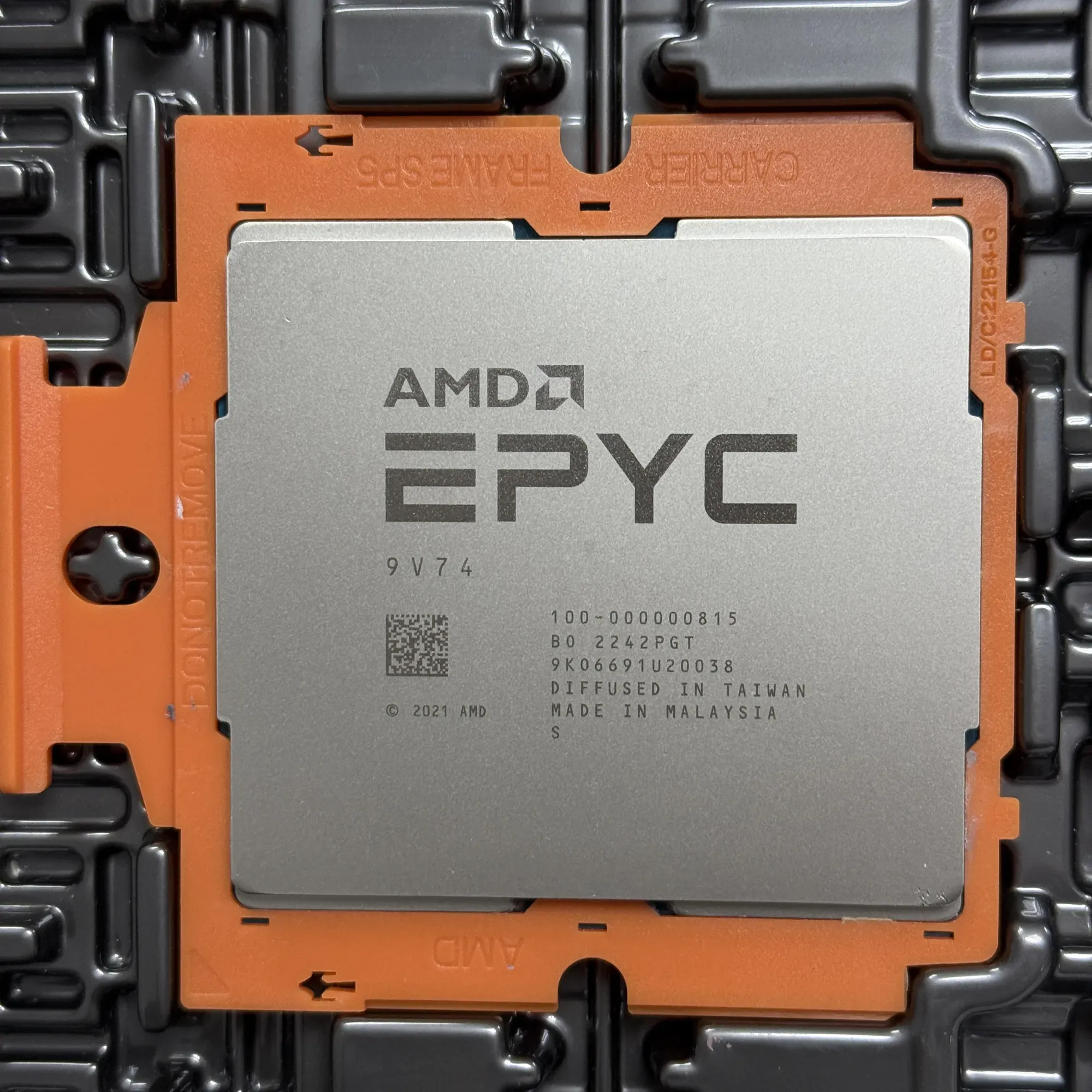
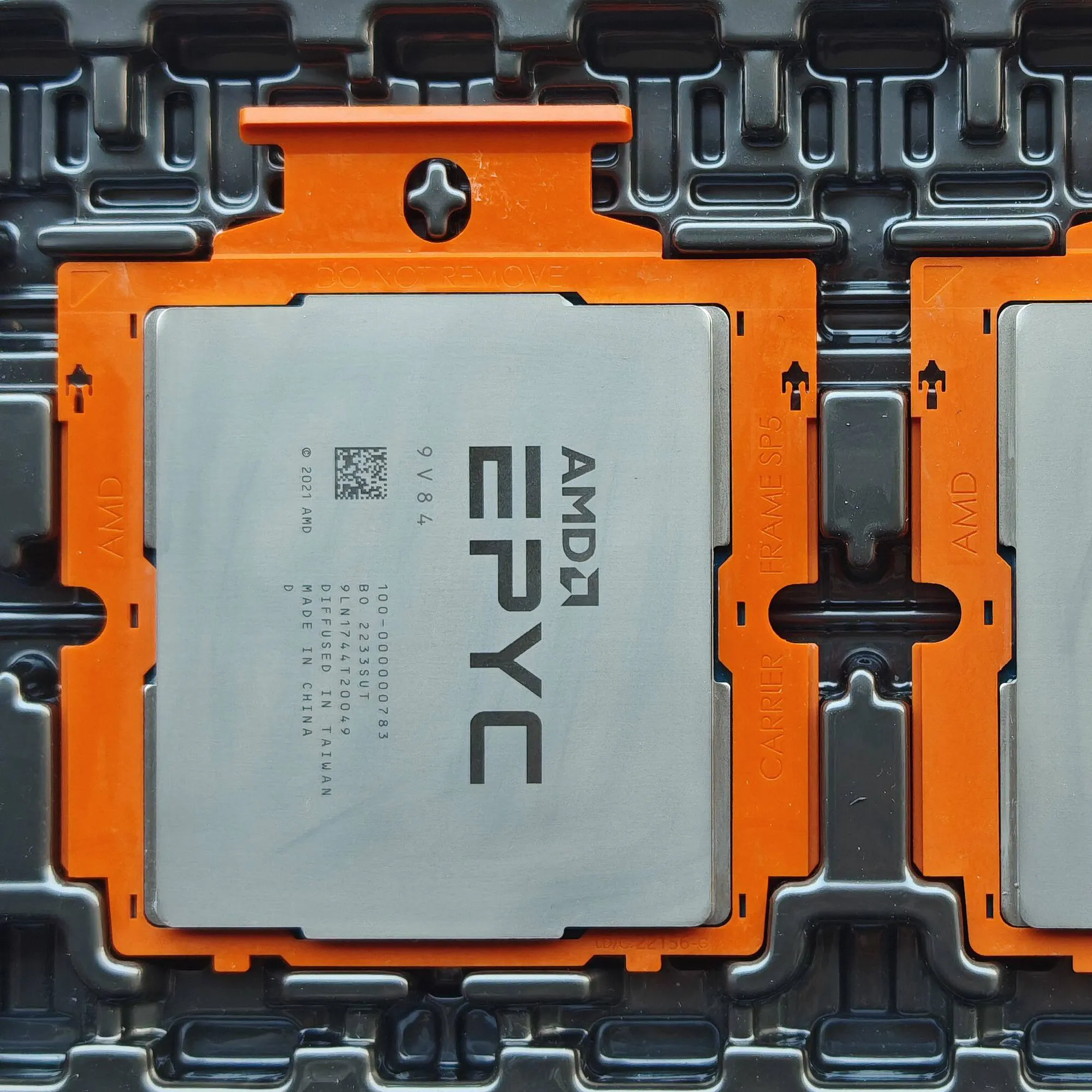
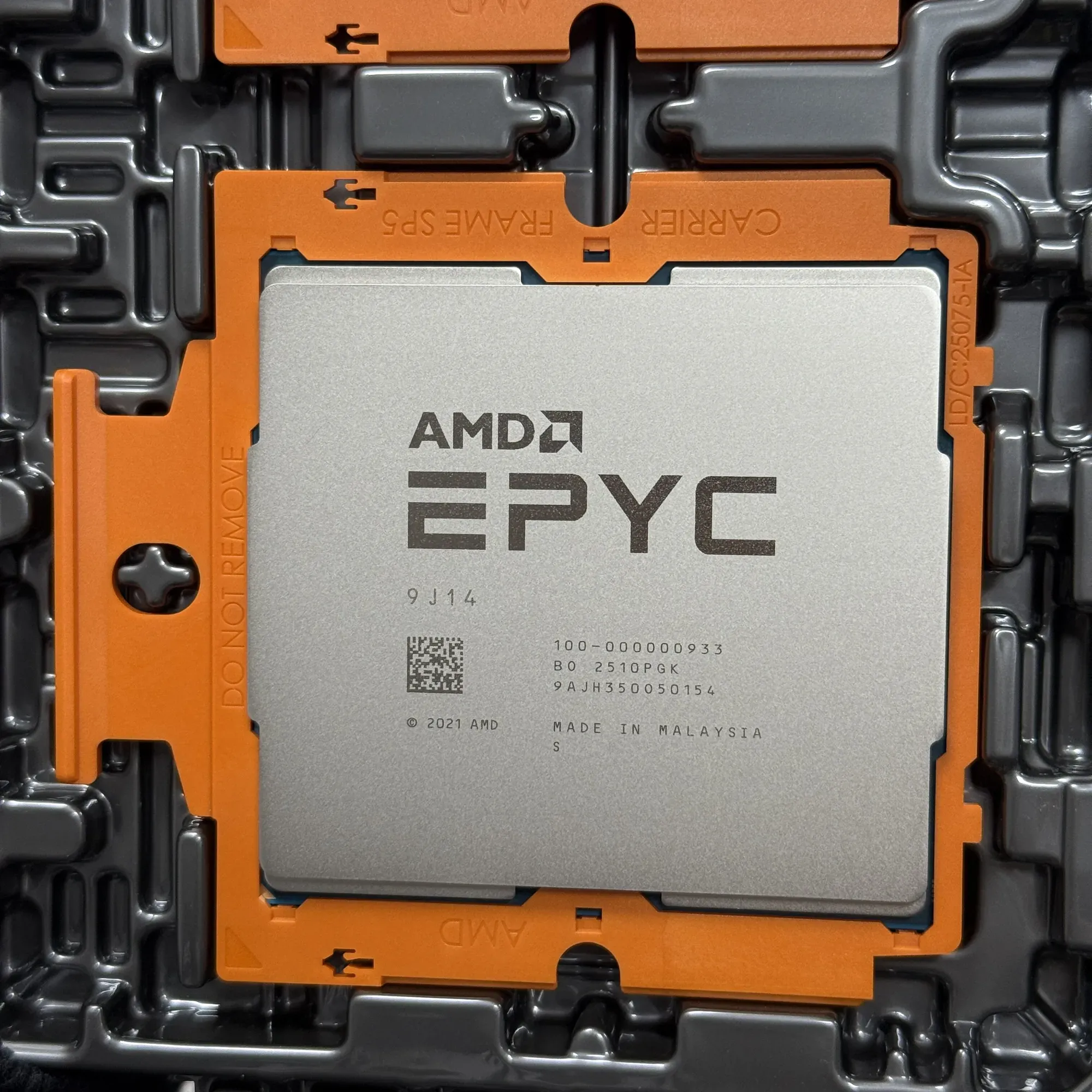
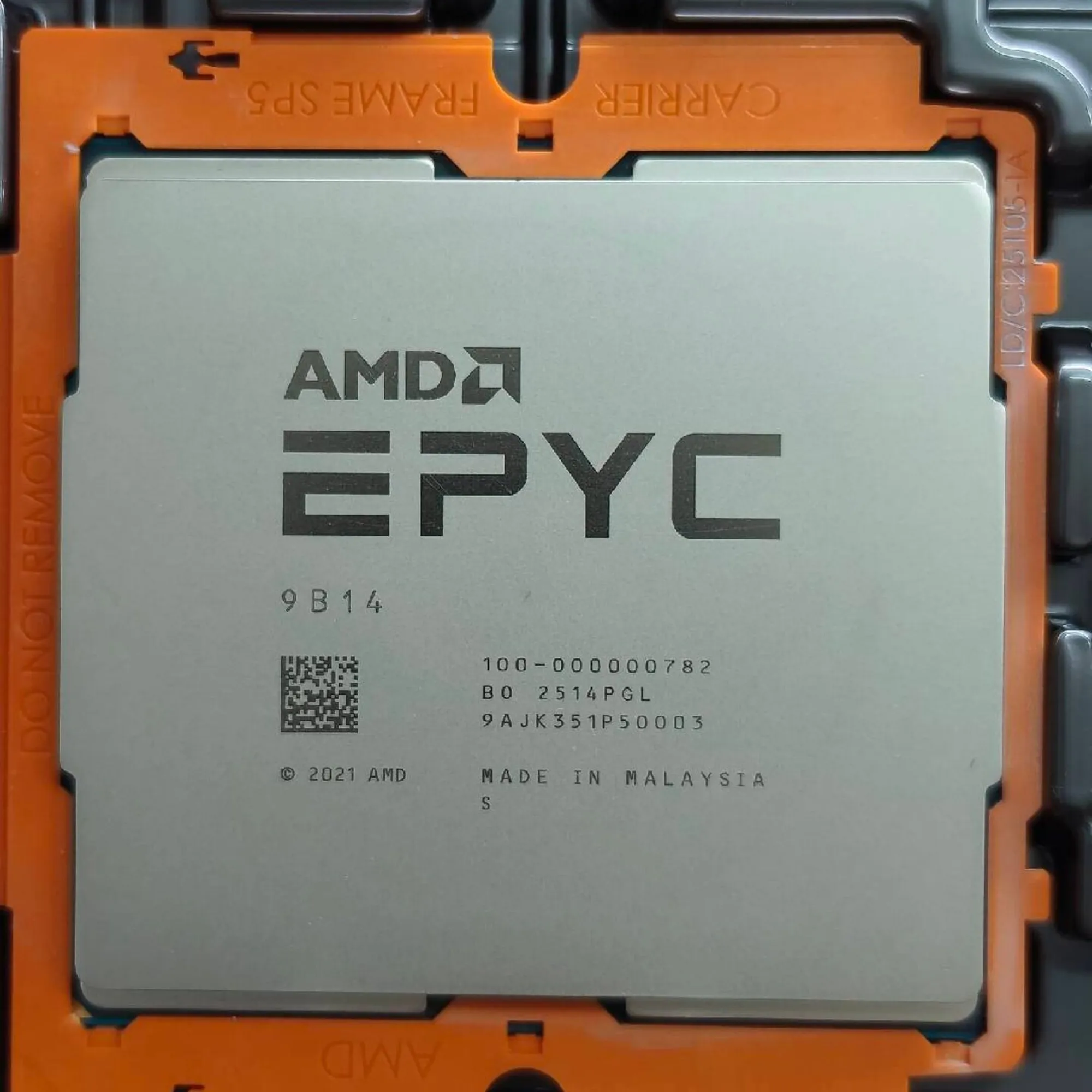
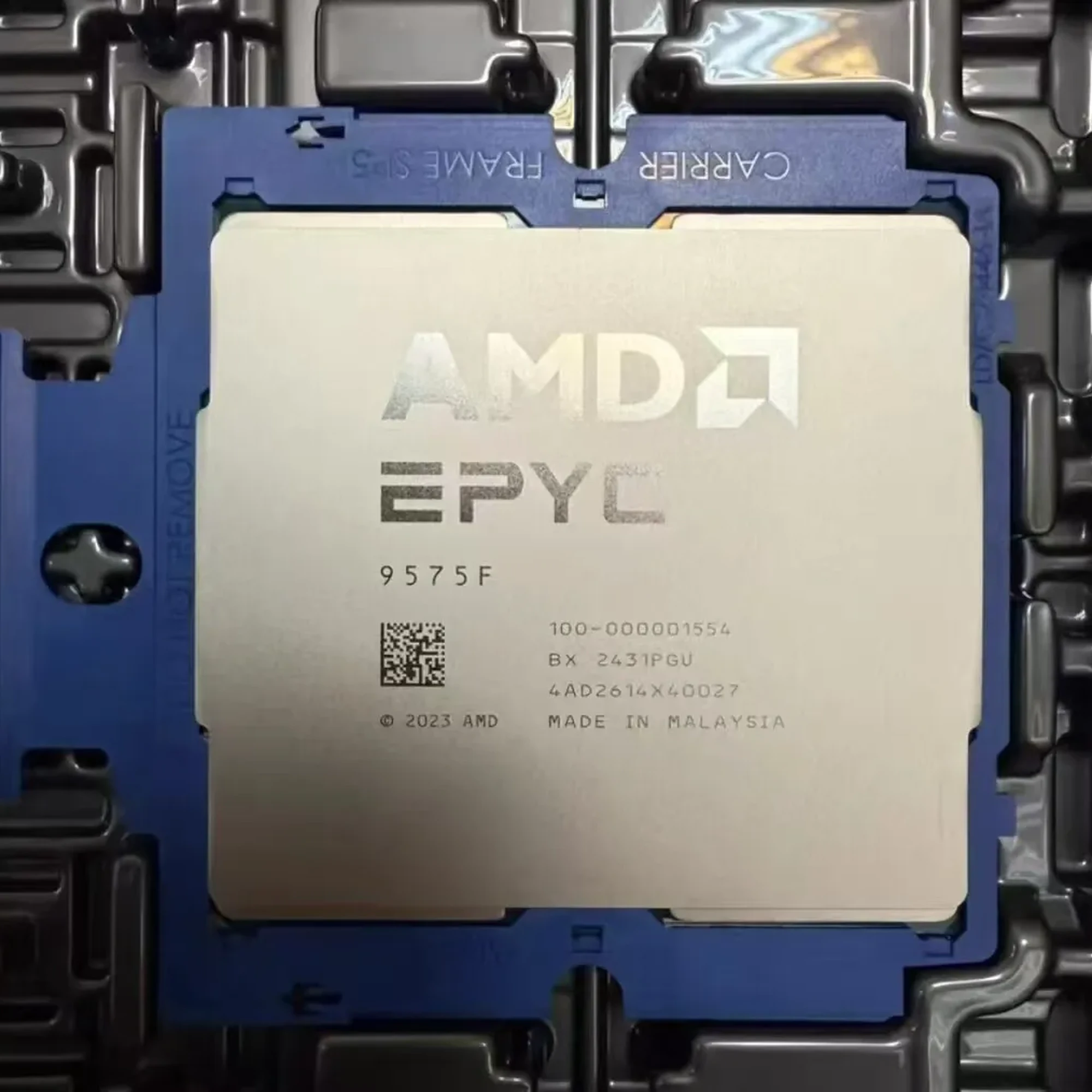
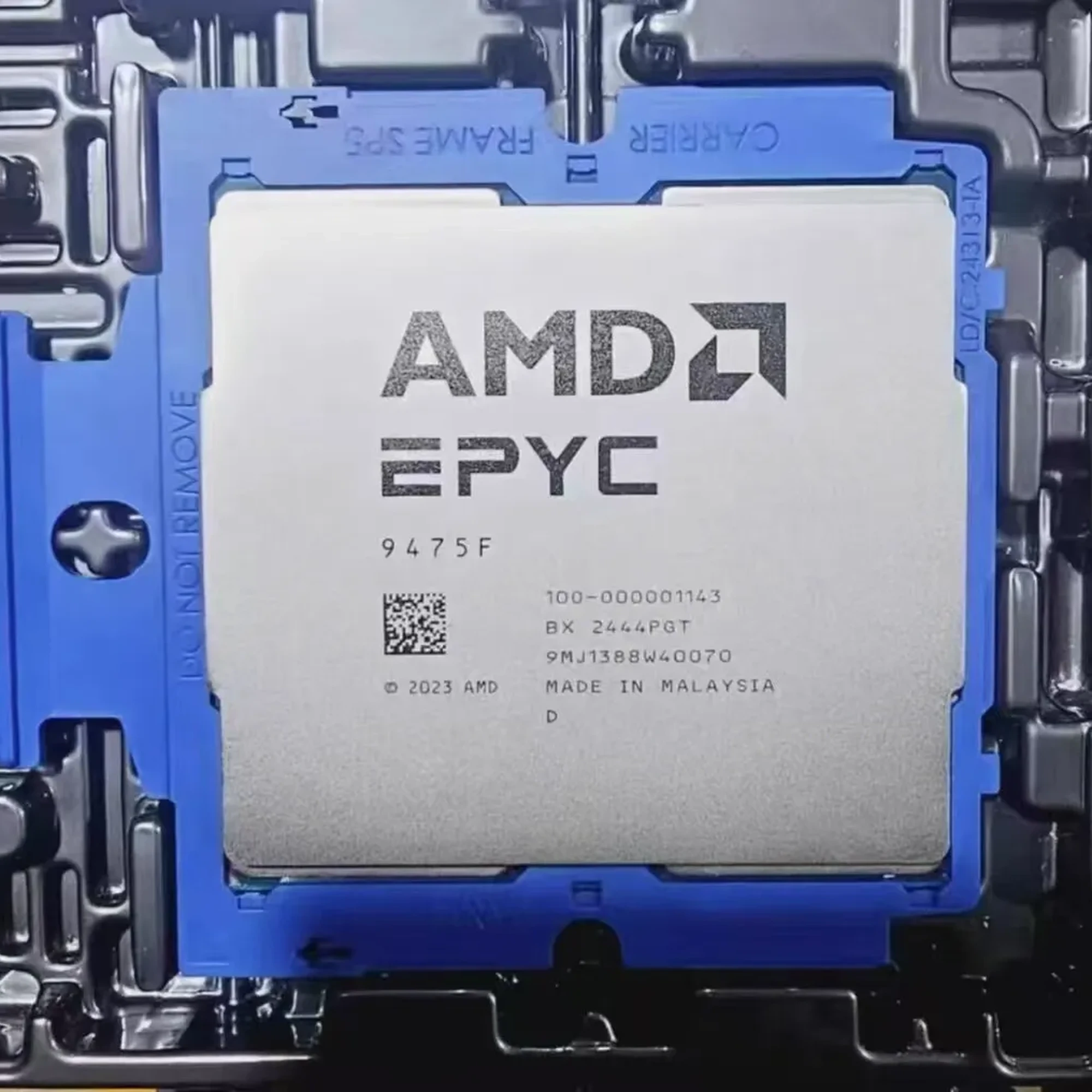
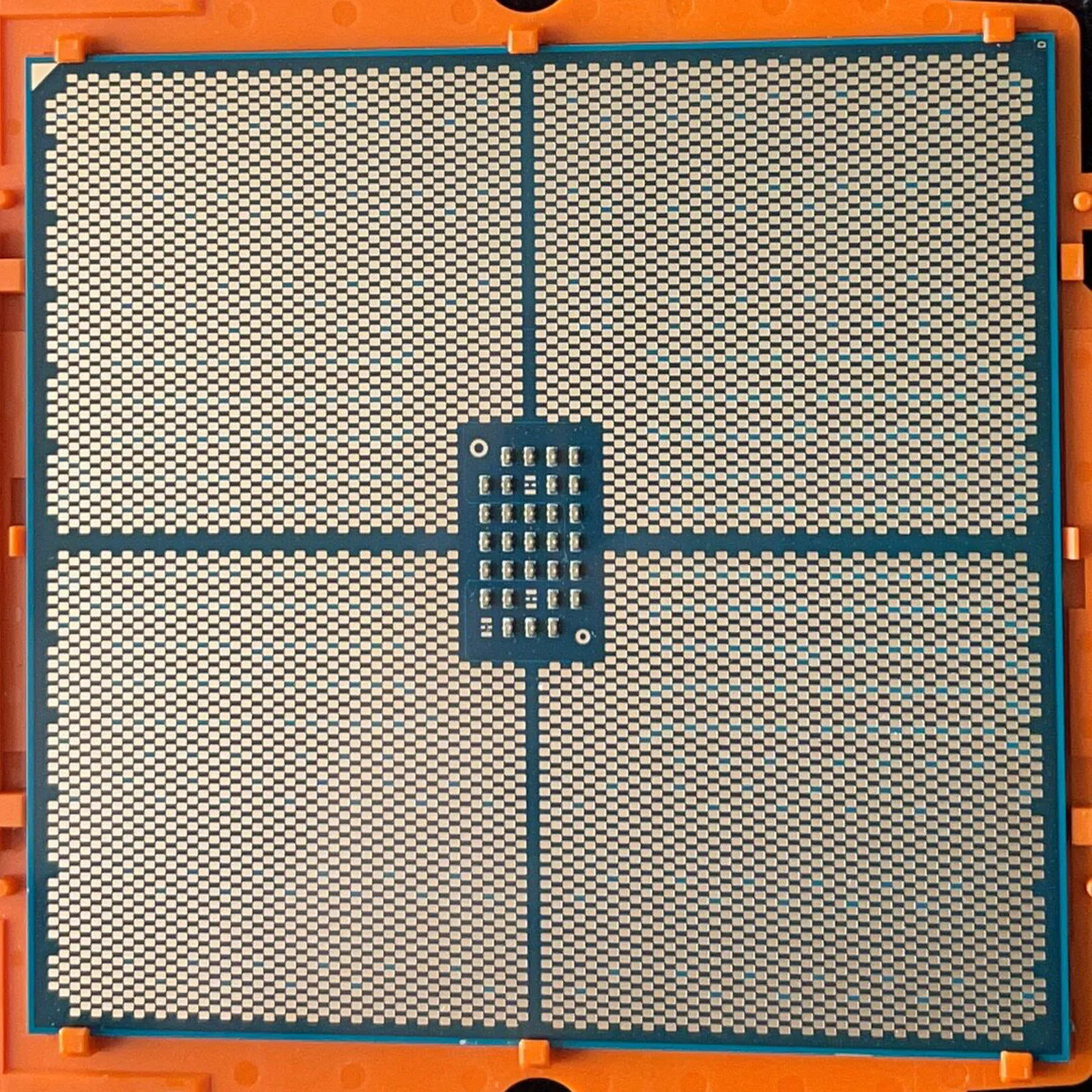
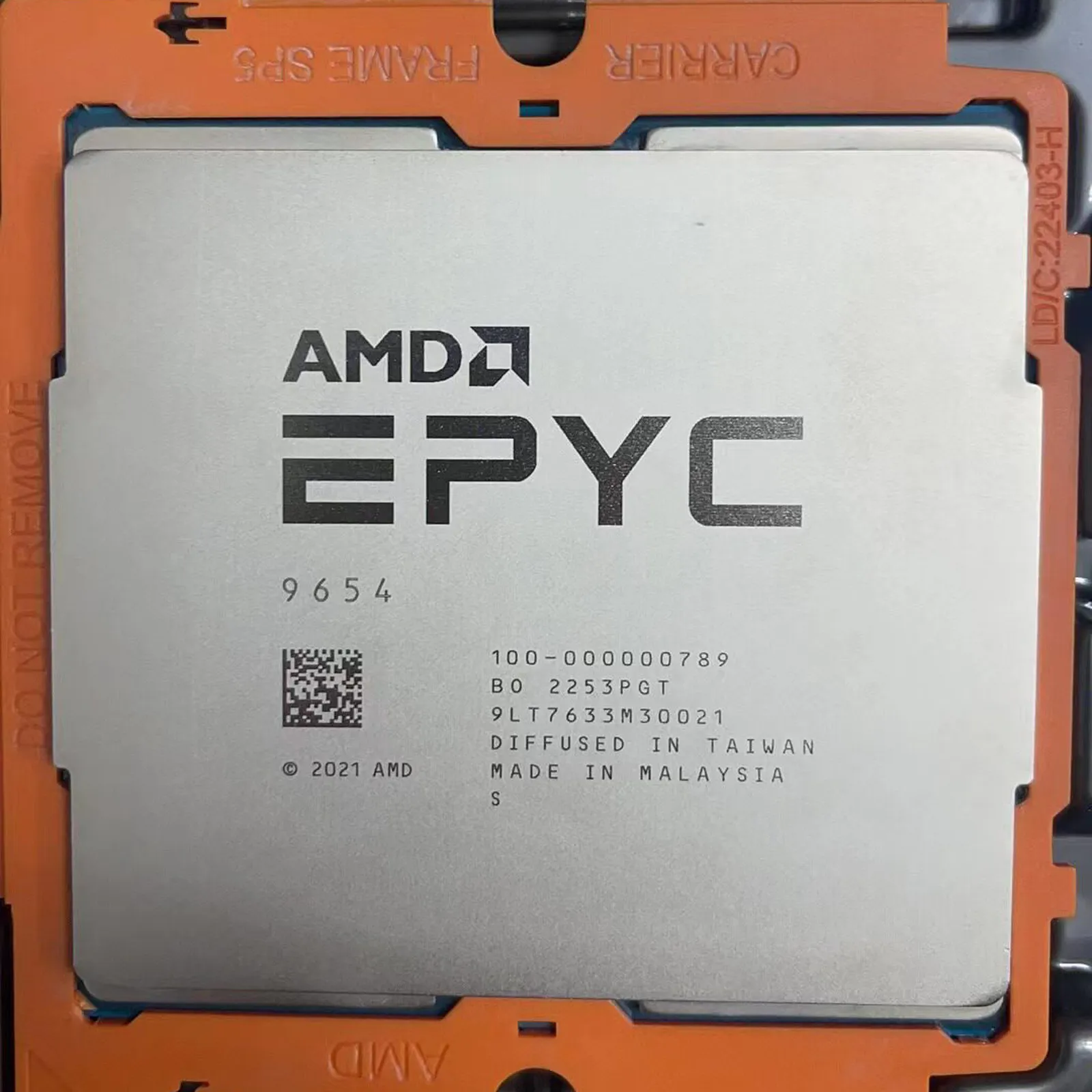
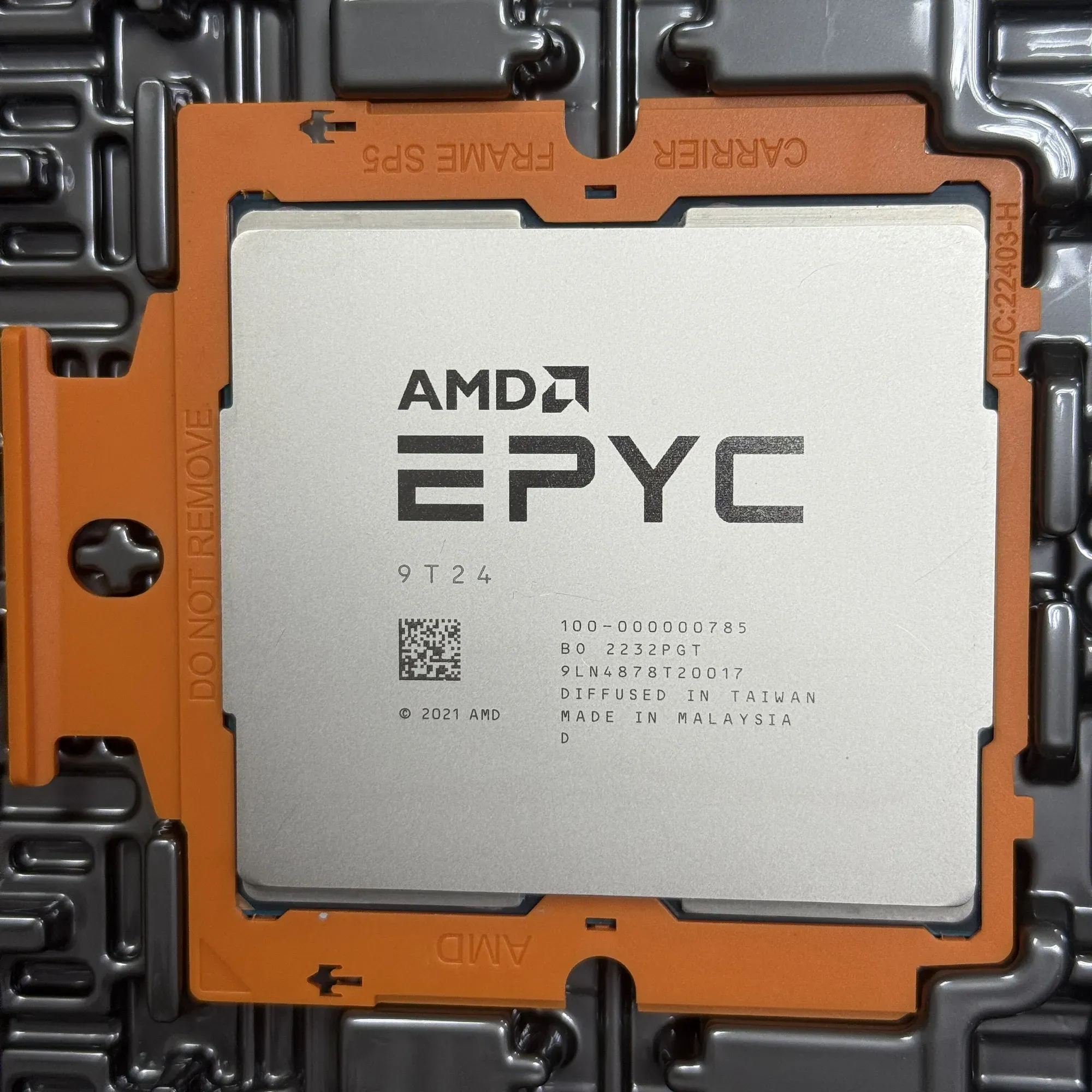
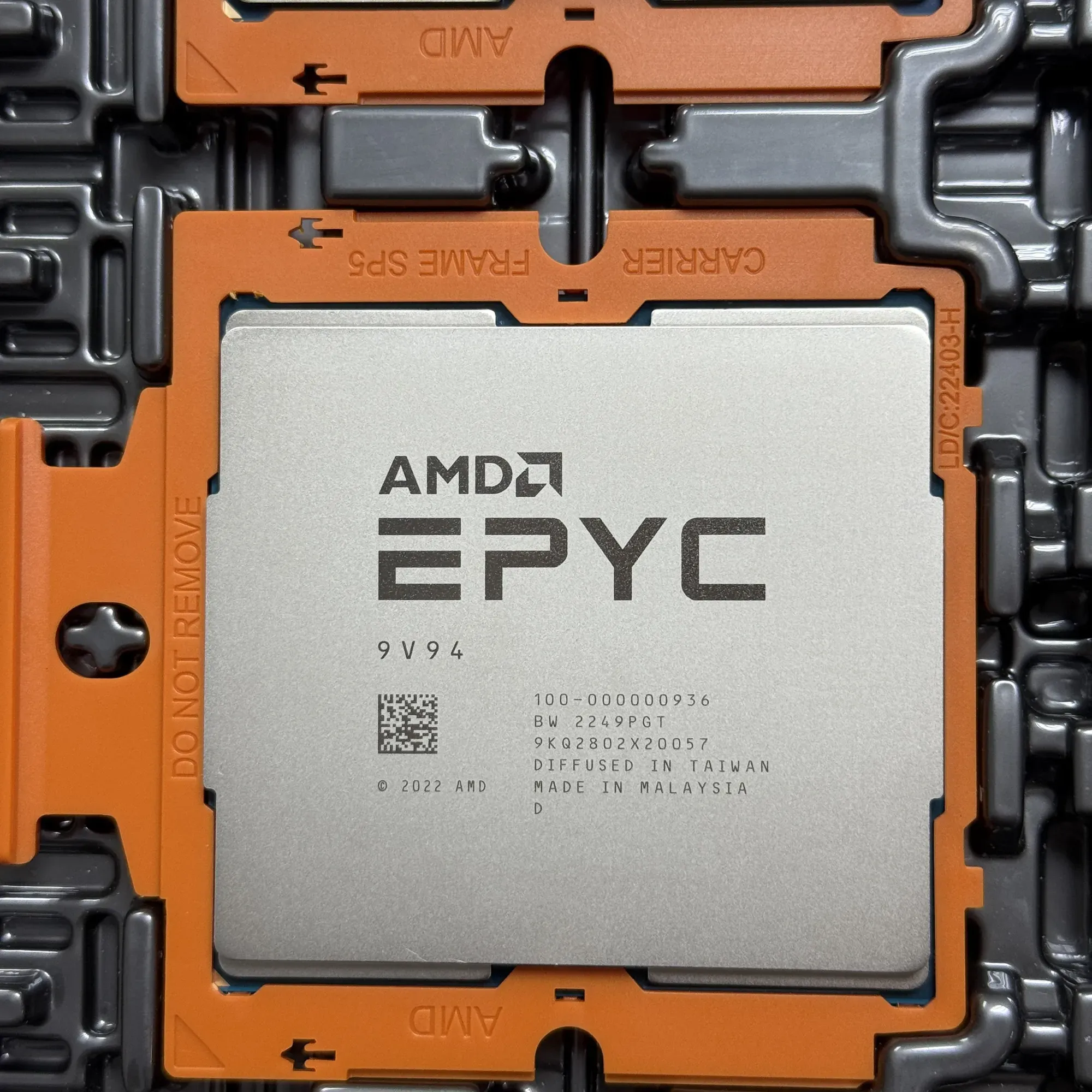
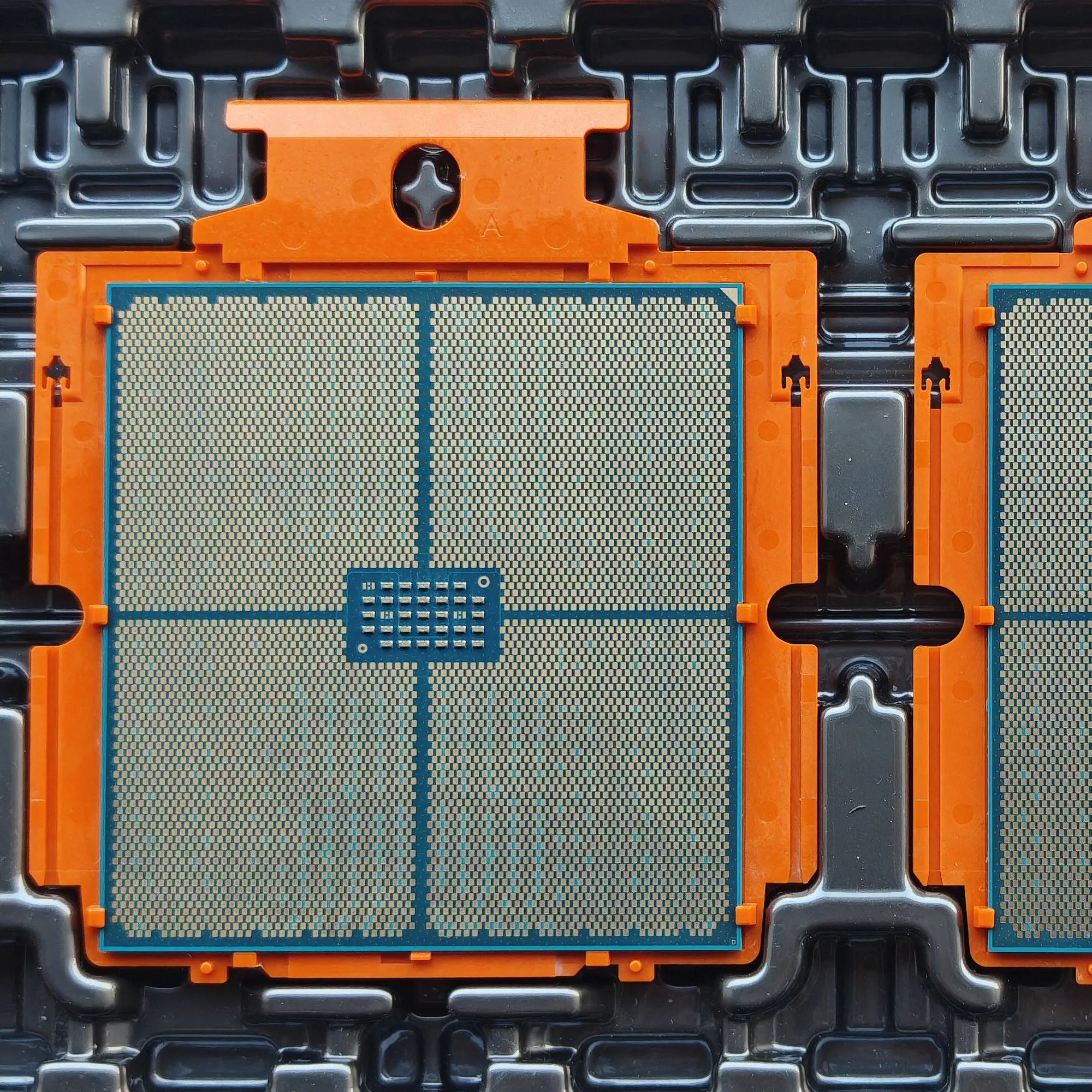

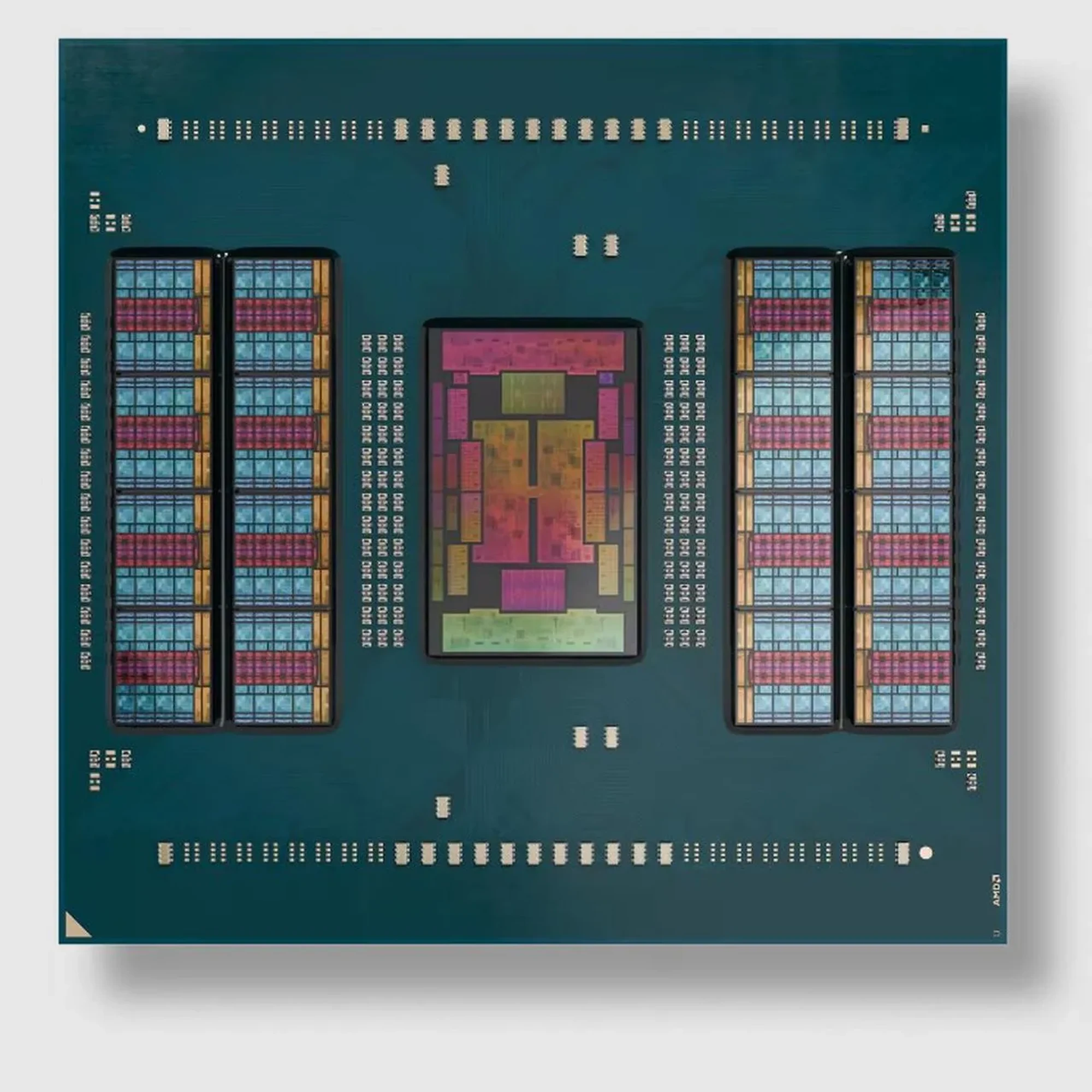
AMD EPYC™ 9365 Server Processor | 64-Core 3nm CPU, 3.5GHz Boost, DDR5-6400, PCIe 5.0 for Mid-Range Enterprise Data Centers
| Specification | Details |
|---|---|
| Product Name | AMD EPYC™ 9365 Server Processor |
| Product Series | AMD EPYC 9005 Series (Turin) |
| Launch Date | October 10, 2024 |
| Process Technology | 3nm (TSMC) |
| Core Architecture | Turin (Zen 5c) |
| Total Cores | 64 |
| Total Threads | 128 (SMT Enabled) |
| Base Clock Speed | 2.0 GHz |
| Max Boost Clock | Up to 3.5 GHz |
| All-Core Boost Speed | 3.0 GHz |
| L1 Cache | 80 KB per core (5.12 MB total) |
| L2 Cache | 1 MB per core (64 MB total) |
| L3 Cache | 128 MB (shared) |
| TDP (Thermal Design Power) | 225W (cTDP: 180W – 240W) |
| Socket Type | AMD Socket SP5 (FC-LGA6096) |
| Supported Configurations | 1P (1-processor), 2P (2-processor) |
| Memory Type | DDR5 (up to 6400 MT/s) |
| Memory Channels | 8 per socket |
| Max Memory Capacity | 4 TB per socket |
| Memory Bandwidth | 409.6 GB/s per socket |
| ECC Memory Support | Yes |
| PCIe Version | PCIe 5.0 |
| PCIe Lanes | 64 per socket |
| Supported Technologies | AMD Infinity Guard, AMD Infinity Architecture, SMT, Precision Boost |
| Workload Affinity | Analytics, App Dev/Test, Content Mgmt, Virtualization, VDI, VM Density, Web Serving, Business-Critical Apps |
| Product ID (Tray) | 100-000001462 |
| 1KU Pricing | $4,299 USD |
| Global Availability | Yes (North America, EMEA, APJ, China, Latin America) |
In the evolving landscape of enterprise IT, mid-range data centers and growing businesses require a server processor that balances performance, efficiency, and cost-effectiveness—without compromising on reliability or scalability. The AMD EPYC™ 9365 Server Processor, part of AMD’s EPYC 9005 series (codenamed Turin), emerges as the ideal solution for this segment. Built on TSMC’s advanced 3nm process technology and AMD’s innovative Turin architecture, this 64-core server CPU delivers the perfect blend of processing power, energy efficiency, and connectivity to support the diverse needs of mid-range enterprise workloads. Whether deployed for virtualization, data analytics, web serving, or business-critical applications, the EPYC 9365 empowers organizations to optimize their IT infrastructure, reduce operational costs, and scale with confidence.
Balanced Core Performance: 64 Cores for Mid-Range Enterprise Workloads
At the heart of the AMD EPYC 9365 lies a thoughtfully designed configuration that caters specifically to mid-range data center needs. Leveraging AMD’s Turin architecture and TSMC’s 3nm process, the processor features 64 physical cores and 128 threads (enabled by AMD’s Simultaneous Multithreading, SMT), providing robust parallel processing capabilities that excel in multi-threaded workloads. Unlike high-end processors that offer excessive core density for most mid-range use cases, the EPYC 9365 strikes a balance—delivering enough processing power to handle concurrent tasks, virtual machines (VMs), and containerized applications, while avoiding the unnecessary cost of unused cores.
The processor’s clock speed specifications further enhance its versatility: a 2.0GHz base clock ensures consistent, reliable performance for routine workloads such as web serving, database management, and light virtualization. For latency-sensitive tasks that require single-threaded performance—such as application hosting and transaction processing—the EPYC 9365 boasts a 3.5GHz maximum boost clock, delivering the speed needed to keep critical applications running smoothly. Additionally, the processor features an all-core boost speed of 3.0GHz, ensuring that even when all 64 cores are fully utilized (e.g., during peak data analytics or virtualization workloads), performance remains consistent without throttling.
When compared to legacy mid-range server processors—such as the Intel Xeon E5-2690 v4 (14 cores, 28 threads, 14nm process)—the EPYC 9365 delivers a 4.5x increase in core count and a 4.5x increase in thread count, alongside a generational leap to 3nm process technology. This translates to significantly faster multi-threaded performance, improved energy efficiency, and the ability to run more VMs or applications on a single server—reducing the physical server footprint and lowering operational costs for mid-range data centers.
Robust Memory & Connectivity: DDR5-6400 & PCIe 5.0 for Seamless Data Flow
Mid-range data centers often face bottlenecks from outdated memory and connectivity, which can hinder performance for memory-intensive workloads like data analytics and virtualization. The AMD EPYC 9365 addresses this challenge with industry-leading memory and connectivity features, engineered to ensure seamless data flow between the processor, memory, and storage subsystems.
The processor supports DDR5 memory with speeds of up to 6400 MT/s (megatransfers per second), making it ideal for memory-intensive tasks such as in-memory databases, data mining, and virtualization. With 8 memory channels per socket, the EPYC 9365 delivers a per-socket memory bandwidth of up to 409.6 GB/s—more than 20x the bandwidth of the Intel Xeon E5-2690 v4—and a maximum memory capacity of 4 TB per socket. This ample memory capacity and bandwidth enable mid-range data centers to handle large datasets without compromising performance, eliminating the need for costly memory upgrades.
In addition to its advanced memory support, the EPYC 9365 features PCIe 5.0 connectivity with 64 PCIe 5.0 lanes per socket. PCIe 5.0 offers twice the bandwidth of PCIe 4.0 (up to 32 GT/s per lane), facilitating faster data transfer between the processor and high-speed peripherals such as NVMe SSDs, network interface cards (NICs), and entry-level GPUs. This capability is critical for mid-range data centers looking to upgrade their storage and networking infrastructure, as it enables faster access to data and improved I/O throughput for virtualization and cloud workloads.
The processor also supports ECC (Error-Correcting Code) memory, a non-negotiable feature for mid-range enterprise environments managing business-critical data. ECC memory detects and corrects single-bit errors and identifies multi-bit errors, ensuring data integrity and preventing system failures that could result in costly downtime. With ECC support, the EPYC 9365 provides the level of reliability required for organizations to run mission-critical applications with confidence.
3nm Process Technology: Efficiency & Cost Savings for Mid-Range Data Centers
For mid-range data centers, energy efficiency directly impacts operational costs—making it a key consideration when selecting server hardware. The AMD EPYC 9365, manufactured using TSMC’s 3nm process technology, delivers a significant improvement in power efficiency compared to previous-generation mid-range server processors. The 3nm process reduces transistor size, allowing AMD to integrate 64 cores into a compact die while minimizing power consumption per core. This translates to enhanced performance per watt—a critical metric for mid-range organizations seeking to reduce their carbon footprint and lower electricity bills.
The EPYC 9365 features a default TDP (Thermal Design Power) of 225W, with AMD’s Configurable TDP (cTDP) technology enabling operators to adjust power consumption between 180W and 240W based on workload requirements. This flexibility allows mid-range data centers to optimize power usage across different scenarios—reducing power consumption during off-peak hours or for less demanding tasks, and increasing power allocation to support peak performance when needed. While the EPYC 9365’s TDP is higher than that of legacy mid-range processors like the Intel Xeon E5-2690 v4 (135W), this difference reflects its significantly higher core count and performance capabilities, and its 3nm process ensures superior performance per watt compared to older, less efficient processors.
The 3nm process also enhances thermal management, allowing the EPYC 9365 to operate at lower temperatures even under heavy workloads. This reduces the need for expensive cooling solutions, further lowering operational costs for mid-range data centers. Additionally, the processor’s advanced power management features—including AMD’s Precision Boost technology—dynamically adjust clock speeds based on workload demand, ensuring efficient power utilization and optimal performance at all times.
Enterprise-Grade Security & Reliability: Built for Mid-Range Needs
Mid-range data centers may not have the same security resources as large enterprises, but they still handle sensitive data that requires robust protection. The AMD EPYC 9365 is equipped with a comprehensive suite of advanced security features designed to protect sensitive data and ensure system integrity, making it suitable for organizations in industries such as healthcare, finance, and education.
The processor incorporates AMD Infinity Guard, a robust security framework that provides hardware-level protection against a wide range of threats, including malware, data breaches, and unauthorized access. Key security features of the EPYC 9365 include secure boot, which ensures that only trusted firmware and operating systems are loaded during system initialization; memory encryption, which encrypts data in memory to prevent unauthorized access in the event of a system compromise; and secure virtualization, which isolates VMs to mitigate cross-VM attack vectors. These features are essential for mid-range organizations looking to comply with industry regulations (such as HIPAA and GDPR) and protect their customers’ data.
In addition to its security capabilities, the EPYC 9365 is engineered for maximum reliability, with a design that meets the stringent requirements of enterprise-grade environments. The processor supports 1P (1-processor) and 2P (2-processor) configurations, enabling mid-range data centers to scale their systems as their workloads grow. It also features an extended product lifecycle, ensuring that organizations can deploy the processor with confidence, knowing it will receive long-term support and updates.
Workload Versatility: Optimized for Mid-Range Enterprise Needs
The AMD EPYC 9365 is a versatile processor optimized for a wide range of mid-range enterprise workloads, making it an ideal choice for organizations with diverse computing needs. Its balanced core count, fast memory bandwidth, and PCIe 5.0 connectivity make it particularly well-suited for the following applications:
- Virtualization & Cloud Computing: With 128 threads and robust support for multiple VMs, the EPYC 9365 is perfect for mid-range cloud service providers and enterprises looking to maximize VM density and reduce server costs. It can easily handle dozens of VMs simultaneously, making it ideal for private cloud and virtual desktop infrastructure (VDI) deployments.
- Data Analytics & Business Intelligence: The processor’s 64 cores and high memory bandwidth enable fast processing of large datasets, making it well-suited for data analytics, business intelligence, and data warehousing workloads. It reduces time-to-insight for mid-range organizations, enabling faster decision-making.
- Web Serving & Content Delivery: The EPYC 9365’s efficient performance and high core count make it ideal for web servers, content delivery networks (CDNs), and e-commerce platforms. It can handle high traffic volumes with ease, ensuring consistent performance for end users.
- Business-Critical Applications: From enterprise resource planning (ERP) and customer relationship management (CRM) to database management and transaction processing, the EPYC 9365’s reliability and performance ensure uninterrupted operation of business-critical applications.
- DevOps & Application Development: The processor’s parallel processing capabilities make it well-suited for DevOps environments, enabling faster build times, testing, and deployment of applications.
Compared to competing mid-range server processors, the EPYC 9365 offers a unique combination of performance, efficiency, and value. For example, when compared to the Intel Xeon Gold 6330 (32 cores, 64 threads, 10nm process), the EPYC 9365 delivers twice the core count, twice the thread count, a 3nm versus 10nm process advantage, and significantly faster memory and PCIe connectivity—all at a competitive price point. This makes the EPYC 9365 a more cost-effective and capable solution for mid-range data centers.
Global Availability & Pricing
The AMD EPYC 9365 Server Processor is available globally, including in key regions such as North America, EMEA, APJ, China, and Latin America, ensuring accessibility for mid-range organizations worldwide. The processor is offered in a tray configuration with the product ID 100-000001462, with a 1KU (1000-unit) pricing of $4,299 USD—reflecting its mid-range positioning and enterprise-grade features. While the initial investment is higher than that of entry-level server processors, the EPYC 9365’s efficiency, scalability, and performance deliver long-term cost savings by reducing server footprint, power consumption, and operational expenses.
Why Choose the AMD EPYC™ 9365 for Your Mid-Range Data Center?
In a competitive mid-range server processor market, the AMD EPYC 9365 stands out for its unmatched balance of performance, efficiency, and value. Whether upgrading an existing mid-range data center or building a new infrastructure, the EPYC 9365 offers the following key benefits:
- 64 cores and 128 threads for robust parallel processing power, ideal for mid-range workloads
- 3nm process technology for superior performance per watt and energy efficiency, reducing operational costs
- DDR5-6400 memory support with 8 channels and 409.6 GB/s bandwidth, eliminating memory bottlenecks
- 64 PCIe 5.0 lanes for high-speed connectivity to peripherals and accelerators, supporting future upgrades
- Advanced security features with AMD Infinity Guard to protect sensitive data and ensure compliance
- Versatility to support virtualization, data analytics, web serving, and business-critical applications
- Global availability and enterprise-grade reliability, with long-term support
- Competitive pricing, delivering exceptional value for mid-range organizations
For mid-range data centers seeking to balance performance and cost, the AMD EPYC 9365 is more than a processor—it is a strategic investment that delivers the power, efficiency, and scalability required to support growing business needs. With its cutting-edge technology and enterprise-grade features, the EPYC 9365 is positioned to become the preferred choice for mid-range organizations worldwide.
Recommended Motherboards for AMD EPYC 9005/9004 SP5 processors
| Model | CPU (Socket / TDP) | Memory | PCIe/CXL | LAN | Management | Form Factor |
|---|---|---|---|---|---|---|
| Gigabyte MZ73-LM2 | Dual SP5 / 500W | 24×DDR5 | PCIe 5.0 | 2×10GbE | IPMI | E-ATX |
| Gigabyte MZ73-LM1 | Dual SP5 / 400W | 24×DDR5 | PCIe 5.0 | 2×10GbE | IPMI | E-ATX |
| Gigabyte MZ73-LM0 | Dual SP5 / 400W | 24×DDR5 | PCIe 5.0 | 2×10GbE | IPMI | E-ATX |
| Gigabyte MZ33-AR1 | Single SP5 / 400W | 24×DDR5 | PCIe 5.0 | 1×10GbE | IPMI | E-ATX |
| Gigabyte MZ33-CP1 | Single SP5 / 500W | 12×DDR5 | PCIe 5.0 | 2×1GbE | IPMI | E-ATX |
| ASRock Rack TURIND8-2L2T | Single SP5 / 400W | 8×DDR5 | PCIe 5.0 + CXL 2.0 | 2×10GbE + 2×1GbE | IPMI | CEB |
| ASRock Rack TURIN2D16-2T | Dual SP5 / 400W | 16×DDR5 (8+8) | PCIe 5.0 + CXL 2.0 | 2×10GbE | IPMI | EEB |
| ASRock Rack TURIN2D24G-2L+/500W | Dual SP5 / 500W | 24×DDR5 (12+12) | PCIe 5.0 + CXL 2.0 | 2×1GbE | IPMI | Proprietary |
| ASUS K14PA-U12 | Single SP5 / 400W | 12×DDR5 | PCIe 5.0 | 2×25GbE (SFP28) | iKVM (ASMB11) | CEB |
5th Gen AMD EPYC Server CPUs Model Specifications
| Name | # of CPU Cores | # of Threads | Max. Boost Clock | Base Clock | L3 Cache | Default TDP |
| AMD EPYC™ 9965 | 192 | 384 | Up to 3.7 GHz | 2.25 GHz | 384 MB | 500W |
| AMD EPYC™ 9845 | 160 | 320 | Up to 3.7 GHz | 2.1 GHz | 320 MB | 390W |
| AMD EPYC™ 9825 | 144 | 288 | Up to 3.7 GHz | 2.2 GHz | 384 MB | 390W |
| AMD EPYC™ 9755 | 128 | 256 | Up to 4.1 GHz | 2.7 GHz | 512 MB | 500W |
| AMD EPYC™ 9745 | 128 | 256 | Up to 3.7 GHz | 2.4 GHz | 256 MB | 400W |
| AMD EPYC™ 9655P | 96 | 192 | Up to 4.5 GHz | 2.6 GHz | 384 MB | 400W |
| AMD EPYC™ 9655 | 96 | 192 | Up to 4.5 GHz | 2.6 GHz | 384 MB | 400W |
| AMD EPYC™ 9645 | 96 | 192 | Up to 3.7 GHz | 2.3 GHz | 256 MB | 320W |
| AMD EPYC™ 9575F | 64 | 128 | Up to 5 GHz | 3.3 GHz | 256 MB | 400W |
| AMD EPYC™ 9565 | 72 | 144 | Up to 4.3 GHz | 3.15 GHz | 384 MB | 400W |
| AMD EPYC™ 9555P | 64 | 128 | Up to 4.4 GHz | 3.2 GHz | 256 MB | 360W |
| AMD EPYC™ 9555 | 64 | 128 | Up to 4.4 GHz | 3.2 GHz | 256 MB | 360W |
| AMD EPYC™ 9535 | 64 | 128 | Up to 4.3 GHz | 2.4 GHz | 256 MB | 300W |
| AMD EPYC™ 9475F | 48 | 96 | Up to 4.8 GHz | 3.65 GHz | 256 MB | 400W |
| AMD EPYC™ 9455P | 48 | 96 | Up to 4.4 GHz | 3.15 GHz | 256 MB | 300W |
| AMD EPYC™ 9455 | 48 | 96 | Up to 4.4 GHz | 3.15 GHz | 256 MB | 300W |
| AMD EPYC™ 9375F | 32 | 64 | Up to 4.8 GHz | 3.8 GHz | 256 MB | 320W |
| AMD EPYC™ 9365 | 36 | 72 | Up to 4.3 GHz | 3.4 GHz | 192 MB | 300W |
| AMD EPYC™ 9355P | 32 | 64 | Up to 4.4 GHz | 3.55 GHz | 256 MB | 280W |
| AMD EPYC™ 9355 | 32 | 64 | Up to 4.4 GHz | 3.55 GHz | 256 MB | 280W |
| AMD EPYC™ 9335 | 32 | 64 | Up to 4.4 GHz | 3 GHz | 128 MB | 210W |
| AMD EPYC™ 9275F | 24 | 48 | Up to 4.8 GHz | 4.1 GHz | 256 MB | 320W |
| AMD EPYC™ 9255 | 24 | 48 | Up to 4.3 GHz | 3.2 GHz | 128 MB | 200W |
| AMD EPYC™ 9175F | 16 | 32 | Up to 5 GHz | 4.2 GHz | 512 MB | 320W |
| AMD EPYC™ 9135 | 16 | 32 | Up to 4.3 GHz | 3.65 GHz | 64 MB | 200W |
| AMD EPYC™ 9115 | 16 | 32 | Up to 4.1 GHz | 2.6 GHz | 64 MB | 125W |
| AMD EPYC™ 9015 | 8 | 16 | Up to 4.1 GHz | 3.6 GHz | 64 MB | 125W |


