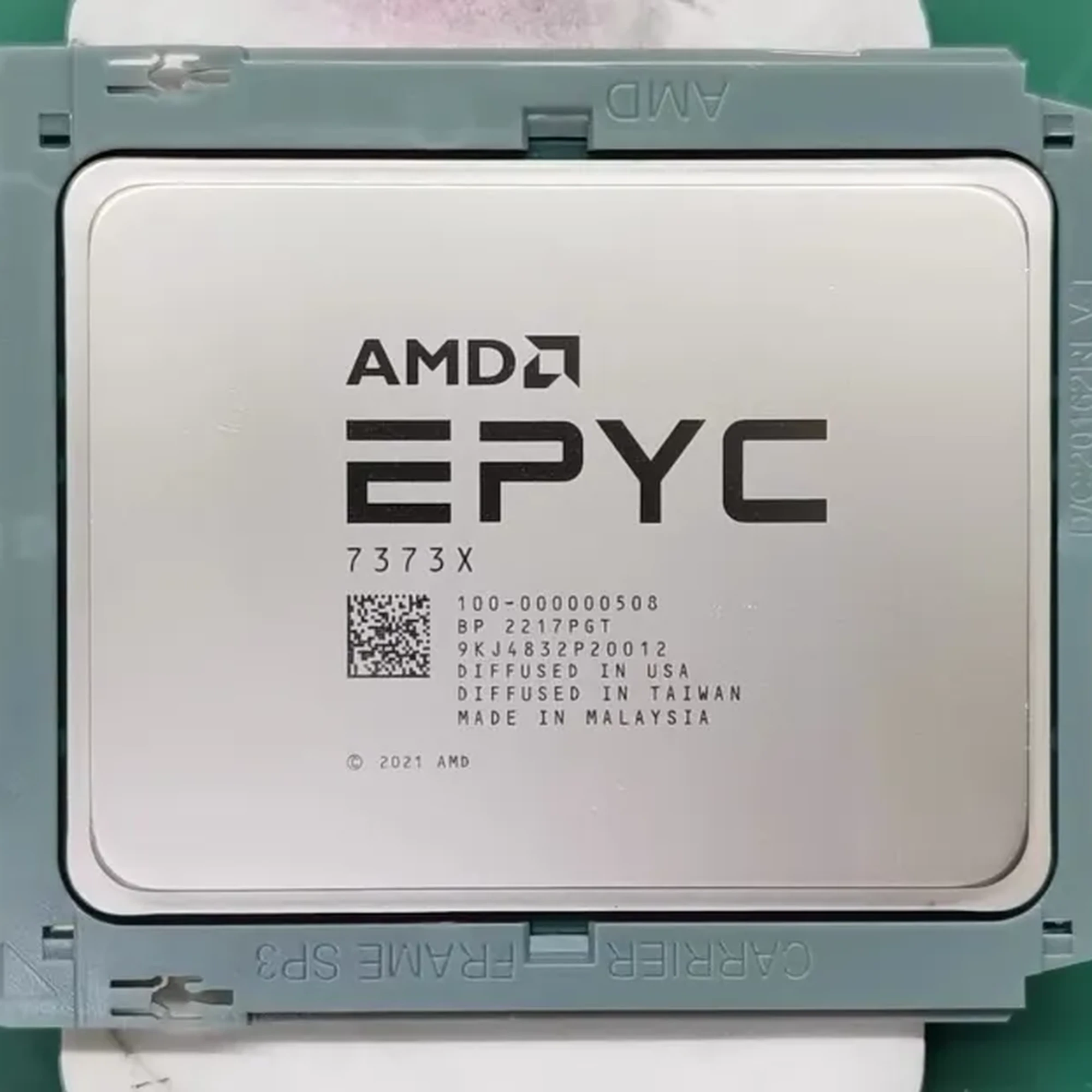

AMD EPYC 7C13 Server Processor | 64 Cores, 128 Threads, 7nm, 256MB L3 Cache – High-Performance Enterprise CPU
In the competitive landscape of enterprise server processors, the AMD EPYC 7C13 stands out as a reliable, high-value solution designed to meet the demands of modern data centers, cloud environments, and high-performance computing (HPC) workloads. As part of AMD’s EPYC 7003 series (codenamed Milan), this processor leverages advanced 7nm fabrication technology, a robust core architecture, and generous cache resources to deliver exceptional multi-threaded performance, energy efficiency, and scalability—all while maintaining a cost-effective profile that makes it accessible for businesses of all sizes.
Introduction to the AMD EPYC 7C13: A Milan-Series Powerhouse
Released in January 2021, the AMD EPYC 7C13 is a server-grade processor engineered to address the growing need for high-core-count CPUs that can handle concurrent workloads without sacrificing performance or efficiency. Built on TSMC’s 7nm process, it belongs to AMD’s Zen 3 (Milan) architecture, which introduced significant improvements over the previous Zen 2 generation—including better IPC (Instructions Per Cycle), larger cache per core, and optimized power management. Unlike consumer-grade CPUs, the EPYC 7C13 is designed exclusively for server platforms, with features tailored to enterprise needs such as ECC memory support, high PCIe lane counts, and multi-socket compatibility.
One of the most notable aspects of the EPYC 7C13 is its positioning as a cost-effective alternative to higher-priced enterprise processors, making it a popular choice for small to mid-sized data centers, cloud service providers, and businesses looking to upgrade their server infrastructure without breaking the bank. While it is often recognized as an OEM variant of the AMD EPYC 7763, the 7C13 offers similar core counts and performance at a more accessible price point, making it a compelling option for organizations prioritizing value without compromising on capability.
Key Specifications & Hardware Architecture
At the heart of the AMD EPYC 7C13 is a 64-core, 128-thread design, which is a defining feature for handling multi-threaded workloads such as virtualization, database management, and batch processing. Each core operates at a base frequency of 2.0GHz, with a maximum turbo boost frequency of up to 3.7GHz—providing a balance between sustained performance and peak throughput. This frequency profile ensures that the processor can handle light workloads efficiently while ramping up performance when needed for more demanding tasks.
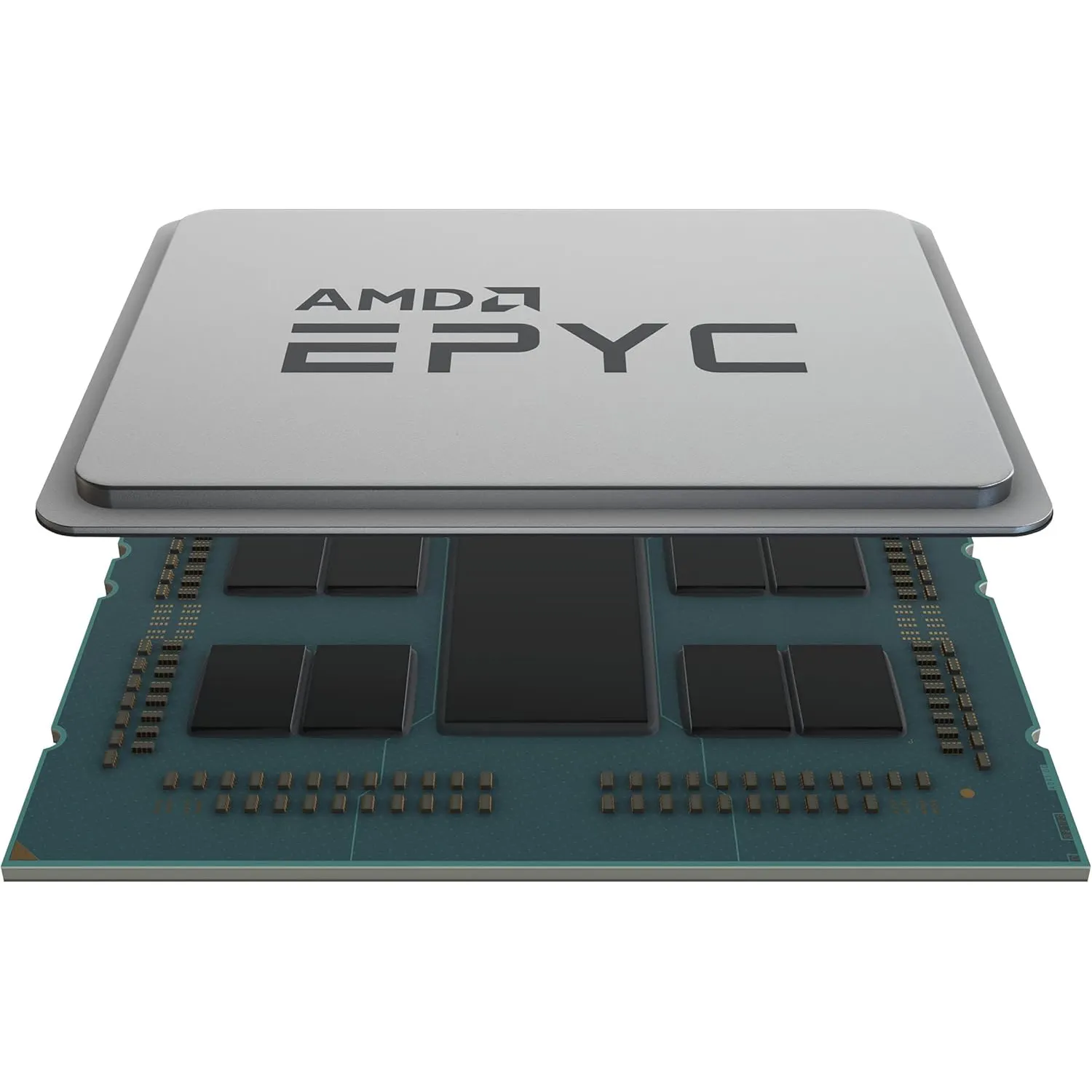
The processor’s cache configuration is another critical component of its performance. It features 64KB of L1 cache per core (32KB for instructions, 32KB for data), 512KB of L2 cache per core, and a massive 256MB of shared L3 cache. This generous cache allocation reduces latency by keeping frequently accessed data close to the cores, which is particularly beneficial for memory-intensive workloads like data analytics and large-scale database operations. The L3 cache is distributed across 8 CCDs (Core Complex Dies), with each CCD containing 8 cores and 32MB of L3 cache—an architecture that optimizes data access and reduces bottlenecks.
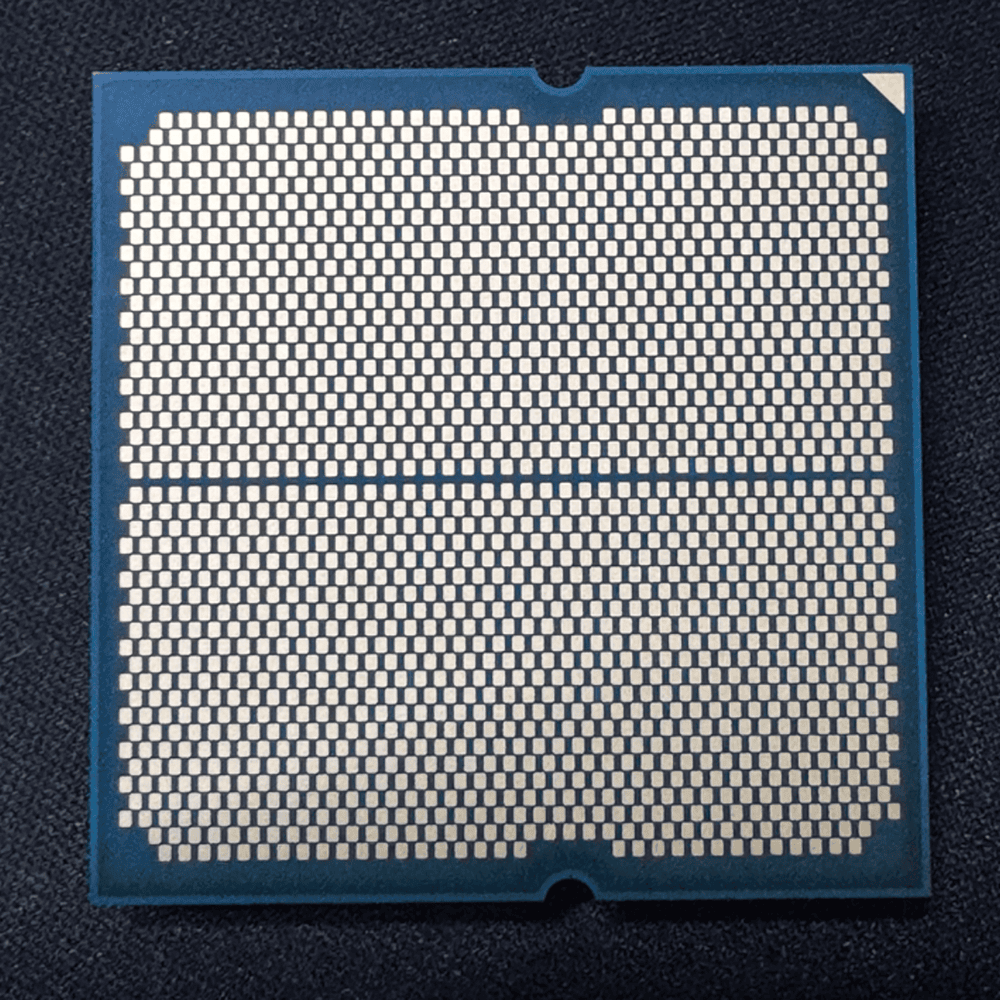
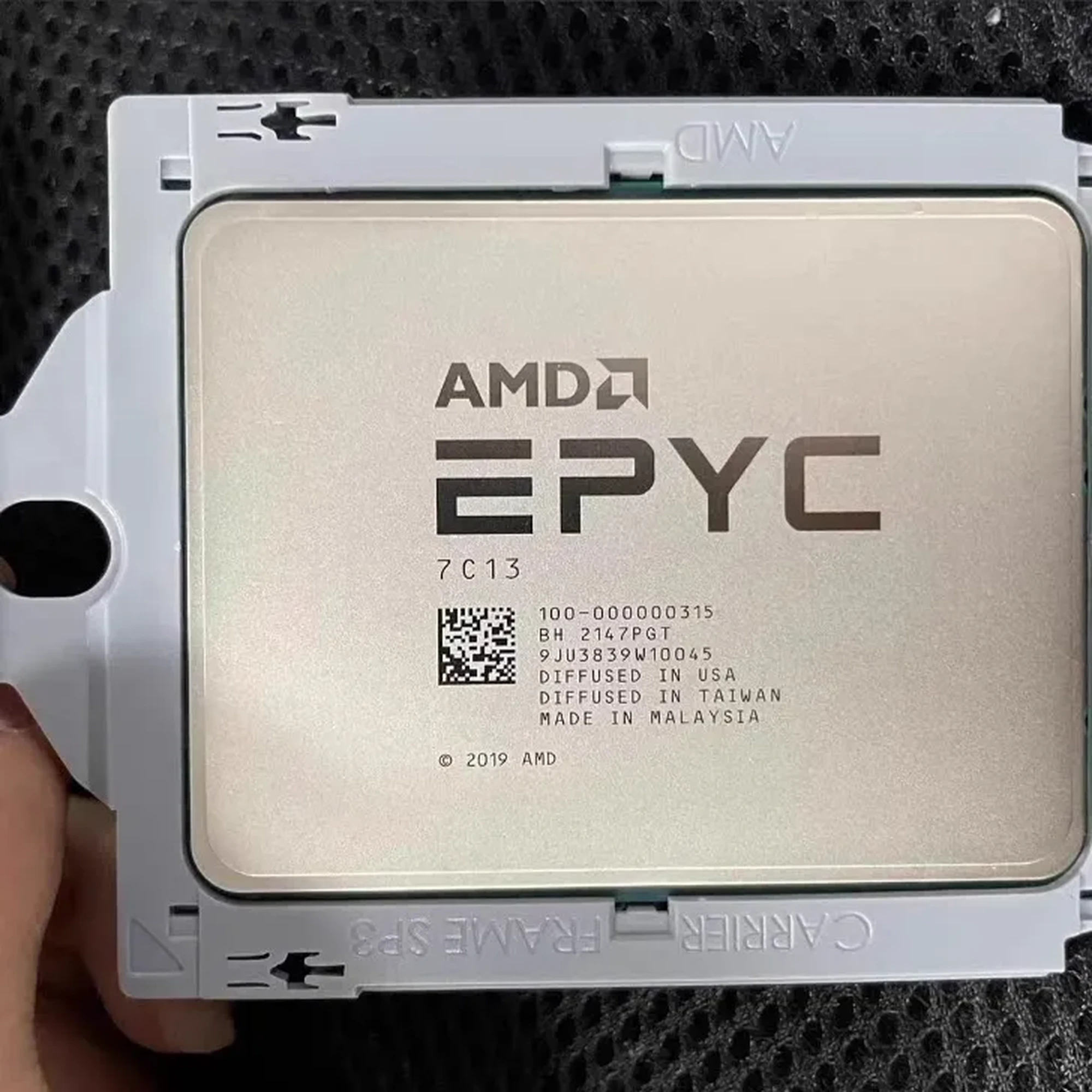
Built on TSMC’s 7nm fabrication process, the EPYC 7C13 achieves a balance between performance and power efficiency. With a default TDP of 225W, it can be configured via AMD’s Configurable TDP (cTDP) to operate between 165W and 280W, allowing organizations to tailor power consumption to their specific needs—whether prioritizing energy efficiency or maximum performance. The processor uses the AMD Socket SP3 (FCLGA-4094) package, which is compatible with a wide range of server motherboards and supports both single-socket (1P) and dual-socket (2P) configurations, offering scalability for growing infrastructure.
Memory support is another strength of the EPYC 7C13. It supports up to 8 channels of DDR4-3200 memory, with a maximum memory bandwidth of 204.8 GB/s—enabling fast data transfer between the processor and system memory. Additionally, it includes ECC (Error-Correcting Code) memory support, which is essential for enterprise environments where data integrity is critical, as it detects and corrects memory errors to prevent system crashes and data loss. For I/O connectivity, the processor features 128 PCIe 4.0 lanes, providing high-speed connectivity to storage devices, network cards, and other peripherals—making it ideal for high-bandwidth workloads like NVMe storage and 100Gbps networking.
Performance Benchmarks: What to Expect from the EPYC 7C13
When it comes to performance, the AMD EPYC 7C13 excels in multi-threaded workloads, which are the backbone of enterprise server operations. According to PassMark benchmarks, the single EPYC 7C13 processor achieves an average multi-thread rating of 76,241, placing it among the top-performing server CPUs in its class. In dual-socket configurations, the multi-thread rating jumps to 81,691, demonstrating its scalability when paired with a second processor.
Single-threaded performance, while not the primary focus of a high-core-count server CPU, is still solid, with a PassMark single-thread rating of 2,607. This ensures that the processor can handle single-threaded tasks—such as application initialization and light workloads—efficiently, without bottlenecking overall system performance. In specific workload tests, the EPYC 7C13 delivers impressive results: it achieves 489,299 MOps/sec in integer math, 265,393 MOps/sec in floating-point math, 113,982 MB/sec in data encryption, and 1,559,043 KB/sec in data compression—all of which highlight its versatility across different enterprise use cases.
When compared to similar processors, the EPYC 7C13 holds its own. For example, it is approximately 20% slower in multi-threaded performance than the AMD Ryzen Threadripper PRO 5995WX (a desktop/server hybrid CPU) but offers better compatibility with enterprise server platforms and higher PCIe lane counts. It also outperforms older Intel Xeon processors, such as the Xeon E5-2680 v4, by a significant margin—delivering more than four times the multi-threaded performance while maintaining similar power consumption.
In real-world testing, the EPYC 7C13 has proven to be a reliable performer for virtualization. When running Proxmox VE (a popular virtualization platform), the processor can efficiently handle dozens of virtual machines (VMs) simultaneously, with minimal performance degradation. It also performs well in data analytics workloads, where its high core count and large cache allow for fast processing of large datasets—making it ideal for businesses that rely on real-time data insights.
Ideal Use Cases: Where the EPYC 7C13 Shines
The AMD EPYC 7C13 is designed for a wide range of enterprise workloads, thanks to its high core count, generous cache, and robust I/O capabilities. Below are the key use cases where this processor delivers the most value:
Data Centers & Cloud Computing: With its 64 cores, 128 threads, and high memory bandwidth, the EPYC 7C13 is ideal for data centers and cloud service providers. It can handle high-density virtualization, allowing organizations to consolidate multiple physical servers into a single system—reducing hardware costs, power consumption, and rack space. Its PCIe 4.0 support also makes it suitable for cloud environments that require fast storage and networking, such as AWS, Azure, or on-premises cloud deployments.
Virtualization & VDI: Virtual Desktop Infrastructure (VDI) and server virtualization are perfect use cases for the EPYC 7C13. Its high thread count allows it to support dozens of virtual desktops or VMs simultaneously, providing a smooth user experience for remote workers or enterprise users. ECC memory support ensures that virtualized environments remain stable and reliable, even under heavy load.
High-Performance Computing (HPC): For HPC workloads such as scientific computing, CAE/CFD/FEA simulations, and machine learning, the EPYC 7C13’s multi-threaded performance and large cache are invaluable. It can handle parallel processing tasks efficiently, reducing the time required to complete complex simulations or data analysis.
Database Management & Data Analytics: Databases and data analytics platforms require high memory bandwidth and multi-threaded performance to process large volumes of data. The EPYC 7C13’s 8 memory channels and 256MB L3 cache ensure that data is accessed quickly, while its 64 cores handle concurrent database queries and analytics tasks with ease. It is well-suited for relational databases (RDBMS), NoSQL databases, and big data platforms like Hadoop and Spark.
Application Development & Testing: For development teams, the EPYC 7C13 provides a powerful platform for testing and debugging applications. Its high core count allows for parallel testing of multiple application versions, reducing development time and improving efficiency. It also supports a wide range of operating systems, including Windows Server, Linux, and VMware, making it flexible for different development environments.
Why Choose the AMD EPYC 7C13 Over Competitors?
In a market dominated by Intel Xeon and other AMD EPYC processors, the EPYC 7C13 stands out for several key reasons:
Value for Money: One of the biggest advantages of the EPYC 7C13 is its cost-effectiveness. With a price point typically below $2,000 (depending on the retailer), it offers 64 cores and 128 threads at a fraction of the cost of higher-end EPYC models or Intel Xeon processors with similar core counts. This makes it an ideal choice for small to mid-sized businesses that need enterprise-grade performance without the enterprise price tag.
Scalability: The EPYC 7C13 supports both single-socket and dual-socket configurations, allowing organizations to scale their infrastructure as their needs grow. Whether starting with a single processor or building a dual-socket server for maximum performance, the EPYC 7C13 offers the flexibility to adapt to changing workload requirements.
Energy Efficiency: Built on 7nm technology, the EPYC 7C13 delivers better performance per watt than older 14nm or 28nm processors. Its configurable TDP (165W-280W) allows organizations to optimize power consumption based on their needs, reducing energy costs and environmental impact.
Enterprise-Grade Features: Despite its lower price point, the EPYC 7C13 includes all the enterprise-grade features needed for mission-critical applications, including ECC memory support, PCIe 4.0, and multi-socket compatibility. It also supports AMD Infinity Guard and AMD Infinity Architecture, which enhance security and system performance.
Reliability: AMD’s EPYC series is known for its reliability and durability, making it suitable for 24/7 server operations. The EPYC 7C13 is no exception, with a robust design that can handle continuous heavy workloads without overheating or performance degradation. It also comes with a 1-year warranty (depending on the retailer), providing peace of mind for businesses.
Conclusion: Is the AMD EPYC 7C13 Right for Your Business?
The AMD EPYC 7C13 is a versatile, cost-effective server processor that delivers exceptional multi-threaded performance, scalability, and energy efficiency. Whether you’re running a small data center, a cloud environment, or an HPC cluster, this processor has the features and capabilities to handle your most demanding workloads. Its 64 cores, 128 threads, 256MB L3 cache, and PCIe 4.0 support make it a powerful choice for enterprise applications, while its competitive price point makes it accessible for businesses of all sizes.
If you’re looking to upgrade your server infrastructure, consolidate virtual machines, or improve the performance of your data analytics or HPC workloads, the AMD EPYC 7C13 is an excellent option. It offers the perfect balance of performance, value, and reliability—making it one of the best server processors in its class. With its compatibility with a wide range of server motherboards and operating systems, it’s easy to integrate into your existing infrastructure, ensuring a smooth transition and minimal downtime.
In summary, the AMD EPYC 7C13 is more than just a processor—it’s a solution that helps businesses optimize their server performance, reduce costs, and scale for the future. Whether you’re a small business or a large enterprise, this processor has the power and flexibility to meet your evolving needs.
6. Specifications
Specification Category | Details |
|---|---|
Processor Model | AMD EPYC 7C13 |
Product Series | AMD EPYC 7003 Series (Milan) |
Architecture | Zen 3 (Milan) |
Fabrication Process | 7nm (TSMC) |
Cores | 64 |
Threads | 128 (SMT Enabled) |
Base Frequency | 2.0 GHz |
Max Turbo Boost Frequency | 3.7 GHz |
L1 Cache | 64KB per core (32KB Instruction, 32KB Data) | Total: 4MB |
L2 Cache | 512KB per core | Total: 32MB |
L3 Cache | 256MB (Shared, 32MB per CCD) |
TDP | 225W (Configurable TDP: 165W – 280W) |
Socket | AMD Socket SP3 (FCLGA-4094) |
Memory Support | DDR4-3200, 8 Memory Channels, ECC Support |
Memory Bandwidth | 204.8 GB/s |
PCIe Version | PCIe 4.0 |
PCIe Lanes | 128 |
Multi-Socket Support | 1P (Single Socket) / 2P (Dual Socket) |
Release Date | January 2021 |
Transistor Count | 33.2 Billions |
Die Size | 8×81 mm² (Core Dies) + 416 mm² (I/O Die) |
I/O Process Size | 12nm |
Supported Technologies | AMD Infinity Guard, AMD Infinity Architecture |
Typical Price Range | $1,161 – $2,000 (Depending on Retailer/OEM) |
AMD EPYC 7003 Series Processors General Specifications
Name | # of CPU Cores | # of Threads | Max. Boost Clock | Base Clock | L3 Cache | Default TDP |
|---|---|---|---|---|---|---|
| AMD EPYC™ 7203P | 8 | 16 | Up to 3.4 GHz | 2.8 GHz | 64 MB | 120W |
| AMD EPYC™ 7203 | 8 | 16 | Up to 3.4 GHz | 2.8 GHz | 64 MB | 120W |
| AMD EPYC™ 7303P | 16 | 32 | Up to 3.4 GHz | 2.4 GHz | 64 MB | 130W |
| AMD EPYC™ 7303 | 16 | 32 | Up to 3.4 GHz | 2.4 GHz | 64 MB | 130W |
| AMD EPYC™ 7643P | 48 | 96 | Up to 3.6 GHz | 2.3 GHz | 256 MB | 225W |
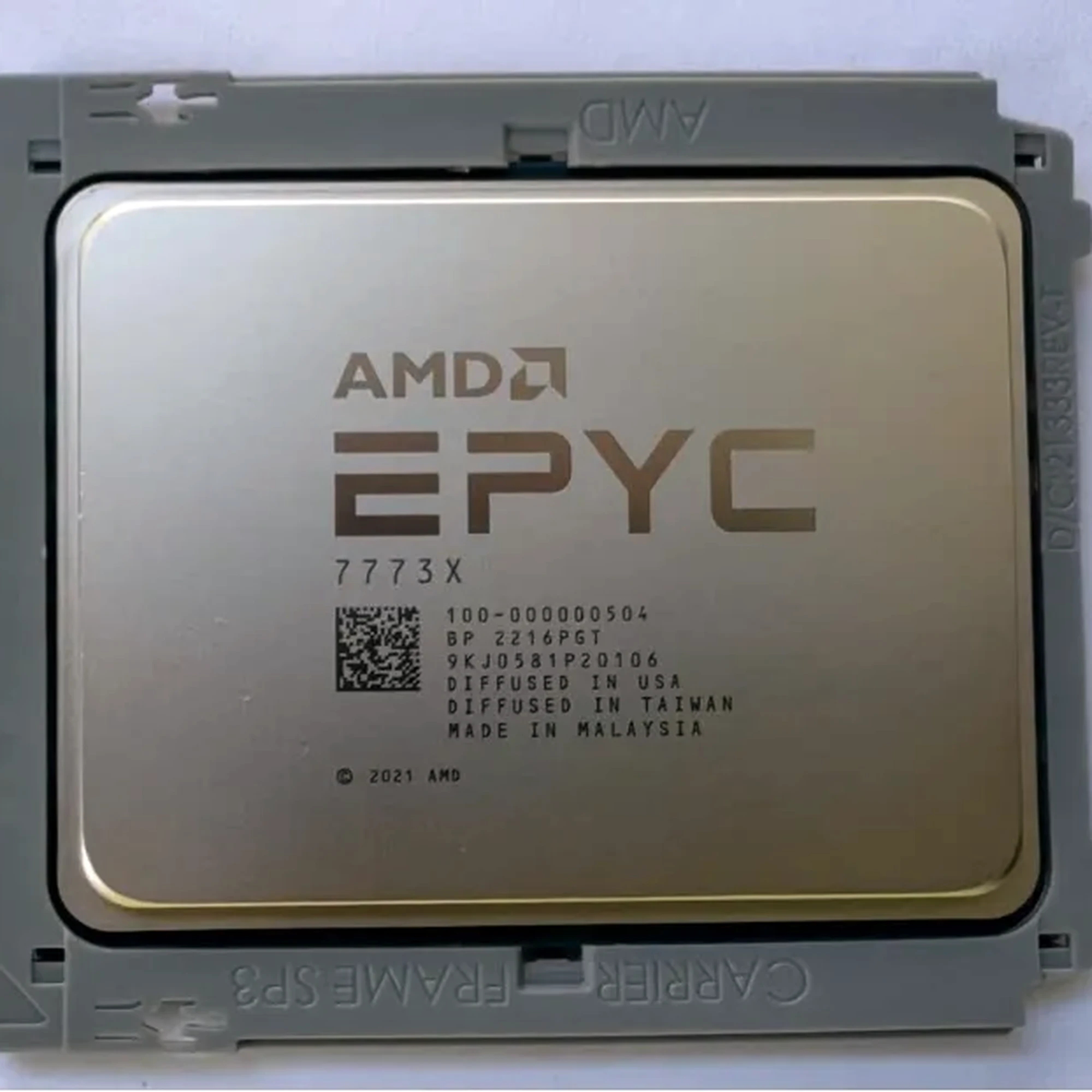
| AMD EPYC™ 7773X | 64 | 128 | Up to 3.5 GHz | 2.2 GHz | 768 MB | 280W |
| AMD EPYC™ 7763 | 64 | 128 | Up to 3.5 GHz | 2.45 GHz | 256 MB | 280W |
| AMD EPYC™ 7713P | 64 | 128 | Up to 3.67 GHz | 2 GHz | 256 MB | 225W |
| AMD EPYC™ 7713 | 64 | 128 | Up to 3.67 GHz | 2 GHz | 256 MB | 225W |
| AMD EPYC™ 7663 | 56 | 112 | Up to 3.5 GHz | 2 GHz | 256 MB | 240W |
| AMD EPYC™ 7643 | 48 | 96 | Up to 3.6 GHz | 2.3 GHz | 256 MB | 225W |
| AMD EPYC™ 7663P | 56 | 112 | Up to 3.5 GHz | 2 GHz | 256 MB | 240W |
| AMD EPYC™ 75F3 | 32 | 64 | Up to 4 GHz | 2.95 GHz | 256 MB | 280W |
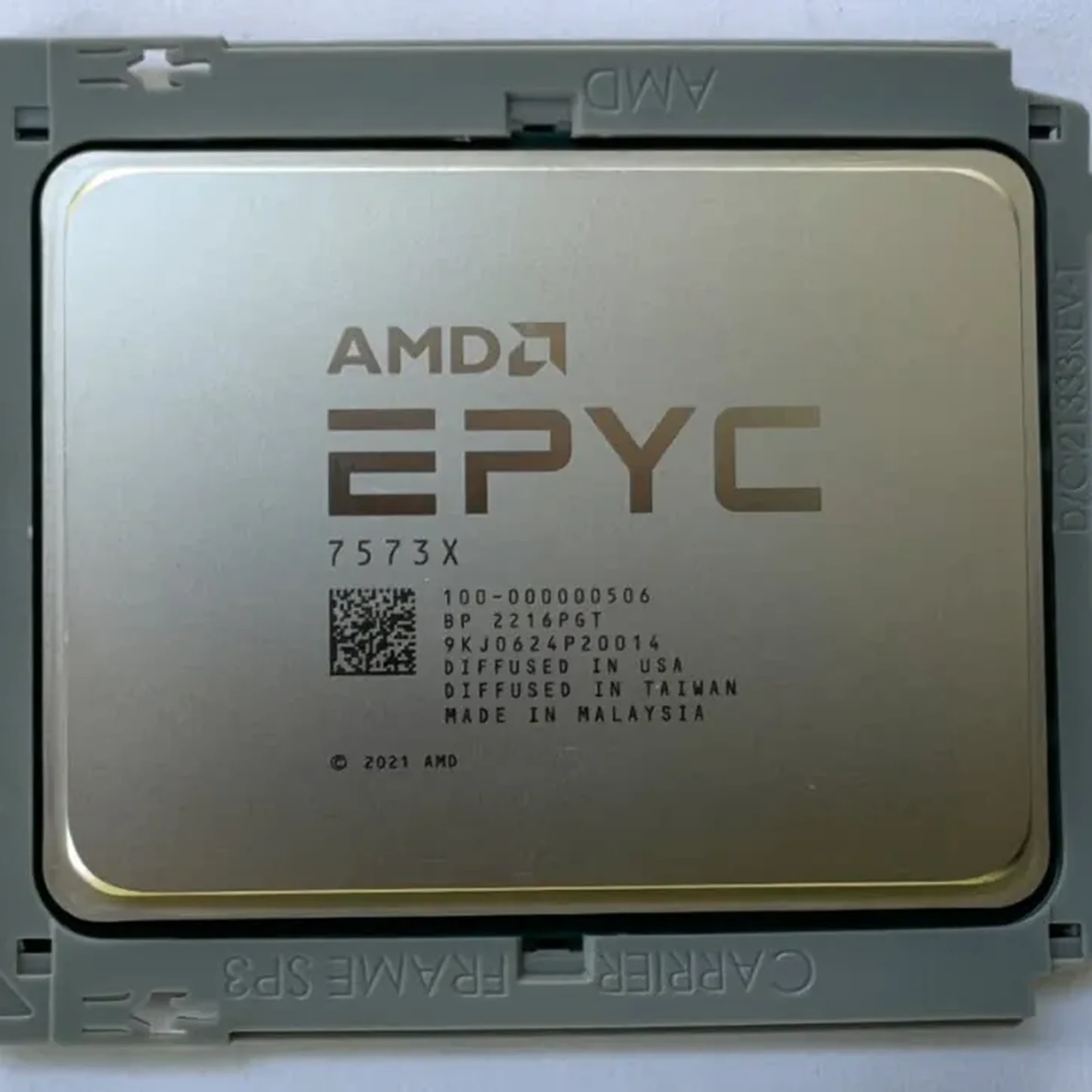
| AMD EPYC™ 7573X | 32 | 64 | Up to 3.6 GHz | 2.8 GHz | 768 MB | 280W |
| AMD EPYC™ 7543P | 32 | 64 | Up to 3.7 GHz | 2.8 GHz | 256 MB | 225W |
| AMD EPYC™ 7543 | 32 | 64 | Up to 3.7 GHz | 2.8 GHz | 256 MB | 225W |
| AMD EPYC™ 7513 | 32 | 64 | Up to 3.65 GHz | 2.6 GHz | 128 MB | 200W |
| AMD EPYC™ 74F3 | 24 | 48 | Up to 4 GHz | 3.2 GHz | 256 MB | 240W |
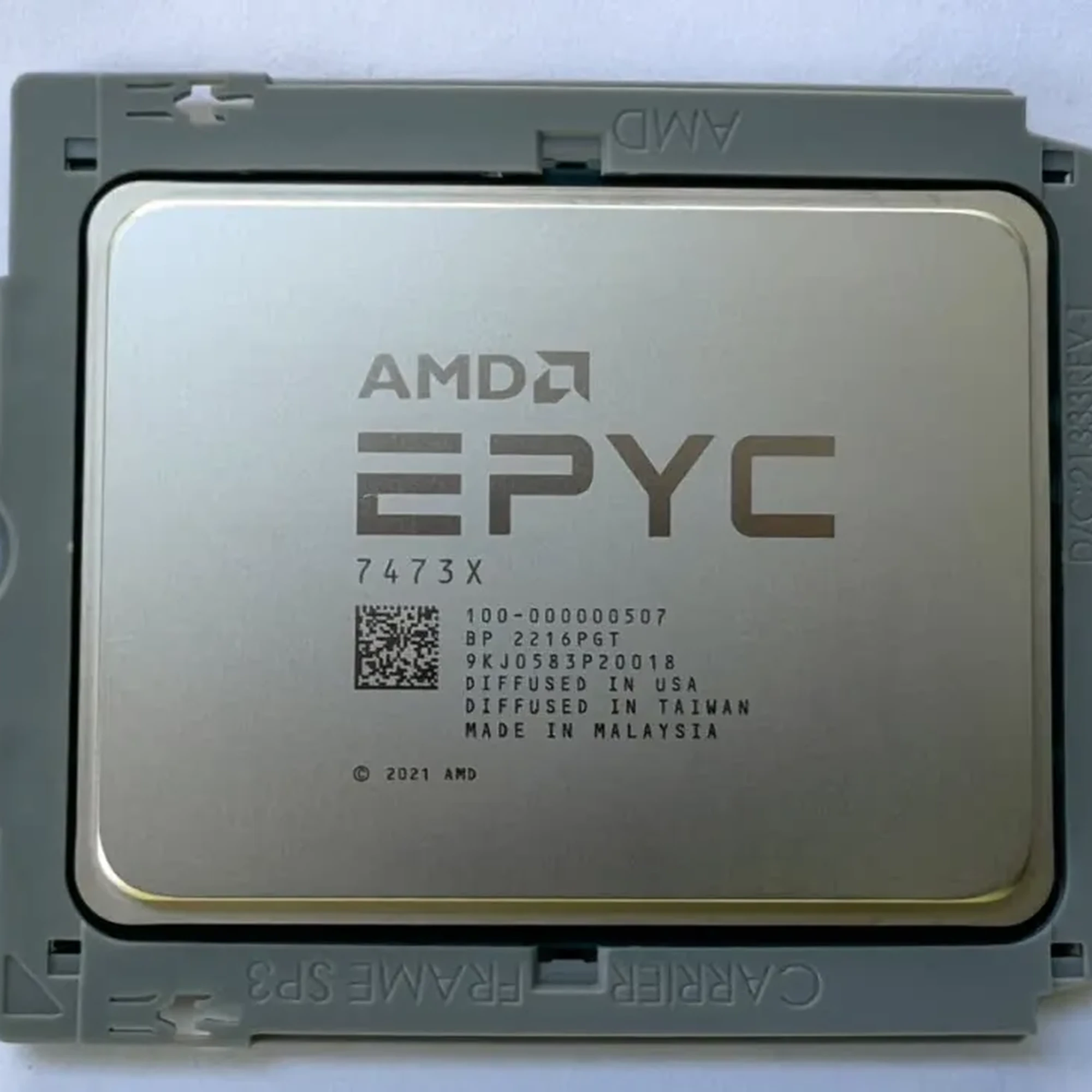
| AMD EPYC™ 7473X | 24 | 48 | Up to 3.7 GHz | 2.8 GHz | 768 MB | 240W |
| AMD EPYC™ 7453 | 28 | 56 | Up to 3.45 GHz | 2.75 GHz | 64 MB | 225W |
| AMD EPYC™ 7443P | 24 | 48 | Up to 4 GHz | 2.85 GHz | 128 MB | 200W |
| AMD EPYC™ 7443 | 24 | 48 | Up to 4 GHz | 2.85 GHz | 128 MB | 200W |
| AMD EPYC™ 7413 | 24 | 48 | Up to 3.6 GHz | 2.65 GHz | 128 MB | 180W |
| AMD EPYC™ 73F3 | 16 | 32 | Up to 4 GHz | 3.5 GHz | 256 MB | 240W |
| AMD EPYC™ 7373X | 16 | 32 | Up to 3.8 GHz | 3.05 GHz | 768 MB | 240W |
| AMD EPYC™ 7343 | 16 | 32 | Up to 3.9 GHz | 3.2 GHz | 128 MB | 190W |
| AMD EPYC™ 7313P | 16 | 32 | Up to 3.7 GHz | 3 GHz | 128 MB | 155W |
| AMD EPYC™ 7313 | 16 | 32 | Up to 3.7 GHz | 3 GHz | 128 MB | 155W |
| AMD EPYC™ 72F3 | 8 | 16 | Up to 4.1 GHz | 3.7 GHz | 256 MB | 180W |