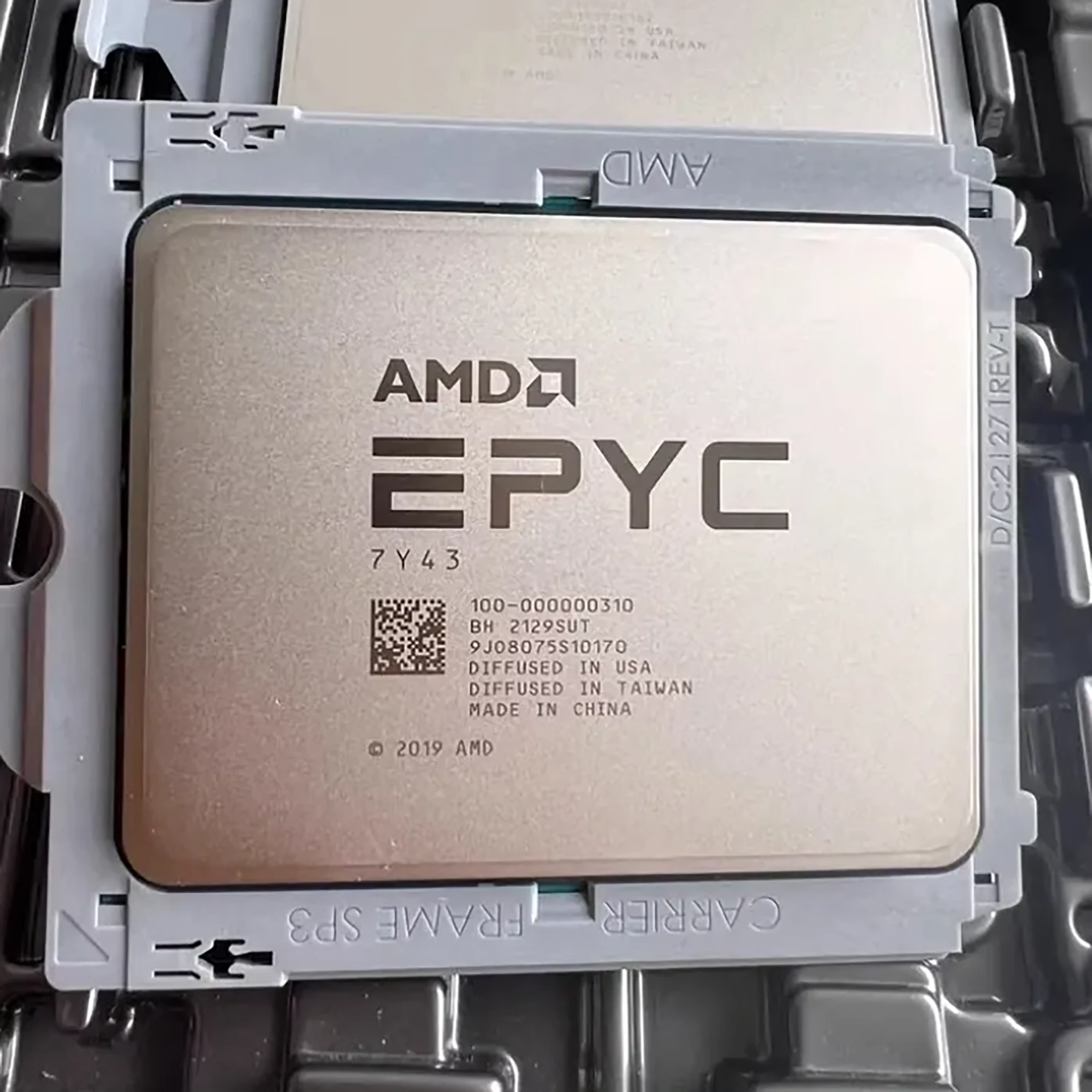
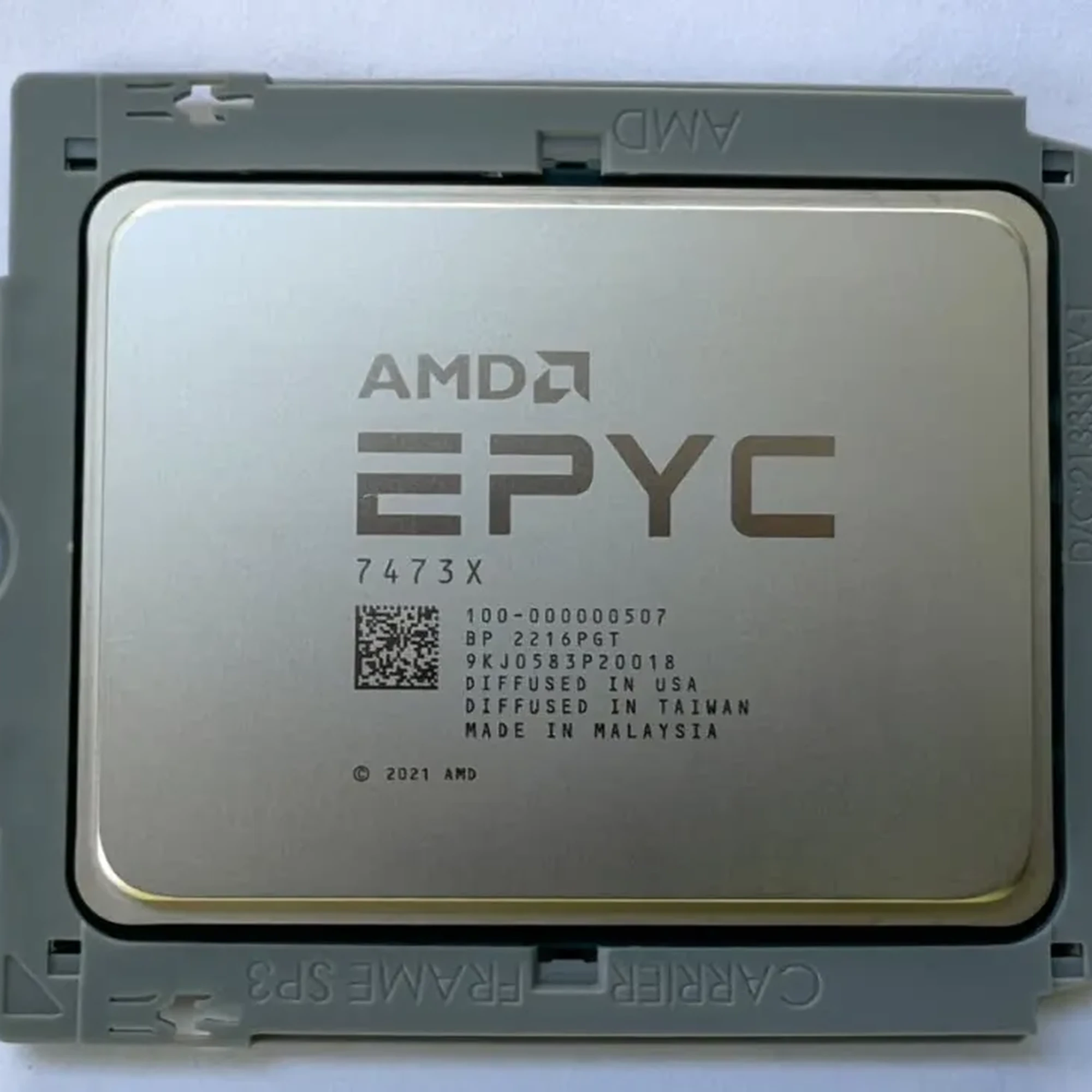
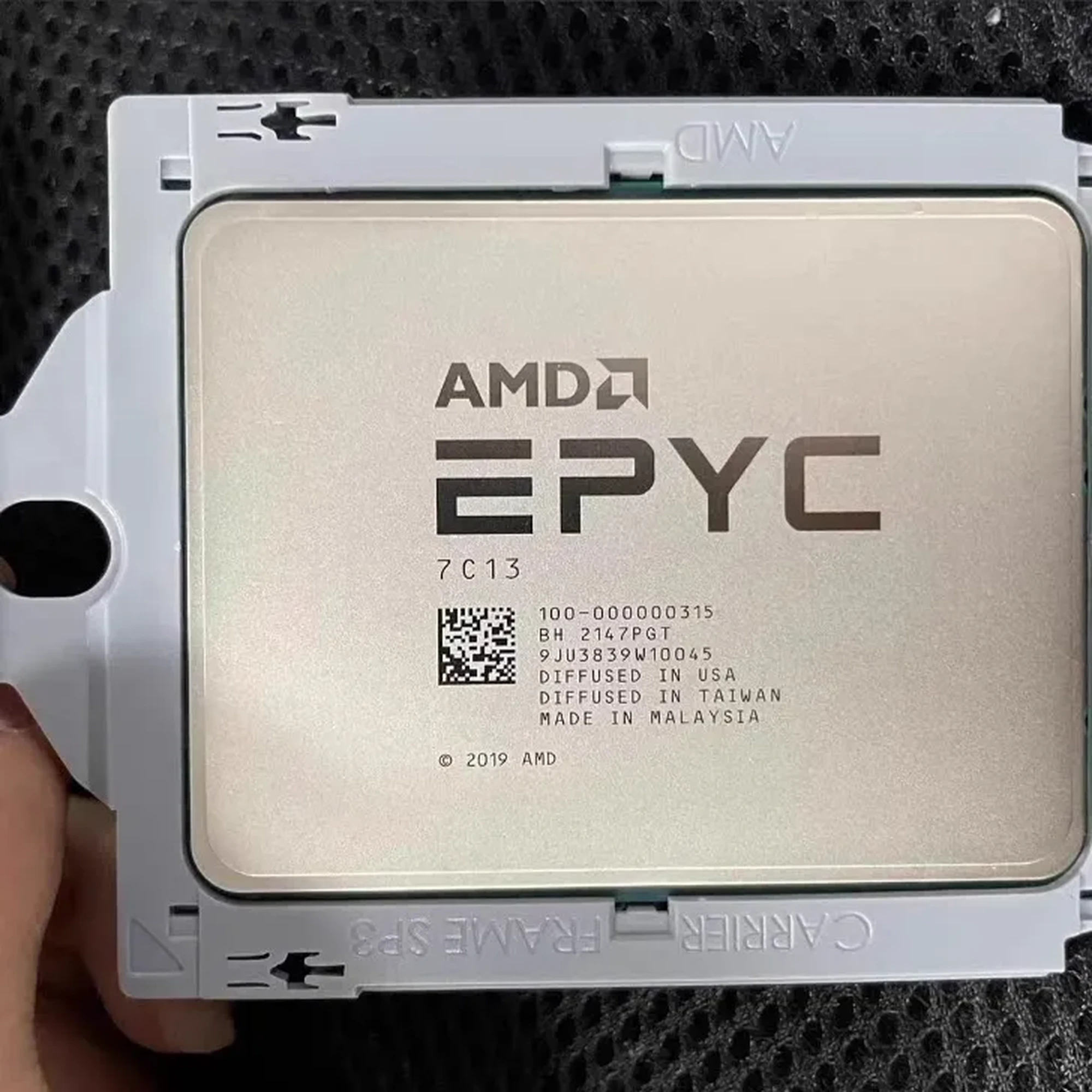
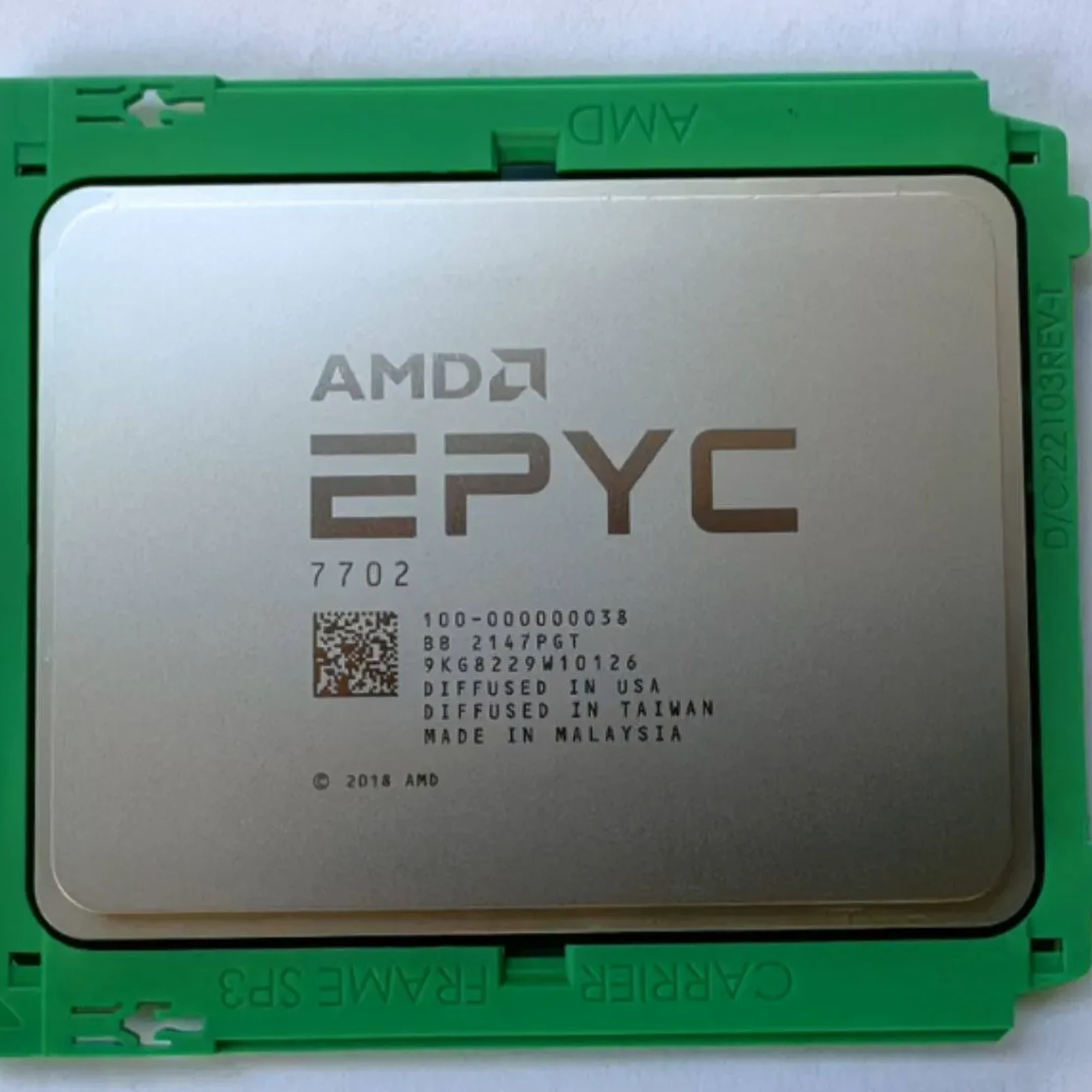
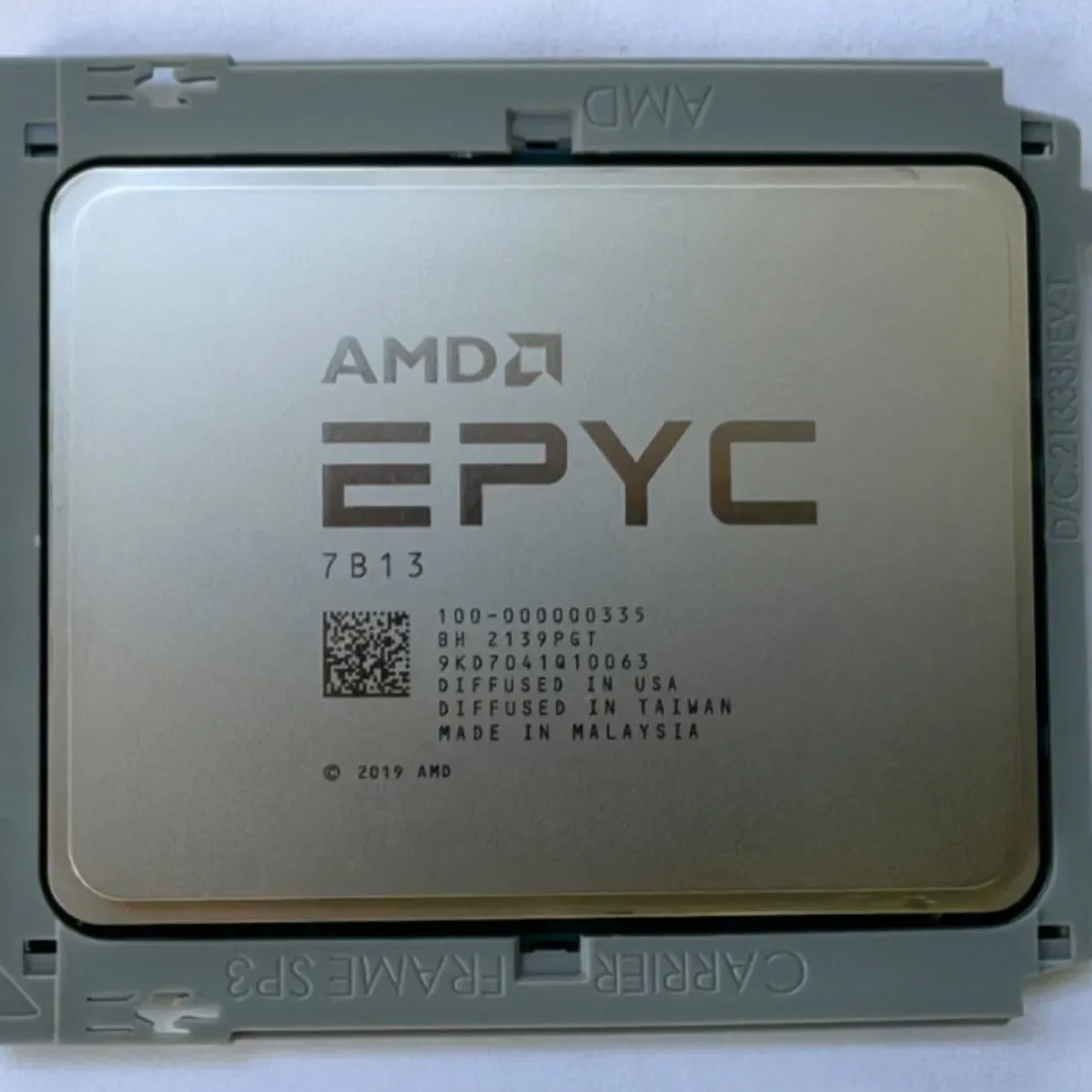

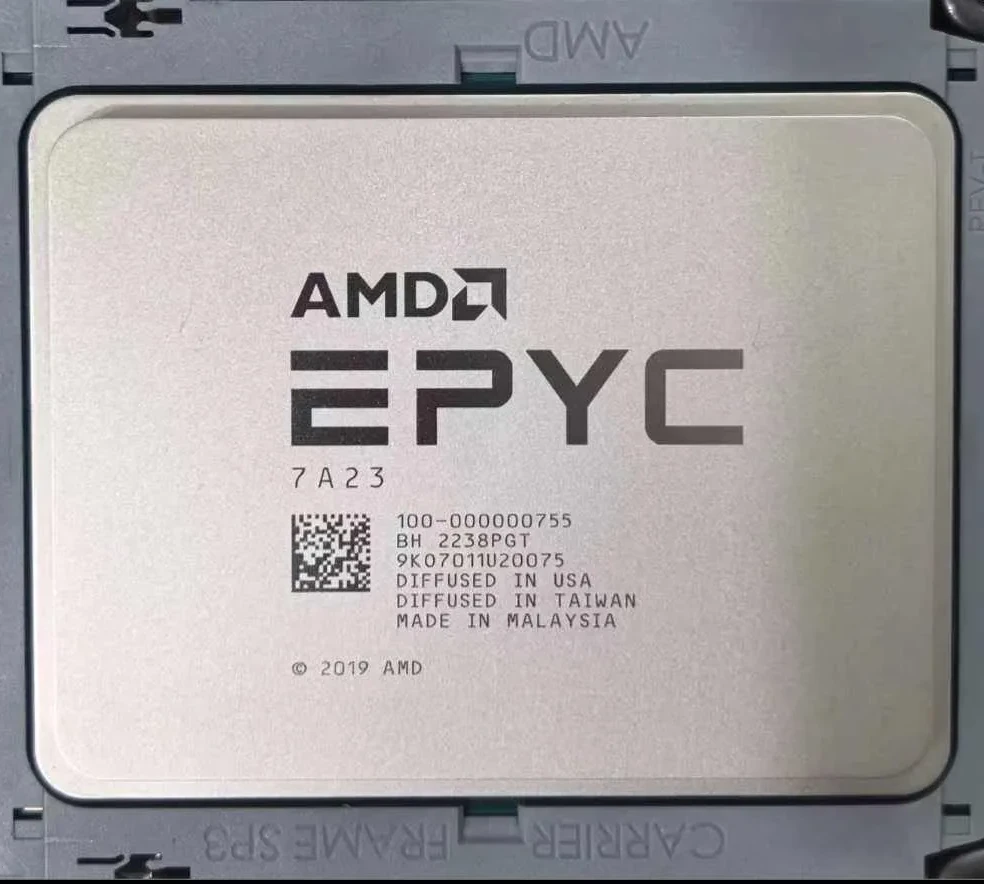
AMD EPYC 7A23 48-Core Server Processor | 2.65GHz Base, 3.7GHz Boost, 192MB L3 Cache – High Performance & Efficiency
failures and less downtime, reducing maintenance costs and ensuring business continuity.
Comparison to Competing Processors
When compared to competing server processors, such as Intel Xeon Platinum models, the AMD EPYC 7A23 offers several key advantages. It delivers more cores and threads than many similarly priced Xeon processors, making it better suited for multi-threaded workloads. Its 192MB L3 cache is also larger than many competitors, reducing latency and improving performance for data-intensive tasks.
In terms of efficiency, the EPYC 7A23 outperforms many Xeon processors, delivering better performance per watt. This is particularly important for data centers looking to reduce their carbon footprint and energy costs. Additionally, the EPYC 7A23’s single-socket design offers greater flexibility and cost savings compared to dual-socket Xeon setups, making it a more cost-effective choice for many businesses.
Conclusion: Why the AMD EPYC 7A23 Is a Smart Investment
The AMD EPYC 7A23 is more than just a server processor—it’s a solution that addresses the key challenges facing modern businesses: performance, efficiency, and cost. Its 48-core design, powerful Zen 3 architecture, and 192MB L3 cache deliver the performance needed to handle the most demanding enterprise and telecom workloads, while its 10nm process and optimized TDP ensure energy efficiency and cost savings.
Whether you’re a telecom company looking to modernize your network infrastructure, a cloud service provider seeking to maximize resource utilization, or an enterprise aiming to reduce TCO, the EPYC 7A23 offers the versatility and performance to meet your needs. Its single-socket design simplifies management, reduces hardware costs, and saves space, while its advanced features ensure reliability and scalability for future growth.
For WordPress website owners and hosts, the EPYC 7A23’s performance and efficiency translate to faster load times, better handling of high traffic, and a more reliable user experience. With its support for advanced instruction sets and multi-threaded performance, it’s well-suited for powering WordPress sites of all sizes, from small blogs to large enterprise portals.
In summary, the AMD EPYC 7A23 is a high-value, high-performance server processor that delivers on its promises of efficiency, reliability, and cost savings. It’s a smart investment for any business looking to optimize their data center infrastructure and stay ahead in the competitive world of enterprise computing.</p>
</div>
| Specification | Details |
|---|---|
| Processor Model | AMD EPYC 7A23 |
| Architecture | AMD Zen 3 |
| Manufacturing Process | 7nm |
| Cores | 48 Physical Cores |
| Threads | 96 Threads (SMT Enabled) |
| Base Clock Speed | 2.65GHz |
| Max Boost Clock | 3.7GHz |
| L3 Cache | 192MB |
| L2 Cache | 24MB (0.5MB per Core) |
| Memory Support | DDR4/DDR5 (Depends on Motherboard), ECC Memory Supported |
| Memory Channels | 8 Channels |
| Max Memory Bandwidth | Up to 204.8 GB/s (Per Socket) |
| PCIe Lanes | 128 PCIe 4.0 Lanes |
| Socket Type | SP3 |
| TDP (Thermal Design Power) | Optimized for Enterprise (Typical: 225W) |
| Instruction Sets | AES, AVX, AVX2, BMI2, SHA, SSE4.1, SSE4.2, POPCNT |
| Use Cases | Telecom, Virtualization, Cloud, Big Data, Enterprise Applications, WordPress Hosting |
| Launch Date | 2025-08-22 |
In the fast-paced world of enterprise computing, businesses demand server processors that balance raw performance, energy efficiency, and cost-effectiveness—especially as AI, cloud, and telecom workloads continue to grow in complexity. The AMD EPYC 7A23 emerges as a standout solution, engineered to meet these demands with a powerful combination of core density, clock speed, and energy efficiency, all built on AMD’s proven Zen 3 architecture. This processor is not just a hardware component; it’s a catalyst for digital transformation, enabling businesses to streamline operations, reduce total cost of ownership (TCO), and scale their infrastructure to meet evolving needs.
Key Overview: What Makes the AMD EPYC 7A23 Unique?
The AMD EPYC 7A23 is a server-grade processor tailored for enterprise and telecom environments, where high core counts, consistent performance, and reliability are non-negotiable. Launched in 2025, it joins AMD’s EPYC lineup as a mid-range powerhouse, offering 48 physical cores and 96 threads—enough to handle the most demanding multi-tasking workloads without compromising speed. Built on a 7nm manufacturing process, it strikes an impressive balance between performance and power consumption, making it suitable for both on-premises data centers and cloud deployments.
Unlike many competitors in its class, the EPYC 7A23 is designed to enable “single-socket server replacement” for dual-socket setups—a game-changer for businesses looking to reduce hardware costs and simplify infrastructure management. With its 48-core configuration, it delivers the same (or better) performance as traditional dual-socket servers while using fewer components, reducing space requirements by up to 50% and lowering power consumption significantly. This makes it an ideal choice for telecom companies, cloud service providers, and enterprises seeking to optimize their data center efficiency.
Performance Breakdown: Core, Clock, and Cache
At the heart of the AMD EPYC 7A23 is its 48-core, 96-thread design, powered by AMD’s Zen 3 microarchitecture. Zen 3 is renowned for its improved IPC (Instructions Per Cycle) performance, which translates to faster single-core and multi-core speeds—critical for both single-threaded applications (like database management) and multi-threaded workloads (like virtualization and big data processing).
The processor features a base clock speed of 2.65GHz, ensuring consistent performance for sustained workloads, and a maximum boost clock of 3.7GHz, which kicks in during peak demand to handle intensive tasks. This combination of base and boost clocks means the EPYC 7A23 can handle both everyday operations and sudden spikes in workload without lag or throttling.
Complementing its core and clock speed is a massive 192MB L3 cache. Cache is essential for reducing latency, as it stores frequently accessed data closer to the processor cores, eliminating the need to retrieve data from slower system memory. The 192MB L3 cache in the EPYC 7A23 ensures that even large datasets—common in telecom and big data applications—are processed quickly, improving overall system responsiveness and throughput.
Benchmark tests highlight the EPYC 7A23’s capabilities: in RandomX benchmarks, it delivers a hash rate of 37,424.59 H/s, with 389.84 H/s per thread, demonstrating its ability to handle cryptographic and high-performance computing (HPC) tasks efficiently. Its multi-core performance also shines in virtualization scenarios, where it can support more virtual machines (VMs) and virtual desktop infrastructure (VDI) sessions than many competing processors, making it a top choice for cloud and enterprise environments.
Architecture and Technology: Zen 3’s Impact on Efficiency
The AMD EPYC 7A23’s performance and efficiency are rooted in AMD’s Zen 3 architecture, which brings several key improvements over previous generations. Zen 3 features a unified L3 cache design, where each core complex (CCX) shares a single L3 cache pool, reducing latency and improving data access speeds. This design is particularly beneficial for multi-threaded workloads, as it allows cores to share data more efficiently, reducing bottlenecks.
The 7nm manufacturing process further enhances efficiency, allowing AMD to pack more cores into a smaller footprint while reducing power consumption. The EPYC 7A23’s TDP (Thermal Design Power) is optimized for enterprise use, ensuring it operates coolly even in dense data center environments, reducing the need for expensive cooling solutions. This combination of Zen 3 architecture and 7nm process makes the EPYC 7A23 one of the most energy-efficient processors in its class, helping businesses reduce their carbon footprint and energy costs.
Additionally, the EPYC 7A23 supports a range of advanced instruction sets, including AES, AVX, AVX2, BMI2, and SHA, enabling it to handle cryptographic operations, media processing, and scientific computing tasks with ease. These instruction sets are critical for modern enterprise workloads, such as secure data transmission, AI inference, and video encoding, making the EPYC 7A23 a versatile solution for diverse use cases.
Ideal Use Cases: Where the EPYC 7A23 Excels
The AMD EPYC 7A23 is designed to excel in a variety of enterprise and telecom use cases, thanks to its balanced performance, core density, and efficiency. Below are the key scenarios where it delivers the most value:
Telecom and Network Infrastructure
Telecom companies are increasingly moving toward cloud infrastructure, requiring processors that can handle high volumes of real-time data, virtualized network functions (VNFs), and containerized applications. The EPYC 7A23’s 48 cores and 96 threads are perfect for these workloads, as they can support multiple VNFs and containers simultaneously, ensuring smooth network performance. Its high clock speed and large L3 cache also make it ideal for handling real-time data transmission and analysis, critical for 5G and edge computing applications.
Moreover, the EPYC 7A23’s single-socket design allows telecom companies to replace dual-socket servers, reducing hardware costs and simplifying management. This is particularly valuable for large-scale telecom networks, where reducing TCO and improving reliability are top priorities.
Virtualization and Cloud Computing
Cloud service providers and enterprises rely on virtualization to maximize resource utilization and reduce costs. The EPYC 7A23’s high core count and multi-threaded performance make it ideal for virtualization, as it can support more VMs and VDI sessions per server than many competing processors. This means businesses can run more workloads on fewer servers, reducing hardware expenses and data center space requirements.
In cloud environments, the EPYC 7A23’s efficiency also plays a key role. Its low power consumption reduces energy costs, while its reliable performance ensures that cloud workloads—from web hosting to database management—run smoothly. For WordPress website hosts, in particular, the EPYC 7A23 can handle high traffic volumes and multiple concurrent users, ensuring fast load times and a seamless user experience.
Big Data and Analytics
Big data analytics requires processors that can handle large datasets and complex algorithms efficiently. The EPYC 7A23’s 192MB L3 cache and high multi-core performance make it well-suited for this use case, as it can process large amounts of data quickly and reduce latency. Whether it’s offline data analysis, real-time analytics, or machine learning inference, the EPYC 7A23 delivers the performance needed to extract insights from data faster.
Enterprise Applications
Enterprise applications, such as enterprise resource planning (ERP), customer relationship management (CRM), and database management, require consistent performance and reliability. The EPYC 7A23’s balanced design—combining high core count, clock speed, and cache—ensures that these applications run smoothly, even during peak usage. Its support for ECC memory (error-correcting code) also enhances reliability, reducing the risk of data corruption and system downtime—critical for mission-critical enterprise operations.
Total Cost of Ownership (TCO) Benefits
One of the most compelling reasons to choose the AMD EPYC 7A23 is its ability to reduce TCO for businesses. Its single-socket design replaces dual-socket servers, reducing hardware costs by eliminating the need for additional processors, motherboards, and other components. This also reduces data center space requirements by up to 50%, lowering cooling and power costs.
The EPYC 7A23’s energy efficiency further contributes to TCO savings. Its optimized TDP and 7nm process reduce power consumption, leading to lower electricity bills over the processor’s lifespan. Additionally, its reliability and durability mean fewer hardware
AMD EPYC 7003 Series Processors General Specifications
Name | # of CPU Cores | # of Threads | Max. Boost Clock | Base Clock | L3 Cache | Default TDP |
|---|---|---|---|---|---|---|
| AMD EPYC™ 7203P | 8 | 16 | Up to 3.4 GHz | 2.8 GHz | 64 MB | 120W |
| AMD EPYC™ 7203 | 8 | 16 | Up to 3.4 GHz | 2.8 GHz | 64 MB | 120W |
| AMD EPYC™ 7303P | 16 | 32 | Up to 3.4 GHz | 2.4 GHz | 64 MB | 130W |
| AMD EPYC™ 7303 | 16 | 32 | Up to 3.4 GHz | 2.4 GHz | 64 MB | 130W |
| AMD EPYC™ 7643P | 48 | 96 | Up to 3.6 GHz | 2.3 GHz | 256 MB | 225W |
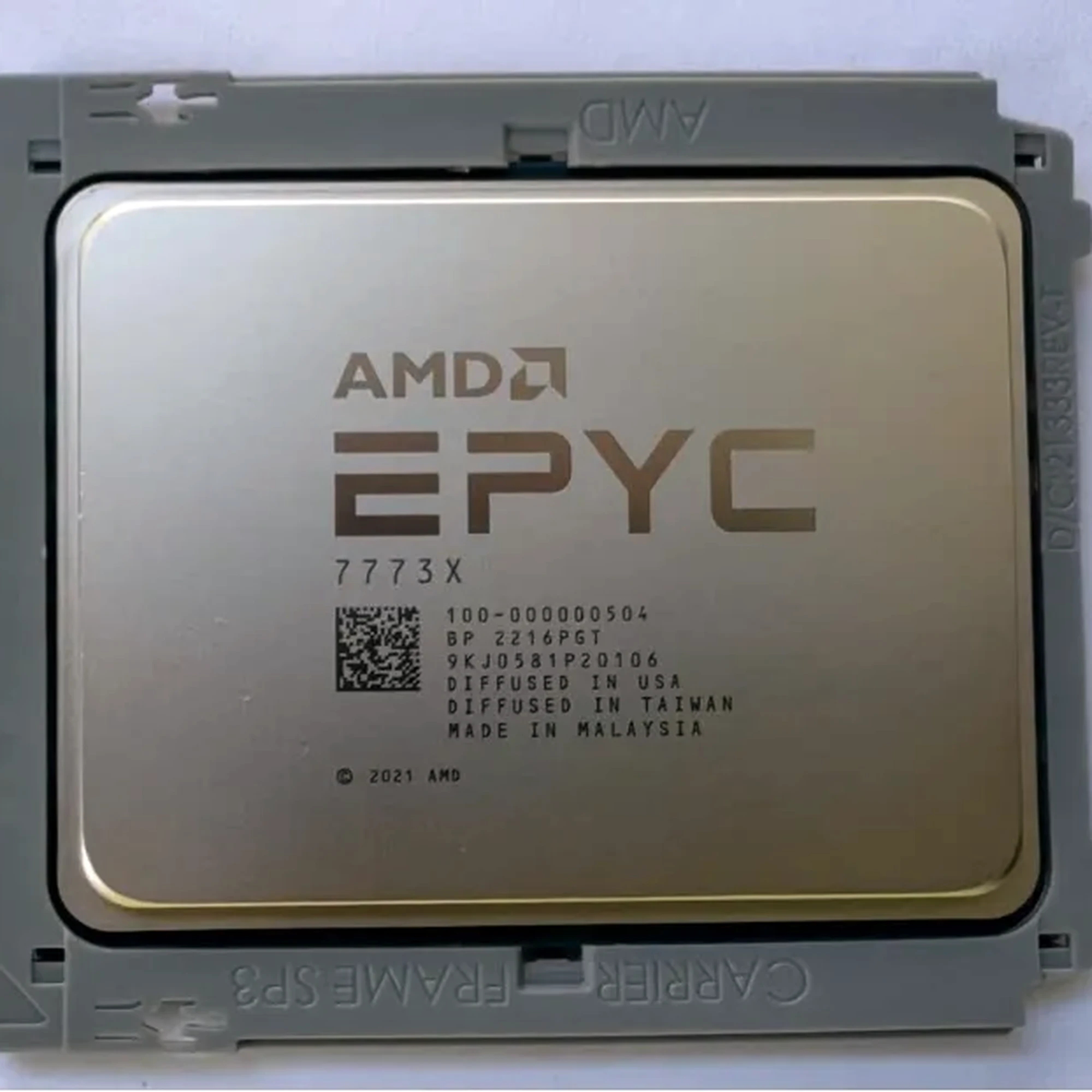
| AMD EPYC™ 7773X | 64 | 128 | Up to 3.5 GHz | 2.2 GHz | 768 MB | 280W |
| AMD EPYC™ 7763 | 64 | 128 | Up to 3.5 GHz | 2.45 GHz | 256 MB | 280W |
| AMD EPYC™ 7713P | 64 | 128 | Up to 3.67 GHz | 2 GHz | 256 MB | 225W |
| AMD EPYC™ 7713 | 64 | 128 | Up to 3.67 GHz | 2 GHz | 256 MB | 225W |
| AMD EPYC™ 7663 | 56 | 112 | Up to 3.5 GHz | 2 GHz | 256 MB | 240W |
| AMD EPYC™ 7643 | 48 | 96 | Up to 3.6 GHz | 2.3 GHz | 256 MB | 225W |
| AMD EPYC™ 7663P | 56 | 112 | Up to 3.5 GHz | 2 GHz | 256 MB | 240W |
| AMD EPYC™ 75F3 | 32 | 64 | Up to 4 GHz | 2.95 GHz | 256 MB | 280W |
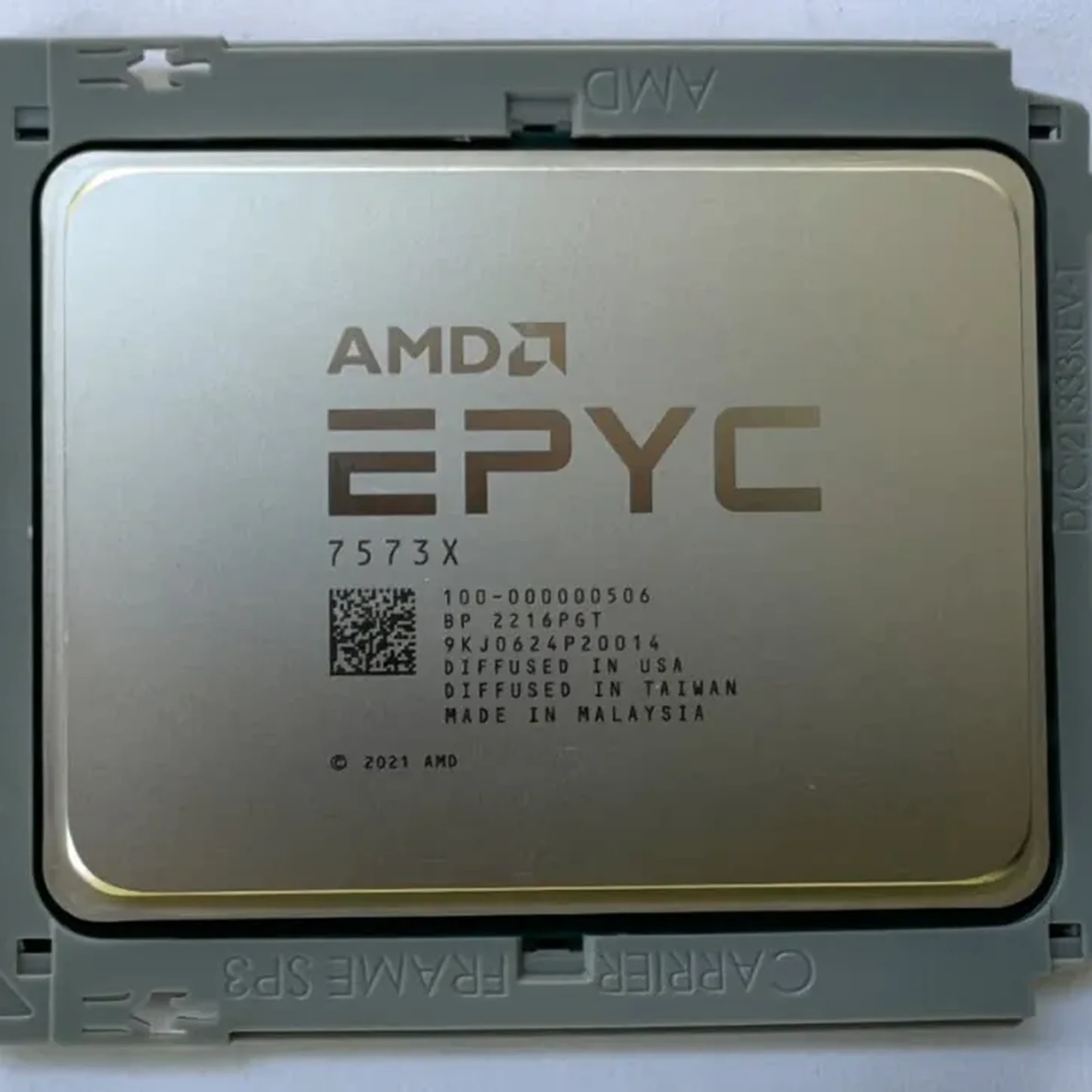
| AMD EPYC™ 7573X | 32 | 64 | Up to 3.6 GHz | 2.8 GHz | 768 MB | 280W |
| AMD EPYC™ 7543P | 32 | 64 | Up to 3.7 GHz | 2.8 GHz | 256 MB | 225W |
| AMD EPYC™ 7543 | 32 | 64 | Up to 3.7 GHz | 2.8 GHz | 256 MB | 225W |
| AMD EPYC™ 7513 | 32 | 64 | Up to 3.65 GHz | 2.6 GHz | 128 MB | 200W |
| AMD EPYC™ 74F3 | 24 | 48 | Up to 4 GHz | 3.2 GHz | 256 MB | 240W |
| AMD EPYC™ 7473X | 24 | 48 | Up to 3.7 GHz | 2.8 GHz | 768 MB | 240W |
| AMD EPYC™ 7453 | 28 | 56 | Up to 3.45 GHz | 2.75 GHz | 64 MB | 225W |
| AMD EPYC™ 7443P | 24 | 48 | Up to 4 GHz | 2.85 GHz | 128 MB | 200W |
| AMD EPYC™ 7443 | 24 | 48 | Up to 4 GHz | 2.85 GHz | 128 MB | 200W |
| AMD EPYC™ 7413 | 24 | 48 | Up to 3.6 GHz | 2.65 GHz | 128 MB | 180W |
| AMD EPYC™ 73F3 | 16 | 32 | Up to 4 GHz | 3.5 GHz | 256 MB | 240W |
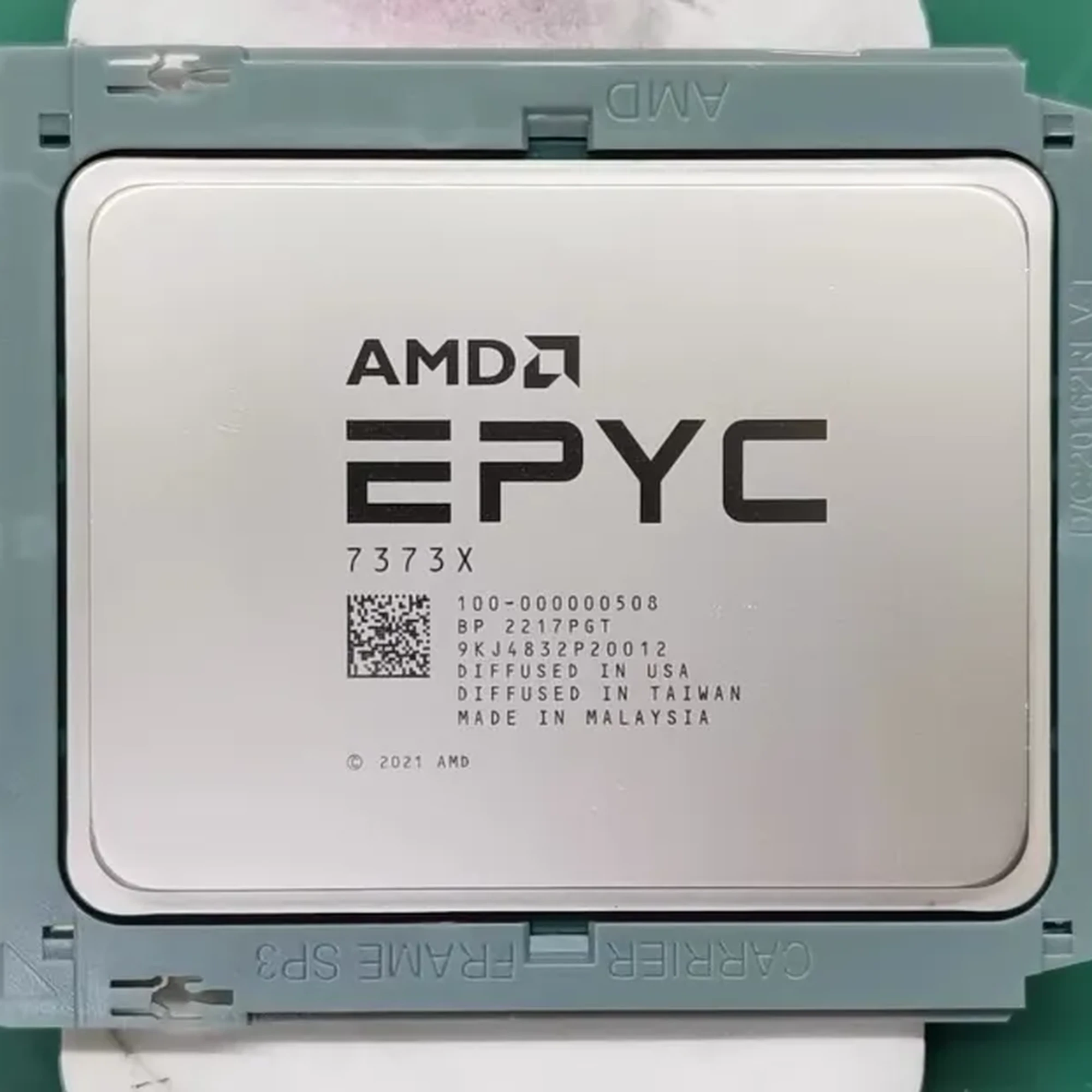
| AMD EPYC™ 7373X | 16 | 32 | Up to 3.8 GHz | 3.05 GHz | 768 MB | 240W |
| AMD EPYC™ 7343 | 16 | 32 | Up to 3.9 GHz | 3.2 GHz | 128 MB | 190W |
| AMD EPYC™ 7313P | 16 | 32 | Up to 3.7 GHz | 3 GHz | 128 MB | 155W |
| AMD EPYC™ 7313 | 16 | 32 | Up to 3.7 GHz | 3 GHz | 128 MB | 155W |
| AMD EPYC™ 72F3 | 8 | 16 | Up to 4.1 GHz | 3.7 GHz | 256 MB | 180W |