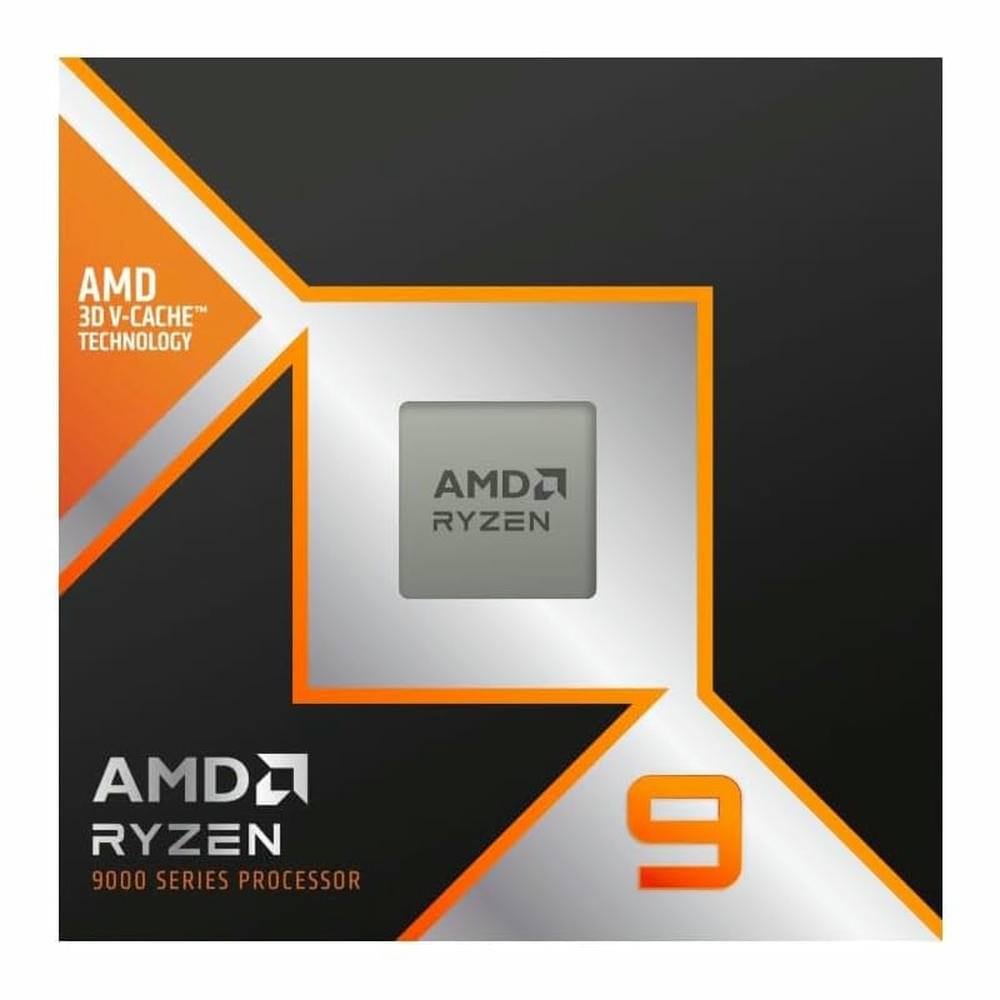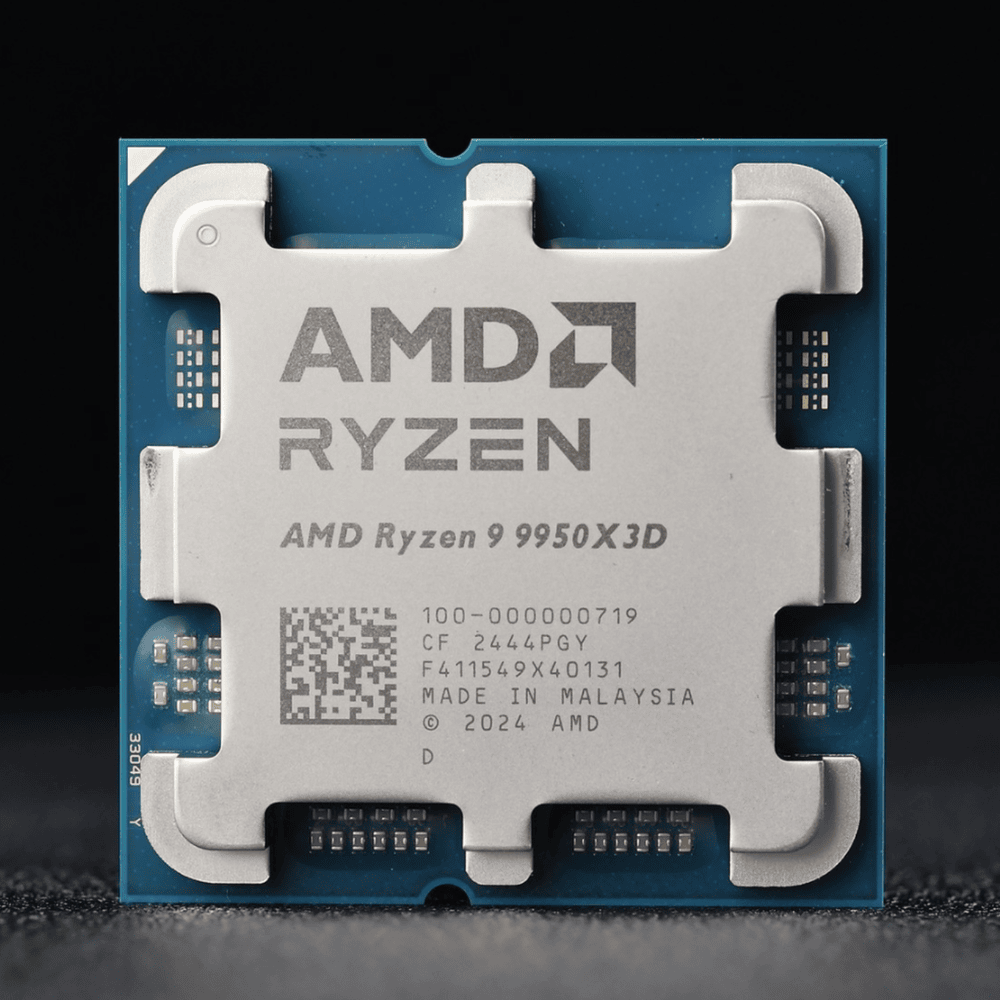
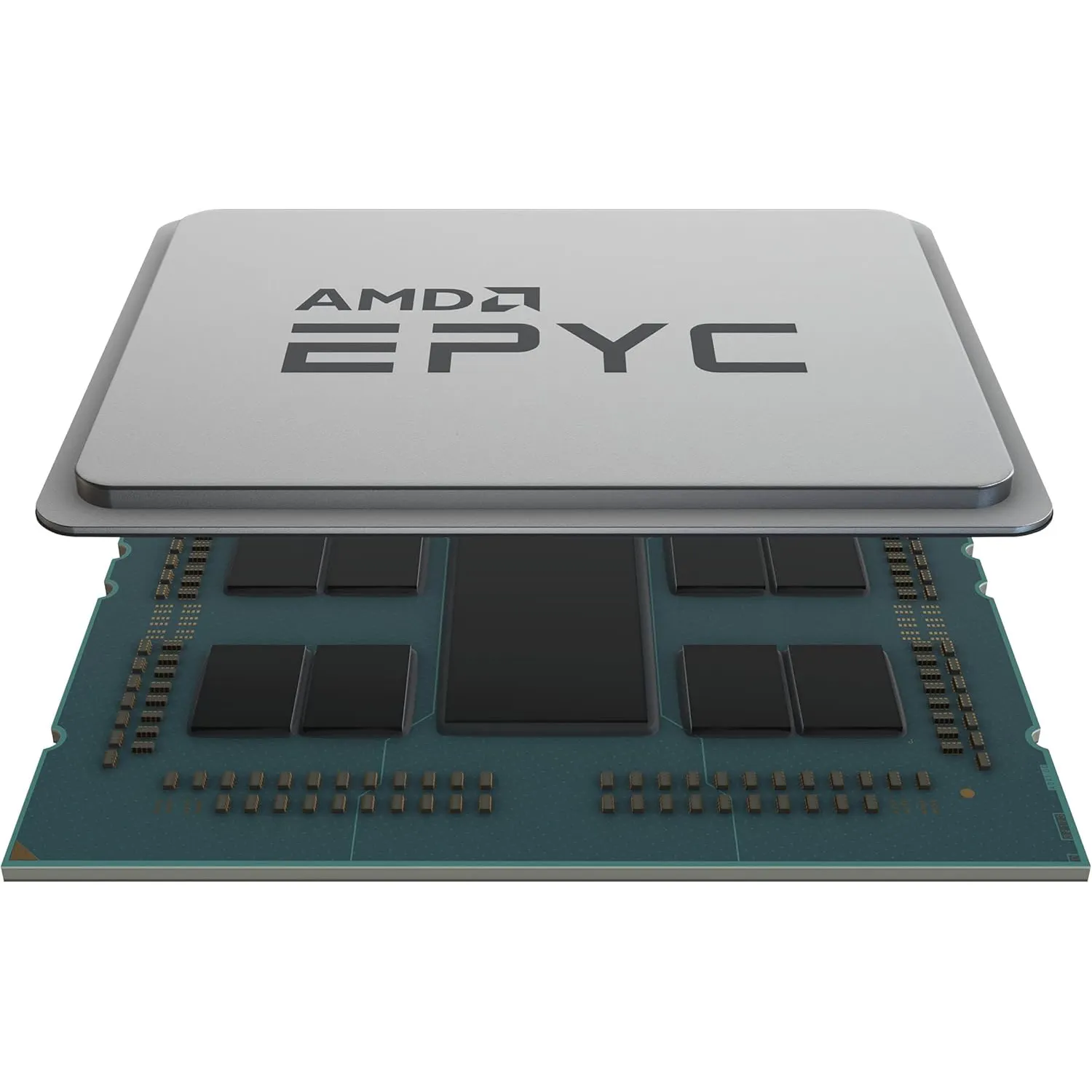
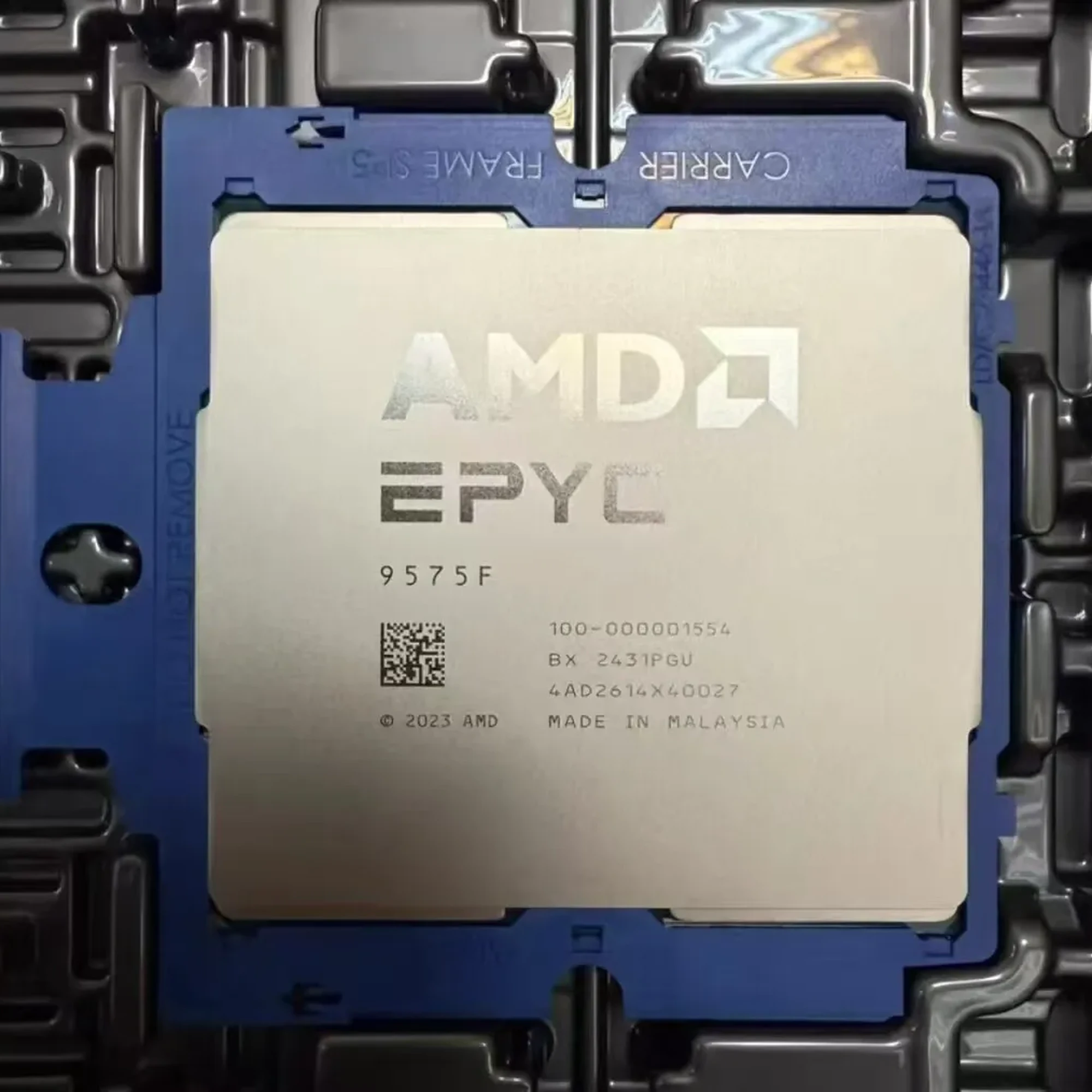
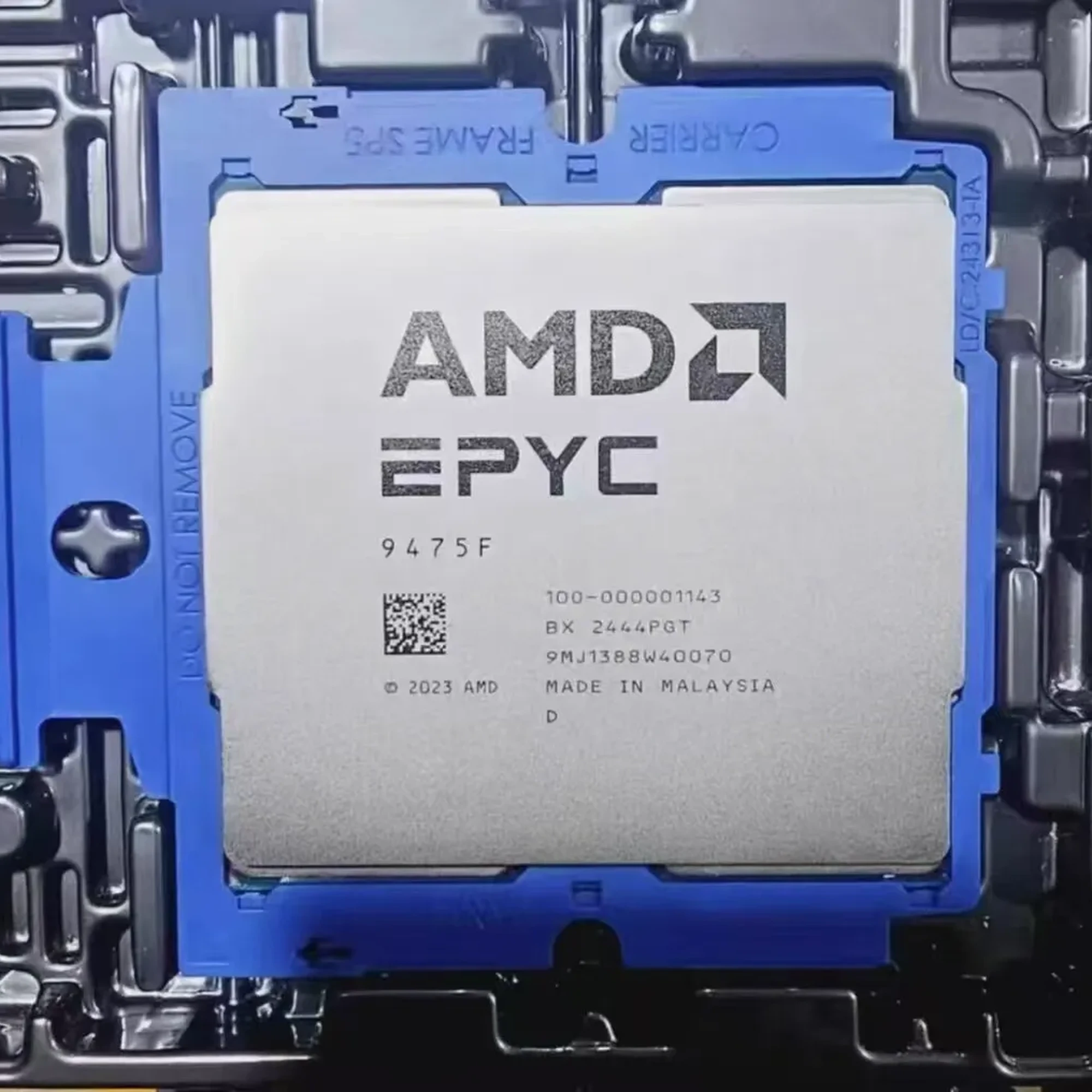
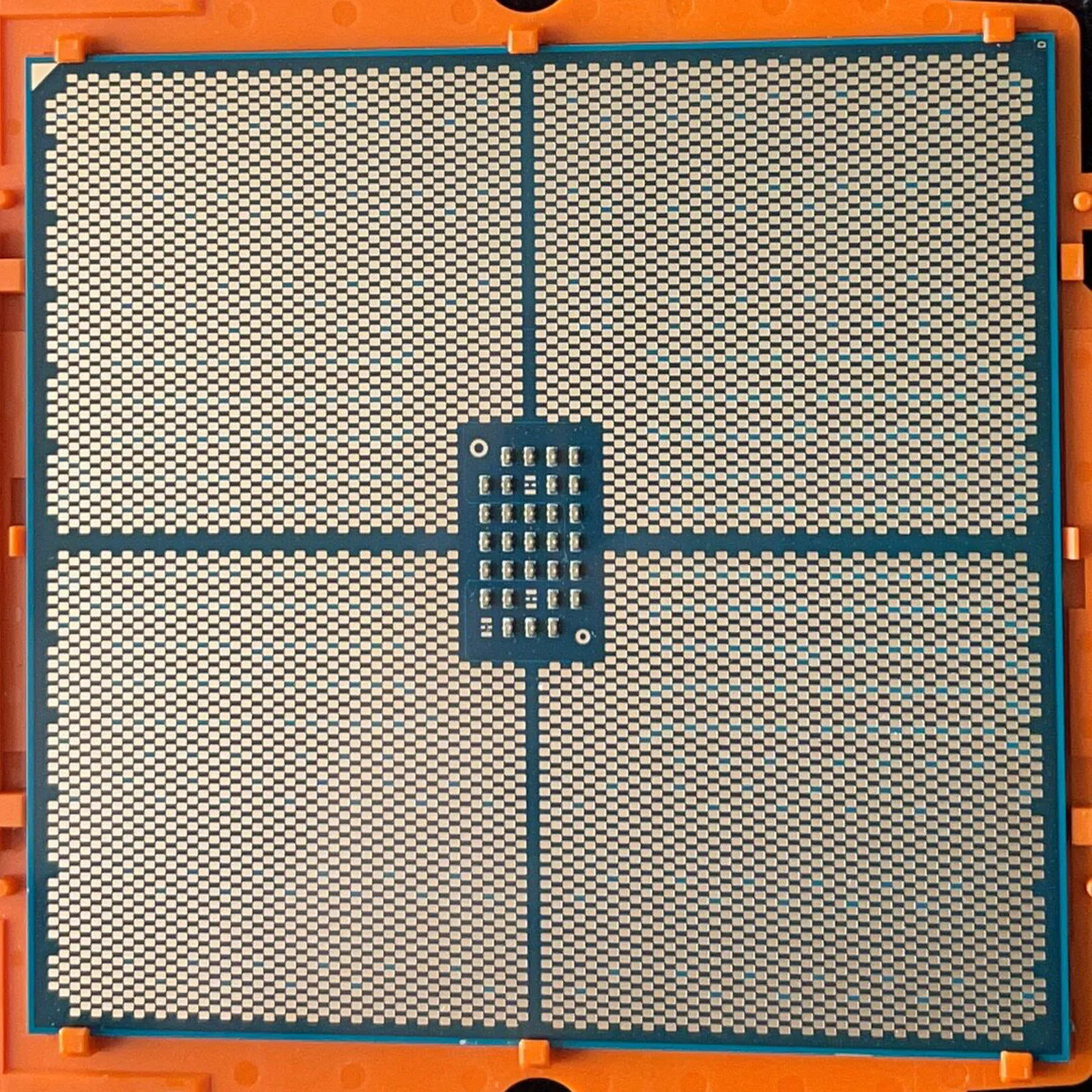
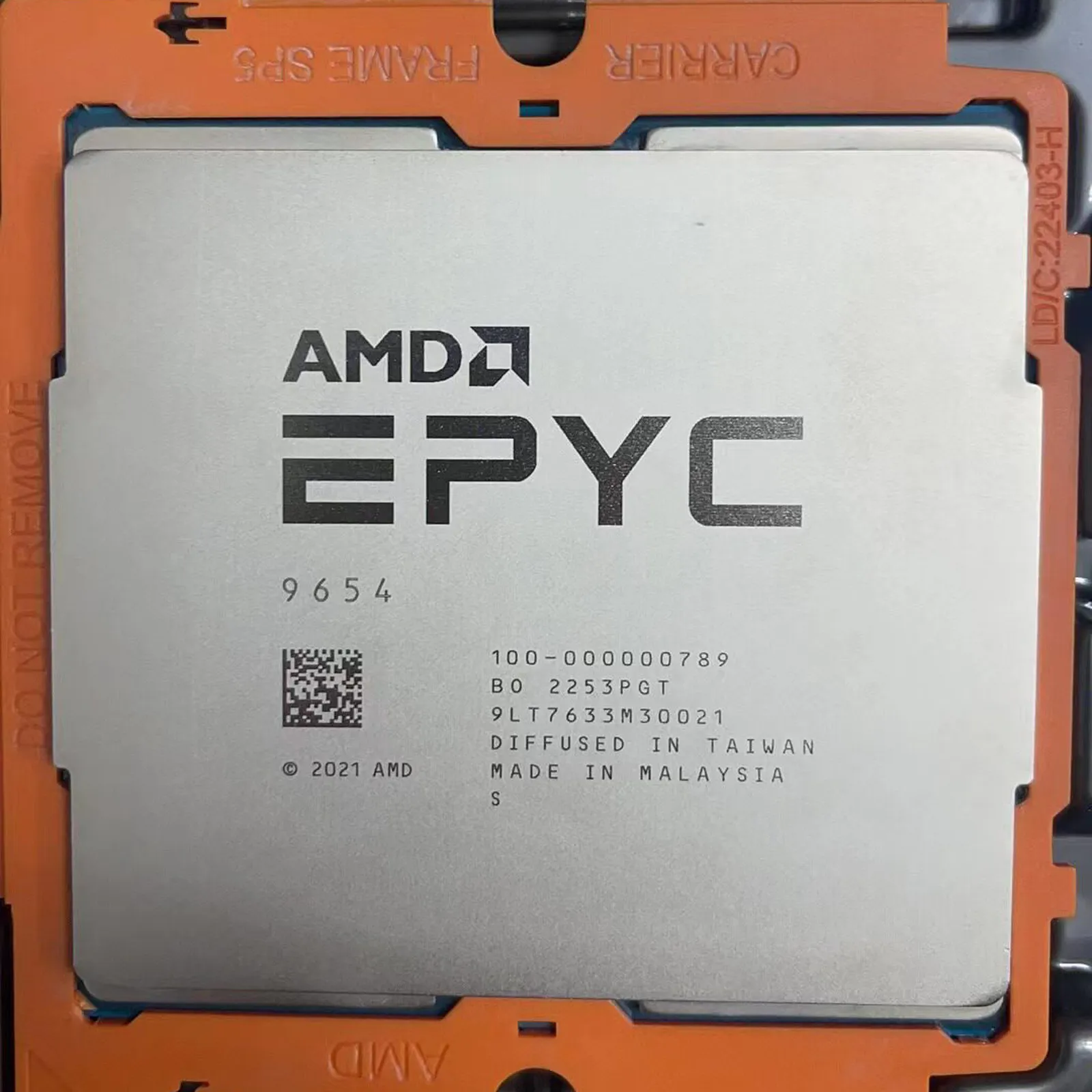

AMD EPYC 7763 64‑Core Server CPU – Max Boost 3.5 GHz | High‑Performance Enterprise Processor
The AMD EPYC 7763 represents one of AMD’s most powerful server processors in the EPYC 7003 series. Built for demanding enterprise environments, cloud workloads, virtualization, HPC (High‑Performance Computing), and large‑scale data analytics, this processor delivers exceptional performance, energy efficiency, and scalability. With its combination of high core count, multi‑threading capability, large cache, and advanced connectivity, the EPYC 7763 sets a new standard for data center CPU performance.
Designed for Modern Data Centers
In today’s highly competitive digital landscape, the ability to process large volumes of data quickly and efficiently is crucial. The AMD EPYC 7763 excels in such environments, providing robust computing performance that can handle multi‑threaded workloads with ease. Its 64 cores and 128 threads make it particularly effective at handling simultaneous tasks without bottlenecks, ensuring smoother operations across virtual machines and containerized applications.
This makes the EPYC 7763 ideal for:
- Cloud service providers
- High‑performance computing (HPC)
- AI and machine learning workloads
- Database and large‑scale enterprise applications
- Virtualization and multi‑tenant environments
Architecture and Technology – Zen 3 Excellence
At the core of the EPYC 7763 is AMD’s Zen 3 microarchitecture, part of the EPYC 7003 “Milan” processor family. Built on a 7 nm production process, Zen 3 delivers improved instructions per clock (IPC), power efficiency, and scalability compared to previous generations.
The chip leverages advanced multi‑chip module (MCM) design, combining multiple CCDs (Core Complex Dies) connected via AMD’s Infinity Fabric. This architecture maximizes data throughput across cores and memory subsystems, enabling faster execution of complex workloads.
High Core Count – Massive Parallel Processing
With 64 physical cores and 128 threads, the EPYC 7763 provides outstanding parallel computing performance. This high thread count is made possible through Simultaneous Multithreading (SMT), allowing multiple tasks to execute on each core simultaneously.
Whether you are running large databases, virtualization environments with hundreds of VMs, or distributed computing frameworks, the EPYC 7763 scales efficiently to meet the demands of today’s enterprise workloads.
Clock Speeds – Balancing Power and Performance
The EPYC 7763 operates at a base clock speed of 2.45 GHz, with the ability to dynamically boost up to 3.5 GHz on demanding tasks. This balance of base and boost frequencies ensures consistent performance under sustained loads while delivering additional power when needed for peak performance situations.
This dynamic performance scaling makes the EPYC 7763 suitable for both throughput‑oriented workloads and challenging compute‑intensive applications.
Large Cache – Dramatically Reducing Latency
One of the standout features of the EPYC 7763 is its 256 MB of shared L3 cache. This large cache ensures that frequently accessed data is stored closer to the cores, significantly reducing data retrieval times and improving overall processing speeds.
In memory‑intensive workloads like analytics and large databases, a large L3 cache can significantly improve performance by reducing bottlenecks and accelerating data access.
Memory and I/O Connectivity – Uncompromised Bandwidth
The EPYC 7763 supports:
- 8‑channel DDR4 memory with speeds up to 3200 MT/s
- ECC (Error‑Correcting Code) memory support for data integrity
- Up to 204.8 GB/s memory bandwidth per socket
This combination ensures rapid data movement and enhanced system stability—essential for mission‑critical enterprise operations.
For connectivity with other system components, the processor provides PCIe 4.0 support with 128 lanes, enabling ultra‑fast connections to NVMe storage, high‑speed networking, and accelerators.
Scalability and Multi‑Processor Support
The AMD EPYC 7763 supports both single‑socket (1P) and dual‑socket (2P) configurations, giving system builders and data center architects flexibility to scale performance as needed. This expands capacity for larger workloads and enables more complex configurations without compromising speed or reliability.
Security and Virtualization Features
Security is a key focus in modern server CPUs, and the EPYC 7763 provides a comprehensive set of features, including:
- AMD Infinity Guard security technologies
- Secure encrypted virtualization
- Enhanced hardware‑based data protection
These capabilities ensure robust protection against threats and provide a secure foundation for cloud and enterprise applications.
Combined with virtualization support, the CPU enables efficient resource sharing across virtualized environments, increasing server utilization and flexibility.
Power Efficiency – Balancing Performance and Thermal Management
Despite its high performance, the EPYC 7763 maintains a sensible approach to power consumption with a standard TDP of 280 W. While this is relatively high compared to desktop CPUs, it is expected for a processor designed for intense server workloads.
Advanced power management technologies allow data center operators to balance performance with cooler operation and efficient thermal designs.
Real‑World Performance
Independent benchmark results consistently show the EPYC 7763 delivering exceptional performance in both single‑threaded and multi‑threaded workloads. In server‑oriented tests and performance suites, this CPU ranks among the fastest in its class, demonstrating its capability to tackle diverse and demanding applications.
Conclusion – Future‑Ready Server Processing
The AMD EPYC 7763 remains a top choice for enterprise and hyperscale environments. Its combination of high core counts, advanced architecture, large cache, memory bandwidth, and PCIe connectivity makes it a compelling choice for modern data centers. Whether deployed in clusters, cloud infrastructure, or critical business systems, this processor delivers a powerful, reliable, and scalable foundation for current and future workloads.
📊 Specifications Sheet
| Specification | Details |
|---|---|
| Model | AMD EPYC 7763 |
| Architecture | Zen 3 (Milan) |
| Cores / Threads | 64 / 128 |
| Base Clock | 2.45 GHz |
| Boost Clock | Up to 3.5 GHz |
| L3 Cache | 256 MB |
| Memory Support | DDR4‑3200, 8‑channel |
| PCI Express Version | PCIe 4.0, 128 lanes |
| ECC Support | Yes |
| Socket | SP3 |
| TDP | 280 W |
| Configurable TDP | 225 W–280 W |
| Launch Date | March 15 2021 |
| Ideal Use Cases | Servers, Cloud, Virtualization, HPC |
AMD EPYC 7003 Series Processors General Specifications
Name | # of CPU Cores | # of Threads | Max. Boost Clock | Base Clock | L3 Cache | Default TDP |
|---|---|---|---|---|---|---|
| AMD EPYC™ 7203P | 8 | 16 | Up to 3.4 GHz | 2.8 GHz | 64 MB | 120W |
| AMD EPYC™ 7203 | 8 | 16 | Up to 3.4 GHz | 2.8 GHz | 64 MB | 120W |
| AMD EPYC™ 7303P | 16 | 32 | Up to 3.4 GHz | 2.4 GHz | 64 MB | 130W |
| AMD EPYC™ 7303 | 16 | 32 | Up to 3.4 GHz | 2.4 GHz | 64 MB | 130W |
| AMD EPYC™ 7643P | 48 | 96 | Up to 3.6 GHz | 2.3 GHz | 256 MB | 225W |
| AMD EPYC™ 7773X | 64 | 128 | Up to 3.5 GHz | 2.2 GHz | 768 MB | 280W |
| AMD EPYC™ 7763 | 64 | 128 | Up to 3.5 GHz | 2.45 GHz | 256 MB | 280W |
| AMD EPYC™ 7713P | 64 | 128 | Up to 3.67 GHz | 2 GHz | 256 MB | 225W |
| AMD EPYC™ 7713 | 64 | 128 | Up to 3.67 GHz | 2 GHz | 256 MB | 225W |
| AMD EPYC™ 7663 | 56 | 112 | Up to 3.5 GHz | 2 GHz | 256 MB | 240W |
| AMD EPYC™ 7643 | 48 | 96 | Up to 3.6 GHz | 2.3 GHz | 256 MB | 225W |
| AMD EPYC™ 7663P | 56 | 112 | Up to 3.5 GHz | 2 GHz | 256 MB | 240W |
| AMD EPYC™ 75F3 | 32 | 64 | Up to 4 GHz | 2.95 GHz | 256 MB | 280W |
| AMD EPYC™ 7573X | 32 | 64 | Up to 3.6 GHz | 2.8 GHz | 768 MB | 280W |
| AMD EPYC™ 7543P | 32 | 64 | Up to 3.7 GHz | 2.8 GHz | 256 MB | 225W |
| AMD EPYC™ 7543 | 32 | 64 | Up to 3.7 GHz | 2.8 GHz | 256 MB | 225W |
| AMD EPYC™ 7513 | 32 | 64 | Up to 3.65 GHz | 2.6 GHz | 128 MB | 200W |
| AMD EPYC™ 74F3 | 24 | 48 | Up to 4 GHz | 3.2 GHz | 256 MB | 240W |
| AMD EPYC™ 7473X | 24 | 48 | Up to 3.7 GHz | 2.8 GHz | 768 MB | 240W |
| AMD EPYC™ 7453 | 28 | 56 | Up to 3.45 GHz | 2.75 GHz | 64 MB | 225W |
| AMD EPYC™ 7443P | 24 | 48 | Up to 4 GHz | 2.85 GHz | 128 MB | 200W |
| AMD EPYC™ 7443 | 24 | 48 | Up to 4 GHz | 2.85 GHz | 128 MB | 200W |
| AMD EPYC™ 7413 | 24 | 48 | Up to 3.6 GHz | 2.65 GHz | 128 MB | 180W |
| AMD EPYC™ 73F3 | 16 | 32 | Up to 4 GHz | 3.5 GHz | 256 MB | 240W |
| AMD EPYC™ 7373X | 16 | 32 | Up to 3.8 GHz | 3.05 GHz | 768 MB | 240W |
| AMD EPYC™ 7343 | 16 | 32 | Up to 3.9 GHz | 3.2 GHz | 128 MB | 190W |
| AMD EPYC™ 7313P | 16 | 32 | Up to 3.7 GHz | 3 GHz | 128 MB | 155W |
| AMD EPYC™ 7313 | 16 | 32 | Up to 3.7 GHz | 3 GHz | 128 MB | 155W |
| AMD EPYC™ 72F3 | 8 | 16 | Up to 4.1 GHz | 3.7 GHz | 256 MB | 180W |