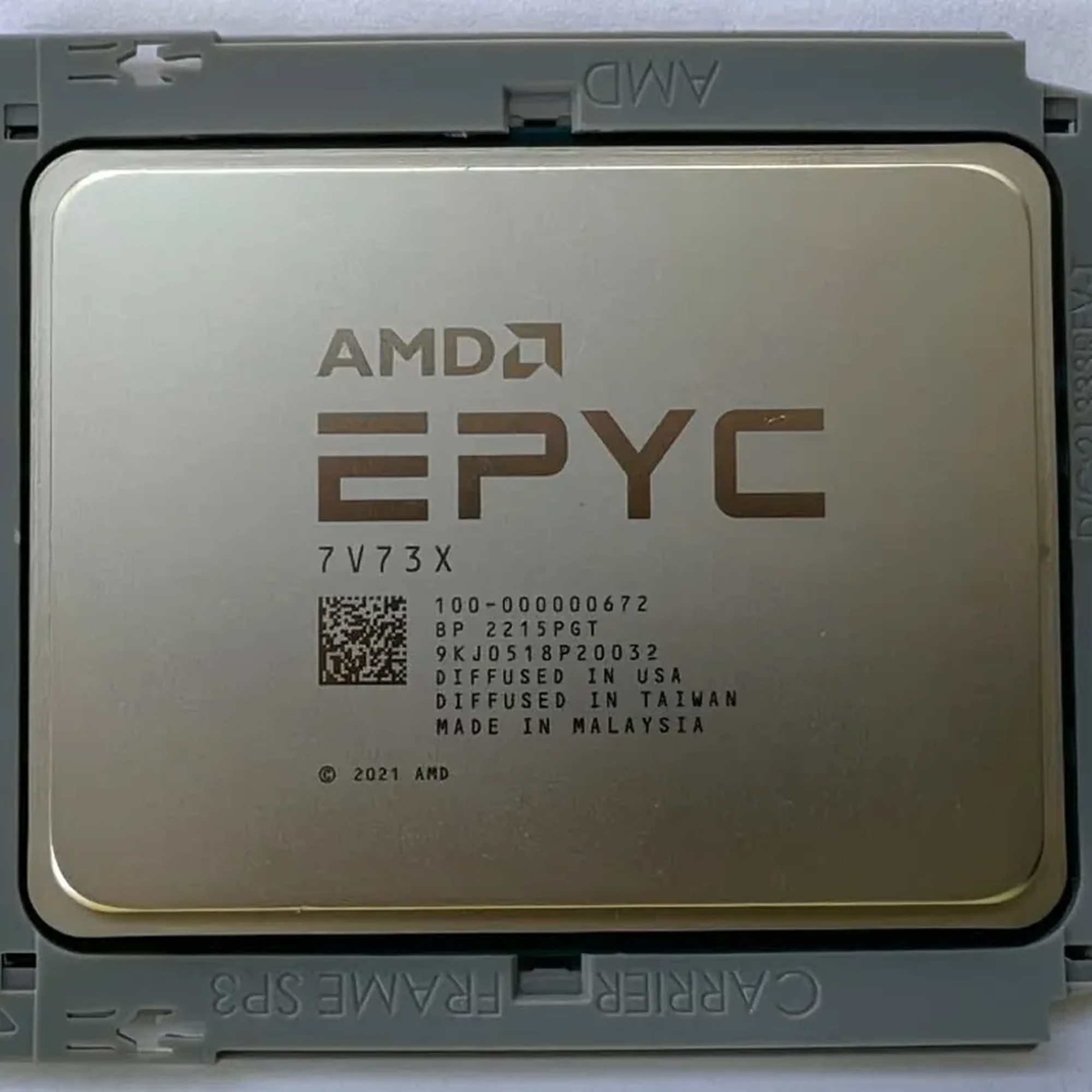
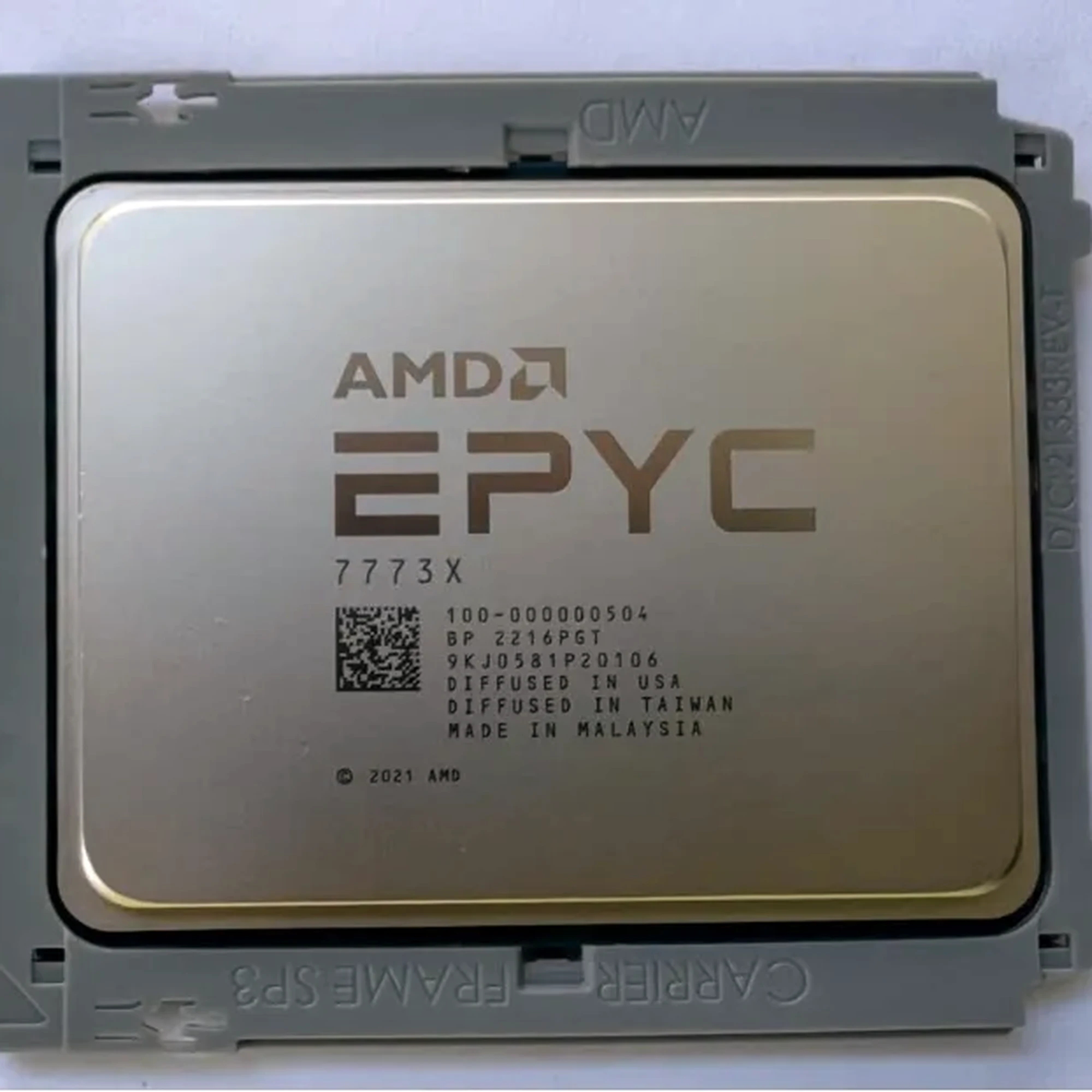
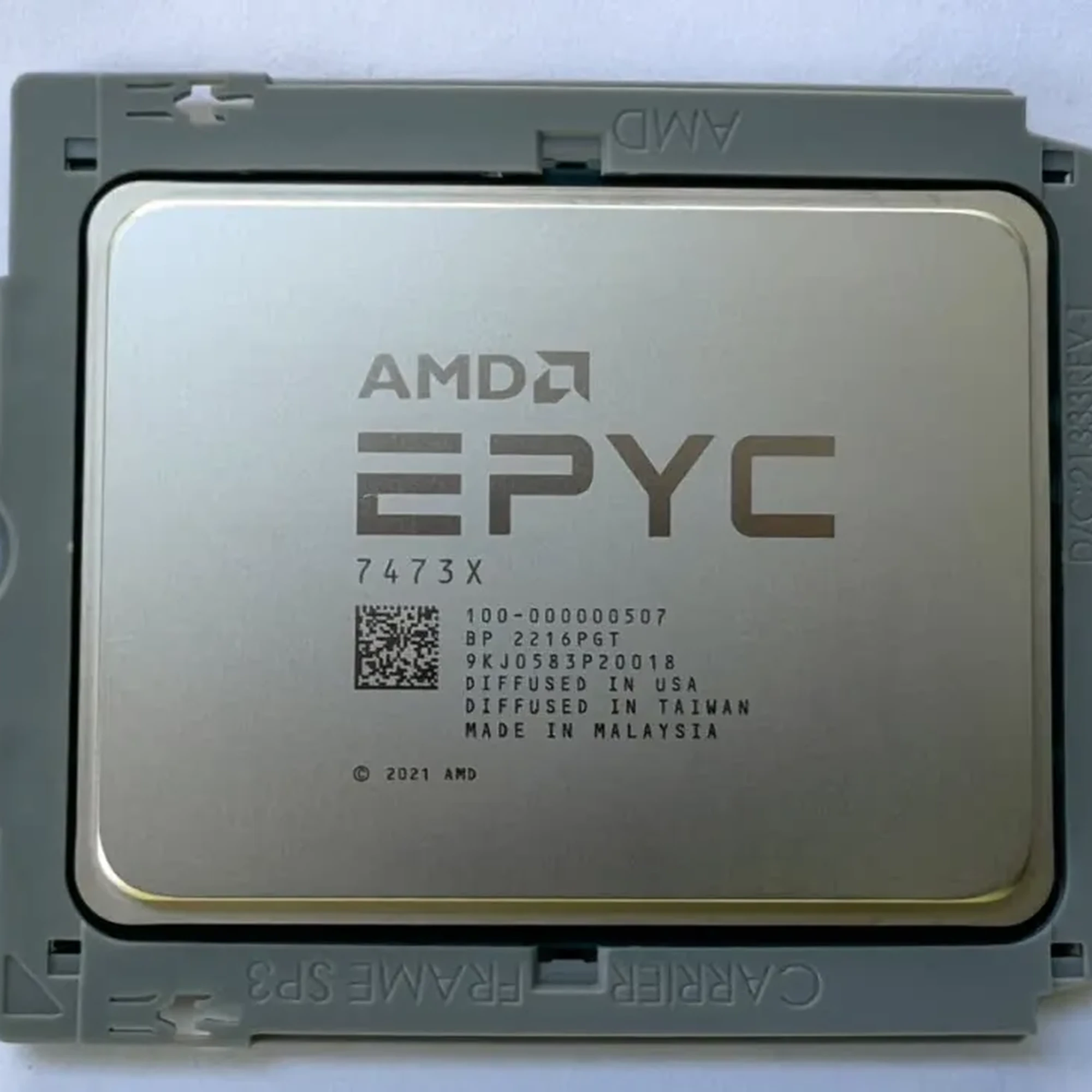
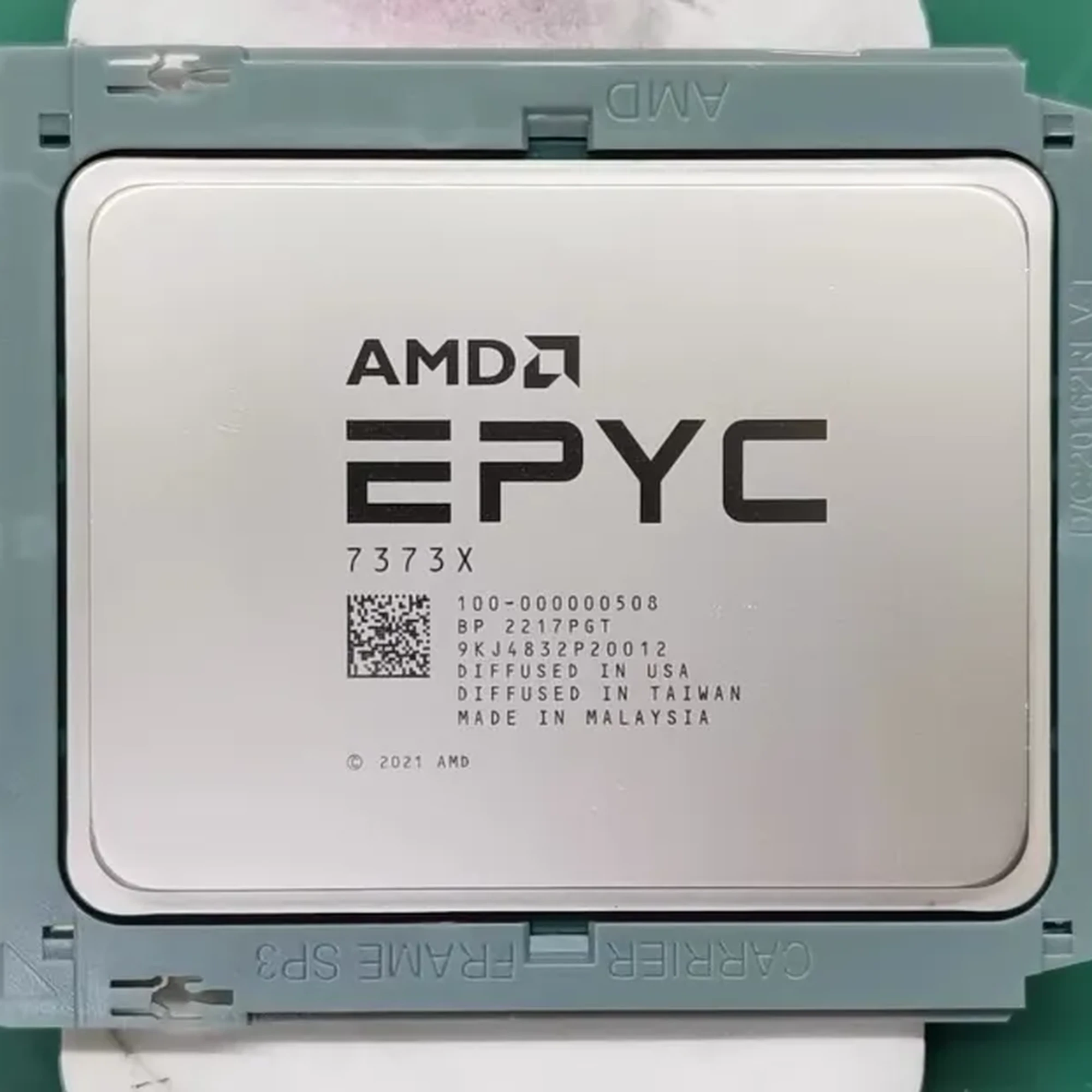

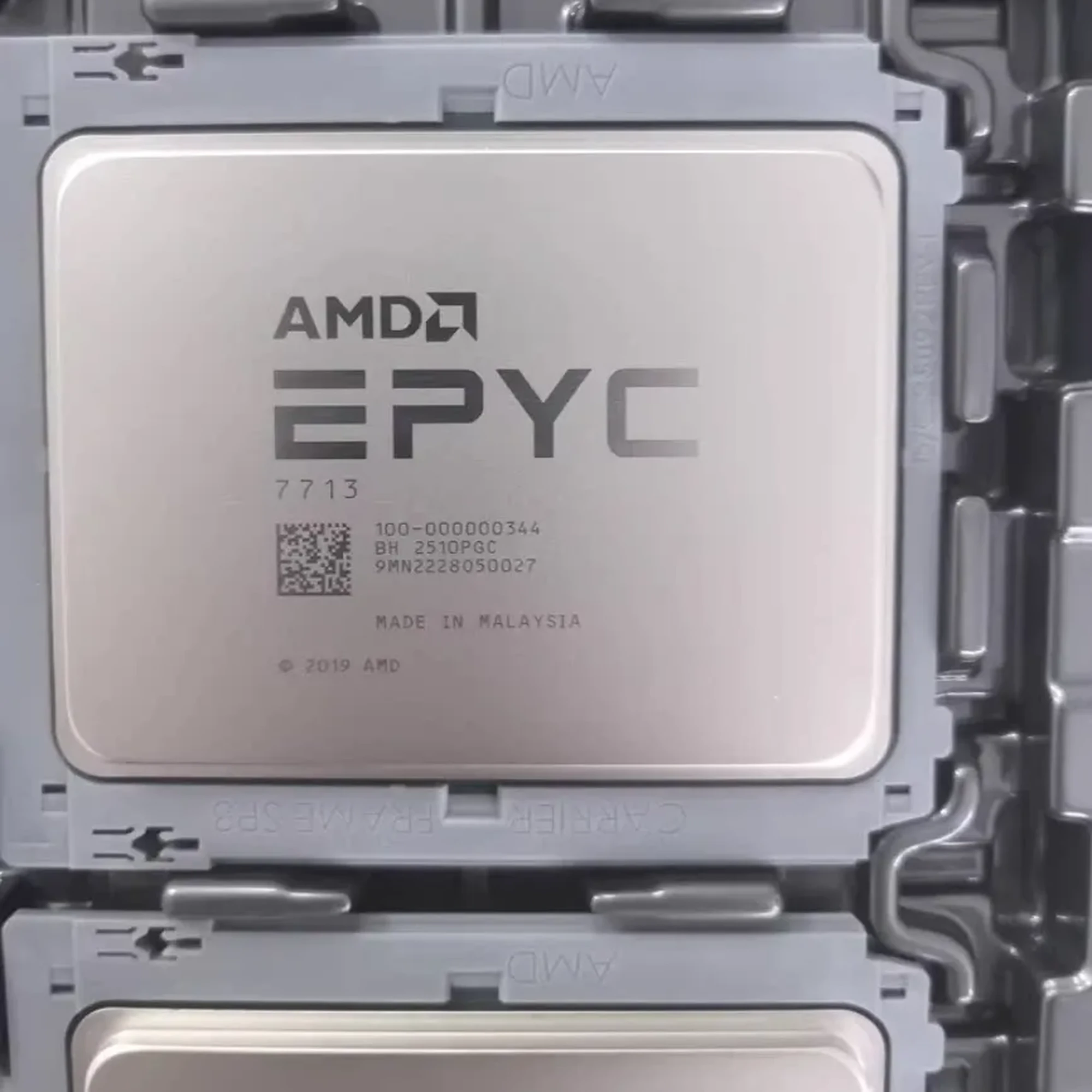
AMD EPYC 7713 Processor 64-Core Server CPU for Data Centers & Cloud Computing
Overview of AMD EPYC 7713
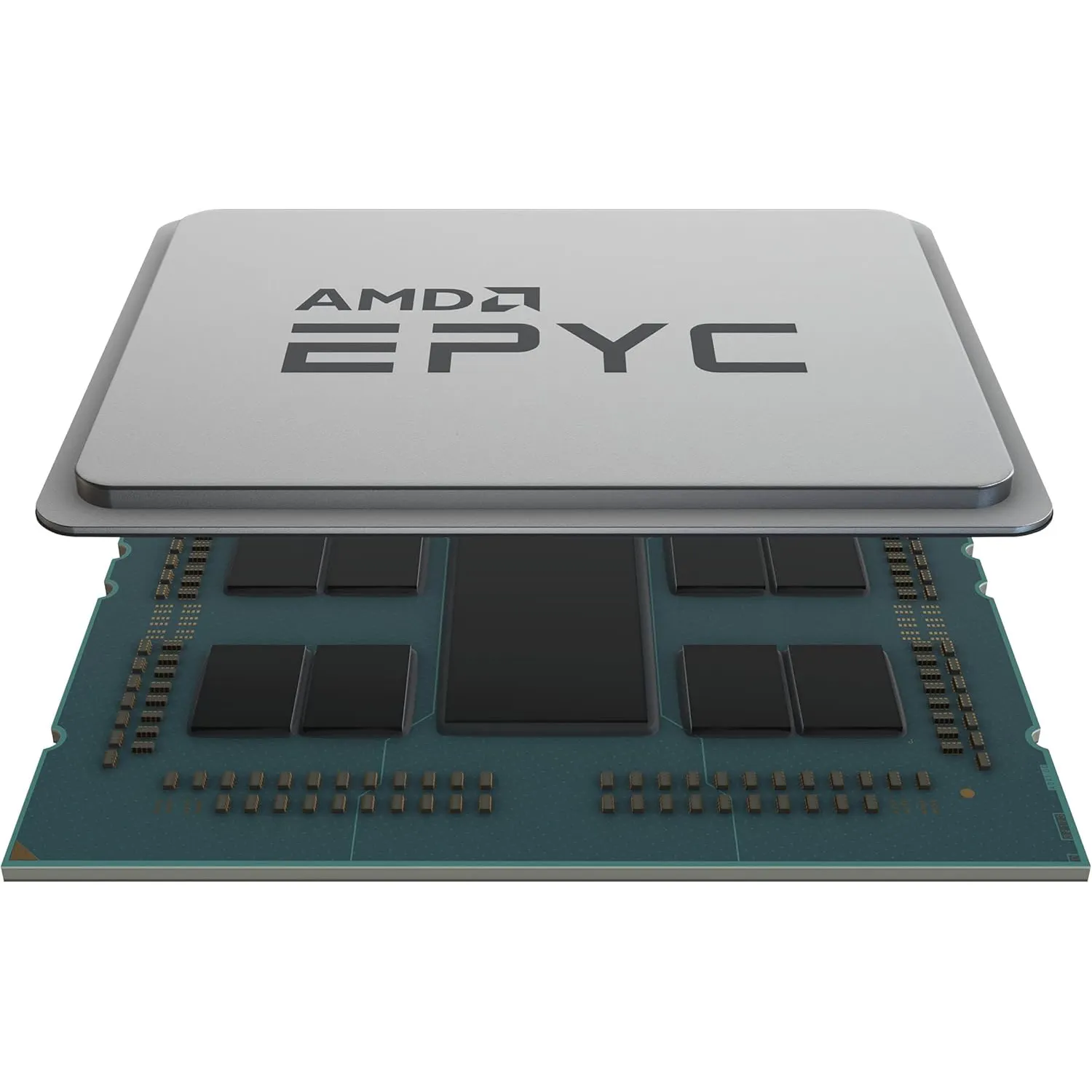
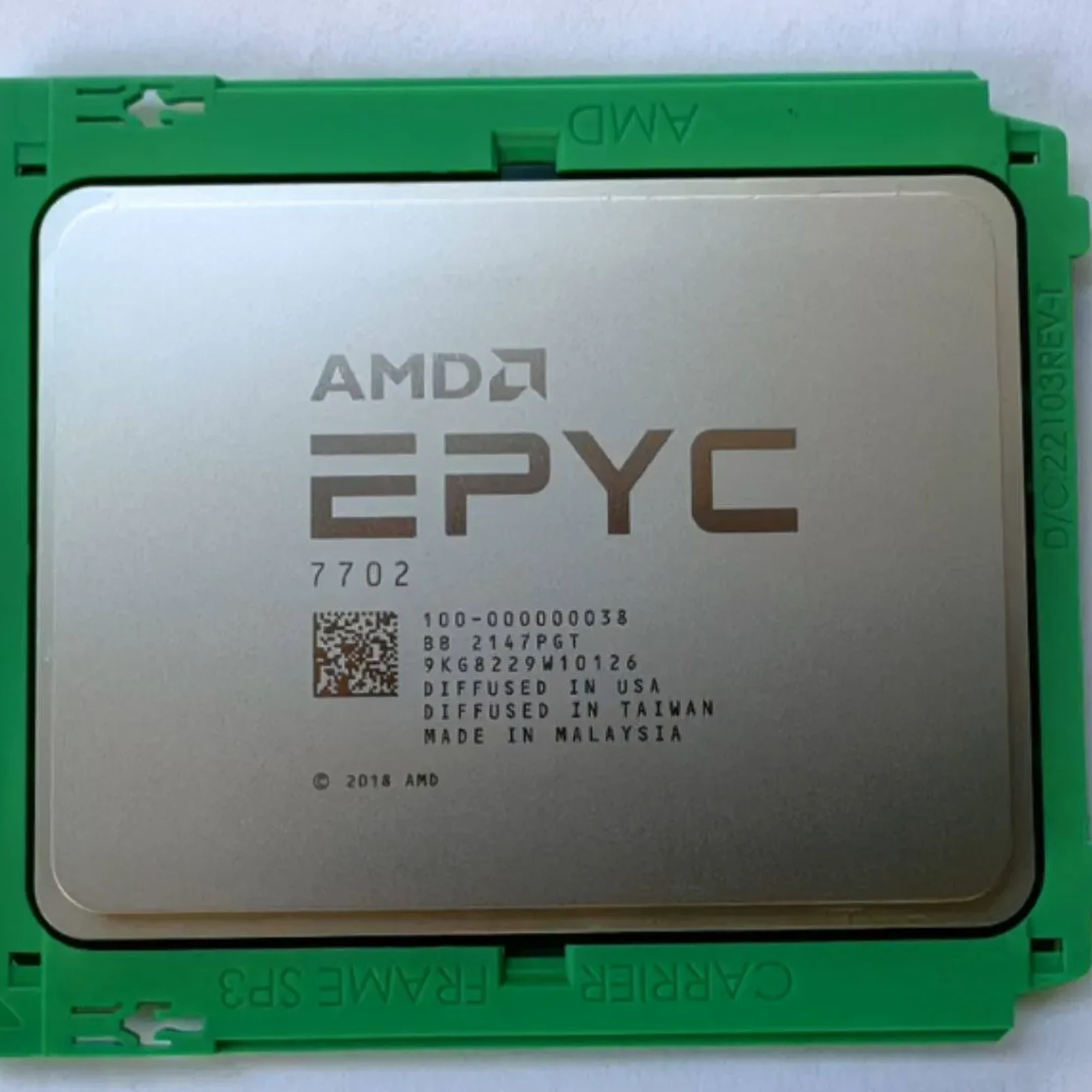
The AMD EPYC 7713 is a high-performance server processor designed for modern data centers, enterprise environments, and cloud infrastructure. Built on AMD’s advanced Zen 3 architecture, this processor delivers exceptional core density, improved IPC (instructions per cycle), and outstanding efficiency.
With 64 cores and 128 threads, the EPYC 7713 is engineered to handle demanding workloads such as virtualization, high-performance computing (HPC), big data analytics, and large-scale databases. It offers a balance between raw computational power and energy efficiency, making it a top choice for businesses seeking scalable and cost-effective server solutions.
Zen 3 Architecture Advantage
The EPYC 7713 is powered by AMD’s Zen 3 architecture, which represents a significant improvement over previous generations. The unified 8-core complex design reduces latency and enhances performance across workloads.
This architecture allows each core to access a larger shared cache, improving data processing efficiency. As a result, applications that rely heavily on memory access, such as scientific simulations and enterprise databases, benefit significantly.
Exceptional Core and Thread Count
One of the standout features of the AMD EPYC 7713 is its massive 64-core and 128-thread configuration. This high core count makes it ideal for multi-threaded workloads, including:
- Virtual machine hosting
- Containerized applications
- AI and machine learning tasks
- Large-scale web hosting environments
The processor can efficiently manage multiple workloads simultaneously without compromising performance, making it a preferred solution for cloud service providers.
High Clock Speeds for Balanced Performance
The EPYC 7713 operates at a base clock of 2.0 GHz and can boost up to 3.675 GHz. This ensures both sustained performance for long-running tasks and higher speeds for burst workloads.
This balance is crucial for environments where both consistency and responsiveness are required, such as financial systems and real-time analytics platforms.
Massive Cache Capacity
The processor includes a total of 256MB L3 cache, which significantly enhances data retrieval speeds. A larger cache reduces the need to access slower system memory, improving overall efficiency.
This feature is particularly beneficial for:
- Database management systems
- Data analytics workloads
- Scientific computing
PCIe 4.0 Support
The AMD EPYC 7713 supports PCIe 4.0, providing double the bandwidth compared to PCIe 3.0. This allows faster communication between the CPU and connected devices such as GPUs, storage drives, and networking hardware.
Benefits include:
- Faster NVMe storage performance
- Improved GPU acceleration
- Enhanced networking throughput
Advanced Memory Capabilities
The processor supports 8-channel DDR4 memory with speeds up to 3200 MT/s. This ensures high memory bandwidth, which is essential for memory-intensive applications.
With support for large memory capacities, the EPYC 7713 is ideal for:
- In-memory databases
- Virtualization environments
- Enterprise resource planning (ERP) systems
Energy Efficiency and Thermal Design
Despite its powerful performance, the EPYC 7713 maintains a thermal design power (TDP) of 225W. AMD’s efficient architecture ensures optimal performance per watt, reducing operational costs for data centers.
This efficiency translates to:
- Lower electricity consumption
- Reduced cooling requirements
- Improved total cost of ownership (TCO)
Security Features
Security is a critical concern in modern IT environments. The AMD EPYC 7713 includes advanced security technologies such as:
- AMD Infinity Guard
- Secure Encrypted Virtualization (SEV)
- Secure Memory Encryption (SME)
These features help protect sensitive data and ensure secure multi-tenant environments.
Ideal Use Cases
The AMD EPYC 7713 is designed for a wide range of enterprise and cloud applications, including:
Cloud Computing
Its high core density makes it perfect for hyperscale cloud providers.
Virtualization
Supports a large number of virtual machines efficiently.
High-Performance Computing (HPC)
Ideal for simulations, research, and engineering workloads.
Big Data Analytics
Handles large datasets with ease thanks to high memory bandwidth.
Enterprise Servers
Reliable and scalable for mission-critical applications.
Scalability and Platform Compatibility
The EPYC 7713 is compatible with the SP3 socket platform, supporting dual-socket configurations. This allows organizations to scale their infrastructure as needed.
With two processors in a system, businesses can achieve:
- 128 cores and 256 threads
- Massive memory capacity
- Enhanced compute power
Reliability and Enterprise Features
AMD EPYC processors are built with enterprise-grade reliability in mind. Features include:
- Advanced error correction
- Predictable performance
- Long lifecycle support
These ensure consistent operation in mission-critical environments.
Competitive Positioning
Compared to other server processors, the AMD EPYC 7713 stands out due to:
- Higher core count at competitive pricing
- Superior memory bandwidth
- PCIe 4.0 support
- Strong performance per watt
This makes it a compelling choice for organizations looking to maximize performance while controlling costs.
Future-Proof Infrastructure
Investing in the EPYC 7713 ensures long-term value. Its support for modern technologies and high scalability makes it suitable for future workloads and evolving IT demands.
Businesses can rely on this processor to handle increasing data volumes and complex applications without requiring frequent upgrades.
Specifications Sheet
| Specification | Details |
|---|---|
| Processor Model | AMD EPYC 7713 |
| Architecture | Zen 3 |
| Cores / Threads | 64 / 128 |
| Base Clock | 2.0 GHz |
| Max Boost Clock | Up to 3.675 GHz |
| L3 Cache | 256 MB |
| TDP | 225W |
| Socket | SP3 |
| Memory Support | DDR4-3200 |
| Memory Channels | 8 Channels |
| PCIe Version | PCIe 4.0 |
| PCIe Lanes | 128 |
| Manufacturing Process | 7nm |
| Server Type | Data Center / Enterprise |
AMD EPYC 7003 Series Processors General Specifications
Name | # of CPU Cores | # of Threads | Max. Boost Clock | Base Clock | L3 Cache | Default TDP |
|---|---|---|---|---|---|---|
| AMD EPYC™ 7203P | 8 | 16 | Up to 3.4 GHz | 2.8 GHz | 64 MB | 120W |
| AMD EPYC™ 7203 | 8 | 16 | Up to 3.4 GHz | 2.8 GHz | 64 MB | 120W |
| AMD EPYC™ 7303P | 16 | 32 | Up to 3.4 GHz | 2.4 GHz | 64 MB | 130W |
| AMD EPYC™ 7303 | 16 | 32 | Up to 3.4 GHz | 2.4 GHz | 64 MB | 130W |
| AMD EPYC™ 7643P | 48 | 96 | Up to 3.6 GHz | 2.3 GHz | 256 MB | 225W |
| AMD EPYC™ 7773X | 64 | 128 | Up to 3.5 GHz | 2.2 GHz | 768 MB | 280W |
| AMD EPYC™ 7763 | 64 | 128 | Up to 3.5 GHz | 2.45 GHz | 256 MB | 280W |
| AMD EPYC™ 7713P | 64 | 128 | Up to 3.67 GHz | 2 GHz | 256 MB | 225W |
| AMD EPYC™ 7713 | 64 | 128 | Up to 3.67 GHz | 2 GHz | 256 MB | 225W |
| AMD EPYC™ 7663 | 56 | 112 | Up to 3.5 GHz | 2 GHz | 256 MB | 240W |
| AMD EPYC™ 7643 | 48 | 96 | Up to 3.6 GHz | 2.3 GHz | 256 MB | 225W |
| AMD EPYC™ 7663P | 56 | 112 | Up to 3.5 GHz | 2 GHz | 256 MB | 240W |
| AMD EPYC™ 75F3 | 32 | 64 | Up to 4 GHz | 2.95 GHz | 256 MB | 280W |
| AMD EPYC™ 7573X | 32 | 64 | Up to 3.6 GHz | 2.8 GHz | 768 MB | 280W |
| AMD EPYC™ 7543P | 32 | 64 | Up to 3.7 GHz | 2.8 GHz | 256 MB | 225W |
| AMD EPYC™ 7543 | 32 | 64 | Up to 3.7 GHz | 2.8 GHz | 256 MB | 225W |
| AMD EPYC™ 7513 | 32 | 64 | Up to 3.65 GHz | 2.6 GHz | 128 MB | 200W |
| AMD EPYC™ 74F3 | 24 | 48 | Up to 4 GHz | 3.2 GHz | 256 MB | 240W |
| AMD EPYC™ 7473X | 24 | 48 | Up to 3.7 GHz | 2.8 GHz | 768 MB | 240W |
| AMD EPYC™ 7453 | 28 | 56 | Up to 3.45 GHz | 2.75 GHz | 64 MB | 225W |
| AMD EPYC™ 7443P | 24 | 48 | Up to 4 GHz | 2.85 GHz | 128 MB | 200W |
| AMD EPYC™ 7443 | 24 | 48 | Up to 4 GHz | 2.85 GHz | 128 MB | 200W |
| AMD EPYC™ 7413 | 24 | 48 | Up to 3.6 GHz | 2.65 GHz | 128 MB | 180W |
| AMD EPYC™ 73F3 | 16 | 32 | Up to 4 GHz | 3.5 GHz | 256 MB | 240W |
| AMD EPYC™ 7373X | 16 | 32 | Up to 3.8 GHz | 3.05 GHz | 768 MB | 240W |
| AMD EPYC™ 7343 | 16 | 32 | Up to 3.9 GHz | 3.2 GHz | 128 MB | 190W |
| AMD EPYC™ 7313P | 16 | 32 | Up to 3.7 GHz | 3 GHz | 128 MB | 155W |
| AMD EPYC™ 7313 | 16 | 32 | Up to 3.7 GHz | 3 GHz | 128 MB | 155W |
| AMD EPYC™ 72F3 | 8 | 16 | Up to 4.1 GHz | 3.7 GHz | 256 MB | 180W |