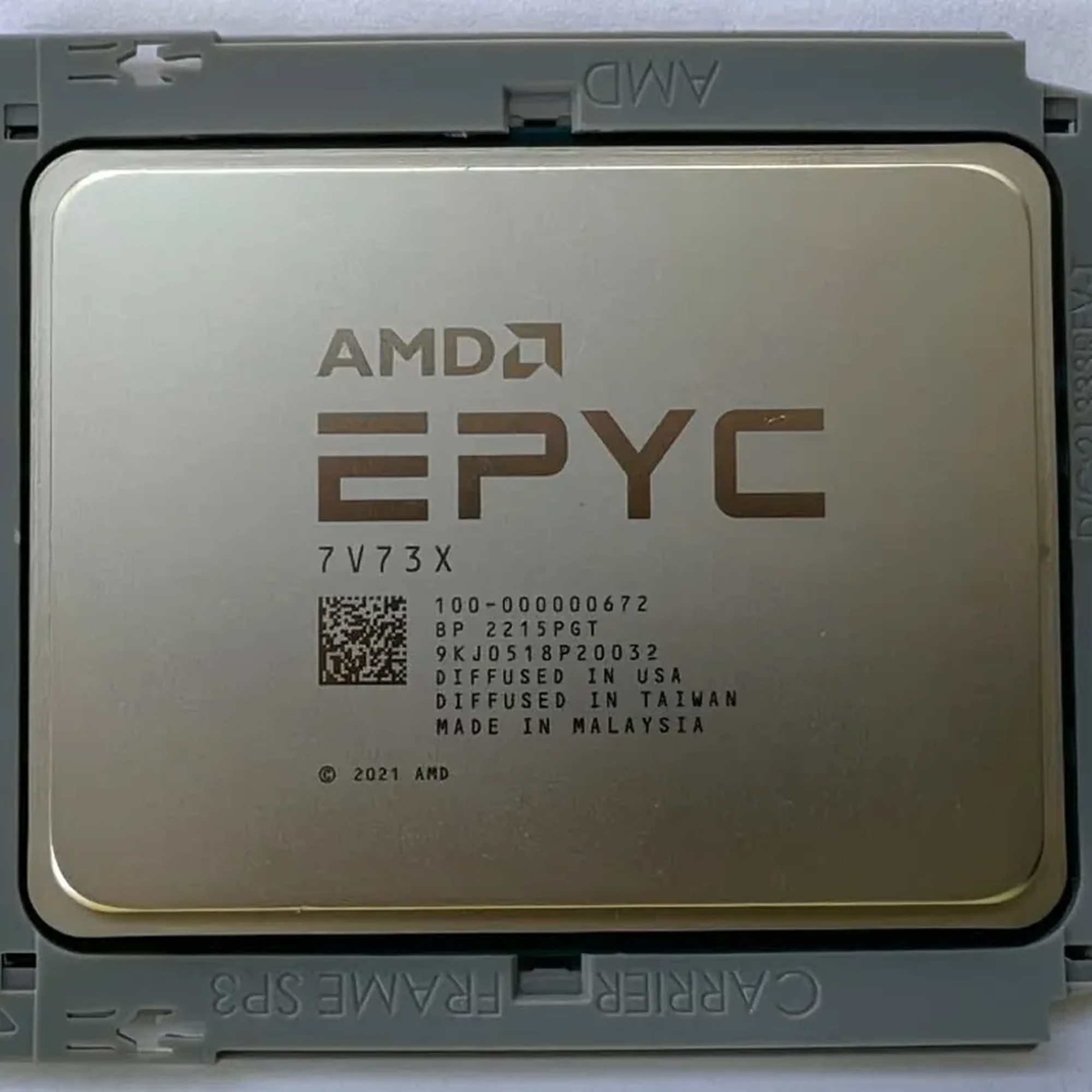
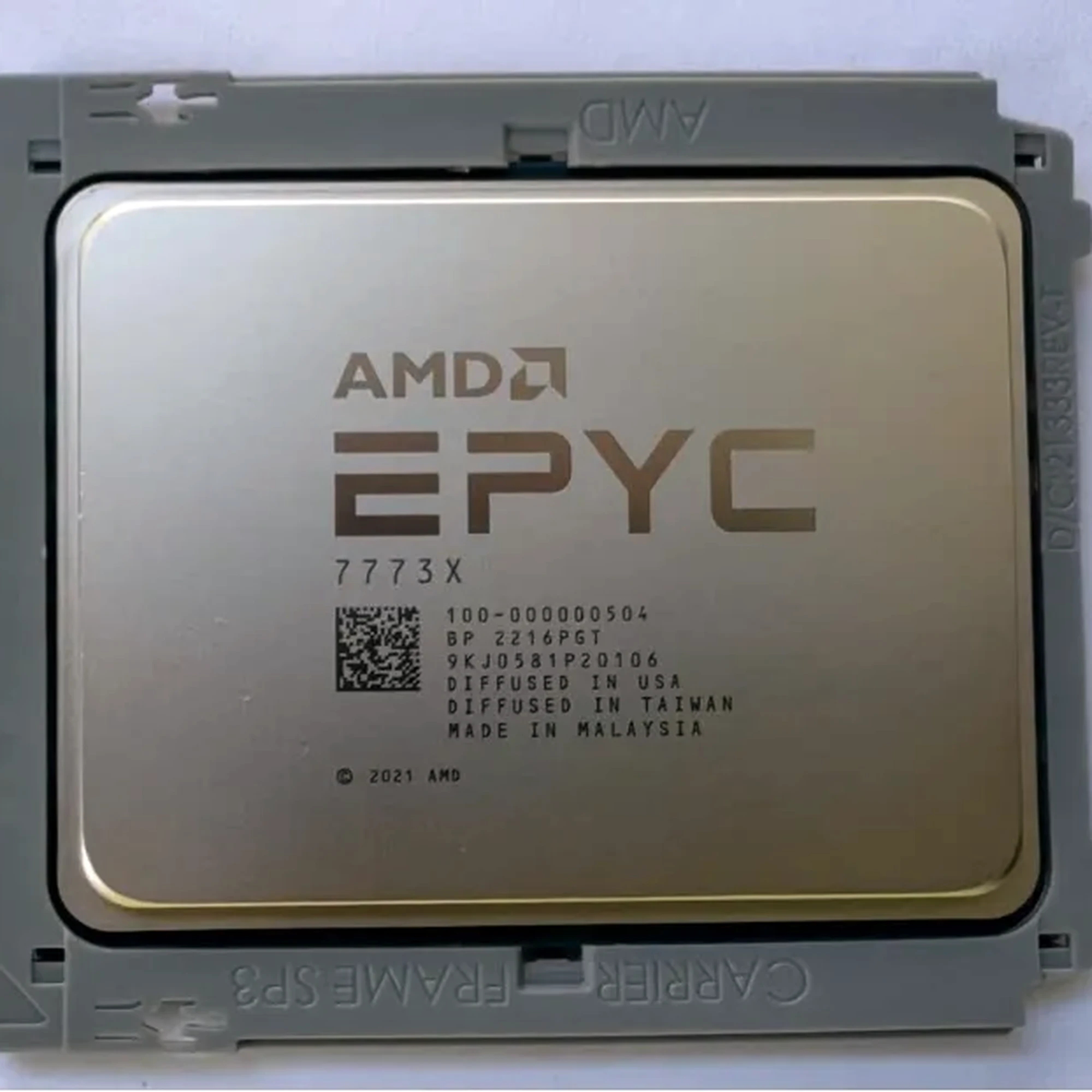
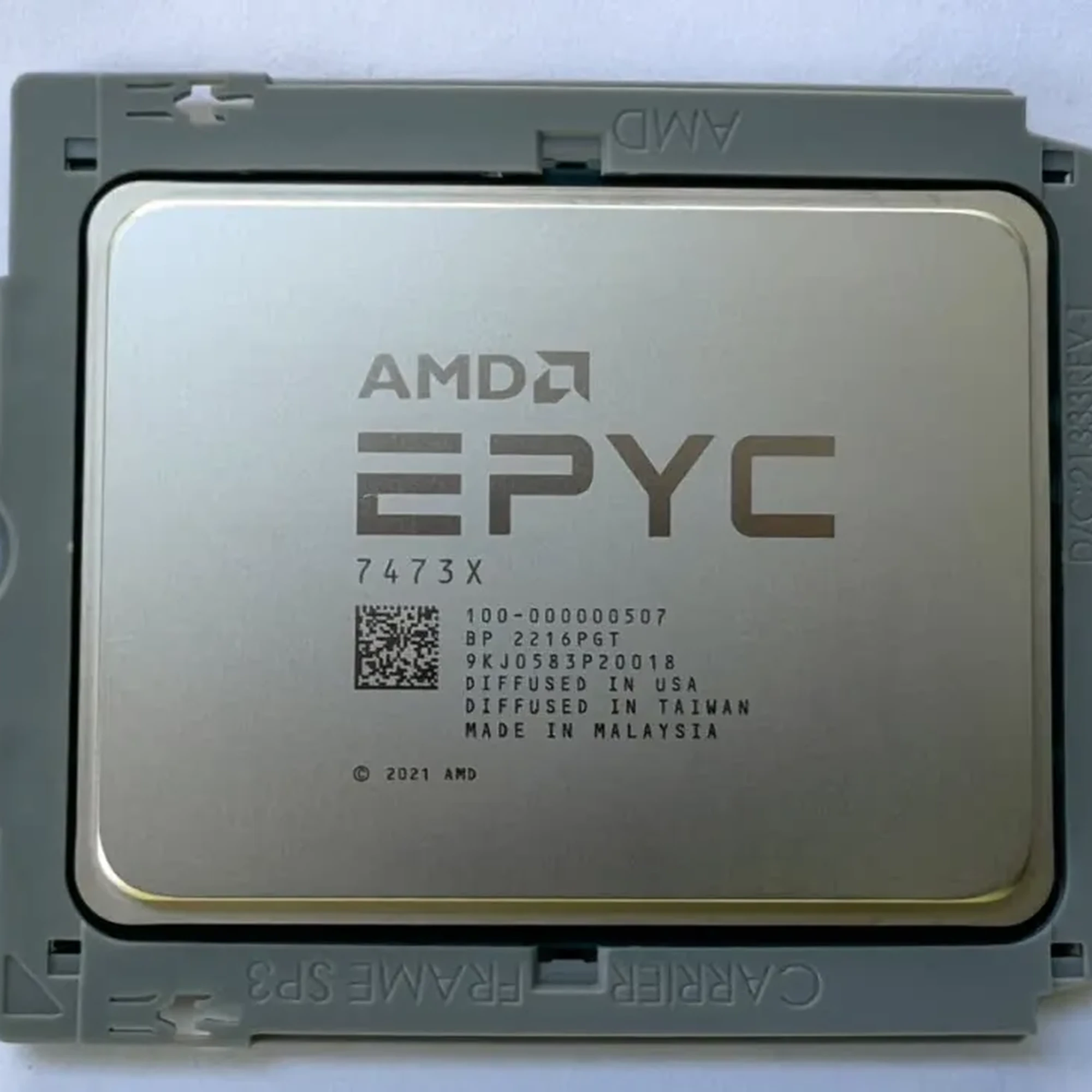
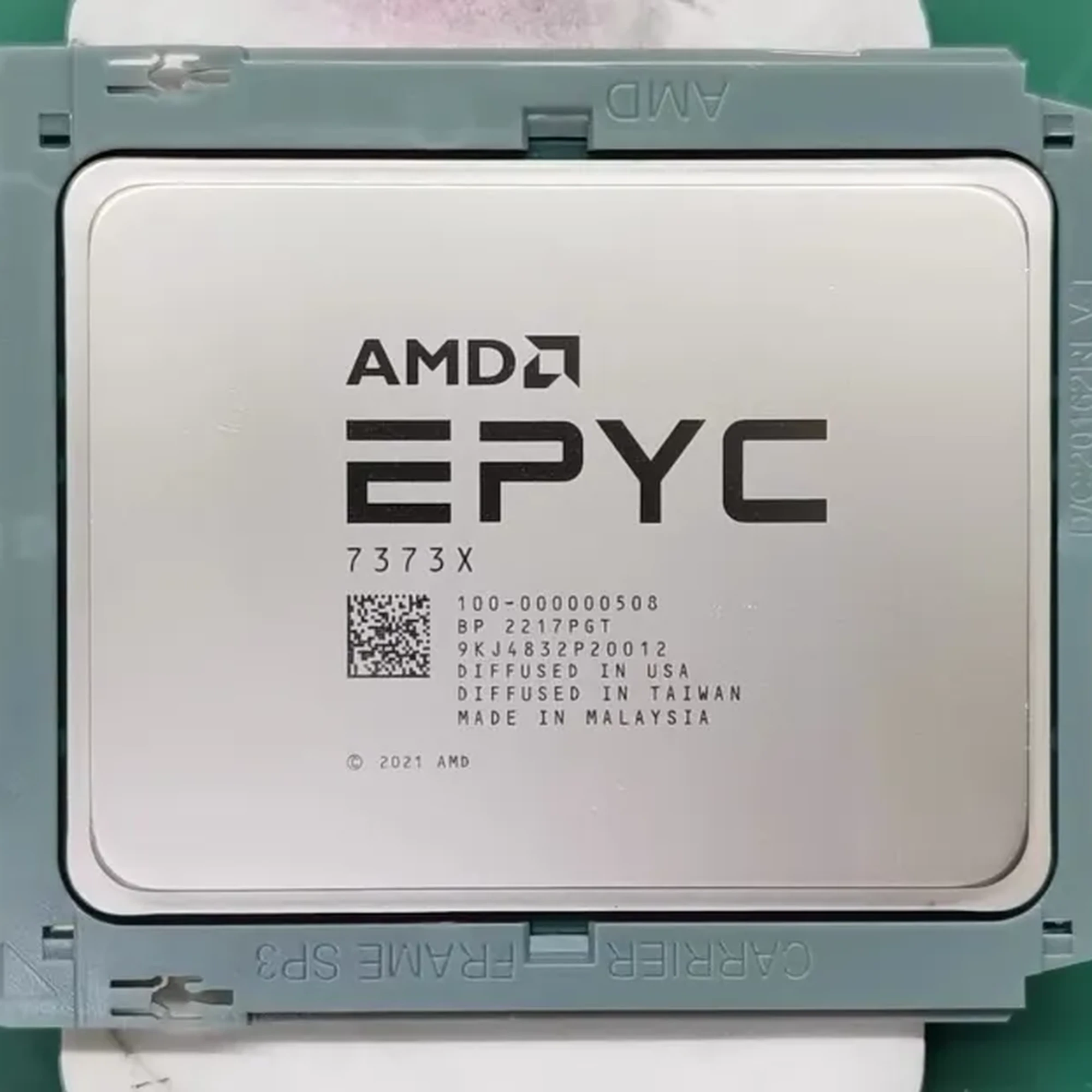

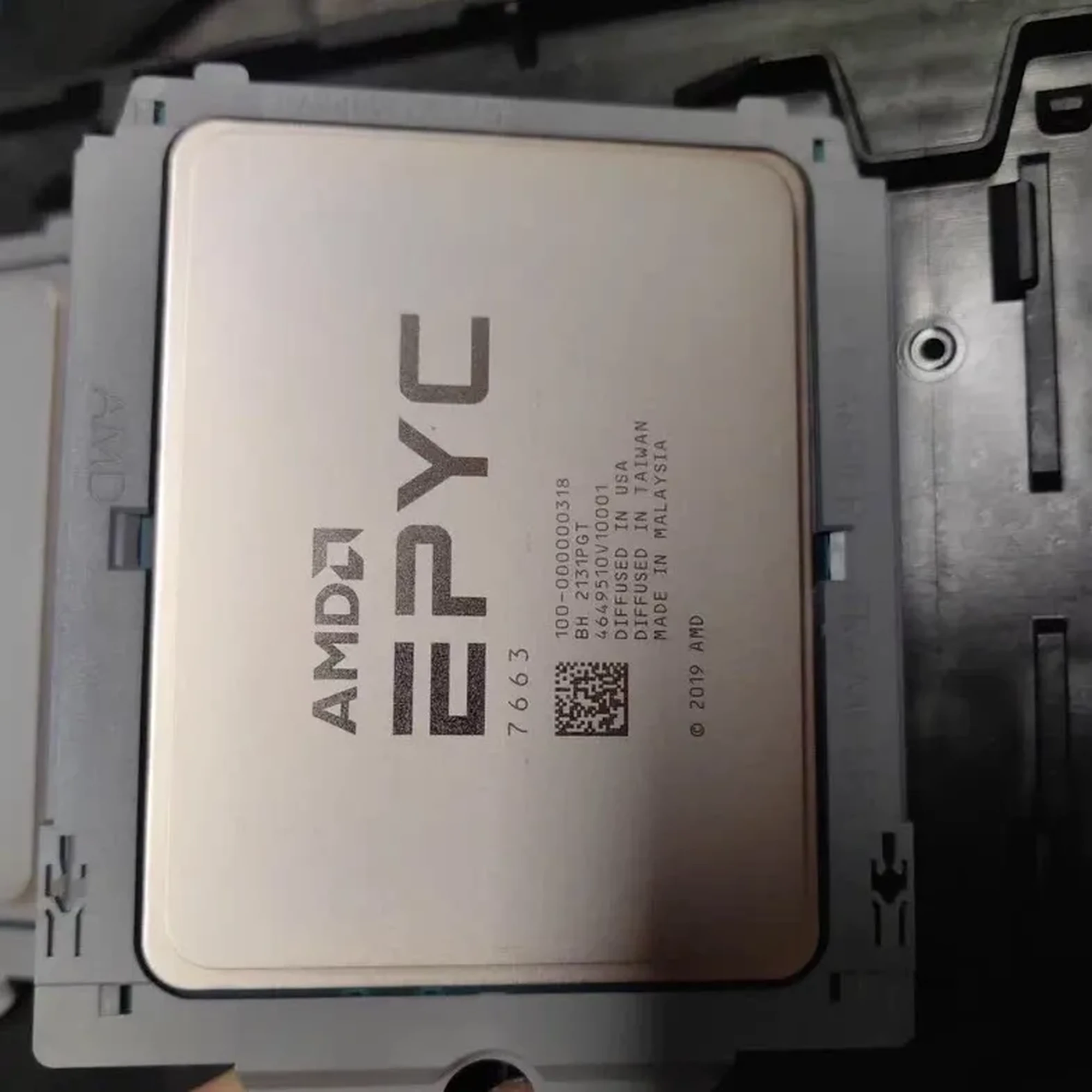
AMD EPYC 7663 High-Performance Server CPU – 56-Core Power for Enterprise Workloads
The AMD EPYC 7663 is a high-performance server processor designed to meet the demands of modern data centers, cloud computing environments, and enterprise workloads. Built on the advanced Zen 3 architecture from AMD, this processor delivers exceptional performance, efficiency, and scalability.
With 56 cores and 112 threads, the EPYC 7663 is engineered to handle highly parallel workloads such as virtualization, database management, and high-performance computing (HPC). Its balanced architecture ensures consistent performance across both single-threaded and multi-threaded applications.
Advanced Zen 3 Architecture
The EPYC 7663 leverages AMD’s Zen 3 core architecture, which introduces significant improvements in instructions per cycle (IPC), cache design, and overall efficiency.
Unlike previous generations, Zen 3 features a unified 32MB L3 cache per core complex die (CCD), reducing latency and improving data access speeds. This architectural enhancement is particularly beneficial for workloads that rely on fast memory access, such as analytics and simulation.
The result is a processor that not only delivers raw computational power but also ensures optimal responsiveness across a wide range of applications.
Exceptional Multi-Core Performance
With 56 cores and 112 threads, the EPYC 7663 excels in environments where parallel processing is critical.
Short paragraphs help highlight key use cases:
- Virtual machines and containerized workloads scale efficiently
- Large-scale databases process queries faster
- Scientific simulations complete in less time
- Rendering and media workloads benefit from high thread counts
This makes the processor an ideal choice for enterprises seeking to maximize throughput while maintaining system stability.
High Clock Speeds for Balanced Workloads
The EPYC 7663 operates with a base clock of 2.0 GHz and can boost up to 3.5 GHz. This balance between core count and clock speed ensures excellent performance in both multi-threaded and lightly threaded applications.
Many high-core processors sacrifice clock speed, but the EPYC 7663 maintains a strong balance, making it suitable for mixed workloads in enterprise environments.
Massive Cache for Faster Data Access
One of the standout features of the EPYC 7663 is its large cache capacity.
- L3 Cache: 256MB
- L2 Cache: 28MB
- L1 Cache: Optimized per core
This large cache significantly reduces memory latency and improves application performance, especially in data-intensive tasks such as:
- Big data analytics
- Financial modeling
- AI inference workloads
PCIe 4.0 Support for High-Speed Connectivity
The processor supports up to 128 PCIe 4.0 lanes, enabling ultra-fast connectivity for GPUs, NVMe storage, and networking devices.
Benefits include:
- Faster data transfer rates
- Improved storage performance
- Enhanced scalability for expansion
This makes the EPYC 7663 ideal for modern infrastructures that require high bandwidth and low latency.
Memory Performance and Capacity
The EPYC 7663 supports 8-channel DDR4 memory with speeds up to 3200 MHz.
Key advantages:
- High memory bandwidth for data-heavy applications
- Support for large memory capacities
- Improved performance in virtualization and databases
The ability to handle large memory workloads ensures smooth operation even under heavy demand.
Enterprise-Grade Security Features
Security is a top priority in modern computing environments, and AMD integrates advanced security features into the EPYC 7663.
These include:
- Secure Encrypted Virtualization (SEV)
- Secure Memory Encryption (SME)
- Hardware-based root of trust
These features help protect sensitive data and ensure compliance with enterprise security standards.
Energy Efficiency and Thermal Design
Despite its high core count, the EPYC 7663 maintains a thermal design power (TDP) of 240W.
This efficient power consumption is achieved through:
- Advanced 7nm manufacturing process
- Optimized core design
- Intelligent power management
For data centers, this translates to lower operational costs and improved energy efficiency.
Ideal Use Cases
The EPYC 7663 is designed for a wide range of enterprise applications:
Cloud Computing
Handles large-scale virtual environments with ease.
Data Centers
Supports high-density deployments with excellent efficiency.
High-Performance Computing (HPC)
Accelerates simulations, modeling, and scientific research.
Enterprise Applications
Optimizes ERP, CRM, and business intelligence systems.
Virtualization
Enables high VM density with consistent performance.
Scalability and Platform Flexibility
The processor supports dual-socket configurations, allowing businesses to scale performance as needed.
Benefits include:
- Increased compute power
- Flexible deployment options
- Future-proof infrastructure
This scalability ensures that the EPYC 7663 can adapt to growing business requirements.
Reliability and Longevity
AMD EPYC processors are known for their reliability in mission-critical environments.
The EPYC 7663 offers:
- Consistent performance under heavy loads
- Long lifecycle support
- Compatibility with enterprise-grade hardware
This makes it a dependable choice for businesses that require uninterrupted operation.
Comparison with Other Processors
Compared to competing server CPUs, the EPYC 7663 stands out in several areas:
- Higher core count than many alternatives
- Superior memory bandwidth
- More PCIe lanes for expansion
- Strong price-to-performance ratio
These advantages make it a compelling option for organizations looking to optimize performance and cost.
Conclusion
The AMD EPYC 7663 is a powerful, efficient, and scalable processor designed for modern enterprise workloads.
With its advanced architecture, high core count, and robust feature set, it delivers exceptional performance across a wide range of applications. Whether you are running a data center, managing cloud infrastructure, or executing complex computations, the EPYC 7663 provides the reliability and power needed to succeed.
Specifications Sheet
| Specification | Details |
|---|---|
| Processor Model | AMD EPYC 7663 |
| Architecture | Zen 3 |
| Cores / Threads | 56 / 112 |
| Base Clock | 2.0 GHz |
| Max Boost Clock | 3.5 GHz |
| L3 Cache | 256 MB |
| L2 Cache | 28 MB |
| TDP | 240W |
| Socket | SP3 |
| PCIe Version | PCIe 4.0 |
| PCIe Lanes | 128 |
| Memory Support | DDR4 |
| Memory Channels | 8 |
| Max Memory Speed | 3200 MHz |
| Manufacturing Process | 7nm |
| Supported Systems | Single & Dual Socket |
AMD EPYC 7003 Series Processors General Specifications
Name | # of CPU Cores | # of Threads | Max. Boost Clock | Base Clock | L3 Cache | Default TDP |
|---|---|---|---|---|---|---|
| AMD EPYC™ 7203P | 8 | 16 | Up to 3.4 GHz | 2.8 GHz | 64 MB | 120W |
| AMD EPYC™ 7203 | 8 | 16 | Up to 3.4 GHz | 2.8 GHz | 64 MB | 120W |
| AMD EPYC™ 7303P | 16 | 32 | Up to 3.4 GHz | 2.4 GHz | 64 MB | 130W |
| AMD EPYC™ 7303 | 16 | 32 | Up to 3.4 GHz | 2.4 GHz | 64 MB | 130W |
| AMD EPYC™ 7643P | 48 | 96 | Up to 3.6 GHz | 2.3 GHz | 256 MB | 225W |
| AMD EPYC™ 7773X | 64 | 128 | Up to 3.5 GHz | 2.2 GHz | 768 MB | 280W |
| AMD EPYC™ 7763 | 64 | 128 | Up to 3.5 GHz | 2.45 GHz | 256 MB | 280W |
| AMD EPYC™ 7713P | 64 | 128 | Up to 3.67 GHz | 2 GHz | 256 MB | 225W |
| AMD EPYC™ 7713 | 64 | 128 | Up to 3.67 GHz | 2 GHz | 256 MB | 225W |
| AMD EPYC™ 7663 | 56 | 112 | Up to 3.5 GHz | 2 GHz | 256 MB | 240W |
| AMD EPYC™ 7643 | 48 | 96 | Up to 3.6 GHz | 2.3 GHz | 256 MB | 225W |
| AMD EPYC™ 7663P | 56 | 112 | Up to 3.5 GHz | 2 GHz | 256 MB | 240W |
| AMD EPYC™ 75F3 | 32 | 64 | Up to 4 GHz | 2.95 GHz | 256 MB | 280W |
| AMD EPYC™ 7573X | 32 | 64 | Up to 3.6 GHz | 2.8 GHz | 768 MB | 280W |
| AMD EPYC™ 7543P | 32 | 64 | Up to 3.7 GHz | 2.8 GHz | 256 MB | 225W |
| AMD EPYC™ 7543 | 32 | 64 | Up to 3.7 GHz | 2.8 GHz | 256 MB | 225W |
| AMD EPYC™ 7513 | 32 | 64 | Up to 3.65 GHz | 2.6 GHz | 128 MB | 200W |
| AMD EPYC™ 74F3 | 24 | 48 | Up to 4 GHz | 3.2 GHz | 256 MB | 240W |
| AMD EPYC™ 7473X | 24 | 48 | Up to 3.7 GHz | 2.8 GHz | 768 MB | 240W |
| AMD EPYC™ 7453 | 28 | 56 | Up to 3.45 GHz | 2.75 GHz | 64 MB | 225W |
| AMD EPYC™ 7443P | 24 | 48 | Up to 4 GHz | 2.85 GHz | 128 MB | 200W |
| AMD EPYC™ 7443 | 24 | 48 | Up to 4 GHz | 2.85 GHz | 128 MB | 200W |
| AMD EPYC™ 7413 | 24 | 48 | Up to 3.6 GHz | 2.65 GHz | 128 MB | 180W |
| AMD EPYC™ 73F3 | 16 | 32 | Up to 4 GHz | 3.5 GHz | 256 MB | 240W |
| AMD EPYC™ 7373X | 16 | 32 | Up to 3.8 GHz | 3.05 GHz | 768 MB | 240W |
| AMD EPYC™ 7343 | 16 | 32 | Up to 3.9 GHz | 3.2 GHz | 128 MB | 190W |
| AMD EPYC™ 7313P | 16 | 32 | Up to 3.7 GHz | 3 GHz | 128 MB | 155W |
| AMD EPYC™ 7313 | 16 | 32 | Up to 3.7 GHz | 3 GHz | 128 MB | 155W |
| AMD EPYC™ 72F3 | 8 | 16 | Up to 4.1 GHz | 3.7 GHz | 256 MB | 180W |