
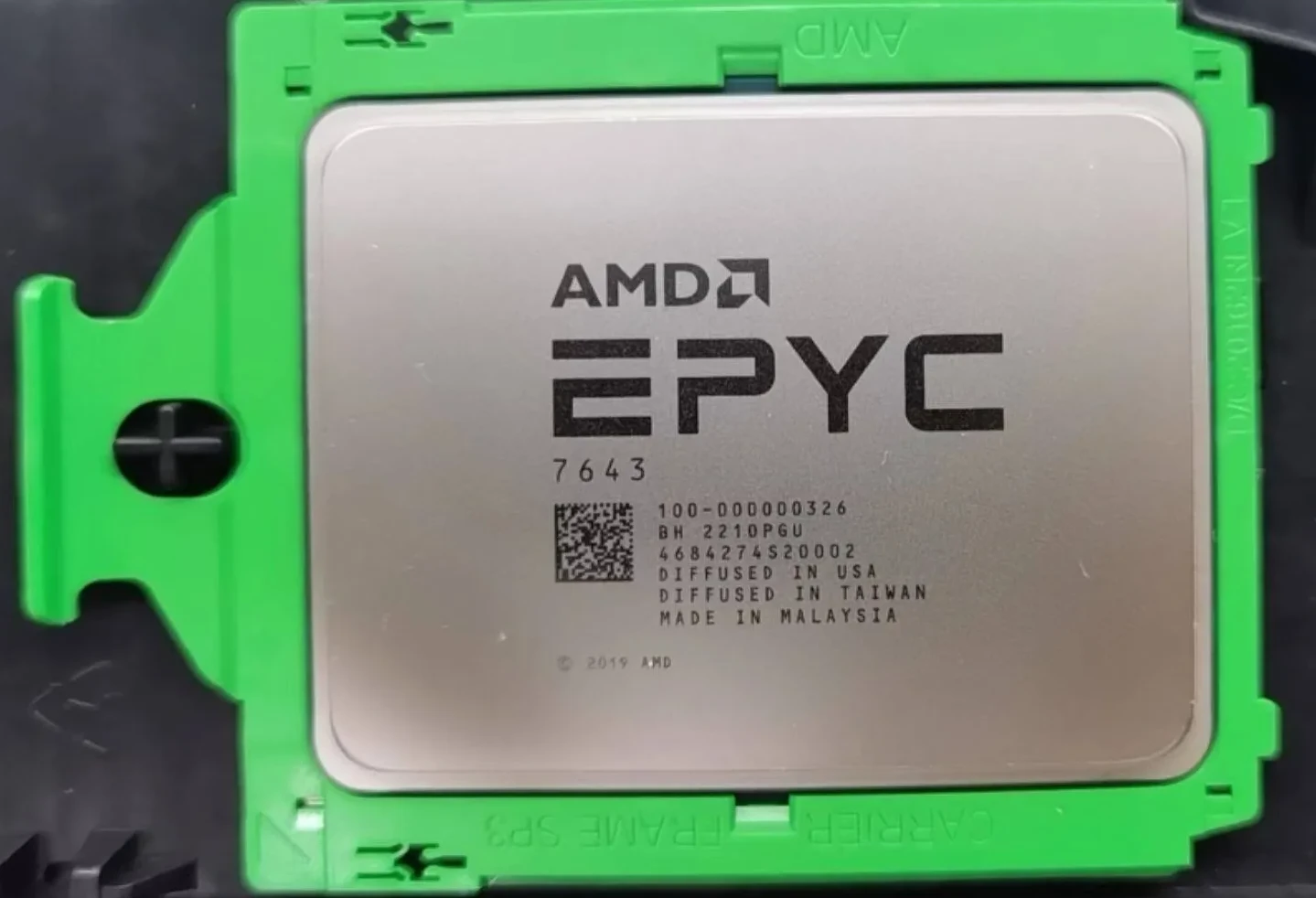
AMD EPYC 7643 Processor High-Performance 48-Core Server CPU for Data Centers
Overview of AMD EPYC 7643
The AMD EPYC 7643 is a powerful server-grade processor designed to meet the demands of modern data centers, cloud computing environments, and enterprise-level workloads. Built on AMD’s advanced Zen 3 architecture, this CPU delivers exceptional performance, efficiency, and scalability for businesses seeking reliable computing power.
With 48 cores and 96 threads, the EPYC 7643 strikes an excellent balance between core count and clock speed. It is ideal for virtualization, database management, high-performance computing (HPC), and cloud-native applications. Its robust design ensures consistent performance under heavy workloads, making it a preferred choice for IT professionals and system integrators.
Advanced Zen 3 Architecture
The EPYC 7643 is based on AMD’s innovative Zen 3 microarchitecture, which introduces significant improvements in instructions per cycle (IPC) compared to previous generations. This translates to faster processing speeds and enhanced responsiveness across a wide range of workloads.
Zen 3 also features a unified L3 cache design per core complex, reducing latency and improving data access efficiency. This architectural enhancement is especially beneficial for data-intensive applications such as analytics, AI workloads, and large-scale simulations.
High Core Count and Multi-Threading Performance
With 48 cores and 96 threads, the AMD EPYC 7643 offers exceptional parallel processing capabilities. This makes it highly suitable for:
- Virtual machines and containerized environments
- Enterprise databases like SQL and NoSQL systems
- Rendering and simulation workloads
- Scientific computing and engineering tasks
The processor’s high thread count ensures that multiple workloads can run simultaneously without performance degradation, maximizing server utilization and reducing operational costs.
Impressive Clock Speeds
The EPYC 7643 operates at a base clock speed of 2.3 GHz and can boost up to 3.6 GHz. This combination allows it to handle both multi-threaded and single-threaded workloads efficiently.
Higher boost frequencies improve performance in latency-sensitive applications such as financial modeling, web hosting, and real-time analytics. The processor dynamically adjusts its frequency based on workload demands, ensuring optimal performance at all times.
Massive Cache for Faster Data Access
This processor is equipped with a substantial 256MB L3 cache, which plays a crucial role in reducing memory latency and improving overall system performance.
A larger cache allows frequently accessed data to remain closer to the CPU cores, minimizing the need to fetch data from slower system memory. This is particularly beneficial for database workloads, virtualization, and high-performance computing tasks.
PCIe 4.0 Support for Modern Infrastructure
The AMD EPYC 7643 supports PCIe 4.0, offering double the bandwidth of PCIe 3.0. With up to 128 PCIe lanes, it enables:
- Faster data transfer speeds
- Improved storage performance with NVMe SSDs
- Enhanced GPU and accelerator connectivity
- Greater flexibility for system expansion
This makes the EPYC 7643 an excellent choice for storage-intensive applications and GPU-accelerated workloads such as AI and machine learning.
Memory Performance and Scalability
The processor supports DDR4 memory with speeds up to 3200 MHz across 8 memory channels. This ensures high memory bandwidth, which is essential for data-intensive applications.
With support for large memory capacities, the EPYC 7643 is ideal for in-memory databases, virtualization platforms, and enterprise applications requiring high memory throughput. Its scalability allows businesses to grow their infrastructure without replacing core components.
Enterprise-Grade Security Features
Security is a critical concern in modern IT environments, and AMD addresses this with advanced hardware-based security technologies in the EPYC 7643.
Features such as Secure Encrypted Virtualization (SEV) and Secure Memory Encryption (SME) help protect sensitive data from unauthorized access. These technologies ensure data integrity and confidentiality, making the processor suitable for industries with strict compliance requirements.
Energy Efficiency and Thermal Design
Despite its high performance, the AMD EPYC 7643 maintains a thermal design power (TDP) of 225W. This balance between performance and energy efficiency helps reduce operating costs in large-scale deployments.
Data centers benefit from lower power consumption and reduced cooling requirements, contributing to overall cost savings and environmental sustainability.
Ideal Use Cases
The EPYC 7643 is designed for a wide range of applications, including:
- Cloud computing platforms
- Virtualization and container orchestration
- Enterprise databases and ERP systems
- High-performance computing (HPC)
- AI and machine learning workloads
- Web hosting and content delivery networks
Its versatility makes it a valuable asset for organizations looking to optimize performance and scalability.
Why Choose AMD EPYC 7643?
Choosing the AMD EPYC 7643 means investing in a processor that delivers:
- High core density for parallel workloads
- Strong single-threaded performance
- Advanced security features
- Exceptional memory and I/O capabilities
- Long-term reliability for enterprise environments
It is a cost-effective solution for businesses aiming to maximize performance without compromising efficiency.
Conclusion
The AMD EPYC 7643 stands out as a powerful and versatile server processor that meets the evolving demands of modern computing environments. With its advanced architecture, high core count, and robust feature set, it provides the performance and reliability needed for today’s data-driven world.
Whether you are running a cloud platform, managing enterprise databases, or deploying high-performance applications, the EPYC 7643 offers the scalability and efficiency required to stay competitive.
Specifications Sheet
| Specification | Details |
|---|---|
| Processor Model | AMD EPYC 7643 |
| Architecture | Zen 3 |
| Cores / Threads | 48 Cores / 96 Threads |
| Base Clock | 2.3 GHz |
| Max Boost Clock | Up to 3.6 GHz |
| L3 Cache | 256 MB |
| TDP | 225W |
| Socket | SP3 |
| Memory Support | DDR4-3200 |
| Memory Channels | 8 Channels |
| PCIe Version | PCIe 4.0 |
| PCIe Lanes | 128 |
| Manufacturing Process | 7nm |
| Security Features | SME, SEV |
AMD EPYC 7003 Series Processors General Specifications
Name | # of CPU Cores | # of Threads | Max. Boost Clock | Base Clock | L3 Cache | Default TDP |
|---|---|---|---|---|---|---|
| AMD EPYC™ 7203P | 8 | 16 | Up to 3.4 GHz | 2.8 GHz | 64 MB | 120W |
| AMD EPYC™ 7203 | 8 | 16 | Up to 3.4 GHz | 2.8 GHz | 64 MB | 120W |
| AMD EPYC™ 7303P | 16 | 32 | Up to 3.4 GHz | 2.4 GHz | 64 MB | 130W |
| AMD EPYC™ 7303 | 16 | 32 | Up to 3.4 GHz | 2.4 GHz | 64 MB | 130W |
| AMD EPYC™ 7643P | 48 | 96 | Up to 3.6 GHz | 2.3 GHz | 256 MB | 225W |
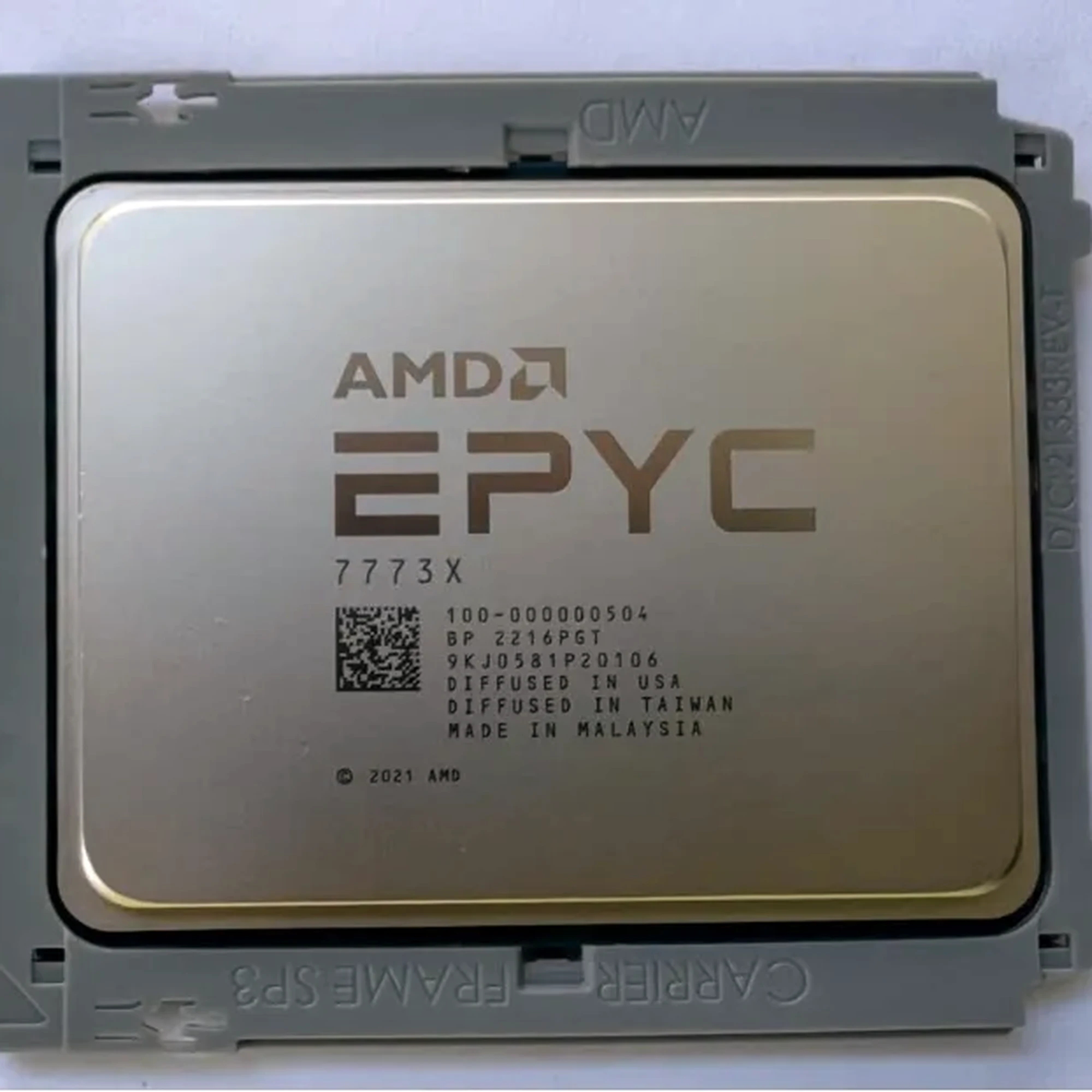
| AMD EPYC™ 7773X | 64 | 128 | Up to 3.5 GHz | 2.2 GHz | 768 MB | 280W |
| AMD EPYC™ 7763 | 64 | 128 | Up to 3.5 GHz | 2.45 GHz | 256 MB | 280W |
| AMD EPYC™ 7713P | 64 | 128 | Up to 3.67 GHz | 2 GHz | 256 MB | 225W |
| AMD EPYC™ 7713 | 64 | 128 | Up to 3.67 GHz | 2 GHz | 256 MB | 225W |
| AMD EPYC™ 7663 | 56 | 112 | Up to 3.5 GHz | 2 GHz | 256 MB | 240W |
| AMD EPYC™ 7643 | 48 | 96 | Up to 3.6 GHz | 2.3 GHz | 256 MB | 225W |
| AMD EPYC™ 7663P | 56 | 112 | Up to 3.5 GHz | 2 GHz | 256 MB | 240W |
| AMD EPYC™ 75F3 | 32 | 64 | Up to 4 GHz | 2.95 GHz | 256 MB | 280W |
| AMD EPYC™ 7573X | 32 | 64 | Up to 3.6 GHz | 2.8 GHz | 768 MB | 280W |
| AMD EPYC™ 7543P | 32 | 64 | Up to 3.7 GHz | 2.8 GHz | 256 MB | 225W |
| AMD EPYC™ 7543 | 32 | 64 | Up to 3.7 GHz | 2.8 GHz | 256 MB | 225W |
| AMD EPYC™ 7513 | 32 | 64 | Up to 3.65 GHz | 2.6 GHz | 128 MB | 200W |
| AMD EPYC™ 74F3 | 24 | 48 | Up to 4 GHz | 3.2 GHz | 256 MB | 240W |
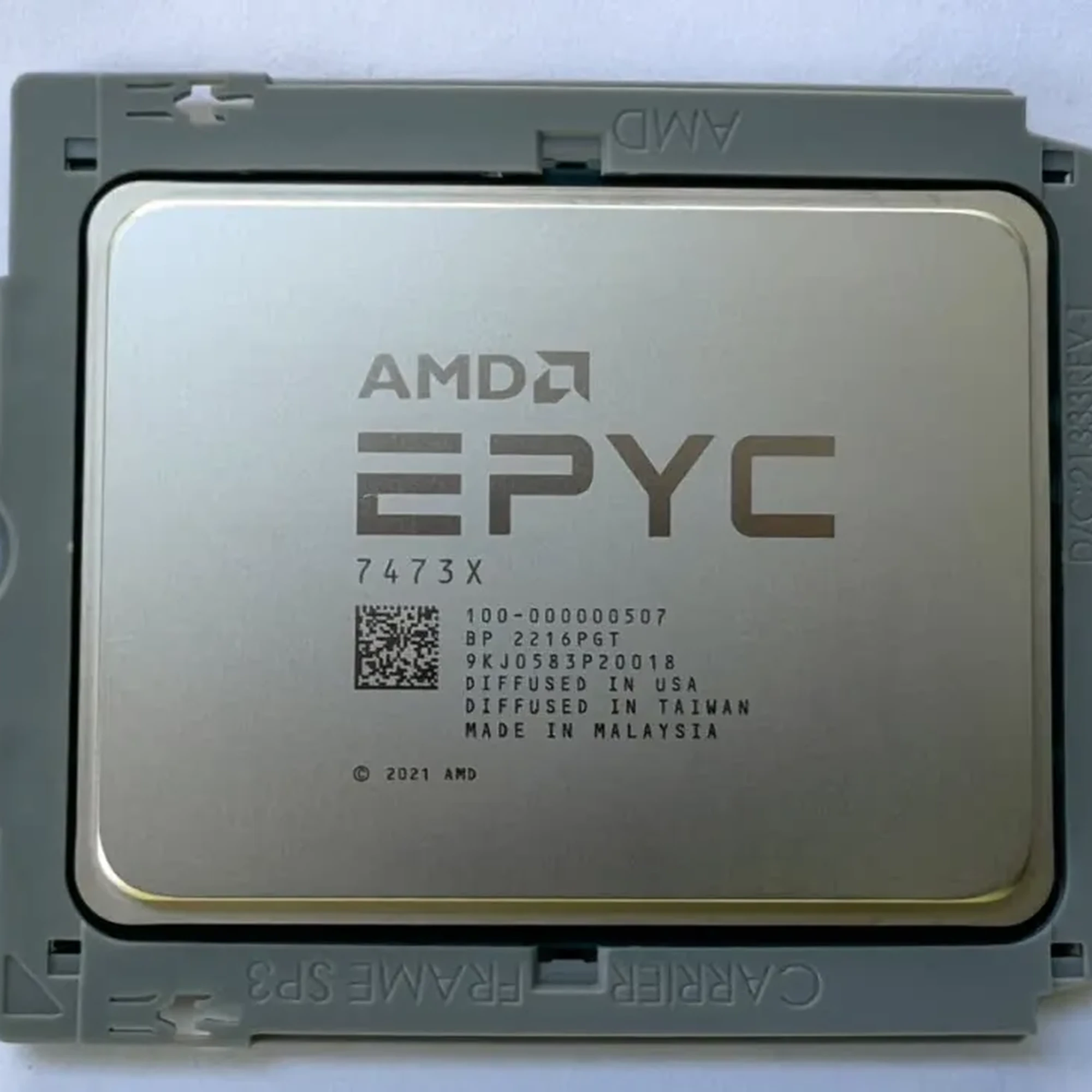
| AMD EPYC™ 7473X | 24 | 48 | Up to 3.7 GHz | 2.8 GHz | 768 MB | 240W |
| AMD EPYC™ 7453 | 28 | 56 | Up to 3.45 GHz | 2.75 GHz | 64 MB | 225W |
| AMD EPYC™ 7443P | 24 | 48 | Up to 4 GHz | 2.85 GHz | 128 MB | 200W |
| AMD EPYC™ 7443 | 24 | 48 | Up to 4 GHz | 2.85 GHz | 128 MB | 200W |
| AMD EPYC™ 7413 | 24 | 48 | Up to 3.6 GHz | 2.65 GHz | 128 MB | 180W |
| AMD EPYC™ 73F3 | 16 | 32 | Up to 4 GHz | 3.5 GHz | 256 MB | 240W |
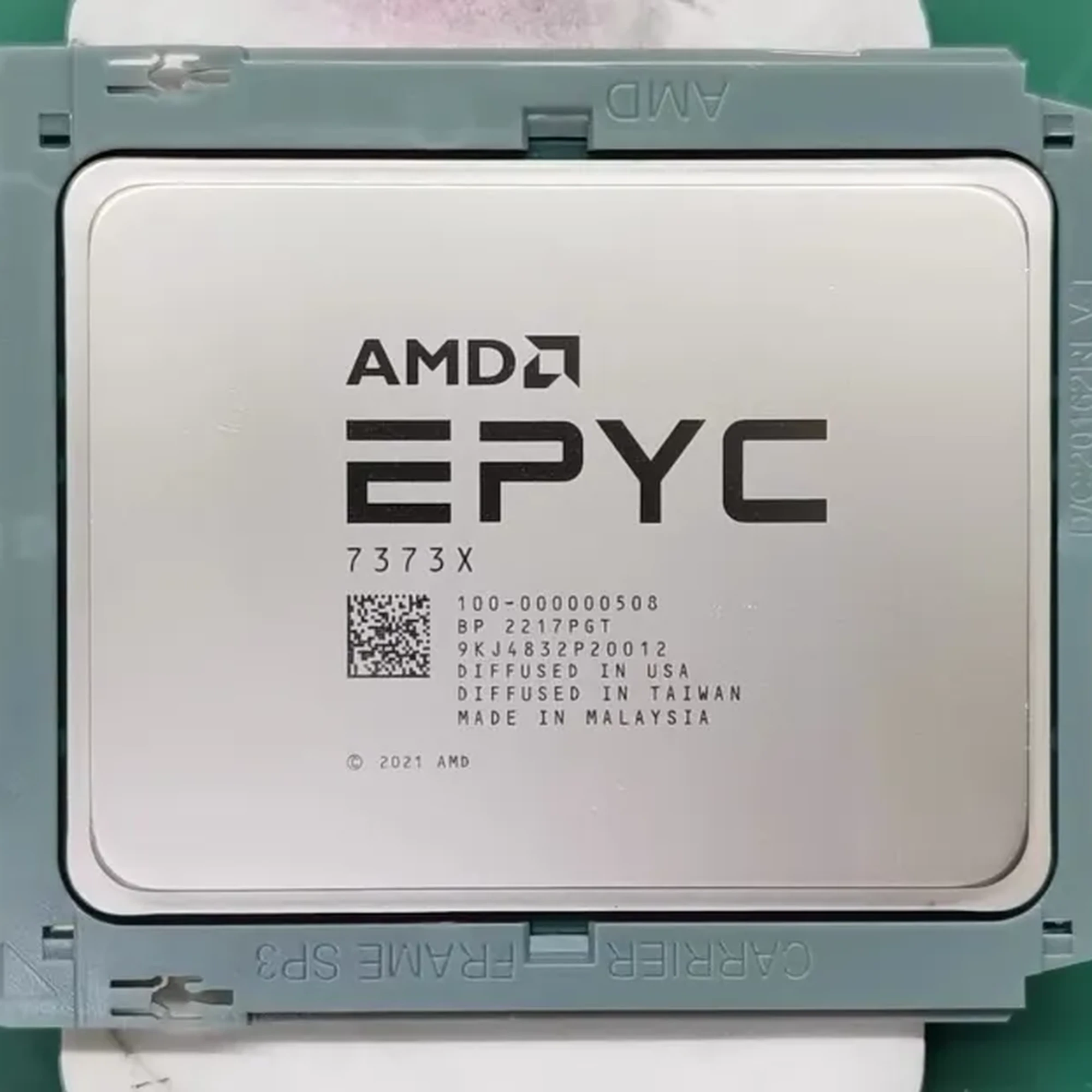
| AMD EPYC™ 7373X | 16 | 32 | Up to 3.8 GHz | 3.05 GHz | 768 MB | 240W |
| AMD EPYC™ 7343 | 16 | 32 | Up to 3.9 GHz | 3.2 GHz | 128 MB | 190W |
| AMD EPYC™ 7313P | 16 | 32 | Up to 3.7 GHz | 3 GHz | 128 MB | 155W |
| AMD EPYC™ 7313 | 16 | 32 | Up to 3.7 GHz | 3 GHz | 128 MB | 155W |
| AMD EPYC™ 72F3 | 8 | 16 | Up to 4.1 GHz | 3.7 GHz | 256 MB | 180W |