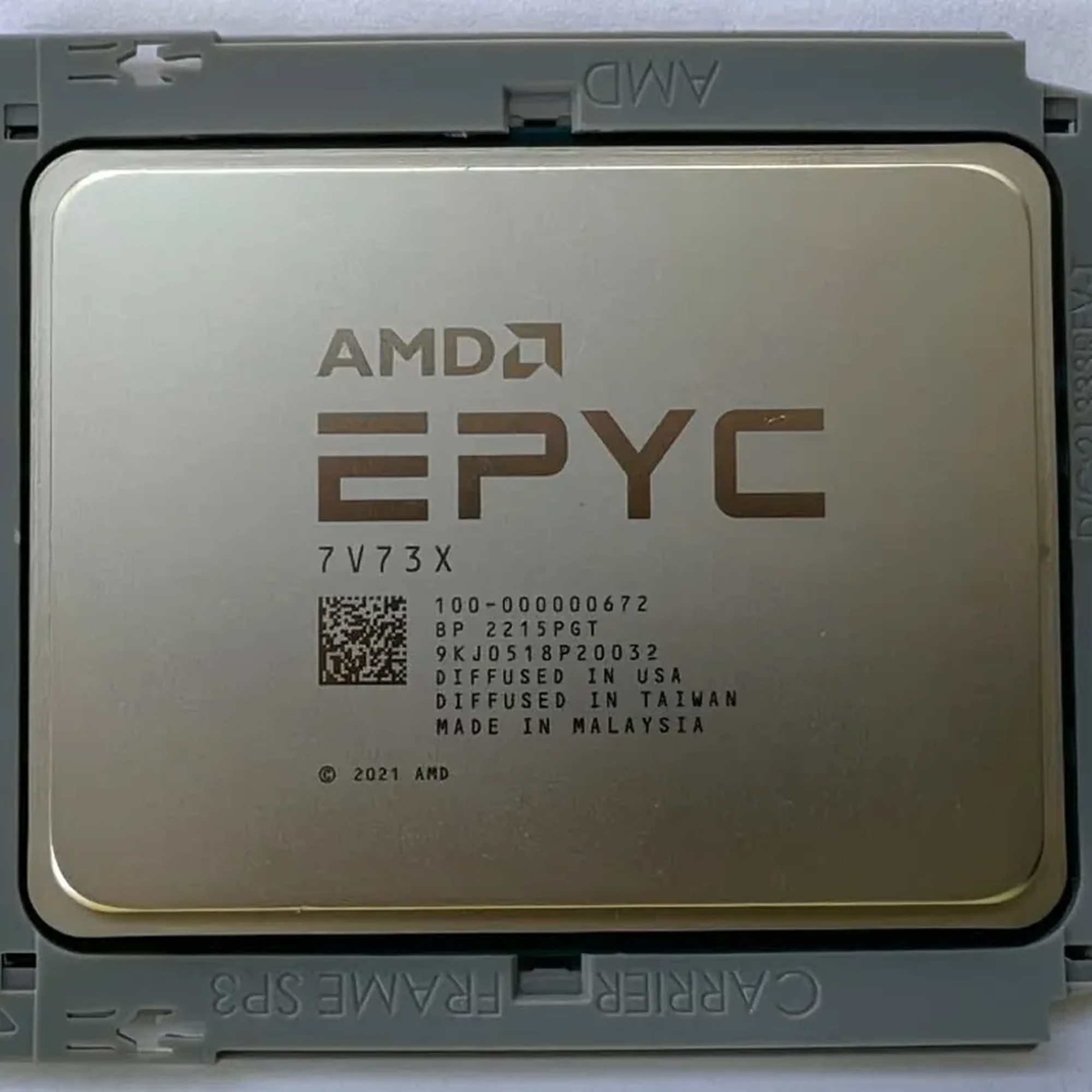
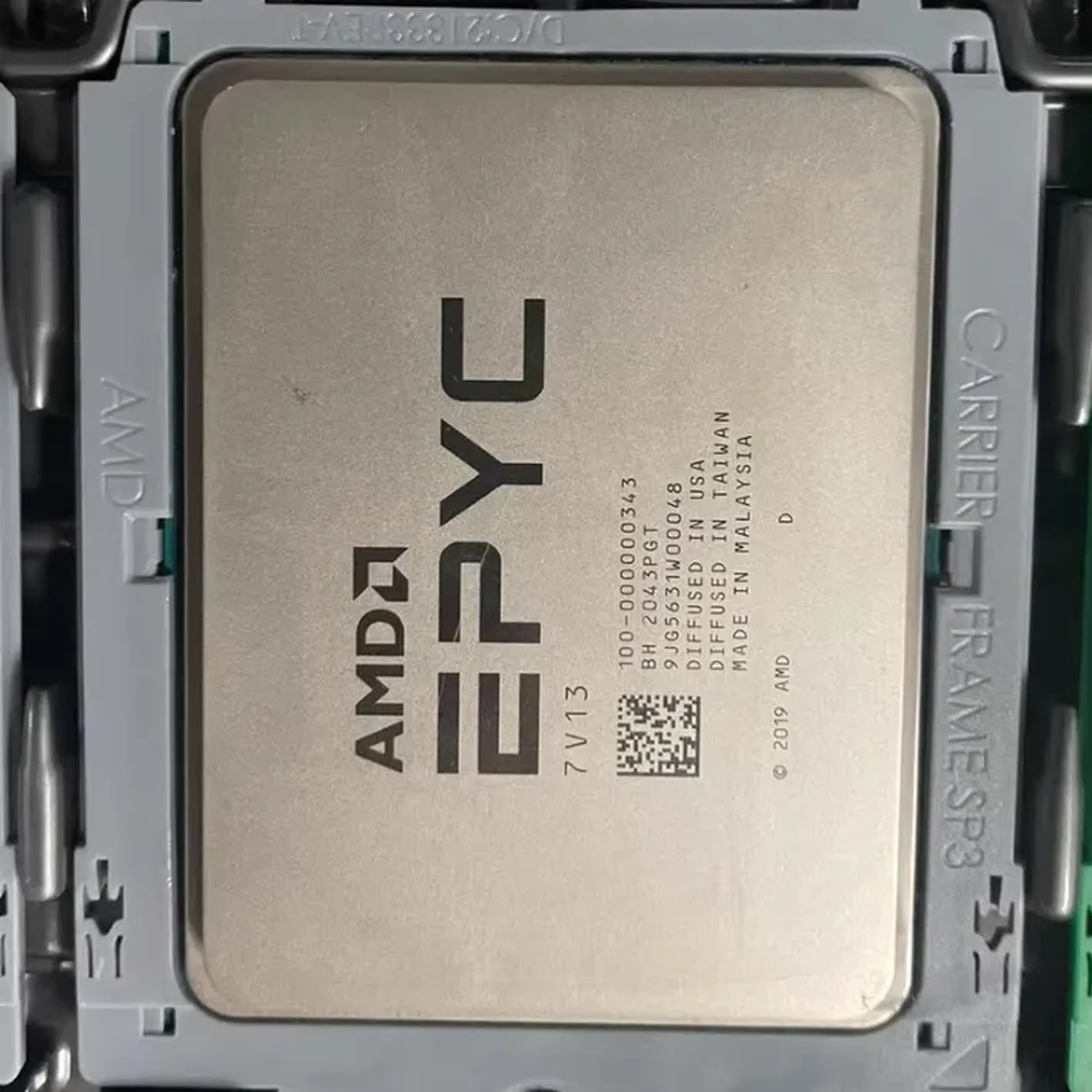
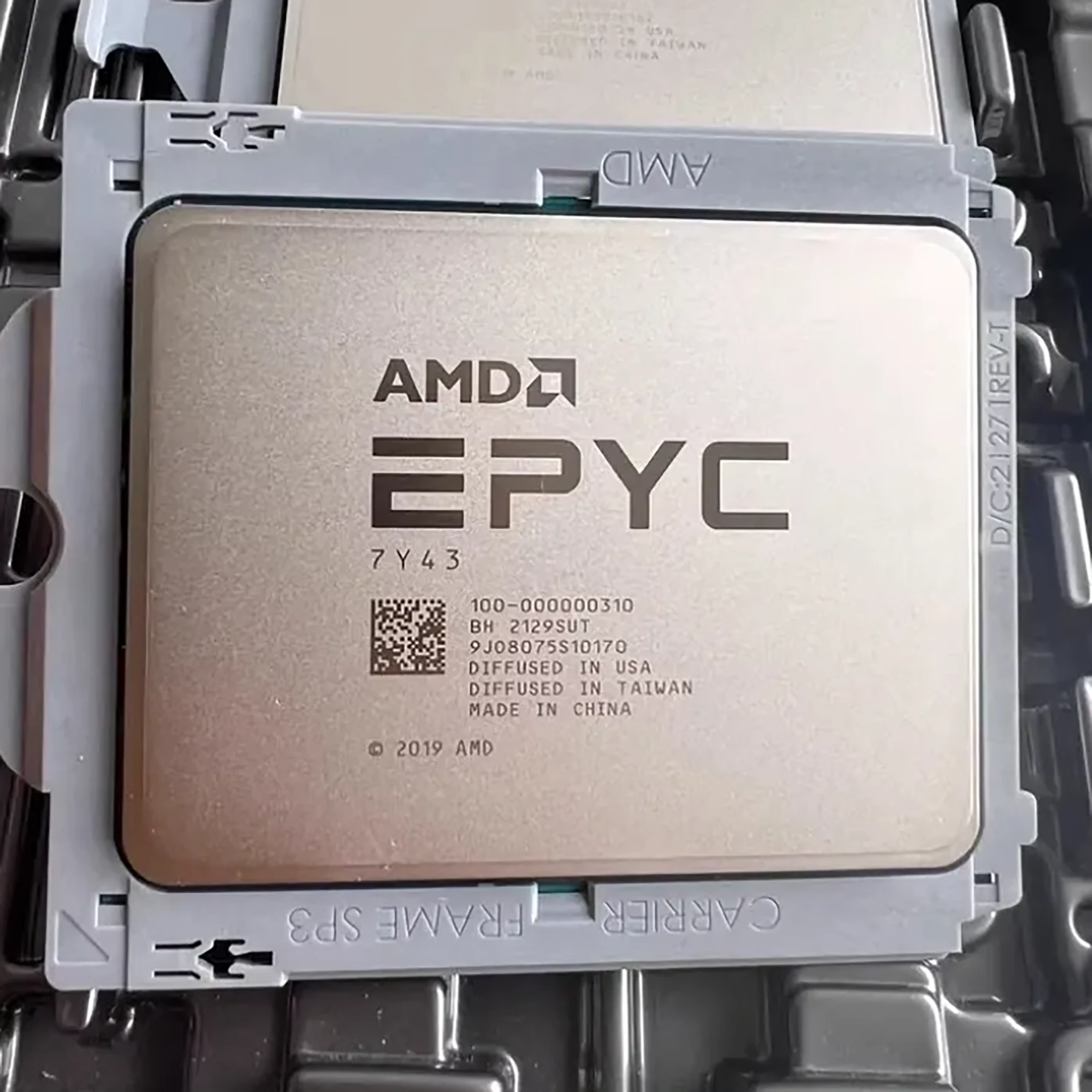
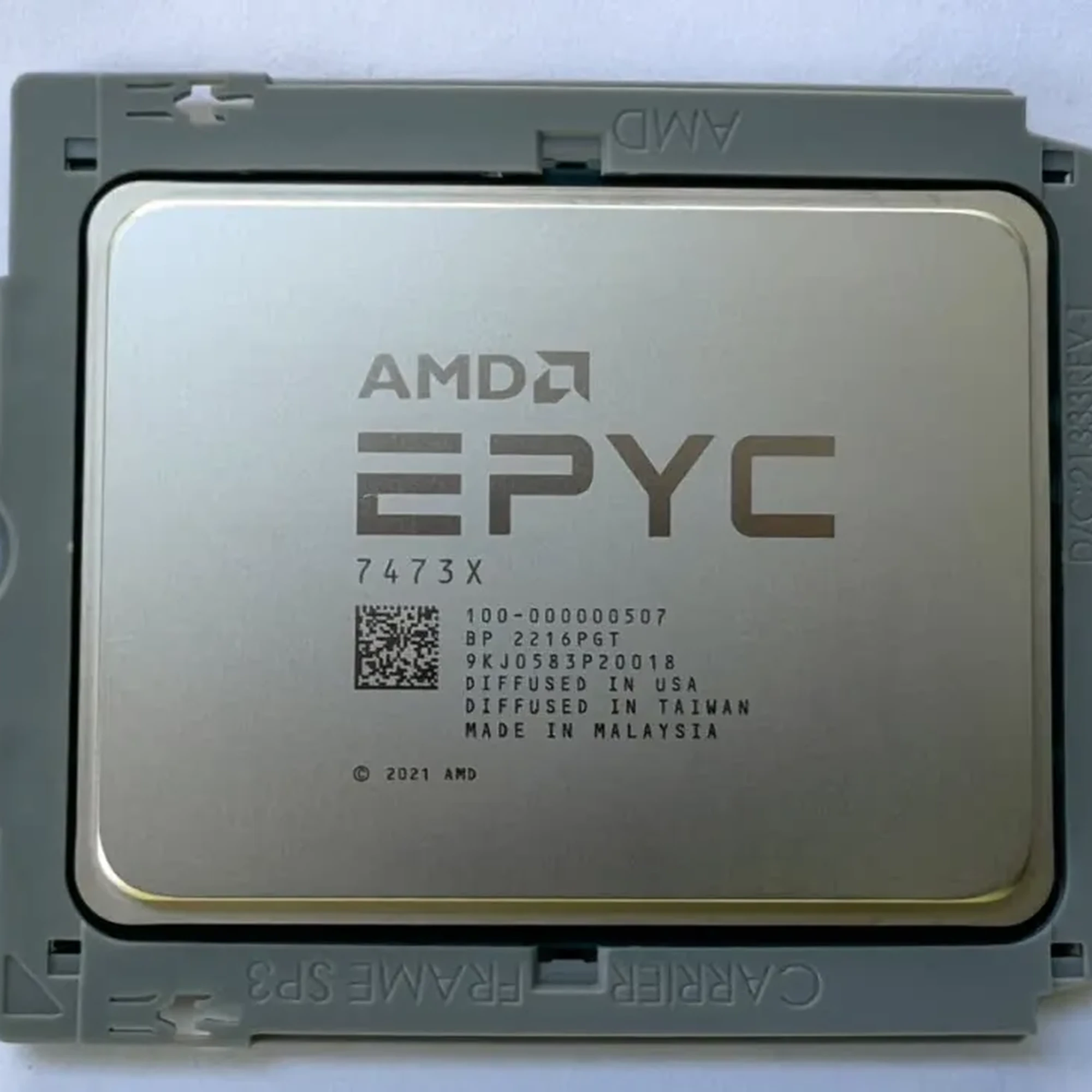
-
 Pick up from the CUBETIQ Store

-
Courier delivery

-
DHL/UPS/Fedex Courier delivery

Don't Miss Top Accessories
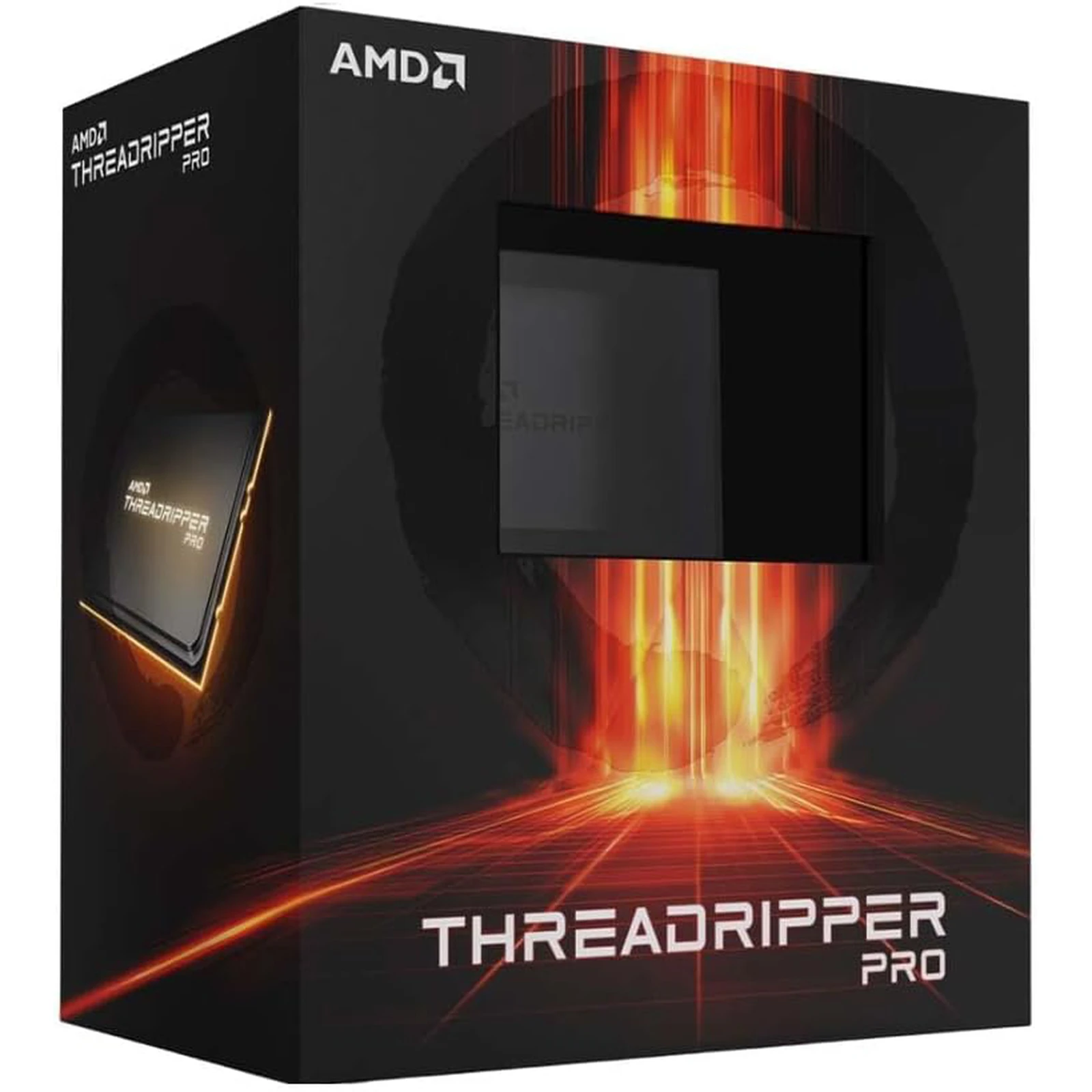
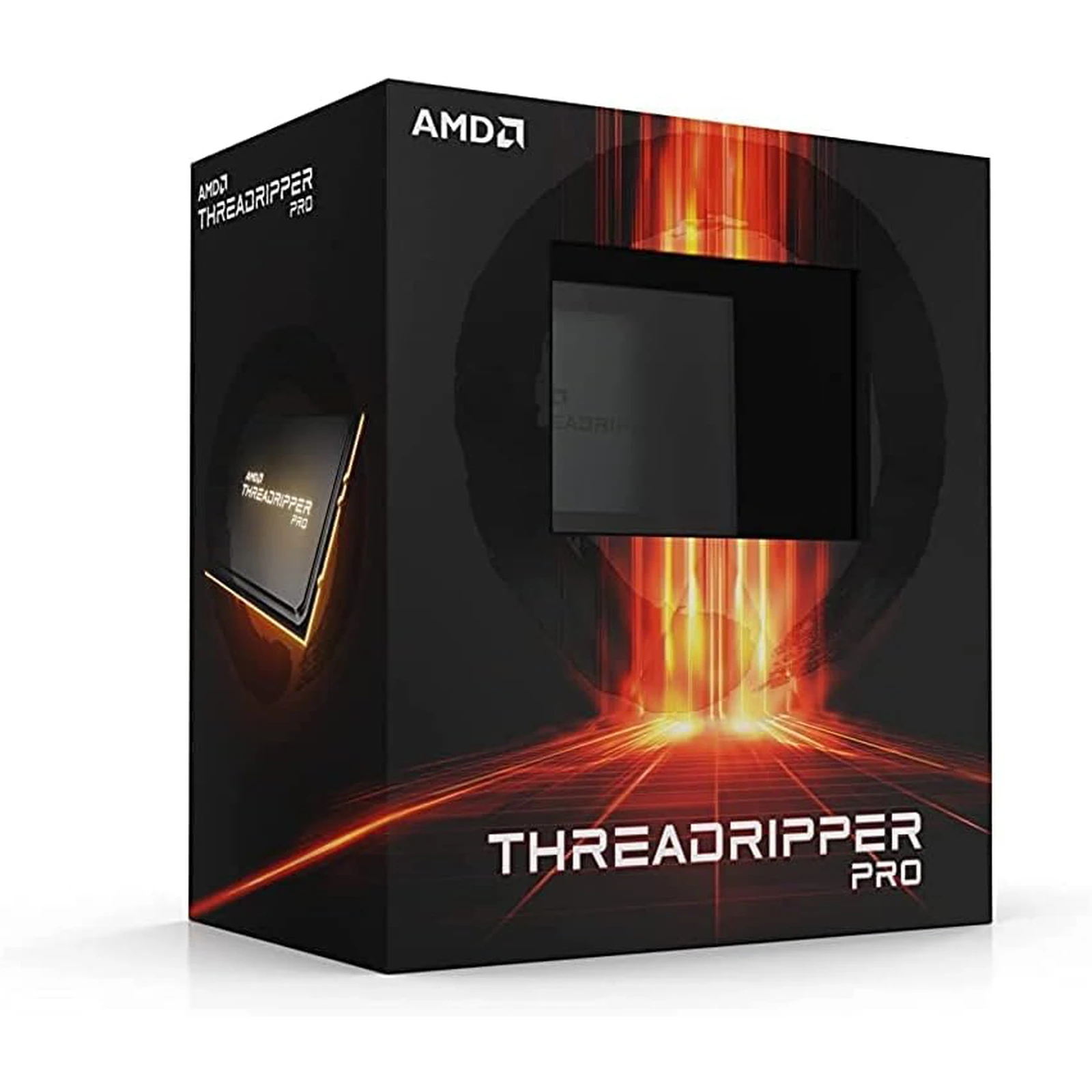
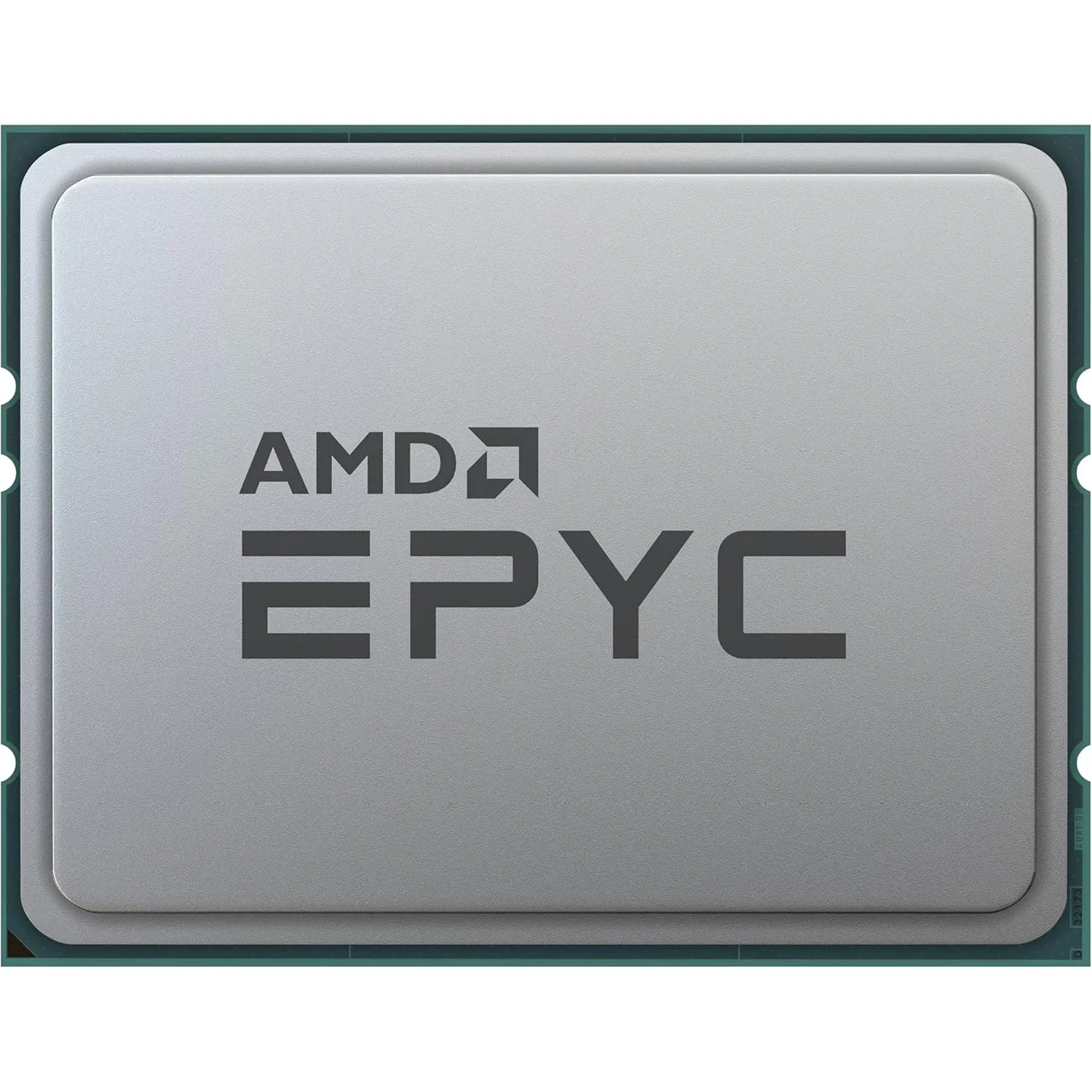
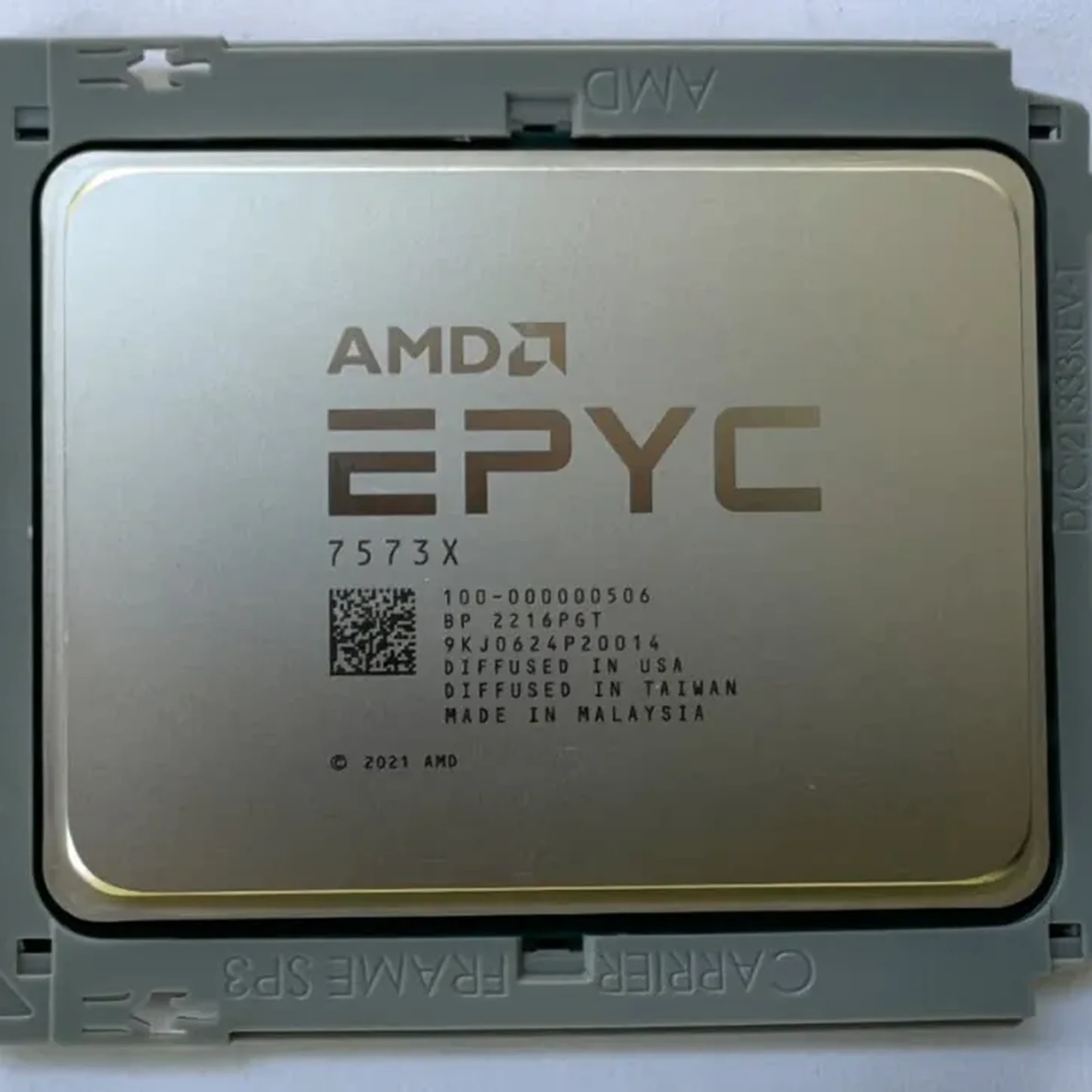
AMD EPYC 7573X 32-Core Server Processor | 768MB 3D V-Cache, 7nm, PCIe 4.0 & 205GB/s Memory Bandwidth
| Specification Category | Details |
|---|---|
| Processor Name | AMD EPYC 7573X |
| Product Family | AMD EPYC (147) |
| Series | AMD EPYC 7003 Series (Milan) |
| Architecture | Milan (Zen 3) |
| Manufacturing Process | 7nm |
| Segment | Server |
| Socket | SP3 |
| Generation | 3 |
| CPU Cores | 32 |
| Threads | 64 (SMT Supported) |
| Base Clock Speed | 2.8GHz |
| Max Boost Clock (1 Core) | 3.6GHz |
| L2 Cache | 32.00MB |
| L3 Cache | 768.00MB (3D V-Cache Technology) |
| Overclocking | No |
| Integrated Graphics (iGPU) | No |
| Memory Type | DDR4 |
| Memory Channels | 8 |
| Max Memory Speed | 3200 MT/s |
| Memory Bandwidth | 205GB/s (per socket) |
| PCIe Version | PCIe 4.0 |
| PCIe Lanes | 128 |
| TDP (Default) | 280W |
| Configurable TDP (cTDP) | 225W – 280W |
| Launch Date | March 22, 2021 |
| 1KU Pricing | $5,590 USD |
| Product ID (Tray) | 100-000000506 |
| Supported Technologies | AMD 3D V-Cache™, AMD Infinity Guard, AMD Infinity Architecture |
| Workload Affinity | CFD, FEA Solvers, Cloud Computing, Virtualization, Database Management |
| Global Availability | Global, China, NA, EMEA, APJ, LATAM |
| Socket Count Support | 1P / 2P |
In the competitive landscape of server processors, the AMD EPYC 7573X stands out as a powerhouse designed to deliver exceptional performance, efficiency, and reliability for modern data centers. Released as part of AMD’s EPYC 7003 (Milan) series, this processor leverages cutting-edge 7nm manufacturing technology and innovative 3D V-Cache to redefine what’s possible for server workloads—from cloud computing and virtualization to high-performance computing (HPC) and even unexpected use cases like demanding gaming. Whether you’re building a small business server or scaling a large enterprise data center, the EPYC 7573X combines raw processing power with intelligent design to meet the most rigorous demands.
Key Architecture: Milan (Zen 3) & 7nm Technology
At the core of the AMD EPYC 7573X is the proven Milan (Zen 3) architecture, which builds on the success of previous Zen generations to deliver significant improvements in performance and efficiency. Unlike older 14nm or 10nm processors, the EPYC 7573X uses a 7nm manufacturing process—developed in collaboration with TSMC—which allows for more transistors to be packed into a smaller space, reducing power consumption while boosting performance. This 7nm process is a game-changer for data centers, where energy efficiency directly impacts operational costs and sustainability goals.
The Zen 3 architecture itself brings critical enhancements, including a unified L3 cache design that reduces latency and improves data access speeds. Each core in the EPYC 7573X benefits from this optimized cache structure, ensuring that even the most data-intensive workloads run smoothly. Additionally, the architecture supports simultaneous multithreading (SMT), which allows each core to handle two threads at once—effectively doubling the number of processing threads and enabling the processor to handle more tasks simultaneously without sacrificing performance.
Unmatched Cache Performance: 768MB 3D V-Cache
One of the most standout features of the AMD EPYC 7573X is its massive 768MB L3 cache, made possible by AMD’s innovative 3D V-Cache technology. This technology stacks cache memory vertically on top of the processor die, significantly increasing cache capacity without increasing the processor’s footprint. For server workloads, which often rely on frequent access to large datasets, this extended cache capacity is a game-changer—it reduces the need to access slower system memory, lowering latency and boosting throughput across a wide range of applications.
In practical terms, the 768MB L3 cache means faster data processing for tasks like database management, virtualization, and content delivery. For example, in a virtualized environment with multiple VMs (virtual machines), the large cache ensures that each VM has quick access to the data it needs, reducing bottlenecks and improving overall system responsiveness. Even in unexpected use cases, such as high-end gaming (when paired with a powerful GPU), the 3D V-Cache provides a noticeable performance boost by reducing texture loading times and improving frame rates in demanding titles.
Processing Power: 32 Cores, 64 Threads & Flexible Clock Speeds
The AMD EPYC 7573X is equipped with 32 physical cores and 64 threads, making it ideal for multi-threaded workloads that require parallel processing. With a base clock speed of 2.8GHz and a maximum boost clock of 3.6GHz (for single-core performance), the processor strikes a perfect balance between sustained multi-core performance and burst single-core speed. This flexibility is critical for servers, which often run a mix of workloads—some requiring high single-core performance (like web servers handling individual requests) and others needing massive multi-core throughput (like HPC simulations or video rendering).
Unlike some server processors that prioritize either multi-core or single-core performance, the EPYC 7573X excels in both. In benchmark tests, it delivers a Geekbench 5 multi-core score of 39,415 and a single-core score of 1,382—placing it among the top performers in the server segment. When compared to similar processors in its class, such as the AMD EPYC 7543 or Intel Xeon equivalents, the EPYC 7573X stands out for its superior cache performance and balanced clock speeds, making it a more versatile choice for diverse data center needs.
Memory & Connectivity: High Bandwidth & Future-Proof I/O
To complement its processing power, the AMD EPYC 7573X offers exceptional memory and connectivity capabilities. It supports 8-channel DDR4 memory with a maximum speed of 3200 MT/s, delivering a memory bandwidth of up to 205GB/s. This high bandwidth ensures that the processor can quickly access large datasets stored in system memory, reducing bottlenecks and improving performance for memory-intensive workloads like big data analytics, machine learning, and scientific computing.
In terms of connectivity, the EPYC 7573X supports PCIe 4.0, the latest generation of PCI Express technology. PCIe 4.0 offers double the bandwidth of PCIe 3.0 (up to 16GT/s per lane), enabling faster data transfer between the processor and peripheral devices like storage drives (NVMe SSDs), GPUs, and network adapters. With 128 PCIe 4.0 lanes, the processor provides ample connectivity for even the most demanding server configurations—allowing for multiple high-speed devices to be connected simultaneously without compromising performance.
Performance Benchmarks: Leading the Server Segment
When put to the test, the AMD EPYC 7573X consistently delivers impressive performance across a range of benchmarks. In PassMark CPU Mark tests, it achieves a multi-thread rating of 69,432 and a single-thread rating of 2,674—ranking it 75th among 1,140 server CPUs and 91st overall in multithreading out of 5,296 processors. These scores translate to real-world performance gains: for example, the processor can handle up to 73,279 MB/s of data encryption, 1,155,019 KB/s of data compression, and 9,547 frames/sec in physics simulations—making it ideal for secure data centers and HPC environments.
In head-to-head comparisons with competitors, the EPYC 7573X outperforms many similarly priced processors. For instance, when compared to the AMD EPYC 7543 (a 32-core/64-thread processor with a 3.7GHz boost clock), the EPYC 7573X offers superior multi-core performance thanks to its larger cache. When compared to Intel Xeon processors in the same class, the EPYC 7573X delivers better value, with higher core counts and cache capacity at a similar price point.
Power Efficiency & Reliability: Designed for Data Centers
Data centers prioritize power efficiency to reduce operational costs and minimize environmental impact, and the AMD EPYC 7573X delivers on this front. With a default TDP (Thermal Design Power) of 280W and a configurable TDP (cTDP) range of 225W to 280W, the processor allows data center administrators to balance performance and power consumption based on their specific needs. The 7nm manufacturing process plays a key role here, as it reduces power consumption per transistor, ensuring that the processor delivers more performance per watt than older 14nm alternatives.
Reliability is another critical factor for server processors, and the EPYC 7573X is built to meet the rigorous demands of 24/7 data center operation. It includes AMD Infinity Guard, a suite of security features designed to protect against advanced threats, and AMD Infinity Architecture, which ensures seamless communication between multiple processors in multi-socket configurations. Additionally, the processor is backed by AMD’s comprehensive warranty and support, giving data center operators peace of mind.
Ideal Workloads & Use Cases
The AMD EPYC 7573X is a versatile processor that excels in a wide range of server workloads, including:
- Cloud Computing & Virtualization: With 32 cores, 64 threads, and 768MB L3 cache, the processor can handle dozens of VMs simultaneously, making it ideal for public and private cloud environments.
- High-Performance Computing (HPC): The combination of high core count, fast memory bandwidth, and 3D V-Cache makes it perfect for scientific simulations, CFD (Computational Fluid Dynamics), and FEA (Finite Element Analysis) solvers.
- Database Management: The large L3 cache and high memory bandwidth reduce latency for database queries, improving performance for SQL and NoSQL databases.
- Content Delivery & Web Hosting: The processor’s balanced single-core and multi-core performance ensures fast response times for web servers and content delivery networks (CDNs).
- High-End Gaming (Unconventional Use Case): While primarily designed for servers, the 3D V-Cache and powerful multi-core performance make it a viable option for high-end gaming rigs when paired with a top-tier GPU.
Pricing & Availability
The AMD EPYC 7573X is available globally, with a 1KU (1,000-unit) pricing of $5,590 USD. While it is a premium processor, its performance, cache capacity, and efficiency make it a cost-effective choice for data centers that require high performance and reliability. The processor is compatible with SP3 socket motherboards, making it easy to integrate into existing server configurations or new builds.
Conclusion
The AMD EPYC 7573X is a standout server processor that combines cutting-edge technology, exceptional performance, and impressive efficiency. Its Milan (Zen 3) architecture, 7nm manufacturing process, 768MB 3D V-Cache, 32 cores/64 threads, and PCIe 4.0 support make it ideal for modern data centers looking to scale their operations and improve performance. Whether you’re running cloud services, HPC simulations, or database management systems, the EPYC 7573X delivers the power and reliability you need to stay competitive in today’s fast-paced digital landscape. With its balanced performance, flexible configuration options, and global availability, it’s a top choice for businesses of all sizes looking to upgrade their server infrastructure.
AMD EPYC 7003 Series Processors General Specifications
Name | # of CPU Cores | # of Threads | Max. Boost Clock | Base Clock | L3 Cache | Default TDP |
|---|---|---|---|---|---|---|
| AMD EPYC™ 7203P | 8 | 16 | Up to 3.4 GHz | 2.8 GHz | 64 MB | 120W |
| AMD EPYC™ 7203 | 8 | 16 | Up to 3.4 GHz | 2.8 GHz | 64 MB | 120W |
| AMD EPYC™ 7303P | 16 | 32 | Up to 3.4 GHz | 2.4 GHz | 64 MB | 130W |
| AMD EPYC™ 7303 | 16 | 32 | Up to 3.4 GHz | 2.4 GHz | 64 MB | 130W |
| AMD EPYC™ 7643P | 48 | 96 | Up to 3.6 GHz | 2.3 GHz | 256 MB | 225W |
| AMD EPYC™ 7773X | 64 | 128 | Up to 3.5 GHz | 2.2 GHz | 768 MB | 280W |
| AMD EPYC™ 7763 | 64 | 128 | Up to 3.5 GHz | 2.45 GHz | 256 MB | 280W |
| AMD EPYC™ 7713P | 64 | 128 | Up to 3.67 GHz | 2 GHz | 256 MB | 225W |
| AMD EPYC™ 7713 | 64 | 128 | Up to 3.67 GHz | 2 GHz | 256 MB | 225W |
| AMD EPYC™ 7663 | 56 | 112 | Up to 3.5 GHz | 2 GHz | 256 MB | 240W |
| AMD EPYC™ 7643 | 48 | 96 | Up to 3.6 GHz | 2.3 GHz | 256 MB | 225W |
| AMD EPYC™ 7663P | 56 | 112 | Up to 3.5 GHz | 2 GHz | 256 MB | 240W |
| AMD EPYC™ 75F3 | 32 | 64 | Up to 4 GHz | 2.95 GHz | 256 MB | 280W |
| AMD EPYC™ 7573X | 32 | 64 | Up to 3.6 GHz | 2.8 GHz | 768 MB | 280W |
| AMD EPYC™ 7543P | 32 | 64 | Up to 3.7 GHz | 2.8 GHz | 256 MB | 225W |
| AMD EPYC™ 7543 | 32 | 64 | Up to 3.7 GHz | 2.8 GHz | 256 MB | 225W |
| AMD EPYC™ 7513 | 32 | 64 | Up to 3.65 GHz | 2.6 GHz | 128 MB | 200W |
| AMD EPYC™ 74F3 | 24 | 48 | Up to 4 GHz | 3.2 GHz | 256 MB | 240W |
| AMD EPYC™ 7473X | 24 | 48 | Up to 3.7 GHz | 2.8 GHz | 768 MB | 240W |
| AMD EPYC™ 7453 | 28 | 56 | Up to 3.45 GHz | 2.75 GHz | 64 MB | 225W |
| AMD EPYC™ 7443P | 24 | 48 | Up to 4 GHz | 2.85 GHz | 128 MB | 200W |
| AMD EPYC™ 7443 | 24 | 48 | Up to 4 GHz | 2.85 GHz | 128 MB | 200W |
| AMD EPYC™ 7413 | 24 | 48 | Up to 3.6 GHz | 2.65 GHz | 128 MB | 180W |
| AMD EPYC™ 73F3 | 16 | 32 | Up to 4 GHz | 3.5 GHz | 256 MB | 240W |
| AMD EPYC™ 7373X | 16 | 32 | Up to 3.8 GHz | 3.05 GHz | 768 MB | 240W |
| AMD EPYC™ 7343 | 16 | 32 | Up to 3.9 GHz | 3.2 GHz | 128 MB | 190W |
| AMD EPYC™ 7313P | 16 | 32 | Up to 3.7 GHz | 3 GHz | 128 MB | 155W |
| AMD EPYC™ 7313 | 16 | 32 | Up to 3.7 GHz | 3 GHz | 128 MB | 155W |
| AMD EPYC™ 72F3 | 8 | 16 | Up to 4.1 GHz | 3.7 GHz | 256 MB | 180W |