
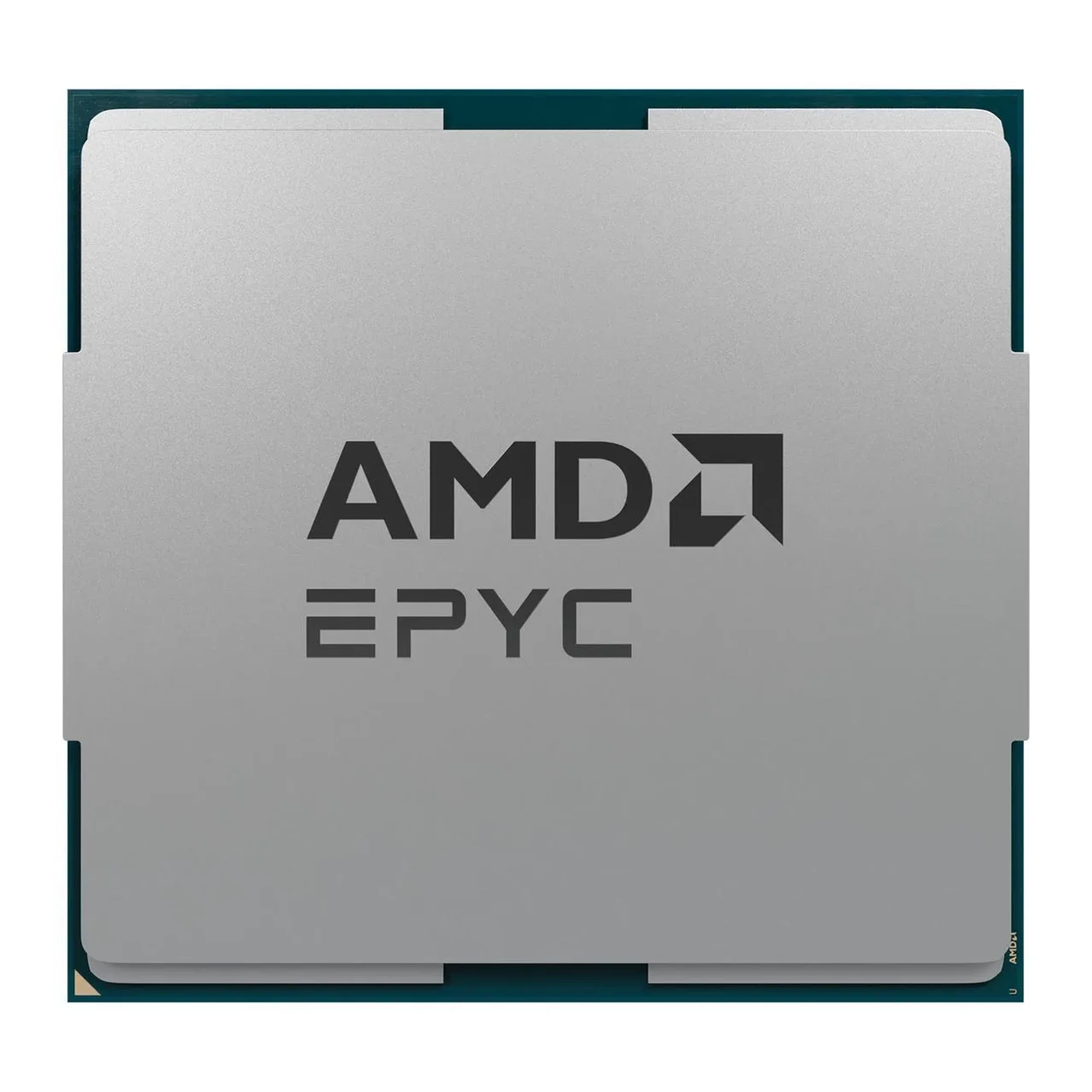
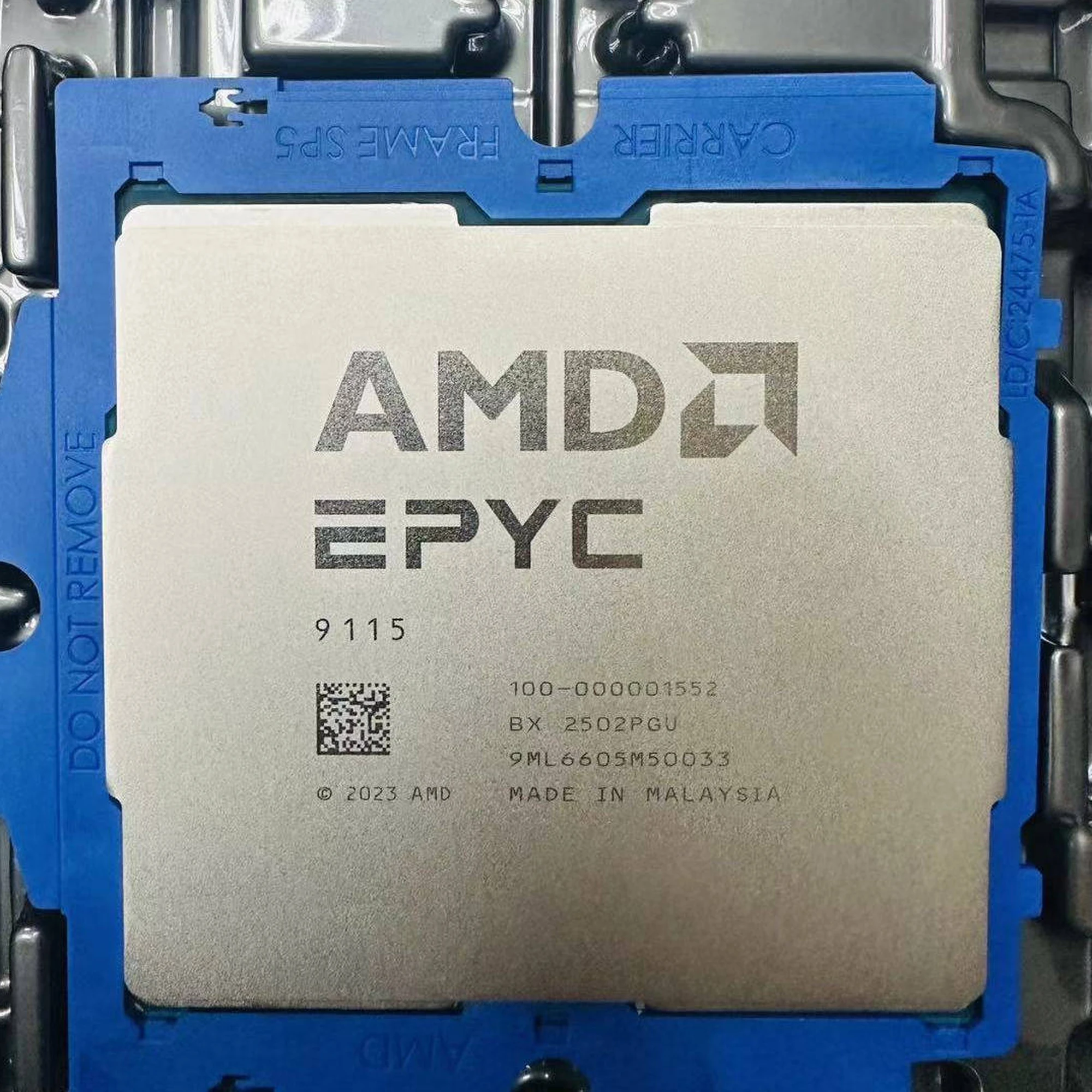
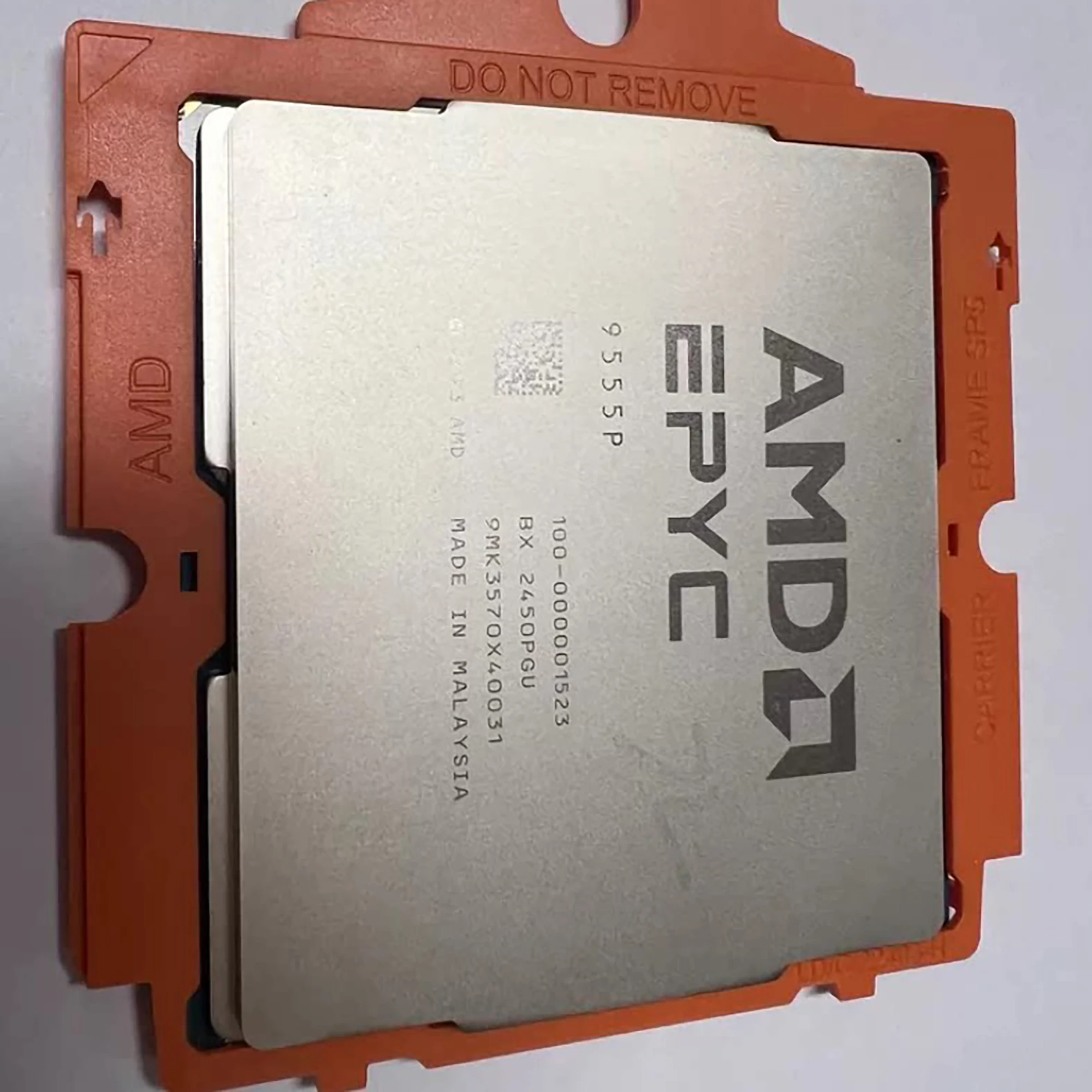
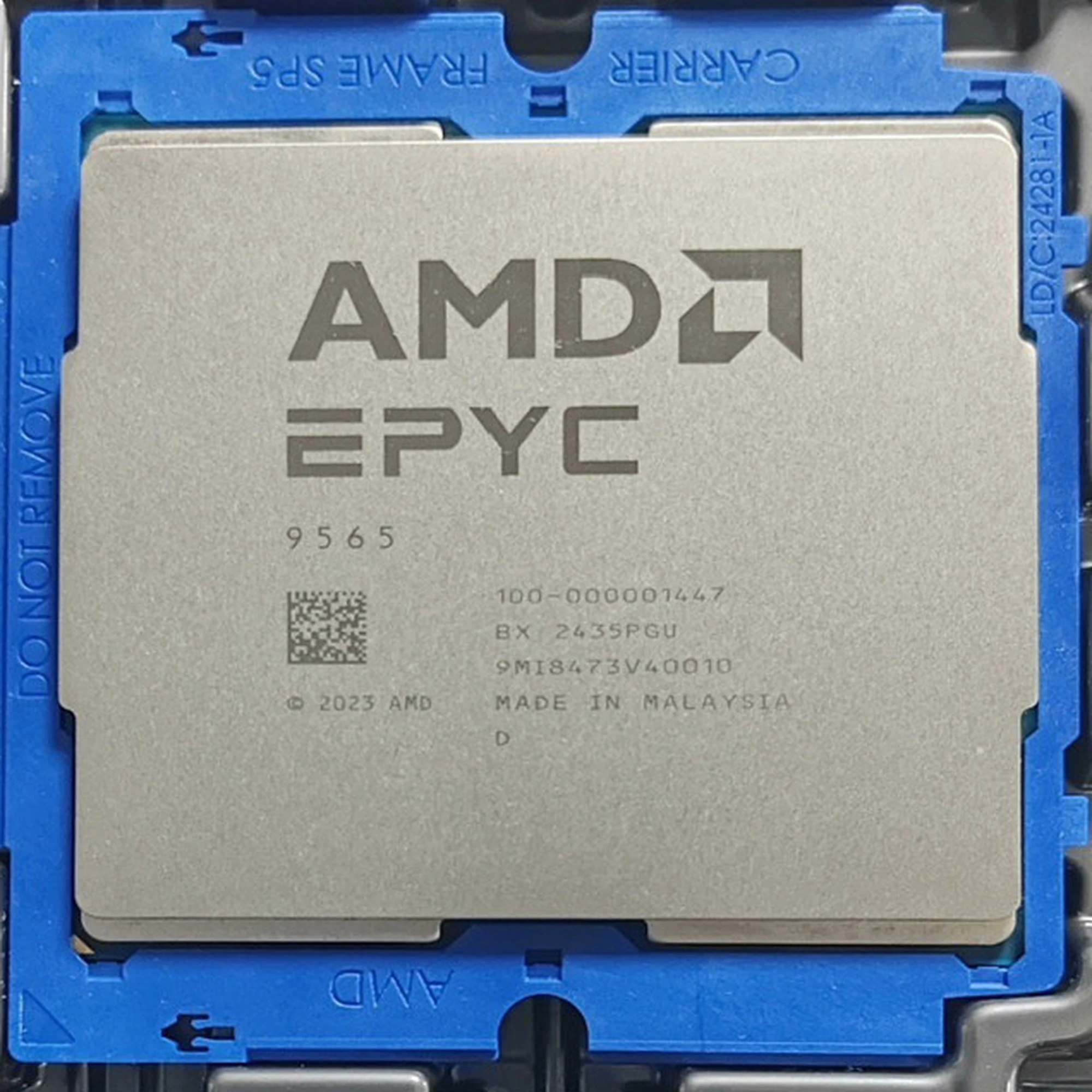
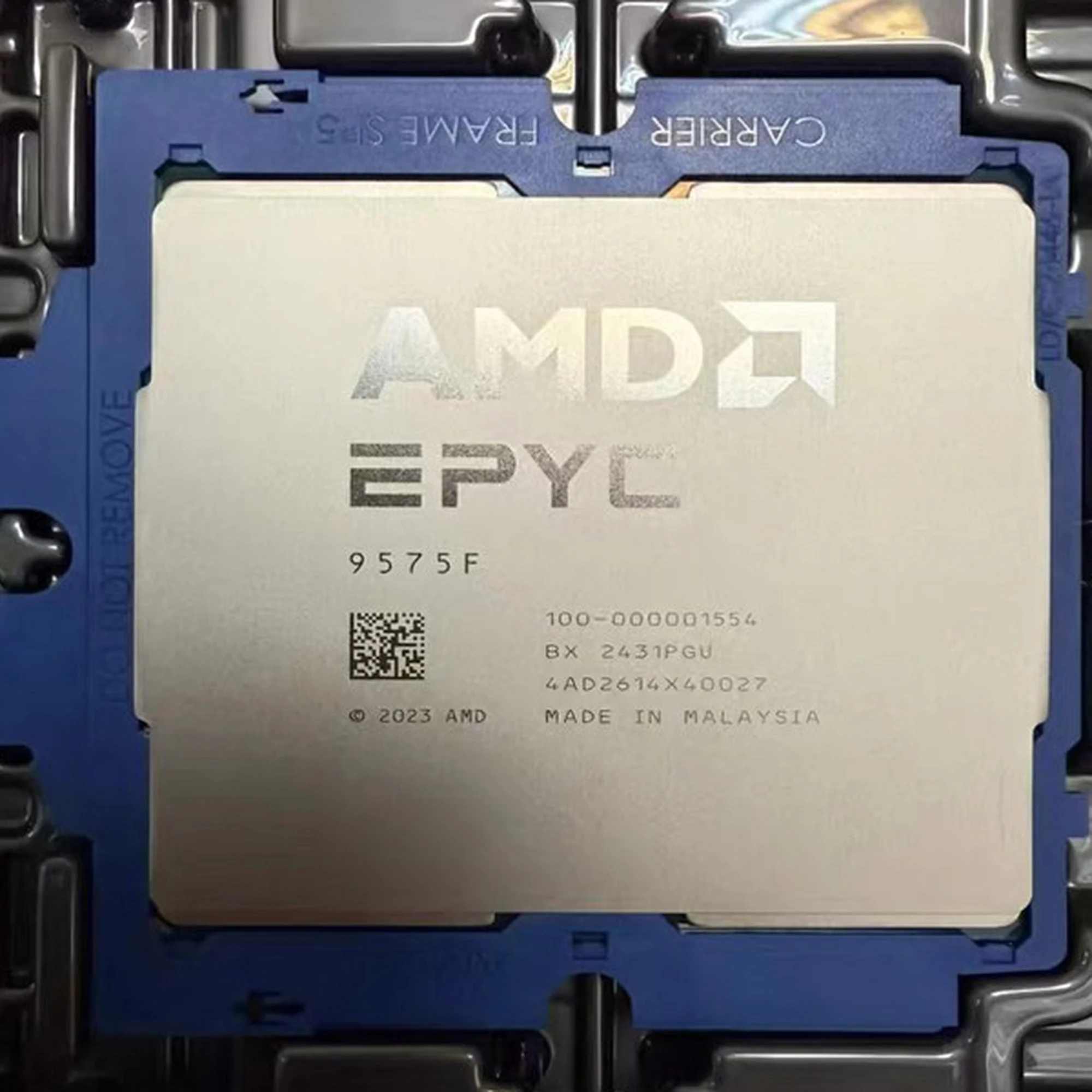
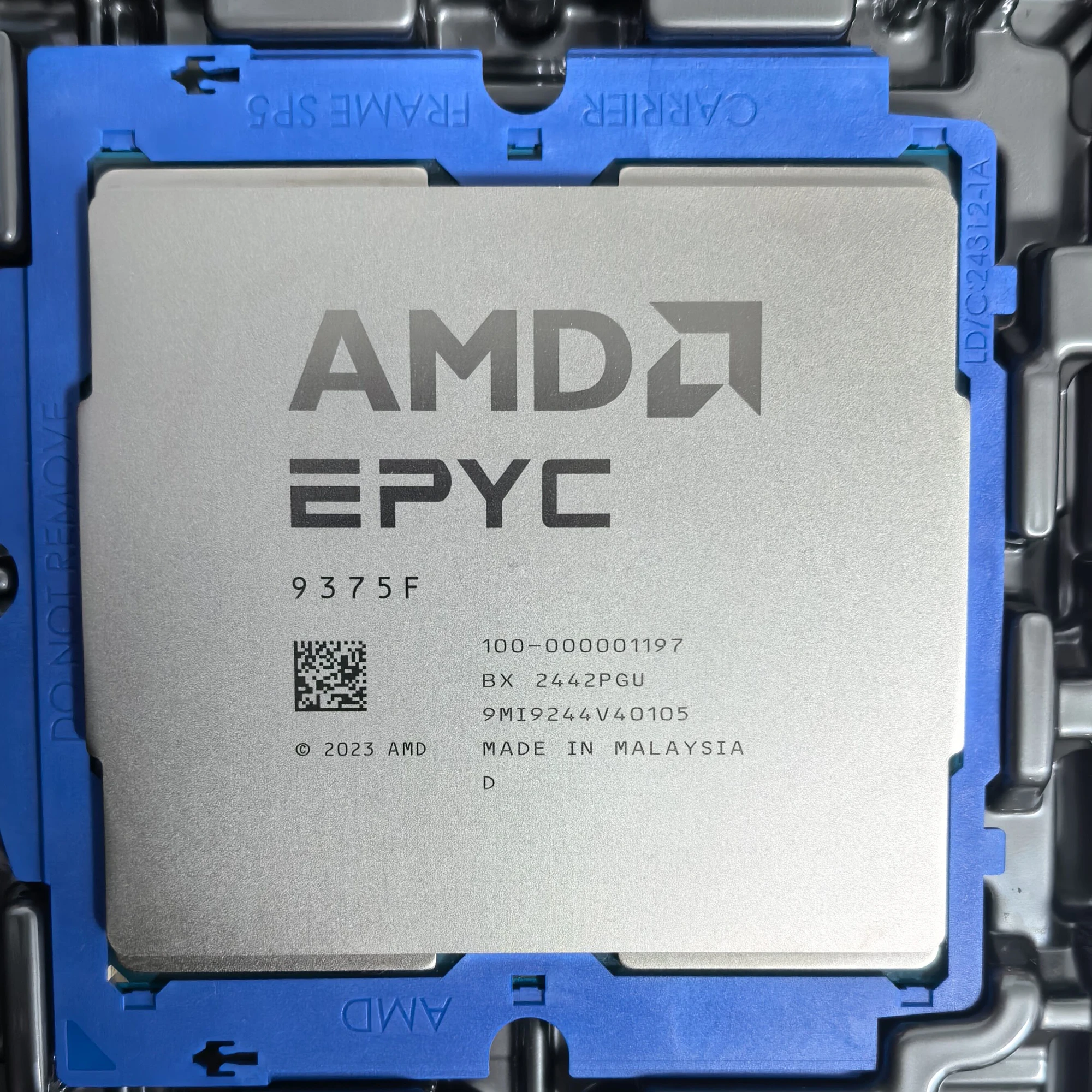
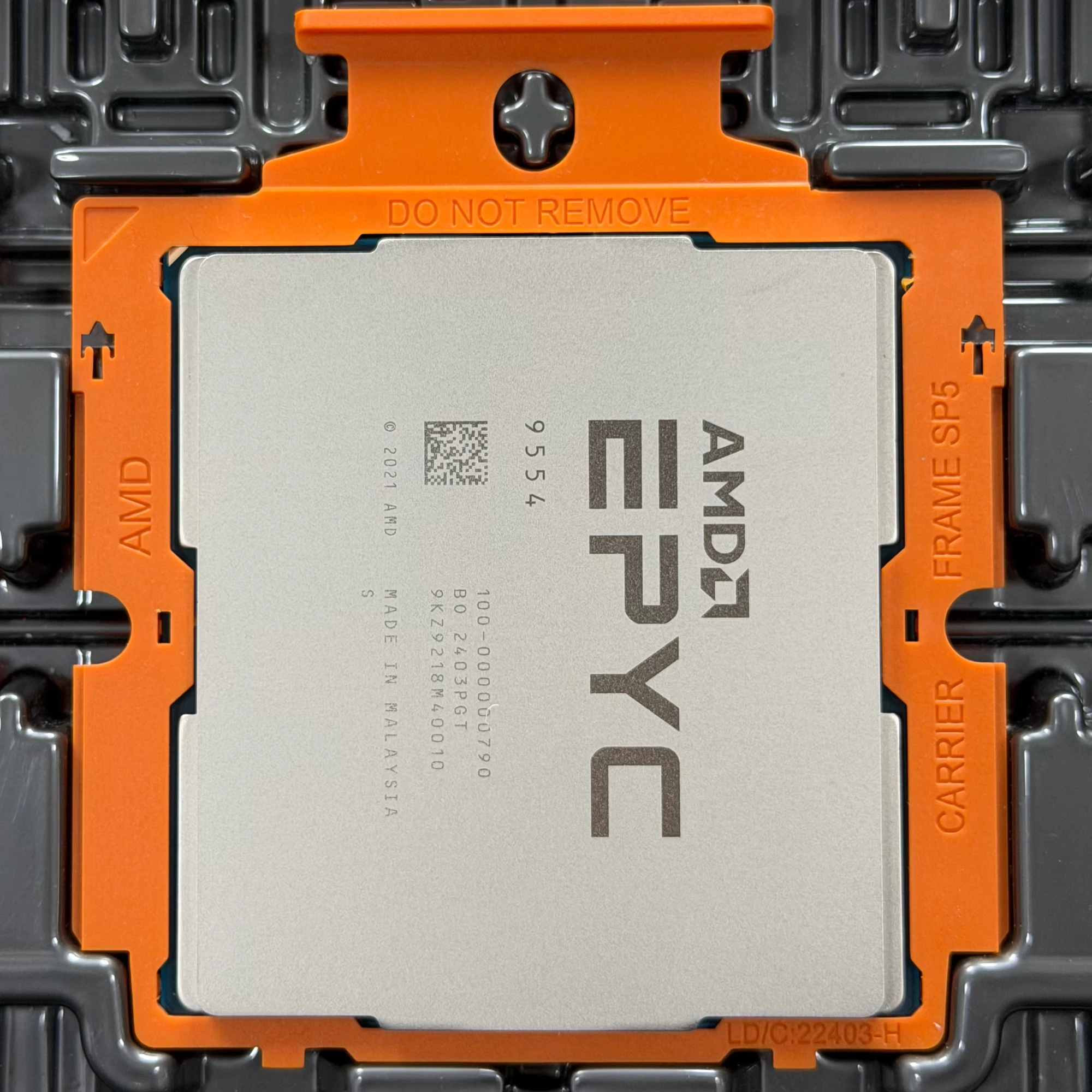
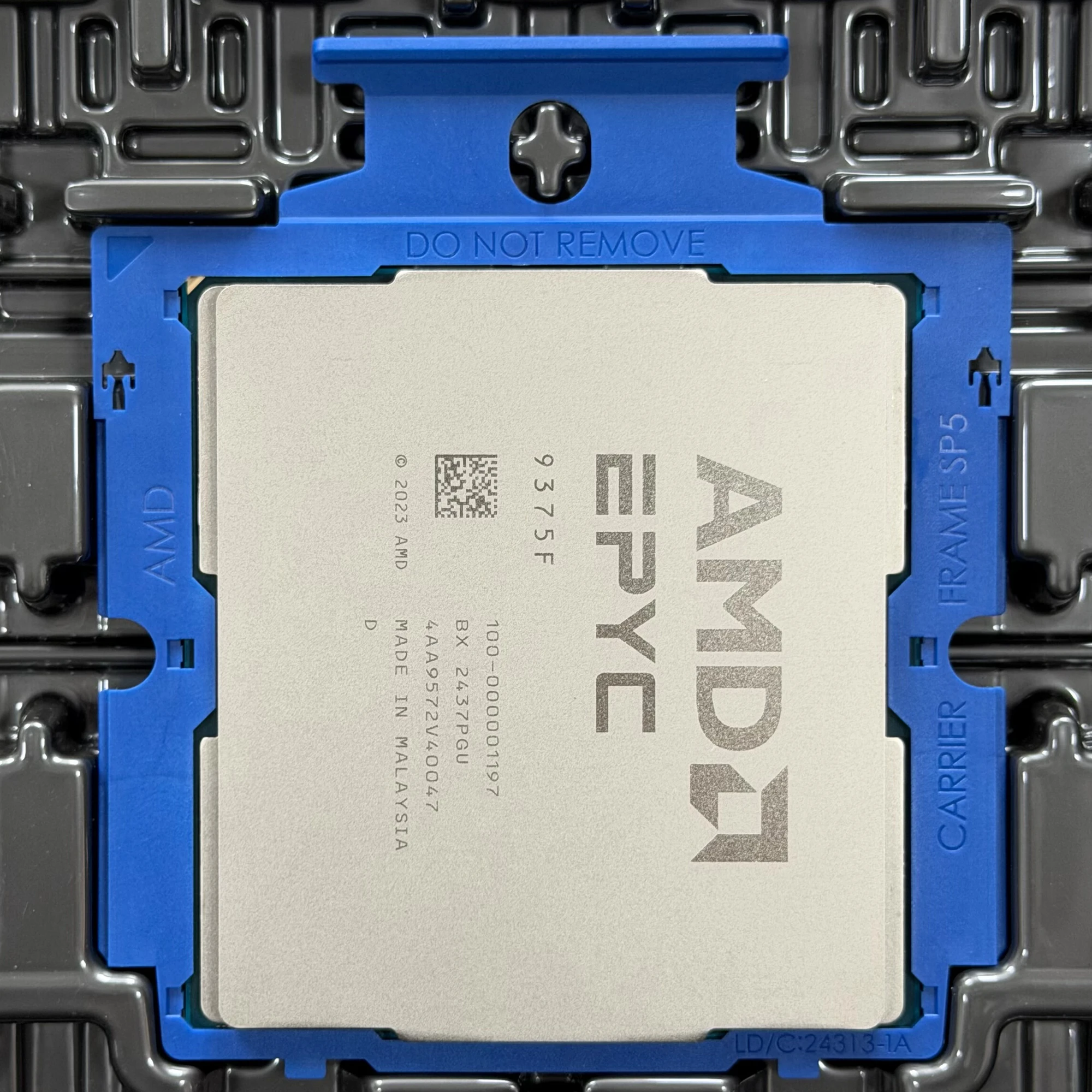
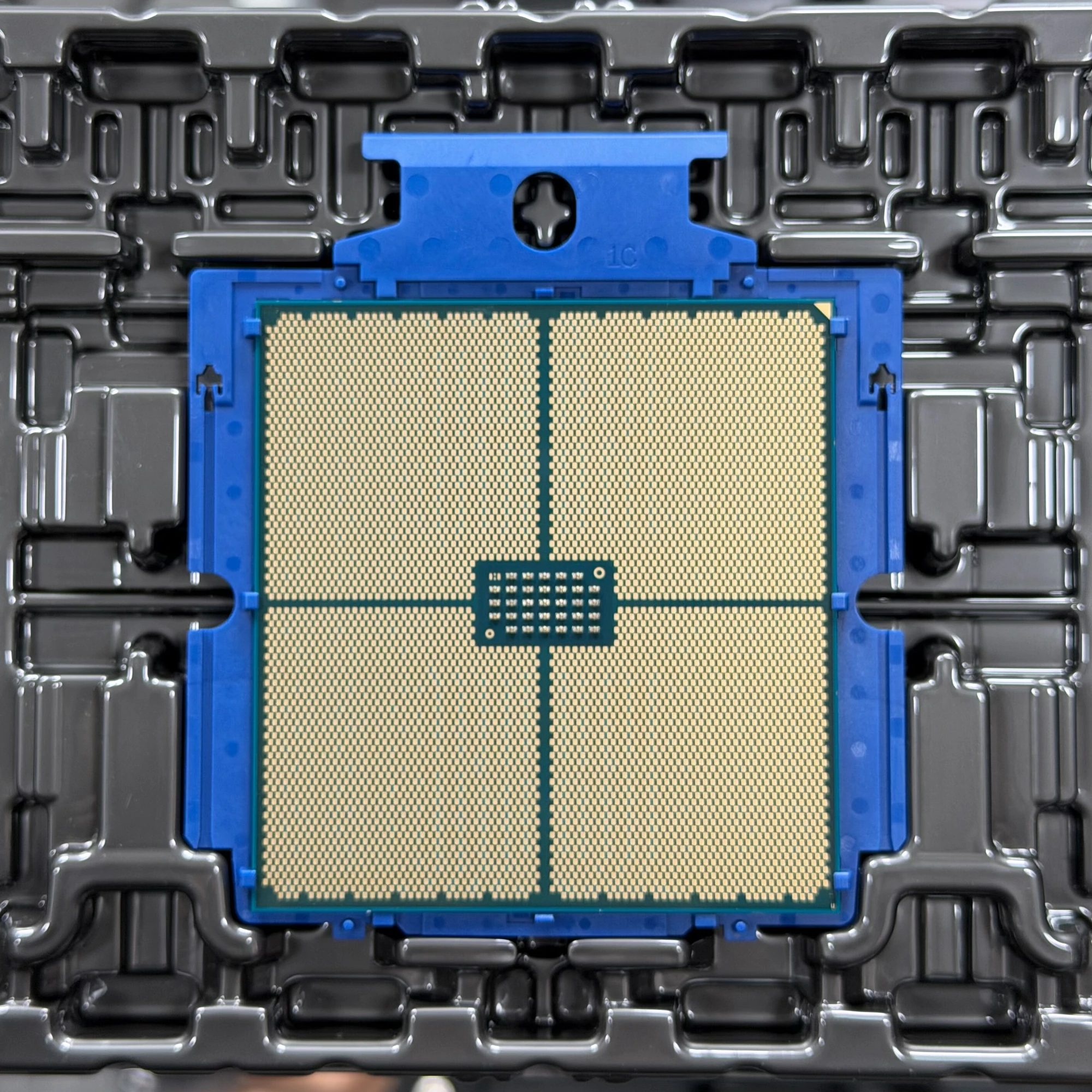
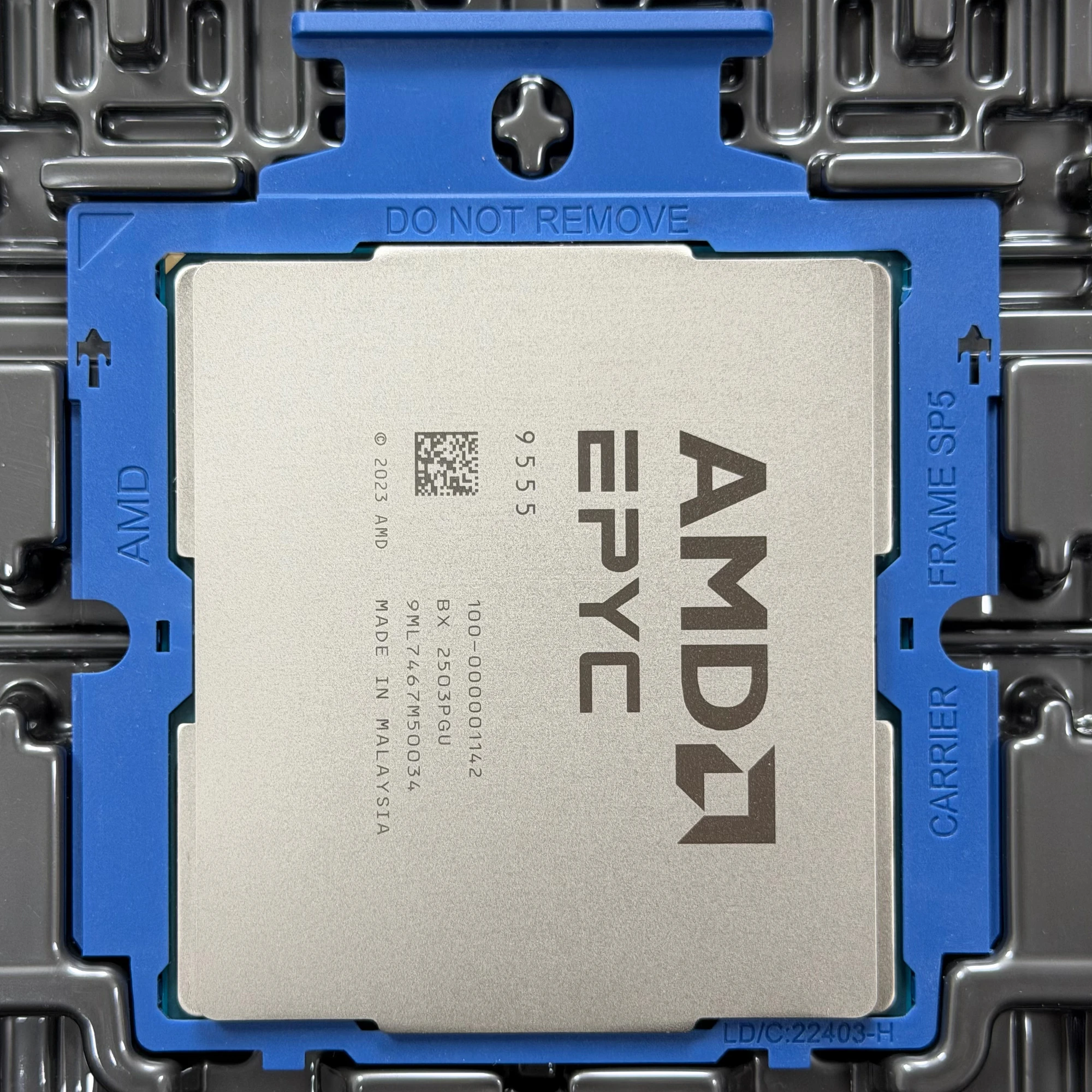
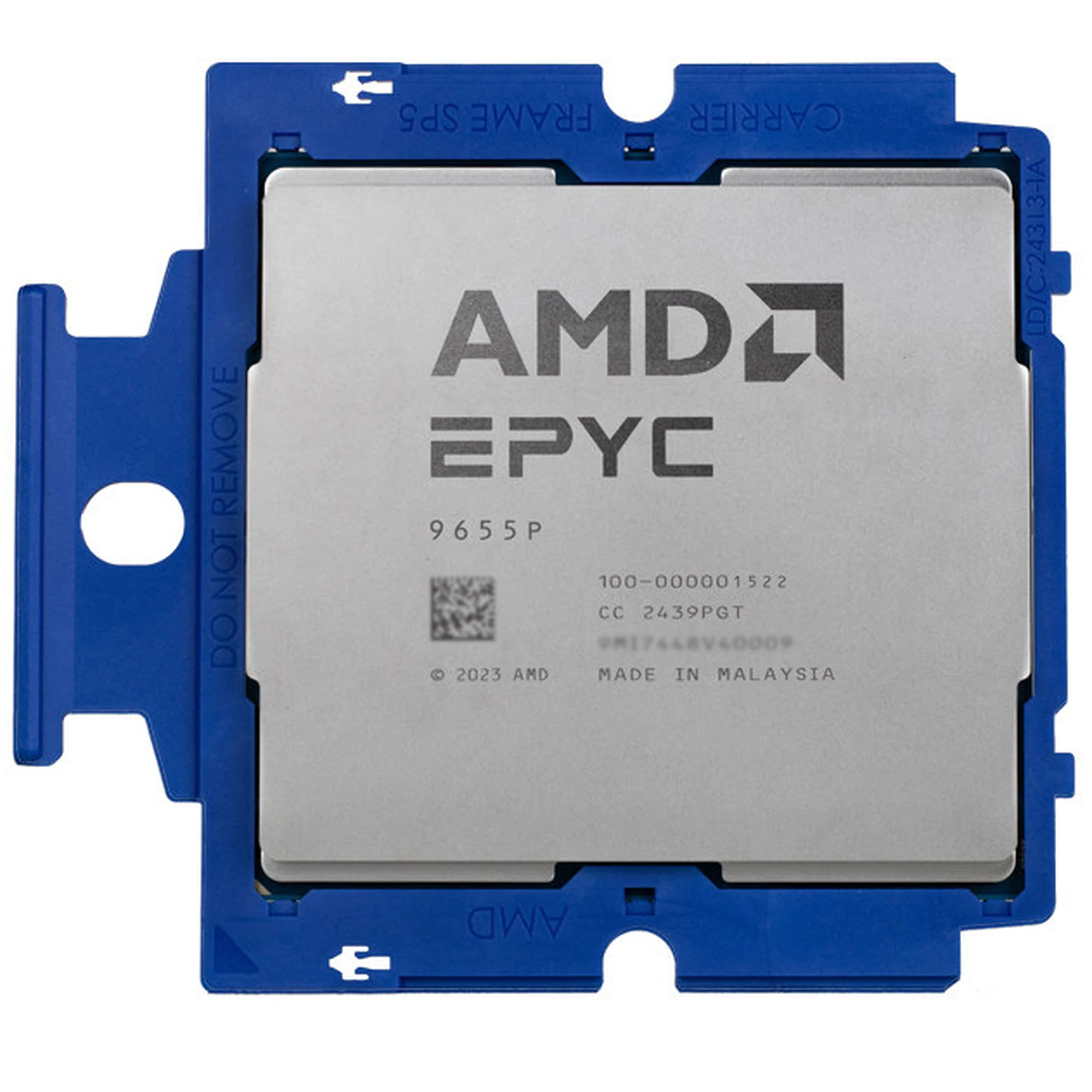
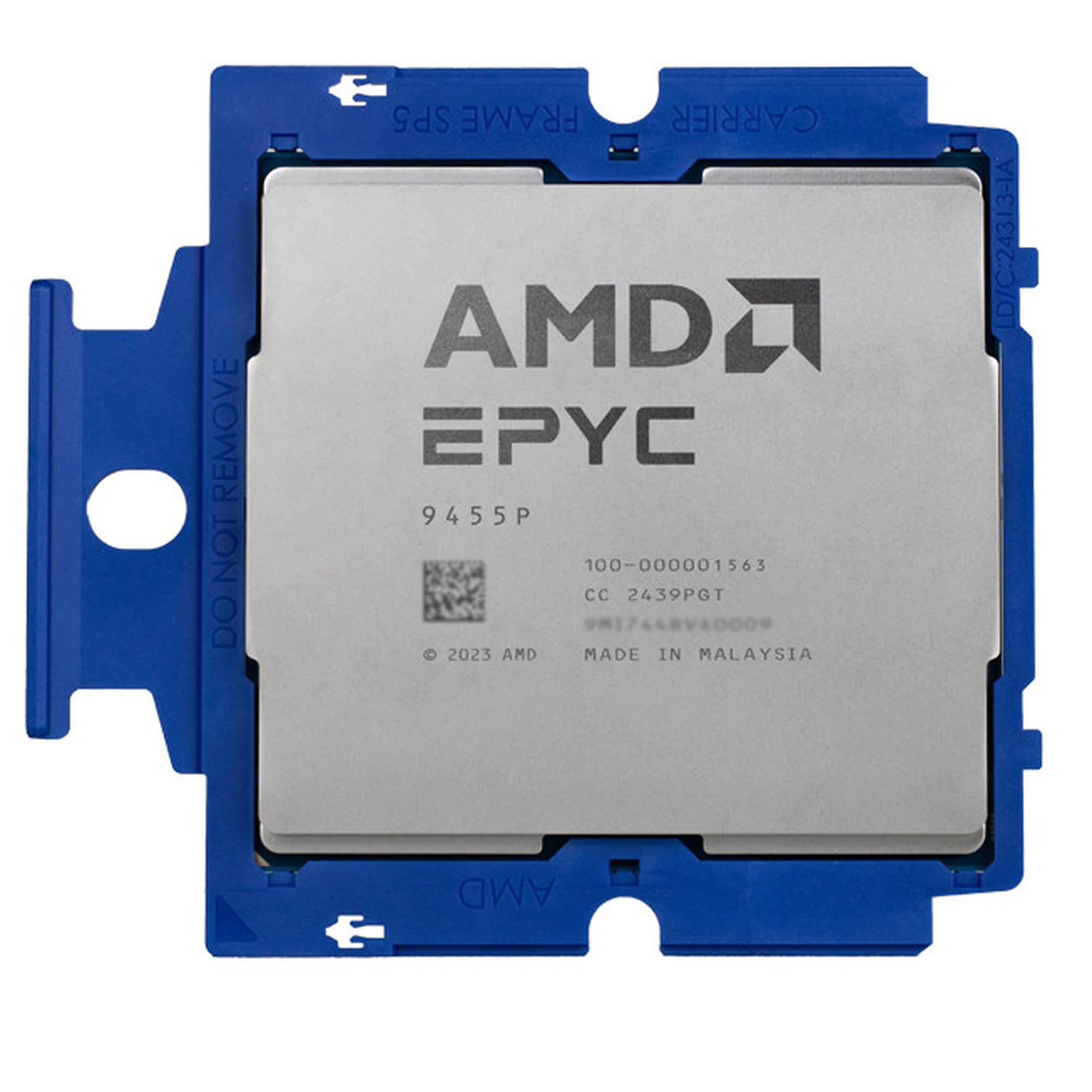
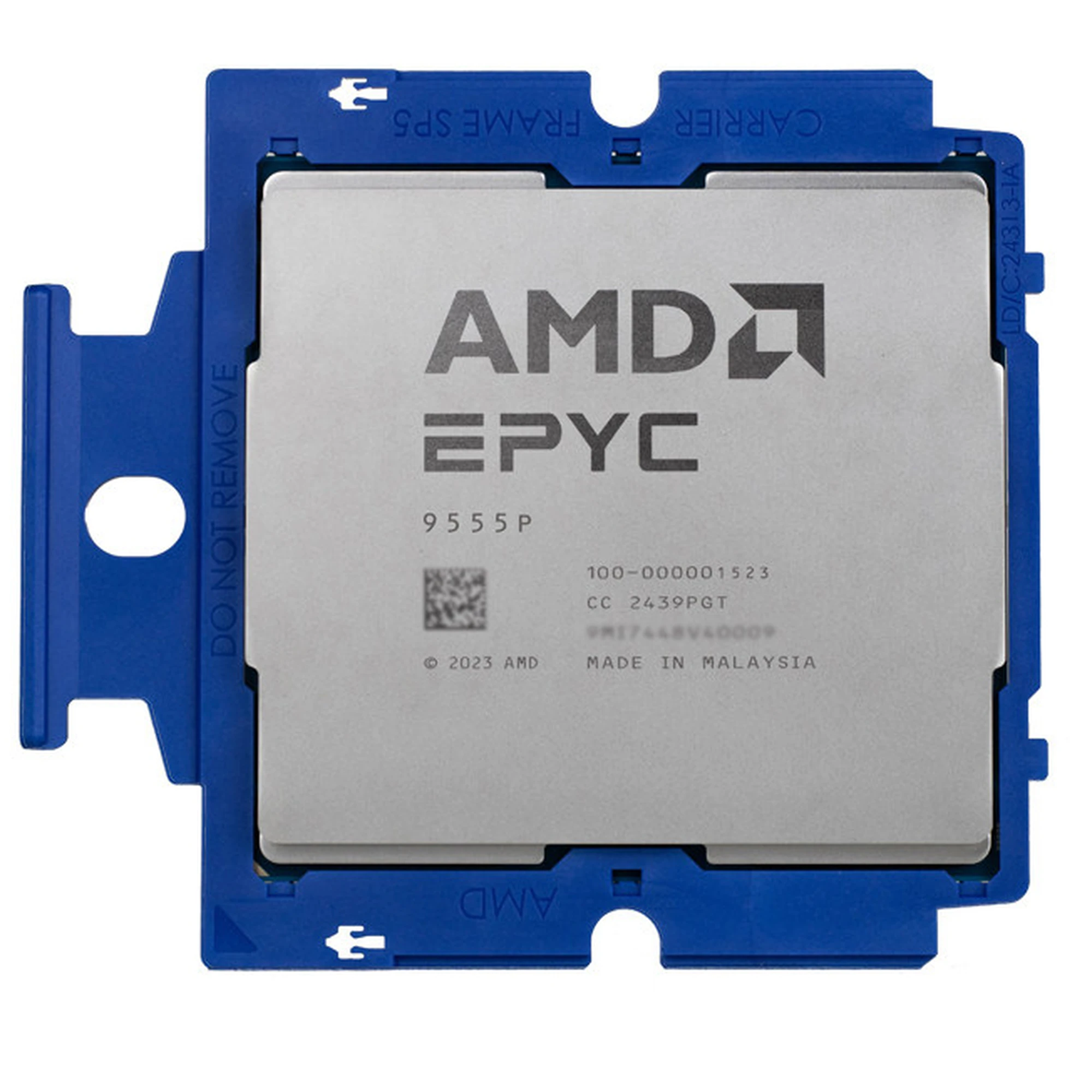

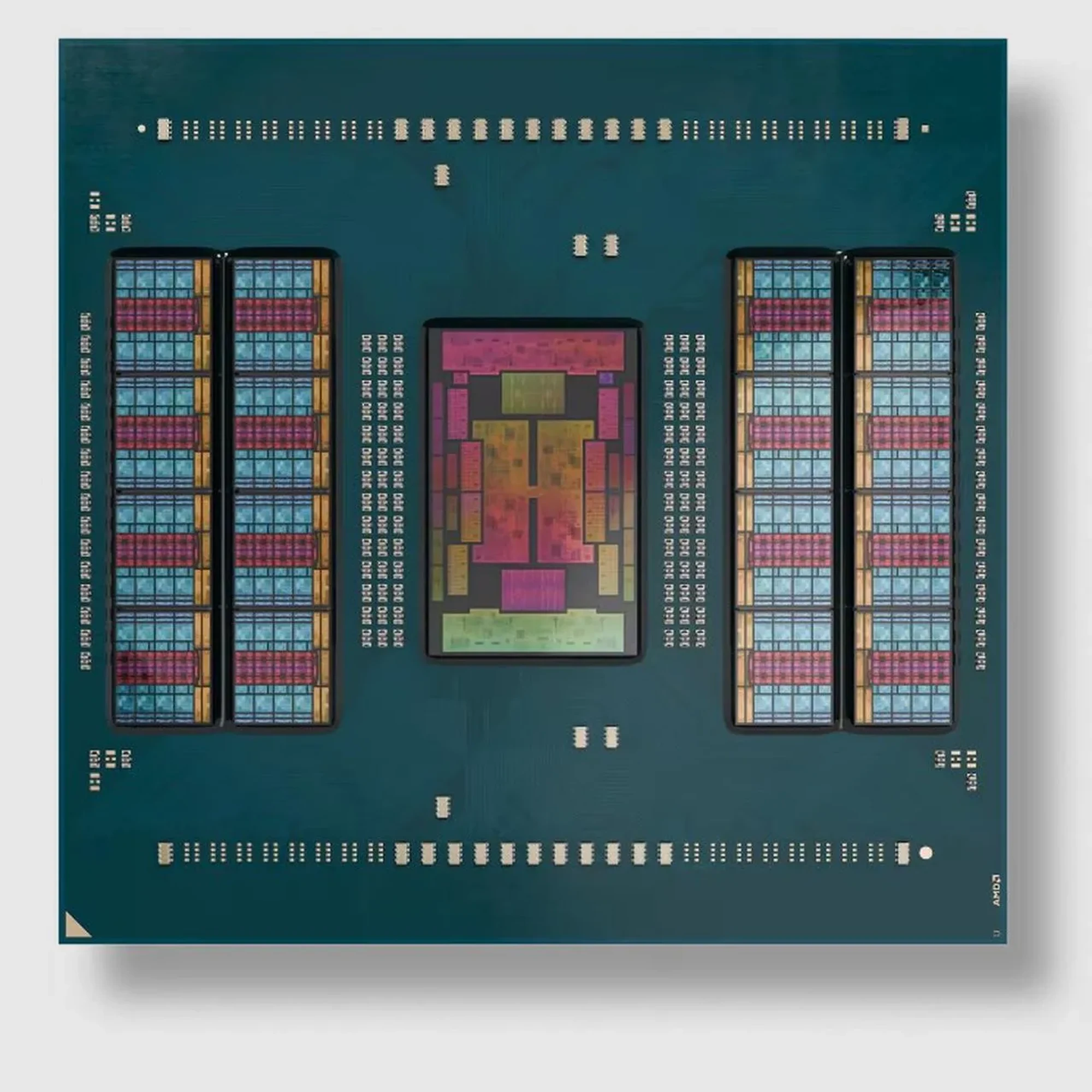
AMD EPYC™ 9655P Server Processor – 96-Core Zen 5 Performance for Data Centers & HPC | 4nm, 4.5GHz, DDR5-6400
| Specification | Details |
|---|---|
| Product Name | AMD EPYC™ 9655P Server Processor |
| Family | AMD EPYC |
| Series | EPYC 9005 Series (Turin) |
| Architecture | Zen 5 (Turin) |
| Manufacturing Process | 4nm (TSMC) |
| Cores | 96 |
| Threads | 192 |
| Base Clock | 2.6 GHz |
| All-Core Boost Speed | 4.1 GHz |
| Max Boost Clock | Up to 4.5 GHz |
| L3 Cache | 384 MB (Shared) |
| L2 Cache | 1 MB per Core (Total 96 MB) |
| L1 Cache | 80 KB per Core (Total 7.68 MB) |
| TDP | 400W (Default) |
| Configurable TDP (cTDP) | 320W – 400W |
| Socket | SP5 (FC-LGA6096) |
| Socket Count | 1P (Single Processor) |
| Memory Type | DDR5 |
| Memory Channels | 12 |
| Max Memory Speed | Up to 6400 MT/s |
| Per Socket Memory Bandwidth | 614 GB/s |
| Max Memory Size | 6 TB |
| ECC Memory Support | Yes |
| PCIe Version | PCI Express® 5.0 |
| PCIe Lanes | 128 |
| Launch Date | October 10, 2024 |
| Regional Availability | Global, China, NA, EMEA, APJ, LATAM |
| 1KU Pricing | $7958 USD |
| Product ID (Tray) | 100-000001522 |
| Supported Technologies | AMD Infinity Guard, AMD Infinity Architecture, AVX-512, AES, VAES, AMD SVM |
| Workload Affinity | CAE, CFD, FEA, High Capacity Data Management (NR, RDBMS), HPC |
In the fast-evolving landscape of data center and high-performance computing (HPC), the demand for processors that can handle increasingly complex workloads—from AI and machine learning to cloud computing and business-critical applications—has never been higher. AMD’s EPYC™ 9655P Server Processor, part of the 9005 series (codenamed Turin), emerges as a game-changing solution, combining cutting-edge 4nm manufacturing technology, Zen 5 architecture, and exceptional core density to deliver unmatched performance, efficiency, and scalability for modern data centers worldwide. Released in October 2024, the EPYC 9655P is engineered to address the most demanding workloads, making it an ideal choice for enterprises, cloud service providers, and research institutions seeking to maximize productivity and reduce total cost of ownership (TCO).
Unmatched Core Performance: 96 Cores, 192 Threads for Multitasking Excellence
At the heart of the AMD EPYC™ 9655P lies a powerful 96-core, 192-thread configuration, built on AMD’s Zen 5 (Turin) architecture—a significant leap forward in performance and efficiency compared to previous generations. Each core is optimized to handle parallel tasks with precision, making the processor ideal for workloads that require massive multitasking capabilities, such as virtualization, containerization, and multi-user cloud environments. With a base clock of 2.6GHz and an all-core boost speed of 4.1GHz, the EPYC 9655P ensures consistent performance even under heavy load, while the maximum boost clock of up to 4.5GHz delivers bursts of speed for latency-sensitive tasks. This balance of core count and clock speed sets the EPYC 9655P apart from competitors, allowing it to handle both throughput-intensive and latency-critical workloads with ease.
The Zen 5 architecture brings several key improvements over its predecessor, including enhanced instruction per cycle (IPC) performance, improved cache efficiency, and advanced power management. These upgrades translate to faster processing speeds, reduced latency, and better overall system responsiveness—critical factors for data centers that operate 24/7 and cannot afford performance bottlenecks. Additionally, the EPYC 9655P supports a wide range of advanced instruction sets, including SSE 4.2, AVX, AVX2, AES, VAES, AMD SVM, FMA, RDRAND, FSGSBASE, BMI2, AVX-512, AVX-512 VNNI/DL-Boost, and AVX-512 BFloat16, making it well-equipped to handle modern AI, machine learning, and HPC workloads that rely on these specialized instructions for accelerated performance.
Exceptional Cache & Memory Bandwidth: Fueling Data-Intensive Workloads
For data-intensive workloads like AI training, big data analytics, and HPC simulations, cache size and memory bandwidth are critical determinants of performance. The AMD EPYC™ 9655P addresses this need with a massive 384MB of L3 cache—shared across all 96 cores—ensuring that frequently accessed data is stored close to the processing units, reducing latency and minimizing the need to access slower system memory. This large cache pool is particularly beneficial for workloads that process large datasets, as it allows the processor to quickly retrieve and manipulate data without waiting for memory transfers.
Complementing the generous cache is a high-speed memory subsystem that supports DDR5 memory with a maximum speed of up to 6400 MT/s and 12 memory channels. This configuration delivers an impressive per-socket memory bandwidth of up to 614 GB/s, ensuring that the processor is never starved for data—even when handling the most demanding workloads. The EPYC 9655P also supports ECC (Error-Correcting Code) memory, which is essential for data centers and mission-critical applications where data integrity is non-negotiable. ECC memory detects and corrects single-bit errors and detects multi-bit errors, preventing data corruption and ensuring system stability over long periods of operation.
Advanced I/O Capabilities: Connectivity for Modern Data Centers
Modern data centers require high-speed connectivity to support a wide range of peripherals, storage devices, and network interfaces. The AMD EPYC™ 9655P delivers with support for PCI Express® 5.0, offering up to 128 PCIe lanes. PCIe 5.0 provides double the bandwidth of PCIe 4.0, enabling faster data transfers between the processor and storage devices (such as NVMe SSDs), network adapters, and other peripherals. This high I/O bandwidth is critical for workloads that rely on fast storage and network connectivity, such as cloud computing, virtualization, and real-time data processing.
The processor uses the SP5 socket, which is designed to support AMD’s latest server platforms and provide scalability for future upgrades. With a 1P (single-processor) configuration, the EPYC 9655P is suitable for a wide range of server form factors, from rack-mounted servers to blade servers, making it flexible enough to adapt to the unique needs of different data center environments. Additionally, the EPYC 9655P supports AMD Infinity Architecture and AMD Infinity Guard, advanced technologies that enhance system performance, security, and manageability.
Power Efficiency & Thermal Management: Balancing Performance and TCO
While performance is critical, data centers also prioritize power efficiency to reduce energy costs and minimize environmental impact. The AMD EPYC™ 9655P features a default TDP (Thermal Design Power) of 400W, with AMD Configurable TDP (cTDP) ranging from 320W to 400W. This flexibility allows data center administrators to adjust the processor’s power consumption based on workload demands, optimizing for either maximum performance or energy efficiency. The 4nm manufacturing process, developed by TSMC, plays a key role in this balance, delivering better performance per watt compared to older 7nm or 10nm processes. By reducing power consumption while maintaining high performance, the EPYC 9655P helps data centers lower their TCO and meet sustainability goals.
Thermal management is also a key consideration for server processors, especially those with high core counts and TDP. The EPYC 9655P is designed to work with industry-standard cooling solutions, ensuring that it operates within safe temperature ranges even under heavy load. This reliability is essential for data centers that require 24/7 operation, as overheating can lead to system downtime and lost productivity.
Workload Affinity: Optimized for Key Data Center Use Cases
The AMD EPYC™ 9655P is engineered to excel in a wide range of data center workloads, with specific optimization for CAE (Computer-Aided Engineering), CFD (Computational Fluid Dynamics), FEA (Finite Element Analysis), high-capacity data management (including NoSQL and RDBMS databases), and HPC. These workloads are characterized by their high computational demands, large data sets, and need for parallel processing—areas where the EPYC 9655P’s 96 cores, 192 threads, and high memory bandwidth shine.
For AI and machine learning workloads, the EPYC 9655P’s support for AVX-512 VNNI/DL-Boost and AVX-512 BFloat16 instructions accelerates model training and inference, reducing the time required to process complex AI workloads. In cloud computing environments, the processor’s high core count and virtualization capabilities allow for efficient consolidation of virtual machines (VMs), maximizing server utilization and reducing the number of physical servers needed—lowering both capital and operational costs. For business-critical applications, such as enterprise resource planning (ERP), customer relationship management (CRM), and financial transactions, the EPYC 9655P’s reliability, security features, and consistent performance ensure that these applications run smoothly and without interruption.
Security & Manageability: Protecting Critical Data and Systems
Data center security is a top priority for enterprises, and the AMD EPYC™ 9655P includes a range of advanced security features to protect critical data and systems. AMD Infinity Guard is a comprehensive set of security technologies that provides hardware-enforced security at every layer of the system, including secure boot, memory encryption, and firmware protection. These features help prevent unauthorized access to data and ensure that the system firmware is not tampered with, reducing the risk of cyberattacks.
Additionally, the EPYC 9655P supports AMD Secure Encrypted Virtualization (SEV), which encrypts VM memory to prevent unauthorized access from other VMs or the hypervisor. This is particularly important in multi-tenant cloud environments, where multiple customers share the same physical server. SEV ensures that each tenant’s data remains isolated and secure, even if other VMs on the same server are compromised. The processor also includes support for AES and VAES encryption instructions, which accelerate data encryption and decryption, ensuring that sensitive data is protected without sacrificing performance.
Global Availability & Pricing: Accessible for Enterprises Worldwide
The AMD EPYC™ 9655P is available globally, including in regions such as North America, EMEA, APJ, Latin America, and China, making it accessible to enterprises of all sizes around the world. The processor is offered in a tray configuration with the product ID 100-000001522, and the 1KU (1000-unit) pricing is $7958 USD. While the upfront cost may be higher than some lower-core processors, the EPYC 9655P’s performance, efficiency, and scalability make it a cost-effective choice for data centers that need to handle high-demand workloads. The processor’s ability to consolidate VMs and reduce the number of physical servers needed further contributes to its TCO advantages, making it a smart long-term investment for enterprises looking to future-proof their data center infrastructure.
Benchmark Performance: Leading the Server Processor Market
Independent benchmark tests confirm the AMD EPYC™ 9655P’s position as a top-performing server processor. In Cinebench 2026, the EPYC 9655P achieves a single-core score of 445 points and a multi-core score of 30,117 points—outperforming many competing processors in its class. These scores demonstrate the processor’s ability to handle both single-threaded and multi-threaded workloads with exceptional performance. On OpenBenchmarking.org, the EPYC 9655P has been featured in approximately 3,897 results since Q4 2024, with an overall rank in the 80th percentile across 109 test profiles, further validating its performance capabilities.
When compared to previous-generation AMD EPYC processors and competing Intel Xeon processors, the EPYC 9655P offers significant performance improvements in multi-core workloads, thanks to its higher core count, improved IPC, and faster memory bandwidth. For data centers that rely on HPC, AI, and big data analytics, these performance gains translate to faster time-to-results, increased productivity, and a competitive edge in their respective industries.
Conclusion: The Ideal Choice for Modern Data Centers
The AMD EPYC™ 9655P Server Processor represents the pinnacle of server performance, combining 96 cores, 192 threads, 4nm Zen 5 architecture, massive cache, high memory bandwidth, and advanced security features to meet the demands of modern data centers. Whether you’re running AI workloads, HPC simulations, cloud services, or business-critical applications, the EPYC 9655P delivers the performance, efficiency, and scalability you need to succeed. With global availability, flexible power management, and a comprehensive set of features, the EPYC 9655P is more than just a processor—it’s a complete solution for building a future-proof data center infrastructure that can adapt to the ever-changing needs of the digital world.
Recommended Motherboards for AMD EPYC 9005/9004 SP5 processors
| Model | CPU (Socket / TDP) | Memory | PCIe/CXL | LAN | Management | Form Factor |
|---|---|---|---|---|---|---|
| Gigabyte MZ73-LM2 | Dual SP5 / 500W | 24×DDR5 | PCIe 5.0 | 2×10GbE | IPMI | E-ATX |
| Gigabyte MZ73-LM1 | Dual SP5 / 400W | 24×DDR5 | PCIe 5.0 | 2×10GbE | IPMI | E-ATX |
| Gigabyte MZ73-LM0 | Dual SP5 / 400W | 24×DDR5 | PCIe 5.0 | 2×10GbE | IPMI | E-ATX |
| Gigabyte MZ33-AR1 | Single SP5 / 400W | 24×DDR5 | PCIe 5.0 | 1×10GbE | IPMI | E-ATX |
| Gigabyte MZ33-CP1 | Single SP5 / 500W | 12×DDR5 | PCIe 5.0 | 2×1GbE | IPMI | E-ATX |
| ASRock Rack TURIND8-2L2T | Single SP5 / 400W | 8×DDR5 | PCIe 5.0 + CXL 2.0 | 2×10GbE + 2×1GbE | IPMI | CEB |
| ASRock Rack TURIN2D16-2T | Dual SP5 / 400W | 16×DDR5 (8+8) | PCIe 5.0 + CXL 2.0 | 2×10GbE | IPMI | EEB |
| ASRock Rack TURIN2D24G-2L+/500W | Dual SP5 / 500W | 24×DDR5 (12+12) | PCIe 5.0 + CXL 2.0 | 2×1GbE | IPMI | Proprietary |
| ASUS K14PA-U12 | Single SP5 / 400W | 12×DDR5 | PCIe 5.0 | 2×25GbE (SFP28) | iKVM (ASMB11) | CEB |
5th Gen AMD EPYC Server CPUs Model Specifications
| Name | # of CPU Cores | # of Threads | Max. Boost Clock | Base Clock | L3 Cache | Default TDP |
| AMD EPYC™ 9965 | 192 | 384 | Up to 3.7 GHz | 2.25 GHz | 384 MB | 500W |
| AMD EPYC™ 9845 | 160 | 320 | Up to 3.7 GHz | 2.1 GHz | 320 MB | 390W |
| AMD EPYC™ 9825 | 144 | 288 | Up to 3.7 GHz | 2.2 GHz | 384 MB | 390W |
| AMD EPYC™ 9755 | 128 | 256 | Up to 4.1 GHz | 2.7 GHz | 512 MB | 500W |
| AMD EPYC™ 9745 | 128 | 256 | Up to 3.7 GHz | 2.4 GHz | 256 MB | 400W |
| AMD EPYC™ 9655P | 96 | 192 | Up to 4.5 GHz | 2.6 GHz | 384 MB | 400W |
| AMD EPYC™ 9655 | 96 | 192 | Up to 4.5 GHz | 2.6 GHz | 384 MB | 400W |
| AMD EPYC™ 9645 | 96 | 192 | Up to 3.7 GHz | 2.3 GHz | 256 MB | 320W |
| AMD EPYC™ 9575F | 64 | 128 | Up to 5 GHz | 3.3 GHz | 256 MB | 400W |
| AMD EPYC™ 9565 | 72 | 144 | Up to 4.3 GHz | 3.15 GHz | 384 MB | 400W |
| AMD EPYC™ 9555P | 64 | 128 | Up to 4.4 GHz | 3.2 GHz | 256 MB | 360W |
| AMD EPYC™ 9555 | 64 | 128 | Up to 4.4 GHz | 3.2 GHz | 256 MB | 360W |
| AMD EPYC™ 9535 | 64 | 128 | Up to 4.3 GHz | 2.4 GHz | 256 MB | 300W |
| AMD EPYC™ 9475F | 48 | 96 | Up to 4.8 GHz | 3.65 GHz | 256 MB | 400W |
| AMD EPYC™ 9455P | 48 | 96 | Up to 4.4 GHz | 3.15 GHz | 256 MB | 300W |
| AMD EPYC™ 9455 | 48 | 96 | Up to 4.4 GHz | 3.15 GHz | 256 MB | 300W |
| AMD EPYC™ 9375F | 32 | 64 | Up to 4.8 GHz | 3.8 GHz | 256 MB | 320W |
| AMD EPYC™ 9365 | 36 | 72 | Up to 4.3 GHz | 3.4 GHz | 192 MB | 300W |
| AMD EPYC™ 9355P | 32 | 64 | Up to 4.4 GHz | 3.55 GHz | 256 MB | 280W |
| AMD EPYC™ 9355 | 32 | 64 | Up to 4.4 GHz | 3.55 GHz | 256 MB | 280W |
| AMD EPYC™ 9335 | 32 | 64 | Up to 4.4 GHz | 3 GHz | 128 MB | 210W |
| AMD EPYC™ 9275F | 24 | 48 | Up to 4.8 GHz | 4.1 GHz | 256 MB | 320W |
| AMD EPYC™ 9255 | 24 | 48 | Up to 4.3 GHz | 3.2 GHz | 128 MB | 200W |
| AMD EPYC™ 9175F | 16 | 32 | Up to 5 GHz | 4.2 GHz | 512 MB | 320W |
| AMD EPYC™ 9135 | 16 | 32 | Up to 4.3 GHz | 3.65 GHz | 64 MB | 200W |
| AMD EPYC™ 9115 | 16 | 32 | Up to 4.1 GHz | 2.6 GHz | 64 MB | 125W |
| AMD EPYC™ 9015 | 8 | 16 | Up to 4.1 GHz | 3.6 GHz | 64 MB | 125W |


