
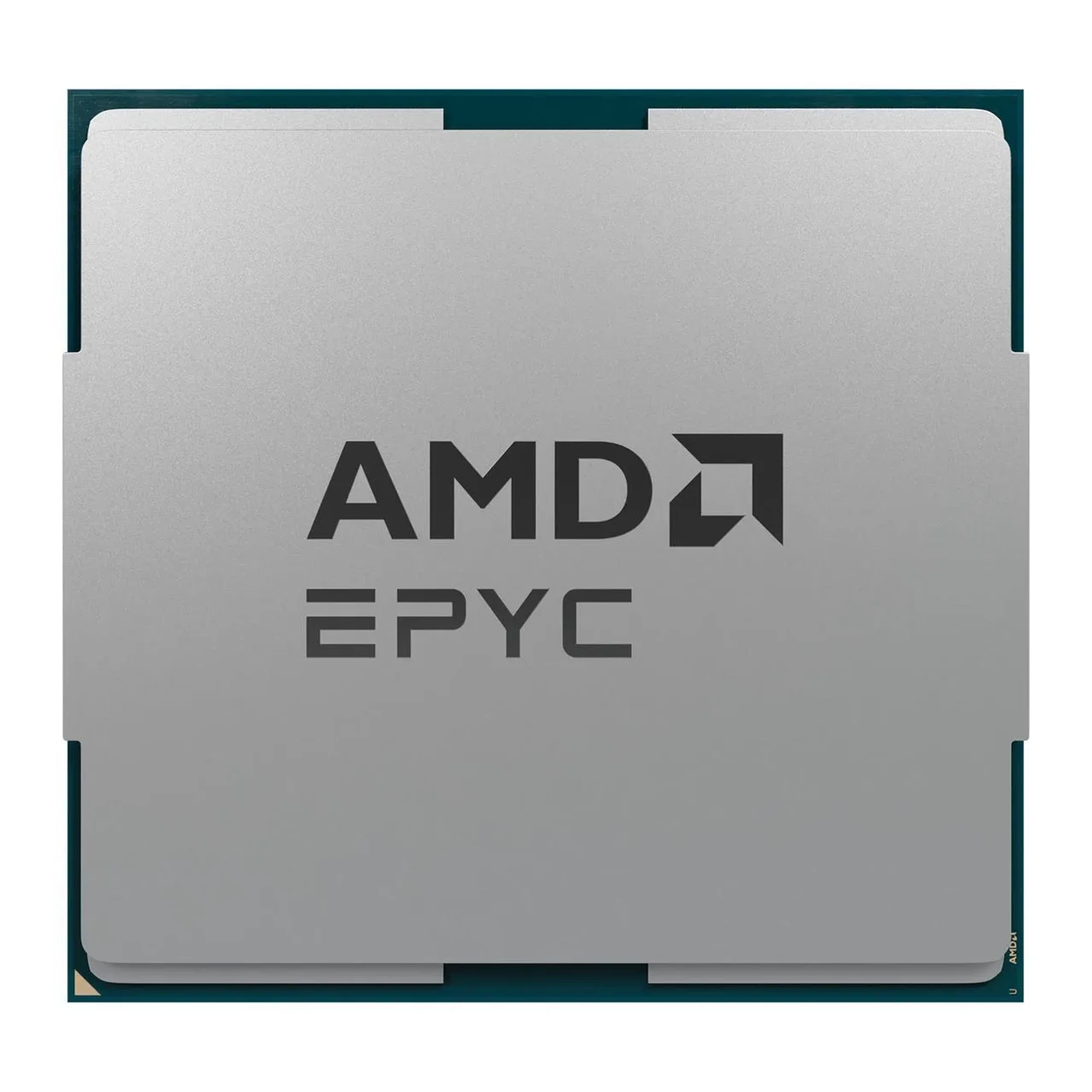
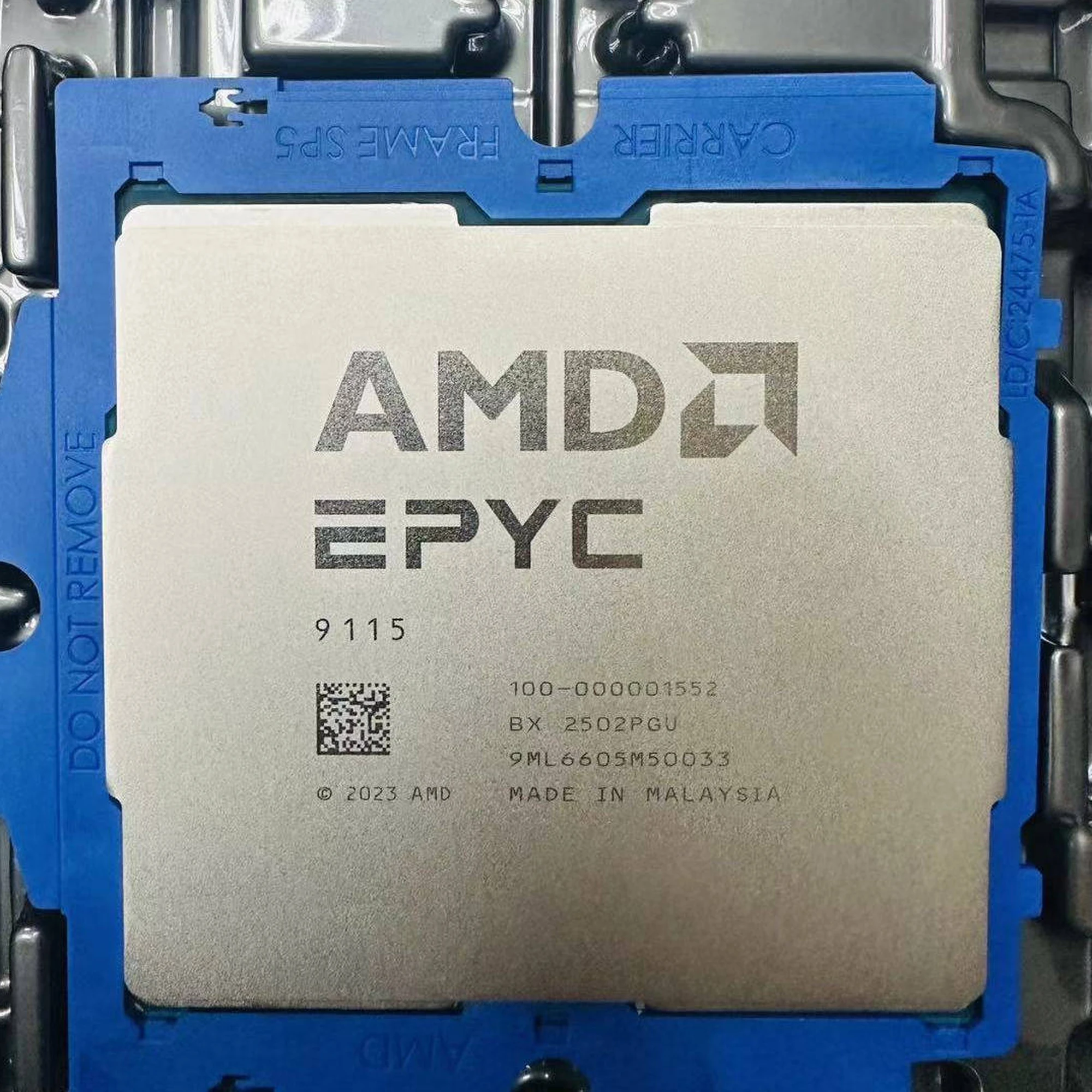
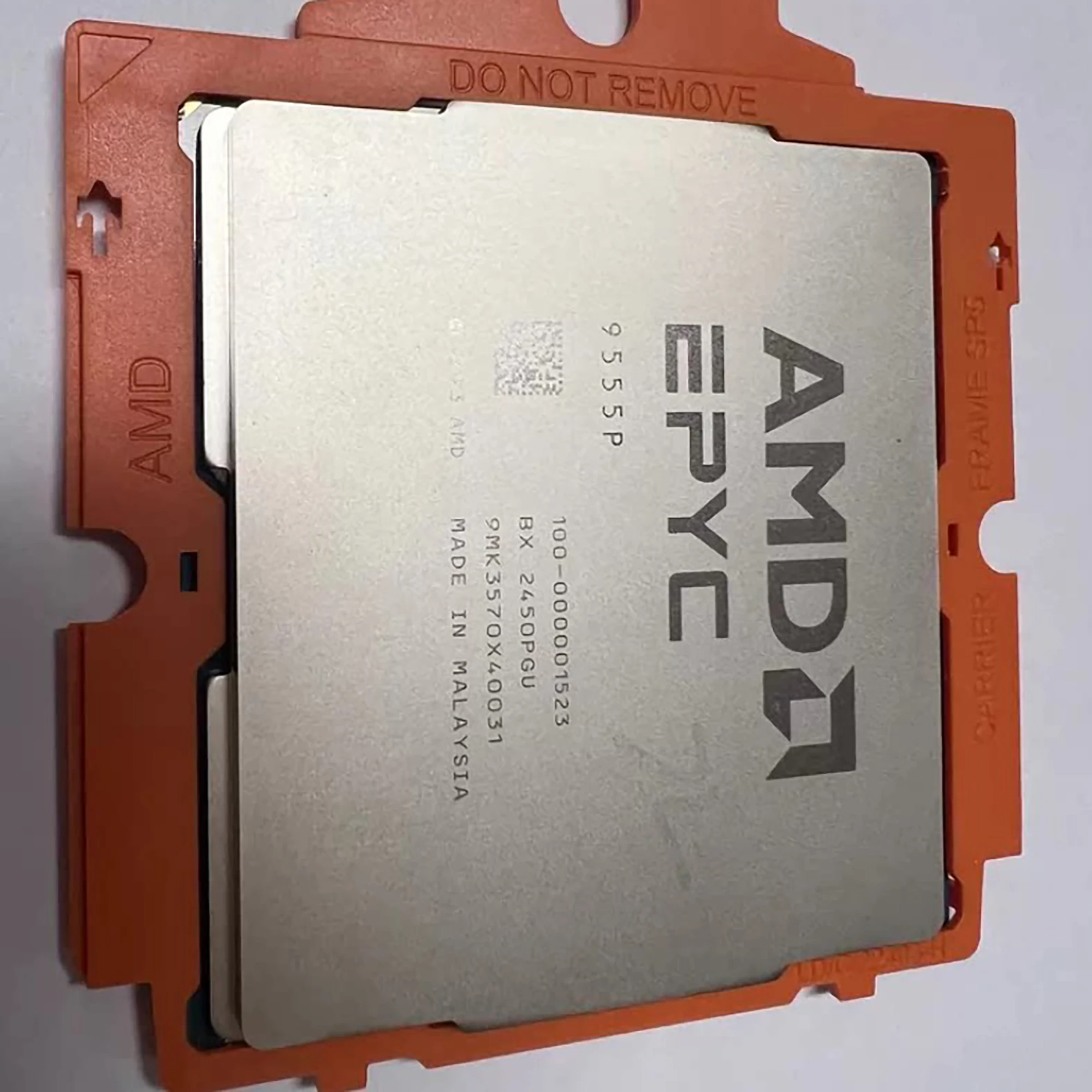
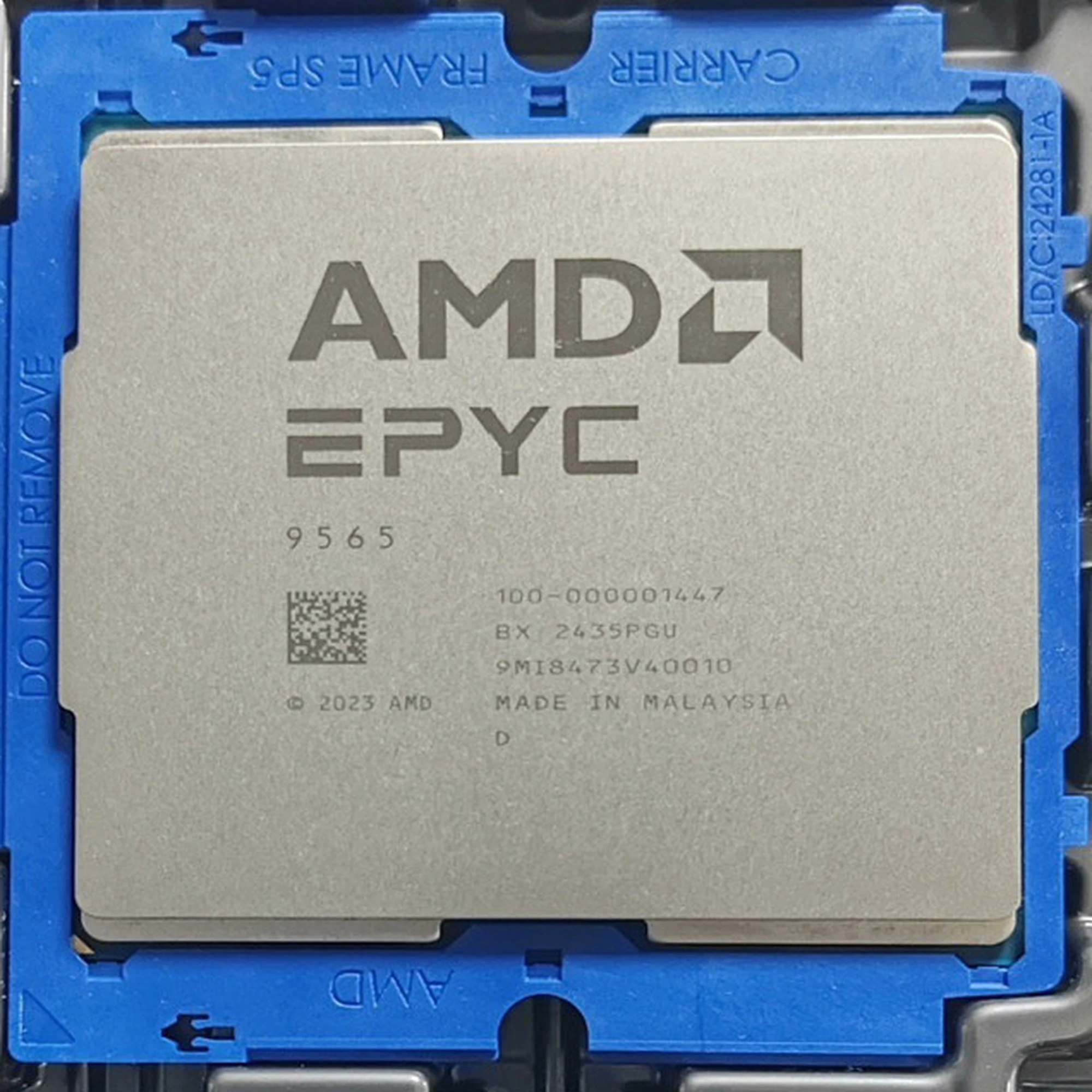
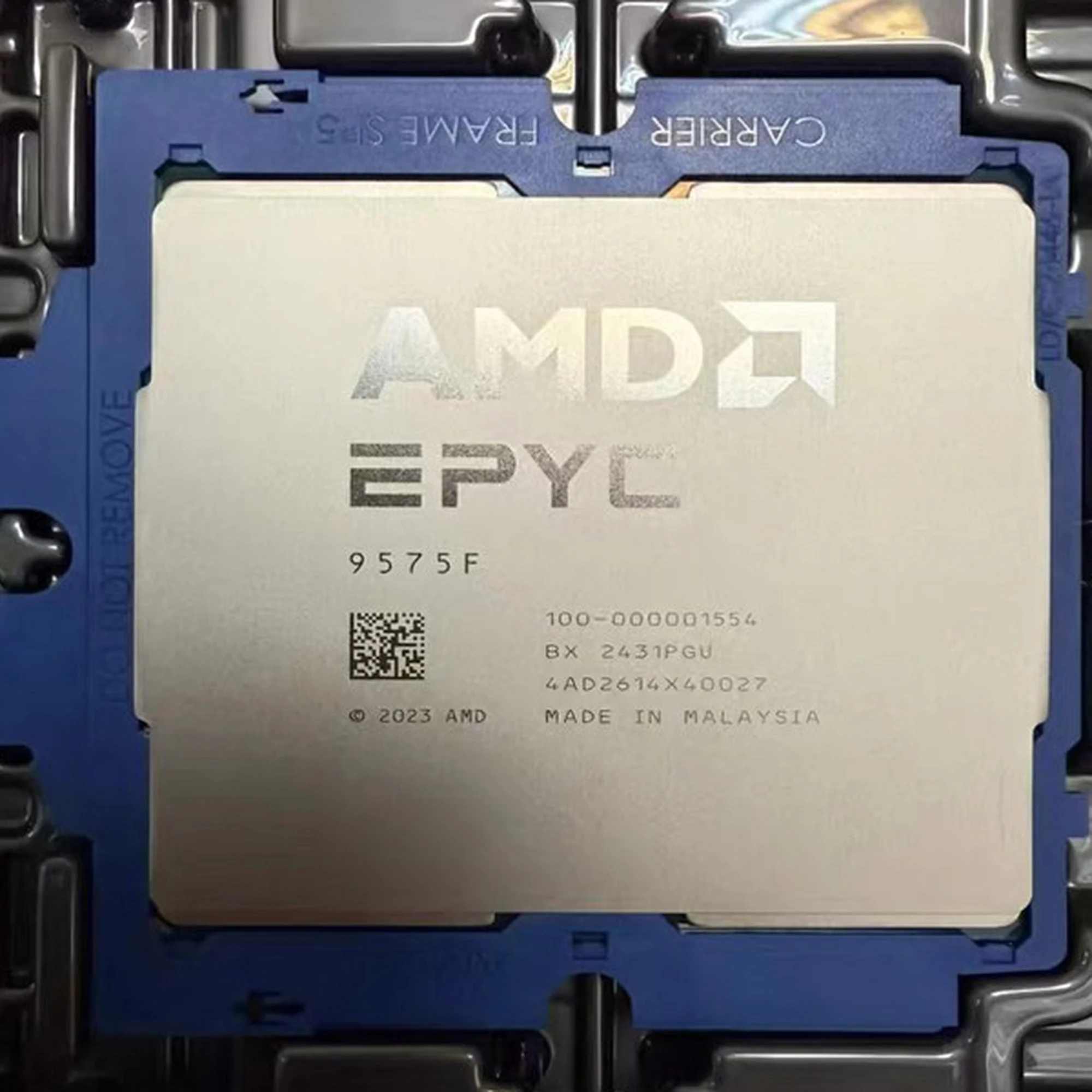
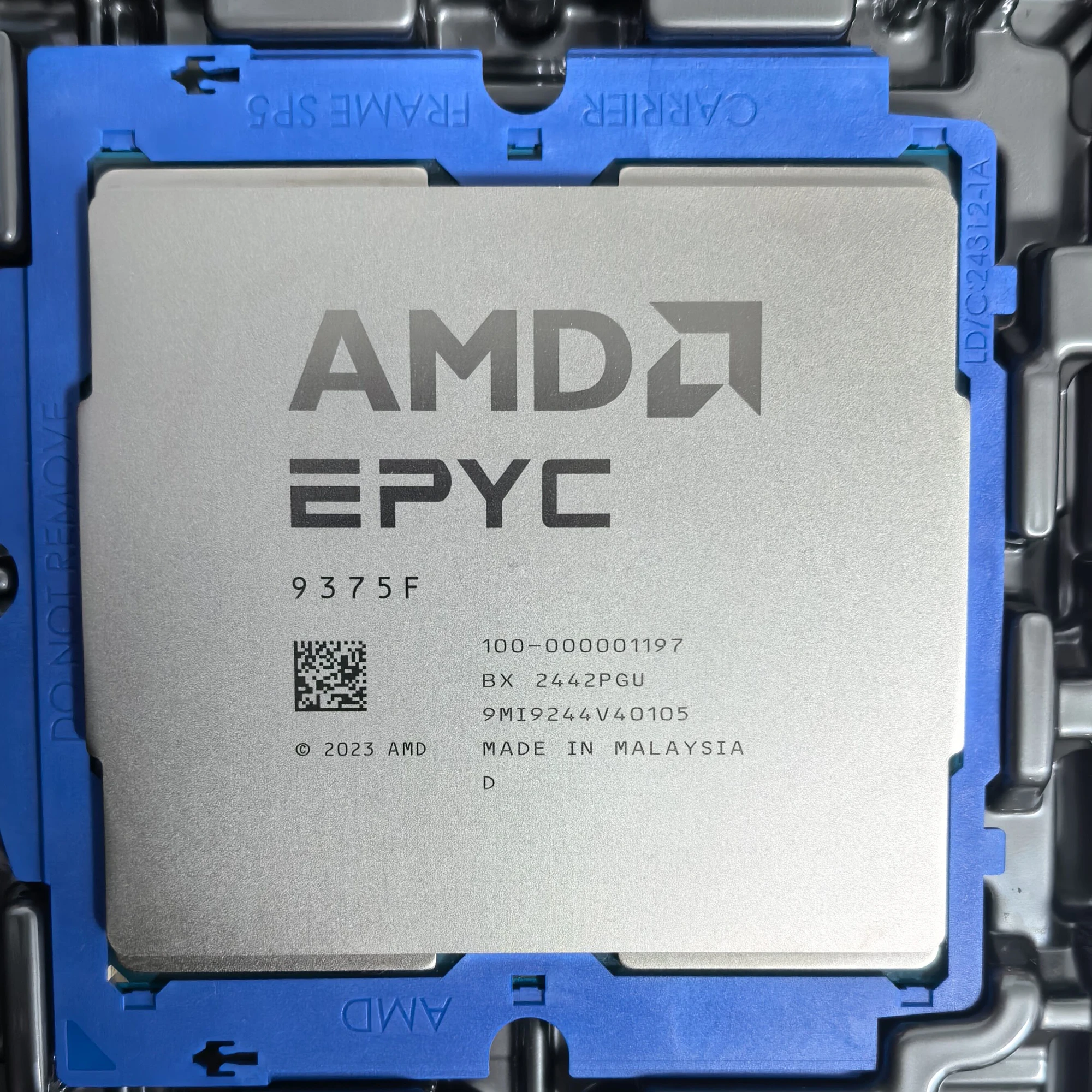
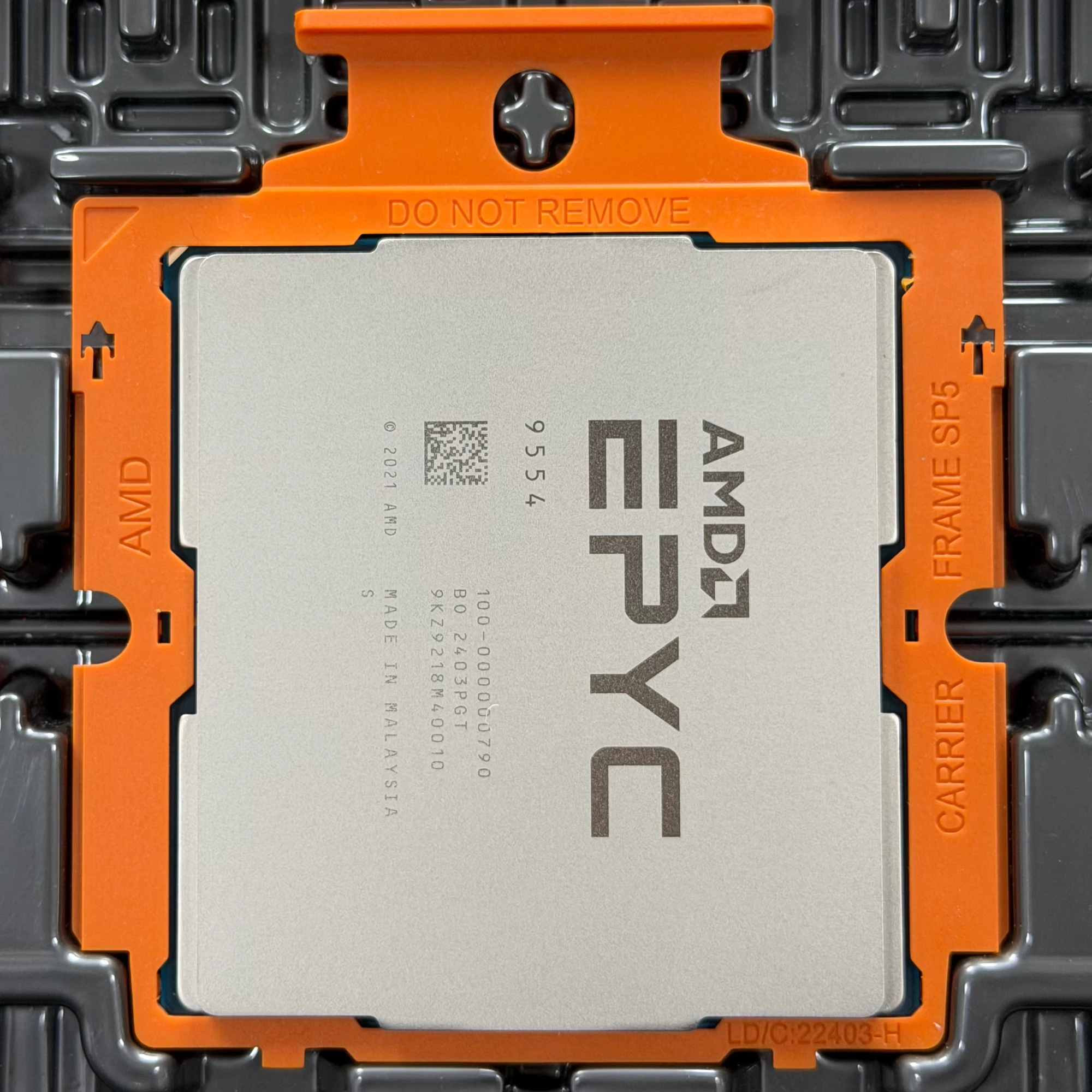
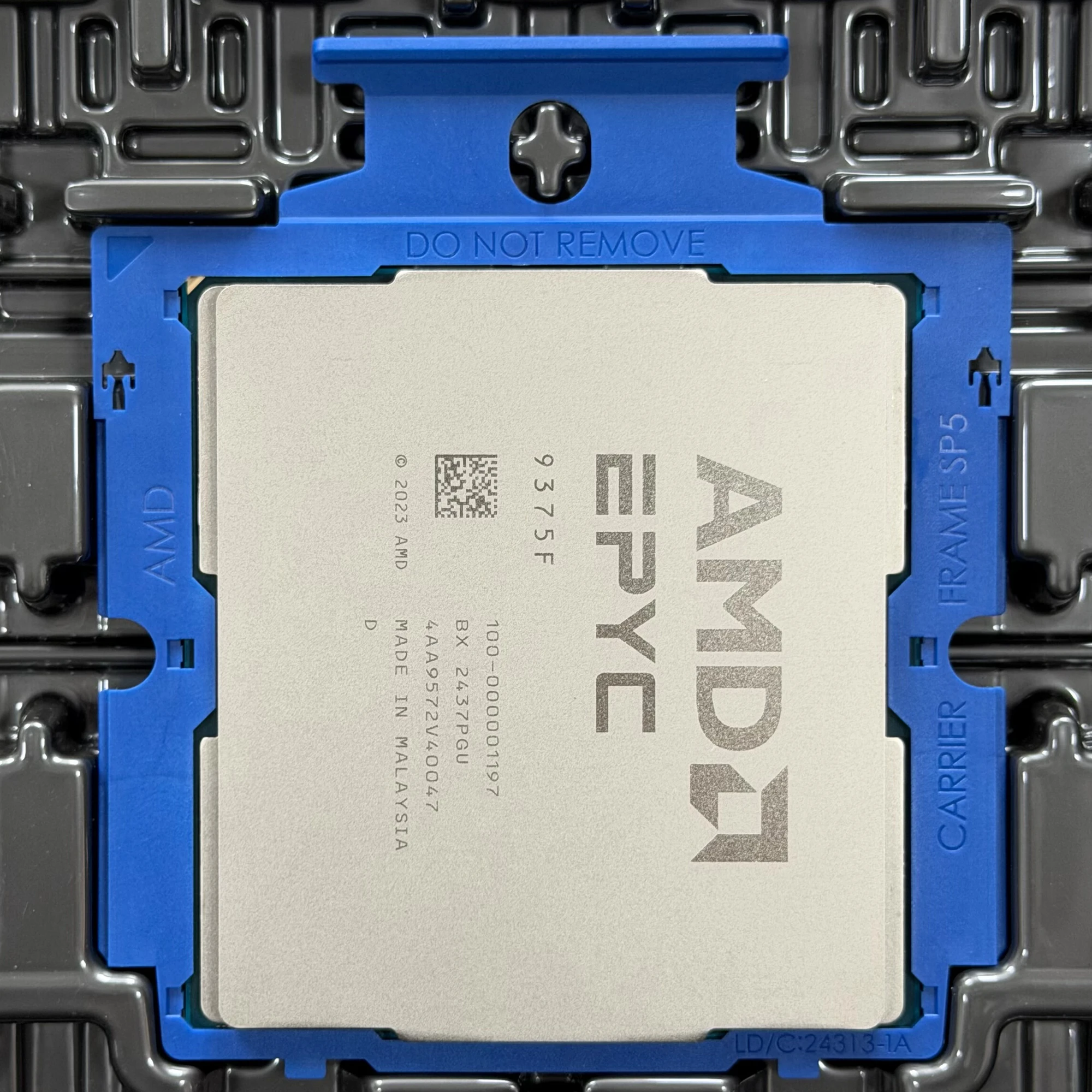
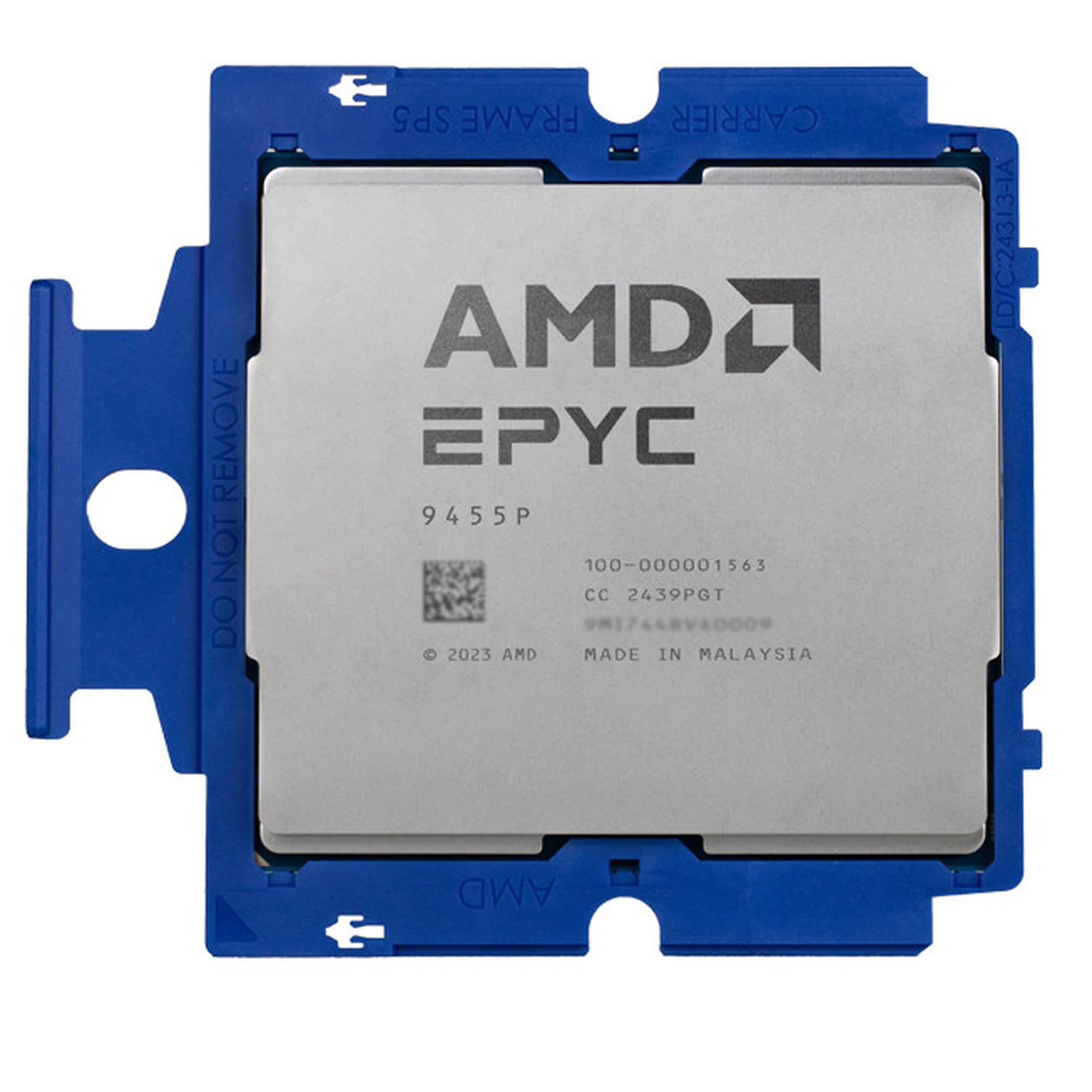
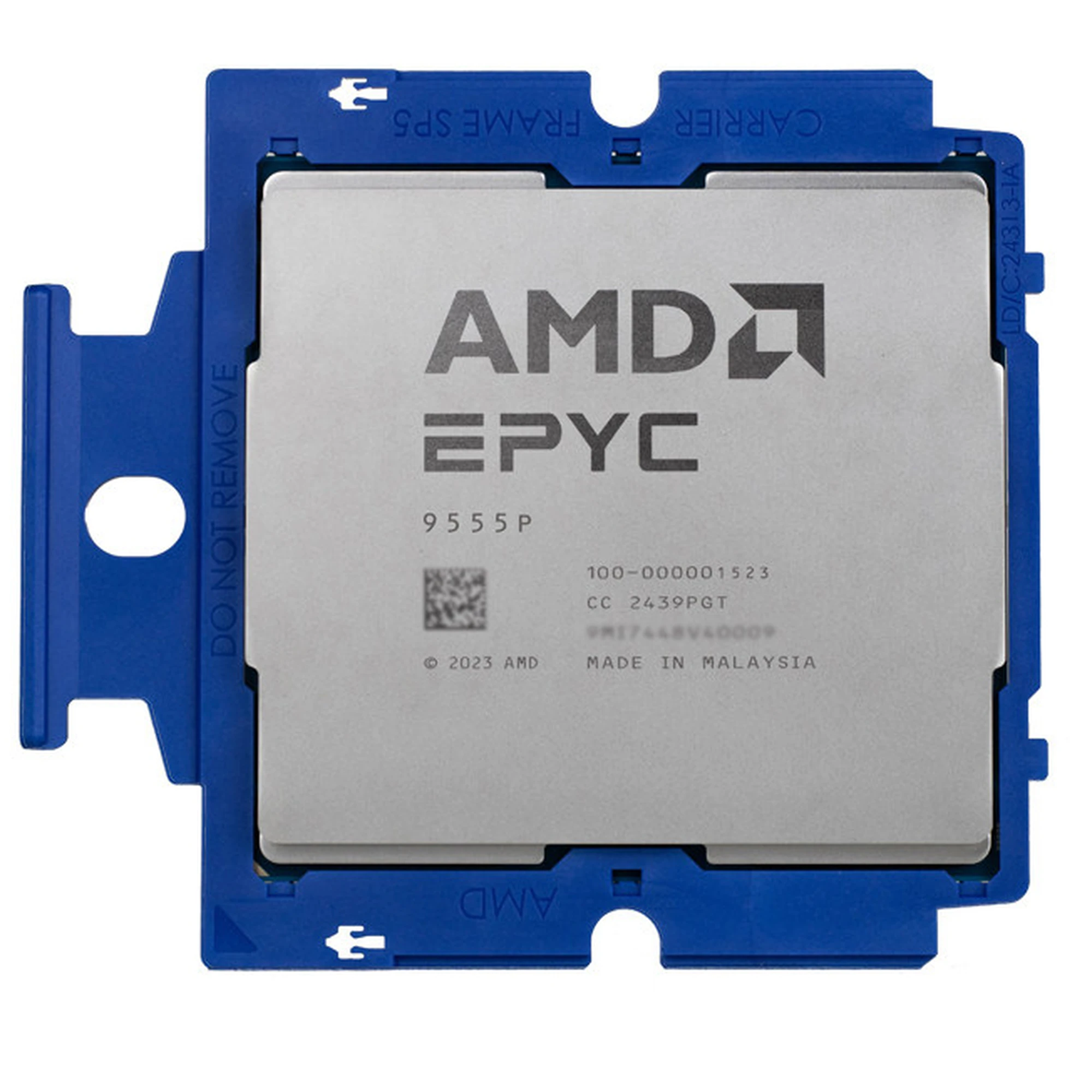

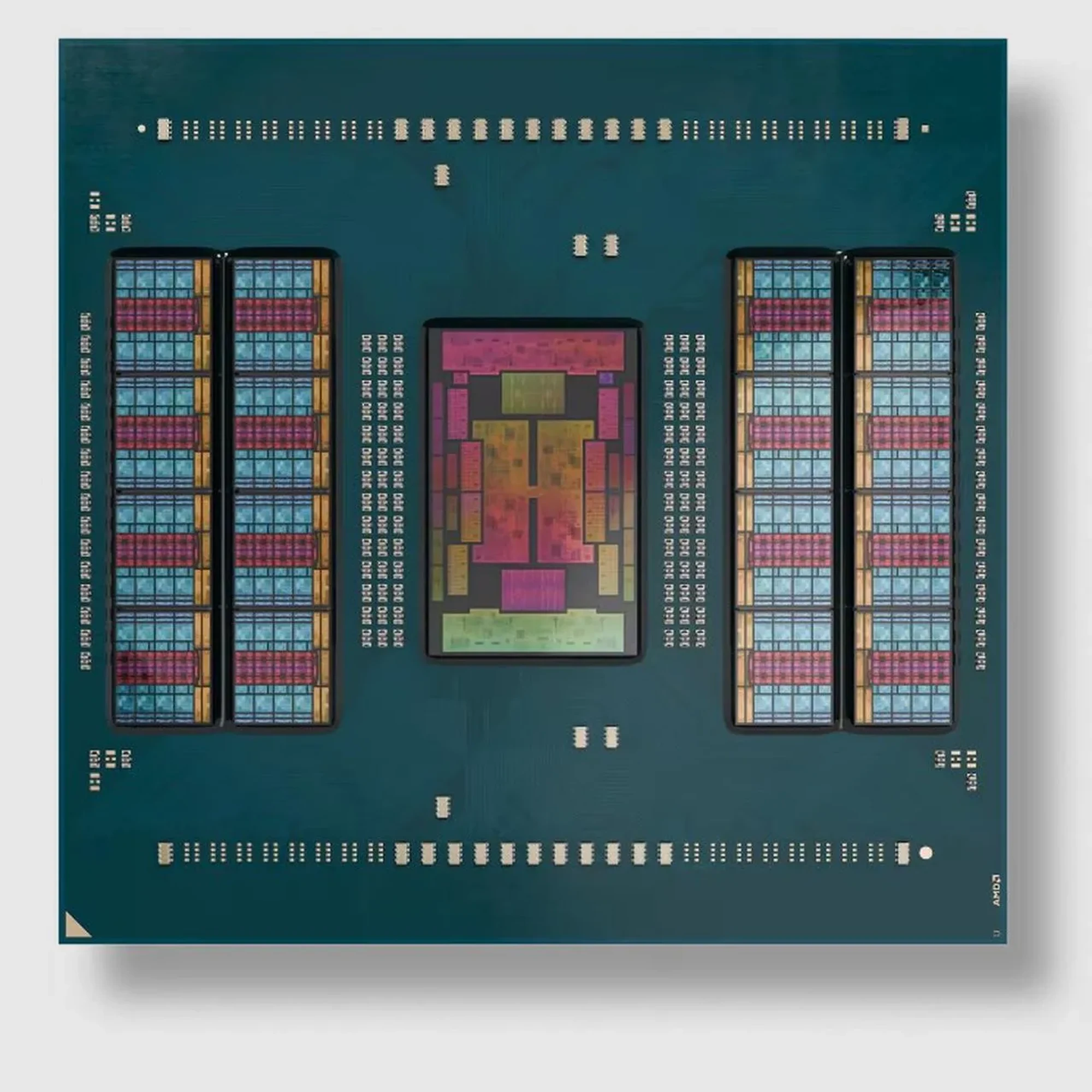
AMD EPYC™ 9455P Server Processor | 48-Core 96-Thread, 4.4GHz Turbo, PCIe 5.0 | High-Density Data Center Performance
| Specification | Details |
|---|---|
| Product Name | AMD EPYC™ 9455P Server Processor |
| Product Series | AMD EPYC 9005 Series (Turin) |
| Architecture | Zen 5 (Turin) |
| Fabrication Process | 4nm TSMC |
| Cores | 48 |
| Threads | 96 (SMT Enabled) |
| Base Clock Speed | 3.15 GHz |
| All-Core Boost Speed | 4.1 GHz |
| Max Turbo Boost Speed | 4.4 GHz |
| L1 Cache | 64 KB per core (3072 KB total) |
| L2 Cache | 1 MB per core (48 MB total) |
| L3 Cache | 256 MB |
| Memory Support | DDR5, up to 6400 MT/s |
| Memory Channels | 12 |
| Per Socket Memory Bandwidth | 614 GB/s |
| Max Memory Capacity | 6 TB (with 512GB DIMMs) |
| ECC Memory Support | Yes |
| PCIe Version | PCIe 5.0 |
| PCIe Lanes | 128 |
| Socket | SP5 |
| Socket Count | 1P (Single Processor) |
| TDP (Default) | 300W |
| cTDP Range | 240-300W |
| Supported Technologies | AMD Infinity Guard, AMD Infinity Architecture, AVX-512, BFloat16, VNNI |
| Supported Workloads | Analytics, App dev/test, CAE/CFD/FEA, ERM/SCM/CRM apps, High capacity data mgmt (NR|RDBMS), VDI, VM Density |
| Release Date | October 10, 2024 |
| 1kU Pricing | $4,366 USD |
| Tray Product ID | 100-000001563 |
| Operating System Support | Windows Server 2022, Linux, Windows 11 |
| Regional Availability | Global, China, NA, EMEA, APJ, LATAM |
In the rapidly evolving landscape of data center technology, businesses and IT teams are constantly seeking server processors that can keep pace with the growing demands of AI-driven workloads, high-volume data processing, and business-critical applications. The AMD EPYC™ 9455P Server Processor emerges as a standout solution, engineered to deliver exceptional performance, scalability, and efficiency—all while supporting the most demanding data center environments. As part of AMD’s EPYC 9005 Series (codenamed Turin), the 9455P builds on the success of previous generations, leveraging cutting-edge 4nm TSMC fabrication technology and the powerful Zen 5 architecture to redefine what’s possible for server performance and density.
Key Overview: What Makes the AMD EPYC™ 9455P a Game-Changer?
At its core, the AMD EPYC™ 9455P is designed to address the unique challenges of modern data centers: the need for more cores, faster clock speeds, higher memory bandwidth, and robust I/O capabilities—all while maintaining energy efficiency to reduce operational costs. Released in October 2024, this server processor targets organizations running AI-enabled workloads, analytics, application development and testing, CAE/CFD/FEA simulations, ERM/SCM/CRM applications, high-capacity data management (including relational and non-relational databases), virtual desktop infrastructure (VDI), and high-density virtual machine (VM) deployments. With 48 cores and 96 threads, it strikes the perfect balance between multi-core throughput and single-core performance, making it versatile enough to handle both parallelized workloads and single-threaded tasks with ease.
Unlike consumer-grade CPUs, server processors like the EPYC 9455P are built for 24/7 operation, with enhanced durability, reliability, and security features to protect critical business data. AMD’s commitment to innovation is evident in every aspect of the 9455P, from its advanced core architecture to its support for the latest memory and I/O standards, ensuring that it can adapt to future upgrades and evolving workload requirements.
Architecture & Core Performance: Zen 5 Power Delivered
The AMD EPYC™ 9455P is powered by the Zen 5 microarchitecture, a significant upgrade over the previous Zen 4 generation. Built on a 4nm TSMC process, this architecture delivers improved IPC (Instructions Per Cycle) performance, reduced power consumption, and increased core density—all critical factors for data center efficiency. Each of the 48 Zen 5 cores operates at a base clock speed of 3.15GHz, with an all-core boost speed of 4.1GHz and a maximum single-core turbo boost of 4.4GHz. This combination ensures that the processor can handle intensive workloads without sacrificing responsiveness, whether you’re running multiple VMs, processing large datasets, or powering AI inference tasks.
The 9455P’s multi-threading capabilities are equally impressive, with 96 threads enabled via AMD’s Simultaneous Multi-Threading (SMT) technology. SMT allows each core to handle two threads simultaneously, effectively doubling the number of tasks the processor can process at once—ideal for multi-tasking and parallelized workloads like cloud computing, big data analytics, and VDI. For organizations that rely on high VM density, this means more virtual machines can be hosted on a single server, reducing hardware costs and simplifying management.
Cache & Memory: Optimized for Data Intensity
To support its high core count and fast clock speeds, the AMD EPYC™ 9455P features a generous cache configuration. It includes 256MB of L3 cache (upgradable in some configurations) and 1MB of L2 cache per core, totaling 48MB of L2 cache across all cores. This large cache pool reduces latency by storing frequently accessed data close to the CPU, minimizing the need to access slower system memory. For data-intensive workloads like database management, analytics, and AI, this translates to faster data retrieval, improved throughput, and reduced bottlenecks.
When it comes to memory, the EPYC 9455P supports the latest DDR5 technology, with 12 memory channels that can handle up to 6400 MT/s (megatransfers per second) of memory speed. This results in a per-socket memory bandwidth of 614 GB/s, allowing the processor to quickly move large volumes of data between memory and the CPU. The processor also supports up to 6TB of maximum memory capacity (when using 512GB DIMMs), making it ideal for memory-intensive workloads like in-memory databases, AI training, and high-performance computing (HPC). Additionally, ECC (Error-Correcting Code) memory support ensures data integrity by detecting and correcting memory errors, a critical feature for business-critical applications where data accuracy is non-negotiable.
I/O & Connectivity: Future-Proofed for Expansion
In today’s data centers, I/O bandwidth is a key determinant of overall system performance. The AMD EPYC™ 9455P addresses this with support for PCIe 5.0, the latest generation of PCI Express technology. With 128 PCIe 5.0 lanes, the processor delivers exceptional I/O bandwidth (up to 504.1 GB/s), enabling fast connectivity to high-speed storage devices (like NVMe SSDs), network adapters, and accelerators (such as GPUs for AI workloads). PCIe 5.0 offers twice the bandwidth of PCIe 4.0, ensuring that the 9455P can keep up with the growing demand for high-speed data transfer in modern data centers.
The processor is also compatible with AMD’s Infinity Architecture, which includes Infinity Guard and other security features to protect data in transit and at rest. Infinity Guard provides hardware-level security enhancements, such as secure memory encryption, secure boot, and firmware TPM (Trusted Platform Module), helping organizations comply with industry regulations and protect against evolving cyber threats. For businesses operating in highly regulated industries (like healthcare, finance, and government), these security features are essential for maintaining data privacy and compliance.
Performance & Workload Optimization
The AMD EPYC™ 9455P is engineered to excel across a wide range of data center workloads, thanks to its balanced design and optimized architecture. In benchmark testing, the 9455P delivers impressive multi-core performance, making it ideal for parallelized tasks like cloud computing, VDI, and big data analytics. Its single-core performance is equally strong, ensuring that single-threaded applications (like legacy software and some business-critical tools) run smoothly and efficiently.
For AI and machine learning workloads, the 9455P’s support for AVX-512, BFloat16, and VNNI instructions accelerates AI inference and training tasks, reducing processing time and improving efficiency. This makes it a great choice for organizations looking to deploy AI-driven applications without investing in specialized AI accelerators (though it can also work seamlessly with GPUs for more demanding AI workloads). Additionally, the processor’s high memory bandwidth and large cache size make it well-suited for in-memory analytics and real-time data processing, allowing businesses to gain insights faster and make more informed decisions.
In terms of VM density, the 9455P’s 48 cores and 96 threads enable organizations to host more virtual machines per server, reducing hardware costs and simplifying management. This is particularly beneficial for cloud service providers and enterprises with large virtualized environments, as it allows for better resource utilization and lower total cost of ownership (TCO). The processor’s cTDP (configurable TDP) range of 240-300W also provides flexibility, allowing IT teams to adjust power consumption based on workload demands—balancing performance and energy efficiency as needed.
Pricing & Value Proposition
The AMD EPYC™ 9455P is priced at approximately $4,366 (1kU pricing), making it a cost-effective solution for organizations seeking high performance and density without breaking the bank. When compared to competing server processors (like Intel’s 4th Gen Xeon Scalable Processors), the 9455P offers better core count, memory bandwidth, and I/O capabilities at a competitive price point. This makes it an attractive option for businesses looking to upgrade their data center infrastructure while maximizing their return on investment (ROI).
The TCO benefits of the 9455P extend beyond its initial price tag. Its energy efficiency (enabled by the 4nm process and Zen 5 architecture) reduces power consumption, lowering electricity costs over the processor’s lifespan. Additionally, its high VM density and scalability mean fewer servers are needed to handle the same workload, reducing hardware, cooling, and maintenance costs. For organizations with growing data center needs, the 9455P’s scalability ensures that it can adapt to future workloads, eliminating the need for frequent hardware upgrades.
Compatibility & Deployment
The AMD EPYC™ 9455P is compatible with the SP5 socket and is designed for 1P (single-processor) server configurations. It supports a wide range of server motherboards from leading manufacturers (like ASUS,技嘉, and Supermicro), ensuring compatibility with existing data center infrastructure. The processor is also compatible with major operating systems, including Windows Server 2022, Linux (Red Hat Enterprise Linux, Ubuntu, SUSE Linux Enterprise Server), and Windows 11, making it easy to integrate into existing IT environments.
Deployment of the EPYC 9455P is straightforward, with support for industry-standard server management tools (like AMD’s EPYC Management Tool and IPMI) to simplify configuration, monitoring, and maintenance. For organizations looking to deploy the processor in cloud environments, it is supported by major cloud service providers, including AWS, Azure, and Google Cloud, making it easy to scale workloads up or down as needed.
Conclusion: Why Choose the AMD EPYC™ 9455P?
The AMD EPYC™ 9455P Server Processor is a versatile, high-performance solution that addresses the evolving needs of modern data centers. With its 48 Zen 5 cores, 96 threads, fast clock speeds, generous cache, and support for PCIe 5.0 and DDR5, it delivers exceptional performance across a wide range of workloads—from AI and analytics to VDI and VM density. Its energy efficiency, scalability, and competitive pricing make it a cost-effective choice for organizations of all sizes, while its robust security features ensure that critical business data is protected.
Whether you’re a cloud service provider looking to maximize VM density, an enterprise running business-critical applications, or a research institution conducting high-performance computing, the AMD EPYC 9455P offers the performance, reliability, and flexibility you need to stay ahead in today’s fast-paced digital landscape. With its future-proofed design and support for the latest technologies, the 9455P is an investment that will serve your data center needs for years to come.
Recommended Motherboards for AMD EPYC 9005/9004 SP5 processors
| Model | CPU (Socket / TDP) | Memory | PCIe/CXL | LAN | Management | Form Factor |
|---|---|---|---|---|---|---|
| Gigabyte MZ73-LM2 | Dual SP5 / 500W | 24×DDR5 | PCIe 5.0 | 2×10GbE | IPMI | E-ATX |
| Gigabyte MZ73-LM1 | Dual SP5 / 400W | 24×DDR5 | PCIe 5.0 | 2×10GbE | IPMI | E-ATX |
| Gigabyte MZ73-LM0 | Dual SP5 / 400W | 24×DDR5 | PCIe 5.0 | 2×10GbE | IPMI | E-ATX |
| Gigabyte MZ33-AR1 | Single SP5 / 400W | 24×DDR5 | PCIe 5.0 | 1×10GbE | IPMI | E-ATX |
| Gigabyte MZ33-CP1 | Single SP5 / 500W | 12×DDR5 | PCIe 5.0 | 2×1GbE | IPMI | E-ATX |
| ASRock Rack TURIND8-2L2T | Single SP5 / 400W | 8×DDR5 | PCIe 5.0 + CXL 2.0 | 2×10GbE + 2×1GbE | IPMI | CEB |
| ASRock Rack TURIN2D16-2T | Dual SP5 / 400W | 16×DDR5 (8+8) | PCIe 5.0 + CXL 2.0 | 2×10GbE | IPMI | EEB |
| ASRock Rack TURIN2D24G-2L+/500W | Dual SP5 / 500W | 24×DDR5 (12+12) | PCIe 5.0 + CXL 2.0 | 2×1GbE | IPMI | Proprietary |
| ASUS K14PA-U12 | Single SP5 / 400W | 12×DDR5 | PCIe 5.0 | 2×25GbE (SFP28) | iKVM (ASMB11) | CEB |
5th Gen AMD EPYC Server CPUs Model Specifications
| Name | # of CPU Cores | # of Threads | Max. Boost Clock | Base Clock | L3 Cache | Default TDP |
| AMD EPYC™ 9965 | 192 | 384 | Up to 3.7 GHz | 2.25 GHz | 384 MB | 500W |
| AMD EPYC™ 9845 | 160 | 320 | Up to 3.7 GHz | 2.1 GHz | 320 MB | 390W |
| AMD EPYC™ 9825 | 144 | 288 | Up to 3.7 GHz | 2.2 GHz | 384 MB | 390W |
| AMD EPYC™ 9755 | 128 | 256 | Up to 4.1 GHz | 2.7 GHz | 512 MB | 500W |
| AMD EPYC™ 9745 | 128 | 256 | Up to 3.7 GHz | 2.4 GHz | 256 MB | 400W |
| AMD EPYC™ 9655P | 96 | 192 | Up to 4.5 GHz | 2.6 GHz | 384 MB | 400W |
| AMD EPYC™ 9655 | 96 | 192 | Up to 4.5 GHz | 2.6 GHz | 384 MB | 400W |
| AMD EPYC™ 9645 | 96 | 192 | Up to 3.7 GHz | 2.3 GHz | 256 MB | 320W |
| AMD EPYC™ 9575F | 64 | 128 | Up to 5 GHz | 3.3 GHz | 256 MB | 400W |
| AMD EPYC™ 9565 | 72 | 144 | Up to 4.3 GHz | 3.15 GHz | 384 MB | 400W |
| AMD EPYC™ 9555P | 64 | 128 | Up to 4.4 GHz | 3.2 GHz | 256 MB | 360W |
| AMD EPYC™ 9555 | 64 | 128 | Up to 4.4 GHz | 3.2 GHz | 256 MB | 360W |
| AMD EPYC™ 9535 | 64 | 128 | Up to 4.3 GHz | 2.4 GHz | 256 MB | 300W |
| AMD EPYC™ 9475F | 48 | 96 | Up to 4.8 GHz | 3.65 GHz | 256 MB | 400W |
| AMD EPYC™ 9455P | 48 | 96 | Up to 4.4 GHz | 3.15 GHz | 256 MB | 300W |
| AMD EPYC™ 9455 | 48 | 96 | Up to 4.4 GHz | 3.15 GHz | 256 MB | 300W |
| AMD EPYC™ 9375F | 32 | 64 | Up to 4.8 GHz | 3.8 GHz | 256 MB | 320W |
| AMD EPYC™ 9365 | 36 | 72 | Up to 4.3 GHz | 3.4 GHz | 192 MB | 300W |
| AMD EPYC™ 9355P | 32 | 64 | Up to 4.4 GHz | 3.55 GHz | 256 MB | 280W |
| AMD EPYC™ 9355 | 32 | 64 | Up to 4.4 GHz | 3.55 GHz | 256 MB | 280W |
| AMD EPYC™ 9335 | 32 | 64 | Up to 4.4 GHz | 3 GHz | 128 MB | 210W |
| AMD EPYC™ 9275F | 24 | 48 | Up to 4.8 GHz | 4.1 GHz | 256 MB | 320W |
| AMD EPYC™ 9255 | 24 | 48 | Up to 4.3 GHz | 3.2 GHz | 128 MB | 200W |
| AMD EPYC™ 9175F | 16 | 32 | Up to 5 GHz | 4.2 GHz | 512 MB | 320W |
| AMD EPYC™ 9135 | 16 | 32 | Up to 4.3 GHz | 3.65 GHz | 64 MB | 200W |
| AMD EPYC™ 9115 | 16 | 32 | Up to 4.1 GHz | 2.6 GHz | 64 MB | 125W |
| AMD EPYC™ 9015 | 8 | 16 | Up to 4.1 GHz | 3.6 GHz | 64 MB | 125W |


