
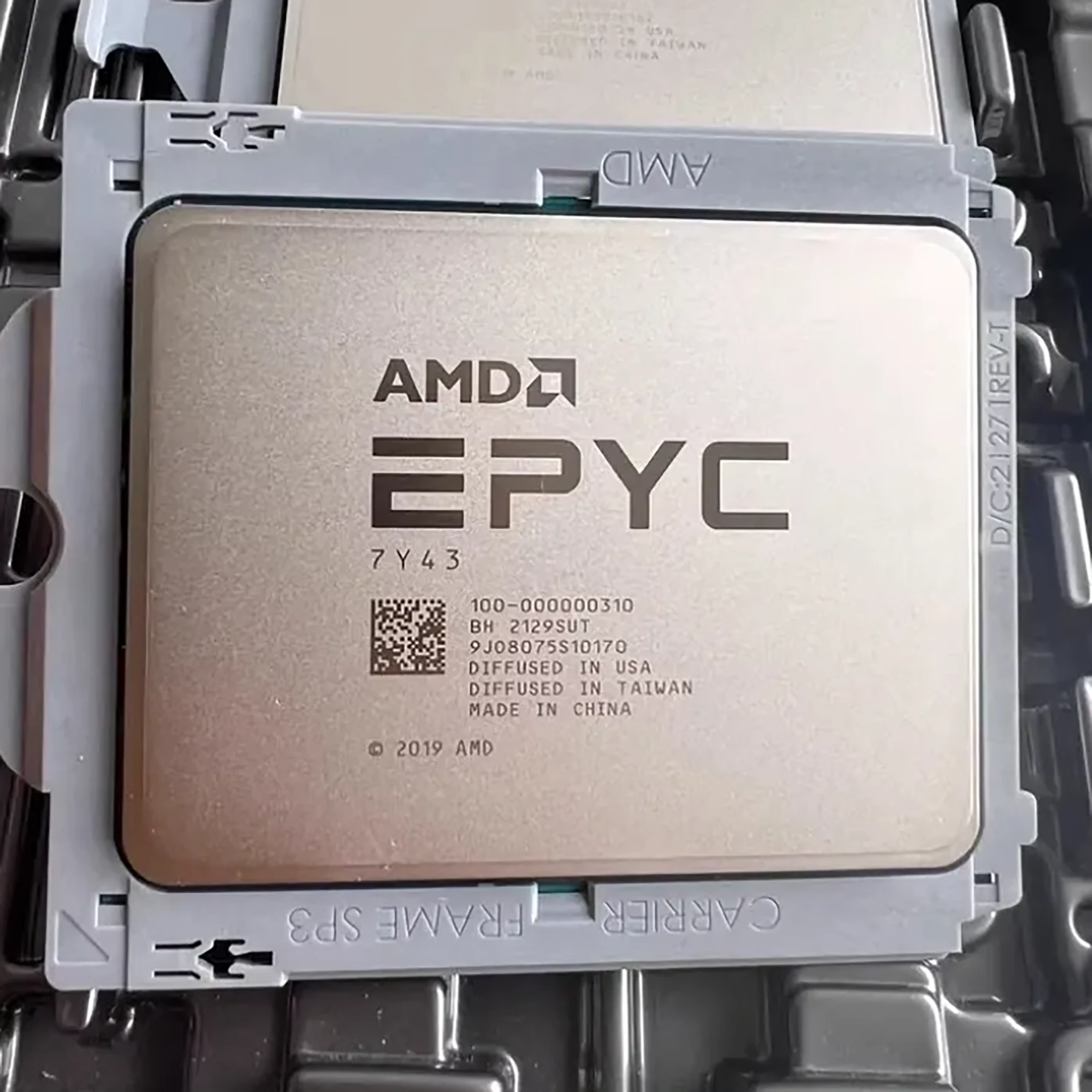
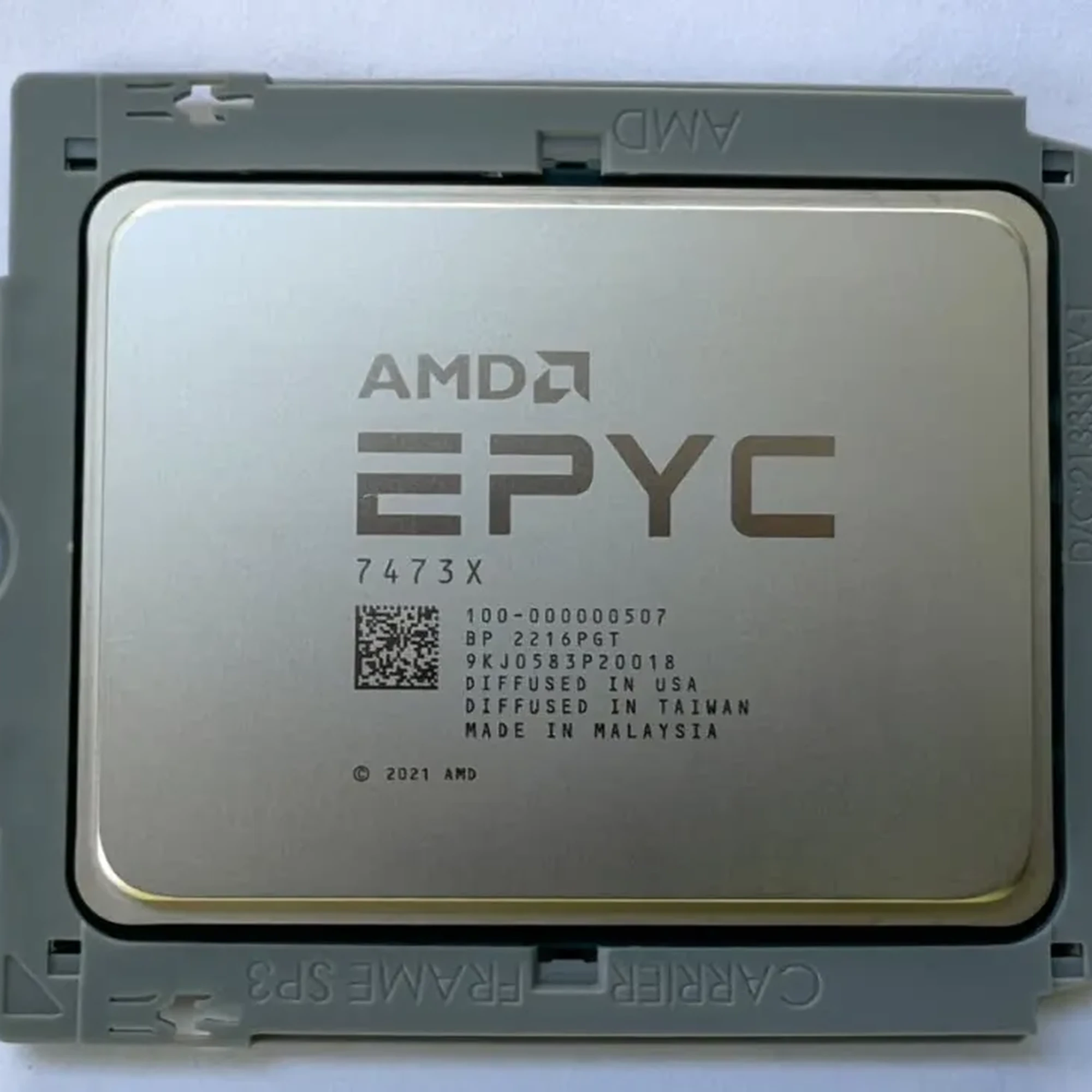
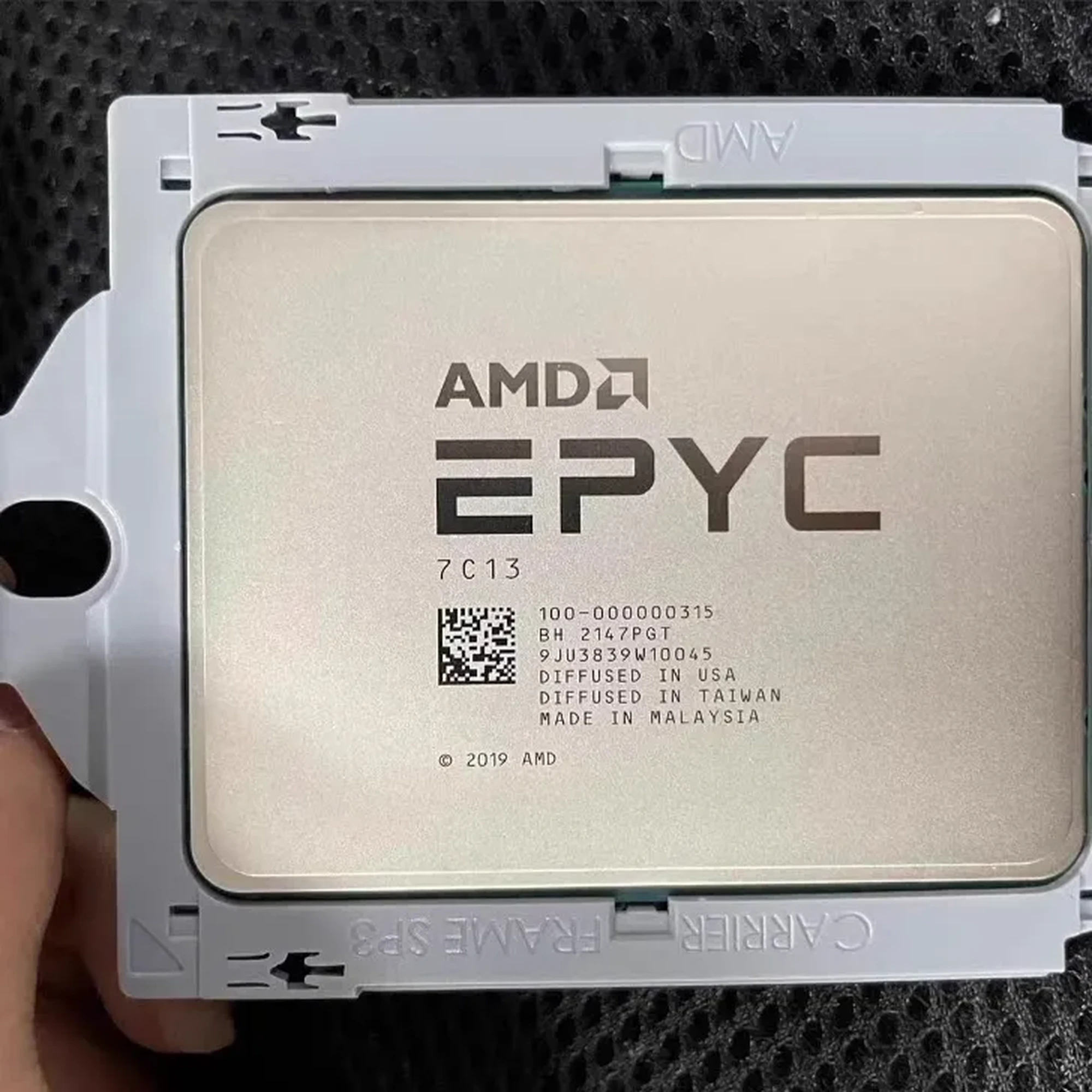
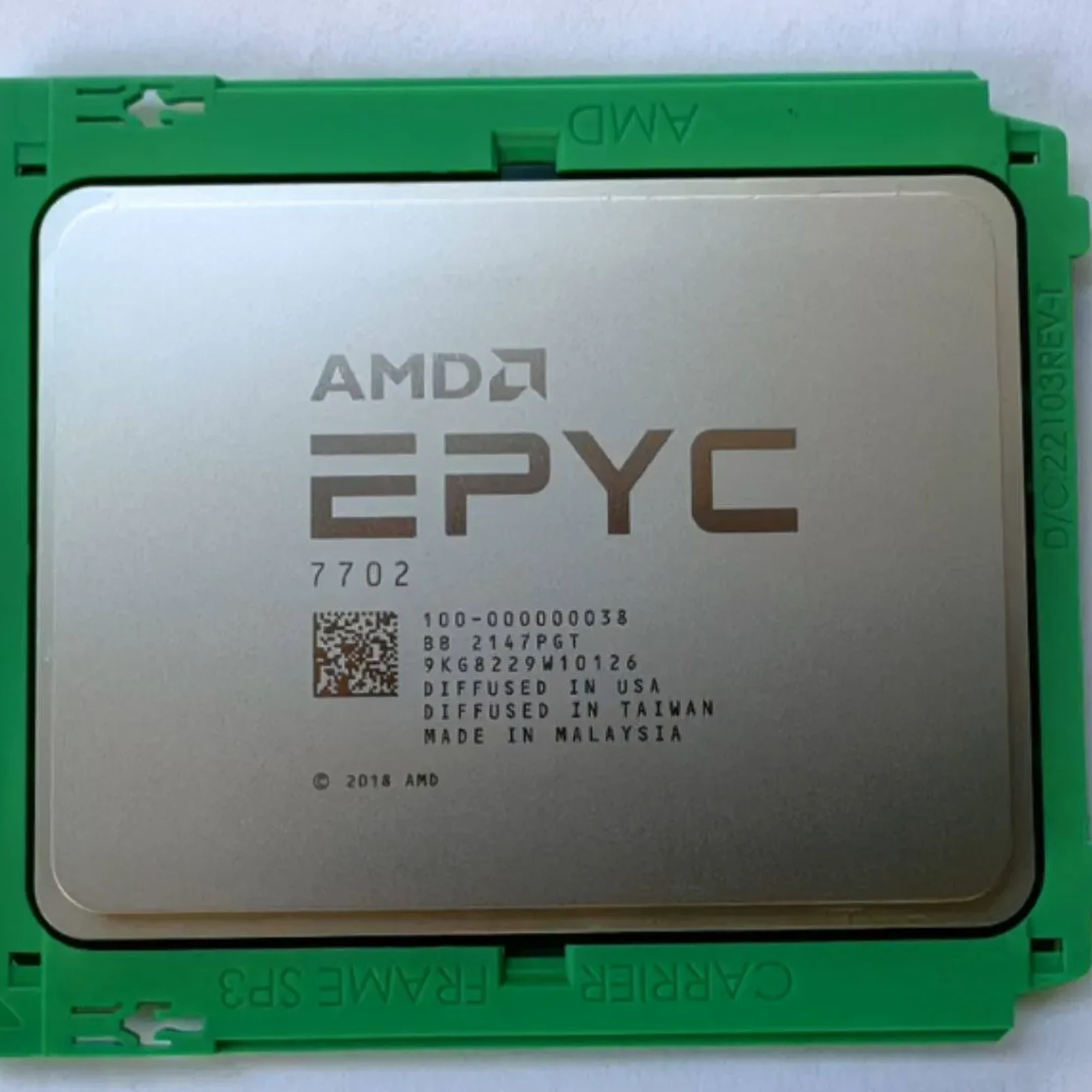
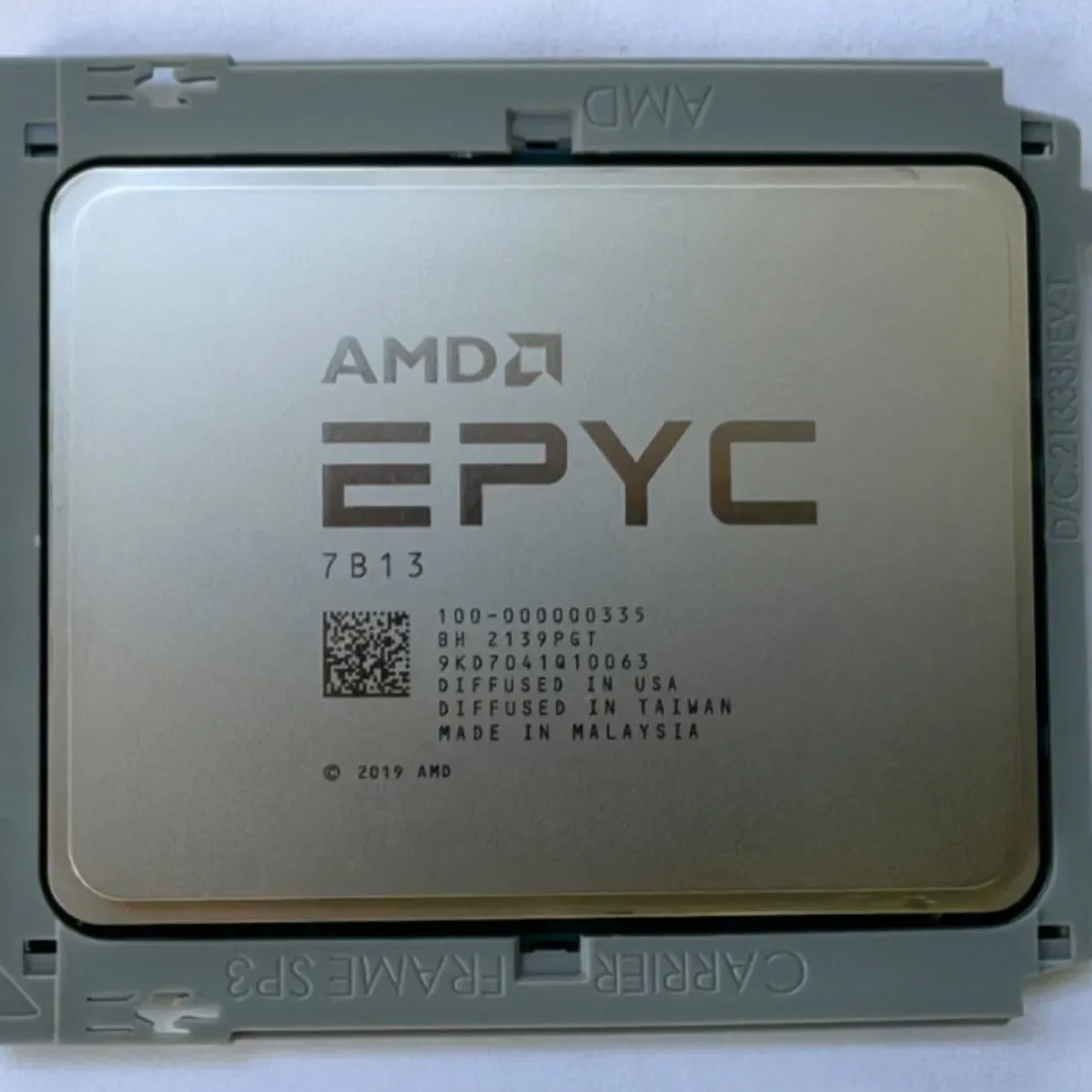
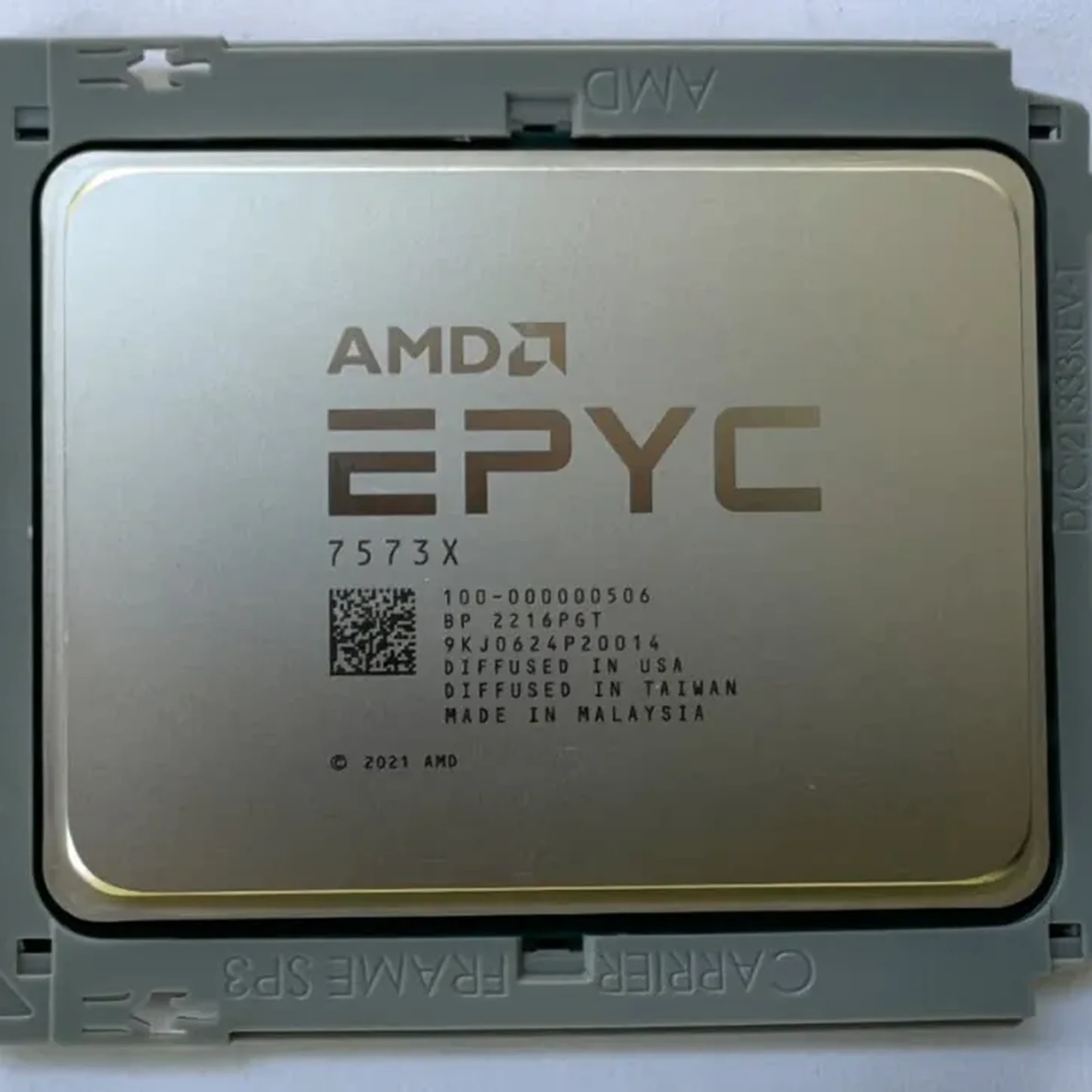

AMD EPYC 7V73X Milan-X CPU | 64-Core 128-Thread 3D V-Cache Server Processor
| Specification | Details |
|---|---|
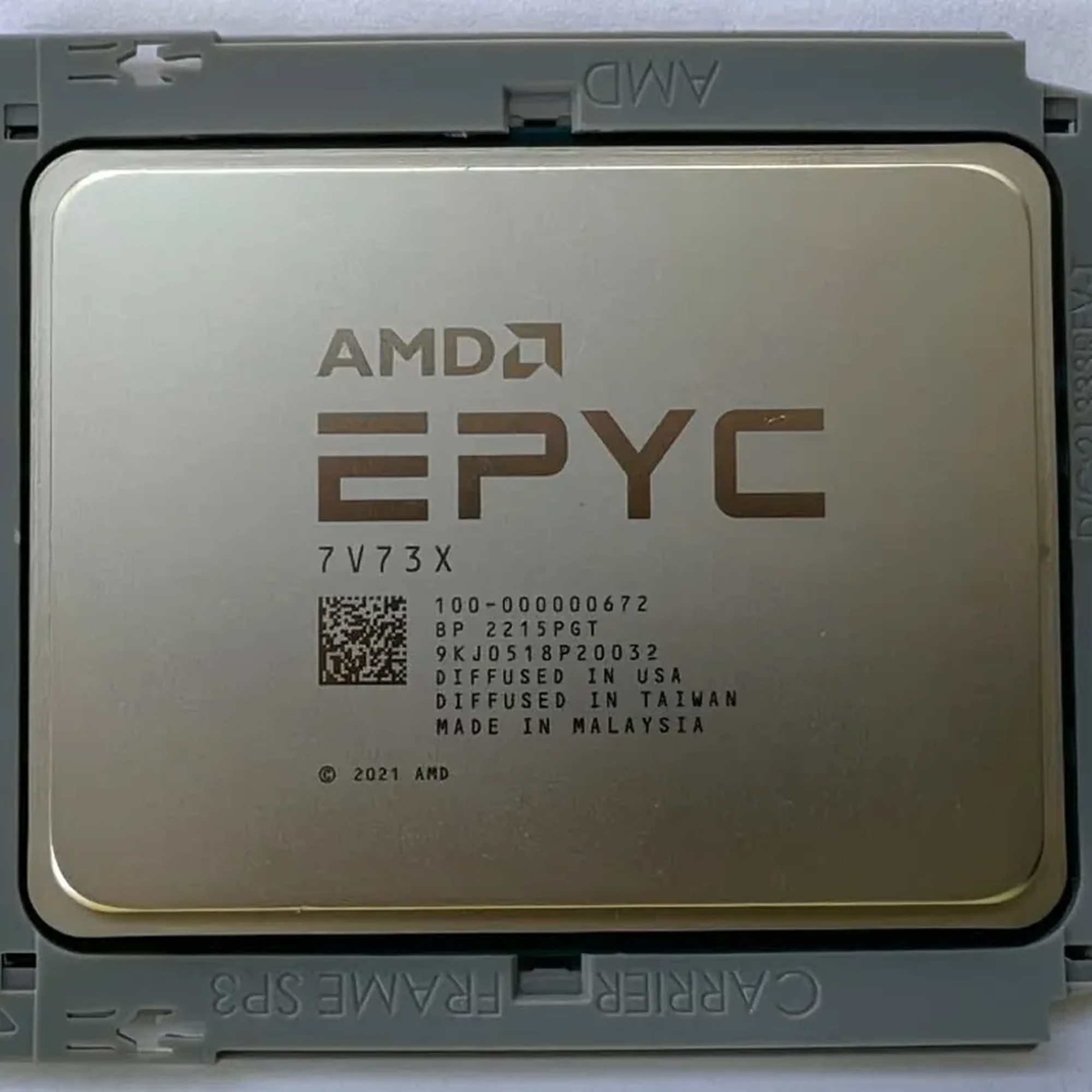
| Product Name | AMD EPYC 7V73X |
| Series | AMD EPYC 7003 Series (Milan-X) |
| Architecture | Zen 3 |
| Cores | 64 (Physical) |
| Threads | 128 (SMT Enabled) |
| Base Clock | 2.2 GHz |
| Boost Clock | 3.5 GHz (Max) |
| L3 Cache | 768 MB (512 MB Stacked 3D V-Cache + 256 MB Standard L3) |
| TDP | 280 W (Default); Configurable 225-280 W |
| Socket | SP3 |
| Memory Support | DDR4, 8 Memory Channels, Max Speed 3200 MT/s |
| Memory Bandwidth | 204.8 GB/s (Per Socket) |
| PCIe Version | PCIe 4.0 |
| PCIe Lanes | 128 |
| Multithread Rating (PassMark, Dual CPU) | 94451 |
| Single Thread Rating (PassMark) | 2277 |
| Typical Price (2 CPUs, 2023-05-15) | $5,999.90 USD |
| First Seen on Charts | Q1 2023 |
| Key Technologies | 3D V-Cache, AMD Infinity Guard, AMD Infinity Architecture |
| Ideal Workloads | HPC, Cloud Computing, Virtualization, Database Management, VDI |
The AMD EPYC 7V73X stands as the flagship processor in AMD’s Milan-X lineup, a series that redefined high-performance server computing with the introduction of 3D V-Cache technology. Built on AMD’s proven Zen 3 architecture, this server CPU is engineered to tackle the most demanding data center workloads—from complex scientific simulations and financial modeling to cloud computing and enterprise virtualization—delivering exceptional performance, reliability, and efficiency that modern businesses and data centers require. Whether you’re running a large-scale cloud infrastructure, a high-performance computing (HPC) cluster, or a mission-critical enterprise server, the EPYC 7V73X is designed to scale with your needs while optimizing resource utilization and reducing total cost of ownership (TCO).
What Sets the AMD EPYC 7V73X Apart?
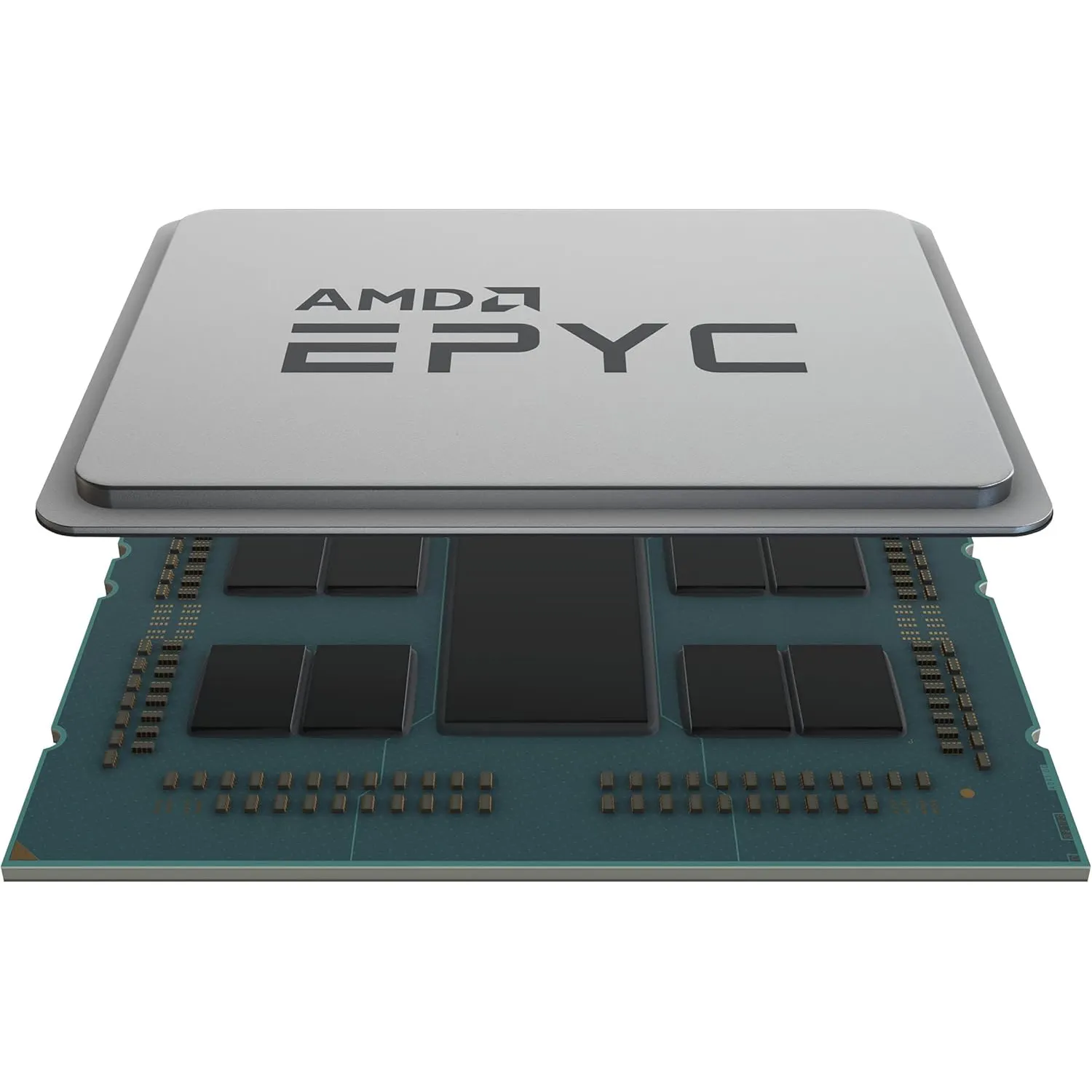
At the core of the EPYC 7V73X’s superiority is AMD’s innovative 3D V-Cache technology, a breakthrough that stacks additional L3 cache directly on top of the CPU die using through-silicon vias (TSVs). This design eliminates the traditional bottlenecks associated with cache access, delivering faster data retrieval and processing speeds for cache-sensitive workloads. Unlike standard Milan CPUs, which feature 256MB of L3 cache, the EPYC 7V73X boasts an impressive 768MB of L3 cache—an insane 3x increase—with 512MB coming from the stacked L3 SRAM and 256MB from the standard on-die cache. Each Zen 3 CCD (Core Complex Die) in the EPYC 7V73X features 64MB of L3 cache, a significant upgrade that translates to tangible performance gains in real-world applications.
Another key differentiator is the EPYC 7V73X’s ability to maintain minimal latency despite the massive cache increase. Testing by tech outlet Chips and Cheese revealed that the EPYC 7V73X only experiences a negligible 3-4 cycle latency increase compared to standard Milan CPUs, a remarkable achievement considering the 3x boost in L3 cache size. Additionally, the EPYC 7V73X maintains better boost clocks than standard Milan CPUs, even with a slightly lower base clock on paper, effectively negating the small latency increase and delivering a net performance gain across most workloads.
Performance: Unmatched Power for Demanding Workloads
The AMD EPYC 7V73X is a performance powerhouse, featuring 64 physical cores and 128 threads, making it ideal for multi-threaded workloads that require parallel processing. With a base clock of 2.2GHz and a boost clock of 3.5GHz, it balances consistent performance with energy efficiency, ensuring that even under heavy load, the CPU remains stable and responsive. In benchmark testing, the EPYC 7V73X delivered up to 12.5% performance uplift over standard Milan CPUs (such as the EPYC 7763) in iso-clock scenarios, a significant improvement for cache-sensitive tasks.
In specific workload benchmarks, the EPYC 7V73X excelled in four out of five tested scenarios. For example, in Gem5, a popular computer architecture simulation tool, the EPYC 7V73X showed a 7.6% performance increase while running at 5% lower clocks compared to the EPYC 7763, highlighting the impact of the 3D V-Cache technology. The only scenario where it lagged slightly was in OpenSSL, a workload that does not stress the cache heavily and where the EPYC 7V73X’s slightly lower sustained clock speed under full load led to a minor performance difference.
The EPYC 7V73X also outperforms Intel’s Ice Lake and Cascade Lake Xeon chips in latency and bandwidth, thanks to AMD’s ring bus architecture, which is optimized for lower latency and higher bandwidth compared to Intel’s mesh architecture. Despite having a smaller L2 cache, the EPYC 7V73X’s larger L3 cache and efficient architecture make it a superior choice for workloads that rely on fast data access, such as database management, virtualization, and HPC.
According to PassMark Software, the EPYC 7V73X (in a dual-CPU configuration) achieves a multithread rating of 94451 and a single-thread rating of 2277, placing it 88th fastest in multithreading out of all multi-CPU configurations. This performance translates to real-world benefits, such as faster data processing, reduced query times, and improved scalability for growing data centers.
Key Features & Technology
The AMD EPYC 7V73X is packed with advanced features that make it a top choice for enterprise and data center environments:
- 3D V-Cache Technology: As mentioned, this innovative technology stacks additional L3 cache on the CPU die, delivering a 3x increase in L3 cache size (768MB total) and reducing data access latency for cache-sensitive workloads.
- Zen 3 Architecture: Built on AMD’s Zen 3 architecture, the EPYC 7V73X benefits from improved IPC (Instructions Per Cycle) and efficiency, ensuring that each core delivers maximum performance per watt.
- Scalable Multithreading: 64 cores and 128 threads enable the CPU to handle hundreds of concurrent tasks, making it ideal for virtualization, cloud computing, and multi-user environments.
- High Memory Bandwidth: Supporting 8 memory channels and DDR4 memory with speeds up to 3200 MT/s, the EPYC 7V73X delivers a per-socket memory bandwidth of 204.8 GB/s, ensuring fast data transfer between the CPU and memory.
- PCIe 4.0 Support: With 128 PCIe 4.0 lanes, the EPYC 7V73X offers high-speed connectivity for storage, networking, and GPU accelerators, enabling seamless integration with modern data center hardware.
- AMD Infinity Guard: A comprehensive set of security features that protects data in transit and at rest, including secure memory encryption, secure boot, and hardware-enforced isolation, ensuring compliance with industry security standards.
- Configurable TDP: With a default TDP of 280W and a configurable TDP range of 225-280W, the EPYC 7V73X allows data center administrators to balance performance and power consumption based on their specific needs.
Ideal Use Cases
The AMD EPYC 7V73X is designed for a wide range of high-performance workloads, making it a versatile choice for various data center and enterprise applications:
- High-Performance Computing (HPC): Perfect for scientific simulations, weather forecasting, seismic data analysis, and oil reservoir modeling—workloads that require massive parallel processing and fast cache access.
- Cloud Computing: Ideal for public and private cloud environments, where scalability and multi-tenancy are critical. The EPYC 7V73X’s high core count and thread density enable efficient virtual machine (VM) consolidation, reducing hardware costs.
- Enterprise Virtualization: Supports hundreds of VMs simultaneously, making it suitable for enterprise data centers running mission-critical applications, such as ERP, CRM, and database servers.
- Database Management: The large L3 cache and high memory bandwidth make the EPYC 7V73X ideal for high-transaction databases, reducing query latency and improving throughput.
- AI & Machine Learning: While not specifically designed for AI training, the EPYC 7V73X’s high core count and fast cache make it suitable for AI inference workloads, such as image recognition and natural language processing.
- Virtual Desktop Infrastructure (VDI): Supports hundreds of virtual desktops, providing a smooth user experience for remote workers and enterprise users.
Notably, the EPYC 7V73X is also used in Microsoft Azure’s HBv3 series virtual machines, which are designed for demanding compute tasks such as liquid dynamics simulation, structural analysis, and chip design testing. These VMs feature up to 120 EPYC 7V73X cores, 448 GB RAM, and 350 GB/s memory bandwidth, showcasing the CPU’s ability to handle enterprise-grade workloads at scale.
Pricing & Availability
The AMD EPYC 7V73X was first seen on performance charts in Q1 2023, with a typical price of $5,999.90 USD for two CPUs (as of May 15, 2023). While exact pricing may vary by retailer and region, the EPYC 7V73X offers excellent value for money, with a PassMark CPU mark per dollar of 15.74, making it a cost-effective choice for data centers looking to maximize performance without breaking the bank.
The CPU is available globally through major server hardware retailers and distributors, and it is compatible with socket SP3 motherboards, making it easy to integrate into existing server infrastructures. For businesses looking to upgrade their data center hardware, the EPYC 7V73X offers a seamless transition, with support for existing DDR4 memory and PCIe 4.0 devices.
Why Choose the AMD EPYC 7V73X?
In a competitive server CPU market, the AMD EPYC 7V73X stands out for its unique combination of performance, efficiency, and scalability. Here are the key reasons to choose the EPYC 7V73X for your data center:
- Unmatched Cache Performance: The 3D V-Cache technology delivers a 3x increase in L3 cache size, resulting in faster data access and up to 12.5% performance uplift over standard Milan CPUs.
- Exceptional Multithreaded Performance: 64 cores and 128 threads make it ideal for multi-threaded workloads, enabling efficient parallel processing and improved productivity.
- Cost-Effective Scalability: The EPYC 7V73X’s high core count and thread density allow for VM consolidation and resource optimization, reducing hardware costs and TCO.
- Advanced Security Features: AMD Infinity Guard provides comprehensive security, ensuring that your data is protected at all times.
- Broad Compatibility: Compatible with socket SP3 motherboards, DDR4 memory, and PCIe 4.0 devices, making it easy to integrate into existing server infrastructures.
Whether you’re building a new data center or upgrading an existing one, the AMD EPYC 7V73X is a reliable, high-performance CPU that can meet the demands of modern enterprise and data center workloads. With its innovative 3D V-Cache technology, exceptional multithreaded performance, and cost-effective scalability, the EPYC 7V73X is the ideal choice for businesses looking to stay ahead in today’s fast-paced digital landscape.
AMD EPYC 7003 Series Processors General Specifications
Name | # of CPU Cores | # of Threads | Max. Boost Clock | Base Clock | L3 Cache | Default TDP |
|---|---|---|---|---|---|---|
| AMD EPYC™ 7203P | 8 | 16 | Up to 3.4 GHz | 2.8 GHz | 64 MB | 120W |
| AMD EPYC™ 7203 | 8 | 16 | Up to 3.4 GHz | 2.8 GHz | 64 MB | 120W |
| AMD EPYC™ 7303P | 16 | 32 | Up to 3.4 GHz | 2.4 GHz | 64 MB | 130W |
| AMD EPYC™ 7303 | 16 | 32 | Up to 3.4 GHz | 2.4 GHz | 64 MB | 130W |
| AMD EPYC™ 7643P | 48 | 96 | Up to 3.6 GHz | 2.3 GHz | 256 MB | 225W |
| AMD EPYC™ 7773X | 64 | 128 | Up to 3.5 GHz | 2.2 GHz | 768 MB | 280W |
| AMD EPYC™ 7763 | 64 | 128 | Up to 3.5 GHz | 2.45 GHz | 256 MB | 280W |
| AMD EPYC™ 7713P | 64 | 128 | Up to 3.67 GHz | 2 GHz | 256 MB | 225W |
| AMD EPYC™ 7713 | 64 | 128 | Up to 3.67 GHz | 2 GHz | 256 MB | 225W |
| AMD EPYC™ 7663 | 56 | 112 | Up to 3.5 GHz | 2 GHz | 256 MB | 240W |
| AMD EPYC™ 7643 | 48 | 96 | Up to 3.6 GHz | 2.3 GHz | 256 MB | 225W |
| AMD EPYC™ 7663P | 56 | 112 | Up to 3.5 GHz | 2 GHz | 256 MB | 240W |
| AMD EPYC™ 75F3 | 32 | 64 | Up to 4 GHz | 2.95 GHz | 256 MB | 280W |
| AMD EPYC™ 7573X | 32 | 64 | Up to 3.6 GHz | 2.8 GHz | 768 MB | 280W |
| AMD EPYC™ 7543P | 32 | 64 | Up to 3.7 GHz | 2.8 GHz | 256 MB | 225W |
| AMD EPYC™ 7543 | 32 | 64 | Up to 3.7 GHz | 2.8 GHz | 256 MB | 225W |
| AMD EPYC™ 7513 | 32 | 64 | Up to 3.65 GHz | 2.6 GHz | 128 MB | 200W |
| AMD EPYC™ 74F3 | 24 | 48 | Up to 4 GHz | 3.2 GHz | 256 MB | 240W |
| AMD EPYC™ 7473X | 24 | 48 | Up to 3.7 GHz | 2.8 GHz | 768 MB | 240W |
| AMD EPYC™ 7453 | 28 | 56 | Up to 3.45 GHz | 2.75 GHz | 64 MB | 225W |
| AMD EPYC™ 7443P | 24 | 48 | Up to 4 GHz | 2.85 GHz | 128 MB | 200W |
| AMD EPYC™ 7443 | 24 | 48 | Up to 4 GHz | 2.85 GHz | 128 MB | 200W |
| AMD EPYC™ 7413 | 24 | 48 | Up to 3.6 GHz | 2.65 GHz | 128 MB | 180W |
| AMD EPYC™ 73F3 | 16 | 32 | Up to 4 GHz | 3.5 GHz | 256 MB | 240W |
| AMD EPYC™ 7373X | 16 | 32 | Up to 3.8 GHz | 3.05 GHz | 768 MB | 240W |
| AMD EPYC™ 7343 | 16 | 32 | Up to 3.9 GHz | 3.2 GHz | 128 MB | 190W |
| AMD EPYC™ 7313P | 16 | 32 | Up to 3.7 GHz | 3 GHz | 128 MB | 155W |
| AMD EPYC™ 7313 | 16 | 32 | Up to 3.7 GHz | 3 GHz | 128 MB | 155W |
| AMD EPYC™ 72F3 | 8 | 16 | Up to 4.1 GHz | 3.7 GHz | 256 MB | 180W |


