
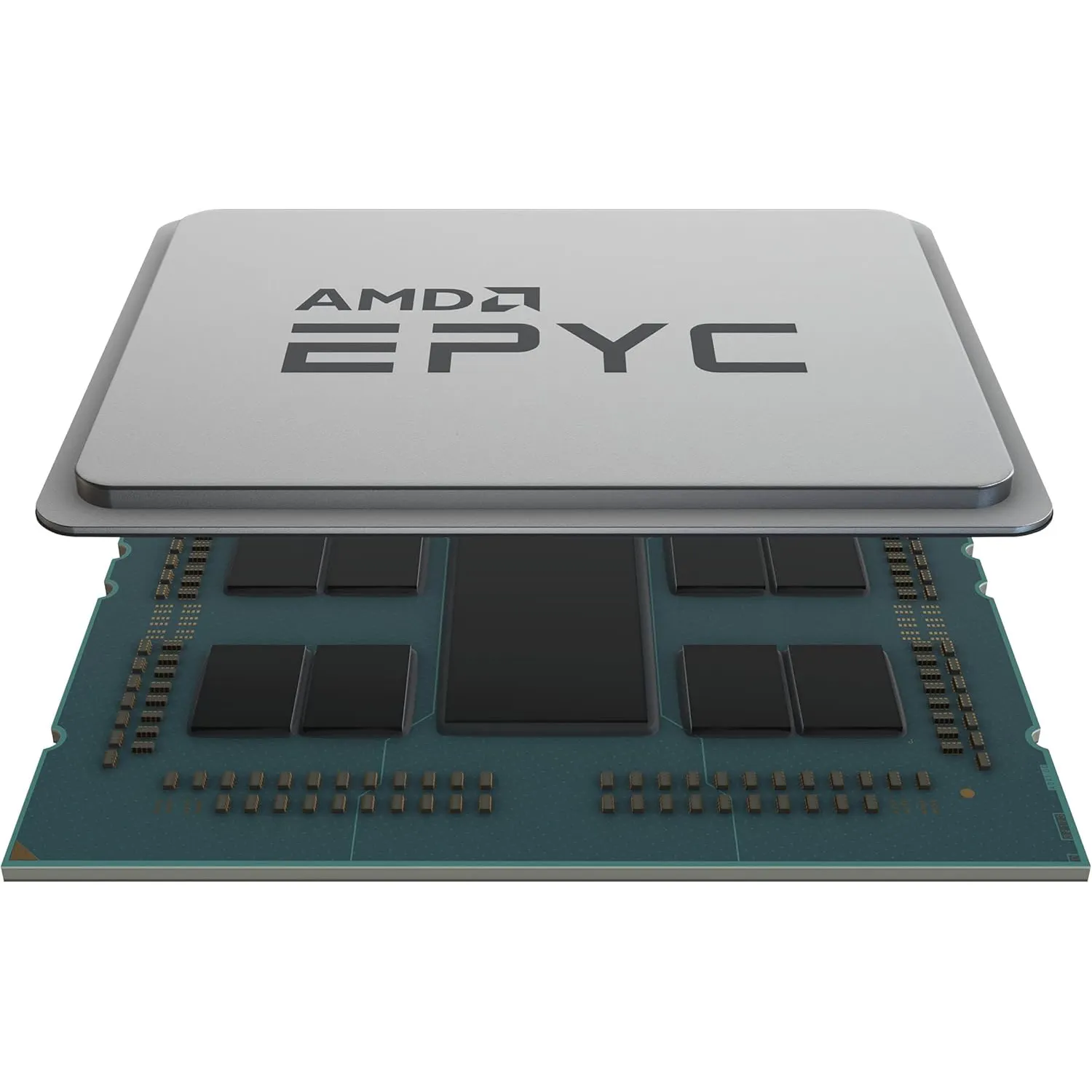
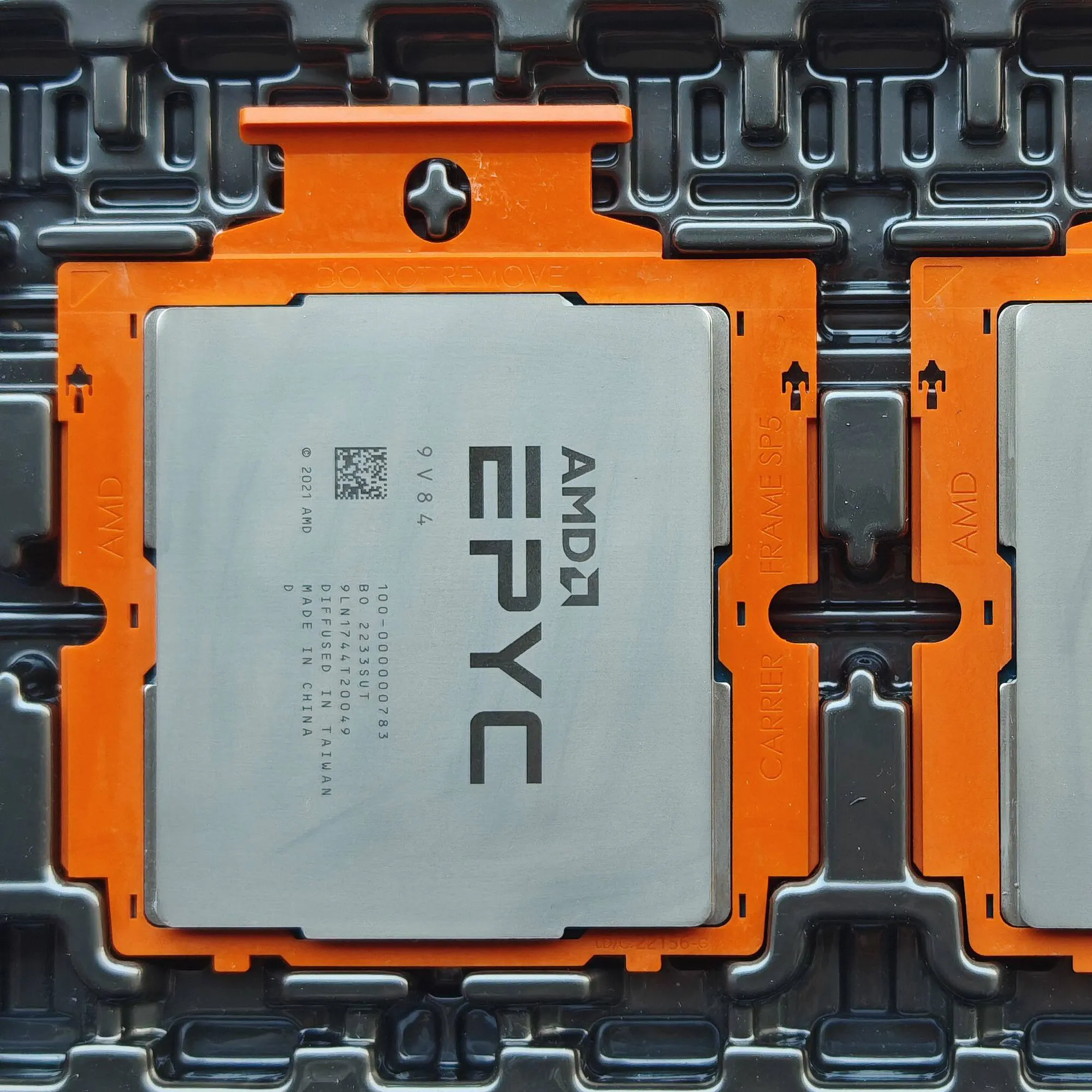
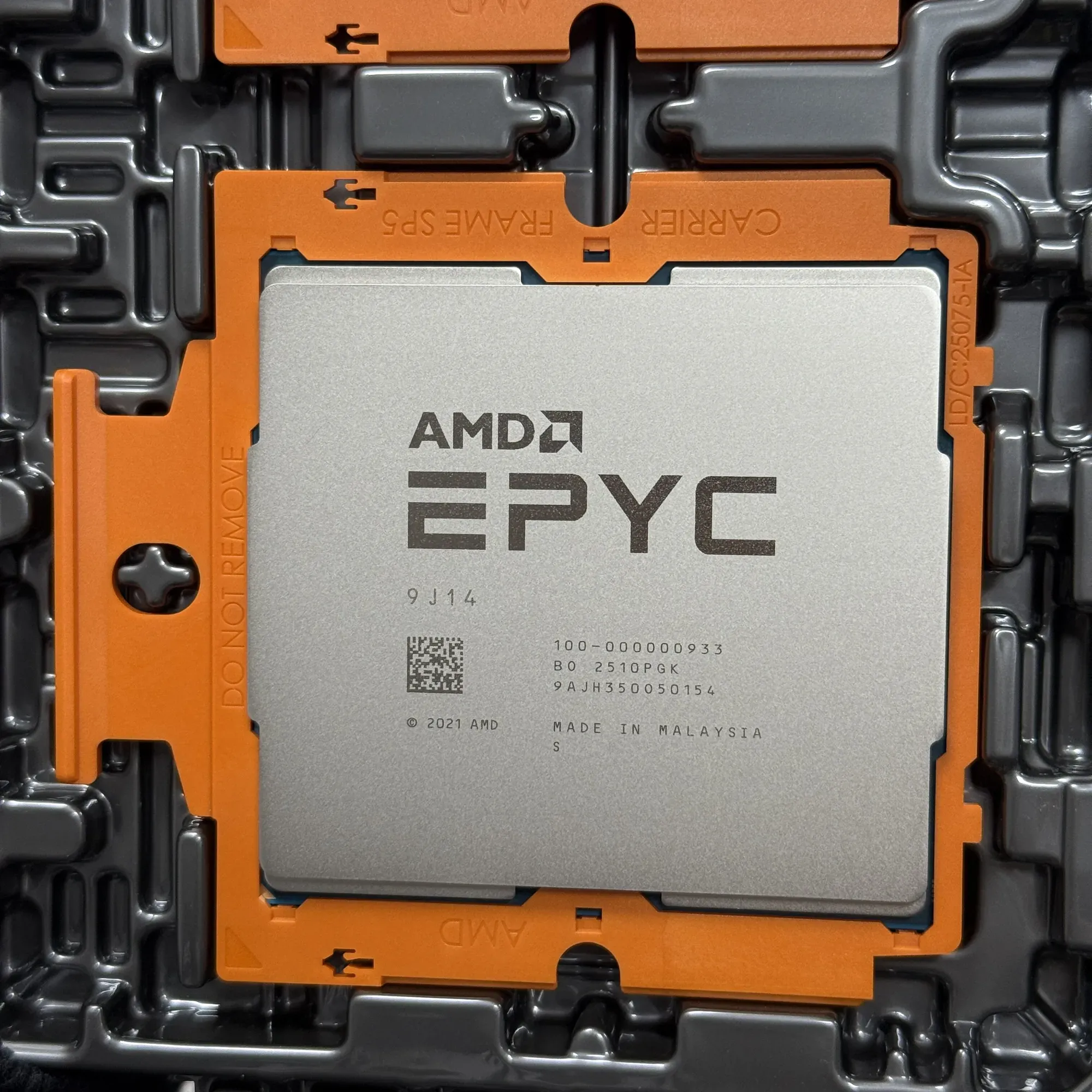
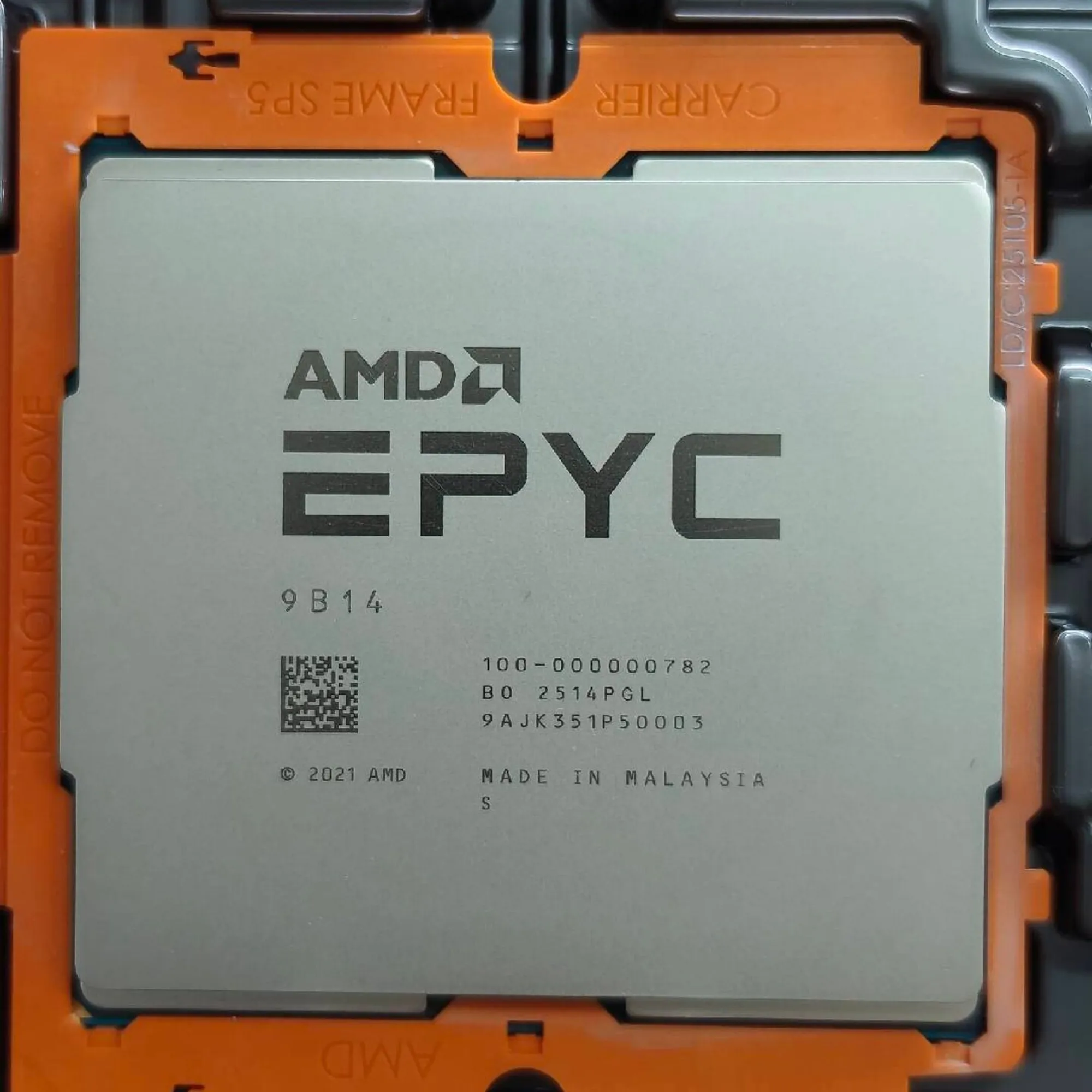
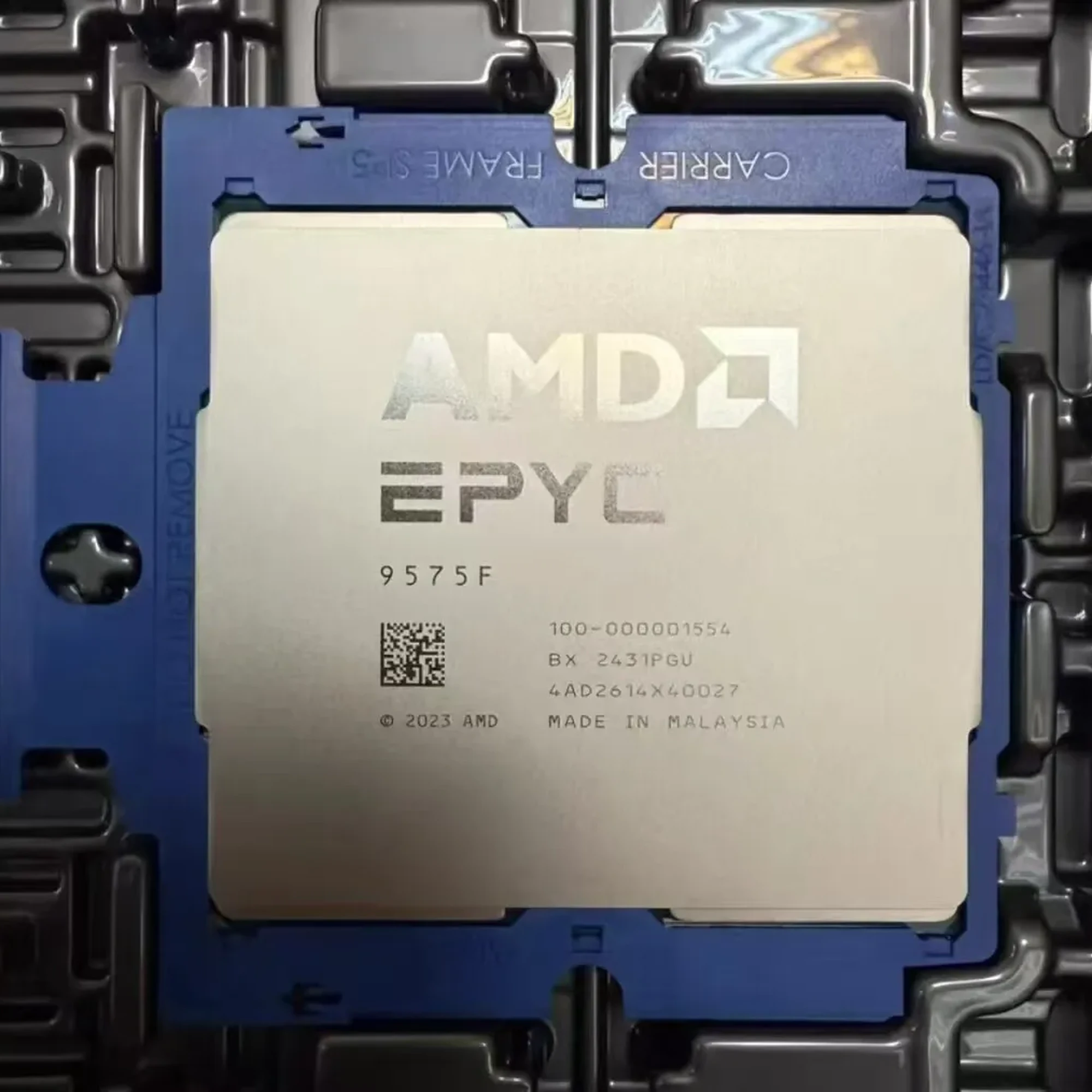
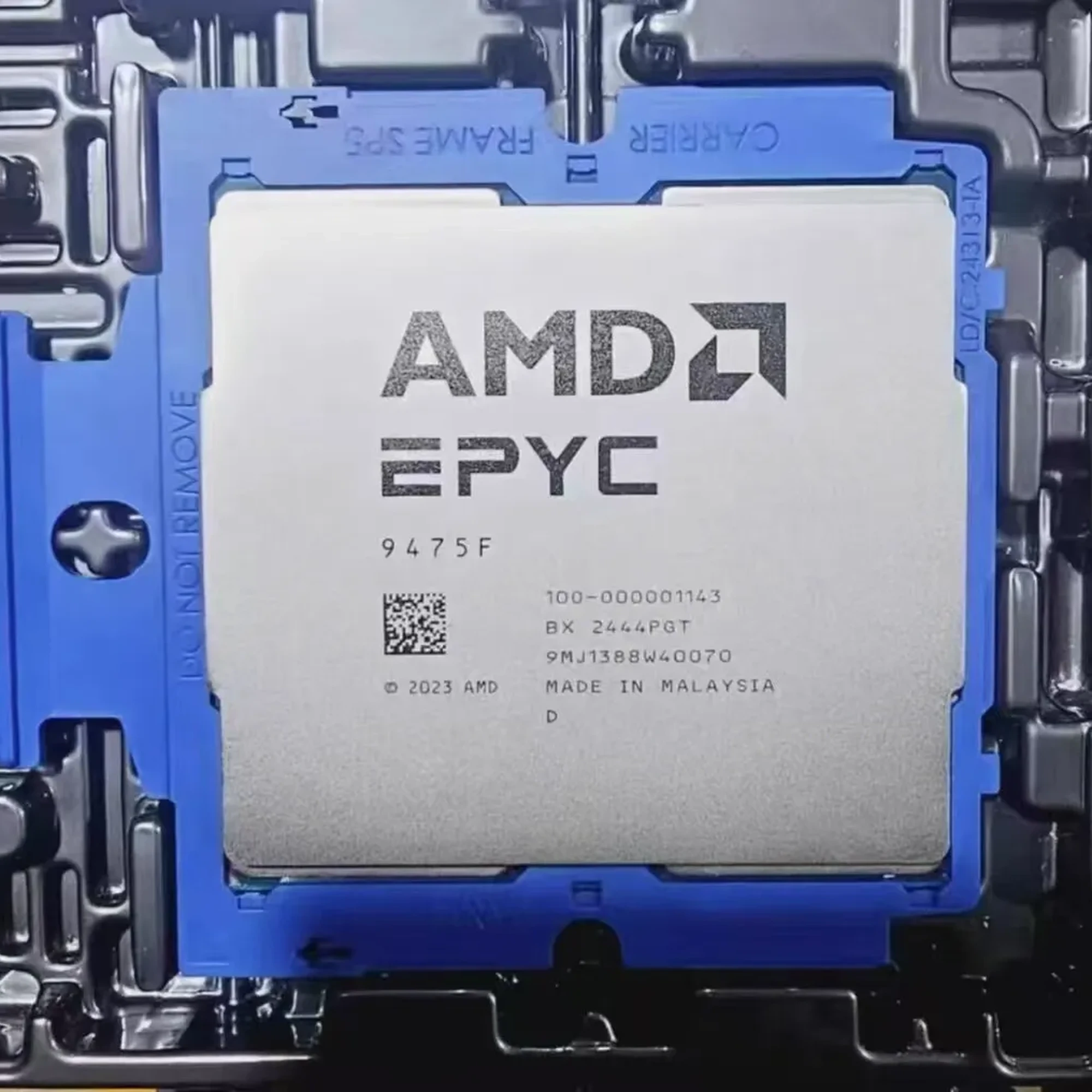
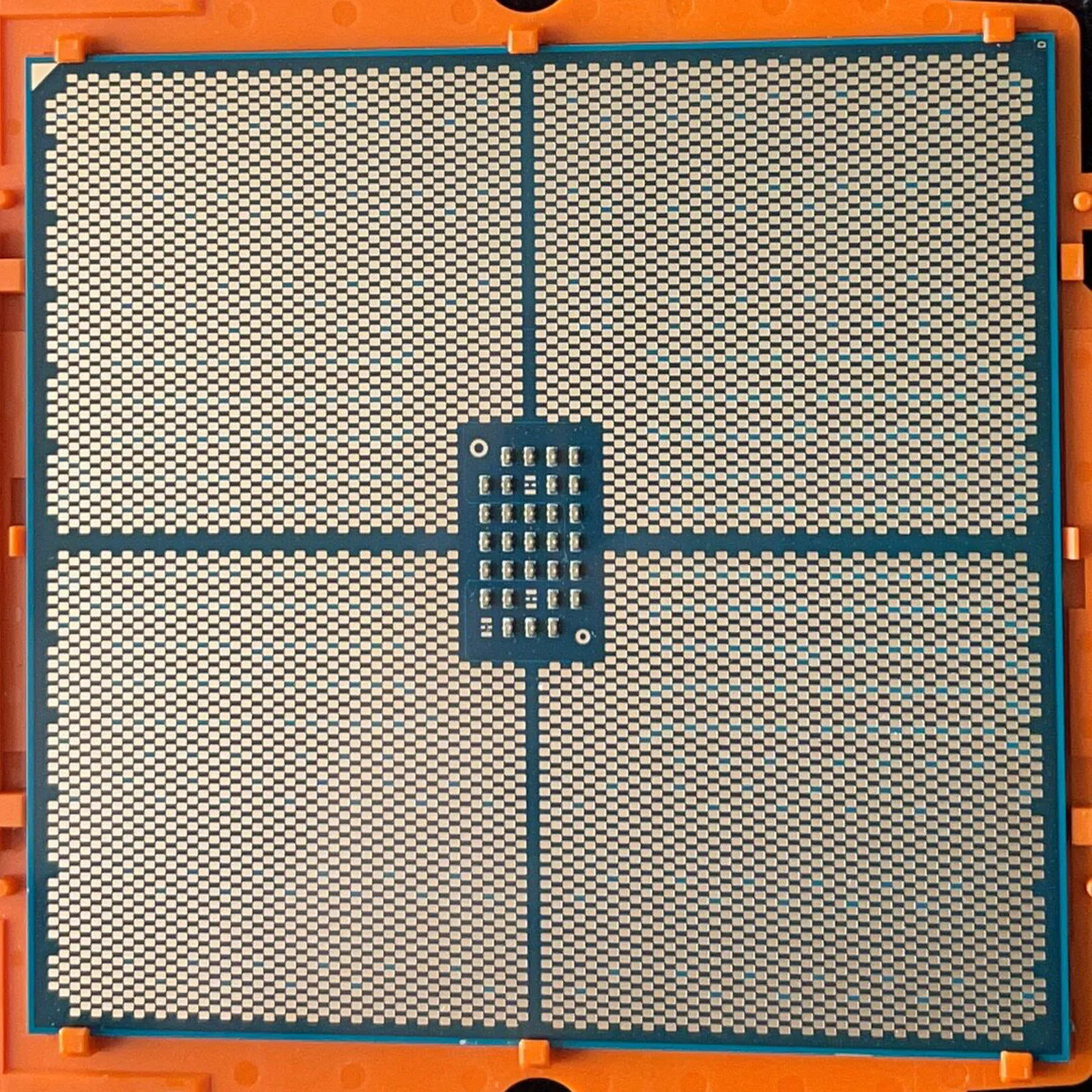
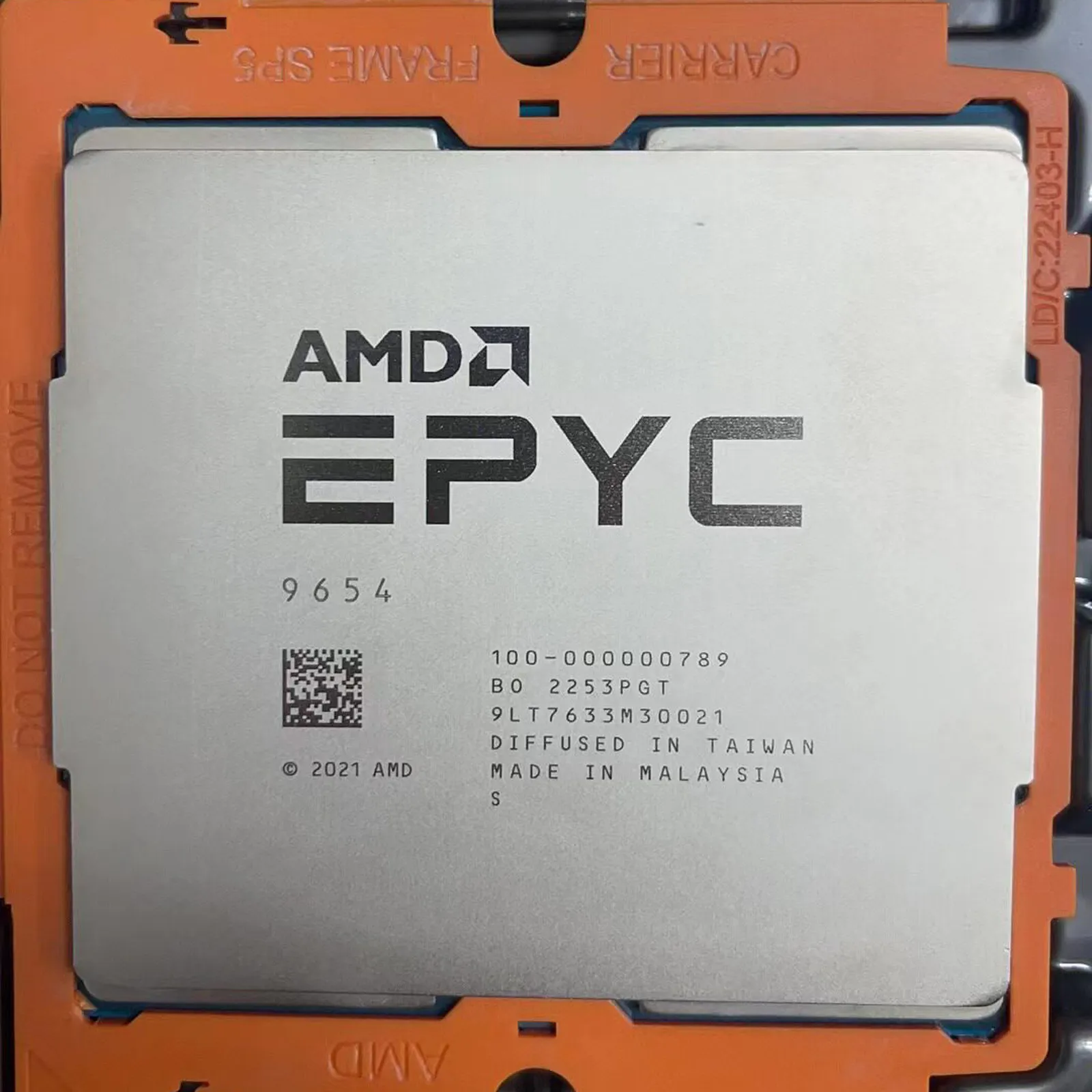
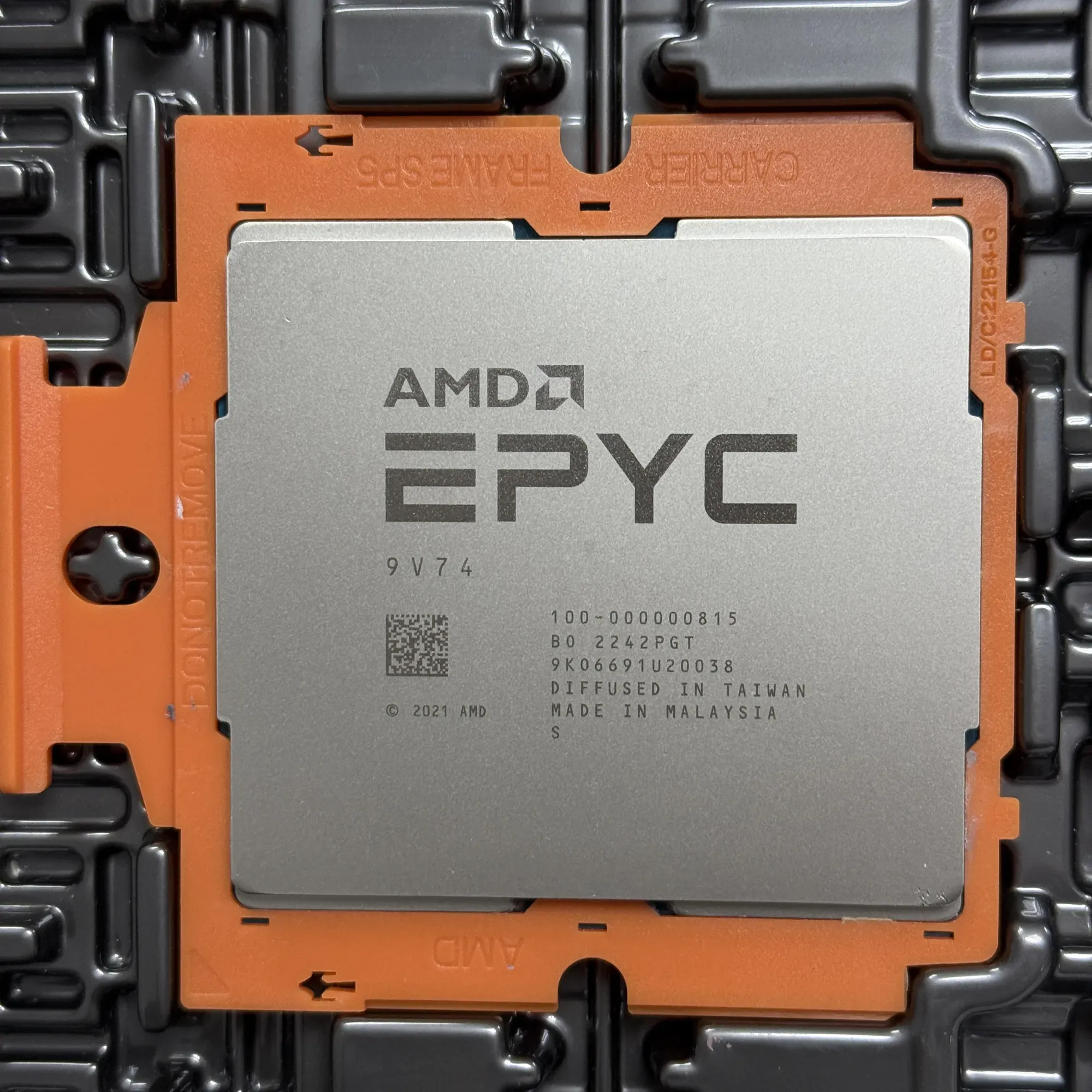
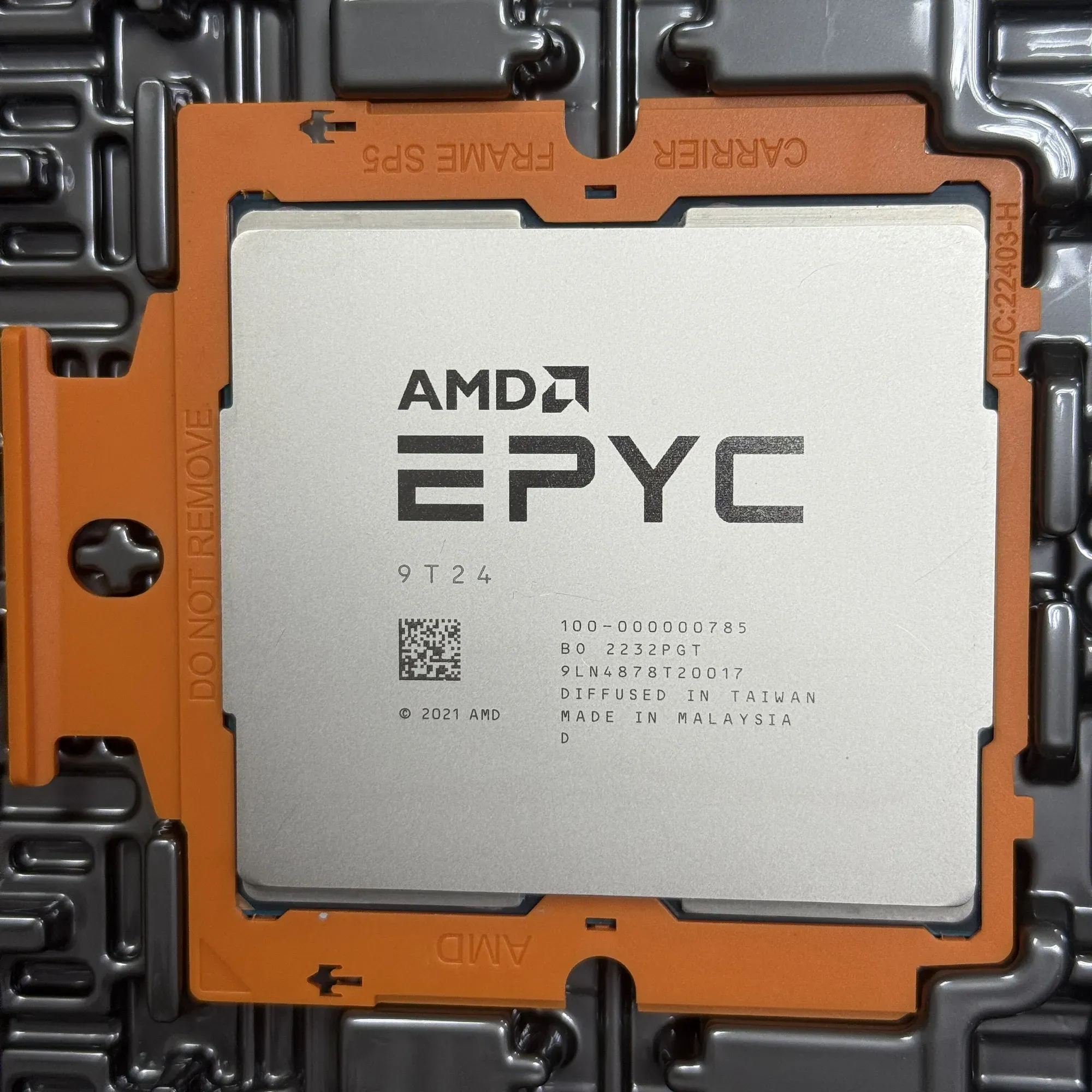
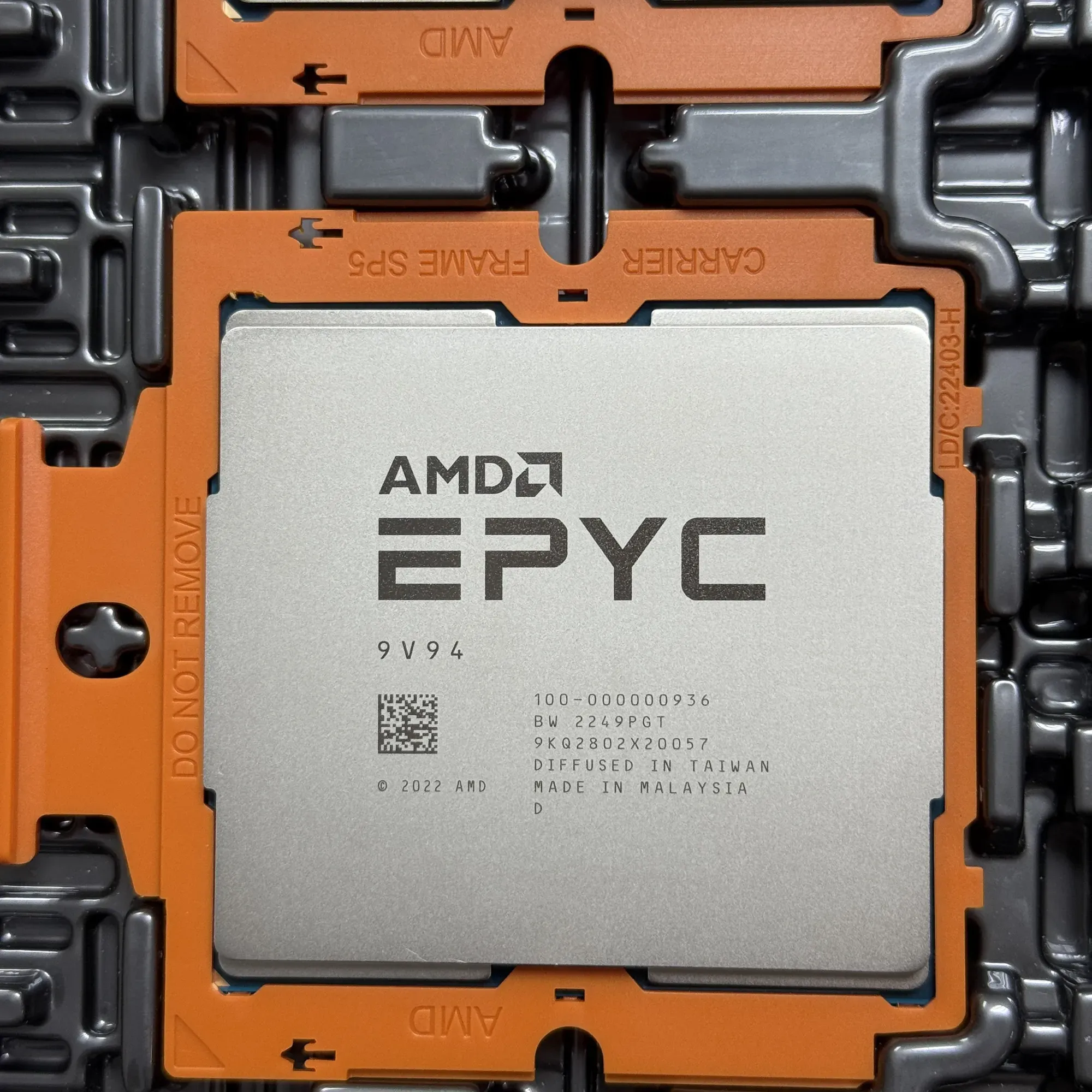
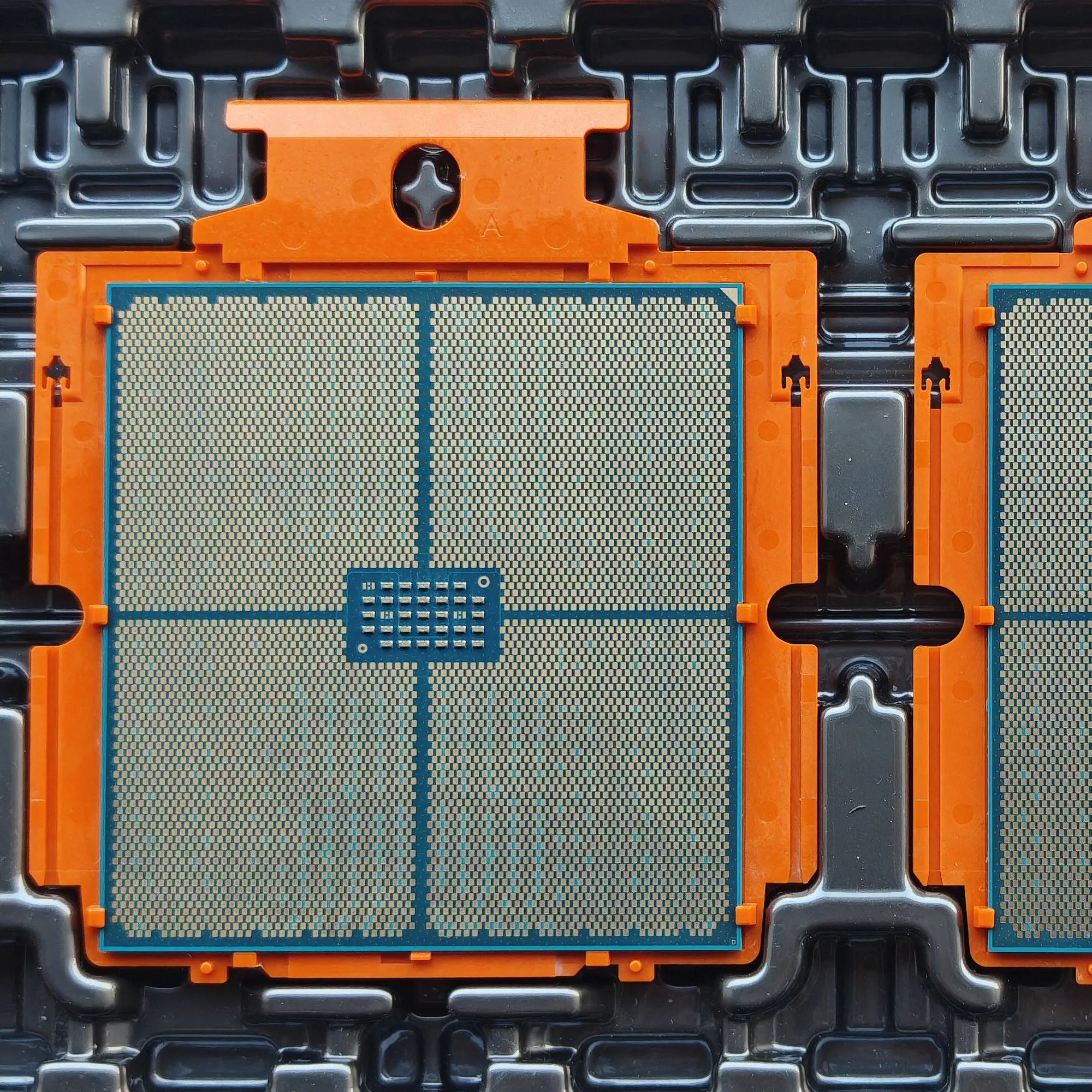

AMD EPYC 9V84 Genoa CPU | 96 Cores 192 Threads, 5nm, 3.7GHz Boost, PCIe 5.0 | OEM Server Processor
| Specification | Details |
|---|---|
| Processor Model | AMD EPYC 9V84 |
| Product Series | AMD EPYC 9004 (Genoa) Series |
| Architecture | Zen 4 |
| Process Node | TSMC 5nm |
| Core Count | 96 Cores |
| Thread Count | 192 Threads (SMT Enabled) |
| Base Clock | 2.7GHz |
| Max Boost Clock | Up to 3.7GHz |
| All-Core Boost Speed | 3.55GHz |
| L2 Cache | 96MB (1MB per Core) |
| L3 Cache | 384MB |
| Memory Support | 12-Channel DDR5 SDRAM, Up to 4800MHz, 3DS ECC Registered RDIMMs |
| Max Memory Capacity (per socket) | Up to 3TB |
| Memory Bandwidth | 460.8 GB/s per socket |
| PCIe Version | PCIe 5.0 |
| PCIe Lanes | 128 Lanes |
| TDP (Default) | 360W |
| Configurable TDP (cTDP) | 320W – 400W |
| Socket Type | SP5 (Single Socket/2P Supported) |
| Launch Date | November 10, 2022 |
| Form Factor Compatibility | ATX Motherboards (e.g., Supermicro H13SSL-N) |
| OEM Status | Custom OEM Variant (Similar to EPYC 9654) |
| Benchmark (Cinebench R23 Multi-Core) | 111,383 Points (Stock) |
| Security Features | AMD Secure Processor, Secure Memory Encryption |
AMD EPYC 9V84: The Custom Genoa Powerhouse for Enterprise & Data Center Excellence
In the competitive landscape of server processors, AMD’s EPYC 9004 “Genoa” series has established itself as a leader in performance, efficiency, and scalability—catering to the most demanding workloads of modern data centers, high-performance computing (HPC), and enterprise environments. Among its lineup, the AMD EPYC 9V84 stands out as a custom OEM variant, engineered to deliver uncompromising multi-threaded performance, advanced connectivity, and power efficiency, making it an ideal choice for organizations seeking to elevate their infrastructure without sacrificing reliability.
Positioned as a tailored solution (often recognized as an OEM variant of the flagship EPYC 9654), the EPYC 9V84 builds on AMD’s Zen 4 architecture, leveraging the cutting-edge TSMC 5nm process to balance raw computing power with energy efficiency. Whether deployed in single-socket or dual-socket configurations, this processor excels at handling CPU-intensive tasks, from cloud virtualization and database management to AI inference and HPC simulations—solidifying its place as a workhorse for mission-critical operations.
Key Architecture: Zen 4 at 5nm – The Foundation of Performance
At the core of the AMD EPYC 9V84 lies the Zen 4 microarchitecture, a significant leap forward in x86 performance and efficiency compared to its predecessors. Built on TSMC’s 5nm process node, this architecture reduces transistor size, enabling AMD to pack more cores into a single die while lowering power consumption and heat output. The 5nm process is critical for the EPYC 9V84’s ability to deliver 96 cores—more than enough to handle the most demanding multi-threaded workloads—without compromising on clock speed or reliability.
The Zen 4 architecture introduces several enhancements that elevate the EPYC 9V84’s performance, including improved instruction per cycle (IPC) throughput, enhanced cache hierarchy, and optimized power management. These improvements translate to faster task execution, reduced latency, and better overall system responsiveness—key factors for data centers and enterprises where every millisecond counts. Additionally, the Zen 4 design prioritizes security, with built-in features like AMD Secure Processor and Secure Memory Encryption, ensuring that sensitive data remains protected throughout its lifecycle.
Unlike standard retail processors, the EPYC 9V84 is a custom OEM model, meaning it is tailored to meet the specific needs of large-scale deployments (such as cloud service providers or enterprise data centers). This customization ensures that the processor aligns with the unique requirements of these environments, whether that’s optimized power consumption, enhanced scalability, or compatibility with specific server hardware.
Core & Clock Performance: 96 Cores, 192 Threads, and Blazing-Fast Clocks
One of the most defining features of the AMD EPYC 9V84 is its impressive core count: 96 Zen 4 cores, supporting 192 threads thanks to AMD’s Simultaneous Multi-Threading (SMT) technology. This massive core and thread count makes the processor a standout choice for workloads that thrive on parallel processing, such as virtualization (where multiple VMs can run simultaneously without performance degradation), database management (handling thousands of concurrent queries), and HPC (running complex simulations and calculations).
When it comes to clock speeds, the EPYC 9V84 strikes a balance between multi-threaded performance and single-threaded responsiveness. It features a base clock of 2.4GHz, ensuring consistent performance during extended workloads, and a maximum boost clock of up to 3.7GHz—delivering the speed needed for single-threaded tasks like application launching and light computing. For multi-threaded workloads, the all-core boost speed averages around 3.55GHz, ensuring that all 96 cores work in tandem to deliver maximum throughput.
Benchmark results highlight the EPYC 9V84’s capabilities: in Cinebench R23, the processor scores an impressive 111,383 points in multi-core testing, outperforming many competing server processors and even matching or exceeding some dual-socket configurations of lower-core models. This performance is further enhanced when deployed in dual-socket setups, where the EPYC 9V84 can deliver up to 192 cores and 384 threads—enough to handle the most demanding HPC and AI workloads with ease.
The processor’s cache hierarchy also plays a critical role in its performance. With 96MB of L2 cache (1MB per core) and 384MB of L3 cache, the EPYC 9V84 minimizes data latency by keeping frequently accessed data close to the cores. This reduces the need to access slower system memory, resulting in faster task execution and improved overall system efficiency. The large L3 cache is particularly beneficial for workloads that process large datasets, such as AI training, data analytics, and video rendering.
Connectivity & Memory: PCIe 5.0 and 12-Channel DDR5 for Unmatched Scalability
In modern data centers, connectivity and memory bandwidth are just as important as raw CPU performance—and the AMD EPYC 9V84 delivers on both fronts. The processor supports PCIe 5.0, the latest generation of PCI Express technology, which offers double the bandwidth of PCIe 4.0 (up to 32 GT/s per lane). With 128 PCIe 5.0 lanes, the EPYC 9V84 provides ample connectivity for high-speed storage devices (such as NVMe SSDs), GPUs, and network adapters—ensuring that data can flow quickly between components without bottlenecks.
For memory, the EPYC 9V84 supports 12-channel DDR5 SDRAM, with a maximum memory speed of up to 4800MHz per socket. This translates to a theoretical memory bandwidth of 460.8 GB/s per socket, ensuring that the processor can access large datasets quickly—critical for workloads like HPC, AI, and big data analytics. The processor also supports 3DS ECC registered RDIMMs, with a maximum memory capacity of up to 3TB per socket (when using 256GB DIMMs), providing ample scalability for growing data needs.
In dual-socket configurations, the EPYC 9V84’s memory bandwidth doubles to over 920 GB/s (theoretical), further enhancing performance for memory-intensive workloads. Real-world testing has shown that dual-socket EPYC 9V84 setups can achieve memory bandwidth of over 700 GB/s—close to the theoretical limit—making them ideal for HPC applications that require fast data access and processing.
Power Efficiency & TDP: Configurable Performance for Every Environment
Power efficiency is a top priority for data centers, where energy costs and heat management can significantly impact operational expenses. The AMD EPYC 9V84 addresses this with a configurable TDP (cTDP) range of 320W to 400W, allowing organizations to optimize power consumption based on their workload requirements. The default TDP is 360W, striking a balance between performance and energy efficiency for most enterprise use cases.
Thanks to the 5nm TSMC process and Zen 4 architecture, the EPYC 9V84 delivers exceptional performance per watt. In testing, dual-socket EPYC 9V84 configurations have shown to deliver up to 2.7 times more performance per watt compared to competing processors, reducing energy costs and carbon footprints—critical for organizations looking to achieve sustainability goals.
The processor’s power management features also allow for dynamic adjustment of clock speeds and power consumption based on workload demand. During light workloads, the EPYC 9V84 can reduce its clock speed and power usage to minimize energy waste, while ramping up to full performance during peak demand. This flexibility ensures that the processor delivers optimal performance when needed, without sacrificing efficiency during idle periods.
OEM Customization: Tailored for Enterprise & Cloud Deployments
As an OEM custom variant, the AMD EPYC 9V84 is designed to meet the specific needs of large-scale deployments, such as cloud service providers (like Microsoft Azure, which has historically used AMD EPYC processors with the “V” identifier) and enterprise data centers. This customization includes optimized compatibility with specific server motherboards (such as the Supermicro H13SSL-N), enhanced power management profiles, and tailored firmware to ensure seamless integration into existing infrastructure.
The EPYC 9V84 is often compared to the retail EPYC 9654, with the two processors sharing many core specifications (96 cores, 192 threads, 384MB L3 cache). However, the EPYC 9V84’s OEM customization makes it better suited for large-scale deployments, where consistency, compatibility, and optimized performance are critical. This makes it an ideal choice for organizations that need to deploy hundreds or thousands of servers, as the customizations ensure that each processor performs reliably and efficiently in a standardized environment.
Use Cases: Where the AMD EPYC 9V84 Shines
The AMD EPYC 9V84’s combination of high core count, fast clock speeds, advanced connectivity, and power efficiency makes it suitable for a wide range of enterprise and data center workloads. Below are some of the key use cases where the processor excels:
- High-Performance Computing (HPC): The EPYC 9V84’s 96 cores and 192 threads, combined with fast DDR5 memory and PCIe 5.0 connectivity, make it ideal for HPC workloads such as scientific simulations, computational fluid dynamics (CFD), and weather forecasting. Dual-socket configurations deliver even more performance, reducing time-to-results for complex calculations.
- Cloud Virtualization: With its massive core and thread count, the EPYC 9V84 can host hundreds of virtual machines (VMs) simultaneously, making it a top choice for cloud service providers. The processor’s PCIe 5.0 support ensures fast access to virtualized storage and network resources, while its power efficiency helps reduce operational costs for large-scale cloud deployments.
- Data Analytics & AI Inference: The EPYC 9V84’s large cache and fast memory bandwidth make it well-suited for data analytics workloads, where large datasets need to be processed quickly. It also delivers strong performance for AI inference tasks, such as image recognition, natural language processing, and recommendation engines—making it a versatile choice for AI-driven enterprises.
- Enterprise Databases: Databases require high multi-threaded performance to handle thousands of concurrent queries, and the EPYC 9V84 delivers just that. Its 96 cores and 192 threads ensure that databases can process queries quickly, while its large L3 cache reduces latency for frequently accessed data—improving overall database performance and responsiveness.
- Edge Computing: For edge computing environments, where space and power are limited, the EPYC 9V84’s configurable TDP and power efficiency make it an ideal choice. Its compact form factor (compatible with ATX motherboards) and high performance ensure that edge servers can handle demanding workloads without requiring excessive power or cooling.
Why Choose the AMD EPYC 9V84 Over Competing Processors?
In a market dominated by Intel Xeon processors, the AMD EPYC 9V84 offers several key advantages that make it a compelling choice for enterprises and data centers:
- Superior Core Count: With 96 cores and 192 threads, the EPYC 9V84 offers more cores than most competing Xeon processors, making it better suited for multi-threaded workloads.
- Advanced Connectivity: PCIe 5.0 support and 128 lanes provide faster connectivity than most competing processors, reducing bottlenecks and improving overall system performance.
- Power Efficiency: The 5nm process and configurable TDP make the EPYC 9V84 more energy-efficient than many competing processors, reducing energy costs and carbon footprints.
- OEM Customization: As a custom OEM variant, the EPYC 9V84 is tailored to meet the specific needs of large-scale deployments, ensuring compatibility and reliability in enterprise environments.
- Cost-Effectiveness: Despite its high performance, the EPYC 9V84 offers excellent value for money compared to competing processors, making it a cost-effective choice for organizations looking to maximize performance without breaking the bank.
Conclusion: The AMD EPYC 9V84 – A Custom Powerhouse for Modern Data Centers
The AMD EPYC 9V84 is more than just a server processor—it’s a custom-engineered solution designed to meet the unique demands of modern enterprise and data center environments. With its 96 Zen 4 cores, 192 threads, 5nm process, PCIe 5.0 connectivity, and configurable TDP, it delivers exceptional performance, efficiency, and scalability for a wide range of workloads, from HPC and cloud virtualization to data analytics and AI inference.
As an OEM custom variant, the EPYC 9V84 offers the flexibility and compatibility needed for large-scale deployments, making it an ideal choice for cloud service providers, enterprise data centers, and organizations looking to elevate their infrastructure. Whether deployed in single-socket or dual-socket configurations, the EPYC 9V84 delivers the performance and reliability needed to keep pace with the ever-growing demands of modern computing.
If you’re looking for a server processor that combines raw power, energy efficiency, and customization, the AMD EPYC 9V84 is the perfect choice. Its advanced features, impressive benchmark results, and tailored design make it a standout in the server processor market—delivering the performance and value needed to drive your business forward.
Recommended Motherboards for AMD EPYC 9005/9004 SP5 processors
| Model | CPU (Socket / TDP) | Memory | PCIe/CXL | LAN | Management | Form Factor |
|---|---|---|---|---|---|---|
| Gigabyte MZ73-LM2 | Dual SP5 / 500W | 24×DDR5 | PCIe 5.0 | 2×10GbE | IPMI | E-ATX |
| Gigabyte MZ73-LM1 | Dual SP5 / 400W | 24×DDR5 | PCIe 5.0 | 2×10GbE | IPMI | E-ATX |
| Gigabyte MZ73-LM0 | Dual SP5 / 400W | 24×DDR5 | PCIe 5.0 | 2×10GbE | IPMI | E-ATX |
| Gigabyte MZ33-AR1 | Single SP5 / 400W | 24×DDR5 | PCIe 5.0 | 1×10GbE | IPMI | E-ATX |
| Gigabyte MZ33-CP1 | Single SP5 / 500W | 12×DDR5 | PCIe 5.0 | 2×1GbE | IPMI | E-ATX |
| ASRock Rack TURIND8-2L2T | Single SP5 / 400W | 8×DDR5 | PCIe 5.0 + CXL 2.0 | 2×10GbE + 2×1GbE | IPMI | CEB |
| ASRock Rack TURIN2D16-2T | Dual SP5 / 400W | 16×DDR5 (8+8) | PCIe 5.0 + CXL 2.0 | 2×10GbE | IPMI | EEB |
| ASRock Rack TURIN2D24G-2L+/500W | Dual SP5 / 500W | 24×DDR5 (12+12) | PCIe 5.0 + CXL 2.0 | 2×1GbE | IPMI | Proprietary |
| ASUS K14PA-U12 | Single SP5 / 400W | 12×DDR5 | PCIe 5.0 | 2×25GbE (SFP28) | iKVM (ASMB11) | CEB |
4th Gen 9004 Series Model Specifications
| Name | # of CPU Cores | # of Threads | Max. Boost Clock | Base Clock | L3 Cache | Default TDP |
| AMD EPYC™ 9754S | 128 | 128 | Up to 3.1 GHz | 2.25 GHz | 256 MB | 360W |
| AMD EPYC™ 9754 | 128 | 256 | Up to 3.1 GHz | 2.25 GHz | 256 MB | 360W |
| AMD EPYC™ 9734 | 112 | 224 | Up to 3 GHz | 2.2 GHz | 256 MB | 340W |
| AMD EPYC™ 9684X | 96 | 192 | Up to 3.7 GHz | 2.55 GHz | 1152 MB | 400W |
| AMD EPYC™ 9654P | 96 | 192 | Up to 3.7 GHz | 2.4 GHz | 384 MB | 360W |
| AMD EPYC™ 9654 | 96 | 192 | Up to 3.7 GHz | 2.4 GHz | 384 MB | 360W |
| AMD EPYC™ 9634 | 84 | 168 | Up to 3.7 GHz | 2.25 GHz | 384 MB | 290W |
| AMD EPYC™ 9554P | 64 | 128 | Up to 3.75 GHz | 3.1 GHz | 256 MB | 360W |
| AMD EPYC™ 9554 | 64 | 128 | Up to 3.75 GHz | 3.1 GHz | 256 MB | 360W |
| AMD EPYC™ 9534 | 64 | 128 | Up to 3.7 GHz | 2.45 GHz | 256 MB | 280W |
| AMD EPYC™ 9474F | 48 | 96 | Up to 4.1 GHz | 3.6 GHz | 256 MB | 360W |
| AMD EPYC™ 9454P | 48 | 96 | Up to 3.8 GHz | 2.75 GHz | 256 MB | 290W |
| AMD EPYC™ 9454 | 48 | 96 | Up to 3.8 GHz | 2.75 GHz | 256 MB | 290W |
| AMD EPYC™ 9384X | 32 | 64 | Up to 3.9 GHz | 3.1 GHz | 768 MB | 320W |
| AMD EPYC™ 9374F | 32 | 64 | Up to 4.3 GHz | 3.85 GHz | 256 MB | 320W |
| AMD EPYC™ 9354P | 32 | 64 | Up to 3.8 GHz | 3.25 GHz | 256 MB | 280W |
| AMD EPYC™ 9354 | 32 | 64 | Up to 3.8 GHz | 3.25 GHz | 256 MB | 280W |
| AMD EPYC™ 9334 | 32 | 64 | Up to 3.9 GHz | 2.7 GHz | 128 MB | 210W |
| AMD EPYC™ 9274F | 24 | 48 | Up to 4.3 GHz | 4.05 GHz | 256 MB | 320W |
| AMD EPYC™ 9254 | 24 | 48 | Up to 4.15 GHz | 2.9 GHz | 128 MB | 200W |
| AMD EPYC™ 9224 | 24 | 48 | Up to 3.7 GHz | 2.5 GHz | 64 MB | 200W |
| AMD EPYC™ 9184X | 16 | 32 | Up to 4.2 GHz | 3.55 GHz | 768 MB | 320W |
| AMD EPYC™ 9174F | 16 | 32 | Up to 4.4 GHz | 4.1 GHz | 256 MB | 320W |
| AMD EPYC™ 9124 | 16 | 32 | Up to 3.7 GHz | 3 GHz | 64 MB | 200W |


