
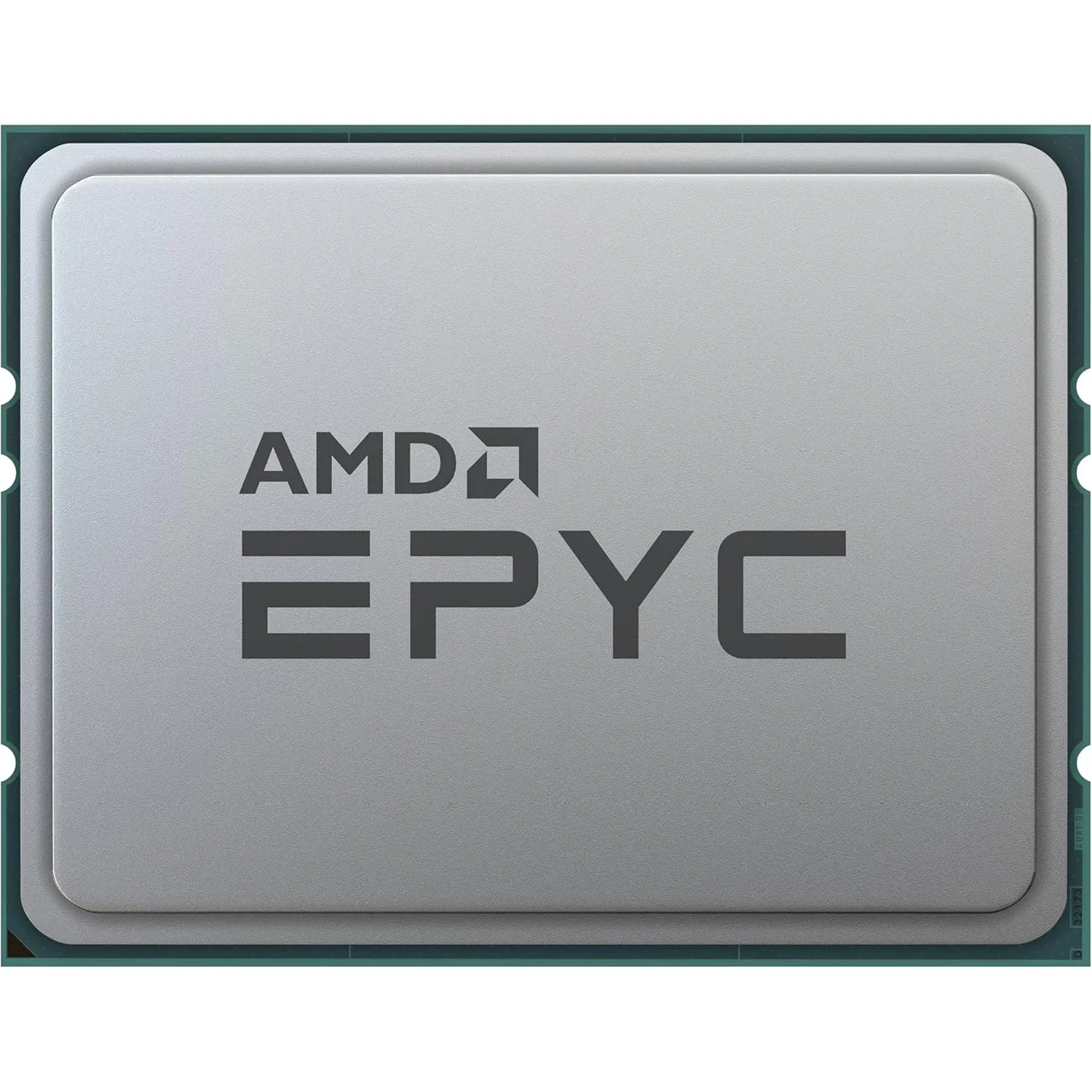
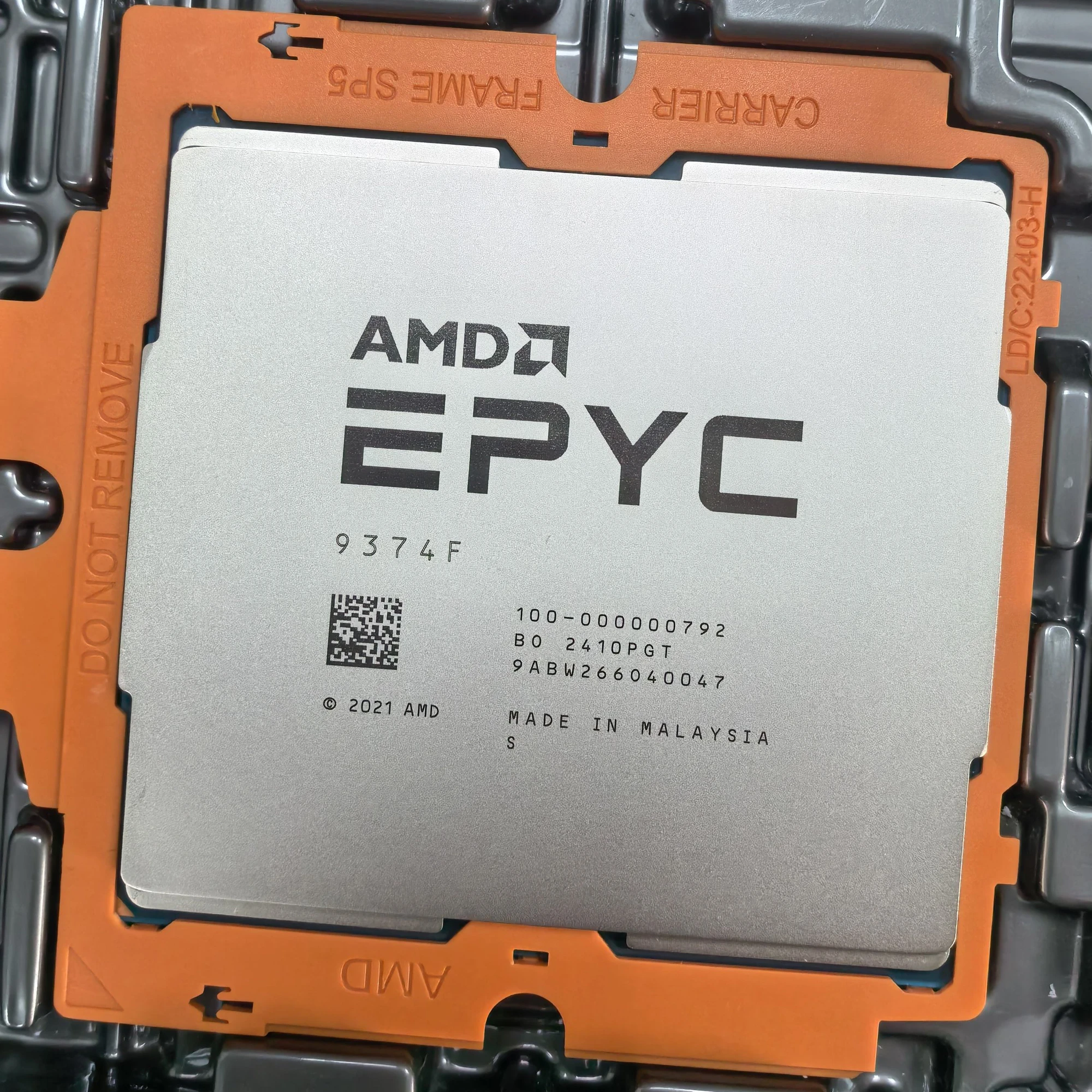
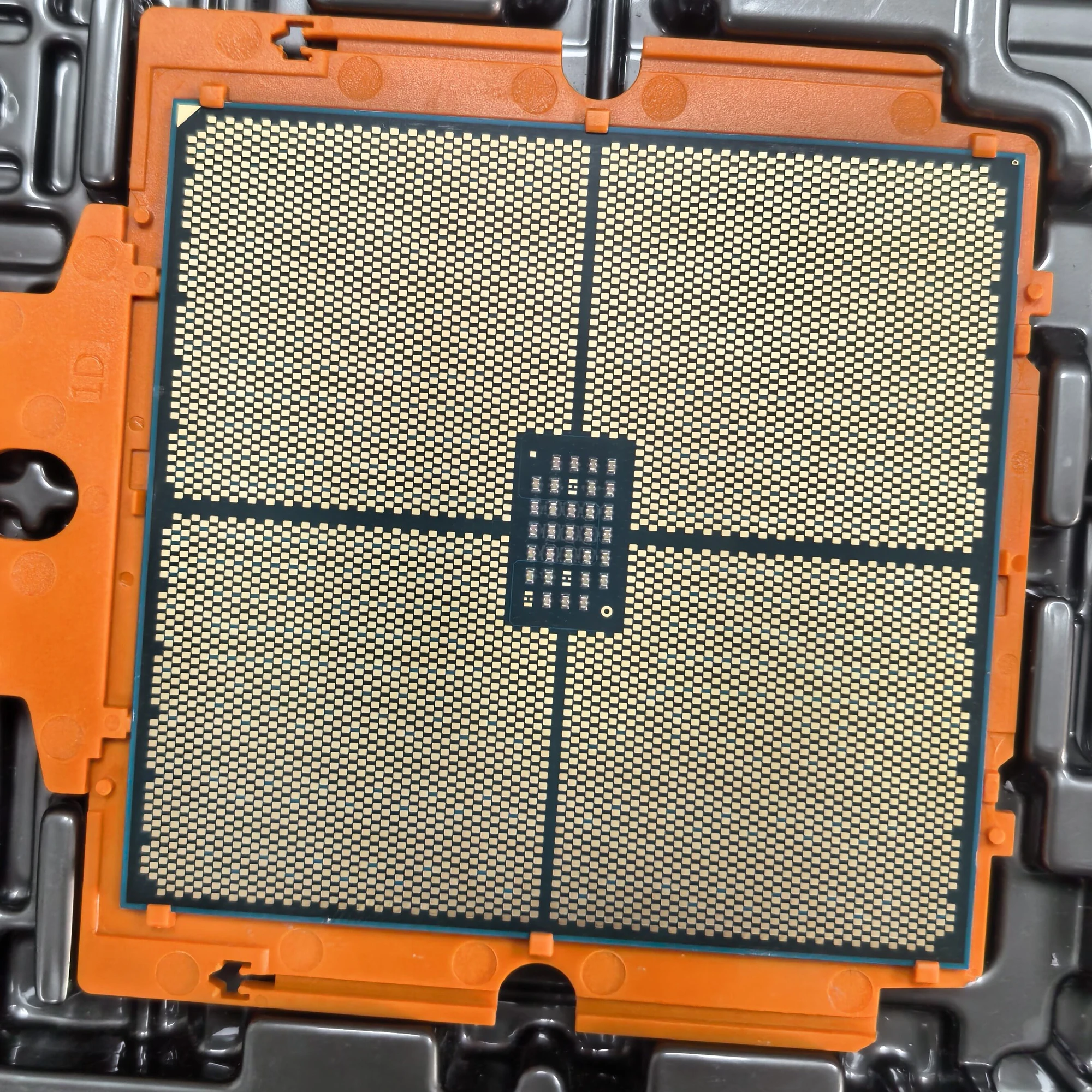
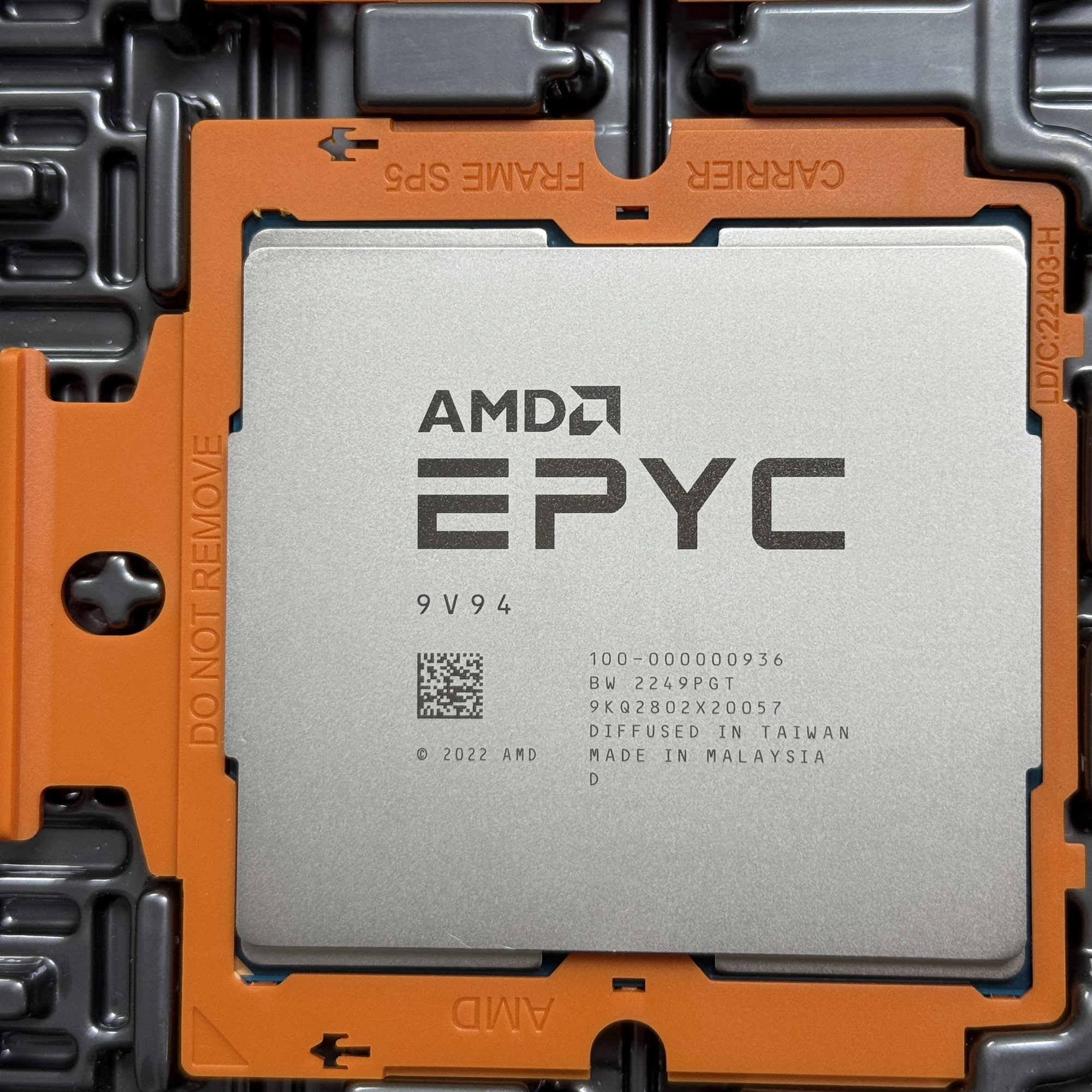
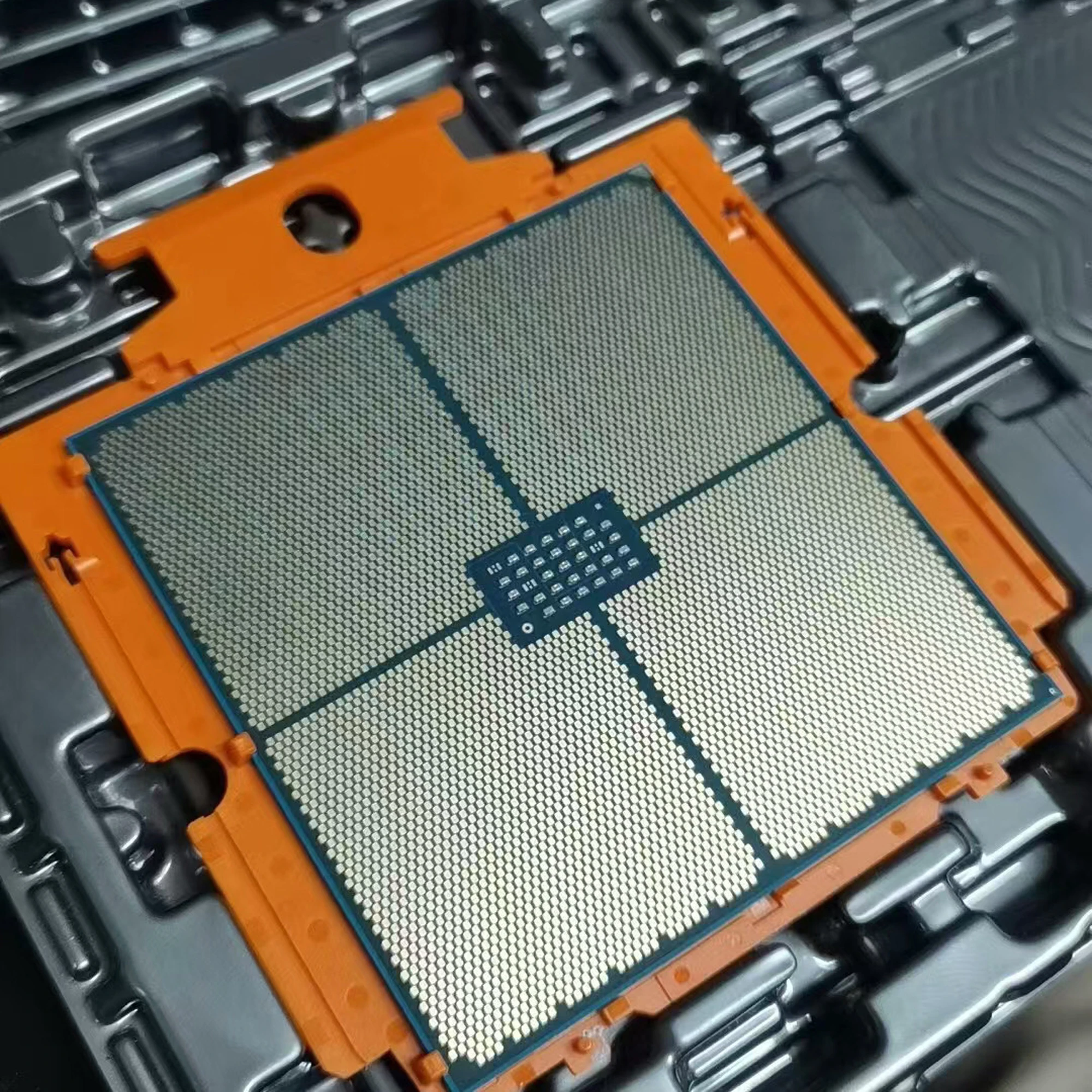
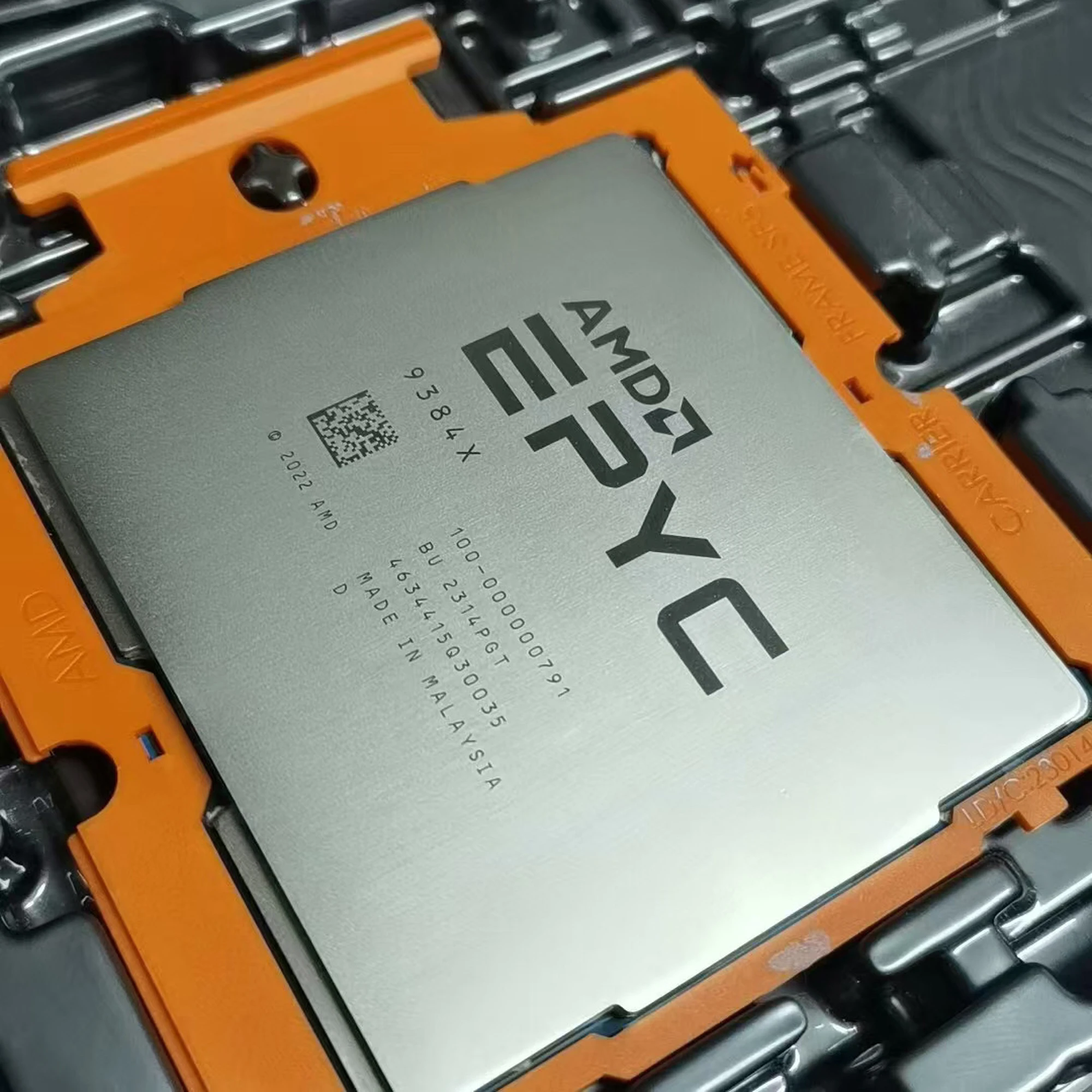

AMD EPYC 9374F 4th Gen 9004 Series 32-Core 64-Thread Server CPU SP5 DDR5 PCIe 5.0 Processor
| Specification | Details |
|---|---|
| Processor Model | AMD EPYC 9374F |
| Product Series | AMD EPYC 9004 Series (Genoa) |
| Architecture | Zen 4 |
| Manufacturing Process | TSMC 5nm |
| Cores | 32 |
| Threads | 64 (via AMD SMT) |
| Base Clock | 3.85 GHz |
| Max Boost Clock | Up to 4.3 GHz |
| All-Core Boost Speed | 4.1 GHz |
| L3 Cache | 256 MB |
| TDP (Default) | 320 W |
| Configurable TDP (CTDP) | 320 – 400 W |
| Socket | SP5 |
| Socket Count Support | 1P / 2P |
| Memory Type | DDR5 |
| Memory Channels | 12 |
| Max Memory Speed | Up to 4800 MT/s |
| Per Socket Memory Bandwidth | 460.8 GB/s |
| PCIe Version | PCIe 5.0 |
| PCIe Lanes | 128 |
| Supported Technologies | AMD Infinity Guard, AMD Infinity Architecture, AVX-512, ECC Memory, Hardware Virtualization (AMD-V), SEV-SNP |
| Workload Affinity | EDA, HCI, High Performance VM Density, Per Core CAE | CFD | FEA, VDI, Databases, HPC, Financial Services |
| Launch Date | November 10, 2022 |
| 1KU Pricing | $4,297 USD |
| Product ID (Tray) | 100-000000792 |
| Regional Availability | Global, China, NA, EMEA, APJ, LATAM |
| Integrated Graphics | N/A |
| Transistors | 52.56 billion |
In the fast-evolving landscape of data center technology, businesses and IT teams demand processors that can keep pace with growing workload demands—from high-densityvirtualization and cloud computing to complex scientific simulations and real-time data analytics. The AMD EPYC 9374F Server Processor emerges as a standout solution in this space, part of AMD’s 4th-generation EPYC 9004 (Genoa) series, engineered to deliver uncompromising performance, efficiency, and scalability for modern data center environments. Built on TSMC’s advanced 5nm manufacturing process and powered by AMD’s Zen 4 architecture, the EPYC 9374F combines high core counts, impressive clock speeds, and cutting-edge connectivity to redefine what’s possible for server performance.
Key Architecture & Design: Zen 4 Power Meets 5nm Efficiency
At the heart of the AMD EPYC 9374F lies AMD’s Zen 4 architecture, a significant leap forward in CPU design that delivers substantial improvements in IPC (Instructions Per Cycle), power efficiency, and overall performance compared to its predecessors. Fabricated on TSMC’s 5nm process, this processor packs 52.56 billion transistors into a compact design, striking an ideal balance between performance and energy consumption—a critical factor for data centers looking to reduce operational costs and carbon footprints. The 5nm process not only enables higher transistor density but also minimizes leakage current, ensuring that the EPYC 9374F delivers more performance per watt than previous-generation server processors.
The EPYC 9374F features a 32-core, 64-thread configuration, leveraging AMD’s Simultaneous Multithreading (SMT) technology to handle multiple tasks simultaneously. This makes it particularly well-suited for multi-threaded workloads, where parallel processing is essential to maximizing throughput. Unlike some server processors that sacrifice clock speed for core count, the EPYC 9374F maintains impressive clock speeds: a 3.85GHz base clock ensures consistent performance for sustained workloads, while a 4.3GHz max boost clock delivers a burst of speed for demanding, short-duration tasks. Additionally, the all-core boost speed of 4.1GHz ensures that even when all 32 cores are active, the processor maintains high performance—critical for workloads like database processing, virtualization, and HPC simulations that require consistent multi-core performance.
Cache & Memory: Reducing Latency, Boosting Throughput
One of the most impactful features of the AMD EPYC 9374F is its generous cache configuration, designed to minimize data latency and keep the processor’s cores fed with the data they need. The processor boasts 256MB of L3 cache, a substantial amount that ensures frequently accessed data is stored close to the cores, reducing the need to access slower system memory. This is particularly beneficial for data-intensive workloads like scientific computing (CFD/FEA), database management, and virtualization, where reducing latency can significantly improve overall performance. The large L3 cache also enhances multi-core coordination, allowing cores to share data efficiently and reducing bottlenecks in parallel processing scenarios.
When it comes to memory, the EPYC 9374F supports DDR5-4800 memory via 12 memory channels, delivering an impressive per-socket memory bandwidth of 460.8 GB/s. This high memory bandwidth is a game-changer for memory-sensitive workloads, such as in-memory databases (like Redis), big data analytics, and scientific simulations, where fast access to large datasets is critical. The 12-channel memory configuration also supports up to 6TB of DDR5 memory per socket, providing ample capacity for even the most memory-hungry applications. Additionally, the processor supports ECC (Error-Correcting Code) memory, a must-have feature for mission-critical data center environments, as it detects and corrects memory errors to prevent data corruption and system downtime.
Connectivity & Scalability: Future-Proofing Your Data Center
In today’s data centers, connectivity is key to supporting high-speed storage, networking, and peripheral devices. The AMD EPYC 9374F features 128 lanes of PCIe 5.0, the latest generation of PCI Express technology, which delivers twice the bandwidth of PCIe 4.0 (up to 32 Gbps per lane). This high-speed connectivity enables support for the latest NVMe SSDs, high-performance GPUs, and network adapters, ensuring that the processor can keep up with the fastest peripheral devices on the market. Whether you’re building a high-performance storage array, a GPU-accelerated HPC cluster, or a virtualization host with multiple network interfaces, the EPYC 9374F’s PCIe 5.0 lanes provide the bandwidth needed to avoid bottlenecks.
Scalability is another key strength of the EPYC 9374F. The processor supports both 1P (single-socket) and 2P (dual-socket) configurations, allowing data centers to scale their infrastructure based on their needs. In a 2P configuration, the EPYC 9374F can leverage AMD’s Infinity Fabric technology to connect two processors seamlessly, doubling the core count (up to 64 cores) and memory bandwidth (up to 921.6 GB/s) for even more powerful workloads. This scalability makes the EPYC 9374F suitable for a wide range of use cases, from small to medium-sized data centers to large enterprise environments and cloud service providers.
Performance Benchmarks: Outperforming the Competition
The AMD EPYC 9374F has been rigorously tested across a range of data center workloads, consistently delivering impressive results that outperform competing server processors. In database performance testing, a single-socket EPYC 9374F system delivered up to a 58% uplift in TProc-C (new orders per minute) compared to a dual-socket Intel Xeon Platinum 8462Y+ system on a 1000-warehouse dataset. Additionally, the same single-socket EPYC 9374F system delivered a 15% improvement in TProc-H power query time versus the dual-socket Intel Xeon system, demonstrating its superior efficiency and performance for database workloads.
For financial services workloads, the EPYC 9374F excelled in STAC-N1 benchmark testing, delivering the lowest mean and 99th percentile latency at a base rate of 100k messages per second, as well as the highest maximum throughput of 1.5 million messages per second. This makes it an ideal choice for high-frequency trading (HFT) and other time-sensitive financial applications, where even microseconds of latency can translate to significant financial impact.
In virtualization scenarios, the EPYC 9374F’s 32 cores and 64 threads, combined with its large L3 cache and high memory bandwidth, support high-density virtual machine (VM) deployments. The processor’s hardware virtualization support (including AMD-V) further enhances VM performance, reducing overhead and improving responsiveness for virtualized workloads. Whether you’re running VDI (Virtual Desktop Infrastructure) or cloud-based VMs, the EPYC 9374F provides the performance and scalability needed to support multiple VMs without compromising on performance.
Security & Reliability: Protecting Mission-Critical Workloads
Data center security is a top priority for businesses, and the AMD EPYC 9374F includes a range of security features to protect sensitive data and ensure system integrity. The processor supports AMD Infinity Guard, a comprehensive set of hardware-based security features designed to defend against modern cyber threats. This includes Secure Encrypted Virtualization (SEV), which encrypts VM memory to prevent unauthorized access, and SEV-SNP (Secure Nested Paging), which provides additional protection against malicious hypervisors. These features are critical for multi-tenant cloud environments, where data isolation between VMs is essential.
Reliability is another cornerstone of the EPYC 9374F’s design. The processor supports error-correcting code (ECC) memory, as well as AMD’s Machine Check Architecture (MCA), which detects and recovers from hardware errors to minimize system downtime. Additionally, the processor’s configurable TDP (320W-400W) allows IT teams to optimize power consumption based on workload demands, balancing performance and energy efficiency while ensuring long-term reliability. The EPYC 9374F is also designed for 7×24 operation, making it suitable for mission-critical applications that require continuous uptime.
Ideal Use Cases: Where the EPYC 9374F Shines
The AMD EPYC 9374F is a versatile server processor that excels in a wide range of data center workloads, including:
- Virtualization & Cloud Computing: With 32 cores, 64 threads, and support for high-density VM deployments, the EPYC 9374F is ideal for cloud service providers and enterprises running VDI or cloud-based VMs. Its high memory bandwidth and PCIe 5.0 connectivity ensure that virtualized workloads run smoothly, even under heavy load.
- Scientific Computing & HPC: The processor’s large L3 cache, high memory bandwidth, and support for AVX-512 instructions make it perfect for HPC workloads like CFD (Computational Fluid Dynamics), FEA (Finite Element Analysis), and scientific simulations. Its multi-core performance and efficiency reduce time-to-results for complex calculations.
- Database & Data Analytics: The EPYC 9374F’s high throughput, low latency, and large cache make it an excellent choice for relational databases (like PostgreSQL), NoSQL databases, and big data analytics. Its performance优势 translates to faster query times and improved data processing efficiency.
- Financial Services: For high-frequency trading, risk analysis, and other time-sensitive financial workloads, the EPYC 9374F’s low latency and high throughput deliver the performance needed to stay competitive in fast-paced markets.
- Edge Computing & 5G Infrastructure: With its balanced performance and power efficiency (320W TDP), the EPYC 9374F is suitable for edge computing environments and 5G infrastructure, where space and power are often limited.
Why Choose the AMD EPYC 9374F?
In a market crowded with server processors, the AMD EPYC 9374F stands out for its unique combination of performance, efficiency, scalability, and security. Here are the key reasons to choose the EPYC 9374F for your data center:
- Exceptional Multi-Core Performance: 32 cores and 64 threads, combined with 4.3GHz max boost and 4.1GHz all-core boost, deliver industry-leading multi-core performance for demanding workloads.
- High Memory Bandwidth: 12-channel DDR5-4800 memory support and 460.8 GB/s per-socket bandwidth eliminate memory bottlenecks for data-intensive applications.
- Future-Proof Connectivity: 128 PCIe 5.0 lanes support the latest high-speed storage, GPUs, and network adapters, ensuring your infrastructure is ready for future technologies.
- Scalability: Support for 1P and 2P configurations allows you to scale your infrastructure as your business grows, without replacing existing hardware.
- Hardware-Based Security: AMD Infinity Guard and SEV-SNP provide robust protection for sensitive data, making it ideal for multi-tenant and mission-critical environments.
- Energy Efficiency: 5nm manufacturing process and configurable TDP deliver more performance per watt, reducing operational costs and carbon footprint.
Whether you’re building a new data center, upgrading existing infrastructure, or looking to optimize performance for specific workloads, the AMD EPYC 9374F Server Processor delivers the performance, reliability, and scalability you need to stay ahead in today’s competitive landscape. Backed by AMD’s reputation for innovation and quality, the EPYC 9374F is a smart investment for any organization looking to future-proof their data center.
Recommended Motherboards for AMD EPYC 9005/9004 SP5 processors
| Model | CPU (Socket / TDP) | Memory | PCIe/CXL | LAN | Management | Form Factor |
|---|---|---|---|---|---|---|
| Gigabyte MZ73-LM2 | Dual SP5 / 500W | 24×DDR5 | PCIe 5.0 | 2×10GbE | IPMI | E-ATX |
| Gigabyte MZ73-LM1 | Dual SP5 / 400W | 24×DDR5 | PCIe 5.0 | 2×10GbE | IPMI | E-ATX |
| Gigabyte MZ73-LM0 | Dual SP5 / 400W | 24×DDR5 | PCIe 5.0 | 2×10GbE | IPMI | E-ATX |
| Gigabyte MZ33-AR1 | Single SP5 / 400W | 24×DDR5 | PCIe 5.0 | 1×10GbE | IPMI | E-ATX |
| Gigabyte MZ33-CP1 | Single SP5 / 500W | 12×DDR5 | PCIe 5.0 | 2×1GbE | IPMI | E-ATX |
| ASRock Rack TURIND8-2L2T | Single SP5 / 400W | 8×DDR5 | PCIe 5.0 + CXL 2.0 | 2×10GbE + 2×1GbE | IPMI | CEB |
| ASRock Rack TURIN2D16-2T | Dual SP5 / 400W | 16×DDR5 (8+8) | PCIe 5.0 + CXL 2.0 | 2×10GbE | IPMI | EEB |
| ASRock Rack TURIN2D24G-2L+/500W | Dual SP5 / 500W | 24×DDR5 (12+12) | PCIe 5.0 + CXL 2.0 | 2×1GbE | IPMI | Proprietary |
| ASUS K14PA-U12 | Single SP5 / 400W | 12×DDR5 | PCIe 5.0 | 2×25GbE (SFP28) | iKVM (ASMB11) | CEB |
4th Gen AMD EPYC Server CPUs 9004 Series Processors SKUs
| Name | # of CPU Cores | # of Threads | Max. Boost Clock | Base Clock | L3 Cache | Default TDP |
| AMD EPYC™ 9184X | 16 | 32 | Up to 4.2 GHz | 3.55 GHz | 768 MB | 320W |
| AMD EPYC™ 9174F | 16 | 32 | Up to 4.4 GHz | 4.1 GHz | 256 MB | 320W |
| AMD EPYC™ 9124 | 16 | 32 | Up to 3.7 GHz | 3 GHz | 64 MB | 200W |
| AMD EPYC™ 9184X | 16 | 32 | Up to 4.2 GHz | 3.55 GHz | 768 MB | 320W |
| AMD EPYC™ 9274F | 24 | 48 | Up to 4.3 GHz | 4.05 GHz | 256 MB | 320W |
| AMD EPYC™ 9254 | 24 | 48 | Up to 4.15 GHz | 2.9 GHz | 128 MB | 200W |
| AMD EPYC™ 9224 | 24 | 48 | Up to 3.7 GHz | 2.5 GHz | 64 MB | 200W |
| AMD EPYC™ 9384X | 32 | 64 | Up to 3.9 GHz | 3.1 GHz | 768 MB | 320W |
| AMD EPYC™ 9374F | 32 | 64 | Up to 4.3 GHz | 3.85 GHz | 256 MB | 320W |
| AMD EPYC™ 9354P | 32 | 64 | Up to 3.8 GHz | 3.25 GHz | 256 MB | 280W |
| AMD EPYC™ 9354 | 32 | 64 | Up to 3.8 GHz | 3.25 GHz | 256 MB | 280W |
| AMD EPYC™ 9334 | 32 | 64 | Up to 3.9 GHz | 2.7 GHz | 128 MB | 210W |
| AMD EPYC™ 9384X | 32 | 64 | Up to 3.9 GHz | 3.1 GHz | 768 MB | 320W |
| AMD EPYC™ 9474F | 48 | 96 | Up to 4.1 GHz | 3.6 GHz | 256 MB | 360W |
| AMD EPYC™ 9454P | 48 | 96 | Up to 3.8 GHz | 2.75 GHz | 256 MB | 290W |
| AMD EPYC™ 9454 | 48 | 96 | Up to 3.8 GHz | 2.75 GHz | 256 MB | 290W |
| AMD EPYC™ 9554P | 64 | 128 | Up to 3.75 GHz | 3.1 GHz | 256 MB | 360W |
| AMD EPYC™ 9554 | 64 | 128 | Up to 3.75 GHz | 3.1 GHz | 256 MB | 360W |
| AMD EPYC™ 9534 | 64 | 128 | Up to 3.7 GHz | 2.45 GHz | 256 MB | 280W |
| AMD EPYC™ 9634 | 84 | 168 | Up to 3.7 GHz | 2.25 GHz | 384 MB | 290W |
| AMD EPYC™ 9684X | 96 | 192 | Up to 3.7 GHz | 2.55 GHz | 1152 MB | 400W |
| AMD EPYC™ 9654P | 96 | 192 | Up to 3.7 GHz | 2.4 GHz | 384 MB | 360W |
| AMD EPYC™ 9654 | 96 | 192 | Up to 3.7 GHz | 2.4 GHz | 384 MB | 360W |
| AMD EPYC™ 9684X | 96 | 192 | Up to 3.7 GHz | 2.55 GHz | 1152 MB | 400W |
| AMD EPYC™ 9734 | 112 | 224 | Up to 3 GHz | 2.2 GHz | 256 MB | 340W |
| AMD EPYC™ 9734 | 112 | 224 | Up to 3 GHz | 2.2 GHz | 256 MB | 340W |
| AMD EPYC™ 9754S | 128 | 128 | Up to 3.1 GHz | 2.25 GHz | 256 MB | 360W |
| AMD EPYC™ 9754 | 128 | 256 | Up to 3.1 GHz | 2.25 GHz | 256 MB | 360W |
| AMD EPYC™ 9754S | 128 | 128 | Up to 3.1 GHz | 2.25 GHz | 256 MB | 360W |
| AMD EPYC™ 9754 | 128 | 256 | Up to 3.1 GHz | 2.25 GHz | 256 MB | 360W |


